Before any impact window can be sold or installed in Florida, it must survive a standardized battery of laboratory tests designed to simulate real hurricane conditions. Those tests fall into three main categories: large-missile impact, cyclic wind-pressure loading, and water & air infiltration. Understanding what each test actually does helps you verify that a product’s approval is real — and tells you why some windows cost more than others.
Key Takeaways
- Impact windows must pass large-missile, cyclic-pressure, and water infiltration tests before they can be sold in Florida.
- Miami-Dade NOA (Notice of Acceptance) is the gold standard — stricter than statewide Florida Product Approval.
- The HVHZ (Miami-Dade + Broward) requires Miami-Dade NOA on all exterior openings.
- Cyclic testing simulates thousands of pressure fluctuations — not just a single hit.
- A product approval number you can look up is a hard fact; a salesperson’s claim is not.
The Problem
Why Homeowners Get Confused About Impact Window Certifications
Not every sticker on a window tells the full story.
South Florida homeowners replacing windows ahead of hurricane season frequently hear terms like “impact-rated,” “Miami-Dade approved,” and “Florida Product Approved” used interchangeably by salespeople. They are not the same thing. A window can carry a Florida statewide Product Approval and still fail to meet the stricter Miami-Dade HVHZ standard. If your home sits in Miami-Dade or Broward County — the High-Velocity Hurricane Zone — only Miami-Dade NOA-listed products satisfy code for exterior openings.
The gap matters at inspection time. A building inspector in Miami-Dade will pull the NOA number and verify it in the product approval database. If the product is not listed, the installation fails — costing you time, money, and potentially leaving your home unprotected during the next named storm.
South Florida Context
HVHZ, Miami-Dade NOA, and Why the Bar Is Higher Here
The High-Velocity Hurricane Zone (HVHZ) encompasses Miami-Dade and Broward Counties. Florida Building Code Chapter 16 mandates that products installed in the HVHZ carry a Miami-Dade Notice of Acceptance — not merely statewide Product Approval. The Miami-Dade County Product Control Section administers NOA testing; their standards are widely considered the most rigorous residential impact-product standards in the United States.
Outside the HVHZ — Palm Beach County and points north — Florida Product Approval through the Florida Building Commission is the applicable standard. That approval is still meaningful, but the test pressure ratings required are generally lower than what Miami-Dade demands. If you are installing impact windows in South Florida, knowing which approval type applies to your address is the first question to settle before you accept any bid.
How the Testing Works
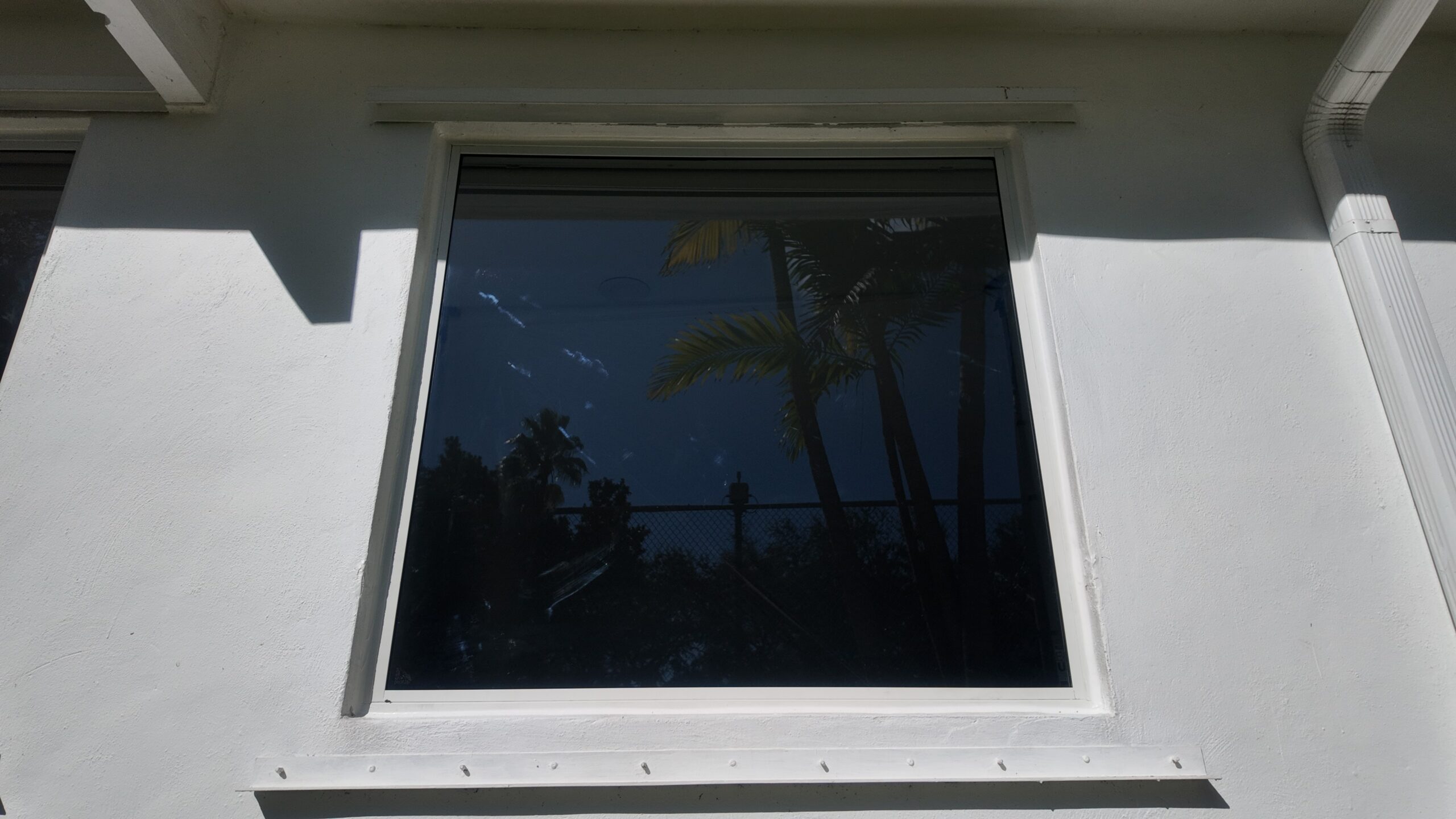
The Three Core Tests Every Impact Window Must Pass
Each test simulates a distinct hurricane threat. A window must pass all of them.
1. Large-Missile Impact Test (TAS 201 / ASTM E1886 + E1996)
This is the test most people picture: a 9-pound 2×4 lumber board fired at the glass and frame at a minimum speed of 50 feet per second. The missile must not penetrate the glazing assembly. After impact, the frame must remain structurally intact — deformation is measured but the window must not open a hole that wind or water can exploit.
Why a 2×4? Debris analysis after major South Florida hurricanes found that dimensional lumber is among the most common and most lethal projectiles generated by storm winds. Passing large-missile means the product has demonstrated it can stop real-world debris at the speeds those storms produce.
Small-missile testing (steel balls at higher velocity) is a separate protocol used for products above the 30-foot elevation threshold. Some products carry both ratings; others carry only one. Know which elevation your opening sits at before specifying a product.
2. Cyclic Wind-Pressure Test (TAS 203 / ASTM E1886)
A single hard hit is not how a hurricane actually loads a window. Real storms create thousands of pressure fluctuations — positive pressure pushing in, negative pressure pulling out — cycling over the hours a storm sits over your neighborhood. The cyclic test replicates this by subjecting the window to 9,000 pressure cycles across a defined load sequence before and after the missile impact test.
This matters because a window can survive one large impact yet fatigue and fail under sustained cycling. Cyclic testing weeds out products that look impact-rated but would progressively loosen, flex, or lose water resistance under actual storm duration. Products that pass TAS 203 have proven structural integrity across the full load history, not just at peak gust.
| Test | Standard | What It Simulates | NOA Required? |
|---|---|---|---|
| Large-Missile Impact | TAS 201 / ASTM E1996 | 9-lb 2×4 at 50 fps | Yes (HVHZ) |
| Cyclic Wind-Pressure | TAS 203 | 9,000 pressure cycles | Yes (HVHZ) |
| Water Infiltration | TAS 202 / ASTM E331 | Driving rain at design pressure | Yes (HVHZ) |
| Air Infiltration | ASTM E283 | Air leakage at 1.57 psf | Yes (HVHZ) |
| Uniform Static Load | TAS 202 | Peak design pressure hold | Yes (HVHZ) |
3. Water Infiltration and Air Infiltration Tests (TAS 202 / ASTM E331 / ASTM E283)
Water infiltration testing sprays water at the exterior face of the window at a rate of 5 gallons per hour per square foot while simultaneously applying a wind-driven pressure differential. The window must show no water penetration past the interior face of the product. This test is run at a percentage of the product’s design pressure rating — typically 15%.
Air infiltration testing measures how much air passes through the closed window at a standardized pressure. Tighter windows mean lower energy bills and less salt-air intrusion — both significant concerns for coastal South Florida homeowners. Aluminum frames, particularly thermally broken aluminum frames, can achieve excellent air-seal performance while outperforming vinyl in long-term dimensional stability under Florida’s UV and heat conditions.
Approval Types Compared
Miami-Dade NOA vs. Florida Product Approval: Side by Side
| Factor | Florida Product Approval | Miami-Dade NOA (HVHZ) |
|---|---|---|
| Governing Body | FL Building Commission | Miami-Dade Product Control |
| Required In | All Florida counties | Miami-Dade + Broward (HVHZ) |
| Test Protocol | ASTM E1886/E1996 | TAS 201/202/203 + ASTM |
| Pressure Ratings | Lower thresholds typical | Higher thresholds typical |
| Lookup Database | floridabuilding.org | miamidade.gov/building |
| Accepted in HVHZ? | No (insufficient alone) | Yes |
When a salesperson tells you a window is “Florida-approved” but cannot produce an NOA number, ask directly: does this product have a Miami-Dade Notice of Acceptance? If you are in the HVHZ and the answer is no, that product cannot legally be installed in your home’s exterior openings.
When Florida Product Approval (without NOA) is the right fit: If your home is in Palm Beach County or farther north — outside the HVHZ — a Florida statewide Product Approval is the applicable standard and is fully sufficient. You do not need an NOA for a Boca Raton or West Palm Beach installation. Verify your county’s requirement with your local building department.
Why Credentials Matter
A Licensed Contractor Can Read the NOA — and Pull the Permit
A licensed contractor, not a lead aggregator or subcontractor chain.
When your contractor holds a Certified Specialty Contractor with a Glass & Glazing Specialty license, they are legally authorized to pull window and door permits directly — no middleman, no subcontractor whose license you cannot verify. That matters at inspection time, because the permit of record determines who is accountable if a product approval issue surfaces.
Additionally, because Bigfoot holds a Certified General Contractor license (CGC1531370), structural scope that sometimes accompanies window replacement — such as hurricane strap verification, header modifications, or structural rough opening corrections — can be handled under one roof rather than requiring a separate contractor with separate accountability. This matters most when a window replacement reveals a structural deficiency that needs to be addressed before the new window can be properly installed and inspected.
“Every product we install has a verifiable NOA or Product Approval number. We pull the permit, we show up for the inspection, and we hand you the paperwork. That is not optional — that is how licensed installation works.”
President, Bigfoot Windows & Roofing
What We Install
Products With Verified NOA and Florida Product Approval
Bigfoot installs Mr. Glass impact windows and ES Windows as our primary lines. Both carry verifiable NOA numbers for HVHZ-eligible products. Mr. Glass Series 200 (single hung) and Series 300 (horizontal roller) are high-rise capable and carry Miami-Dade NOA where applicable. The Series 1000 sliding glass door uses 9/16″ glass as a standard specification — the thickest commonly available in residential impact products.
We specify aluminum frames for South Florida installations. Aluminum is more dimensionally stable than vinyl under sustained heat, UV exposure, and salt air — conditions that are persistent in coastal Miami-Dade and Broward. For energy efficiency, thermally broken aluminum frames reduce conductive heat transfer without sacrificing the structural integrity that coastal conditions demand.
Glass specification matters as well. For coastal locations within two miles of saltwater, we require 2605 finish on aluminum frames — 2604 wood-grain finish loses its 10-year warranty in salt-air environments. Low-E glass with SB 70 coating provides the strongest solar heat block for South Florida, with a dark green hue. Climate Guard 6227 delivers equivalent specs and is available as a free upgrade on whole-house replacement projects.
You can verify any product’s NOA at miamidade.gov/building or Florida Product Approval at floridabuilding.org — look up the NOA or approval number before you sign a contract. Any reputable installer should be able to hand you that number on request. Learn more about our full impact window installation services and the products we carry.
Our Process
From Estimate to Passed Inspection: What to Expect
- Estimate & product selection: We confirm your address, verify whether your location is HVHZ, and specify a product with the appropriate NOA or Product Approval number.
- Permit application: We pull the permit directly under our license. No subcontracting the permit to a third party.
- Installation: Crews install per the NOA installation instructions — anchor spacing, sealant type, and flashing details are all NOA-specified, not left to field judgment.
- Inspection: The building inspector verifies the NOA number, checks anchor patterns, and signs off. We coordinate and attend.
- Wind mitigation documentation: After inspection, a wind mitigation report documents your new openings for your insurance carrier — which may support a meaningful reduction in your wind premium.
If you are financing the project, PACE financing through Renew Financial allows payment through your property tax bill — no bank loan, no credit score impact. Windows and roofing must be submitted as separate PACE applications. For qualifying property owners, there may be tax benefits available — please consult your CPA.
Ready to verify product approvals and get a real number — not a vague estimate?

Written by Darryl Henry Rosenbaum, Founder of Bigfoot Windows & Roofing.
Darryl Henry Rosenbaum, doing business as Bigfoot Windows and Roofing, holds four active Florida licenses recognized by the Florida Department of Business and Professional Regulation (DBPR): Certified General Contractor (CGC1531370), Certified Residential Contractor (CRC1331693), Certified Roofing Contractor (CCC1333168), and Certified Specialty Contractor with a Glass & Glazing Specialty (SCC131153098).
Who We’re Not the Right Fit For
- Buyers who want the lowest possible price above all else. We specify NOA-compliant products and pull permits on every job. If a competitor is offering a lower number by skipping permits or using products without verifiable approval numbers, we are not going to match that — and you should not want us to.
- Homeowners outside South Florida who need a local installer. We serve Miami-Dade, Broward, and Palm Beach County. If your project is in another part of Florida, we are geographically not the right fit.
- Projects requiring licenses we do not hold. We hold four DBPR licenses covering general contracting, residential contracting, roofing, and glass & glazing. We do not hold electrical, plumbing, mechanical, or HVAC licenses. If your project requires those trades as primary scope, you will need additional licensed contractors for those portions.
- Commercial or condo high-rise projects requiring specialized curtain-wall or storefront systems. Our sweet spot is residential and light-commercial impact windows and doors. Large-scale commercial glazing systems are outside our typical scope.
Common Questions
Frequently Asked Questions
How are impact windows tested?
Impact windows must pass three core tests: large-missile impact (a 9-lb 2×4 fired at the glazing), cyclic wind-pressure loading (9,000 pressure cycles), and water and air infiltration testing. In the HVHZ — Miami-Dade and Broward Counties — products must carry a Miami-Dade Notice of Acceptance (NOA) verifying all three tests were passed under TAS 201, 202, and 203 protocols.
What is the large-missile impact test?
The large-missile test fires a 9-pound 2×4 lumber board at the window assembly at a minimum of 50 feet per second. The glazing must not be penetrated. After impact the frame must remain structurally intact. It simulates the most common lethal debris type documented in post-hurricane surveys of South Florida — dimensional lumber from damaged structures and fences.
What is cyclic pressure testing for windows?
Cyclic pressure testing subjects the window to 9,000 pressure fluctuations — alternating positive and negative loads — before and after the impact test. It simulates the hours of sustained wind-pressure reversals a real hurricane produces. A window that survives one hit but fatigues under cycling would fail this test. Products that pass TAS 203 have demonstrated structural integrity across the full storm load history.
How are windows tested for water infiltration?
Water infiltration testing sprays 5 gallons of water per hour per square foot against the exterior face while a pressure differential simulating wind is applied. No water may pass the interior face of the product. This test is conducted at a defined percentage of the window’s design pressure rating. It verifies the window’s seals, glazing pocket, and frame drainage will perform under driving-rain conditions.
What is a Miami-Dade NOA?
A Miami-Dade Notice of Acceptance (NOA) is a product approval issued by the Miami-Dade County Product Control Section after a product passes HVHZ-level testing. It is required for all exterior opening products installed in Miami-Dade and Broward Counties. It is stricter than statewide Florida Product Approval. You can verify any NOA number at miamidade.gov/building before signing a contract.
What is Florida Product Approval, and how is it different from an NOA?
Florida Product Approval is issued by the Florida Building Commission and is accepted statewide. It is sufficient for counties outside the HVHZ, such as Palm Beach. It uses ASTM E1886/E1996 protocols, which are meaningful but generally require lower pressure ratings than Miami-Dade’s TAS protocols. In Miami-Dade and Broward, Florida Product Approval alone does not satisfy code — an NOA is required.
Can I finance impact window replacement in South Florida?
Yes. PACE financing (through programs like Renew Financial) lets you repay through your property tax bill — not a bank loan. Rates are approximately 9.49%; a 20-year term produces the lowest monthly payment. There is no prepayment penalty and no credit score impact. Window and roofing projects must be submitted as separate PACE applications. For qualifying owners, there may be tax benefits — consult your CPA.
Sources
- Miami-Dade County Building Department — Product Control Section, NOA lookup: miamidade.gov/building
- Florida Building Commission — Florida Product Approval database: floridabuilding.org
- Florida Building Code, Section 1609 and Chapter 16 — Wind Load and HVHZ provisions
- ASTM E1886 / E1996 — Standard Test Method for Performance of Exterior Windows, Curtain Walls, Doors, and Impact Protective Systems
- TAS 201, TAS 202, TAS 203 — Florida Testing Application Standards for HVHZ impact and cyclic pressure
Have questions about which impact window approval applies to your home?
Call Bigfoot Windows & Roofing at 786-886-2088 or request a free estimate online.