
HOA Approval for New Windows & Doors in Miami-Dade
If you live in a South Florida community with an architectural review board, you are running two approval tracks at once — and most homeowners find that out the hard way. Your HOA cares what the window looks like from the street. Miami-Dade County cares whether the product survives a Category 5 pressure test. Those two authorities do not talk to each other, they do not share a calendar, and only one of them can stop you from getting a permit. Getting HOA approval for new windows and doors in Miami-Dade without stalling your project comes down to sequencing the paperwork correctly from day one — and scoping your product options to what is already NOA-approved before you ever fill out the first architectural review form.
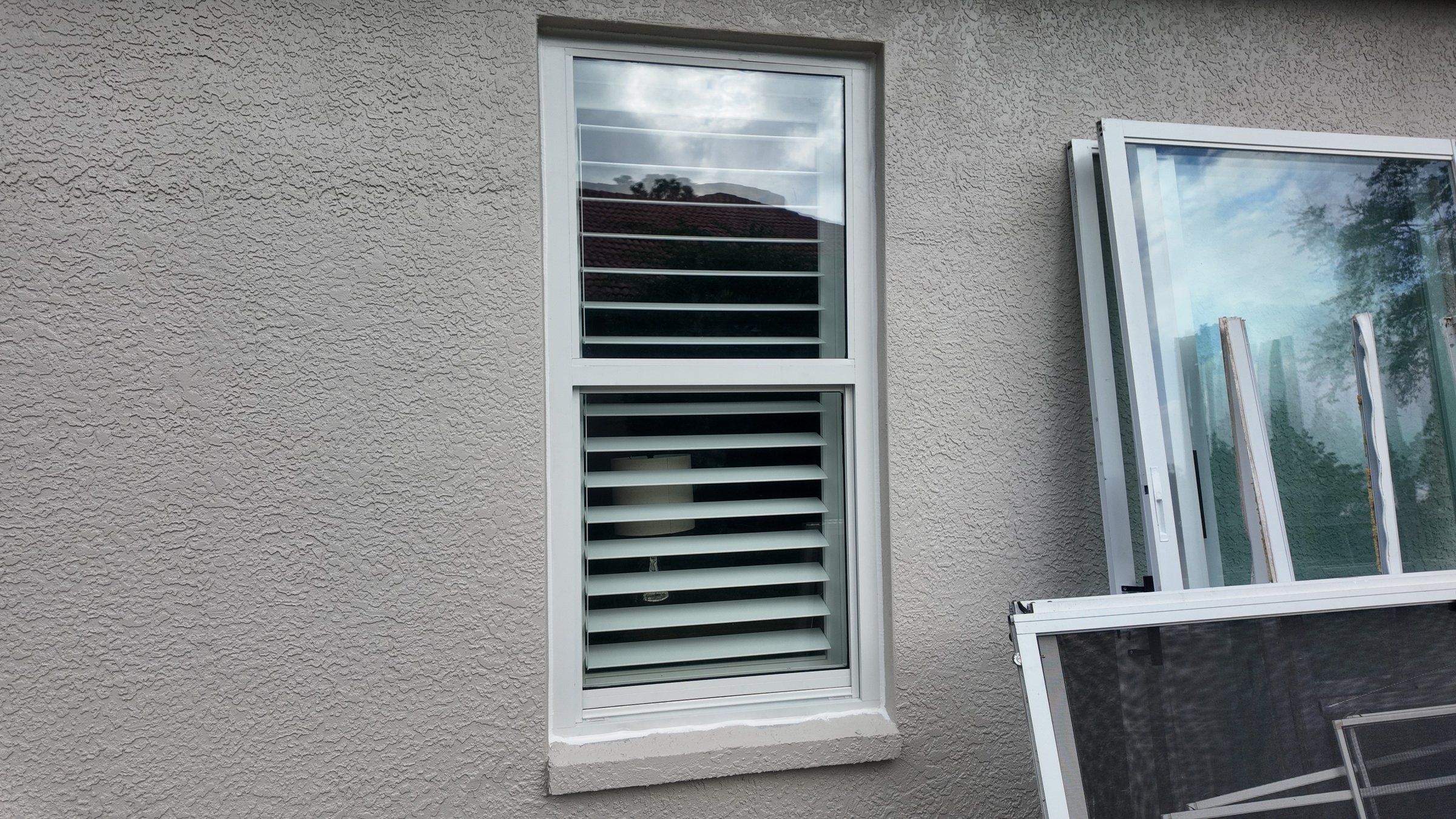
By the Bigfoot Windows & Roofing editorial team, reviewed by our Miami-Dade licensed general and residential contracting staff (CGC1531370, CRC1331693). We install impact windows and doors under Miami-Dade High-Velocity Hurricane Zone product approval in covenant-controlled communities across Miami-Dade County.
Why HOA Approval and Miami-Dade Permitting Are Not the Same Process
An HOA architectural review board is a private contractual body. It enforces the community’s recorded covenants — how the building looks, whether the window frames match, whether the front elevation stays consistent with the rest of the association. It has no authority over structural performance and no ability to certify anything for wind load.
Miami-Dade County’s building department is a public code authority. It enforces the Florida Building Code and the High-Velocity Hurricane Zone (HVHZ) provisions that apply to Miami-Dade and Broward. It does not care about your frame color. It cares about design pressure ratings, large and small missile impact testing, anchor spacing, and buck detail. The HVHZ requirements are set out in the Florida Building Code and enforced through Miami-Dade’s product control program (see floridabuilding.org and miamidade.gov).
Here is the part that trips people up: the county does not require your HOA’s blessing to issue a permit. In most Miami-Dade jurisdictions, a permit application and an HOA architectural review packet can run in parallel. But your association’s covenants are still legally binding on you as an owner. A county permit does not immunize you from a violation letter, a fine, or an order to remove and replace at your own cost. The permit protects you from the county. Only the HOA approval protects you from the HOA.
The Compliance Constraint Generic Guides Miss: HVHZ-Approved Products Only
National contractor blogs treat HOA approval as a form you submit. In Miami-Dade, it is a compliance sequencing problem — because your available choices were already narrowed before the HOA ever saw them.
Every impact window and door installed in the HVHZ must carry a Miami-Dade NOA or a Florida Product Approval that covers HVHZ use — a product approval document that lists the exact configurations, sizes, glazing packages, frame finishes, and installation details that passed testing. If a configuration is not on the NOA, it does not exist as far as the plans examiner is concerned. Miami-Dade County maintains a searchable database of active NOAs through its Product Control section (miamidade.gov).
That means the menu your HOA is choosing from is not the manufacturer’s full catalog. It is the much shorter list of what that manufacturer had tested and accepted for HVHZ use. A color, a grid layout, or a glass package that is not covered by the NOA is not a “custom option” you can order — it is an uninstallable product in Miami-Dade County.
As a licensed general and residential contractor (CGC1531370, CRC1331693) working under Miami-Dade product approval every day, this is where we start every job: pull the NOA-eligible options first, then take those to architectural review. Never the other way around.
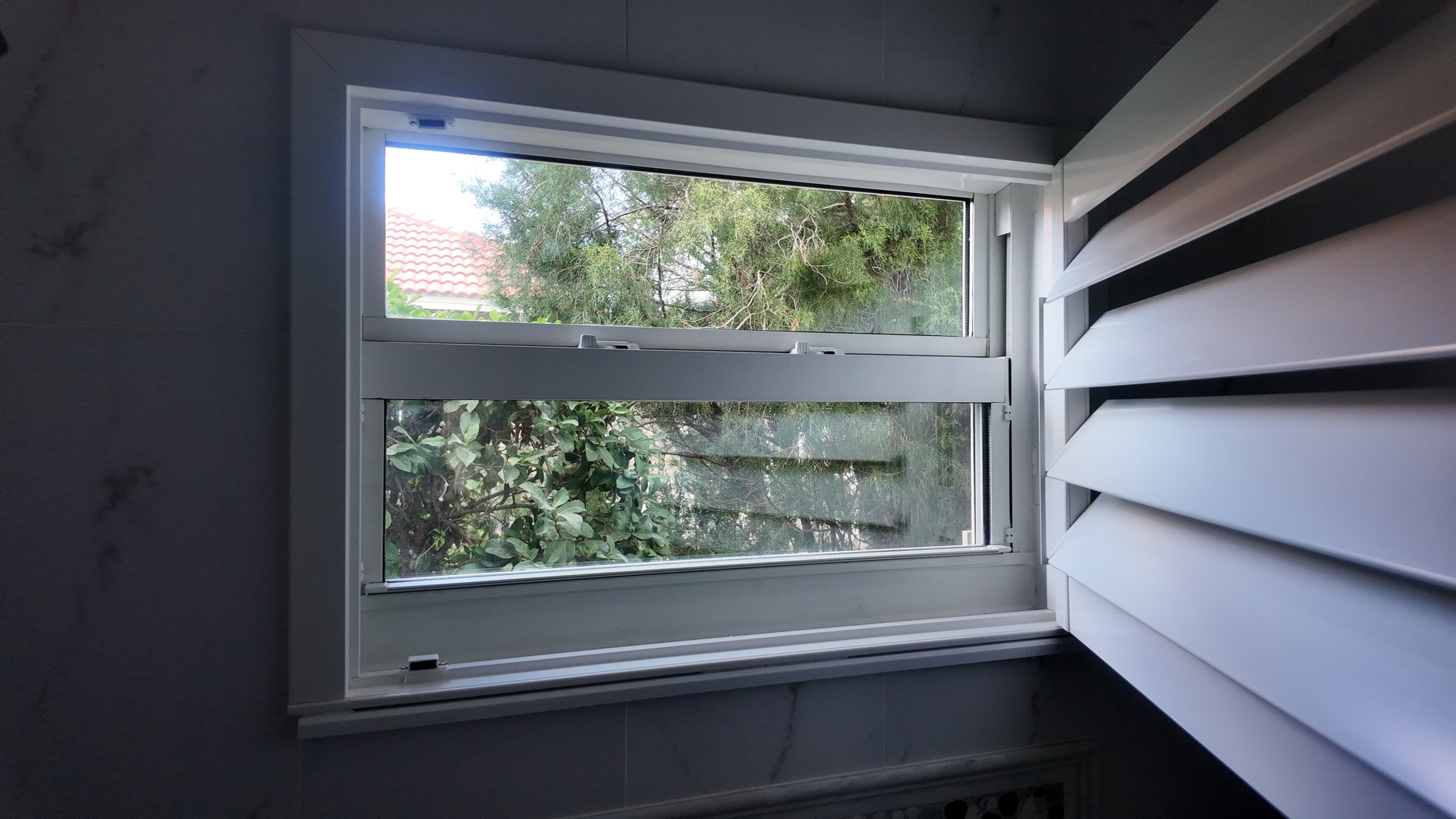
Frame Color Restrictions: What Your HOA Can and Can’t Require
HOA window color restrictions in Florida communities are usually written as “white frames only,” “bronze or dark bronze,” or “must match existing.” Those are enforceable. What is not enforceable is a color that no NOA-listed product line offers in your required size and pressure rating.
Most HVHZ-rated aluminum and vinyl lines carry white, bronze, and black as standard finishes because those are the finishes carried through the testing program. Beyond that, you get into custom powder coat or specialty anodized finishes — which may be available, may add six to ten weeks of lead time, and may or may not be covered under the same NOA. A finish applied after the fact, outside the approved manufacturing process, can void product approval entirely.
Practical translation: if your association requires a color that falls outside standard NOA-listed finishes, your options are to request a variance from the board, find a different NOA-approved manufacturer whose standard line includes that finish, or accept the lead time and cost of a factory-applied custom finish documented in the NOA. What you cannot do is field-paint an impact window and expect it to pass inspection.
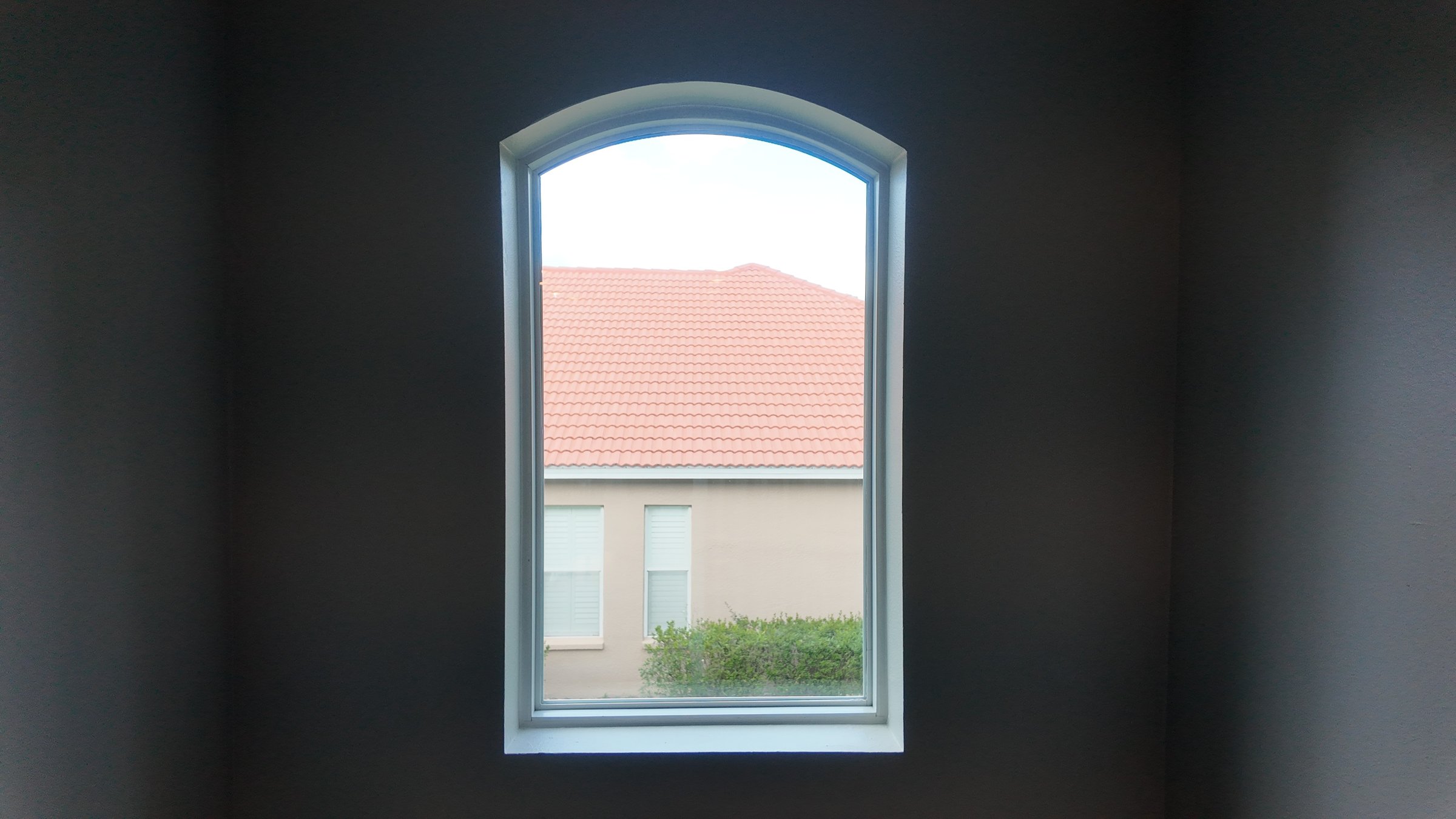
Glass Tint Rules: Where HOA Aesthetics Meet Miami-Dade VLT Code
Two rulebooks land on the same pane of glass here. Associations often write window glass tint rules to preserve a uniform exterior appearance — no mirrored film, no dark tint, no reflective coatings visible from the street. Meanwhile, the Florida Building Code and Florida Energy Conservation Code push you toward low-E and solar control glazing to hit performance targets. The U.S. Department of Energy notes that ENERGY STAR-qualified windows can reduce household energy bills by an average of 13% compared with non-certified products (energy.gov).
Visible light transmittance (VLT) is the number that connects them. A high-performance low-E impact unit can read as faintly green, gray, or blue depending on the coating — enough that a strict board reads it as “tinted” even though it is a clear-glass product with a spectrally selective coating. That distinction is worth putting in writing in your packet.
The clean approach is to submit the actual glazing specification — the manufacturer’s glass data sheet showing VLT, solar heat gain coefficient, and coating type — alongside the NOA. Boards approve numbers far more readily than they approve adjectives. And critically: applying aftermarket window film to an impact unit after installation can void both the glass warranty and, in some cases, the laminated glazing’s approved assembly. If tint is wanted, it belongs in the factory glazing package, on the NOA, before the order goes in.
Grid Patterns and Muntins: Impact-Rated vs. Surface-Applied for Uniformity Standards
This is the single most common technical question we field on impact window HOA rules in South Florida communities, and generic guides never address it.
There are two ways to get a grid look on an impact window:
- Grids between the glass (GBG / internal muntins) — an aluminum bar sealed inside the insulated glass unit. It is part of the tested assembly, protected from weather, and shows up as a specific option on the NOA. It reads as a flatter, thinner line from the street.
- Simulated divided lite (SDL) / surface-applied grids — bars adhered to the exterior and interior glass surfaces, sometimes with an internal spacer. This gives the deeper shadow line that matches true divided-lite wood windows in older or historic-style communities.
For HOA uniformity standards, these are not interchangeable. A board that wrote its covenant around the original surface-applied colonial grid pattern will often reject flat internal grids as visually inconsistent — and they are within their rights to do so. Conversely, some SDL configurations are not available across every size or pressure rating in a given NOA, which means a board can approve a muntin pattern the product line cannot legally deliver at your opening size.
Settle the grid question early. Specify grid type, bar width, and the exact lite pattern (colonial 3×2, prairie, perimeter) in the submission, and confirm each against the NOA option table before the packet goes to the board.
Community Uniformity Standards and the Architectural Review Board Packet
A community association architectural review for windows is decided on the strength of the packet. A thin submission gets tabled to the next monthly meeting; a complete one usually gets approved on first read. A complete packet includes:
- The association’s own architectural modification request form, fully filled out and signed by the owner of record.
- Manufacturer product literature showing frame material, finish color with a color name or code, and profile.
- The Miami-Dade NOA for the exact product line and configuration, including expiration date.
- Glazing specification sheet with VLT, SHGC, and glass makeup.
- Grid/muntin specification — type, pattern, bar width.
- An opening schedule listing every window and door being replaced, with sizes and operating type (single hung, horizontal roller, casement, fixed, sliding glass door, French door).
- Photos of the existing elevations and, where the board requires it, a rendering or elevation drawing showing the proposed appearance.
- Contractor license and insurance certificates — for our work that means CGC1531370, CCC1333168, CRC1331693, and SCC131153098, along with current general liability and workers’ compensation certificates.
Condo association window replacement approval adds a layer. In a condominium, the window is frequently a common element or limited common element under the declaration, which means the association — not the individual unit owner — may control the specification entirely, and unit-by-unit replacement may be prohibited outright. Read the declaration before you spend money on a proposal.
The Correct Order of Operations: HOA Packet, NOA Cut Sheets, Then Permit
The sequence that avoids rework — and the reason a licensed Miami-Dade contractor is worth having in the room on day one:
- Scope to NOA-eligible products first. Measure the openings, calculate required design pressures for the elevation and zone, then filter to product lines whose NOA covers those sizes and pressures. Only then look at color, glass, and grid.
- Build and submit the HOA architectural review packet using those NOA-eligible options, with the NOA attached as proof of compliance.
- Submit the Miami-Dade (or municipal) permit application with signed and sealed plans, NOA documents, anchor calculations, and the product approval forms. In most jurisdictions this can run in parallel with review — but do not order product until the board has approved appearance, because appearance changes force a permit revision.
- Hold the order until both approvals are in hand. Impact product is built to order and is largely non-returnable. This is where the money gets lost when the sequence is wrong.
- Install, then inspect. County inspection verifies the installed product matches the permitted NOA — right model, right anchors, right embedment, right labels intact.
The one rule that governs the whole Miami-Dade window permit process order: never let the HOA approve something the permit cannot accept.
What Happens When an HOA Approves a Non-Compliant Product
It happens more than people expect, usually because a board is working from an old approved-vendor list written before a product line’s NOA was revised or expired. NOAs carry expiration dates and get renewed with changed configurations; a line that was approved for your opening size three years ago may not be today.
When a board approves something the county will not permit, the HOA approval does not create any right to install it. The plans examiner rejects the submission, and you are back at architectural review with a revised product — often another full meeting cycle. The homeowner absorbs the delay, and if product was already ordered, the restocking loss too.
The fix is preventive: attach the current, unexpired NOA to the packet and note the expiration date on the cover sheet. It also gives the board a defensible basis for approving a product that differs slightly from the neighbor’s — the county-approved options changed, and the documentation proves it.
Why This Matters in a High-Velocity Hurricane Zone
The paperwork discipline described here exists for a reason: the HVHZ provisions were written in the aftermath of Hurricane Andrew, which FEMA documented as one of the costliest natural disasters in U.S. history at the time it struck South Florida in 1992 (fema.gov). Miami-Dade’s product control and NOA system grew directly out of that event, which is why the county tests to large and small missile impact standards that exceed most of the country. When we install an impact window in a covenant-controlled community, we are documenting compliance with a code that was purpose-built for the exact wind field your home sits in.
A Real Bigfoot Job Sequence: From HOA Submission to Final Inspection
A typical single-family replacement inside a covenant-controlled Miami-Dade community runs like this for us:
Week 1 — Field measure and product scoping. Every opening measured, elevations noted, design pressures established. We pull the covenant’s window standard and cross-reference it against NOA-eligible lines. On one recent job, the homeowner’s requested bronze frame with a colonial grid was confirmed available in a line whose NOA covered the required pressures at those sizes — a check we ran before quoting the appearance.
Week 2 — HOA packet assembled and submitted. Modification request, product literature, current NOA, glazing data sheet, grid specification, opening schedule, elevation photos, and our license and insurance certificates go in as one document. It lands ahead of the monthly ARB meeting, not after it.
Weeks 2–4 — Permit application prepared in parallel. Signed and sealed plans, product approval forms, and anchor details assembled while the board reviews. Nothing is ordered.
Week 4–5 — ARB approval received in writing. Written approval, not a verbal from a board member. It goes into the job file and, where the municipality requests it, into the permit file.
Weeks 5–9 — Permit issued, product ordered and manufactured. Lead time varies by line, finish, and glazing package; a custom finish extends it.
Installation week — Install and inspection. Product labels stay intact for the inspector, anchors match the approved detail, and the final inspection closes the permit. The homeowner ends with a closed permit and a documented HOA approval — the two pieces of paper that matter at resale.
Common Mistakes That Delay HOA and Permit Approval
- Ordering product on a verbal approval. If it is not in writing from the board, it did not happen.
- Submitting brochure images instead of the NOA. Boards increasingly require product approval documentation, and the county always does.
- Describing color as “dark bronze” without a finish code. Manufacturers’ bronzes differ; a board approving one and receiving another is a legitimate violation.
- Ignoring the sliding glass door. Doors have their own NOAs, their own pressure requirements, and often separate HOA standards from windows.
- Assuming grids are a free option. Grid type affects both HOA compliance and NOA configuration.
- Missing the ARB meeting calendar. Many boards meet monthly. Missing a submission deadline by two days costs four weeks.
- Adding aftermarket film or field paint after install. Voids warranty, and can compromise the approved assembly.
Frequently Asked Questions About HOA Window and Door Approval in Miami-Dade
Can I choose any window color to match my HOA’s requirements, or am I limited to certain finishes?
You are limited to finishes covered by the product’s Miami-Dade NOA. White, bronze, and black are standard across most HVHZ-rated lines. Custom factory finishes exist but add lead time and cost, and must still be documented within the product approval. Field-painting an impact window is never an acceptable path — it can void both the warranty and the approved assembly.
Does my Miami-Dade permit application get rejected if I don’t have HOA approval yet, or can they be submitted at the same time?
In most Miami-Dade jurisdictions the county does not require HOA approval to issue a permit, so the two can run in parallel — and we usually prepare them simultaneously to save weeks. But a permit does not override your covenants. If the board later rejects the appearance, you are exposed to a violation regardless of the permit, so we never release the product order until written HOA approval is in hand.
Do impact-rated grids between the glass count the same as surface-applied grids for HOA uniformity rules?
Usually not. Grids between the glass read as a flat, thin line; surface-applied or simulated divided lite grids create a deeper shadow line that matches traditional divided-lite windows. Boards enforcing a specific historic or colonial appearance frequently reject internal grids as inconsistent. Specify grid type, bar width, and lite pattern in the packet, and verify each against the NOA option table before submitting.
Will tinted impact glass violate HOA glass-clarity rules or Miami-Dade’s visible light transmittance code?
High-performance low-E impact glass is a clear product with a spectrally selective coating, though it can read faintly green or gray from outside. Submit the glass data sheet showing visible light transmittance and solar heat gain coefficient so the board approves a number rather than an impression. Aftermarket tint film applied after installation is the real risk — it can void the glass warranty and compromise the tested laminated assembly.
What happens if my HOA approves a window or door product that isn’t NOA-listed for our wind zone?
The approval is worthless for permitting purposes. The plans examiner rejects the submission, and you return to architectural review with a revised product — often a full meeting cycle later, plus restocking losses if the order was already placed. This most often happens when a board works from an outdated approved-vendor list, since NOAs expire and get revised with changed configurations.
How long does the HOA approval and Miami-Dade permit process take from start to finish?
On a well-sequenced single-family job, expect roughly four to five weeks from measurement to written ARB approval and issued permit when the packet is complete and hits the board’s meeting calendar on time, then several more weeks for manufacturing and installation. Custom finishes, incomplete packets, missed meeting deadlines, and condominium declarations that require a broader vote all extend that timeline substantially.
Where can I verify that a window or door product actually holds a valid Miami-Dade NOA?
Miami-Dade County publishes active Notices of Acceptance through its Product Control Search on miamidade.gov, and the statewide product approval system is available through floridabuilding.org. Both list the approved configurations, sizes, and expiration dates. We attach the current, unexpired NOA to every HOA packet so the board and the plans examiner are reviewing the same document.
Get the Sequence Right the First Time
The difference between a four-week approval and a four-month one is almost never the board. It is whether the product options were scoped to Miami-Dade NOA compliance before architectural review ever saw them. Bigfoot Windows & Roofing handles both tracks — the HOA packet and the HVHZ permit submission — as one process, licensed under CGC1531370, CCC1333168, CRC1331693, and SCC131153098.
Ready for a free estimate? Call 786-886-2088 or fill out our contact form.