
7250 SW 39th Terrace, Miami, FL 33155
Licensed & Insured · South Florida

Metal Roofing in Miami Metal Roof Installation & Replacement

The Last Roof You'll Ever Need.

Storm-rated systems I Energy-efficient design I 40–70 year lifespan. Installed by a Licensed Miami Crew.

 40–70 yr lifespan | ✓ Hurricane-rated | ✓ Licensed & Insured | ✓ Permit-ready 

IS METAL ROOFING RIGHT FOR YOU?

The smartest upgrade for South Florida homes.

Built for Miami’s climate. Longer lifespan, stronger performance, and lower long-term cost.

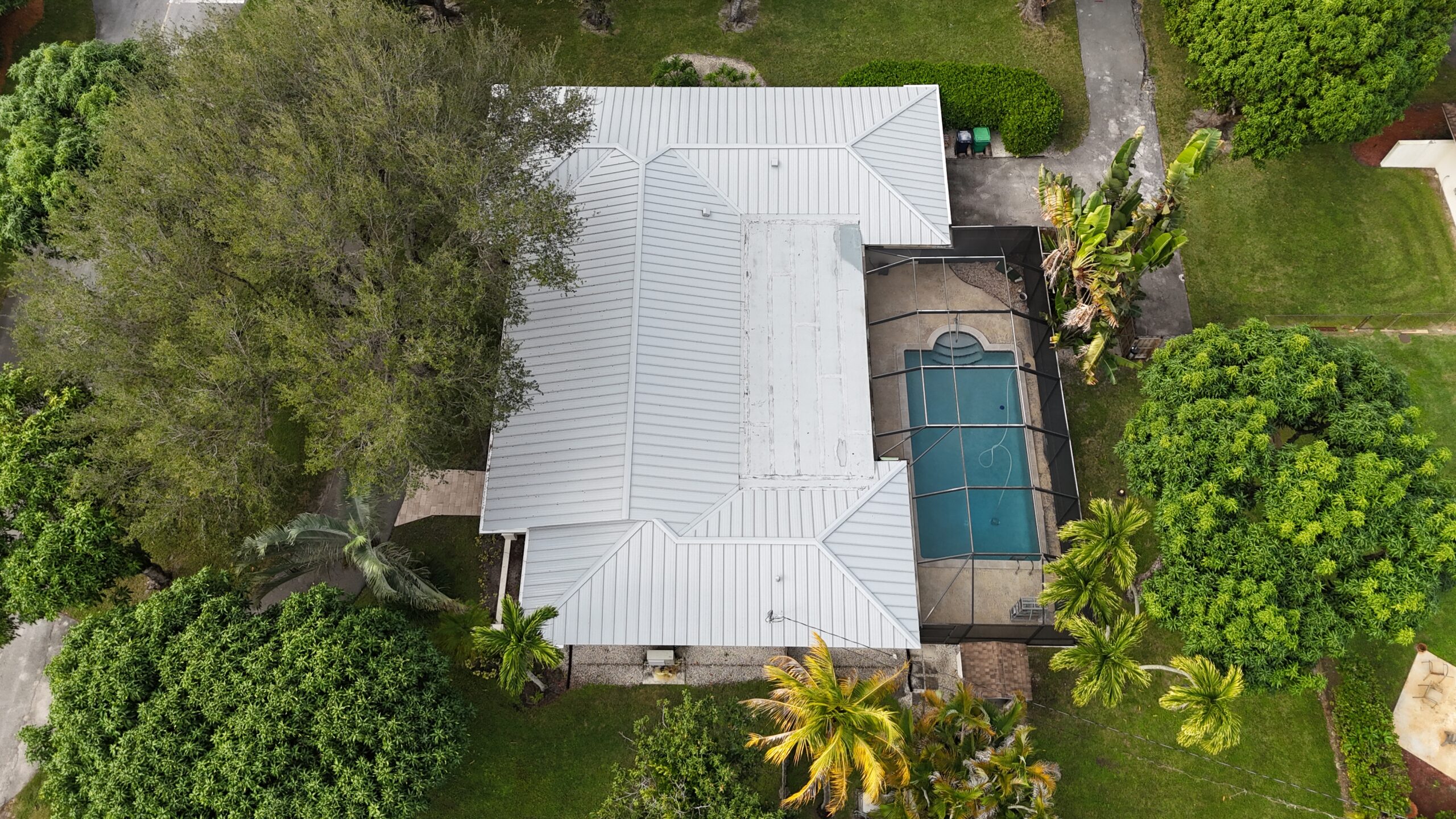
Aerial drone view of South Florida home with metal roof and screened pool enclosure
MOST RECOMMENDED
Metal ✓ Shingles Tile
Lifespan 40–70 yrs 15–30 yrs 25–50 yrs
Wind 140+ mph ~130 mph ~150 mph
Maintenance Minimal Moderate Low–mod
Efficiency High Low Moderate

METAL ROOFING SYSTEMS

Pick your metal roofing system.

Each system is built for a different need. Select one to explore.

Standing Seam Metal Roof

Standing Seam

Hidden fasteners, sleek lines, maximum wind resistance.

Best for: Coastal homes & premium residential

READY FOR NEXT STEPS?

Confirm your metal roofing options today.

Miami-Dade guidance — clear timeline — licensed crew — permit-ready.

A REAL COMPANY BEHIND THE WORK

Licensed South Florida Roofing, Window & Door Contractors

We are not a lead aggregator. We are a licensed roofing, window, and door contractor based in Miami, handling every project from inspection through permit to final walkthrough.

License #CGC1531370 License #CCC1333168 License #SCC131153098 License #CRC1331693 Miami-Dade, Broward & Palm Beach Permit coordination included Our crew installs
CALL (786) 886-2088

We don’t outsource. Our crew shows up, installs clean, and doesn’t leave until it’s right.

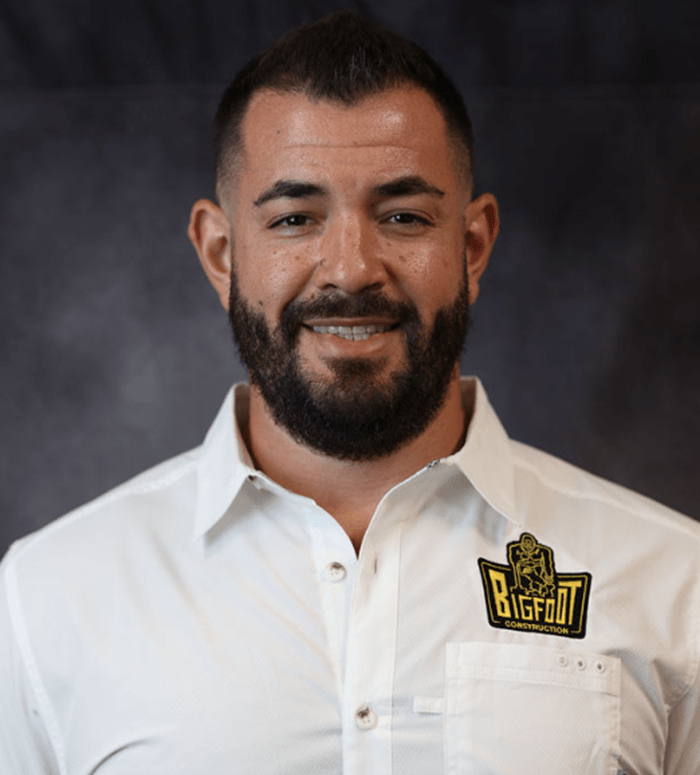
Darryl, President of Bigfoot Windows & Roofing
— Darryl President | Bigfoot Windows & Roofing

COMMON QUESTIONS

Clear answers. No fluff.

Tap a question. Get the answer instantly.

01

How long does metal roofing last in Florida?

Metal roofs typically last 40 to 70 years in Florida — significantly outlasting asphalt shingles, even under harsh coastal conditions.

What Miami Homeowners Say

Real projects.
Real results.

4.9
★★★★★
120+ Google Reviews

What Makes a Quality Metal Roof in South Florida

Not all metal roofs are equal — especially in Miami's mix of relentless sun, salt air, and hurricane wind. Here's what we look at when we build a metal roof made to last down here, and what to ask about when you compare quotes.

Panel system and gauge

We install premium standing-seam systems, including panels custom roll-formed on-site with Englert and panels from Metal Alliance. For Miami homes we favor a mechanically seamed standing seam — the panels are joined with a folded 90-degree seam and hidden fasteners, which handles wind uplift far better than exposed-screw or snap-lock panels. We build in 24-gauge steel as our standard; the lower the gauge number, the thicker and stronger the metal, and a heavier gauge also reduces the "oil canning" (surface waviness) you often see on thin panels.

The finish: Kynar 500 (PVDF)

The paint is what keeps a metal roof looking new in the Florida sun. We use a Kynar 500 / PVDF fluoropolymer finish (such as Sherwin-Williams Fluoropon) — widely regarded as the industry's top exterior metal coating — which resists the fading and chalking that cheaper finishes suffer under intense UV. A quality painted finish also performs better as a "cool roof" than bare, unpainted metal.

Coastal metal: aluminum vs. Galvalume

How close you are to the water changes what metal belongs on your roof. Within about a half-mile of salt water, we install aluminum, which won't corrode in salt air. Farther inland, Galvalume (aluminum-zinc-coated steel) is an excellent, more economical choice. Putting bare steel panels near the coast is a common mistake that shortens a roof's life — matching the metal to your location is part of doing it right.

Energy savings in the Miami heat

A metal roof with a reflective, cool-colored finish bounces back more of the sun's heat than a dark asphalt roof. According to the U.S. Department of Energy, replacing a dark roof with a solar-reflective cool roof can reduce a home's annual air-conditioning energy use by roughly 5–20%, and cool roofs save the most in hot, sunny climates like South Florida (energy.gov). We can walk you through the reflectance rating of each color so you can weigh the energy benefit.

Built for the HVHZ

Because we're licensed South Florida roofers (CGC1531370, CCC1333168), the metal systems we install carry the Florida and Miami-Dade product approvals required for the High-Velocity Hurricane Zone, and we pull the permit so every roof is inspected to code. You can verify any product's approval at Miami-Dade Product Control or floridabuilding.org.

Metal Roof Warranties in Florida: What's Covered — and What Isn't

"Backed by a 40-year warranty" sounds simple, but a metal roof actually carries several different warranties, each with its own length and its own fine print. We'd rather explain it honestly up front than have you discover the gaps after a storm.

The warranties you actually get

  • Paint / finish warranty. On Englert's Kynar 500 / PVDF finish, this runs up to 40 years against chipping, cracking, and peeling (and, to a lesser degree, fade and chalk). See Englert's published warranties.
  • Substrate (base-metal) warranty. A separate — and usually shorter — warranty on the metal itself (Galvalume steel or aluminum) against rust-through.
  • Weathertightness warranty. Coverage against actual water penetration, available up to 20 years — but only when the system is installed by a manufacturer-certified contractor.
  • Workmanship warranty. Our own labor warranty on the installation itself.

The exclusions most contractors won't mention

  • Coastal homes are often excluded. Standard paint and Galvalume substrate warranties commonly do not apply within roughly 1,500 feet of the coast. That's a big reason we install aluminum near the water — it isn't subject to the Galvalume coastal exclusion — and why a "40-year" claim can quietly not apply to a home near the beach.
  • No certified installer, no weathertightness warranty. The exact same panels installed by a non-certified crew may carry no water-penetration coverage at all.
  • Most finish warranties are prorated. They pay a shrinking share as the roof ages — not a full replacement in year 30.
  • Warranties usually must be registered after installation, or they can be voided.
  • Damage caused by others isn't covered. A solar installer, an AC tech, or anyone walking the roof can void coverage on the panels they damage.

When we quote your roof, we tell you exactly which warranties apply to your home — coastal or inland — install so the weathertightness coverage stays valid, register the warranty for you, and hand you the paperwork. No fine-print surprises.

Updated July 2026