
HOA Roof Approval South Florida: ARC Timeline & Rules
If you own a home in a deed-restricted community in Miami-Dade or Broward, your roof replacement has two bosses. The county building department decides whether your roof assembly is legal. Your homeowners association decides whether it is allowed. Different people, different calendars, different standards — and the South Florida homeowner who satisfies one while ignoring the other ends up with a stalled job, a stop-work order, or a violation letter.
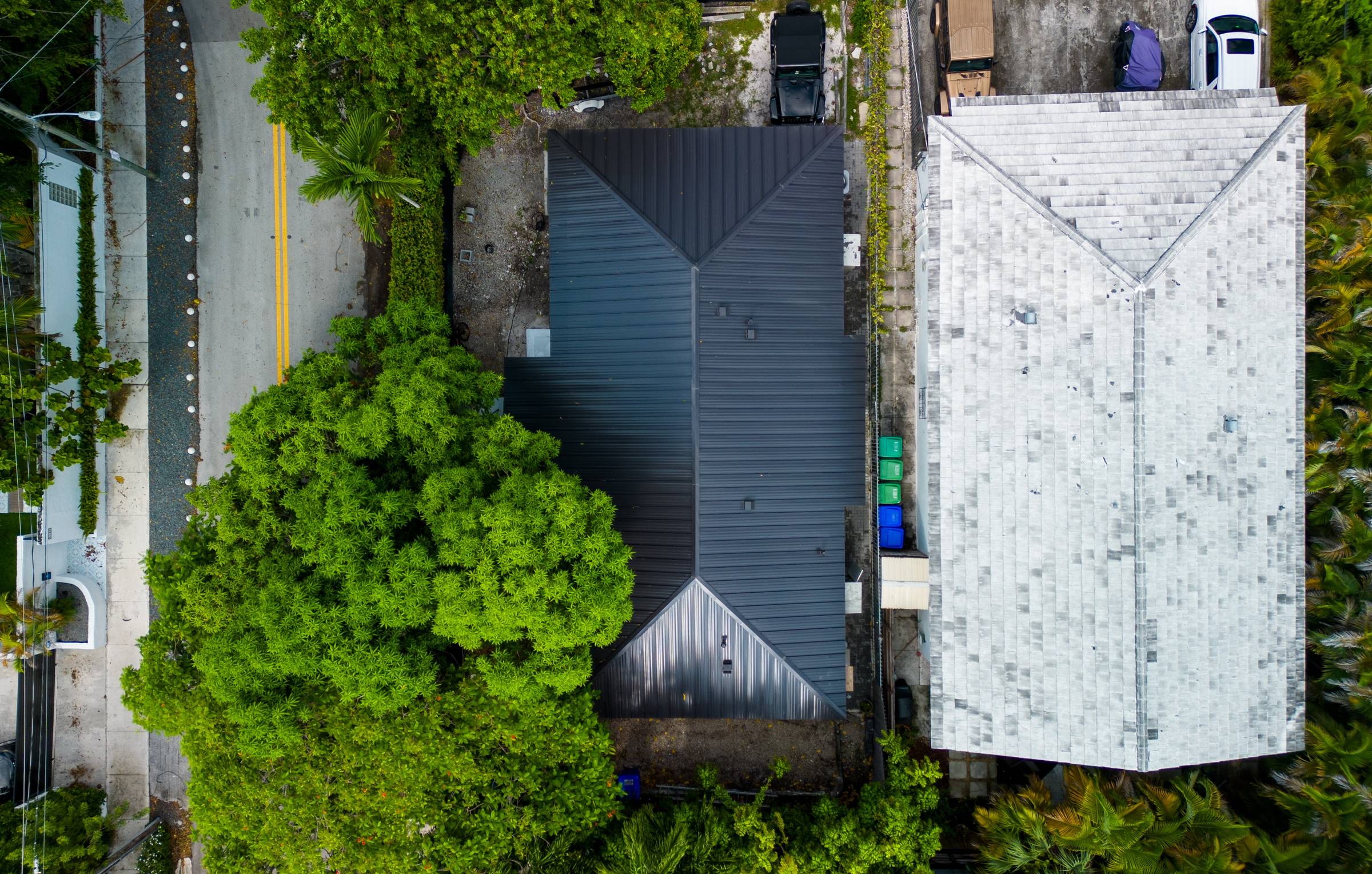
Most guides treat HOA roof approval like a wallpaper decision: pick a color, submit a form, wait. Not here. In the High-Velocity Hurricane Zone (HVHZ), the products you may legally install are already narrowed to assemblies carrying a valid Miami-Dade Notice of Acceptance. Your architectural review committee then narrows what remains, on taste. The overlap is your real menu, and it is shorter than the brochure suggests.
The stakes are physical, not just bureaucratic. The HVHZ — covering Miami-Dade and Broward — exists because of the damage Hurricane Andrew inflicted in 1992, which drove the toughest building-code provisions in the country (source: floridabuilding.org). FEMA’s post-storm assessments have repeatedly found that the roof covering and its edge metal are among the first components to fail in high winds, and that failures often begin at the perimeter (source: fema.gov Building Science). That is why the county’s product review is not a formality — and why an HOA request that ignores it can never be built.
Why HOA Roof Approval in South Florida Is Its Own Layer of Red Tape
Florida statute gives associations broad authority over exterior appearance, and South Florida communities use it aggressively. A roof is the largest visible surface on a house, so it draws more scrutiny than paint, driveways, and landscaping combined. Expect recorded covenants naming permitted roof types, an ARC (architectural review committee) meeting on a fixed schedule, and a submittal form nobody has updated in years. The friction is structural: ARC members are volunteers, not roofers. They know what the neighborhood should look like. They do not know wind-uplift requirements, approved underlayment stacks, or why a tile profile was pulled from the product approval database. So the HOA roof approval process routinely produces requests that cannot legally be built.
The Two Approval Tracks You’re Actually Navigating: ARC Taste vs. Miami-Dade/Broward Product Code
Two separate inspections of the same plan:
- The county. Miami-Dade and Broward are HVHZ jurisdictions. Every component — fastener pattern, underlayment, drip edge, cap sheet — must belong to an approved system rated for the design wind pressures on your specific roof. This track does not care about color. (You can verify any product’s status in the county’s Product Control search at miamidade.gov.)
- The ARC. Your association cares about profile, color, sheen, and whether the finished roof matches the community’s established look. This track does not care about uplift ratings.
Neither reviewer will warn you about the other. A licensed contractor is the only party sitting on both sides, which is why architectural review committee roofing submittals from unlicensed or out-of-area crews bounce so often. Bigfoot Windows & Roofing holds CGC1531370, CCC1333168, CRC1331693, and SCC131153098 — general, roofing, residential, and specialty licensure — so one packet speaks both languages.
What Goes in a South Florida HOA Roof Submittal Packet
A complete HOA submittal packet roofing request generally needs all of this. Missing one item is the top cause of deferral to the next meeting:
- The association’s architectural modification request form, signed by the titled owner.
- Contractor license and certificate of insurance, naming the association as additional insured where required.
- Manufacturer product data for the exact shingle, tile, or membrane.
- A physical color sample or manufacturer chip — not a printout, not a phone photo. Screens lie about color.
- The Miami-Dade Notice of Acceptance number, or Florida Product Approval number where applicable.
- Written scope: tear-off depth, decking repair allowance, underlayment, roof flashing and drip edge replacement, ventilation changes.
- Photos of the existing roof, and of the same product installed elsewhere in the community if available.
- Projected start and completion dates, plus dumpster and staging locations.
How Color and Material Restrictions Actually Work (and Where They Collide With NOA Listings)
HOA roof color restrictions are written one of three ways: an approved-color list by manufacturer name, a general “match the neighborhood palette” clause, or a requirement to match a documented standard. The named list is cleanest and ages worst — manufacturers discontinue colors and reformulate lines constantly while the recorded list sits unchanged for a decade.
That is the collision. The approved list names a tile blend no longer produced in an HVHZ-rated configuration. Or the roof shingle color HOA approved in the covenants exists only in a product line whose Notice of Acceptance does not cover your slope or deck type. The owner orders the color; the permit reviewer rejects the assembly.
Color is not only cosmetic here. The U.S. Department of Energy notes that a reflective “cool roof” can stay up to about 50°F cooler than a conventional roof under peak summer sun, and reduce cooling energy demand (source: energy.gov). In a market where the ARC may push you toward a darker community palette, that trade-off is worth raising early.
The fix is sequence. Confirm what is NOA-legal for your roof first, then bring the ARC the compliant options closest to the community standard, with documentation showing why the named product is no longer buildable. Committees approve substitutions routinely when the request arrives with proof instead of an argument.
Understanding HVHZ Product Approval: The Non-Negotiable Layer Most HOAs Don’t Mention
A Notice of Acceptance is Miami-Dade’s product approval document. It certifies that a specific roofing system — not just a shingle, but the whole stack including underlayment, fasteners, and edge metal — was tested to HVHZ standards and is legal to install in the zone. Each NOA carries a number, an expiration date, and installation limits: allowable slopes, deck types, fastening patterns, and wind pressures tied to the Miami-Dade 25-7 HVHZ wind-load standard. You can pull and verify any current NOA directly from the county’s Product Control Search (source: miamidade.gov).
Two things homeowners get wrong. First, an NOA expires; a number copied off an old proposal may be dead. Second, an NOA covers a system — pairing a compliant tile with a non-listed underlayment voids the assembly. That holds just as hard on flat roofs, where a TPO membrane or modified bitumen system has its own listed configuration, and at every piece of roof flashing and drip edge on the perimeter, which is where uplift failures start.
Your association almost certainly will not ask for the NOA. The county absolutely will.
Realistic ARC Timelines: How Long Approval Actually Takes
The honest answer to how long does ARC approval take is that it tracks the meeting calendar. Committees meeting monthly and voting by quorum typically decide within two to six weeks of a complete submittal. Communities where a management company can approve routine like-for-like reroofs turn around in days. Communities meeting quarterly, or requiring full board ratification after an ARC recommendation, can run two months or longer.
Many governing documents include a default-approval clause: if the association fails to respond within a stated window, the request is deemed approved. Read yours before relying on it, and get any deemed approval confirmed in writing. The variable you control is completeness — a deferral does not cost a week, it costs a meeting cycle.
Can ARC Approval and County Permitting Run at the Same Time?
Usually yes, and on most jobs they should. Miami-Dade and Broward building departments review code compliance, not covenants, and do not require HOA sign-off to accept a permit application. Running both tracks in parallel can cut weeks off the schedule.
The caution is real. If the ARC demands a different material or profile, the permit must be revised — new product data, new NOA, sometimes new wind-load calculations, and a fresh position in the review queue. Parallel filing is smart for a like-for-like replacement. When you are requesting a substitution or an upgrade, wait for ARC direction before locking the permit set.
Tile and Metal Roof Upgrades: Extra HOA Scrutiny for Structural Load
Changing roof type is a different animal than replacing like-for-like. Tile roof HOA guidelines Miami communities enforce cut both ways — some require tile and forbid shingle, others forbid tile because the original framing was never engineered for the load.
Going from shingle to concrete or clay tile can multiply roof dead load several times over. That is an engineering question before it is an aesthetic one, and both the county and a careful ARC will want a structural engineer’s letter confirming the framing carries it. Metal draws its own review: panel profile, rib spacing, finish sheen, and glare toward neighbors, plus NOA constraints on slope and substrate for standing-seam systems. Budget extra time for any roof material approval HOA request that changes the category rather than the color.
The Most Common Reasons South Florida HOAs Reject a Roof Submittal
- Incomplete packet — missing license, insurance certificate, or physical color sample.
- Color or profile outside the recorded list, submitted with no documented substitution rationale.
- Product discontinued, or no longer NOA-listed for the zone.
- Category change (shingle to tile, tile to metal) without a structural letter.
- Work started before approval — the fastest route to a violation and a restoration demand.
- Contractor not licensed for the scope, or short of the coverage limits the covenants require.
- Scope silent on visible details: drip edge color, flashing metal, ridge vent profile, fascia work.
Nearly every one is a paperwork failure, not a design failure. That is good news — paperwork is fixable in advance.
How Bigfoot Windows & Roofing Builds a Packet That Passes Both Reviews the First Time
We work the tracks in the right order. First we establish the assembly that is legal on your specific roof — slope, deck, and design pressures under the HVHZ standard — and pull current NOA documentation straight from the county’s Product Control database. Then we cross-reference that against your association’s recorded restrictions to find where they agree and where they conflict. You see the compliant options, with real color samples, before anything is submitted.
On one recent Miami-Dade tile reroof, the community’s approved list still named a barrel-tile blend the manufacturer had discontinued in its HVHZ-rated line. We installed the closest current NOA-listed profile in a matched color and submitted the ARC request with the discontinuation notice and the active product approval attached — the committee approved the substitution without a second meeting. That is the difference between arriving with proof and arriving with an argument.
The ARC packet and the permit set are then built from the same source documents, so the color on the modification request is the color on the permit and the NOA in the county file is the NOA in the association’s file. Licensed as CGC1531370, CCC1333168, CRC1331693, and SCC131153098, we handle the HOA roof replacement rules Florida homeowners face daily across Miami-Dade and Broward, on tile, shingle, metal, and flat roof systems alike.
Frequently Asked Questions
How long does HOA ARC approval take for a roof replacement in South Florida?
Most South Florida committees decide within two to six weeks of a complete submittal, driven by their meeting schedule. Associations whose management company can approve like-for-like reroofs move in days; those meeting quarterly or requiring board ratification can take two months or more. Check your governing documents for a default-approval window if the association fails to respond in time.
Can an HOA reject a roof material that already meets Miami-Dade or Broward wind code?
Yes. Code compliance and covenant compliance are separate. The county approves what is legally installable; the association governs appearance under its recorded restrictions. A fully NOA-listed HVHZ assembly can still be denied on color or profile. The practical path is finding products that satisfy both, or submitting a documented substitution when the covenant’s named product is no longer available.
What is a Notice of Acceptance (NOA) and how do I verify one?
An NOA is Miami-Dade’s document certifying that a complete roofing system — shingle or tile plus underlayment, fasteners, and edge metal — was tested to High-Velocity Hurricane Zone standards. Each carries a number, an expiration date, and installation limits on slope, deck type, and wind pressure. You can look up and confirm any current NOA in the county’s Product Control Search at miamidade.gov before you order material.
What has to be in the HOA submittal packet for a new roof?
Typically the modification request form, contractor license and insurance certificate, manufacturer product data, a physical color sample, the Miami-Dade NOA or Florida Product Approval number, a written scope covering tear-off, underlayment, flashing and drip edge, photos of the existing roof, and projected dates. Requirements vary by community — confirm against your own covenants before filing.
Do metal or tile roof upgrades need extra HOA sign-off beyond a standard reroof?
Usually yes. Changing roof category rather than replacing like-for-like triggers deeper review. Tile adds substantial dead load and generally requires a structural engineer’s letter confirming the framing can carry it. Metal draws scrutiny on panel profile, finish sheen, and glare toward neighbors. Expect a longer cycle and more documentation than a same-material replacement.
Can I apply for my county roofing permit while ARC approval is still pending?
Generally yes — Miami-Dade and Broward building departments review code compliance, not HOA covenants, and do not require association sign-off to accept an application. The risk is rework: if the committee directs a different material or color, the permit set must be revised and re-queued. Parallel filing suits straightforward like-for-like replacements, less so substitutions or upgrades.
What are the most common reasons South Florida HOAs reject a roof submittal?
Incomplete packets lead — missing license, insurance, or a physical color sample. Then colors or profiles outside the recorded list with no substitution rationale, discontinued or unlisted products, category changes without a structural letter, work started before approval, and scopes silent on visible details like drip edge and flashing color.
Ready for a free estimate? Call 786-886-2088 or fill out our contact form.