
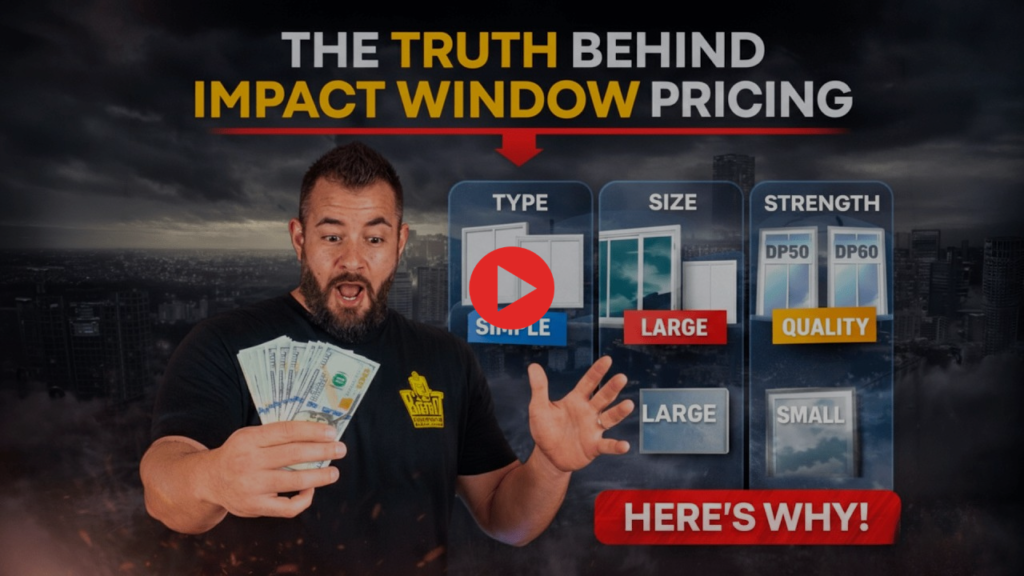
Impact window quotes in South Florida can be thousands of dollars apart for what looks like “the same job” on paper—but the details tell a very different story. This blog breaks down the key lessons from Bigfoot Windows & Roofing’s video, “Why Your Impact Window Quotes Are All Over the Place,” so you can compare bids like a pro instead of guessing.
Why Impact Window Quotes Vary So Much
On the surface, two companies may list the same number of windows and doors, yet one quote is tens of thousands higher than the other. The video explains that real pricing comes down to specific technical and installation factors, not random markup or sales games.
When you understand these variables, you can spot when a low price means real savings—and when it means corners are being cut on safety, performance, or labor.
1. Window Type and Operable Complexity
Different impact window styles are not priced equally. As the video explains:
- Single-hung windows are typically the most affordable.
- Horizontal rollers usually cost more.
- Casement windows are often the most expensive.
The reason is complexity—the more moving parts, hardware, and reinforcement a window needs to pass hurricane testing, the higher the cost. So if one quote is full of casements and another is mostly single-hungs, you shouldn’t expect the totals to match.
2. Size and Design Pressure (DP) Ratings
Size matters not just for material costs but also for engineering. Larger openings require stronger frames and higher design pressure (DP) ratings to resist wind loads and debris, which raises the price.
Two homes with the same number of windows can have completely different quotes because:
- One has big living room picture windows, while the other has smaller openings.
- One is in Miami-Dade with higher DP requirements, while the other is further inland.
DP rating is one of the biggest price drivers that homeowners rarely hear about, but it’s crucial for real hurricane performance.
3. Frame Material: Aluminum vs Vinyl vs Hybrid
The video breaks down how frame material affects both performance and price.
- Aluminum frames tend to be stronger and often cost more, especially on large openings.
- Vinyl can be more affordable but usually needs a thicker profile to hit the same DP rating.
- Hybrid systems fall in between, though they’re less common in South Florida.
If one company is quoting high‑DP aluminum across the house and another is using thinner vinyl with lower ratings, that alone can explain a big price gap.
4. Glass Packages and Upgrades
Not all impact glass is the same, and the package you choose can significantly affect your quote. Options include:
- Insulated vs non‑insulated glass
- Tinted vs clear glass
- Low‑E coatings for energy efficiency, UV protection, comfort, and reduced condensation
Those low‑E and insulated upgrades add cost up front but pay off in comfort and long‑term performance—something the installer in the video mentions he regrets not choosing for his own home.
5. Installation Complexity and Labor Quality
One of the most overlooked pricing factors is how your home is built.
- Concrete block (masonry) openings are usually simpler and faster to work with.
- Wood‑framed homes can require more steps, more materials, and more labor time.
The video also emphasizes the difference between cheap labor and skilled, licensed crews who slow down and do the job right. Quality installers, proper licensing, and teams that respect your home will cost more—but impact windows are safety systems, not decorations. If labor is suspiciously cheap, something is usually being rushed or skipped.
6. Code Compliance, Approvals, and “The Minivan Test”
Impact windows with full Miami‑Dade NOAs or Florida Product Approvals cost more to design, test, and certify—and that cost is baked into the product. Cheaper windows sometimes just meet the bare minimum or skip full testing.
The video compares it to buying a minivan for a new family: you wouldn’t pick the model with the lowest safety rating just because it’s cheaper. The same logic should apply to the glass that’s protecting your family during a hurricane.
7. Why “Brand Only” Quotes Are a Red Flag
One powerful point in the video is the “Mercedes” analogy. Some companies write a quote that just lists the manufacturer name (like saying “Mercedes”) without specifying the exact product line, performance level, or options.
That’s like being told you’re getting “a Mercedes” without knowing if it’s the entry‑level model or the fully loaded AMG. If a quote doesn’t clearly spell out the specific window line, DP ratings, glass package, and approvals, it’s a reason to question that proposal.
What Smart Homeowners Do with This Information
Most full‑home impact window projects land somewhere between about 15,000 and 45,000 dollars, depending on the number of openings, sizes, materials, ratings, and installation complexity. If a quote is dramatically lower than that range, something is usually missing—either in the product, the installation, or both.
The homeowners who get the best long‑term value don’t chase the lowest number; they compare:
- Window types and sizes
- DP ratings and approvals
- Frame material
- Glass package
- Installation scope and who’s actually doing the work
That’s exactly how Bigfoot Windows & Roofing encourages people to evaluate their quotes—through clear education instead of pressure tactics. If you’re in South Florida and want help decoding your impact window bids, their team can walk you through each of these variables so you know exactly what you’re paying for and why.