5 Things to Check Before Signing a Roofing Contract | Bigfoot Windows & Roofing
Updated August 2026
Before you sign a roofing contract in South Florida, verify five things: the contractor holds an active Florida DBPR license, the contract spells out permit and Notice of Commencement obligations, the materials carry Miami-Dade Product Approval for the High Velocity Hurricane Zone, all warranty terms are written out, and no assignment-of-benefits clause strips your rights under Florida Statute 627.7152.
Key Takeaways
- A valid Florida DBPR license — verifiable online — is the minimum bar for any roofer you hire in Miami-Dade or Broward.
- Your roofer must pull a permit; you, as the property owner, must record a Notice of Commencement before work begins.
- A product with a current Florida Product Approval (FL number) that covers HVHZ use is legal to install in Miami-Dade and Broward. A Miami-Dade NOA is an additional certification some products also carry; it is not required for the permit.
- Your contract should list both a manufacturer warranty passthrough and a separate workmanship warranty with explicit durations.
- Assignment-of-benefits clauses in roofing contracts are regulated by Florida Statute 627.7152 — read before you sign.
The Risk
Why South Florida Homeowners Get Burned on Roofing Contracts
A low bid is not a safe bid — especially in the HVHZ.
Every hurricane season, Miami-Dade and Broward County homeowners discover the hard way that a cheap roofing quote came with no permit, unlicensed labor, or materials that failed the Florida Building Code’s High Velocity Hurricane Zone (HVHZ) requirements. By then, the contractor is gone, the roof leaks, and the homeowner is holding a lien from a supplier who was never paid.
The good news: most of these situations are preventable. The contract you sign before a single shingle is touched is your primary legal protection. This guide walks through the five things that matter most.
South Florida Context
Why Roofing Contracts Are More Complex Here Than Anywhere Else in the U.S.
Miami-Dade and Broward County operate under the HVHZ — the strictest residential building code in the continental United States. That means stricter product approval requirements, stricter installation standards, and stricter permitting than you would find even 50 miles north in Palm Beach County. A roofing contract written for a suburb of Atlanta will not protect you in Hialeah or Miramar.
The Florida Building Code Chapter 15 re-roofing thresholds for HVHZ specify when a damaged deck must be fully replaced rather than recovered. If your contract does not address deck replacement scope and pricing, you are exposed to open-ended change orders the day work starts. Local permit requirements, including the Miami-Dade Notice of Commencement, add another layer that many out-of-area contractors simply skip — creating lien exposure for the homeowner.
The Checklist
The 5 Things to Check Before You Sign
1. Verify the Contractor Holds an Active Florida DBPR License
Florida law requires any contractor replacing or repairing a roof to hold a state-issued license from the Florida Department of Business and Professional Regulation (DBPR). The license must be active at the time of contract and permit application — not expired, not suspended.
How to verify: go to the DBPR license search portal at myfloridalicense.com and search the contractor’s name or license number. Look for a Certified Roofing Contractor (CCC) or Certified General Contractor (CGC) designation. A CGC license — like Bigfoot’s Certified General Contractor (CGC1531370) — also allows the contractor to handle structural scope such as hurricane strap upgrades or deck repairs without subcontracting that work to a separate party. Also confirm the contractor holds a Miami-Dade County Certificate of Competency if they are pulling permits locally — the county issues these separately from the state.
Red flag: any contractor who cannot provide a license number or who asks you to pull the permit yourself is signaling unlicensed activity.
2. Confirm the Contract Covers Permits and the Notice of Commencement
In Miami-Dade County, a roofing permit is required for virtually every replacement or substantial repair — no exceptions for routine tear-offs. Your contract must state explicitly that the contractor is responsible for pulling the permit before work begins.
Equally important: Florida law requires a Notice of Commencement (NOC) to be recorded at the county courthouse before any permitted work starts on an improvement worth $2,500 or more. The NOC protects you from mechanics’ liens filed by subcontractors or suppliers your roofer fails to pay. If your roofer does not address the NOC in the contract — or worse, asks you to waive it — walk away.
Ask to see the permit application number and confirm the NOC is part of the standard process before you sign. For multi-trade projects where roofing connects to structural work — like adding hurricane straps — having a single contractor authorized to pull all permits through a Certified General Contractor license reduces the coordination risk significantly.
3. Confirm Materials Carry Miami-Dade Product Approval for the HVHZ
Not all Florida-approved roofing products are approved for the High Velocity Hurricane Zone. HVHZ requires Miami-Dade Product Approval (or a current NOA — Notice of Acceptance) for every major system component: shingles, underlayment, clips, and fasteners.
Your contract should name the specific products being installed — not just a brand category. Ask for the product approval number for each component and verify it against the Miami-Dade product approval database. Knockoff clips or paused-approval materials that get installed without a Miami-Dade NOA or a Florida Product Approval that covers HVHZ use can fail inspection, requiring a full redo at your expense.
| Roofing Component | Minimum Approval Standard | HVHZ Requirement |
|---|---|---|
| Shingles / Tiles / Metal Panels | Florida Product Approval | Miami-Dade NOA or HVHZ-rated FPA |
| Underlayment / Peel-and-Stick | Florida Product Approval | Miami-Dade NOA or HVHZ-rated FPA |
| Metal Clips / Fasteners | Manufacturer spec sheet | Manufacturer-approved or equivalent NOA-stamped clips |
| Ridge Cap / Accessories | Listed with primary product | Must be listed under same NOA as primary product |
4. Read the Warranty Language: Manufacturer vs. Workmanship
Most roofing contracts reference a manufacturer warranty — but that warranty only covers material defects, not installation errors. A manufacturer warranty passthrough is only as valuable as the installation beneath it. If the roofer installs shingles in a way that voids the manufacturer’s requirements, you get nothing from either party.
Your contract should include two separate warranty disclosures:
- Manufacturer warranty: the product’s defect coverage, its duration, and any actions that void it (wrong fastener pattern, incompatible accessories, missing accessories required for system coverage).
- Workmanship warranty: the contractor’s own coverage for installation defects — leak points, improper flashing, improper underlayment seams. This should be in writing with a clear duration. Bigfoot’s workmanship warranty on roofing installations is documented separately from manufacturer coverage.
For GAF shingle systems, the WindProven Limited Wind Warranty — which carries no maximum wind speed limitation for 15 years — requires installation with the four required GAF accessories. If your contract does not specify those accessories, the WindProven warranty is not available to you, regardless of what the salesperson said.
5. Check for Assignment-of-Benefits Clauses and Florida Statute 627.7152 Compliance
An assignment-of-benefits (AOB) clause in a roofing contract transfers your right to your insurance claim proceeds directly to the contractor. Florida Statute 627.7152, which significantly reformed AOB practices in Florida, imposes strict requirements on any contractor asking you to sign one: the contractor must provide a written notice of rights, you must have a rescission window, and the contract must comply with specific disclosure requirements.
Before signing any contract that includes an AOB or insurance direction-to-pay provision, read it carefully and — if you are uncertain — have an attorney or public adjuster review it. A reputable contractor will not pressure you to sign an AOB as a condition of starting work. You can learn more about roofing financing options that do not involve AOB clauses.
Contract Comparison
What a Strong Contract Covers vs. a Weak One
| Contract Element | Weak / Risky Contract | Strong / Protective Contract |
|---|---|---|
| License verification | Verbal assurance only | License number printed on contract |
| Permit responsibility | Silent or vague | Contractor pulls permit, documented |
| Notice of Commencement | Not mentioned | Explicitly included as contractor obligation |
| Material specifications | Brand name only | Product + approval number listed |
| Manufacturer warranty | Referenced but not detailed | Duration, scope, and void conditions listed |
| Workmanship warranty | Absent or verbal | Written, duration specified |
| AOB / insurance clause | Buried, no rescission window | Compliant with FL Stat. 627.7152 or absent |
| Deck replacement scope | Change-order surprise | Clear unit pricing or scope trigger defined |
Why License Breadth Matters
One Contractor, All the Licenses — No Coordination Risk
A licensed contractor, not a lead aggregator.
Certified Residential Contractor CRC1331693
Certified Roofing Contractor CCC1333168
Glass & Glazing Specialty SCC131153098
Miami-Dade • Broward • Palm Beach
“When a homeowner hands me a contract from another roofer, the first thing I look for is the license number and the permit language. If either is missing, that’s the answer you need before you sign anything.”
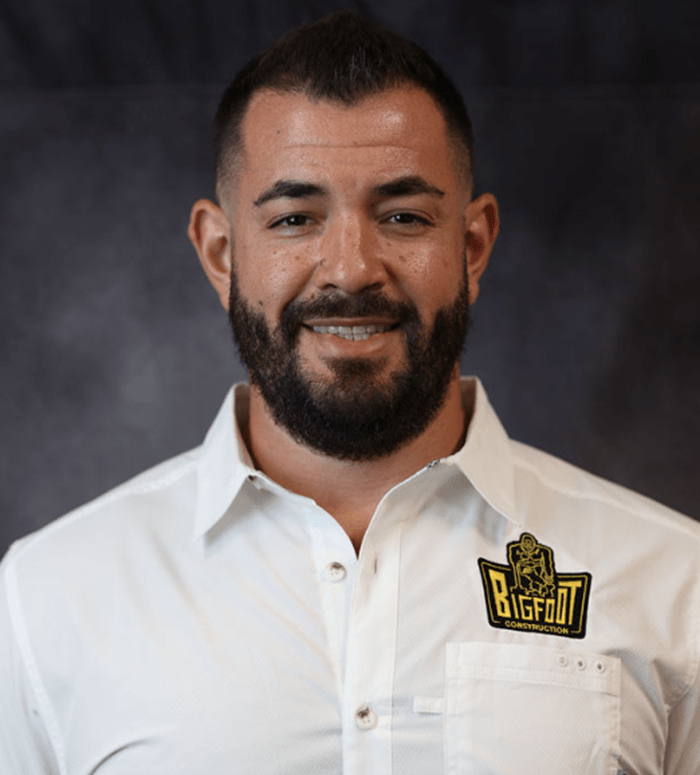
President, Bigfoot Windows & Roofing
Because Bigfoot holds a Certified General Contractor (CGC1531370) license in addition to its Certified Roofing Contractor (CCC1333168) license, we can address structural scope — hurricane strap upgrades, deck structural repairs, or load-path corrections — under one contract and one permit pull. That means a homeowner dealing with storm damage that also affected the roof deck framing does not need to coordinate a second contractor or a second permit process. One scope, one point of accountability.
You can verify Bigfoot’s four active Florida licenses directly through the Florida DBPR license search at myfloridalicense.com. Florida licensed: CGC1531370 · CRC1331693 · CCC1333168 · SCC131153098.
Materials We Install
Roofing Systems We Use — and Why They Satisfy HVHZ Requirements
At Bigfoot, every roofing product we install is specified against its current Miami-Dade or Florida Product Approval before we write a proposal. Here is how our primary systems align with the HVHZ standards this article describes:
- GAF Timberline shingles with LayerLock Technology: eligible for the GAF WindProven Limited Wind Warranty (15-year, no maximum wind speed limit, no named-storm exclusion) when installed with the four required GAF accessories. Our contracts name each accessory explicitly.
- Englert or Metal Alliance standing seam metal panels: roll-formed on-site from 24-gauge Galvalume or aluminum, installed with manufacturer-approved clips carrying a current Miami-Dade NOA. We specify the NOA number on every proposal because the clip approval is what passes inspection — knockoff clips fail.
- Westlake tile systems: Saxony 900 flat concrete and Barcelona barrel are our most common tile installations in Miami-Dade and Broward. Poly-set foam installation reaches 180 mph wind resistance versus 160 mph for mechanical fasteners, and poly set also provides an attic insulation benefit.
If you want to compare local roofing options in Miami-Dade, understanding product approval requirements is the right starting point — not price alone.
Our Process
How Bigfoot Handles the Contract and Permit Process
Here is what the pre-construction sequence looks like when you work with us:
- Free estimate and written proposal: We walk the roof, document current condition, and provide a written itemized proposal that names every product, every approval number, and every warranty term — manufacturer and workmanship.
- Contract execution: Our contract clearly states that Bigfoot pulls the permit, that we coordinate the Notice of Commencement filing, and that no AOB is required from you.
- Permit pull and NOC recording: We apply for the permit and confirm the NOC is recorded before any materials are delivered or work starts.
- Installation and inspection: Work is performed to HVHZ code standards. The final inspection is county-issued, not a self-certification. We do not consider the job closed until the permit is signed off.
If you want to get an early sense of scope and cost before we meet, visit our South Florida roofing pricing guide to understand the ranges and cost drivers.
Ready to review a proposal that covers all five contract requirements?
Request a free roofing estimate
Or call us directly: 786-886-2088
Keep Reading
Related Articles
Who We’re Not the Right Fit For
- Homeowners who need the lowest possible price above all else. Bigfoot’s pricing reflects licensed labor, HVHZ-compliant materials with current NOAs, and a permit-pulled process. If your primary goal is the cheapest bid, we are probably not your contractor — and neither is any contractor who can match an unusually low price on a code-compliant HVHZ job.
- Projects where the homeowner wants to pull their own permit. We do not support owner-builder arrangements on roofing jobs we are contracted to perform. Our process requires us to pull the permit as the licensed contractor of record.
- Homeowners seeking a contractor to work without permits in Miami-Dade or Broward. We do not perform unpermitted roofing work. Every installation we do is permitted, inspected, and closed out by the county.
- Projects that require only a cosmetic patch with no intention of code compliance. If the goal is to cover a leak temporarily without a permit or inspection, that is not a scope we accept — both for legal and liability reasons.
Frequently Asked Questions
How do I verify a roofing contractor is licensed in Florida before I sign a contract?
Go to the Florida DBPR license search at myfloridalicense.com and search by the contractor’s name or license number. Look for an active Certified Roofing Contractor (CCC prefix) or Certified General Contractor (CGC prefix). Also check Miami-Dade County’s contractor licensing portal for a local Certificate of Competency if the job is in Miami-Dade. If the contractor cannot provide a license number, do not sign.
What permits does a roofer need to pull in Miami-Dade County before starting a roof replacement?
In Miami-Dade County, a roofing permit is required for essentially all roof replacements and substantial repairs. The licensed contractor must apply for and receive the permit before work begins. In addition, the homeowner (or contractor on the homeowner’s behalf) must record a Notice of Commencement at the county recorder before any permitted improvement valued at $2,500 or more starts. Skipping either step creates legal and lien exposure.
What is a Notice of Commencement and do I need one for a roof repair in South Florida?
A Notice of Commencement (NOC) is a recorded legal document that protects a homeowner from mechanics’ liens filed by subcontractors or suppliers who were not paid by the general or roofing contractor. Florida law requires it for permitted improvements valued at $2,500 or more. Most roof repairs and all full replacements exceed that threshold. Your roofing contract should explicitly address who records the NOC and when.
What roofing materials are approved for the High Velocity Hurricane Zone in Miami-Dade?
HVHZ roofing materials must carry a current Miami-Dade Notice of Acceptance (NOA) or an HVHZ-rated Florida Product Approval. This applies to shingles, tile, metal panels, underlayment, clips, and accessories. A product with a current Florida Product Approval (FL number) that covers HVHZ use is legal to install in Miami-Dade and Broward. A Miami-Dade NOA is an additional certification some products also carry; it is not required for the permit. Ask your contractor for the specific approval number for each product component and verify it in the Miami-Dade product approval database before signing the contract.
What is the difference between a manufacturer warranty and a workmanship warranty on a new roof?
A manufacturer warranty covers defects in the roofing material itself — it does not cover installation errors. A workmanship warranty is the contractor’s commitment to fix problems caused by how the roof was installed, such as improper flashing or underlayment seams. Both should appear in writing in your contract with explicit durations. A manufacturer warranty alone gives you no recourse if the roofer installs the product incorrectly.
What is an assignment-of-benefits clause and is it legal in Florida roofing contracts?
An assignment-of-benefits (AOB) clause transfers your insurance claim rights to the contractor. Florida Statute 627.7152 allows AOBs in roofing contracts but imposes strict requirements: written notice of rights, a rescission window, and specific disclosure language. AOBs are not required — a reputable contractor should not make signing one a condition of starting work. If a contract includes an AOB clause, review it carefully and consider having an attorney or public adjuster read it first.
Does Florida law require a roofing contractor to provide a written contract before starting work?
Florida law requires written contracts for residential construction projects above a specified dollar threshold, and virtually all roof replacements qualify. Beyond the legal minimum, a written contract is your primary protection: it documents the scope, the license, the permit obligations, the materials, and the warranties. Never allow a roofer to begin work — or deliver materials to your property — based on a verbal agreement alone.
Schedule Your Free Estimate
Ready to get started? Request a free estimate — no phone call required.
Sources
- Florida Department of Business and Professional Regulation (DBPR) — contractor license verification: myfloridalicense.com
- Florida Statute 627.7152 — Assignment of Benefits requirements: flsenate.gov
- Florida Building Code, 8th Edition (2023) — Chapter 15, re-roofing requirements: floridabuilding.org
- Miami-Dade County product approval database: miamidade.gov
- GAF WindProven Limited Wind Warranty terms: gaf.com/en-us/resources/warranties/windproven
- Florida Division of Emergency Management — wind mitigation booklet: floridadisaster.org
Get a roofing proposal that checks all five boxes.
Every Bigfoot proposal includes license numbers, product approval numbers, permit obligations, and warranty terms in writing — before you sign anything.
Request your free roofing estimate
Or call 786-886-2088