
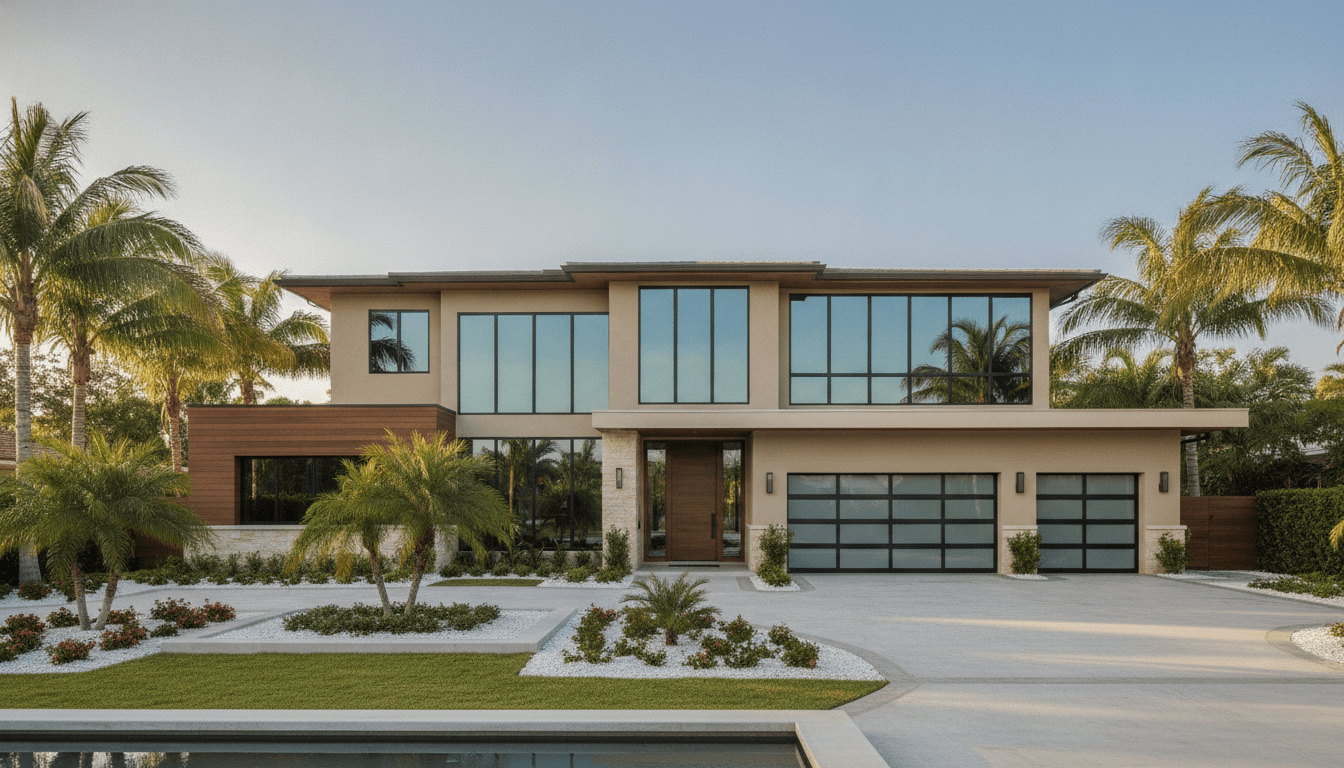
Do Impact Windows Lower Home Insurance In Florida | Bigfoot Windows & Roofing (Miami-Dade)
Updated June 2026
Key Takeaways
- Impact windows can qualify your home for a wind-mitigation discount — often the largest single discount category on a Florida homeowner’s policy.
- Miami-Dade and South Florida are in the High-Velocity Hurricane Zone (HVHZ); products must carry a Miami-Dade NOA or a Florida Product Approval that covers HVHZ use to qualify.
- Discounts vary by insurer and home — get a wind-mitigation inspection after installation to document the savings with your carrier.
- Full-home protection (all openings) typically unlocks the largest discount; partial protection may yield little or no reduction.
- Impact windows are one upgrade; roof shape, age, and other opening protection factors also affect your wind-mitigation credit.
The Problem
Florida Insurance Premiums Are Crushing Homeowners
The average Florida homeowner is paying more than ever — and opening protection is one of the few levers you actually control.
If you own a home in South Florida, you already know: homeowner’s insurance premiums have climbed sharply in recent years. Carriers have exited the state, rates have spiked, and many Miami-Dade and Broward homeowners are paying two to three times what they paid five years ago.
Impact windows come up in nearly every conversation as a way to cut costs. The question is whether the savings are real, how large they actually are, and what the catch is. This article answers all three — honestly, without inflating the numbers.
South Florida Context
Why Miami-Dade Is Different From the Rest of Florida
The HVHZ designation changes what products qualify and how much your insurer will credit you.
Miami-Dade and Broward counties sit inside Florida’s High-Velocity Hurricane Zone (HVHZ) — the most stringent wind-load classification in the Florida Building Code. Products sold and installed here must meet a higher bar than anywhere else in the state. Every impact window or door installed in the HVHZ must carry a Miami-Dade Notice of Acceptance (NOA) or a Florida Product Approval that covers HVHZ use — a product-approval certification that confirms the unit has been tested to HVHZ standards.
This distinction matters for your insurance discount because Florida insurers base wind-mitigation credits partly on the type and quality of opening protection. An impact window with an NOA signals to your carrier — and to the licensed wind-mitigation inspector who documents your home — that your openings meet the highest local standard. Windows whose Florida Product Approval does not cover HVHZ use, and that have no NOA, may not qualify for the full HVHZ credit.
How the Savings Work
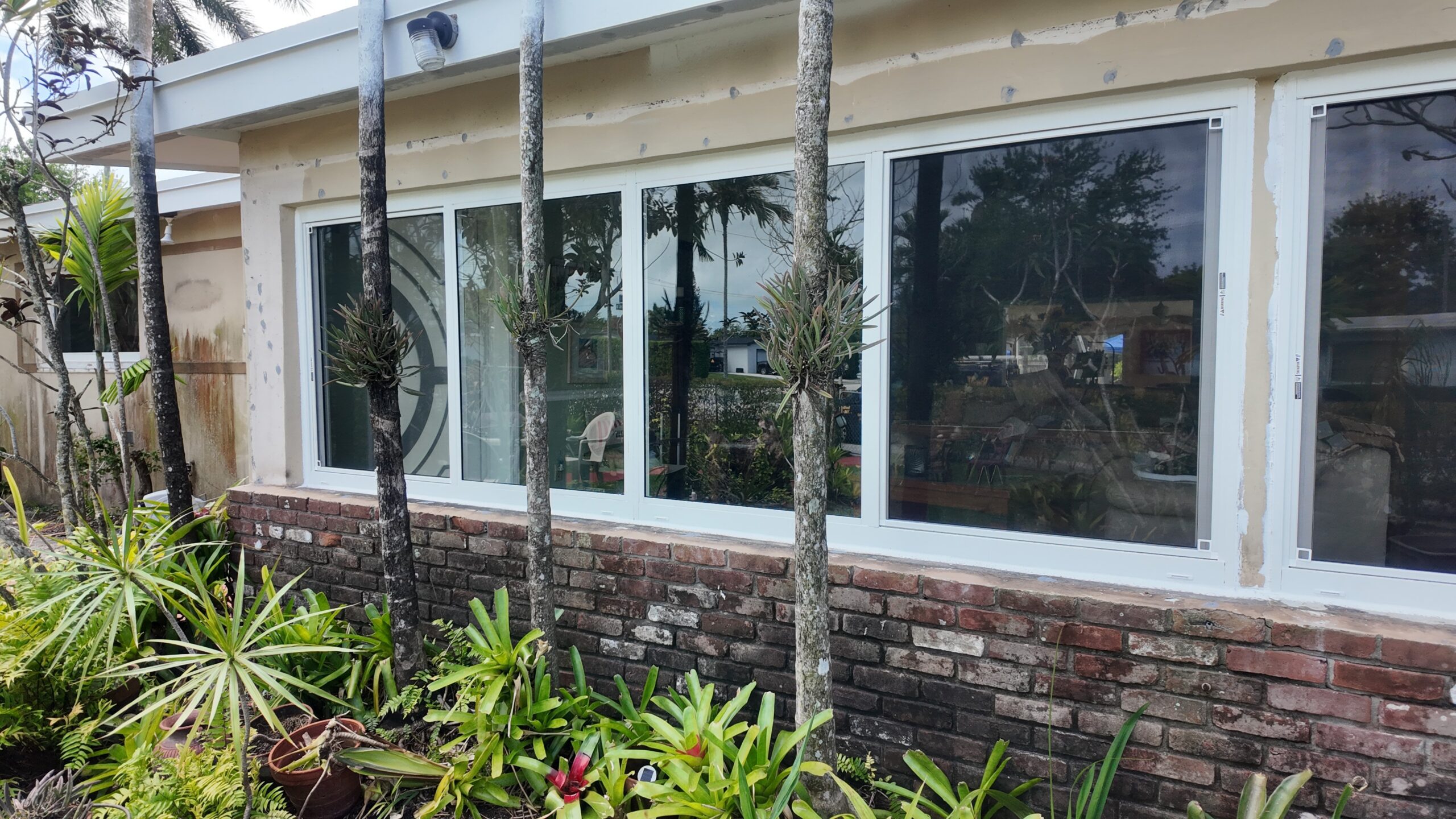
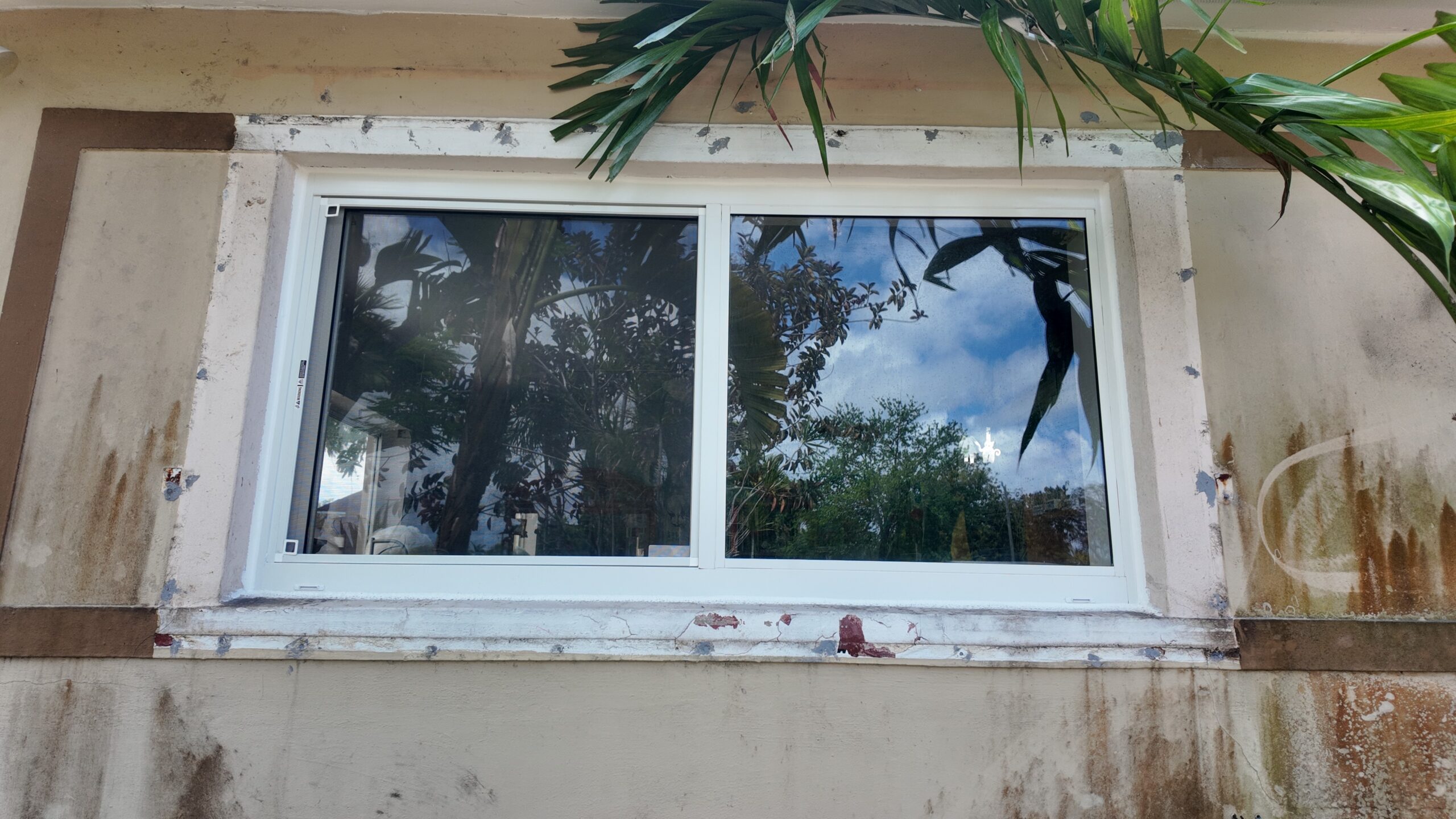
Impact Windows and the Wind-Mitigation Inspection: The Mechanism Behind the Discount
The discount isn’t automatic — it flows through a documented wind-mitigation report filed with your insurer.
Florida law (Florida Statute §627.0629) requires insurers to offer actuarially justified discounts, credits, or rate differentials for construction features that reduce hurricane damage. Opening protection — meaning how well your windows, doors, and garage doors resist wind and wind-borne debris — is one of the most heavily weighted categories in the wind-mitigation rating form (OIR-B1-1802) that inspectors use.
Here is the sequence that connects impact windows to a lower premium:
- You install NOA-compliant impact windows on all or most openings.
- You hire a licensed wind-mitigation inspector (after installation, not before) to inspect and document the protection on the standard Florida form.
- You submit the completed report to your insurer. The insurer applies its own rate tables — which vary by carrier — to calculate your new premium.
- You receive a revised premium notice. The savings appear as a wind-mitigation credit line item.
The inspector’s report is valid for five years. You do not need to repeat it unless you make changes to your openings or your carrier requests an update.
| Opening Protection Rating | Description | Typical Insurer Treatment |
|---|---|---|
| Class A (Highest) | All openings protected with impact-rated glazing meeting HVHZ / Miami-Dade NOA | Largest wind-mitigation credit — varies by carrier |
| Class B | All openings protected with non-impact but code-compliant shutters or panels | Moderate credit — less than Class A in most cases |
| Class C / Mixed | Some openings protected, some not | Partial or no credit — insurer-dependent |
| No Protection (X) | No rated opening protection | No wind-mitigation opening credit |
Note: The specific credit percentages are set by each insurer’s rate filing and can change. The table above reflects the general hierarchy — not a guaranteed dollar amount. Request a quote from your carrier before assuming a specific savings figure.
For impact window installation on your home, the key principle is full-home coverage. If even one large opening — say, a set of sliding glass doors or a garage door — lacks rated protection, most insurers will not award the top-tier discount. Impact windows on all your wall openings, paired with an impact-rated or otherwise protected garage door, is the combination that typically unlocks the maximum credit.
Impact Windows vs. Shutters
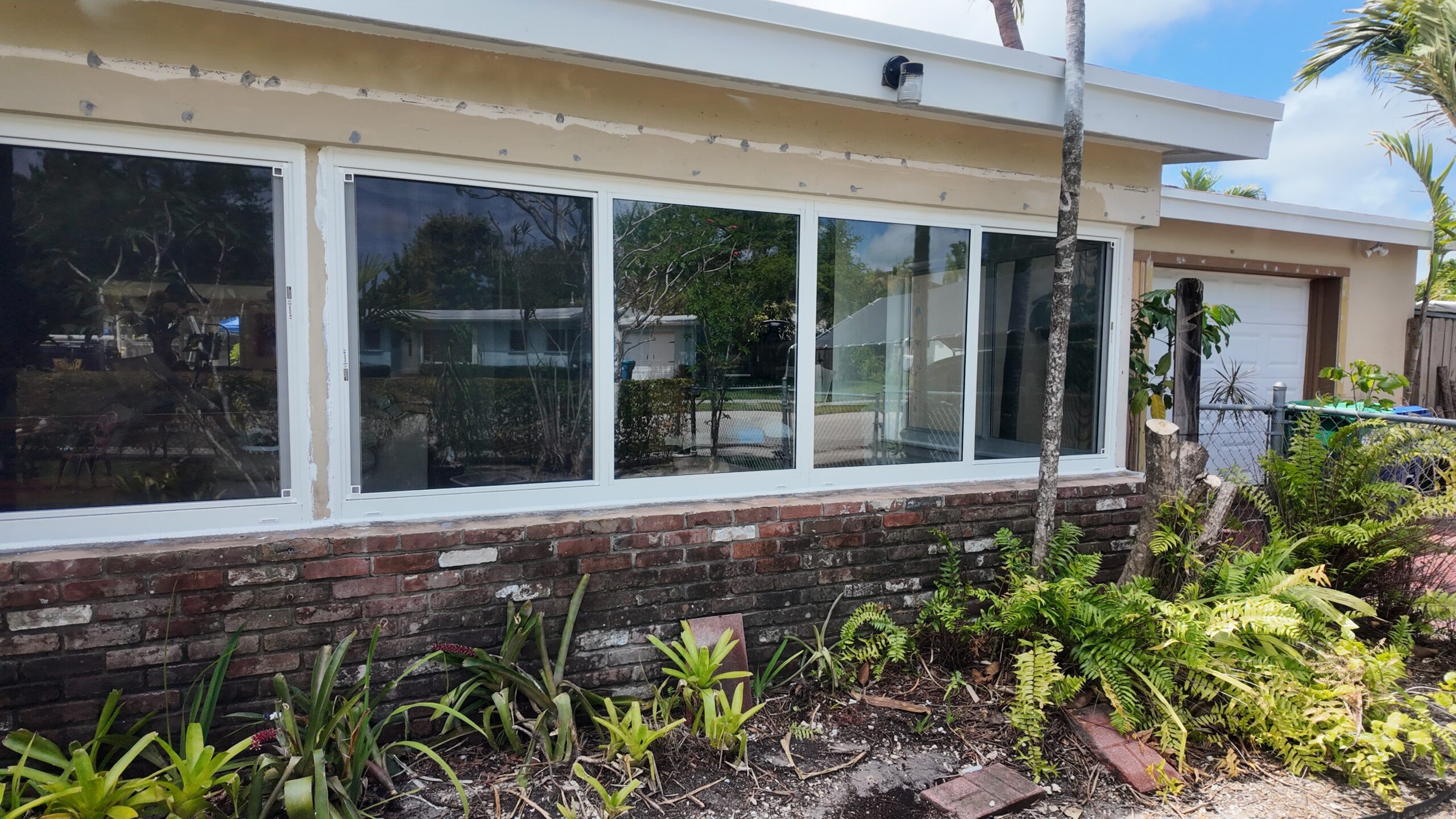
Which Option Earns a Bigger Insurance Credit — and What Else Changes?
Both impact windows and accordion shutters can qualify for wind-mitigation credits. Here is how they compare across the factors that matter to homeowners.
| Factor | Accordion / Panel Shutters | Impact Windows (NOA-rated) |
|---|---|---|
| Insurance credit eligibility | Yes — Class B in many filings | Yes — Class A in many filings |
| Deployment required before storm | Yes — you must deploy before impact | No — protection is permanent |
| Day-to-day livability | Reduced light when deployed; stored otherwise | No change — normal windows year-round |
| Noise and UV reduction | Minimal (shutters add no glazing benefit) | Significant — laminated glass reduces both |
| Upfront cost | Lower for shutters alone | Higher — but no separate shutter maintenance |
| Miami-Dade / HVHZ compliance | A Miami-Dade NOA or a Florida Product Approval that covers HVHZ use is required for shutters too | A Miami-Dade NOA or a Florida Product Approval that covers HVHZ use is required — same standard |
| Long-term property value | Modest lift | Generally stronger lift at resale |
When shutters are the better fit: If your budget is tight and you primarily want to satisfy the insurer’s opening-protection requirement at the lowest upfront cost, accordion shutters rated to HVHZ standards can achieve a meaningful wind-mitigation credit. They are a legitimate option — Bigfoot simply recommends knowing the full picture before deciding.
When impact windows make more sense: If you want permanent, deployment-free protection, noise reduction, UV control, and the strongest long-term property-value case, impact windows are typically the stronger investment — especially for full-time South Florida residents who are home when storms approach.
Why It Matters Who Installs Them
A Licensed Contractor — Not Just a Window Dealer
Florida-licensed. DBPR-verified. Not a lead aggregator passing your project to an unknown sub.
Installation quality directly affects whether your wind-mitigation inspector can certify your openings. An impact window that is improperly flashed, incorrectly anchored, or installed without the required Miami-Dade NOA or a Florida Product Approval that covers HVHZ use will not pass inspection — and your insurer will not issue the credit. The installation contractor’s license and workmanship are part of the chain of documentation.
Because Bigfoot holds a Certified General Contractor license (CGC1531370) in addition to a Certified Specialty Contractor with a Glass & Glazing Specialty (SCC131153098), we can also address structural modifications that sometimes arise during a full window or door replacement — like load-bearing header work, hurricane strap corrections, or code-driven framing changes — without bringing in a separate contractor. That means one permit, one point of accountability, and no gaps between trades.
“Homeowners ask me all the time if impact windows will lower their insurance. The honest answer: yes, often significantly — but only if the product has the right NOA or Florida Product Approval, covers all your openings, and is installed correctly so the wind-mitigation inspector can document it. That’s the part a lot of dealers skip explaining.”
President, Bigfoot Windows & Roofing
What We Install
Aluminum Impact Windows Built for South Florida Conditions
Bigfoot represents Mr. Glass and ES Windows — aluminum-frame impact products tested and approved for HVHZ use.
Bigfoot’s preferred and represented manufacturers are Mr. Glass and ES Windows. Both offer aluminum-frame impact window lines that carry Miami-Dade Notices of Acceptance — a prerequisite for HVHZ installation and for qualifying for the highest tier of wind-mitigation credit.
We prefer aluminum frames for South Florida installations. Aluminum has a decades-long track record in Florida’s heat, humidity, salt air, and UV environment. Thermally broken aluminum frames add a thermal barrier that reduces heat transfer — relevant to both comfort and energy efficiency in a coastal climate where air conditioning runs year-round. National marketing materials sometimes position vinyl as the energy-efficient default, but vinyl’s real-world performance in South Florida’s UV and heat load is a different question than its performance in a northern climate. We recommend aluminum for long-term durability in this specific market.
If energy efficiency is a priority, ask about thermally broken aluminum impact windows — they are ENERGY STAR eligible under Florida’s climate zone criteria and can be relevant to separate energy-efficiency programs your utility or insurer may offer.
The Process
From Estimate to Wind-Mitigation Report: What to Expect
- Free estimate and opening audit. We measure every opening, confirm which carry existing rated protection, and identify what needs to be replaced or added to achieve full-home coverage.
- Product selection and Miami-Dade NOA verification. We confirm the selected product’s NOA prior to ordering — not after installation.
- Permit pulled before work begins. Miami-Dade and Broward require permits for impact window replacement. We pull the permit; homeowners should never allow a contractor to proceed without one.
- Installation by licensed crew. Proper anchoring, flashing, and sealant per the product’s approved installation drawing — the inspector will check this.
- County inspection and permit close-out. The building department inspection is separate from the wind-mitigation inspection. Both must be completed.
- Wind-mitigation inspection (you hire a licensed inspector). After permit close-out, hire a licensed wind-mitigation inspector to produce the OIR-B1-1802 form. Submit it to your insurer.
For impact door replacement alongside windows, the same permit and inspection process applies — and combining both in one project can reduce permitting time and disruption.
Ready to find out what your home qualifies for? Get a written estimate — no pressure, no obligation.
Or call Bigfoot Windows & Roofing directly: 786-886-2088
Keep Reading
Related Articles
Who We’re Not the Right Fit For
- Budget-first shoppers seeking the absolute lowest installed price. Bigfoot is not the cheapest option in Miami-Dade. If your only criterion is lowest bid, an unlicensed or minimally licensed installer may underbid us — at a risk to permit compliance and wind-mitigation documentation that you will absorb, not them.
- Homeowners who only want to replace one or two windows. We are set up for full-home or substantial partial projects. Very small single-opening replacements may not be the right scope for our crew and permitting workflow.
- Projects requiring electrical, plumbing, HVAC, or pool work. Our four licenses cover general contracting, residential contracting, roofing, and glass & glazing. We do not hold electrical, plumbing, mechanical, or pool contractor licenses — those trades require their own licensed contractor.
- Homeowners expecting guaranteed specific insurance savings before installation. We can explain how the wind-mitigation process works and what the documentation looks like. We cannot promise a specific dollar discount — that is your insurer’s determination after they receive the inspector’s report.
Frequently Asked Questions
Do impact windows actually lower home insurance in Florida?
Yes — impact windows can qualify your home for a wind-mitigation credit on your Florida homeowner’s policy. The credit is applied after a licensed wind-mitigation inspector documents your opening protection on the state-standard OIR-B1-1802 form and you submit it to your carrier. The specific discount amount varies by insurer and policy.
How much can I expect to save on insurance with impact windows?
There is no universal number — discounts vary significantly by insurer, policy structure, home age, and current opening-protection rating. The wind-mitigation credit for full opening protection can be substantial, but the only accurate figure for your home is the quote your carrier provides after reviewing a completed wind-mitigation report. Anyone who quotes you a specific savings dollar amount before inspection is estimating.
Do I need Miami-Dade NOA-rated windows to get the insurance discount in South Florida?
If your home is in the High-Velocity Hurricane Zone (Miami-Dade or Broward), not necessarily an NOA — products must carry a Miami-Dade NOA or a Florida Product Approval that covers HVHZ use to meet Florida Building Code requirements for installation. Insurers and wind-mitigation inspectors will look for HVHZ-compliant product approval. A product without an NOA may not qualify your home for the top-tier opening-protection credit.
Do I need to protect every opening to get the maximum discount?
In most cases, yes. The wind-mitigation form rates opening protection across all openings. If any significant opening — windows, doors, garage doors — lacks rated protection, inspectors typically assign a lower protection class for the entire home. Most insurers reserve their largest credits for homes with complete opening protection on all openings.
What happens after the windows are installed — how do I actually get the discount?
After installation and permit close-out, hire a licensed wind-mitigation inspector to inspect your home and produce the OIR-B1-1802 form. Submit the completed report to your insurance carrier. The carrier applies their rate tables and issues a revised premium. The report is typically valid for five years. Bigfoot does not conduct wind-mitigation inspections — that must be an independent, licensed inspector.
Are impact windows better than accordion shutters for insurance purposes?
Impact windows generally qualify for a higher opening-protection class (Class A) than accordion shutters (often Class B) in Florida’s wind-mitigation rating system, which can mean a larger insurance credit. Beyond insurance, impact windows provide permanent protection without deployment. Shutters can still earn meaningful credits and are a legitimate lower-upfront-cost option — the right choice depends on your budget and priorities.
Does Bigfoot pull permits for impact window installation in Miami-Dade?
Yes. Permits are required for impact window replacement in Miami-Dade and Broward counties under the Florida Building Code. Bigfoot pulls the permit before work begins. Never allow a contractor to start impact window installation without an active permit — unpermitted work can create serious problems at resale and will not support a wind-mitigation inspection.
Sources
- Florida Statute §627.0629 — Residential property insurance; wind mitigation; discounts, credits, and other rate differentials.
- Florida OIR Wind Mitigation Uniform Mitigation Verification Inspection Form OIR-B1-1802.
- Miami-Dade County Product Control — Notice of Acceptance (NOA) program: miamidade.gov/building.
- Florida Building Code, 8th Edition — Chapter 16, High-Velocity Hurricane Zone provisions.
- ENERGY STAR Certified Windows, Doors & Skylights — Florida climate zone criteria: energystar.gov.
Get a written estimate on impact windows for your South Florida home — transparent pricing, licensed installation, and full HVHZ compliance.
Questions first? Call 786-886-2088 — no obligation.
Related Articles
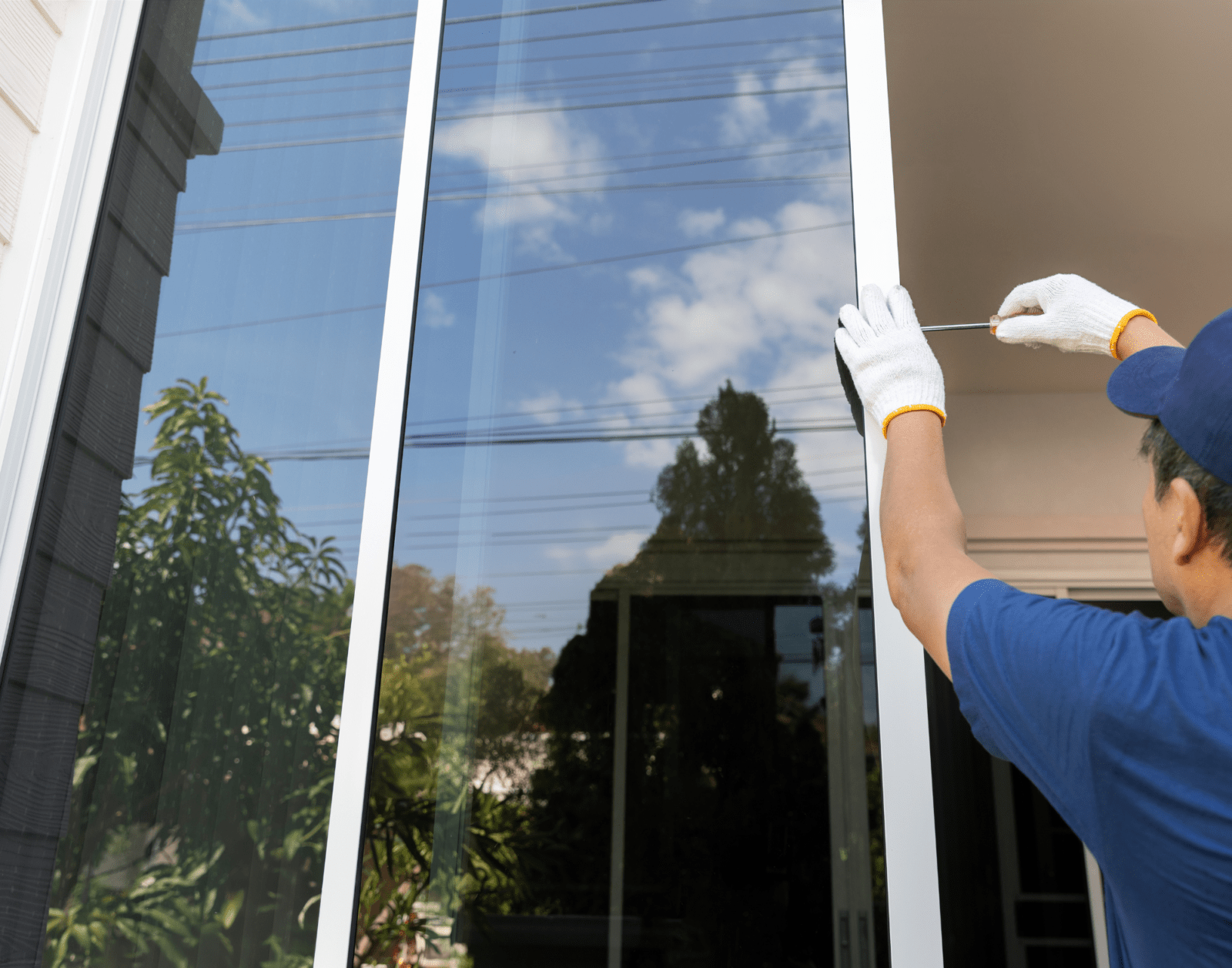 PG Window Ratings Explained: How to Choose the Right Hurricane Impact Windows for Your South Florida Home
 Energy Efficiency in Florida Homes: How Impact Windows Lower Your Bills
 Are Impact Windows Required in Florida? A 2026 Guide for Miami Homeowners
 Impact Windows Cost in Florida 2026: Complete Pricing Guide