
Impact Windows in Miami: Hurricane Protection, Energy Savings, and What South Florida Homeowners Actually Need to Know
Updated May 2026
If you own a home in Miami or anywhere in South Florida, impact windows are one of the most consequential upgrades you will ever make. They change how your home survives a hurricane, how it handles summer heat, and how it holds up to the daily punishment of a coastal climate. They also come with a procurement process that rewards well-informed buyers and quietly punishes those who skip the research.
This guide covers the fundamentals: how impact windows protect against hurricanes, what Florida product approvals actually mean, realistic expectations for energy savings, what frame materials perform best in South Florida conditions, and how to evaluate installers before signing anything. We will keep the claims honest — no marketing exaggeration — so you can make a decision that protects your home and your investment for decades.
Call 786-886-2088 or request your estimate online — Bigfoot Windows & Roofing serves Miami-Dade, Broward, and Palm Beach counties.
How Impact Windows Actually Stop Hurricanes
Standard windows fail during hurricanes in two ways: direct impact from debris and pressure failure from the sustained wind loads a storm generates around the envelope of a building. Impact windows address both problems simultaneously.
The core protection comes from a laminated glass assembly. Two panes of tempered or heat-strengthened glass are bonded together with an interlayer — typically polyvinyl butyral (PVB) or SGP (SentryGlas Plus). When struck by debris, the glass may crack or spider, but the interlayer prevents shattering. The window opening stays sealed. That seal matters enormously during a storm: an open window or door allows wind pressure to build inside the structure, which is one of the primary mechanisms for roof failure.
The second component is the frame and installation system. A properly installed impact window is anchored to the structural buck with approved fasteners at intervals specified in the product’s approval documentation. The frame must transfer wind loads into the building structure without pulling out or deflecting beyond the tested design limits.
Design pressure (DP) rating is the number you want to understand. It describes the maximum positive or negative pressure load the product can sustain while remaining operable and maintaining weather resistance. A DP-50 rating means the window can handle 50 lbs per square foot of wind pressure load. In coastal Miami-Dade, the High Velocity Hurricane Zone (HVHZ) requires higher DP ratings than inland areas. Large openings in exposed locations require higher-rated products than protected interior windows.
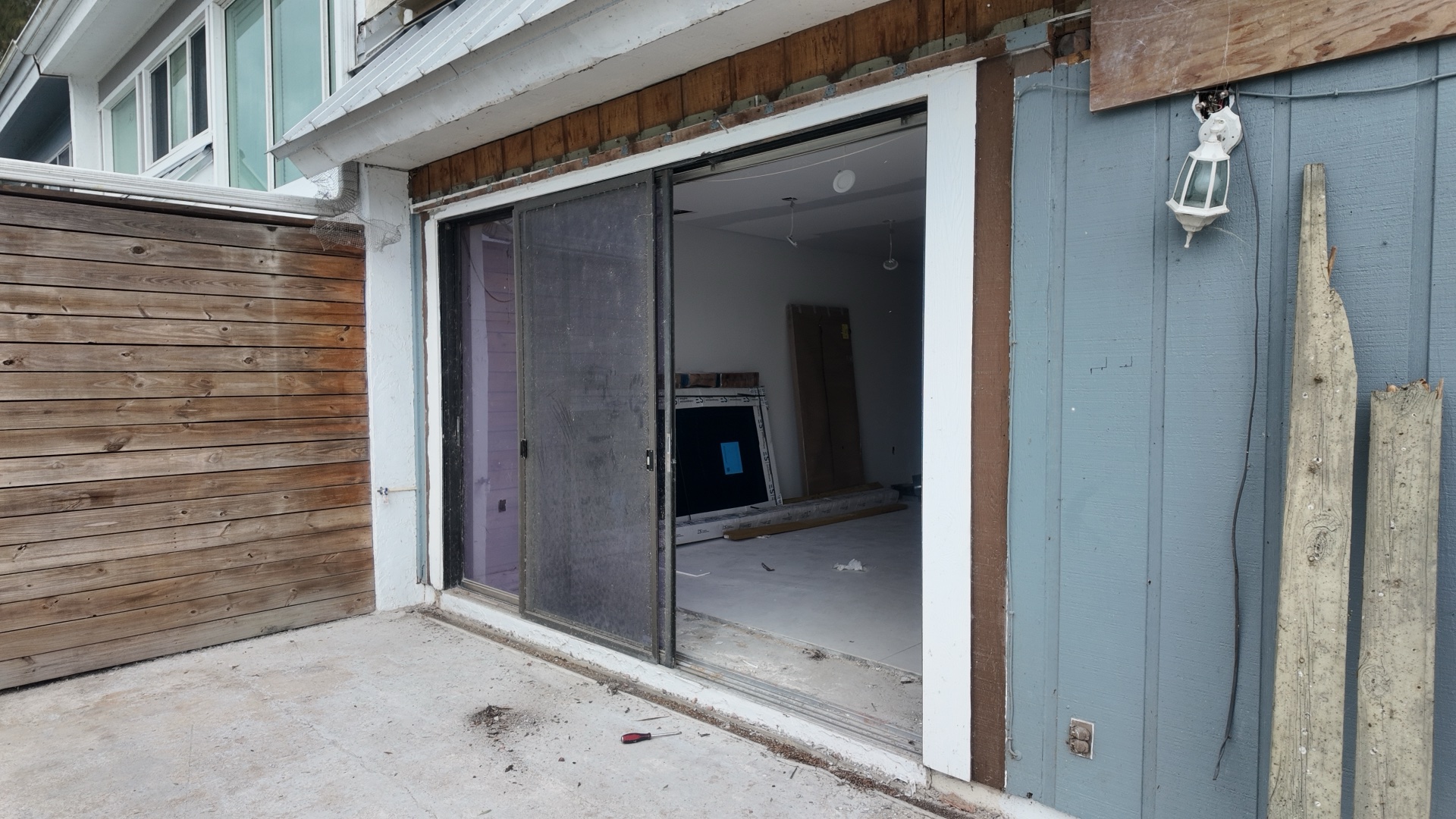
Opening protection matters at a system level, not just window by window. Every opening in your home’s envelope — windows, exterior doors, sliding glass doors, garage doors — must be protected for the structure to perform as designed. A single unprotected opening can compromise the entire pressure management system of the house.
Miami-Dade Product Approvals, NOA, and the HVHZ — What They Mean for Your Purchase
Florida has the most rigorous impact window approval process in the United States, driven largely by the catastrophic losses from Hurricane Andrew in 1992. Miami-Dade County sits in the High Velocity Hurricane Zone, which imposes additional testing requirements beyond the Florida Building Code baseline.
A Notice of Acceptance (NOA) is the document issued by Miami-Dade County’s Product Control Division after a window or door system successfully completes all required testing. The NOA specifies exactly what was tested: the product dimensions, frame depth, glass type, installation method, and hardware. An NOA issued for a specific product in a specific size range does not automatically apply to larger or differently-configured units.
When reviewing an NOA for a product being considered for your home, verify three things. First, confirm the NOA is current and has not expired. Second, confirm the specific configuration (size, glass type, frame depth) matches what is being proposed for your project. Third, confirm the installation instructions in the NOA match what your installer intends to do — fastener type, spacing, substrate, and sealant requirements.
Florida Product Approval (FL number) is the statewide system administered by the Florida Building Commission. It covers regions outside the HVHZ. In Miami-Dade, the NOA is the controlling document. Some projects require both. Your permit set should reference the applicable NOA or FL number for each product being installed.
The HVHZ does not just affect which products can be used — it affects the entire inspection and permitting workflow. Miami-Dade requires a separate threshold inspection for structural elements in many cases, and window/door projects require full permit documentation including the NOA reference, installer license numbers, and product specifications before a permit is issued.
What Impact Windows Can and Cannot Do for Energy Efficiency
Impact windows improve energy performance in a real but bounded way. Understanding the mechanism helps set realistic expectations.
Single-pane clear glass — still common in older South Florida homes — transmits radiant heat almost completely. Standard insulating glass (IGU) improves on this significantly. Impact glass with a low-emissivity (low-E) coating goes further by reflecting a portion of infrared radiation before it enters the home. In South Florida’s cooling-dominated climate, this primarily reduces the amount of solar heat gain that your air conditioning must overcome.
The specific improvement depends on the existing condition. Replacing single-pane jalousie windows with impact units featuring a low-E coating can produce meaningful utility savings over time. Replacing existing double-pane insulated windows that are already in good condition will produce a much smaller incremental improvement in energy performance.
Frame material also plays a role. Aluminum conducts heat, which is why thermally broken aluminum frames were developed. A thermal break is a non-conductive barrier (typically polyamide) inserted between the interior and exterior sections of an aluminum frame, reducing heat conduction through the frame itself. In South Florida, where cooling loads dominate and winter heating is minimal, the practical benefit of thermally broken frames is present but more modest than in colder climates. If energy efficiency is a priority, verify whether a proposed aluminum window system uses a thermally broken frame.
Infiltration control is a secondary energy benefit of impact window replacement. Older windows often have degraded seals and weatherstripping that allow conditioned air to escape and humid outdoor air to infiltrate. New impact windows with fresh seals can reduce this infiltration meaningfully. This also helps with indoor humidity control, which matters for comfort and mold risk in South Florida.
Honest summary: impact windows are primarily a structural and safety product. The energy savings they produce are real, variable, and should be considered an additional benefit rather than the primary return on investment calculation.
Frame Materials in South Florida: Why Aluminum Dominates
South Florida’s climate is exceptionally demanding for window frames. Salt air, sustained UV exposure, tropical rain cycles, and hurricane wind loads create conditions that expose weaknesses in frame materials over time. Aluminum has been the dominant frame choice in South Florida for decades, and that track record has real meaning.
Aluminum does not rot, warp, or absorb moisture. It maintains dimensional stability in extreme heat. It accepts the high-strength glazing bead and fastener configurations required for HVHZ-rated impact products. Salt does affect aluminum over time — oxidation and surface pitting occur without proper maintenance — but the structural and sealant systems are not compromised the way they would be in materials that swell or deform.
Vinyl frames have expanded in the national market largely on the basis of lower cost and easier maintenance. In South Florida, vinyl’s thermal expansion and contraction behavior is a real concern. The temperature cycling in a south-facing exposure, where surface temperatures can exceed 160°F in direct summer sun, stresses vinyl frames in ways that aluminum handles more predictably. For HVHZ applications, the highest-rated large-format products tend to be aluminum-framed.
Fiberglass frames offer excellent thermal performance and dimensional stability and have a growing presence in the market. They remain more expensive than aluminum or vinyl, and the product selection for HVHZ-approved configurations is narrower.
For most South Florida impact window replacements, aluminum is the practical first choice. If energy efficiency at the frame level is a specific priority and the project allows for the additional cost, thermally broken aluminum is worth evaluating. Your contractor should be able to provide the specific frame specifications and NOA documentation for whatever product is being proposed.
Manufacturers Worth Knowing: Mr. Glass and ES Windows
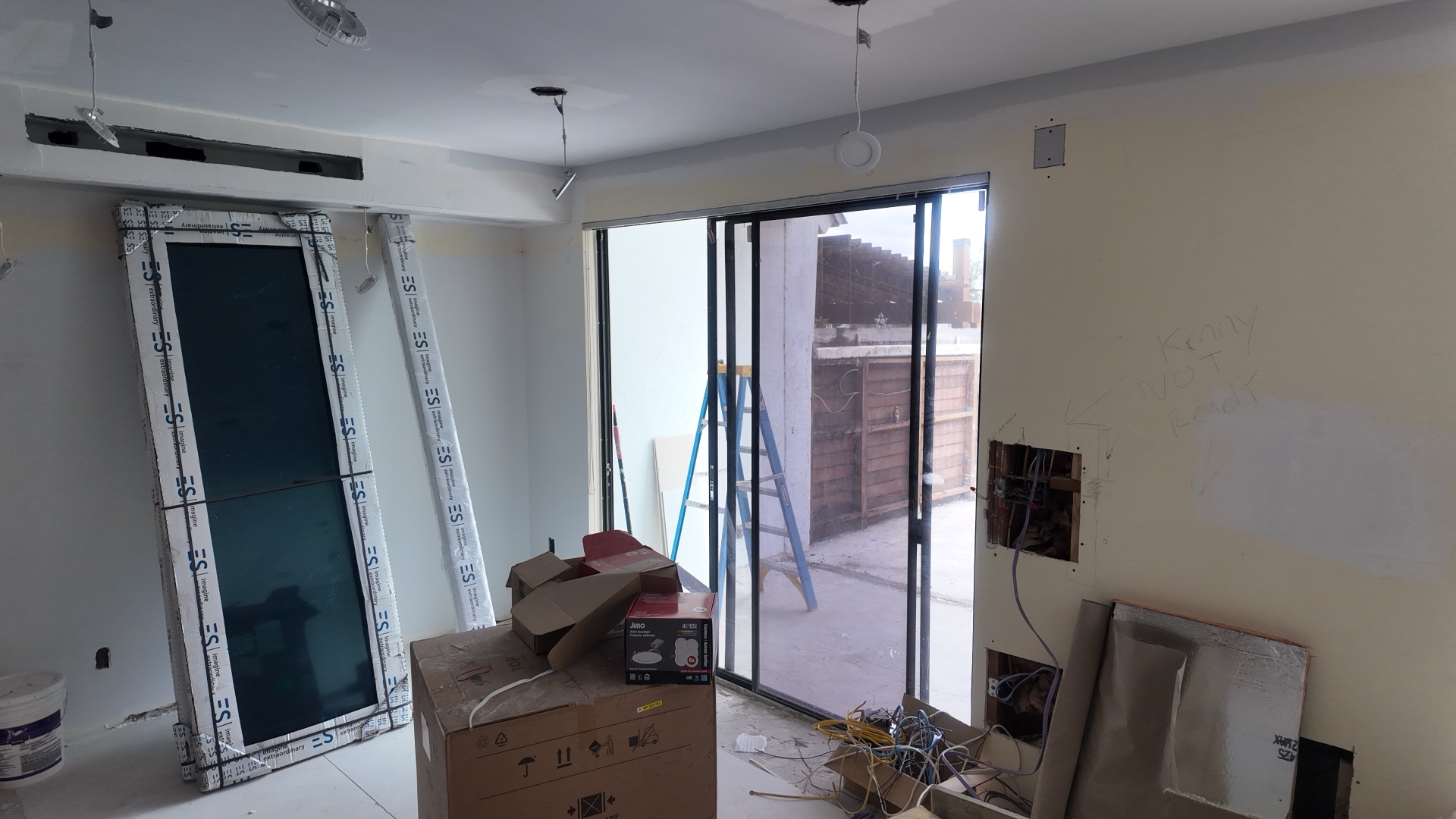
The South Florida impact window market includes dozens of manufacturers with varying levels of local presence, product support, and approval depth. Two manufacturers that Bigfoot Windows & Roofing works with regularly and trusts for residential projects are Mr. Glass and ES Windows.
ES Windows is a Colombian manufacturer with a strong distribution presence in South Florida and an extensive Miami-Dade NOA portfolio. Their aluminum-framed impact window and door systems have been installed in South Florida residential projects at scale for many years. ES Windows products are widely specified by experienced local contractors for their combination of compliance depth and competitive pricing within the aluminum segment.
Mr. Glass is a South Florida-focused manufacturer and fabricator with deep roots in the local market. Their products are designed specifically for South Florida conditions, and their local presence means parts, technical support, and warranty service are accessible. For custom configurations and high-design applications, Mr. Glass offers fabrication flexibility that national manufacturers sometimes do not match.
This is not an exhaustive list of quality manufacturers in the market. PGT, CGI, WinDoor, Eco Window Systems, and others produce quality HVHZ-rated products. Bigfoot’s preference for Mr. Glass and ES Windows reflects our experience with their specific products in South Florida installations — not a claim that other manufacturers’ products are inferior. The most important things to verify about any manufacturer in your project are the current NOA or FL approval status, the specific product configuration’s tested dimensions, and the installer’s familiarity with that manufacturer’s installation requirements.
Permitting, Inspection, and Why Installation Quality Is the Deciding Variable
A Florida-licensed contractor with the correct license type must obtain the permit for your impact window installation. In Miami-Dade, this is a building permit that includes the structural documentation, product NOA references, and contractor license numbers. The permit is not optional, and work without permits exposes you to consequences ranging from stop-work orders to mandatory demolition and reinstallation when the property is sold.
The inspection process exists because impact window installation quality is not visible from the outside once the work is complete. Inspectors verify that fastener spacing, frame anchorage, perimeter sealing, and product placement match the approved NOA installation instructions and permit documents. A window installed with the wrong fasteners at the wrong spacing may look identical to a properly installed unit but may not perform as tested during a hurricane.
What installation quality means in practice: the rough opening is correctly prepared and free of rot or structural damage before the new unit is set. The frame is anchored to the structural buck (not just the stucco or drywall finish) at the specified intervals. The perimeter is sealed with compatible, approved sealant. The unit is properly shimmed and plumb. Interior trim and finishing are addressed after the structural and sealing work is inspected and approved.
Before hiring any impact window contractor, verify three things: their Florida contractor license is active and covers the work being performed, they are current on liability and workers’ compensation insurance, and they are pulling a permit for your specific job. A contractor who proposes to do the work “permit free” to save you time or money is exposing you to liability and leaving you with no inspection-verified documentation that the work meets the code.
| Frame Material | Salt/Humidity | Thermal Expansion | HVHZ Product Range | Typical First Cost |
|---|---|---|---|---|
| Aluminum | Very good (oxidizes but structurally stable) | Low; highly predictable | Widest — most HVHZ NOAs | Mid range |
| Thermally Broken Aluminum | Very good | Low | Good — growing HVHZ approvals | Mid-high |
| Vinyl | Good (no oxidation) | High; concerning in extreme heat | Narrower — fewer HVHZ approvals at large size | Low-mid |
| Fiberglass | Excellent | Very low | Narrower — fewer HVHZ configurations | High |
What to Expect When You Get Quotes
Impact window quotes vary widely in South Florida, and the variance is not always explained by product quality differences. Understanding the main cost drivers helps you evaluate proposals more accurately.
Glass specification is the primary driver of unit cost. Low-E coatings add cost over clear glass and improve energy performance. Laminate interlayer thickness and type (PVB vs. SGP) affect both performance and cost. For HVHZ applications, the minimum glass specifications are set by code; above-minimum choices represent genuine performance and durability upgrades rather than upsell for its own sake.
Opening size and quantity drive labor cost. Larger openings require more crew and more time. Unusual opening shapes — arched, circular, angled sill — require custom fabrication and increase both material and labor cost. Homes with many small openings often cost more per opening to replace than homes with fewer, larger units because of setup and logistics time.
Building type affects installation complexity. CBS (concrete block stucco) construction — the most common residential building type in Miami-Dade — requires a different rough opening prep and anchoring approach than wood-frame construction. High-rise or mid-rise buildings require different equipment, insurance levels, and permitting than single-family homes.
Permit costs in Miami-Dade are real and should be included in any legitimate proposal. If a proposal omits permitting, ask specifically what the permit cost will be and who is responsible for obtaining it. A proposal with no mention of permits is a yellow flag.
Bigfoot Windows & Roofing provides transparent, no-pressure estimates with full product, permit, and installation cost breakdowns. Serving Miami-Dade, Broward, and Palm Beach.
Frequently Asked Questions: Impact Windows in Miami
Do I have to use impact windows in Miami, or can I use accordion shutters instead?
Florida Building Code allows multiple options for opening protection in single-family homes: impact-rated windows, accordions shutters, storm panels, and in some cases plywood. Miami-Dade’s HVHZ rules are more specific about product performance requirements, but the code does not require impact windows over shutters for most residential applications. The practical difference is convenience: impact windows are passive and always in place, while shutters require activation before each storm. Many homeowners in older homes choose impact windows partly to eliminate the effort of shutter deployment.
Can impact windows really lower my insurance premium in Florida?
Many Florida homeowners insurance carriers offer discounts for homes with full opening protection — meaning all exterior openings, not just some windows. The specific discount amount varies by carrier and policy, and the documentation requirements typically include a completed wind mitigation inspection (OIR-B1-1802 form) completed by a licensed inspector. If you are having impact windows installed to qualify for an insurance discount, verify with your carrier before and after the project what documentation they require. The inspection must be current and document the specific protection method on your property.
What is an NOA and do I need one for my specific windows?
A Notice of Acceptance (NOA) is issued by Miami-Dade County’s Product Control Division after a window or door system completes required testing. In the HVHZ (which covers Miami-Dade and Broward counties), any product used for opening protection must have an active NOA or Florida Product Approval. Your contractor should provide the NOA number for each product being installed, and the permit documentation should reference it. If a contractor cannot produce the NOA number for a product being proposed, that is a red flag — it may mean the product is not approved for your jurisdiction or that the contractor does not routinely verify approvals.
How long does a typical impact window installation take for a single-family home?
A typical single-family home in Miami-Dade (approximately 8–15 openings) can usually be completed in one to three days of installation labor, depending on opening count, building type, and crew size. Permitting timelines add variable time before installation can begin — typically two to six weeks in Miami-Dade depending on current permit backlog, complexity of the project, and whether the contractor’s documentation is complete on first submission. Total project timeline from signed contract to final inspection is commonly six to twelve weeks, though projects during active hurricane season or after major storms may take longer due to demand.
What does DP-50 mean, and what rating do I need for my home?
Design Pressure (DP) rating measures how much wind pressure load a window system can sustain in testing without failure. DP-50 means 50 lbs per square foot. Higher ratings indicate the product has been tested to higher wind loads. The minimum DP rating required for your specific openings depends on your building’s exposure category, window dimensions, and location within the building envelope — factors calculated during the permit review. Coastal Miami-Dade locations typically require higher DP ratings than more sheltered inland locations. Your contractor should be able to show you the DP calculation for each opening in your project, and the proposed products should meet or exceed those minimums.
Is it worth buying impact windows before hurricane season?
The practical answer is yes, but with caveats. Demand for impact windows increases significantly after named storms or during active seasons, which means longer lead times from manufacturers and potentially longer permit timelines when inspectors are busy. Starting a project in the off-season (November through March) typically gives you more contractor scheduling flexibility and faster permit processing. That said, hurricane season begins June 1, and some protection is better than none. If you begin a project in April or May, work with your contractor on a realistic completion timeline and have a backup plan for any openings that are not complete if an early-season storm threatens.
Related Reading
Sources
- Miami-Dade County Product Control Division — Notice of Acceptance (NOA) database. productcontrol.miamidade.gov
- Florida Building Commission — Florida Product Approval database. floridabuilding.org
- Florida Building Code, 8th Edition — Section 1609 (Wind Loads) and Chapter 14 (Exterior Walls/Openings)
- Florida Office of Insurance Regulation — Uniform Mitigation Verification Inspection Form OIR-B1-1802
- ASCE 7-22 — Minimum Design Loads and Associated Criteria for Buildings and Other Structures (wind load methodology)
- Florida Department of Business and Professional Regulation — contractor license verification. myfloridalicense.com
Bigfoot Windows & Roofing | Licensed in Florida | CGC1531370 | CCC1333168 | SCC131153098 | CRC1331693 | Call 786-886-2088