
Miami-Dade Roofing Guide
Miami-Dade Roofing Contractors: What Every South Florida Homeowner Needs to Know
Hiring a roofing contractor in Miami-Dade County is more complex than it is anywhere else in the United States. Your roof must be engineered for 175+ mph sustained winds, installed to HVHZ-specific code requirements, and permitted through one of the most stringent building departments in the country. One shortcut — unlicensed labor, wrong materials, a skipped permit — can void your insurance coverage, delay a sale, or leave your home exposed in the next storm. This guide explains exactly how to evaluate a roofing contractor in Miami-Dade so you make the right decision from the first call.
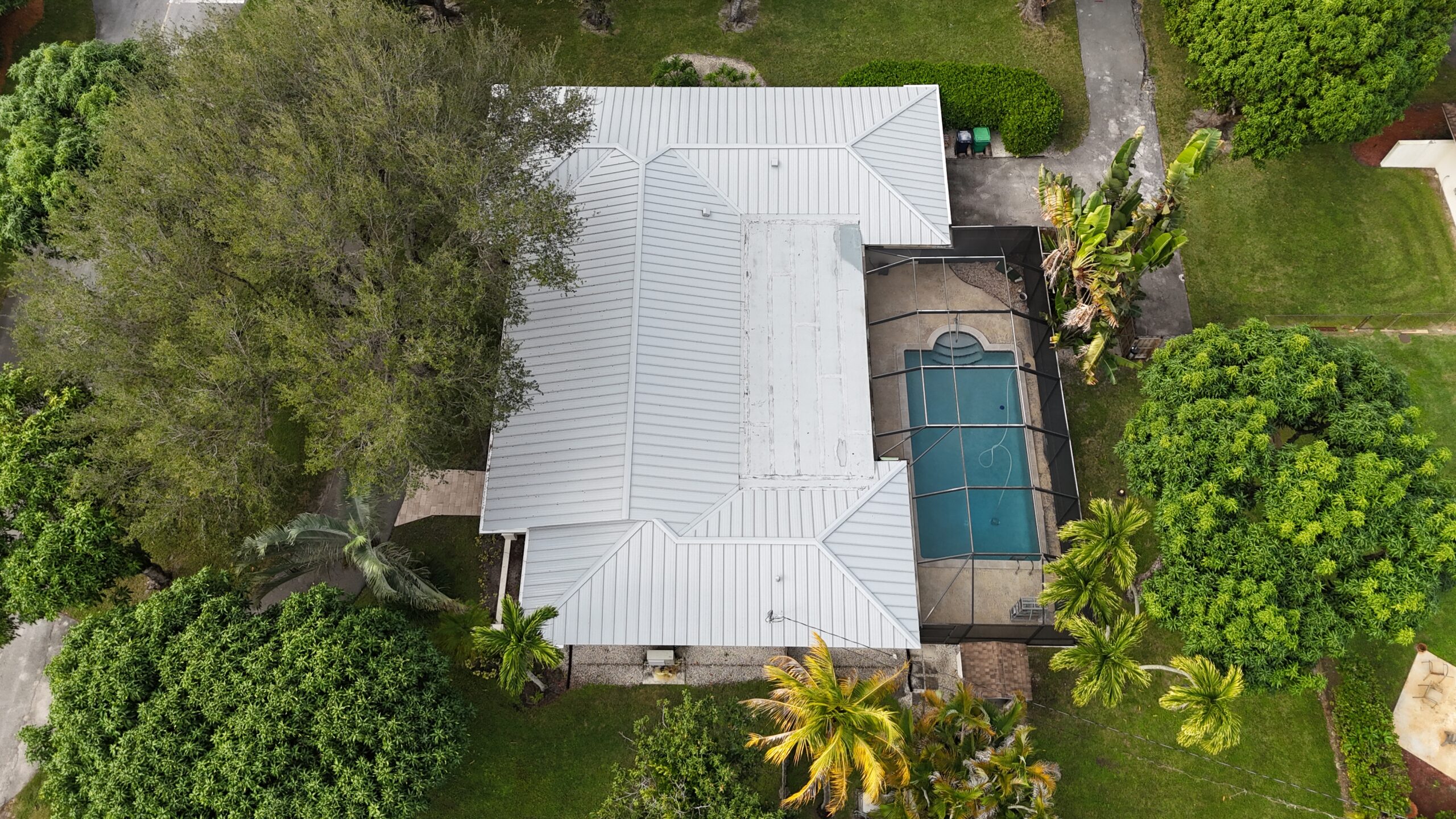
- Miami-Dade sits entirely in Florida’s High Velocity Hurricane Zone (HVHZ) — the most restrictive wind zone in the US
- All roofing materials must carry a valid Miami-Dade Notice of Acceptance (NOA) or Florida Product Approval (FPA)
- Roof replacement and major repairs require permits — no exceptions
- A licensed Certified Roofing Contractor (CCC) or Certified General Contractor (CGC) is required by Florida law
- Tile roofing runs $8–15/sq ft installed; architectural shingles $5–9/sq ft; metal $10–18/sq ft
- Permit approval in Miami-Dade: typically 5–15 business days under normal conditions
The Real Problem
Why Picking the Wrong Roofer in Miami-Dade Is a High-Stakes Mistake
What goes wrong when homeowners choose on price alone — and how to avoid it.
After every major storm, Miami-Dade is flooded with out-of-state roofing crews, storm chasers, and contractors who are legitimately licensed in another state but have no Florida license. They offer fast starts and low prices. They may even do work that looks finished from the street. But “finished” is not the same as “permitted,” “inspected,” or “insurable.”
The risks are real and documented:
- Insurance claim denial: If your roof was installed without a permit or by an unlicensed contractor, your homeowner’s insurance carrier can deny a wind damage claim — even years later.
- Inability to sell your home: Unpermitted roofing work shows up on a title search. Buyers’ lenders will require the work to be permitted, inspected, and closed before closing. That means re-roofing or opening the permit retroactively at your expense.
- Code violations: Miami-Dade Building and Neighborhood Compliance can issue stop-work orders or require tear-off and reinstallation if work proceeds without proper permits.
- Wind exposure: A roof that isn’t installed to HVHZ fastening patterns and product NOA specifications may not survive a major hurricane — even if it looks identical to a compliant roof from the street.
The decision is not just about getting a new roof. It is about protecting the long-term value, insurability, and structural integrity of your home.
Miami-Dade Context
What Makes South Florida Roofing Different from Everywhere Else
HVHZ, NOAA, and the county requirements no out-of-state roofer will tell you about.
Miami-Dade County occupies Florida’s southern tip, where the Atlantic and Gulf of Mexico converge and where the county’s own location makes it a direct target for major Atlantic hurricanes. The county responds to that geography with the most aggressive building codes in the nation.
The High Velocity Hurricane Zone (HVHZ)
HVHZ is not a brand or a marketing category — it is a formal designation in the Florida Building Code covering Miami-Dade and Broward Counties. Within HVHZ, every component of a roofing system must be engineered and tested specifically for extreme wind performance. This includes:
- Underlayment: Florida’s 8th Edition Building Code requires a two-ply underlayment system in HVHZ, using materials with valid NOA documentation. The standard 15-lb felt used in non-HVHZ markets does not qualify.
- Fasteners and nail patterns: Shingles must be installed with 6 nails per shingle (not the standard 4), at specific nail placement zones defined in the product’s NOA.
- Deck attachment: Ring-shank nails are required for decking-to-truss attachment in HVHZ. Smooth nails do not meet code.
- Edge metal: Drip edge and starter strips must also carry NOA approval and be installed to manufacturer specifications — not to general practice.
Notice of Acceptance (NOA)
Miami-Dade County issues NOAs through its Building Code Compliance Office (BCCO). A product’s NOA is a formal approval specific to Miami-Dade’s wind zone — more stringent than the Florida Product Approval (FPA) used elsewhere in the state. Before any roofing material is installed under a Miami-Dade permit, the contractor must be able to provide the NOA number for every component of the system: the primary roofing material, the underlayment, the fasteners, and the edge metal. Your inspector will check this at the final inspection.
Salt Air, UV, and Thermal Cycling
South Florida’s subtropical climate creates degradation pressures that temperate-climate contractors may not account for:
- UV intensity: Miami averages 3,000+ sunshine hours per year, which accelerates granule loss on asphalt shingles and UV degradation of flat-roof membranes.
- Humidity and thermal cycling: Seasonal humidity above 85% combined with daily temperature swings affects adhesion, flashing sealants, and tile mortar. Materials specified for northern climates may fail prematurely in South Florida conditions.
- Salt air: Coastal proximity — Biscayne Bay, the Atlantic shoreline, Key Biscayne — accelerates corrosion of metal components. Any exposed metal: flashing, fasteners, edge metal, or ridge vents — must be corrosion-rated for coastal use.
Permitting in Miami-Dade County
All roof replacements require a permit from Miami-Dade Building and Neighborhood Compliance (MDBNC). Repairs covering more than 25% of the existing roof area also require permits. The permit process includes:
- Permit application with contractor license numbers and COI (Certificate of Insurance)
- NOA documentation submission for all materials
- Plan review (typically 5–15 business days under normal volume; longer during post-storm surge)
- Installation inspection — contractor schedules this through the county after work is completed
- Final inspection and permit closeout — the closed permit is recorded in the county’s building database
A reputable contractor handles the permit application on your behalf — this is standard practice, not an upgrade. If a contractor suggests you pull the permit yourself, treat that as a significant warning sign.
Contractor Evaluation
How to Evaluate a Roofing Contractor in Miami-Dade
The eight questions that separate a qualified local contractor from a liability risk.
Evaluating a roofing contractor in Miami-Dade requires verifying several specific items that do not apply in other markets. Here is a systematic checklist.
1. Verify Florida Roofing License
Florida licenses roofing contractors through the Department of Business and Professional Regulation (DBPR). The two relevant license classes are:
- Certified Roofing Contractor (CCC): Licensed statewide for roofing work including tile, shingle, metal, flat, and specialty roofing systems.
- Certified General Contractor (CGC): Licensed statewide for all construction including roofing, structural repairs, decking, and fascia — relevant when a roof replacement reveals structural damage.
Verify the license at myfloridalicense.com before any work begins. Enter the contractor’s license number and confirm it is active, current, and held in the individual’s or company’s legal name — not a different entity’s name. A lapsed or inactive license means no permit can be legally pulled.
2. Confirm Active Workers’ Compensation and General Liability Insurance
A Certificate of Insurance (COI) must name Bigfoot Windows & Roofing — or whichever contractor you are evaluating — as the certificate holder, with:
- General liability: Minimum $300,000–$500,000 per occurrence is standard for residential roofing. Verify the policy is current and not expired.
- Workers’ compensation: Any crew working on your property must be covered. If a worker is injured on your property and the contractor has no workers’ comp, you may be liable.
Request the COI directly from the contractor’s insurance agent — not just from the contractor — so you can confirm the policy hasn’t been canceled since it was issued.
3. Ask for NOA Numbers Before Signing
A qualified Miami-Dade roofing contractor can tell you, before the contract is signed, what materials they plan to use and provide the NOA number for each. They should also explain how the underlayment and fastening system will meet HVHZ requirements. If a contractor cannot answer questions about NOA documentation, they may not be familiar with Miami-Dade’s code requirements.
4. Check for Local References and Prior Permit History
The best evidence of a contractor’s Miami-Dade competence is a permit history with the county. You can search the Miami-Dade Building and Neighborhood Compliance portal (miamidade.gov/building) to see how many permits a contractor has pulled, and whether those permits reached final inspection and closeout. A contractor with hundreds of closed permits in Miami-Dade has demonstrated they navigate the county process reliably. A contractor with no local permit history is an unknown quantity.
5. Understand What Happens If Decking or Structural Damage Is Found
Miami-Dade’s heat and humidity mean that rotted decking, damaged fascia boards, and compromised rafters or trusses are common discoveries during a roof tear-off. A contractor licensed only as a Certified Roofing Contractor (CCC) may be legally required to subcontract structural repairs to a General Contractor (CGC) or Residential Contractor (CRC). A Certified General Contractor can handle both the roofing work and any structural repairs that are uncovered, under one permit and one scope. This matters for documentation, scheduling, and for your insurance claim if structural damage is part of a wind or water event.
6. Evaluate Written Scope of Work
A reputable contractor provides a written scope before you sign anything, specifying: material brand and product name, NOA numbers or product approval numbers, fastener specification, number of squares (100 sq ft each), decking replacement allowance (if any), estimated timeline, and the permit process they will handle on your behalf. Avoid verbal agreements on roofing scope in Miami-Dade — the stakes are too high.
7. Ask About Warranty — Both Material and Workmanship
Roofing warranties have two components: the manufacturer’s material warranty (typically 25–50 years for architectural shingles, 40–50 years for tile, and 20–40 years for metal depending on product) and the contractor’s workmanship warranty (typically 1–10 years from reputable local contractors). The workmanship warranty only has value if the contractor is still in business in your area — a traveling storm chaser with a workmanship warranty is effectively no warranty at all.
8. Confirm the Permit Will Be Pulled in Their Name
The licensed contractor must be the entity pulling the permit. If a contractor tells you to pull the permit yourself as an owner-builder — unless you are genuinely acting as your own contractor — decline. Pulling the permit as an owner-builder transfers legal responsibility for code compliance, inspection scheduling, and closeout to you, and may create complications for your homeowner’s insurance coverage.
Material Comparison
Miami-Dade Roofing Materials: Tile vs. Shingle vs. Metal vs. Flat
Which system performs best for South Florida’s wind, humidity, and UV environment.
| Material | Installed Cost (per sq ft) | Lifespan (South FL) | Wind Rating | Best For | Bigfoot Recommendation |
|---|---|---|---|---|---|
| Concrete or Clay Tile | $8–$15 | 40–50+ years | 150+ mph (with HVHZ NOA) | Long-term ownership, traditional South FL aesthetic | Best overall for longevity and wind resistance |
| Architectural Asphalt Shingles | $5–$9 | 20–30 years | 130–150 mph (HVHZ-rated products) | Budget-conscious replacement, faster installation | Best value when tile budget is constrained |
| Standing Seam Metal | $10–$18 | 40–60+ years | 140–160 mph (varies by system) | Modern aesthetic, low maintenance, long lifecycle | Best for commercial or modern residential |
| Metal Shingles / Shake | $8–$14 | 30–50 years | 120–150 mph (NOA-dependent) | Traditional look with metal durability | Verify NOA before specifying |
| TPO / Modified Bitumen Flat | $5–$10 | 15–25 years | Varies by attachment method | Low-slope or flat-roof sections, commercial | Requires experienced flat-roof contractor |
A note on pricing: The ranges above reflect typical installed costs in the Miami-Dade market in 2026 and include material, labor, removal of existing roofing, permit fees, and standard flashing work. Decking replacement, structural repairs, and complex roof geometry add cost. A reputable contractor itemizes these clearly in writing.
Material cost per square foot is only part of the calculation. A tile roof at $12/sq ft that lasts 50 years has a lower 10-year annualized cost than an architectural shingle roof at $7/sq ft that needs replacement in 20 years. For long-term homeowners in Miami-Dade, tile’s lifecycle economics are usually favorable despite higher upfront cost.
Why Bigfoot
A Licensed Contractor — Not a Lead Aggregator
We pull permits, install, and inspect — we don’t broker your project to the lowest bidder.
▶ Certified Roofing Contractor — CCC1333168
▶ Certified Residential Contractor — CRC1331693
▶ Certified Specialty Contractor (Glass & Glazing) — SCC131153098
▶ Miami-Dade / Broward / Palm Beach Service Area
▶ HVHZ Installation Experience
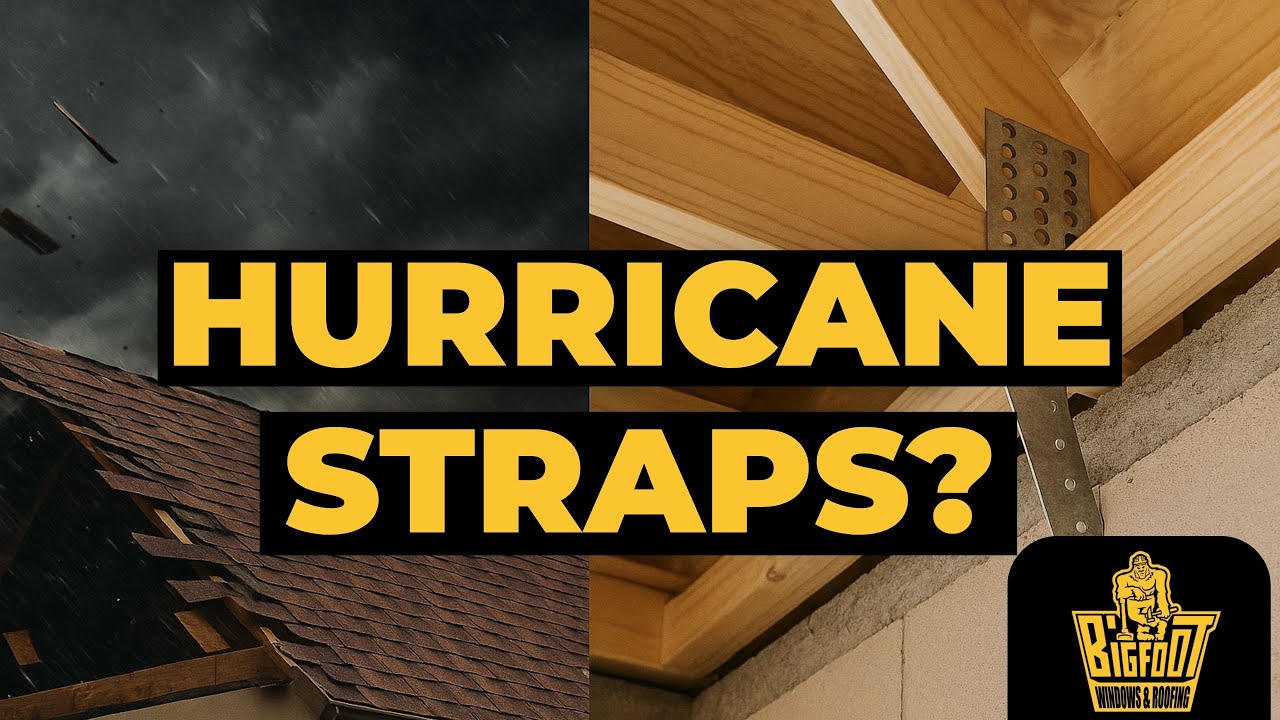
Bigfoot Windows & Roofing holds four Florida contractor licenses, including a Certified General Contractor (CGC1531370) and a Certified Roofing Contractor (CCC1333168). That combination matters. When a tear-off reveals damaged decking, rotted fascia, compromised trusses, or failed hurricane straps, we handle those structural repairs under the same permit and the same scope — not as a subcontracted surprise. A roofing-only license doesn’t cover that work.
“We’ve been pulling Miami-Dade permits since before storm chasing was a business model. Every project we do has a closed permit. That closed permit is what protects your insurance coverage, your resale value, and your family in the next hurricane.”
President, Bigfoot Windows & Roofing | CGC1531370 | CRC1331693
Roofing Systems
What We Install and Why It Matters
Systems selected for South Florida wind exposure, UV intensity, and humidity performance.
Bigfoot installs the full range of residential and light commercial roofing systems in Miami-Dade. Every installation uses products with valid Miami-Dade NOA documentation. We do not use materials that “work elsewhere” without HVHZ-specific approval.
Tile Roofing (Concrete and Clay)
Tile is the traditional South Florida roofing material for good reason. Concrete and clay tile systems installed to HVHZ specifications achieve wind ratings of 150+ mph. The mass of tile also provides natural thermal buffering, reducing attic heat gain during South Florida summers. Tile’s typical lifespan of 40–50+ years in South Florida gives it the best long-term value for homeowners who plan to stay in their home.
Installation considerations unique to Miami-Dade include: the mortar system used at the eave course and hip/ridge detail must be compatible with the tile’s NOA; tile battens (if used) must also carry approval; and the weight of tile requires engineering confirmation that the roof deck and structural framing can support it — a factor Bigfoot’s CGC license allows us to assess and address on-site.
Architectural Shingles
HVHZ-rated architectural shingles — the correct specification for Miami-Dade — are a different product from standard 30-year architectural shingles sold at building supply stores. HVHZ-rated shingles are tested to Miami-Dade’s NOA wind standards, required to be installed with 6-nail patterns, and designed for the thermal and UV stresses of South Florida’s climate. We specify products with valid Miami-Dade NOA only.
Standing Seam Metal Roofing
Standing seam metal is the preferred roofing system for flat or low-slope sections and is increasingly chosen for its modern aesthetic and 40+-year lifespan. Metal systems with concealed fasteners and properly engineered seam details perform exceptionally in South Florida wind events. Bigfoot installs standing seam systems appropriate for HVHZ wind loads. We also install corrugated metal and metal shingle systems where the product carries Miami-Dade NOA approval.
Flat Roof Systems (Modified Bitumen and TPO)
Many South Florida homes have flat or low-slope roof sections — common in mid-century construction across Coral Gables, Coconut Grove, Pinecrest, and similar neighborhoods. Flat roof systems require different expertise, different products, and different inspection criteria than pitched roofing. Bigfoot installs modified bitumen and TPO systems on residential and light commercial structures, including on additions, covered entries, and flat-roof-primary construction.
What to Expect
The Bigfoot Roofing Process: From First Call to Closed Permit
How we run a Miami-Dade roofing project from assessment through final inspection.
A well-run Miami-Dade roofing project follows a defined sequence. Here is what it looks like with Bigfoot.
- On-site assessment and written scope: We inspect the roof from the exterior and, where accessible, from the attic. We document existing condition with photos before touching anything. You receive a written scope of work with material specifications, NOA references, decking allowance, and timeline before any contract is signed.
- Permit application: We file the permit application with Miami-Dade Building and Neighborhood Compliance, including all required NOA documentation and our license and insurance information. We track the permit status and notify you when it is issued. You do not manage the permitting process.
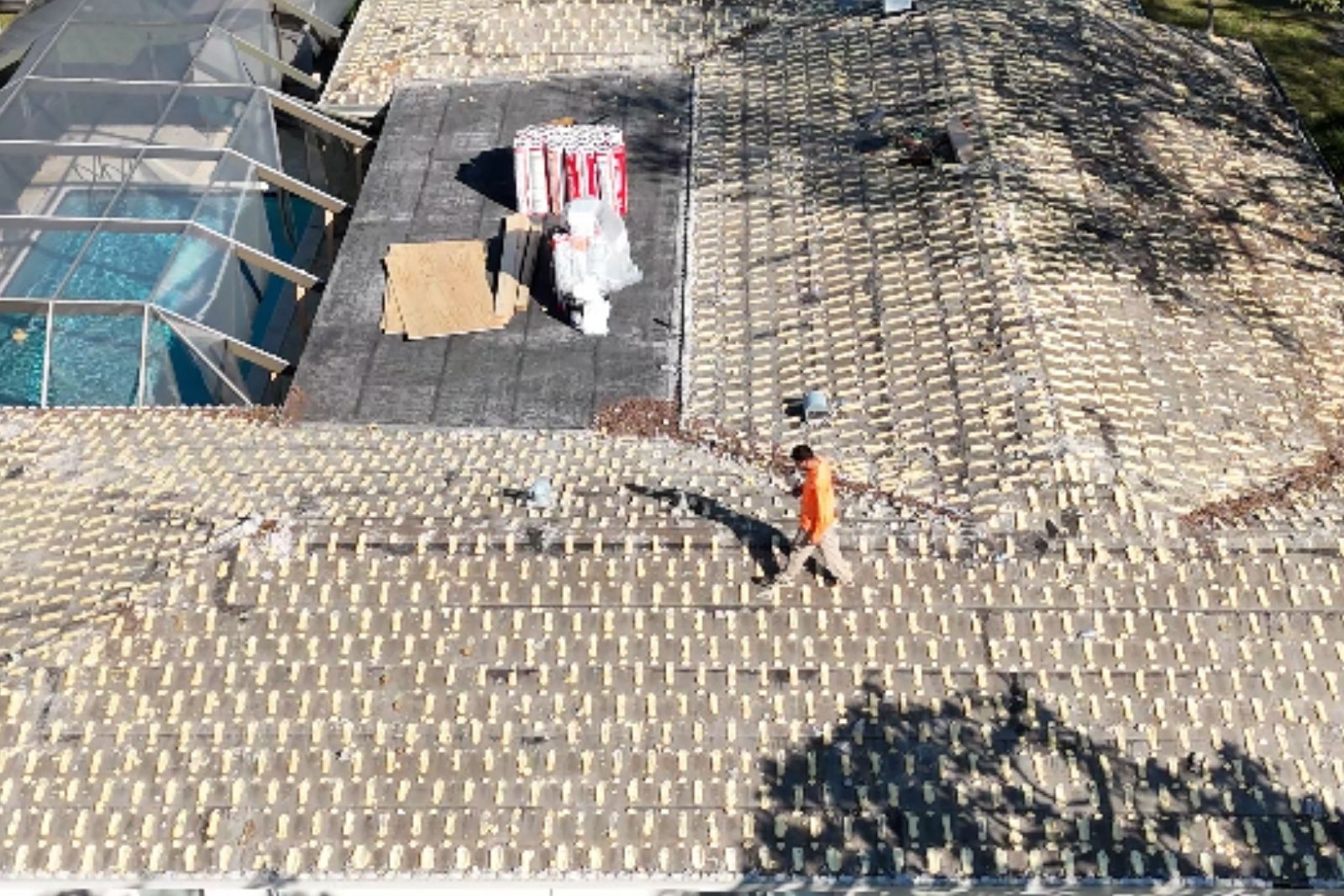
- Material delivery and staging: Materials are delivered to your property before installation begins. Your project coordinator confirms the delivery and reviews quantities against the permitted scope.
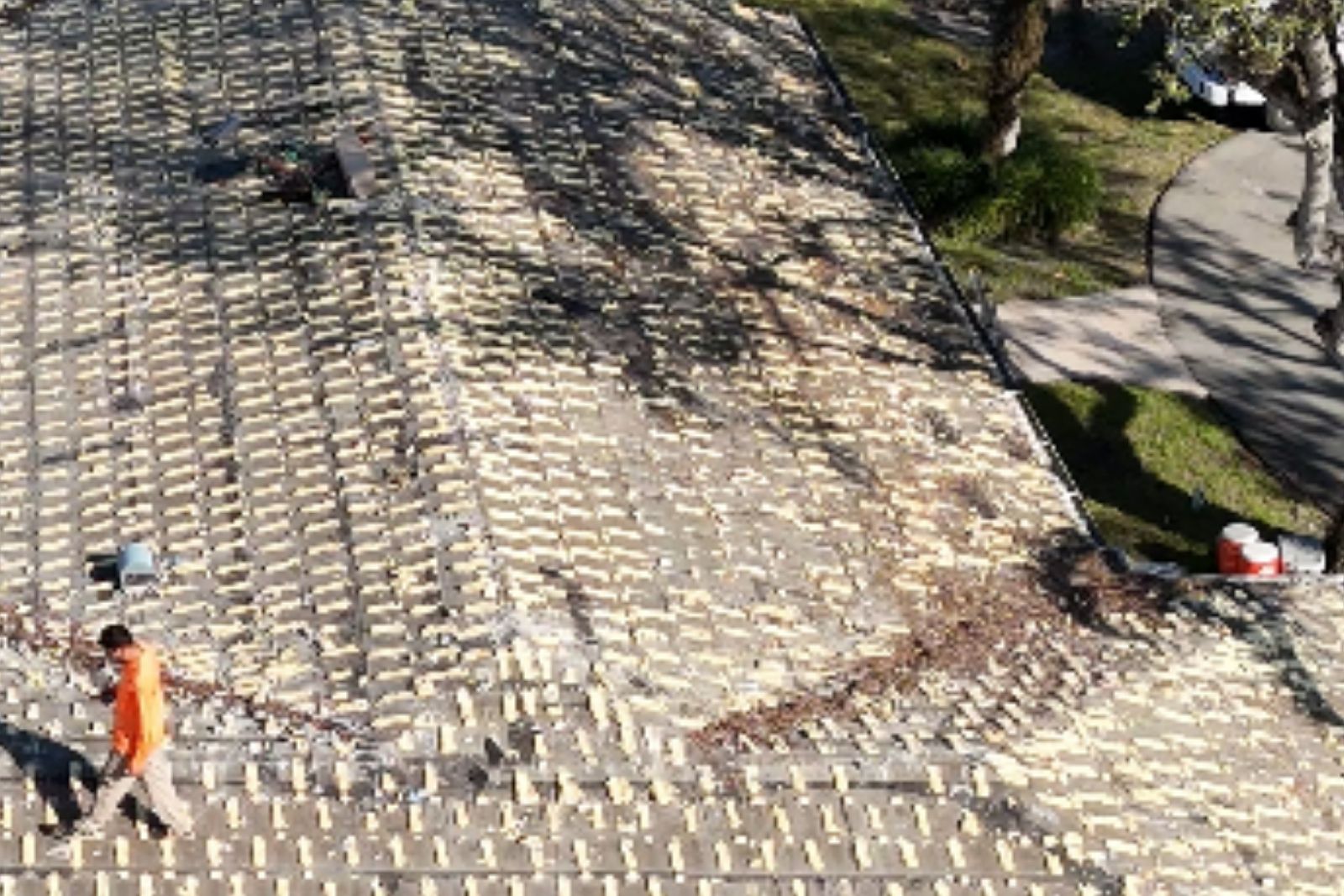
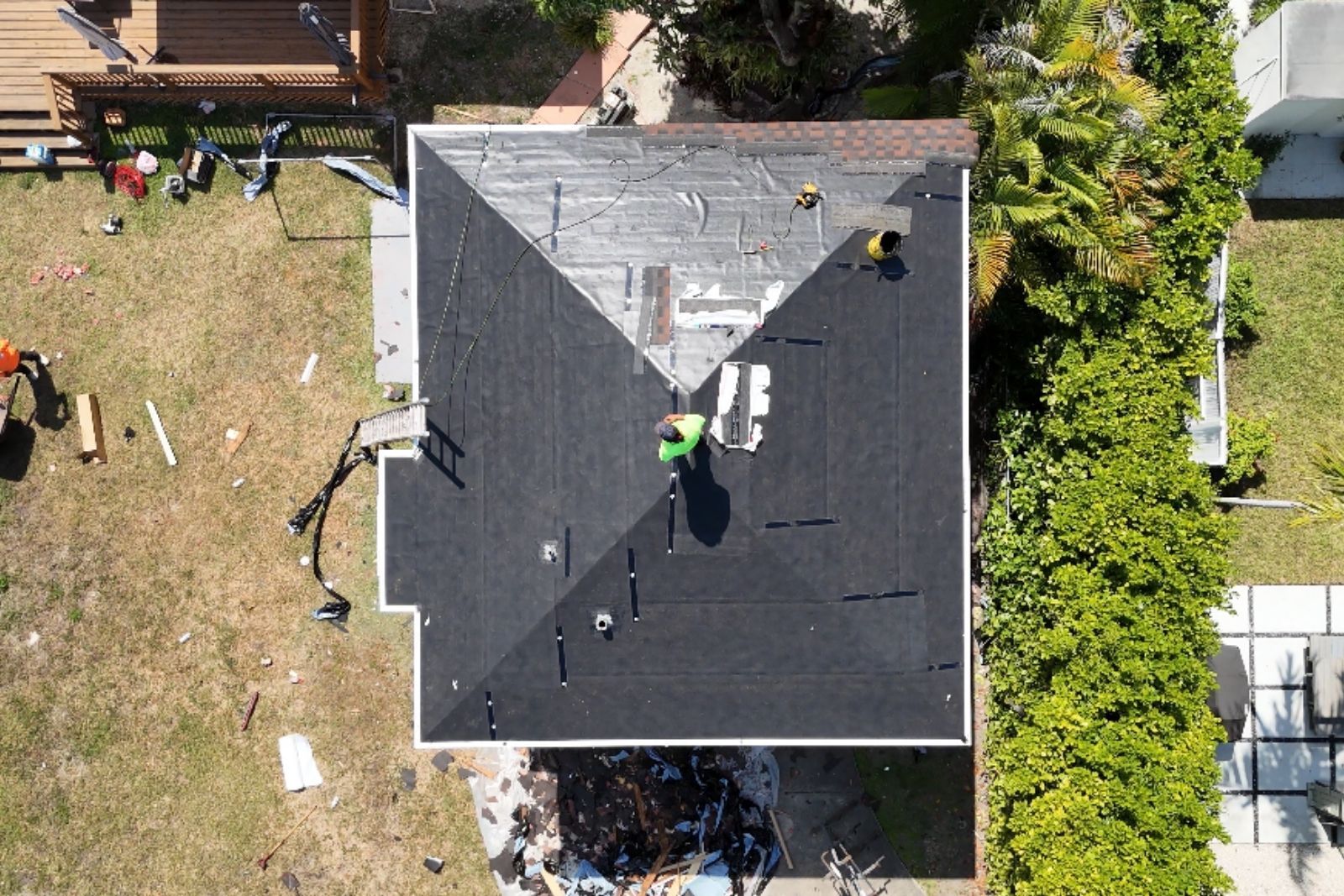
- Tear-off and deck inspection: The existing roofing is removed down to the decking. We photograph the deck before new material goes on. Any deteriorated OSB or plywood, compromised trusses, or failed hurricane straps are documented, reported to you, and repaired before installation proceeds. As a CGC, we handle structural repairs under the same permit when required.
- HVHZ-compliant installation: Underlayment, fasteners, primary material, edge metal, flashing, and ridge are installed to the NOA specifications on the permit. Nail patterns, uplift attachment, and edge details are set to HVHZ requirements throughout.
- Final inspection scheduling: We schedule the county final inspection immediately after installation is complete. We are on-site during the inspection to address any inspector questions or observations.
- Permit closeout and documentation: Once the inspector signs off, we file for permit closeout. You receive a copy of the closed permit for your records. The closed permit is also reflected in Miami-Dade’s online building database — verifiable by any future buyer or insurance carrier.
Typical total project timeline in Miami-Dade: 4–8 weeks from contract signing, depending on permit review volume and material availability. Installation itself takes 3–7 days for most residential projects.
Ready to schedule your Miami-Dade roof assessment?
We pull the permit, we handle the inspection, and we close it out. One call covers everything.
Related Guides
More South Florida Roofing Resources

Frequently Asked Questions
Miami-Dade Roofing: Common Questions Answered
Do I need a permit for roof replacement in Miami-Dade County?
Yes — all roof replacements require a permit from Miami-Dade Building and Neighborhood Compliance (MDBNC). Repairs covering more than 25% of the existing roof area also require permits. Permit fees typically range from $200–$500 depending on project value and scope. The review process takes 5–15 business days under normal conditions. A licensed contractor handles the permit application on your behalf; you should never be asked to pull the permit yourself as an owner-builder for contractor-installed work.
How much does roof replacement cost in Miami-Dade?
Installed costs for residential roof replacement in Miami-Dade in 2026 range from approximately $5–$9 per square foot for HVHZ-rated architectural shingles to $8–$15 per square foot for concrete or clay tile. Standing seam metal typically runs $10–$18 per square foot. A 2,000-square-foot home with a simple roof geometry pays $10,000–$18,000 for shingles or $20,000–$36,000 for tile. Costs include removal, HVHZ-rated materials, NOA-compliant fastening systems, permit fees, and standard flashing work. Decking replacement, structural repairs, and complex roof geometry add cost and should be itemized clearly in any written scope.
What roofing materials are approved for Miami-Dade’s HVHZ?
All roofing materials installed in Miami-Dade must carry a valid Miami-Dade Notice of Acceptance (NOA) issued by the county’s Building Code Compliance Office (BCCO), or a Florida Product Approval (FPA) accepted under Miami-Dade’s HVHZ provisions. This requirement covers the primary roofing material (shingles, tile, metal), the underlayment, fasteners, and edge metal. The contractor must be able to provide the specific NOA number for every component before work begins. Materials with a standard Florida Product Approval but without Miami-Dade-specific NOA may not be sufficient for a county permit — verify before signing a contract.
How do I verify a Florida roofing contractor’s license?
Use the Florida Department of Business and Professional Regulation (DBPR) license lookup at myfloridalicense.com. Enter the contractor’s license number and confirm: (1) the license is Active — not Inactive, Suspended, or Revoked; (2) the license type is appropriate — Certified Roofing Contractor (CCC) or Certified General Contractor (CGC) covers residential roofing; (3) the license is held in the contractor’s or company’s legal name as presented to you. A license that appears active online is still subject to verification — confirm it in the same session in which you are considering a contract, since license status can change.
What happens if a roofer finds structural damage during tear-off?
Rotted decking, compromised rafters, failed hurricane straps, and deteriorated fascia are all common discoveries during a roof tear-off in South Florida. A contractor who holds only a Certified Roofing Contractor (CCC) license is typically limited to the roofing work itself — structural repairs may require a separate licensed General Contractor (CGC). A Certified General Contractor can handle structural repairs as part of the same permitted scope, avoiding permit complications and ensuring structural and roofing work are inspected together under one final inspection. Ask about this before signing a contract — especially for older homes where structural surprises are more likely.
How long does a Miami-Dade roof replacement take?
The total timeline from contract signing to closed permit is typically 4–8 weeks in Miami-Dade. The breakdown: permit application and county review takes 5–15 business days (longer during post-storm backlogs); material delivery and staging takes 1–3 days; installation takes 3–7 days depending on roof size, geometry, and material (shingles are fastest, tile takes longest); final inspection scheduling through Miami-Dade takes 1–3 days; and permit closeout takes 1–5 business days after the final inspection passes. Bad weather during hurricane season can extend installation days. Post-hurricane surge can significantly extend permit review timelines.
Does my homeowner’s insurance cover roof replacement in Miami-Dade?
Homeowner’s insurance in Florida typically covers roof damage caused by a covered peril — wind, hail, falling objects — subject to your policy’s deductible (which for wind in South Florida is often a separate, percentage-based wind deductible rather than a flat dollar amount). Age and condition of the roof affect coverage: many Florida carriers limit or exclude coverage for roofs over 20–25 years old, or require a wind mitigation inspection to determine coverage terms. Coverage is also affected by whether the roof was properly permitted and installed — an unpermitted roof or work performed by an unlicensed contractor can be grounds for claim denial or policy cancellation. Consult your insurance carrier before making final material decisions.
What is a wind mitigation inspection and do I need one?
A wind mitigation inspection is performed by a licensed inspector (typically a licensed engineer, building inspector, or general contractor) and documents the wind-resistance features of your home, including: roof shape, roof deck attachment method, roof-to-wall connection (hurricane straps), roof covering type, and opening protection (windows and doors). The inspection results in a Florida Division of Emergency Management (OIR-B1-1802) form that your insurance carrier uses to calculate your windstorm insurance premium. A new HVHZ-compliant roof with documented hurricane straps, ring-shank nails, and approved covering can reduce annual windstorm premiums significantly — often by 20–40% or more. A wind mitigation inspection after a roof replacement is typically worthwhile and pays for itself quickly through premium savings.
Sources and References
- Florida Building Code, 8th Edition — Chapter 15 (Roof Assemblies and Rooftop Structures), HVHZ provisions. Florida Building Commission, 2023.
- Miami-Dade County Building and Neighborhood Compliance (MDBNC). “Notice of Acceptance (NOA) Program.” miamidade.gov/building/product-approval.asp
- Florida Department of Business and Professional Regulation (DBPR). Contractor License Verification. myfloridalicense.com
- Insurance Institute for Business and Home Safety (IBHS). “Hurricane Wind Resistance: What You Need to Know About Roof-to-Wall Connections.” disastersafety.org
- Florida Division of Emergency Management. Wind Mitigation Inspection Form (OIR-B1-1802). floridadisaster.org
- NOAA / National Weather Service. “South Florida Historical Hurricane Climatology.” nhc.noaa.gov
- Florida Department of Financial Services. “Citizens Property Insurance Corporation — Roof Coverage Requirements.” myfloridacfo.com
Schedule Your Miami-Dade Roofing Assessment Today
Licensed, permitted, inspected, and closed. Call Bigfoot Windows & Roofing for a free on-site assessment and written scope — no pressure, no obligation.