
What Is PACE Financing and Is It Right for Your Home Improvement Project?

Last updated: July 2026 by the Bigfoot Windows & Roofing editorial team.
Key Takeaways
- PACE is paid through your property tax bill — not a bank loan, and approval is based on home equity, not credit score.
- Florida PACE rates, terms, fees, and payment amounts vary by provider, property, project, and approval. Review the complete financing agreement before making a decision.
- If you sell, the PACE lien transfers with the property — buyers and title companies need to know.
- PACE works best for homeowners with equity who want to improve safety and may reduce insurance premiums.
- Roofing and window projects must be submitted as separate PACE applications — never combined in one.
The Problem
Impact Windows and Roofing Are Expensive Upfront — And Traditional Financing Is Not Always Available
South Florida homeowners face a real squeeze: storm-hardening your home costs real money, banks want good credit, and not everyone qualifies for a HELOC.
A full impact window replacement in Miami-Dade or Broward can run tens of thousands of dollars. A new roof adds to that. Most homeowners cannot write a check. Traditional financing — personal loans, credit cards, HELOCs — all require income verification, credit checks, and approval timelines. PACE was designed specifically to solve this mismatch: your home has equity, you want to make it safer and more efficient, and you need a way to pay over time without a bank deciding you do not qualify.
That said, PACE is not right for every situation. This guide explains exactly how it works, what the real numbers look like, and who should probably choose a different path.
South Florida Context
Why PACE Is Especially Relevant in Miami-Dade and Broward
Florida’s High-Velocity Hurricane Zone requirements and Citizens Insurance pressure make storm hardening a financial necessity, not just a nice-to-have.
Miami-Dade and Broward counties sit inside the High-Velocity Hurricane Zone (HVHZ) — the strictest building code jurisdiction in the United States. The Florida Building Code mandates impact-rated products for new installations in this zone. Meanwhile, Citizens Insurance has been non-renewing policies on homes with roofs that are 20 years or older. Homeowners who complete a wind mitigation inspection after upgrading to impact windows and a new qualifying roof can see significant insurance premium reductions. PACE financing exists under Florida statute specifically to make these kinds of improvements accessible without requiring a bank loan.
How It Works
PACE Financing Explained: The Mechanics, the Numbers, and the Fine Print
PACE stands for Property Assessed Clean Energy. The Florida PACE program is enabled under Florida Statute Chapter 163, Part III. Here is how it actually works, step by step.
Step 1 — You Apply Based on Home Equity, Not Income or Credit
Unlike a bank loan, PACE qualification is primarily based on whether your home has sufficient equity. The PACE administrator places a senior or subordinate lien on your property. Lenders like Renew Financial operate as the PACE provider in Florida. Because the assessment is secured by the property itself, they do not need to pull your credit score the way a bank would. This makes PACE accessible to homeowners who might not qualify for traditional financing.
Step 2 — The Assessment Is Added to Your Property Tax Bill
Once approved and the project is complete, the repayment is structured as a property tax assessment. You pay it annually (or semi-annually, depending on your county tax schedule) alongside your regular property taxes. It does not show up as a loan on your credit report. There is no separate monthly bill from a lender — it is folded into your tax obligation.
Step 3 — The Rate, Term, and What It Costs
| PACE Parameter | What Homeowners Should Confirm |
|---|---|
| Interest rate | Varies by provider and approval |
| Maximum term | Varies by program and project |
| Sample: $15,000 / 20 yr | Request a personalized written estimate |
| Prepayment penalty | Confirm the conditions in the financing agreement |
| Credit score impact | No — not reported as a loan |
| Approval basis | Home equity, not income/credit |
The 20-year term produces the lowest annual payment but the highest total interest paid. Shorter terms reduce interest cost but raise each year’s tax bill. Choose the term based on your cash flow, not just the monthly number.
Step 4 — The Lien Transfers When You Sell
This is the piece most homeowners miss until they are at the closing table. The PACE assessment is a lien on the property. When you sell, the buyer inherits it — or you pay it off at closing. Title companies in Florida are required to disclose existing PACE liens. Some buyers or lenders will require payoff at closing. If you plan to sell within a few years, factor this in before you sign.
One Application Per Trade — Never Combined
A critical operational detail: roofing and window projects must be submitted as two separate PACE applications. Combining them into a single application is not permitted under program rules. If you are replacing both your roof and your impact windows at the same time, your contractor should walk you through submitting two distinct applications before work begins.
Comparison
PACE vs. Other Home Improvement Financing Options
No single financing tool is best for everyone. Here is how PACE compares to the common alternatives.
| Factor | PACE | Personal Loan | HELOC | Credit Card |
|---|---|---|---|---|
| Approval basis | Home equity | Credit score / income | Credit score / equity | Credit score |
| Typical rate | Varies by provider and approval | 8–20%+ varies | Prime-based, varies | 18–29%+ |
| Credit report impact | No | Yes | Yes | Yes |
| Payment mechanism | Property tax bill | Monthly bank payment | Monthly bank payment | Monthly statement |
| Lien on property | Yes — transfers on sale | No | Yes | No |
| Prepayment penalty | None | Sometimes | Sometimes | No |
| Max term | 20 years | 2–7 years typical | 10–20 years | Revolving |
When Another Option Is a Better Fit
PACE is not always the answer. If you have excellent credit and qualify for a low-rate HELOC, that may produce a lower total cost over time. If you plan to sell within 12–24 months, paying off a PACE lien at closing adds friction. If you only need a small amount — say, one or two windows — a personal loan may close faster with less paperwork. Always compare total cost of financing, not just the monthly payment.
You can also explore the financing options Bigfoot offers to see what makes sense before committing to any single path.
Why Contractor Choice Matters
A Single Contractor Handling Both Trades Reduces Financing Complexity
A licensed contractor — not a lead aggregator — coordinates your permit, your install, and your PACE paperwork across both trades.
“When a homeowner does windows and a roof with us, we manage two PACE applications, two permits, and one coordinated installation. You are not chasing two separate contractors to get your paperwork in order.”
Founder & President, Bigfoot Windows & Roofing
What You Are Financing
Impact Windows, Impact Doors, and Roofing — What PACE Covers
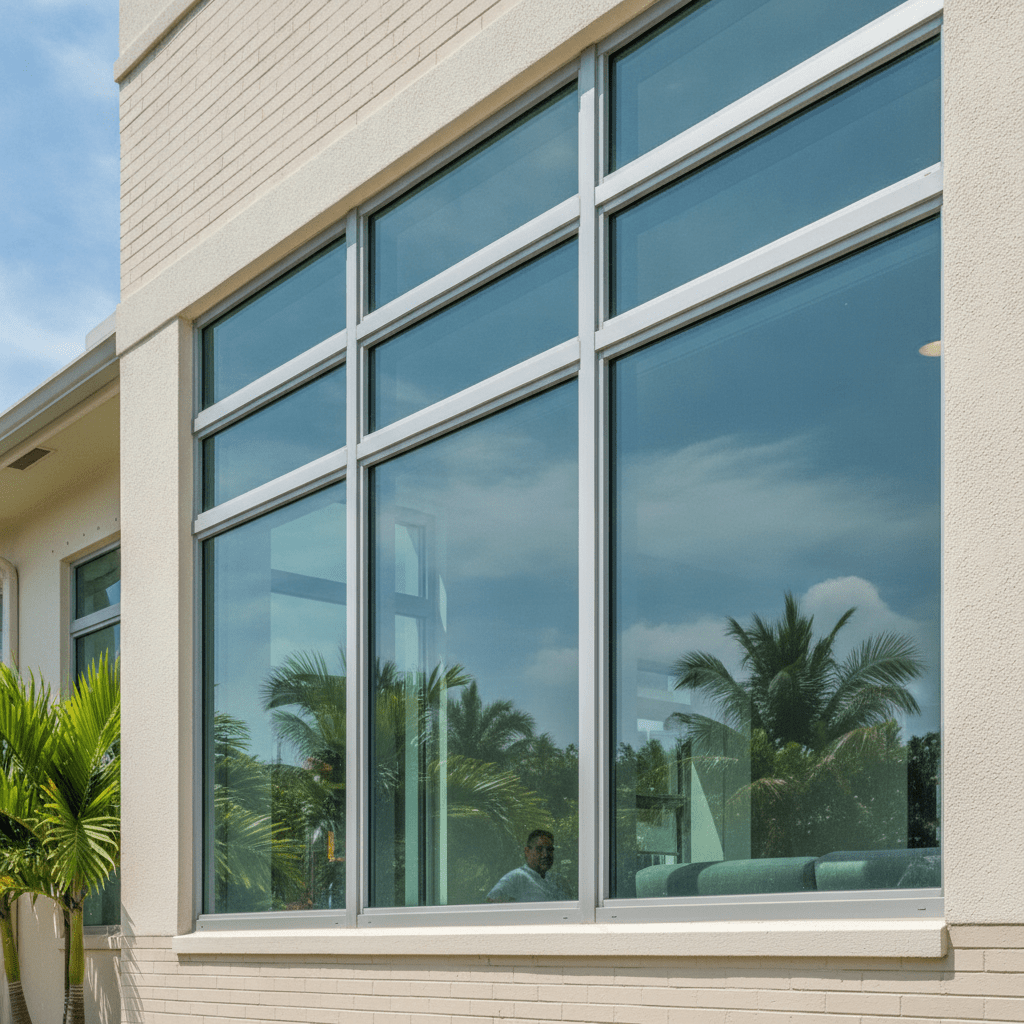
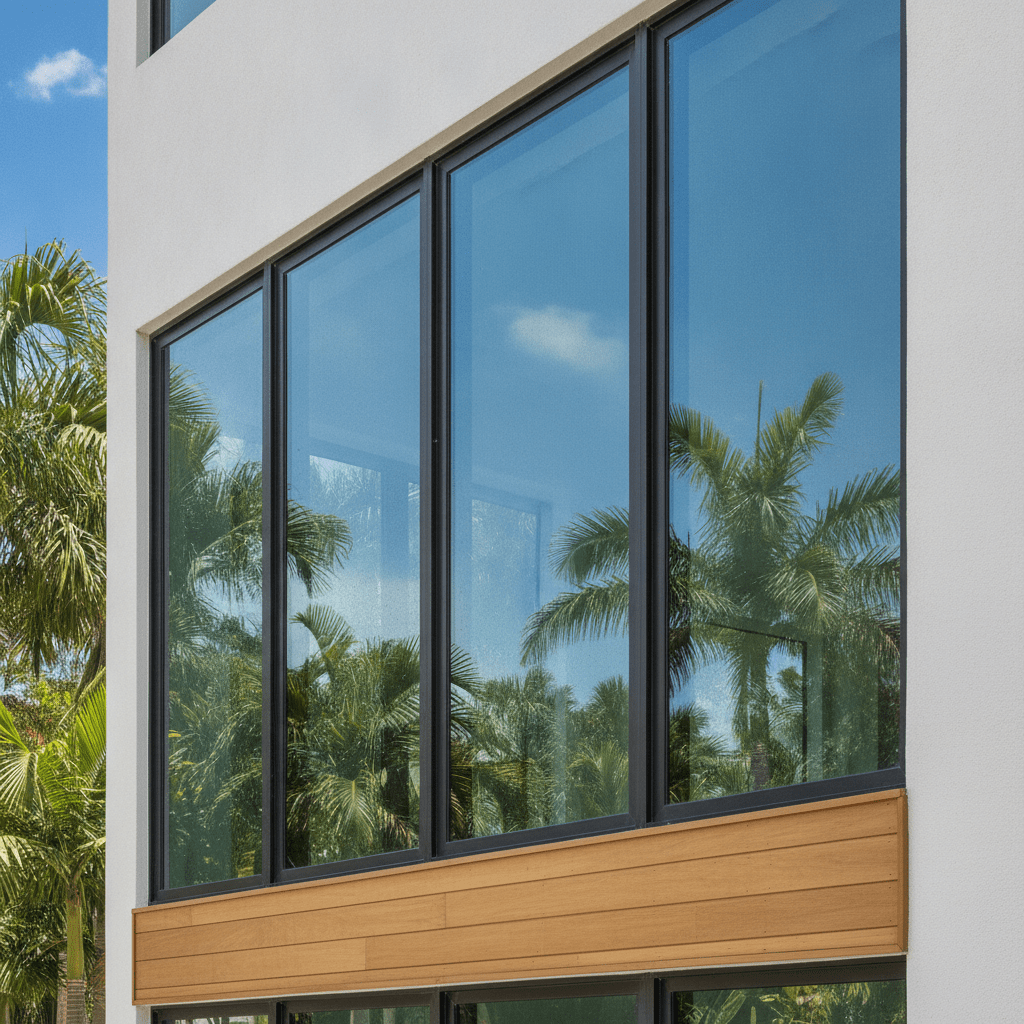
PACE in Florida is approved for qualifying energy-efficiency and storm-hardening improvements. Impact windows and impact doors qualify. New roofing qualifies. These are exactly the projects South Florida homeowners need most to meet the Florida Building Code, satisfy insurer requirements, and protect their families during hurricane season.
For windows and doors, we install Mr. Glass aluminum-frame impact products and ES Windows. Aluminum frames are our recommendation for South Florida conditions — they are more time-tested in the HVHZ heat, UV exposure, salt air, and hurricane loading than alternative frame materials.
For roofing, qualifying projects include GAF shingle systems, standing seam metal roofing, and tile systems. If your project involves structural modifications — for example, adding hurricane straps, correcting truss connections, or addressing structural issues uncovered during a re-roof — those scope items can be coordinated in-house under our Certified General Contractor license (CGC1531370). You do not need a separate structural contractor for code-driven structural scope. That coherent accountability across trades is a meaningful structural advantage when you are managing both a PACE application and a permit simultaneously.
The Process
How a PACE-Financed Project Works From Estimate to Installation
- Free estimate: We scope the project — windows, doors, roof, or all three — and give you a clear price range before any paperwork starts.
- PACE pre-approval: We connect you with the PACE provider (Renew Financial) and walk you through the application. Remember: separate applications for roofing and windows.
- Permit pulled: We pull all required permits with Miami-Dade, Broward, or Palm Beach county before any work begins. No work without a permit.
- Installation: Our crews install to Florida Building Code and HVHZ standards. All products carry Florida Product Approvals.
- Inspection passed: County inspector signs off. PACE funding is released after verified completion — not before.
- Wind mitigation inspection: Once complete, schedule a wind mit inspection to document your upgrades and submit to your insurer for a potential premium reduction.
If you are eligible for the My Safe Florida Home grant (up to $10,000 for qualifying homeowners), that grant can be stacked with PACE financing to reduce the total amount financed. For qualifying property owners, there may be tax benefits available — please consult your CPA.
Questions about whether PACE makes sense for your project? Talk through the numbers before you commit to anything.
Related Articles


Who We’re Not the Right Fit For
- You plan to sell within 12–24 months. A PACE lien must be disclosed and can complicate or delay closing. If selling soon, a personal loan or HELOC may be cleaner.
- You only need one or two windows. PACE has administrative overhead. For smaller jobs, other financing paths are often faster and simpler.
- You want the lowest possible total interest cost and have excellent credit. A low-rate HELOC may beat PACE on total cost of financing. We will tell you that honestly.
- You need the project done in under two weeks. PACE pre-approval and permit timelines mean PACE-financed projects require planning lead time. If urgency is the priority, paying out of pocket or using a pre-approved credit line is faster.
Frequently Asked Questions
What is PACE financing and how is it different from a loan?
PACE (Property Assessed Clean Energy) is a government-enabled program that finances home improvements through a property tax assessment rather than a bank loan. You are not borrowing from a lender in the traditional sense — the repayment obligation is attached to your property and paid through your tax bill. Approval is based on home equity, not your credit score or income, which is the key structural difference from a conventional loan.
How does paying through my property tax bill work?
After your project is complete and inspected, the PACE provider records an assessment against your property. That assessment amount is then added to your annual (or semi-annual) property tax bill. You pay it on your normal tax schedule — no separate monthly statement from a lender. If you escrow your taxes through your mortgage, your escrow payment will increase to cover the additional assessment.
Does PACE financing affect my credit score?
Generally, no. The PACE assessment is not reported as a loan to the credit bureaus, so it does not appear on your credit report the way a personal loan or credit card balance would. However, if the property tax assessment goes unpaid, it can trigger collection or lien enforcement actions, which could eventually have credit implications. Pay your tax bill on time and there is no credit impact.
What happens to the PACE lien if I sell my house?
The PACE lien is attached to the property, not the person. When you sell, it either transfers to the buyer (who then continues paying through their property taxes) or you pay it off at closing. Florida law requires title companies to disclose PACE liens. Some buyers — especially those using conventional mortgage financing — may require payoff before close. If you plan to sell within a few years, discuss this with your real estate attorney before signing a PACE agreement.
Who qualifies for PACE — is it based on income or equity?
PACE qualification is primarily based on your home’s equity, not your income or credit score. The PACE provider assesses whether the property has sufficient value relative to the assessment amount. There are also program-level requirements around property taxes being current (not in default). Most Florida homeowners with meaningful equity who are current on their taxes can qualify, regardless of their employment status or credit profile.
What is the interest rate and term on PACE in Florida?
PACE interest rates, terms, fees, and payment amounts vary by provider, property, project, and approval. Before signing, request a written estimate showing the total assessment, annual property-tax payment, financing costs, applicable fees, term, and any prepayment conditions.
Can I use PACE for both windows and a roof at the same time?
Yes — but they must be two separate PACE applications. You cannot combine roofing and window projects into a single PACE application under program rules. If you are doing both at once, your contractor should help you initiate both applications before construction begins so approval and funding timelines align with the project schedule.
Sources referenced in this article:
- Florida Statute Chapter 163, Part III — Property Assessed Clean Energy (PACE) program enabling legislation.
- Florida Department of Financial Services — PACE disclosure requirements for residential property owners.
- Florida Building Code (8th Edition) — High-Velocity Hurricane Zone (HVHZ) requirements for impact-rated products.
- My Safe Florida Home Program — Florida Department of Financial Services, grant eligibility and application guidance.
Ready to understand what PACE financing would look like for your specific project? Request a free estimate — no pressure, no obligation.