
Choosing Roofing Contractors in South Florida | Bigfoot Windows & Roofing
, licensed contractor (CGC1531370 · CRC1331693 · CCC1333168 · SCC131153098) and founder of Bigfoot Windows & Roofing. 786-886-2088
Updated June 2026
Key Takeaways
- Every South Florida roofer must hold a Florida Certified Roofing Contractor license — verify it free on the DBPR website before signing anything.
- Miami-Dade and Broward sit inside the High-Velocity Hurricane Zone (HVHZ) — the strictest roofing code in the U.S.; not every contractor is trained for it.
- Products used on HVHZ roofs must carry a Miami-Dade Notice of Acceptance (NOA) — a number you can look up independently.
- A permit pulled in the contractor’s name (not yours) is the single clearest sign of a legitimate South Florida roofer.
- Material lifespan varies widely in Florida heat and salt air — tile and metal outlast shingles by decades.
- Roof replacement costs typically run $750–$1,400 per square (per 100 sq ft installed) depending on material, complexity, and permit scope.
The Problem
Why Hiring a Roofer in South Florida Is More Complicated Than Anywhere Else
Storm chasers, unlicensed crews, and HVHZ non-compliance are real risks here.
South Florida homeowners replace roofs more often than almost anywhere in the country. Between hurricane seasons, intense UV, relentless humidity, and coastal salt air, a roof here works harder than a roof in Ohio ever will. That means the contractor you choose matters far more — and the stakes of choosing wrong are higher.
After a major storm, crews pour in from out of state. Some are qualified. Many are not. Even established local companies vary widely in their knowledge of Florida Building Code and HVHZ-specific requirements. A roof installed with the wrong product approval, by a crew that skipped the permit, can fail inspection — or worse, fail in the next storm — and leave you holding the cost.
This guide walks you through exactly what separates a legitimate South Florida roofing contractor from a risky one, what questions to ask, how the permitting process works, and what each roofing material is actually worth in this climate.
South Florida Context
HVHZ, Salt Air, and the Florida Building Code — What Makes This Market Different
What Is the HVHZ?
The High-Velocity Hurricane Zone (HVHZ) covers Miami-Dade and Broward Counties. It is not a marketing label — it is a defined geographic classification under the Florida Building Code that triggers the most demanding roofing standards in the United States. Wind design pressures are higher, product approval requirements are stricter, and the inspection sequence is more involved than in Palm Beach County or anywhere further north.
Contractors working in the HVHZ must install products that have passed Miami-Dade’s own testing protocol, not just the statewide Florida Product Approval. That distinction matters when you’re evaluating bids.
Notice of Acceptance (NOA) — What It Is and How to Use It
A Miami-Dade Notice of Acceptance (NOA) is a product-specific approval issued by the Miami-Dade County Building Department after independent laboratory testing. Every roofing product installed in Miami-Dade must carry a valid NOA number — shingles, underlayment, tile, metal panels, fasteners, adhesives, and clips all have their own approvals.
When a contractor specifies a product, ask for the NOA number. You can verify it independently at the Miami-Dade Building Department’s online product search portal. If a contractor cannot provide NOA numbers for the products they intend to install, that is a serious red flag.
Broward County also requires HVHZ-level product approvals. Palm Beach County falls under the standard Florida Building Code, which uses the statewide Florida Product Approval system — still rigorous, but a different approval path.
Salt Air and Coastal Corrosion
Within roughly two miles of the coastline, salt air accelerates corrosion on metal components — flashing, fasteners, clips, ridge caps, and gutters. Contractors experienced in coastal South Florida know to specify corrosion-resistant materials for these details. Ask specifically about fastener and clip specifications on any coastal project. This is an area where cutting costs on materials creates expensive callbacks within a few years.
Permitting and Inspection Sequence in South Florida
A legitimate roof replacement in South Florida follows a defined sequence:
- Permit application: The roofing contractor (not the homeowner) submits plans and product approvals to the municipal or county building department.
- Permit issuance: The department reviews the submission against the Florida Building Code and, for HVHZ projects, HVHZ-specific requirements. Turnaround varies by municipality — Miami-Dade unincorporated areas, the City of Miami, Coral Gables, Hialeah, and Fort Lauderdale each have their own timelines.
- Deck inspection: Once old material is removed and the deck is exposed, an inspector must verify deck condition before new material is installed. Skipping this step is a code violation.
- In-progress inspection: Underlayment and any secondary water barrier must be inspected before shingles, tiles, or panels go on.
- Final inspection: After installation is complete, a final inspection closes the permit.
If a contractor tells you a permit is unnecessary, or offers to pull it “after the job” to save time, walk away. An un-permitted roof creates title and insurance complications that will surface when you sell the home or file a claim.
Roofing Materials
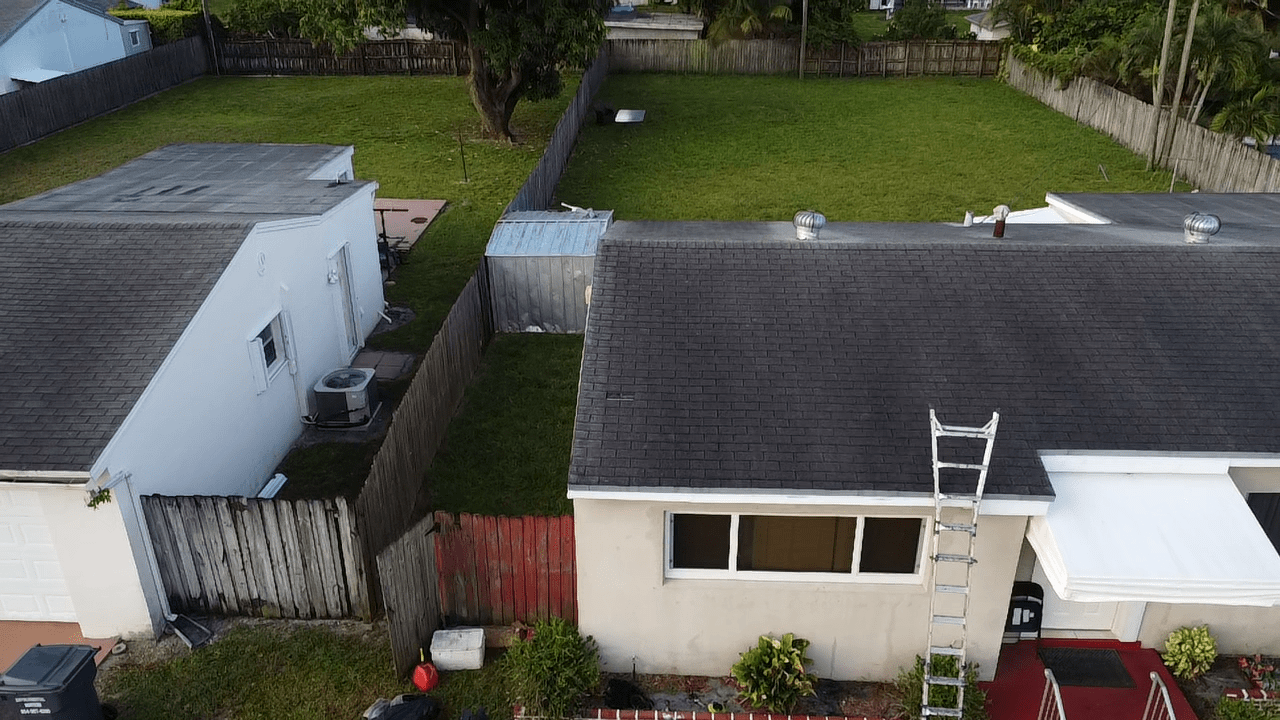
Which Roofing Material Is Right for Your South Florida Home?
Each material has a different lifespan, cost profile, and installation complexity in Florida’s climate.
Concrete and Clay Tile
Tile is the dominant roofing material across South Florida for a reason — it handles heat, UV, and salt air better than almost anything else. A properly installed concrete tile roof can last 40–50 years in this climate. Clay tile can last longer. The trade-off is weight: tile roofs require adequate structural support, and not every home is designed for a tile-to-tile replacement without a structural assessment. The tile roofing installation process involves specific underlayment requirements in HVHZ, including peel-and-stick membranes at valleys and eaves.
On installation method: foam-set tile (Poly Set or equivalent) rated at 180 mph outperforms mechanically fastened tile rated at 160 mph in wind uplift tests. It also provides attic insulation benefit. Ask your contractor which method they use and what the NOA-tested wind rating is for that specific system.
Asphalt Shingles
Shingles are the most affordable option at installation but carry the shortest lifespan in South Florida — typically 12–15 years given the combination of heat, UV, and storm exposure. Premium architectural shingles with strong wind warranties are available. GAF’s Layer Lock system, for example, uses a 1.81-inch nail line (dramatically wider than pre-2020 shingles) and a Wind Proven warranty with no maximum mph cap and no named-storm voiding clause — a meaningful difference from the standard 130 mph caps most competitors offer.
A GAF System Plus warranty, available through Silver Plus certified installers, covers shingles, labor, tear-off, and accessories on a 50-year non-prorated basis. Explore shingle roofing options and warranty details if this material fits your budget and timeline.
Metal Roofing — Standing Seam
Metal standing seam is gaining ground across South Florida, and the performance case is strong. Englert standing seam panels are fabricated custom and roll-formed on-site, run as one continuous piece from ridge to eave (no horizontal seams), and use a clip system that allows thermal expansion without oil canning or buckling. Roof panels rated for hurricane uplift — with properly stamped Englert clips at 6-inch spacing at ridge and eave — deliver structural performance that nail-strip systems cannot match.
Lifespan: 50 years or more with proper maintenance. Wind mitigation inspectors frequently rate metal roofs favorably, which translates to meaningful insurance premium reductions. Metal roofing installation and cost details are worth reviewing if you’re weighing the long-term value equation.
Stone-Coated Metal
Stone-coated steel (such as Westlake’s Unified Steel) offers tile-like aesthetics with metal-level wind performance. The Unified Steel VSH-rated product carries a Lifetime warranty with no named-storm exclusion and no saltwater exclusion — a notable contrast to some competitors’ products that include named-storm and saltwater clauses. HOA-friendly profiles are available, and Florida SB 293 means HOAs cannot prohibit metal roofing regardless of aesthetic restrictions.
Flat / Low-Slope Roofing (TPO and Membrane)
Many South Florida homes — particularly those with additions, patios, or flat-roof sections — require membrane roofing. TPO is the current standard for residential flat sections: it handles UV, resists ponding water, and is compatible with tapered insulation systems that improve drainage. Cost varies based on whether the installation includes tapered ISO insulation, a Dens Deck cover board, or a tear-off of existing material. Flat roofing requires specific expertise; the installation details that prevent leaks are not the same as those for pitched roofs.
| Material | Typical Lifespan (S. FL) | Installed Cost Range | HVHZ Approved |
|---|---|---|---|
| Concrete / Clay Tile | 40–50+ years | $1,000–$1,350/sq | Yes (NOA required) |
| Metal Standing Seam | 50+ years | $1,050–$1,300/sq | Yes (NOA required) |
| Stone-Coated Metal | Lifetime (warranty) | $1,175–$1,400/sq | Yes (NOA required) |
| Asphalt Shingles | 12–15 years | $750–$850/sq | Yes (NOA required) |
| Flat / TPO | 20–25 years | $800–$1,400/sq | Yes (NOA required) |
Per square = per 100 sq ft installed. Ranges reflect material grade, deck condition, complexity, and permit scope. Get a site-specific estimate before budgeting.
Contractor Evaluation
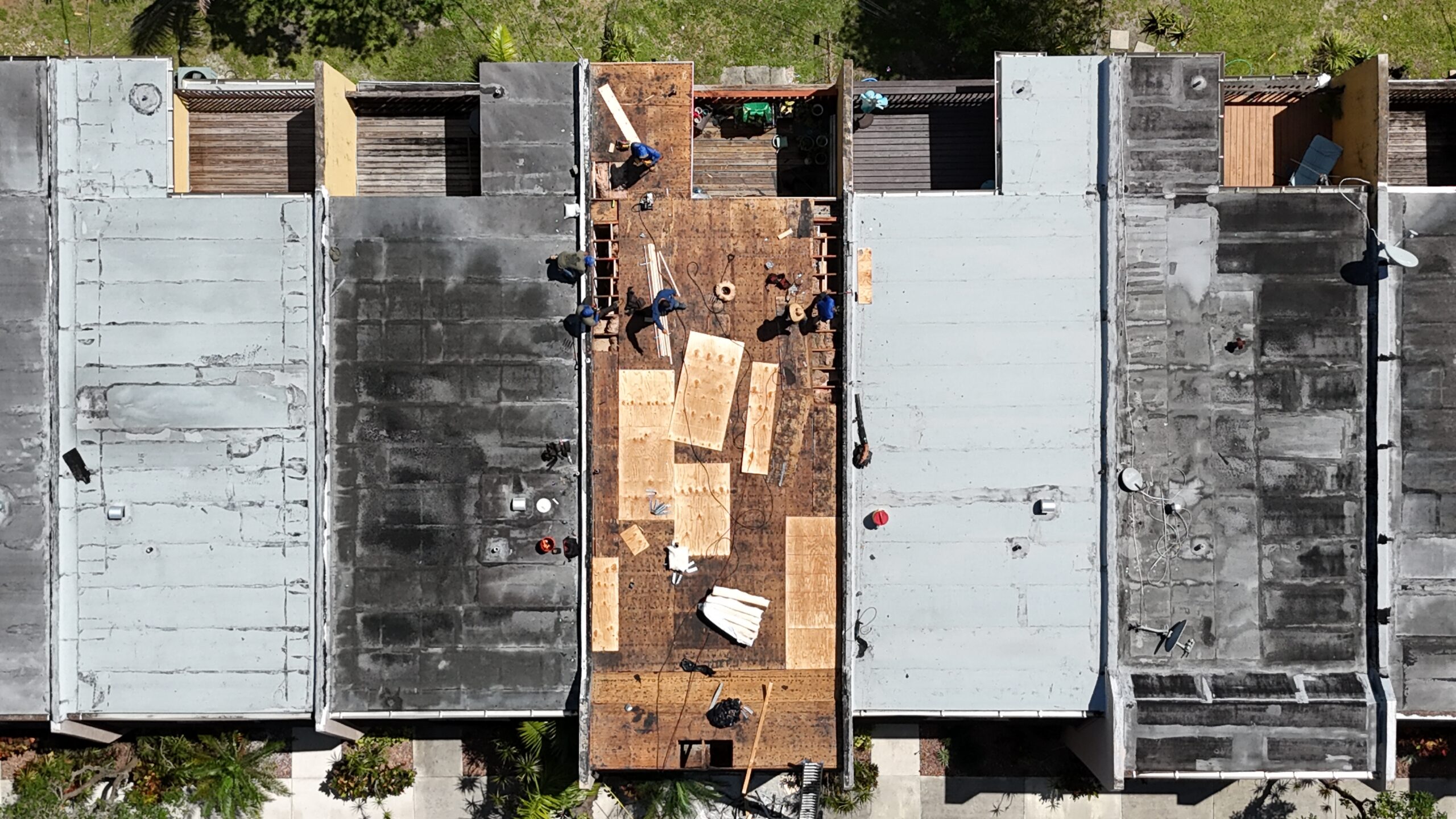
8-Point Checklist for Vetting Roofing Contractors in South Florida
Use this before signing any contract.
| # | What to Check | How to Verify | Red Flag |
|---|---|---|---|
| 1 | Florida Certified Roofing Contractor license | DBPR online license search (myfloridalicense.com) | License belongs to a different name or company than bidding |
| 2 | Workers’ Compensation insurance | Request Certificate of Insurance; verify carrier is active | “Exempt” status on a crew of multiple workers |
| 3 | General Liability insurance | Same COI; confirm coverage limit is adequate for project size | No COI or expired policy |
| 4 | NOA numbers for specified products | Miami-Dade product approval portal | Cannot provide NOA for any product they plan to install |
| 5 | References and permit history | Ask for 3 recent local references; search permit history by contractor name at municipal building dept | No verifiable local permit history |
| 6 | Written scope covering decking and structural items | Read the contract; ask specifically about deck replacement and hurricane strap inspection | Vague scope or verbal-only promises |
| 7 | Written material and workmanship warranty | Request warranty documents before signing | Warranty is verbal or references a company with no local track record |
| 8 | Permit pulled in contractor’s name | Confirm in writing before work starts; verify at building dept portal | “Homeowner permit” or no permit discussed |
How to Verify a Florida Roofing Contractor License (DBPR)
Go to myfloridalicense.com and search by license number or contractor name under “Verify a License.” A Florida Certified Roofing Contractor license (prefix CCC) is issued to an individual, not a company. The name on the license should match the person who will be responsible for your project. Verify that the license is current (not expired or on suspension) and that the address or DBA shown is consistent with the company bidding your job.
Note: a Certified General Contractor (CGC) or Certified Residential Contractor (CRC) is also authorized to perform roofing work under Florida Statute, but the license class you should see on a roofing-only contract is typically CCC (Certified Roofing Contractor). A contractor holding both a roofing license and a general contractor license can handle structural scope that a roofing-only contractor legally cannot — relevant when your project involves hurricane straps, decking repairs, or structural modifications discovered during tear-off. Florida licensed: CGC1531370 · CRC1331693 · CCC1333168 · SCC131153098.
The GC Scope Differentiator — Why It Matters on Roof Replacements
A roofing-only contractor is authorized to replace your roof. What they are not authorized to do is handle structural modifications that may surface once the deck is exposed — deteriorated rafters, missing hurricane straps, or rotten sheathing that requires a structural repair, not just a deck board swap. When those conditions arise, a roofing-only crew has to stop and call a separate contractor, which creates scheduling gaps and split accountability.
A contractor holding both a Certified Roofing Contractor and a Certified General Contractor license can address structural scope in-house — hurricane strap installation, rafter sistering, structural deck repairs — without requiring a second contractor to re-mobilize. This is a structural advantage grounded in license breadth, not a promise of faster or better outcomes. It simply means the scope of work that can be managed under one contract, one permit, and one point of accountability is broader.
License & Authority
A Certified Contractor, Not a Lead Aggregator
Bigfoot Windows & Roofing is a licensed contractor — not a middleman who resells your project to a subcontract crew.
Certified Residential Contractor CRC1331693
Certified Roofing Contractor CCC1333168
Glass & Glazing Specialty SCC131153098
Miami-Dade · Broward · Palm Beach
HVHZ Qualified
GAF Silver Plus Certified
“In South Florida, the permit and product approval process is not a formality — it is the work. If a contractor treats it like paperwork to skip, that tells you everything about how they will handle the rest of your job.”
Founder & President, Bigfoot Windows & Roofing
Products We Install
What Bigfoot Windows & Roofing Installs — and Why
We carry GAF shingles (Silver Plus certified, System Plus warranty available), Englert standing seam metal (roll-formed on-site, custom per job, 24-gauge C4 steel, 50-year warranty), Westlake/Unified Steel stone-coated metal (Lifetime warranty, no named-storm exclusions), and TPO for flat sections. On tile roofs, we install Westlake’s Saxony 900 (flat concrete) and Barcelona profiles — the most popular systems in Southeast Florida.
We do not install EMC, Sunshine, Big, or Ply Gem products. These lines have demonstrated high callback rates in South Florida conditions. We also do not currently carry Owens Corning or CertainTeed shingles.
For homeowners replacing windows at the same time as their roof — common when re-roofing triggers an insurance policy review — we install impact-rated windows and doors from Mr. Glass and ES Windows. Coordinating both scopes under one Certified General Contractor eliminates the scheduling and permit sequencing headaches that come from hiring two separate companies.
Use the roofing cost estimator to get a preliminary range before requesting a site visit. For financing options including PACE (paid through your property tax bill, no credit score impact), visit the financing page.
The Process
What to Expect: From First Call to Final Inspection
- Site Assessment: A project walk covers the existing roof condition, deck, flashing, fascia, gutters, and — where relevant — hurricane straps and structural framing. Findings are documented before a scope is written.
- Written Scope and Material Selection: You receive a written proposal specifying products by name, NOA numbers, warranty terms, and what happens if deck damage is found during tear-off. Verbal scopes are not acceptable on a project of this size.
- Permit Application: We pull the permit in our name, submit product approvals, and manage the building department timeline. You should never be asked to pull your own permit for a contractor-performed roof replacement.
- Tear-Off and Deck Inspection: Old material is removed, the deck is inspected (by us and by the city or county inspector), and any structural repairs are addressed before new material goes on.
- Installation and In-Progress Inspection: Underlayment and secondary water barrier are installed and inspected before the finish material is applied.
- Final Inspection and Closeout: The city or county inspector performs the final walk. Permit is closed. You receive documentation including the permit card, warranty documents, and any product approval records — important for future wind mitigation inspections and insurance policy updates.
Ready to get a roofing estimate? Use the online estimator or call us directly.
Related Articles
Keep Reading
Related Articles
Who We’re Not the Right Fit For
- Homeowners who need the lowest possible upfront price above all else. We do not cut scope to win bids. If a proposal requires omitting deck inspection, skipping a secondary water barrier, or using products without valid NOAs, we will not match that price. There are contractors who will — we are not one of them.
- Projects outside Miami-Dade, Broward, and Palm Beach Counties. We do not serve Central Florida, the Treasure Coast, or the Gulf Coast. If your project is outside our service area, a locally licensed contractor will serve you better.
- Homeowners who need a roofing-only vendor with no interest in other scope. We hold four licenses and often identify window, structural, or entry door scope during a roofing assessment. If you want a contractor who will ignore adjacent issues and stay strictly in lane, our process may feel over-involved.
- Projects requiring product lines we do not carry. We do not install Owens Corning, CertainTeed, or EMC products. If your insurance settlement or HOA specifies one of these, you will need a contractor who carries them.
Frequently Asked Questions
How do I check if a roofing contractor is licensed in Florida?
Go to myfloridalicense.com and search under “Verify a License” using the contractor’s name or license number. A Florida Certified Roofing Contractor carries a CCC prefix. Confirm the license is current, belongs to the individual responsible for your project, and matches the company name on your contract. This search is free and takes under two minutes.
What is the HVHZ and how does it affect my roof replacement?
The High-Velocity Hurricane Zone covers Miami-Dade and Broward Counties and triggers the strictest roofing code in the U.S. Every product installed must carry a Miami-Dade Notice of Acceptance (NOA), wind design pressures are higher than the rest of Florida, and the inspection sequence is more detailed. Not every out-of-area or budget contractor is trained and equipped for HVHZ compliance.
Do I need a permit to replace my roof in South Florida?
Yes — a permit is required for roof replacements across Miami-Dade, Broward, and Palm Beach Counties. The permit should be pulled by the contractor in their name. An un-permitted roof can cause title issues, insurance claim denials, and resale complications. If a contractor suggests skipping the permit or asks you to pull it yourself, treat that as a disqualifying red flag.
What is the average lifespan of roofing materials in Florida’s climate?
Asphalt shingles last roughly 12–15 years in South Florida due to UV, heat, and storm exposure. Concrete and clay tile roofs typically last 40–50 years or more. Metal standing seam is rated at 50+ years. Stone-coated metal carries lifetime warranties. Flat TPO membranes typically perform for 20–25 years. Climate, installation quality, and maintenance frequency affect every material.
How much does a roof replacement cost in Miami-Dade?
Installed costs typically run $750–$850 per square for asphalt shingles, $1,000–$1,350 for tile, $1,050–$1,300 for metal standing seam, and $800–$1,400 for flat membrane roofing. One “square” equals 100 square feet. Final cost depends on roof size, pitch, deck condition, permit complexity, and material grade. Use the roofing estimator for a preliminary range.
Will my homeowner’s insurance cover a roof replacement in South Florida?
Coverage depends on your policy, the cause of damage, and your roof’s age. Citizens Insurance and many private carriers are non-renewing policies on roofs 20–25 years or older. If a storm causes more than 25% damage (the Florida Building Code trigger), a full replacement is typically required rather than a patch. A wind mitigation inspection after a new roof can meaningfully reduce your annual premium.
How do I spot a storm chaser after a hurricane?
Storm chasers typically cannot provide a Florida CCC license number, have no local permit history, request large cash deposits upfront, and cannot produce NOA numbers for the products they plan to install. Always verify the license on DBPR before signing. Contractors who were operating in your market before the storm, with a verifiable local permit history, are a safer baseline to start from.
What is a wind mitigation inspection and do I need one?
A wind mitigation inspection is a licensed inspector’s assessment of your roof’s construction features — roof shape, attachment method, secondary water barrier, opening protection. Results are submitted to your insurer for a premium discount. After a new roof installation with a qualifying secondary water barrier and impact-rated windows, the premium reductions can be significant. Ask your contractor to document the installation details that support wind mitigation credit before the job closes out.
Sources
- Florida Building Code — Residential, 8th Edition (High-Velocity Hurricane Zone provisions, Section R4401 et seq.)
- Miami-Dade County Building Department — Product Control Search (miamidade.gov/building)
- Florida Department of Business and Professional Regulation — License Verification (myfloridalicense.com)
- Florida SB 293 (2023) — Prohibiting HOA restrictions on metal roofing and impact windows
- GAF Roofing — Layer Lock Technology and Wind Proven warranty specifications
- Florida Statute §489 — Contractor licensing and scope of work authority
Get Started
Request a Free Roofing Estimate
Use the online estimator for a preliminary range, or call us to schedule a site assessment. We serve Miami-Dade, Broward, and Palm Beach Counties.