
Why Missing Wind Mitigation Documentation Is Killing South Florida Real Estate Deals
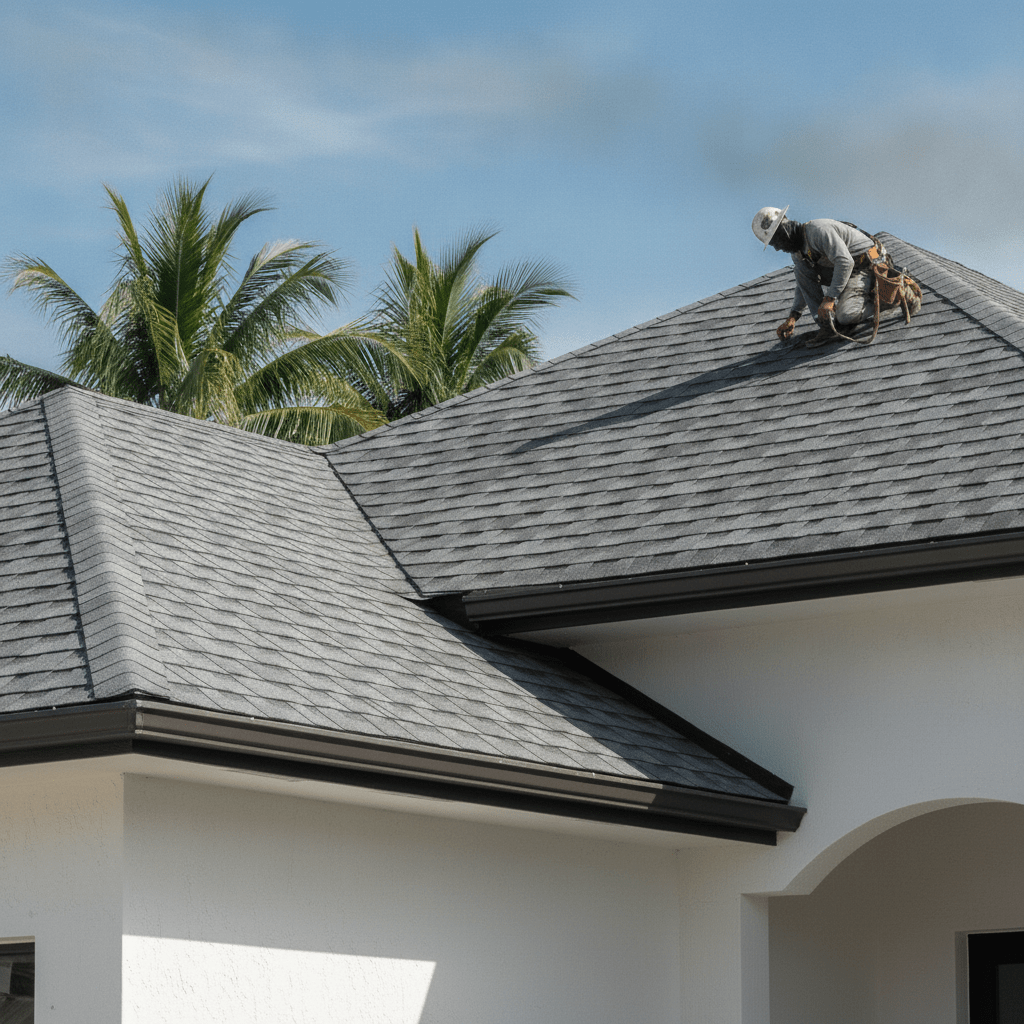
Picture this: a buyer has been pre-approved for a million-dollar home in Coral Gables. The property is beautiful — historic architecture, mature trees, old-world character. Then the insurance quote comes back at $8,000 per year. That single number, spread over twelve months, adds $666 to a monthly payment that was already at the limit. The deal collapses. The seller has to explain to the next interested buyer why the house went under contract and came back. The home now has, as one South Florida insurance professional puts it, a “black eye.”
This scenario is not rare. It is happening on historic streets across Miami-Dade and Broward counties — and in most cases, it is entirely preventable. The root cause is not the condition of the home. It is missing or incomplete wind mitigation documentation. We sat down with an insurance industry professional to break down exactly how this happens, what documentation underwriters actually require, and why working with a properly certified contractor matters more than most homeowners realize.
The $8,000 Problem: How Insurance Premiums Collapse Mortgage Qualifications
South Florida has one of the most complex home insurance environments in the country. Miami-Dade and Broward counties sit within the High Velocity Hurricane Zone (HVHZ) — the strictest residential building code jurisdiction in the United States. Homes built before modern code changes, particularly those featuring toenail construction instead of hurricane straps, or without compliant opening protection, are underwritten at maximum-risk pricing.
For a buyer using financing, that premium enters the Debt-to-Income (DTI) calculation. Lenders typically cap total housing costs — principal, interest, taxes, and insurance — at a percentage of gross monthly income. When a $4,000-per-year insurance expectation becomes an $8,000-per-year reality, the monthly gap is $333 to $666. On a purchase already close to the qualification limit, that gap alone disqualifies the buyer.
“Maybe you’re just scraping by enough to get paid for that house,” the insurance professional told us. “And it’s going to make or break the deal.” The seller can avoid this entirely by investing in documented upgrades before listing — or by pricing accordingly to offer a credit.
There is also a strategic play available during active negotiations. Bringing an insurance professional in before making an offer — rather than after going under contract — gives the buyer a data-driven negotiating tool. “You could use me as a negotiating tool,” the professional explained. “‘We did some pricing and if this house had this, then my price would only be that.’ Or, I need a credit. And instead of saying like, I want the whole credit for the roof, maybe I’ll take half the credit because I’ll save some money with the insurance on the back end.”
The “Black Eye” Phenomenon: What a Failed Contingency Does to Your Listing
Florida real estate contracts routinely include a financing contingency — a clause that allows a buyer to exit the deal without losing their deposit if they cannot secure a mortgage. This is a standard buyer protection. But for sellers, it creates an asymmetric risk that is rarely discussed before listing.
When a buyer exercises a financing contingency because the insurance premium torpedoed their DTI, the property re-enters the market with a disclosed history. Future buyers and their agents will see that the property went under contract and came back. They will ask why. The answer — that insurance costs disqualified the previous buyer — signals to every subsequent buyer that they face the same risk.
“There’s an explanation and you have to explain it,” the professional noted. “It kind of opens up a can of worms.” Sellers who address the documentation gaps before listing eliminate this risk entirely. The cost of a new roof or impact window installation, viewed as a pre-sale investment rather than a sunk cost, often pays back through a cleaner transaction, a higher final sales price, and a buyer pool that includes financed purchases — not just all-cash offers.
What Insurance Underwriters Actually Need (and What Most Roofers Do Not Provide)
The gap between what a homeowner pays for and what an insurer will credit is almost always a documentation problem, not a construction problem. The work may have been done correctly. The materials may meet code. But if the paperwork is incomplete, the credit does not exist — and the next homeowner, or the next inspector, has no way to prove what was done.
Secondary Water Barriers (SWR) are a perfect example. An SWR is a self-adhering peel-and-stick underlayment applied directly to the roof deck before shingles are laid. It qualifies for a meaningful insurance credit on a Wind Mitigation inspection. But the credit only appears if the inspector can verify it — and verification requires documentation.
The photographic standard is more specific than most homeowners or roofers expect. “I would take pictures like I have a pool, my tile’s very distinct — take a picture that kind of includes my pool,” the insurance professional told us. “So if an underwriter ever gave me a hard time, I’d be like, that’s my pool. That’s my sidewalk. You need something in the background — not just general pictures, like close-ups where I couldn’t tell your house from your neighbor’s house from your other neighbor’s house.”
Generic material close-ups are routinely rejected because they cannot be tied to a specific address. Underwriters need geographic context — proof that the documented material is on your roof and not a stock photo.
The permit record carries equal weight. “All they care about is the permit,” the professional explained. Specifically, the permit must show the word “FINAL” in municipal records. Issued, approved, and inspected are not sufficient. Final means the work passed final inspection. Without it, “you don’t get the credit.” Homeowners who cannot locate a final permit — because a prior owner handled the work, because the permit was pulled in a different municipality, or because records were never properly filed — have no recourse except to re-do the inspection from scratch.
How Drone Documentation Changes the Equation
Traditional roofing documentation — photos taken at ground level or from a ladder — produces exactly the type of close-up imagery that underwriters reject. Without aerial context, a photo of self-adhering underlayment on a roof deck is indistinguishable from any other roof in the neighborhood.
Drone technology during installation stages solves this problem permanently. When a drone captures photos at multiple points during the roofing process, the resulting images include surrounding property features by definition: neighboring rooflines, pools, driveways, distinctive trees, and street geometry that establishes the location beyond any reasonable doubt.
“A drone picture, we might catch your car, we’re going to catch your neighbor’s house, we’re going to catch details about your backyard that are very hard to deny as proof that this is your actual house,” we explained during the conversation. For homeowners who complete a roof installation with properly geolocated drone documentation, the SWR credit survives property sales, inspector changes, and decades of ownership transfers — because the evidence is unambiguous.
Bigfoot Windows & Roofing deploys drone technology through multiple stages of every roofing installation for exactly this reason. The drone documentation package — combined with permit finalization tracking and a complete handoff of inspection-ready records — is designed to ensure that every credit the homeowner earned is actually credited on their Wind Mitigation report, not just hoped for.
Maximizing Discounts: Hurricane Straps, Opening Protection, and What Actually Moves the Needle
Florida homeowners frequently overestimate the insurance benefit of certain upgrades and underestimate others. The Wind Mitigation inspection evaluates several structural categories independently, and the credit weight is not evenly distributed.
| Upgrade | Wind Mit Credit Impact | Notes |
|---|---|---|
| Hurricane straps (roof-to-wall connectors) | High — often the largest single credit | Verified by inspector; requires accessible attic |
| Roof construction & shape | High | Hip roof vs. gable; deck attachment type |
| Opening protection (shutters) | Moderate | Credit based on coverage category (A, B, C, D) |
| Opening protection (impact windows) | Same as shutters — no additional credit | Impact windows do not increase the opening protection discount over shutters |
| Secondary Water Barrier (SWR) | Moderate — requires documented proof | Credit lost without geographic photo documentation |
“Hurricane straps having opening protection is going to give you a big discount,” the insurance professional confirmed. “Hurricane protection, hurricane straps are going to give you the most discounts. As we talked about, unfortunately, switching from shutters to impact windows do not save you anything additional, specifically related to insurance.”
This is a counterintuitive truth that many contractors avoid saying out loud. Impact windows are still a significant investment — they are permanent, they comply with current HVHZ codes, they qualify under Florida SB 293 (which prevents HOAs from blocking their installation), and they have real structural value in a named storm. They improve resale appeal and remove the operational burden of deploying shutters. But buyers who are investing in impact windows primarily to reduce insurance premiums should know the honest answer: the insurance credit is the same as shutters. The structural and lifestyle benefits are real. The insurance premium savings, relative to code-compliant shutters, are not.
Inspection Lifespan: A Critical Planning Factor
| Inspection Type | Valid For | What It Covers |
|---|---|---|
| Wind Mitigation | 5 years | Roof construction, straps, opening protection, SWR, roof deck attachment |
| 4-Point | 1 year (some carriers allow 2) | Roof, electrical, plumbing, HVAC — required for older homes to obtain coverage |
The lifespan difference matters most during a property sale. A Wind Mitigation report dated within the past five years typically transfers to the new owner and can be used to secure premium discounts immediately. A 4-Point inspection dated more than a year ago will need to be re-done before most carriers will bind coverage on a home older than a certain threshold — and if the original inspector is no longer reachable, obtaining a replacement becomes an unexpected closing cost and a potential timeline risk.
“If they’re gone, I can’t get a hold of somebody that’s already done that,” the professional told us. “And then a Wind Mil’s good for five years. Four points only good for one year.” The practical advice: work with inspectors and contractors who maintain accessible records and can be reached years after the work is done — not just at the time of installation.
What Homeowners Should Ask Their Contractor Before and After the Job
Based on the full conversation, homeowners completing any roofing or window upgrade should request the following from their contractor before work begins and verify delivery before final payment:
- Aerial/drone photos at each installation stage — especially for Secondary Water Barrier, showing identifiable property context
- Permit number and municipal tracking confirmation — with written confirmation once the permit status reads “FINAL”
- Complete documentation package — all inspection reports, NOAs (Notice of Acceptances), and product approvals filed with permit records
- Inspector contact information — so you or a future owner can reach them for updated reports or clarifications on a Wind Mitigation renewal
The professional’s summary was direct: “Get as much documentation from the builder as possible. Get pictures. As you’re putting the secondary water barrier — take pictures. Communicate with your insurance agent.”
Frequently Asked Questions
How can missing roofing or window permit documentation cause a South Florida real estate transaction to fall apart?
If local building records fail to show a “final” permit status, mortgage underwriters price the home at maximum risk, pushing insurance premiums past $8,000 per year. That premium spike — roughly $666 per month — can push a buyer’s Debt-to-Income ratio above the lender’s limit, killing the mortgage qualification and collapsing the deal even on a well-maintained property.
What specific photographic evidence do insurance companies demand to approve a Secondary Water Barrier discount?
Underwriters require wide-angle field photos that show the self-adhering peel-and-stick underlayment alongside permanent, identifiable property features — such as an in-ground pool, a neighbor’s roofline, or a distinct backyard layout — to prove the material belongs to your specific home. Close-up material shots alone are routinely rejected because they cannot be tied to a specific address.
What is the lifespan difference between a 4-Point inspection and a Wind Mitigation report in Miami?
A Wind Mitigation inspection report remains valid for up to five years in Florida. A 4-Point inspection — covering the roof, electrical, plumbing, and HVAC — typically expires after one year and must be renewed annually. Some carriers allow two years on a 4-Point, but this is not standard.
Does upgrading from hurricane shutters to impact windows improve my insurance discount in South Florida?
No — and this surprises most homeowners. Switching from hurricane shutters to impact windows does not provide additional insurance premium discounts, because both qualify for the same “opening protection” credit category. Impact windows still offer significant value: they are permanent, code-compliant under HVHZ standards, protected by Florida SB 293, and eliminate the hassle of shutter deployment. But for insurance savings specifically, hurricane straps and roof construction type are the categories that move the needle most.
What does the word “FINAL” on a permit mean for my wind mitigation insurance credit?
Underwriters and inspectors require that a permit status shows “FINAL” in municipal records — not “issued,” “approved,” or “inspected.” Final means the inspection was completed and the work passed code. Without the word “FINAL” attached to the permit record, your contractor’s work will not qualify you for the insurance discount, even if the installation was done correctly. You can verify permit status through your local building department or permit tracking services.
How do hurricane straps compare to impact windows for insurance premium discounts in Florida?
Hurricane straps and roof construction type deliver the largest single insurance discounts available through a Wind Mitigation inspection. Opening protection — whether shutters or impact windows — earns a separate credit, but that credit does not increase when you upgrade from shutters to impact glass. If you are investing in your home with insurance savings as the primary goal, confirming your roof has proper strap tie-downs and meets current construction standards is where the largest credit comes from.