
When your roof needs repair or replacement in South Florida, finding the right contractor can feel overwhelming. Hurricane season runs June through November—a full six months—and Miami-Dade County enforces some of the strictest building codes in the United States because of it. According to the National Hurricane Center (NOAA), South Florida averages more than 40 named tropical systems making landfall or threatening the coast every decade, making durable, code-compliant roofing a matter of life and property safety—not just aesthetics.
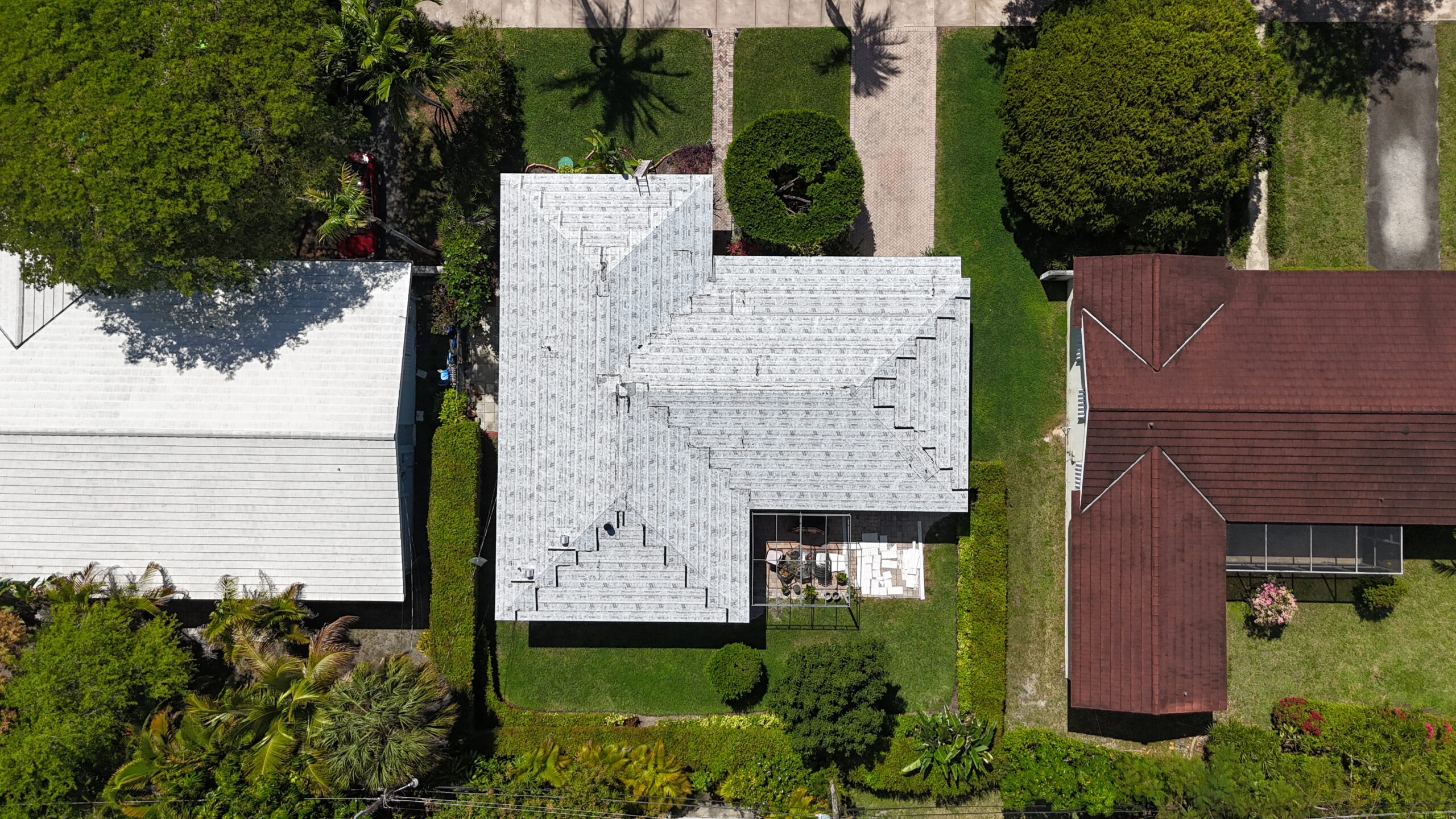
This guide will help you find qualified roofing contractors in Miami-Dade, Broward, and Palm Beach counties while avoiding the common pitfalls that cost homeowners thousands of dollars every storm season.
How to Find the Best Roofers Near You in Miami-Dade County
The key to finding reliable roofers starts with understanding what makes a contractor qualified to work on your home in South Florida—and why cutting corners here costs far more than it saves.
Essential Licensing Requirements for Florida Roofers
Florida law requires roofing contractors to hold specific state-issued licenses depending on the scope of work. You can verify any license instantly through the Florida Department of Business and Professional Regulation (DBPR) license search.
- Certified Roofing Contractor (CRC): Required for all roofing work statewide
- General Contractor (CGC): Needed for structural modifications, major renovations, or projects combining multiple trades
- Glazing Contractor: Required when installing skylights or roof windows
Licensed contractors must carry general liability insurance and workers’ compensation coverage. Florida Statute §489.126 mandates that contractors who collect deposits above a defined threshold must apply for the required permits within 30 days—a consumer protection provision worth knowing before you sign anything.
For more information about our licensing and credentials, visit our About Us page.
High Velocity Hurricane Zone (HVHZ) Expertise
Miami-Dade and Broward counties fall within the High Velocity Hurricane Zone (HVHZ), a designation codified in the Florida Building Code (FBC) that imposes significantly more stringent requirements than the rest of the state. Your roofer must understand:
- Miami-Dade Notice of Acceptance (NOA) or Florida Product Approval: Every product installed must carry an NOA issued by the Miami-Dade County Product Control Division or a Florida Product Approval that covers HVHZ use—no exceptions
- Enhanced fastening schedules: Higher nail density and ring-shank fasteners vs. standard code
- Impact-resistant material specifications: Minimum Class 4 impact rating per FM 4473 or UL 2218
- Proper installation techniques: Specific overlap, adhesion, and deck attachment methods for hurricane resistance
In our own work across Miami-Dade, we recently completed a full concrete-tile replacement on a 3,200 sq ft Kendall home where the prior contractor had used non-NOA-approved underlayment. The homeowner’s insurance adjuster had flagged it during a claim review—we pulled permits, corrected the installation, and got the NOA documentation submitted within the same inspection cycle.
Learn more about hurricane-resistant roofing solutions we offer in South Florida.
What to Look for When Hiring a Roofing Contractor in South Florida
Red Flags to Avoid
The Florida Attorney General’s office consistently lists unlicensed contractor fraud among the top consumer complaints after major storms. Protect yourself by watching for these warning signs:
| Red Flag | Why It’s Dangerous |
|---|---|
| Door-to-door solicitation after a storm | Often unlicensed “storm chasers” with no local accountability |
| Requests large payment upfront | May disappear with your money before work begins |
| No verifiable local address | Difficult or impossible to reach for warranty issues |
| Pressure to sign immediately | Prevents you from getting competitive quotes or reviewing the contract |
| Significantly low estimates | Often signals subpar materials, unlicensed labor, or no permits |
| Cannot produce a license number | Unlicensed work is unenforceable and voids many insurance policies |
Questions to Ask Potential Contractors
Before hiring any roofer, get clear written answers to these essential questions:
- Are you licensed, bonded, and insured in Florida? (Ask for license number and certificate of insurance)
- Do you handle permit applications and inspections—or does that fall to the homeowner?
- What warranty do you provide on materials and workmanship, and is it transferable?
- Can you provide local references from projects completed in the past 12 months?
- Do all products you install carry a Miami-Dade NOA?
- Will you assist with insurance claim documentation if needed?
For answers to these questions about our services, check out our comprehensive FAQ section.
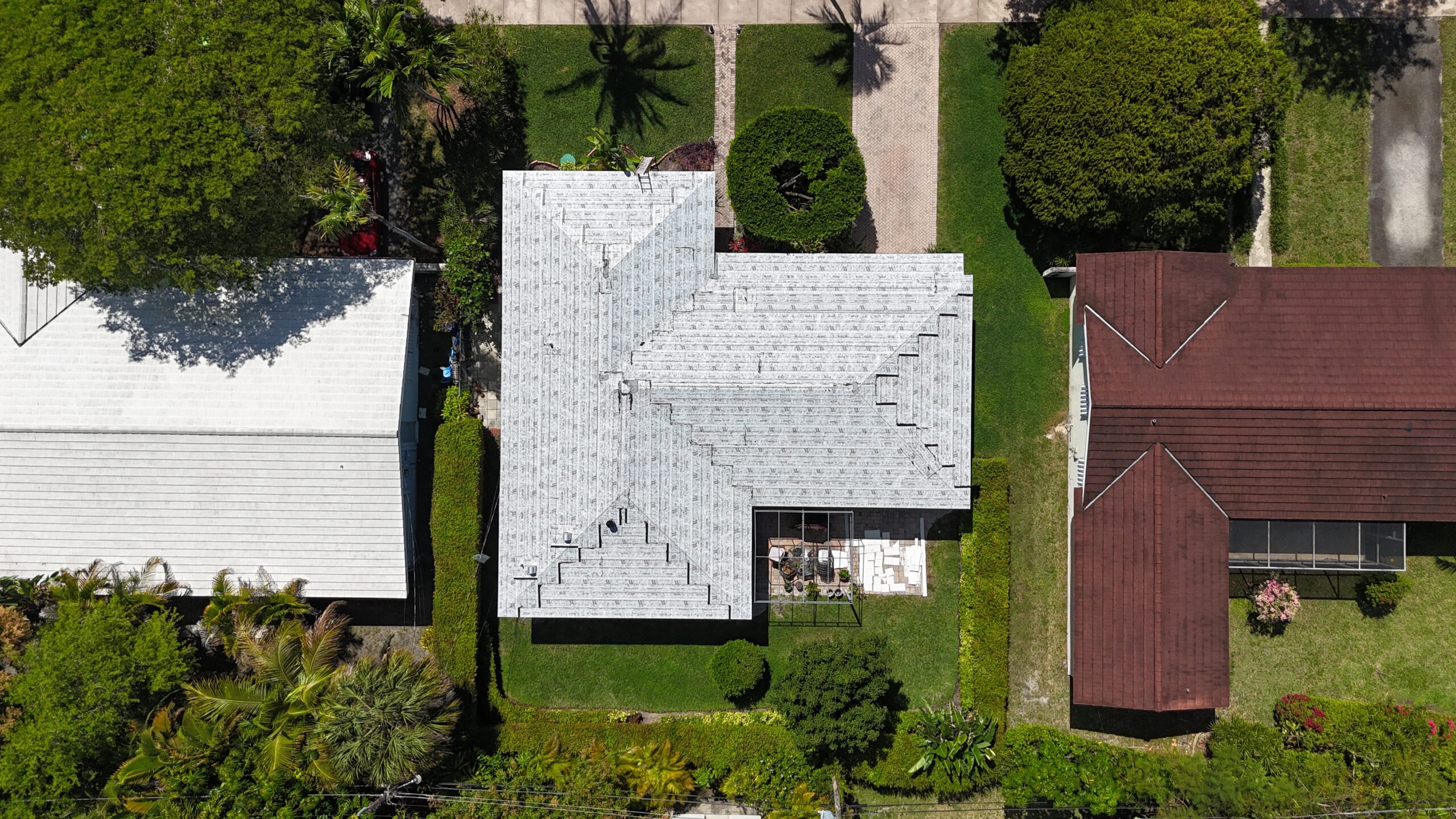
Roofing Materials That Work Best for Florida Hurricanes
South Florida’s climate demands specific roofing materials engineered to withstand extreme weather. The U.S. Department of Energy notes that cool-roof technology can reduce peak cooling demand by 10–15% in hot climates like South Florida—making material selection both a safety and an energy decision.
Impact-Resistant Roofing Options Compared
| Material | Hurricane Rating | Typical Lifespan (FL) | Best For |
|---|---|---|---|
| Concrete Tile | Class 4 Impact (FM 4473) | 30–50 years | Traditional Florida homes; long-term value |
| Metal Roofing | Up to 170 mph winds | 40–70 years | Modern, energy-efficient homes; low maintenance |
| Impact Shingles | Class 4 Impact (UL 2218) | 20–25 years (FL heat) | Budget-conscious homeowners seeking good protection |
| Modified Bitumen | High wind resistance (NOA-tested) | 15–25 years | Flat or low-slope roofs; commercial applications |
Energy Efficiency Considerations
With South Florida’s intense sun and cooling bills that rank among the highest in the nation (U.S. Energy Information Administration), choose materials with:
- High solar reflectance (SRI) ratings — look for SRI ≥ 78 for steep-slope and ≥ 29 for low-slope per ENERGY STAR Roof Products criteria
- ENERGY STAR certification for potential utility rebates
- Cool roof technology — reflective coatings or light-colored tiles that reduce attic temperatures
- Proper ventilation compatibility — ridge vents and soffit vents sized to Florida’s heat load
Discover our selection of energy-efficient roofing materials perfect for the Florida climate.
Roof Replacement Costs in Miami-Dade County
Understanding typical costs helps you budget appropriately and identify unusually high or low estimates. According to Remodeling Magazine’s Cost vs. Value Report, roofing replacement consistently ranks among the top five highest ROI home improvement projects nationwide—and that return is amplified in South Florida’s storm-sensitive real estate market.
Factors That Influence Your Total Roofing Cost
- Roof size and complexity: Square footage, pitch, dormers, and architectural features
- Material selection: Premium materials cost more upfront but significantly reduce long-term maintenance costs
- Structural modifications: Adding hurricane straps, reinforcing trusses, or replacing damaged decking
- Permit and inspection fees: Typically $200–$800 in Miami-Dade, depending on project scope
- Tear-off and disposal costs: Removing and legally disposing of old roofing materials
- HVHZ compliance upgrades: Enhanced fasteners, NOA-approved underlayment, and edge metal can add 8–15% vs. non-HVHZ installations
Average Price Ranges (Per Square Foot — Miami-Dade, 2025–2026)
| Material Type | Material Cost | Installation Cost | Total Range |
|---|---|---|---|
| Asphalt Shingles (Impact-rated) | $3–$5 | $3–$5 | $6–$10 |
| Concrete Tile | $4–$8 | $5–$8 | $9–$16 |
| Metal Roofing | $7–$12 | $5–$10 | $12–$22 |
| Clay Tile | $8–$15 | $6–$12 | $14–$27 |
Note: Prices reflect South Florida market conditions and HVHZ compliance requirements. Actual costs vary based on specific products, roof complexity, structural needs, and current material pricing.
For a detailed estimate tailored to your specific project, visit our roofing cost calculator.
Florida Roofing Permits and Inspection Requirements
When Permits Are Required in Miami-Dade County
The Miami-Dade County Building Department requires permits for:
- Complete roof replacement (any material type)
- Structural modifications to roof framing
- Adding hurricane straps or truss reinforcements
- Installing roof-mounted equipment (solar panels, HVAC units)
- Repairs exceeding 25% of the total roof area
The Permit Process — Step by Step
- Application submission: Contractor submits engineered drawings, product NOA documentation, and product specifications to the county
- Plan review: Miami-Dade Building Department reviews plans — typically 10–15 business days
- Permit issuance: Fees paid and permit issued; work may begin
- Work completion: Roofing installed strictly per approved plans and product NOA requirements
- Final inspection: County inspector verifies HVHZ code compliance on-site
- Certificate of completion: Issued upon passing inspection; required for insurance and real estate transactions
Professional contractors handle this entire process. Unpermitted roofing work can void your homeowner’s insurance, create problems at sale, and result in mandatory tear-off and reinstallation at your cost.
Filing Insurance Claims for Roof Damage in Florida
Understanding Your Coverage
Florida homeowners insurance policies typically cover sudden and accidental losses. The Florida Department of Financial Services outlines that standard policies cover:
- Wind damage from hurricanes and tropical storms
- Hail damage
- Falling tree or debris damage
- Fire damage
Important: Flood damage is explicitly excluded from standard homeowners policies and requires a separate National Flood Insurance Program (NFIP) policy or private flood coverage.
Steps to File a Successful Roof Damage Claim
- Document damage immediately: Take timestamped photos and video from safe vantage points
- Prevent further damage: Deploy tarps or temporary repairs — insurers may reduce claims if you fail to mitigate
- Contact your insurance company: Report the claim promptly; Florida Statute §627.70131 requires insurers to acknowledge claims within 14 days
- Get a professional assessment: Have a licensed roofing contractor inspect and document all damage before the adjuster visit
- Be present during the adjuster inspection: Walk the roof with the adjuster and ensure all damaged areas are noted
- Review the settlement offer carefully: Confirm it covers all code-required upgrades, not just like-for-like replacement
We have assisted dozens of Miami-Dade homeowners in getting full replacement settlements by providing detailed photo documentation and scope-of-work reports that adjusters could not dispute. Learn more about our insurance claim assistance services.
Emergency Roofing Services in South Florida
When to Call for Emergency Service
Contact emergency roofers immediately if you notice:
- Active water infiltration during or after a storm
- Missing, displaced, or severely damaged shingles or tiles
- Visible structural damage — sagging decking, broken rafters
- Fallen trees or large debris resting on the roof
- Exposed underlayment, decking, or open penetrations
Temporary Protection Measures (Before the Crew Arrives)
- Place buckets under active leaks to protect flooring and belongings
- Move furniture, electronics, and valuables away from damaged areas
- Deploy tarps over exposed areas only if you can do so safely from ground level or a secure ladder
- Document all damage with timestamped photos and video before any temporary repairs
- Do not walk on damaged roofing — structural integrity may be compromised
For immediate emergency assistance, contact our 24/7 emergency roofing team.
The Advantage of Working with a Licensed General Contractor
Many roofing projects in South Florida require more than shingle or tile replacement. When structural modifications are needed—adding hurricane straps, opening changes, reinforcing roof-to-wall connections, or integrating solar—working with a licensed General Contractor (CGC) means a single point of accountability for the entire scope.
This integrated approach delivers:
- One licensed contractor responsible for the full project
- Better coordination between roofing, structural, and electrical trades
- Unified workmanship warranty across all scopes
- Streamlined permit and inspection process — one set of drawings, one inspection
- Cost savings from eliminating markups between separate subcontractors
On a recent Coral Gables renovation we managed, the homeowner had originally hired separate roofing and structural contractors. After permitting conflicts delayed the project by six weeks, they brought us in to consolidate the scope under a single CGC permit — we resolved the conflicts and completed the work in half the remaining estimated time.
How Often Should You Replace Your Roof in South Florida?
South Florida’s combination of UV radiation, humidity, salt air, and hurricane wind load accelerates roof aging measurably compared to other U.S. regions. A University of Florida IFAS Extension study on building envelope performance in tropical climates found that uncoated asphalt shingles in South Florida can lose effective granule coverage up to 30% faster than the same product installed in the Mid-Atlantic states.
Material-Specific Lifespans in the South Florida Climate
- Asphalt shingles (impact-rated): 15–25 years — UV and heat accelerate aging; inspect annually
- Concrete tile: 30–50 years — durable but inspect fasteners and underlayment every 10 years
- Metal roofing: 40–70 years — minimal maintenance; inspect sealants at penetrations every 5 years
- Modified bitumen (flat/low-slope): 15–25 years — inspect seams and drains after every storm event
Signs It’s Time for Replacement
- Multiple leaks or recurring repair needs in the same areas
- Significant granule loss on asphalt shingles (fills gutters; visible bare patches)
- Cracked, broken, or displaced tiles in multiple locations
- Sagging or deflecting roof sections
- Daylight visible through roof boards from the attic
- Mold, mildew, or water stains on attic sheathing or interior ceilings
Schedule a free roof inspection to assess your roof’s current condition and replacement timeline.
Frequently Asked Questions About Roofing in South Florida
How long does a roof replacement take in Miami-Dade County?
Most residential roof replacements take 1–3 days of active installation, depending on roof size and material type. However, the permit approval process through the Miami-Dade Building Department typically adds 10–15 business days before work can legally begin. Weather delays during hurricane season can extend the overall timeline. Plan your project start date accordingly — we recommend initiating the permit process at least 3–4 weeks before your target installation date.
Do I need special permits for roof repair after a hurricane?
Yes. Under Miami-Dade County Building Code, any repair covering more than 25% of your total roof area requires a permit. Storm-related repairs must also comply with current Florida Building Code and HVHZ standards, even if your original roof was installed under older code requirements. This means a major post-storm repair can trigger an upgrade to materials with a Miami-Dade NOA or a Florida Product Approval that covers HVHZ use throughout — something your insurance claim should account for.
What’s the best roofing material for hurricane protection in South Florida?
Metal roofing and concrete tile offer the strongest hurricane protection in our climate, with verified wind ratings up to 170 mph and Class 4 impact resistance per FM 4473. Impact-resistant asphalt shingles (UL 2218 Class 4) provide solid protection at a lower installed cost. Regardless of material, all products installed in Miami-Dade and Broward counties must carry a Miami-Dade NOA or a Florida Product Approval that covers HVHZ use.
Will my insurance cover roof replacement if my roof is just old?
Insurance generally does not cover replacement due to normal wear and tear or age-related deterioration. However, if your roof fails because of a covered peril—such as wind or hail damage from a named storm—replacement costs are typically covered minus your deductible, subject to your policy’s actual cash value (ACV) vs. replacement cost value (RCV) terms. Florida has specific provisions for matching materials and code upgrade coverage; review your policy carefully or contact the Florida Department of Financial Services for guidance.
How can I verify that my roofer is properly licensed in Florida?
Visit the Florida DBPR license verification portal and enter the contractor’s license number. Confirm they hold an active Certified Roofing Contractor (CRC) or General Contractor (CGC) license. Also verify their certificate of insurance directly with their insurer — don’t accept a paper copy alone. A licensed contractor will never hesitate to provide this information before you sign.
How often should I have my roof inspected in South Florida?
We recommend a professional inspection at minimum once per year — ideally in May before hurricane season — and again after any storm that produces sustained winds above 40 mph. Many homeowners insurance policies now also require documented inspections to maintain coverage or avoid surcharges on older roofs. A documented inspection report from a licensed contractor creates a baseline record that is invaluable during insurance claims.
Choose Bigfoot Windows & Roofing for Your South Florida Roofing Needs
Don’t let roofing problems compromise your home’s safety and value. At Bigfoot Windows & Roofing, our licensed and insured team — holding both CRC and CGC certifications — has completed more than 500 residential roofing projects across Miami-Dade, Broward, and Palm Beach counties. We install only products with a Miami-Dade NOA or a Florida Product Approval that covers HVHZ use, pull every permit, attend every inspection, and stand behind our work with a written workmanship warranty.
Our comprehensive general contracting capability means we handle structural modifications, permit applications, and insurance claim documentation all under one license — no subcontractor hand-offs, no gaps in accountability. Contact Bigfoot Windows & Roofing today for a free inspection and estimate. Call us at 786-886-2088 or fill out our online form to schedule your consultation with South Florida’s trusted roofing experts.