
How to Install Impact Windows in South Florida: A Homeowner Guide for CBS Construction
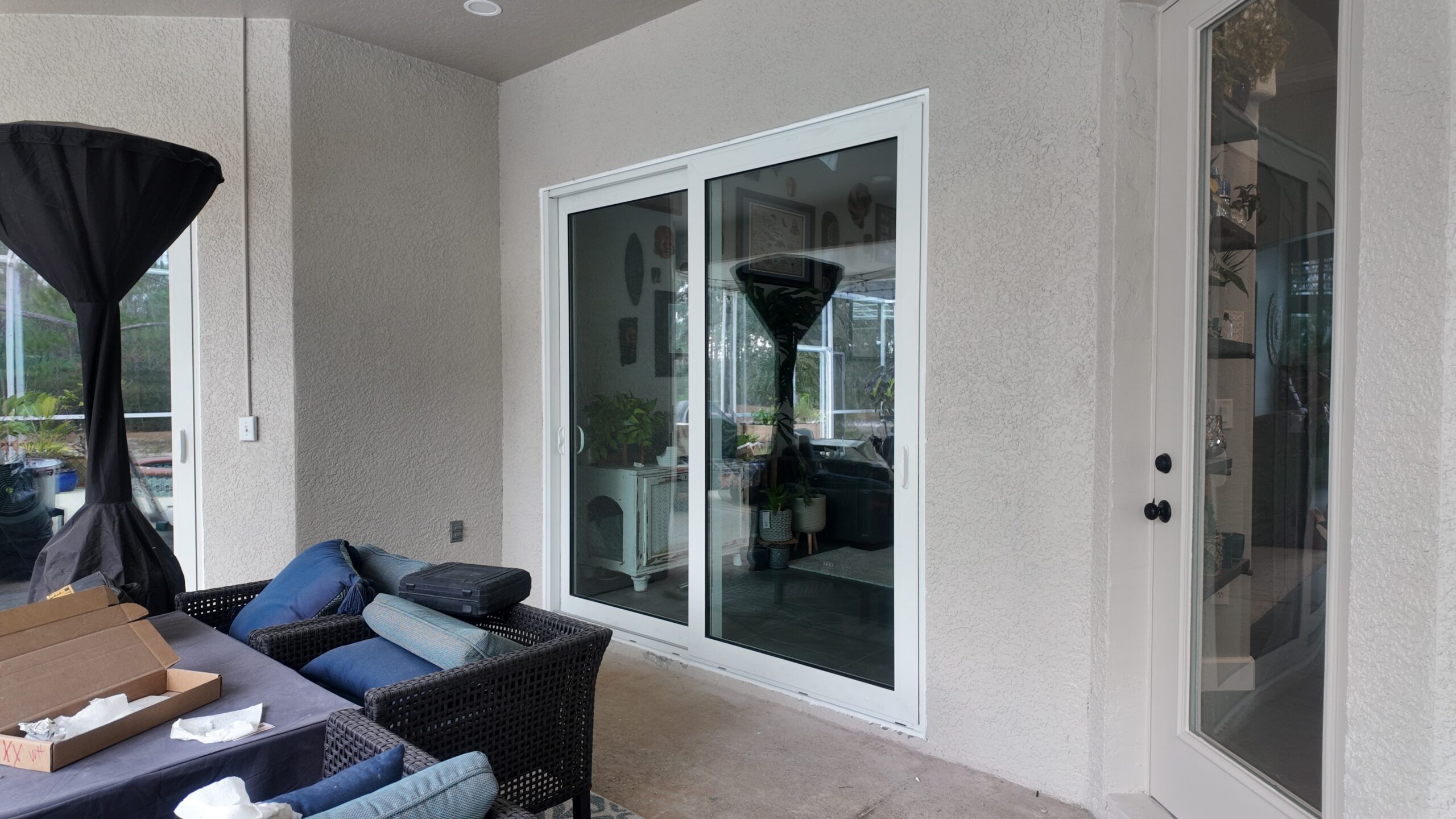
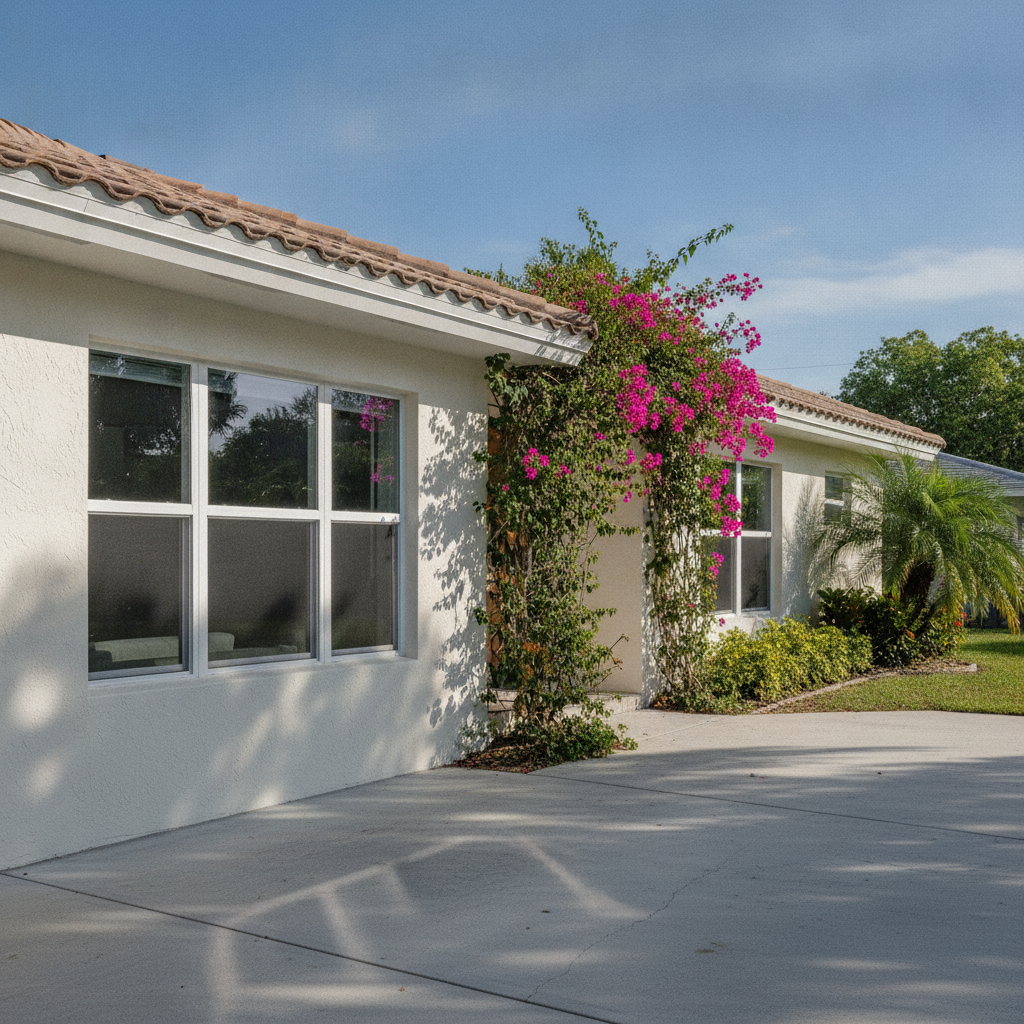
Updated July 2026
Impact window installation in a South Florida CBS home follows eight steps: site survey, product and NOA selection, permit application, existing window removal, buck preparation and shimming, frame anchoring into masonry, sealing and stucco repair, and final inspection. Each step is required — skipping any one of them risks a failed inspection or a voided product approval.
Key Takeaways
- CBS (concrete block and stucco) construction requires masonry anchors and a stucco repair step not needed in wood-frame homes.
- Miami-Dade and Broward County are High-Velocity Hurricane Zones (HVHZ) — every window must carry a Miami-Dade Notice of Acceptance (NOA) or a Florida Product Approval.
- A permit is required in every South Florida jurisdiction; expect 2–8 weeks for approval depending on municipality.
- Aluminum frames have a longer track record than vinyl in South Florida’s HVHZ heat, humidity, salt air, and structural load conditions (based on HVHZ product availability and field experience).
- Installed cost typically runs $75–$175 per square foot depending on window size, glass spec, and structural conditions found in the opening.
The Problem
Why Impact Window Installation Goes Wrong in South Florida
Most installation failures trace back to skipped steps — not defective windows.
South Florida homeowners replacing windows in concrete block homes run into a specific set of problems that don’t appear in wood-frame installations up north. The substrate is harder, the code is stricter, and the permit process is longer. When any one of those variables is handled poorly, you end up with a failed inspection, a voided product approval, water intrusion at the buck, or — worst case — windows that dislodge in a major storm.
Common failure modes Bigfoot sees during pre-install surveys: inadequate anchor spacing into the CMU (concrete masonry unit) block, stucco that was never properly keyed before caulking, the wrong window product for the HVHZ rating required by the local jurisdiction, and permits pulled after installation was already underway. Each of these is preventable with the right process.
South Florida Context
HVHZ Rules, Permits, and Why Miami-Dade Is Different
Miami-Dade and Broward counties sit entirely within the High-Velocity Hurricane Zone (HVHZ) as defined by the Florida Building Code. The HVHZ carries the strictest residential window requirements in the United States. Every window installed in an HVHZ jurisdiction must meet impact resistance and design pressure standards validated by a Miami-Dade Notice of Acceptance (NOA) or a Florida Product Approval number.
A Florida-approved impact window is not automatically HVHZ-compliant. Products without a Miami-Dade NOA may have a Florida Product Approval (FPA) that covers most of the state — but not always the HVHZ. Your contractor must verify the correct approval number for your specific county before ordering product.
Palm Beach County sits just outside the formal HVHZ boundary but is subject to the Florida Building Code’s wind-speed requirements for its coastal zones. Permit requirements are enforced county-by-county and municipality-by-municipality; some cities (Coral Gables, Hialeah, Aventura) have additional local review layers.
Permit timeline: In Miami-Dade, residential window permits typically take 2–5 weeks for electronic review through the county portal. Broward municipalities vary from 1–3 weeks (unincorporated Broward) to 6–8 weeks (some incorporated cities with manual review). No installation should start before a permit is in hand — installers who proceed otherwise are violating Florida Statute 489 and may leave you liable.
The Installation Process
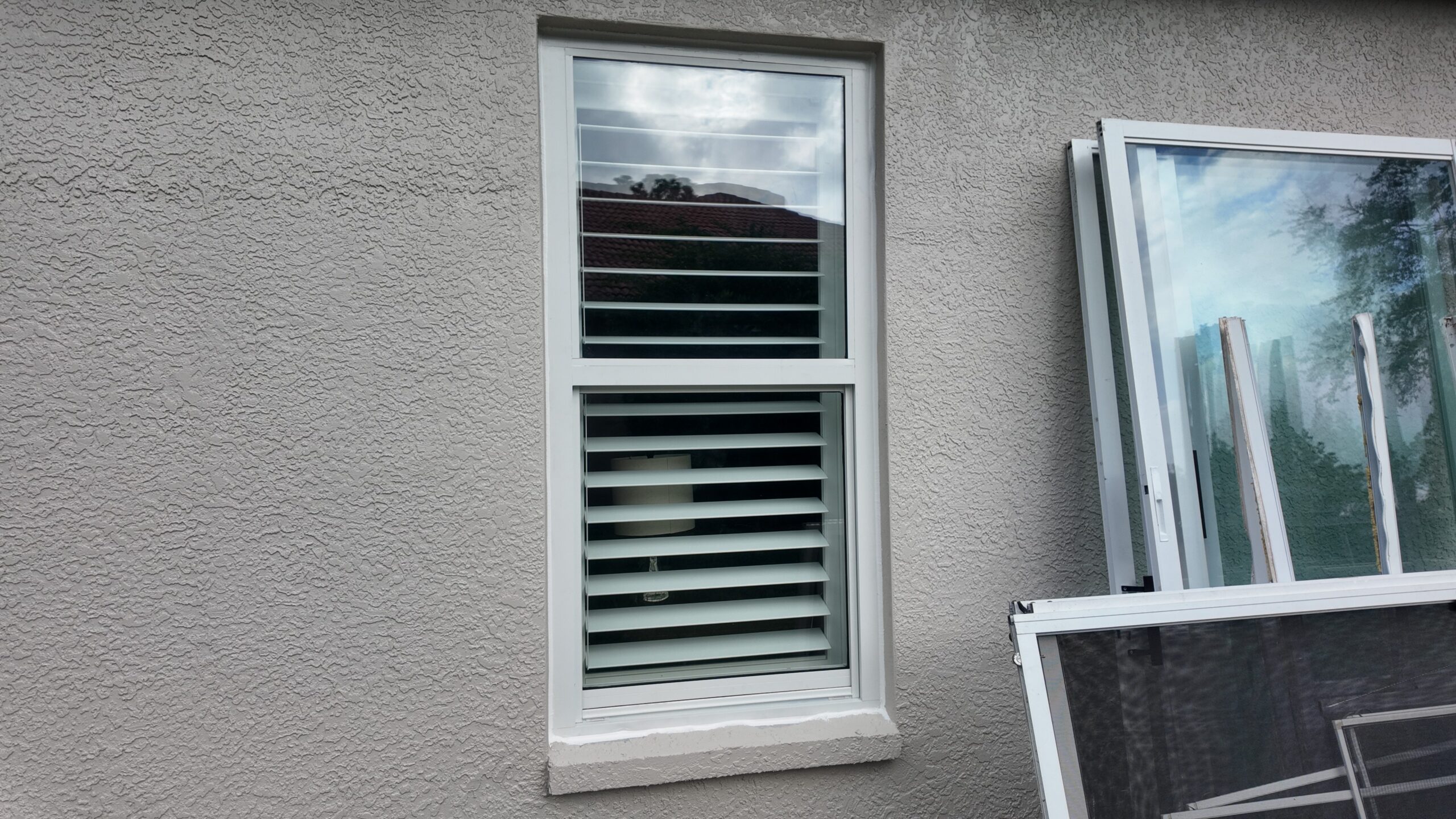
Impact Window Installation Steps: CBS Construction, Start to Finish
Eight steps cover the full scope — from site assessment to final inspection sign-off.
Step 1 — Site Survey and Opening Measurement
Every opening in a CBS home is slightly different. Concrete block walls are rarely perfectly square, and stucco finishes can add variable thickness to the rough opening. A proper survey measures the opening in at least three places (top, middle, bottom and both sides), identifies any out-of-square condition, checks for header integrity above the opening, and notes the stucco profile depth. These measurements govern the window order size and the shim allowance needed during installation.
Step 2 — Product Selection and NOA Verification
Once rough opening dimensions are confirmed, the contractor selects the window product and verifies its NOA or FPA number against the county’s required approval list. For HVHZ installations, the design pressure (DP) rating must meet or exceed the wind-load requirement for the wall location and building height. The product approval must also match the frame type (aluminum, in most South Florida installs) and the glass spec ordered.
Bigfoot installs Mr. Glass aluminum impact windows as its primary product line. Mr. Glass holds Florida Product Approval on all series and Miami-Dade NOA on select products including the Series 2500T door. Aluminum frames are Bigfoot’s standard recommendation for South Florida — aluminum has a longer track record in HVHZ heat, humidity, salt air, and structural load cycling than vinyl alternatives (based on HVHZ product availability and field experience). For properties requiring improved thermal performance, thermally broken aluminum frames are available.
Step 3 — Permit Application and Approval
The contractor (not the homeowner) applies for the building permit. The permit package includes the signed contract scope, the product NOA or FPA number, the window schedule (listing each unit’s size and DP rating), and a site plan locating each opening. Some jurisdictions also require a signed and sealed engineering letter for openings above a certain size or for structural lintels that need modification.
Because Bigfoot holds both a Certified Residential Contractor (CRC1331693) license and a Certified General Contractor (CGC1531370), it can handle structural scope — including lintel replacement or modification, hurricane strap tie-ins, or header reinforcement — under the same permit package rather than requiring a separate contractor. This matters when a survey uncovers a structural condition in the opening that a window-only installer cannot legally address.
Step 4 — Existing Window Removal
Old windows (aluminum jalousies, single-pane sliders, or older impact units) are removed carefully to preserve the stucco buck. In CBS construction, the window frame is typically set into a concrete or CMU buck. The installer cuts the existing frame’s attachment screws, removes the frame in sections, and cleans the buck surface of old sealant, paint, and debris. Any cracked or spalled CMU at the buck edges is repaired before the new window is set.
Step 5 — Buck Preparation and Shimming
The concrete buck is checked for level, plumb, and square. Shims (typically composite or pressure-treated wood for masonry applications) are placed to bring the opening into tolerance for the new frame. The buck face is cleaned and, if required by the product’s NOA installation instructions, a bed of sealant is applied to the perimeter before frame insertion.
Step 6 — Frame Anchoring into Masonry
This is the most structurally critical step in a CBS installation. The window frame is anchored to the CMU block using masonry screws or anchor bolts at spacing specified in the product’s NOA installation instructions. Spacing is typically 6 inches from each corner and no more than 12–18 inches on center around the perimeter, depending on the DP rating and the opening size. Under-anchoring voids the NOA and creates a hurricane safety failure point. The inspector will check anchor count and spacing against the approved drawing.
Step 7 — Sealing, Stucco Repair, and Caulking
After anchoring, the gap between the new frame and the stucco edge is filled and sealed. In CBS construction this typically involves a base coat of stucco patched tight to the new frame, allowed to cure, followed by a finish coat matched to the existing texture, and finally a perimeter caulk bead using a sealant rated for the exposure category in the product’s NOA. The caulk is the last line of defense against water intrusion — it must be tooled and continuous with no voids.
Step 8 — Final Inspection and Sign-Off
The building department inspector verifies anchor count, anchor spacing, product approval number, and sealant application against the approved permit drawings. In Miami-Dade, the inspection is typically conducted by a county building official. Once the inspection passes, the permit is closed and the homeowner receives a Certificate of Completion. This document is critical for insurance premium adjustments and for documenting compliance when you sell the home.
Frame Material Comparison
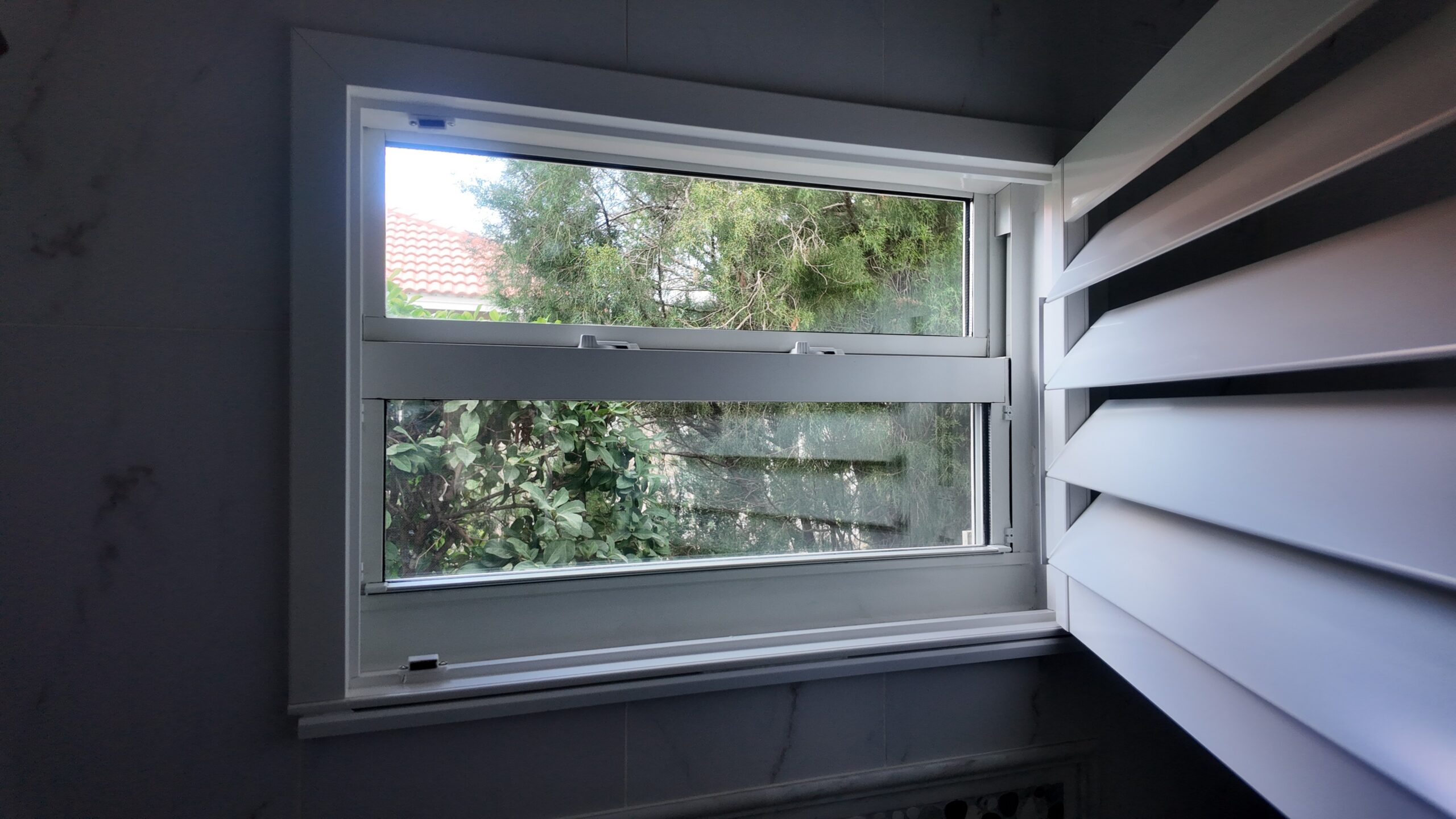
Aluminum vs. Vinyl for South Florida Impact Windows
Frame choice affects long-term performance in HVHZ conditions — here is what the data supports.
| Factor | Aluminum (Bigfoot’s Standard) | Vinyl |
|---|---|---|
| HVHZ structural load performance | Long track record in CBS applications | Fewer HVHZ-rated products available |
| Heat and UV durability | Stable in South Florida heat cycles | Can warp or degrade over time in sustained heat |
| Salt air resistance | Strong with proper finish (2605 for coastal) | Generally resistant but fewer coastal-rated lines |
| Thermal performance | Thermally broken aluminum available | Better insulation value without thermal break |
| Frame depth change when upgrading glass | Frame depth stays constant (Mr. Glass) | Varies by manufacturer |
| Typical South Florida contractor familiarity | Very high — dominant in HVHZ market | Moderate — less common in CBS installs |
When vinyl might make sense: If thermal performance is the primary driver and the project is in a non-HVHZ jurisdiction with a product that carries the required FPA, vinyl can be a viable option. Bigfoot does not currently install vinyl frames because aluminum is better suited to the structural and climate demands of Miami-Dade and Broward construction. A contractor experienced with vinyl in HVHZ applications would be a better fit if that is your preference.
License Authority
A Contractor Who Can Handle the Full Scope
Impact window installation in South Florida touches building code, structural conditions, and specialty glazing — a licensed contractor, not a lead aggregator.
The Certified Specialty Contractor with a Glass & Glazing Specialty license is the specific credential Florida requires for impact window and door installation. Paired with a Certified General Contractor license, Bigfoot can handle structural scope in the same opening — lintel work, header reinforcement, or hurricane strap tie-ins — without subcontracting to a second firm. That structural scope authority is what separates a full-service impact window contractor from a window-only installer.
“In CBS construction, the opening is never just a window opening. We survey the lintel, the buck condition, and the anchor path before we ever order product. The permit drawings have to match what we actually find on site — not what the original builder drew in 1987.”
President, Bigfoot Windows & Roofing
Product Guidance
What to Know About Mr. Glass Impact Windows for CBS Homes
Bigfoot’s primary impact window line is Mr. Glass — an aluminum-frame product manufactured with Florida Product Approval on all series. A few product details that matter specifically for CBS construction in South Florida:
- Series 200 (flagship single hung): High-rise capable, 2-7/8-inch frame, spiral adjustable balances — well-suited for taller CBS residential buildings where design pressure requirements are elevated.
- Series 300 (flagship horizontal roller): Rated to 80/80 psf (per manufacturer product approval documentation — verify the current FPA for your specific configuration), up to 127-5/8 inches wide in a three-panel configuration — handles large openings common in 1970s–1990s CBS homes.
- Frame depth stays constant: Upgrading from standard glass to 9/16-inch glass does not change the frame depth — a common misconception that leads homeowners to over-worry about interior trim modifications.
- Coastal finish requirement: Properties within two miles of salt water are required by Mr. Glass warranty terms to use the 2605 finish. The 2604 wood-grain finish loses the 10-year product warranty in coastal exposures — homeowners should confirm the current warranty terms with Bigfoot before ordering.
- Glass spec and turtle code: If your property is in a coastal turtle-lighting zone, 9/16-inch gray glass is auto-compliant. Thinner glass specs may require double-gray glazing to satisfy the ordinance.
Bigfoot provides a 10-year workmanship warranty on window installations. Mr. Glass carries a 10-year product warranty (effective October 2025). Explore impact window options for South Florida homes or explore financing options including PACE programs if upfront cost is a consideration.
Cost Context
What Impact Window Installation Costs in South Florida
| Window Type / Spec | Typical Installed Range (per sq ft) | Key Cost Drivers |
|---|---|---|
| Standard aluminum single hung, 5/16" glass | $75–$110 | Opening size, anchor count, stucco condition |
| Aluminum horizontal roller, 7/16" glass | $95–$135 | Panel count, opening width, buck repair needed |
| High-rise / high-DP unit, 9/16" glass | $130–$175 | Design pressure spec, glass weight, structural lintel condition |
| Structural scope add (lintel, header) | Priced per opening | Extent of CMU repair or reinforcement required |
These ranges reflect typical South Florida CBS installations and are not quotes. Actual cost depends on the number of openings, the condition of the existing bucks, whether structural work is required in any opening, permit fees (which vary by municipality), and the glass specification selected. Request a site survey to get a number tied to your specific home — per-square-foot ranges become meaningless once structural conditions are factored in.
Ready to start the permit process?
Bigfoot surveys the opening, verifies the NOA, pulls the permit, and handles structural scope in the same project — no second contractor needed.
Who We’re Not the Right Fit For
- Homeowners who need vinyl frames: Bigfoot installs aluminum impact windows exclusively. If you’ve already decided on vinyl, a contractor specializing in vinyl HVHZ products is a better fit for your project.
- Fastest-possible turnaround: Doing this correctly means waiting for the permit before installation begins. If a contractor is offering to start immediately without a permit in hand, that is a red flag — not a benefit. If your timeline cannot accommodate the permit process, we are not the right fit.
- Budget below the installed cost range: Impact window installation in CBS construction involves masonry anchoring, stucco repair, and HVHZ-compliant product. If the budget requires cutting corners on any of those, the finished installation will not pass inspection and will not perform in a storm. We would rather tell you that upfront than take the job.
- Single-window replacements in non-CBS construction: Our process is optimized for whole-home or multi-opening replacement in concrete block homes. Homeowners replacing one wood-frame window in a non-HVHZ jurisdiction may find a smaller specialty installer is a more efficient fit.
Questions? Call 786-886-2088.
Ready to get started? Get a free, no-pressure estimate from a licensed South Florida contractor.
Frequently Asked Questions
Do you need a permit for impact window installation steps in Miami-Dade or Broward?
Yes. Miami-Dade and Broward require permits and product approval documentation (a Miami-Dade NOA or a Florida Product Approval that covers HVHZ use) for impact window and door installations. A licensed contractor pulls the permit and schedules inspections.
Does financing typically cover impact window installation steps?
Financing options may be available depending on scope and lender. Ask your contractor what programs apply to your specific project before you sign anything.
How long does an installation like this take?
Most residential impact window or door installations in South Florida are completed in 1-3 days once product is on site and permits are pulled, though whole-house projects can take longer.
What warranty applies to this type of work?
Warranty terms vary by manufacturer and product line. Ask your contractor for the specific manufacturer and workmanship warranty terms in writing before work begins.
Can impact windows help with insurance premiums?
Many Florida insurers offer wind-mitigation credits for impact-rated openings. The amount varies by insurer and policy, so ask your agent about a wind mitigation inspection after installation.
What is an NOA and why does it matter?
A Notice of Acceptance (NOA) is Miami-Dade product approval documentation showing a window or door assembly passed required testing. In High-Velocity Hurricane Zone counties, inspectors verify the installed product matches its approval documents.
Schedule Your Free Estimate
Ready to get started? Request a free estimate — no phone call required.