Updated July 2026
Key Takeaways
- Impact window projects take 8–16 weeks from contract to installation — hurricane season does not pause for your schedule.
- Custom manufacturing, permit approval, and inspection scheduling all add time before a single window is installed.
- Demand — and sometimes pricing — rises sharply from May through October in South Florida, squeezing installer capacity.
- Financing applications and insurance inspections take time; starting late means benefits arrive late.
- Acting in the off-season (November–March) gives you more installer attention, better scheduling flexibility, and fewer surprises.
The Real Problem
Why “I’ll Do It Before the Storm” Rarely Works
The decision feels urgent in August. The math says it should have started in January.
Every spring, the same pattern repeats across South Florida: a tropical system forms in the Atlantic, the local news cycle intensifies, and thousands of homeowners suddenly remember they meant to replace those single-pane windows. They call contractors. Contractors are already booked. Manufacturers are already backlogged. Permit offices are processing a surge of applications. And the storm does not care about any of it.
This is not a scare tactic. It is a scheduling reality. Impact window and door systems are not shelf products that installers keep in a warehouse. They are custom-manufactured to your exact opening dimensions, engineered to meet Florida Building Code requirements for your specific wind zone, and ordered from a manufacturer’s production queue that everyone else in South Florida is also competing for.
The gap between “I want impact windows” and “my impact windows are installed and inspected” is almost always measured in months, not days or weeks. Understanding where that time goes is the first step to not getting caught on the wrong side of it.
South Florida Context
Miami-Dade, HVHZ, and Why Your Timeline Is Longer Than You Think
Building in the High Velocity Hurricane Zone adds steps that do not exist anywhere else in the country.
South Florida — particularly Miami-Dade and Broward counties — sits inside what the Florida Building Code designates the High Velocity Hurricane Zone (HVHZ). This is the strictest residential building code jurisdiction in the United States. A product with a current Florida Product Approval (FL number) that covers HVHZ use is legal to install in Miami-Dade and Broward. A Miami-Dade NOA is an additional certification some products also carry; it is not required for the permit.
What that means practically: not every impact window product on the market qualifies for installation in Miami-Dade. The products that do qualify have been through rigorous third-party testing. That engineering investment is one reason lead times from compliant manufacturers are longer — and one reason you cannot simply swap to a faster supplier when demand spikes.
Permit processing in Miami-Dade and Broward also involves plan review by a licensed inspector, structural verification for the opening sizes and anchor patterns, and a final inspection after installation is complete. Each of those steps has a queue. During peak season — May through October — those queues get longer. A permit that might be approved in two weeks in January can take four to six weeks in July.
| Phase | Off-Season Estimate (Nov–Mar) | Peak Season Estimate (May–Oct) |
|---|---|---|
| Measure & Contract | 1–2 weeks | 1–3 weeks (capacity constrained) |
| Permit Submission & Approval | 2–4 weeks | 4–7 weeks |
| Custom Manufacturing | 4–8 weeks | 6–12 weeks |
| Scheduling & Installation | 1–2 weeks | 2–4 weeks |
| Final Inspection | 1 week | 1–3 weeks |
| Total Realistic Range | 9–17 weeks | 14–29 weeks |
Timeline estimates are directional. Actual timelines vary by project scope, municipality, and manufacturer backlog. Ask your contractor for a written schedule at contract signing.
How the Timeline Actually Works
The Four Phases That Eat Your Calendar
Each phase is sequential. You cannot compress them by wanting to.
Phase 1: Measurement and Contract
Before anything is ordered, a technician must physically measure every opening. Impact windows are not standard sizes — your rough opening dimensions, the existing frame condition, and the depth of your wall assembly all affect what gets manufactured. This step is non-negotiable and cannot be done remotely. After measurements, the contract is drawn, product selections are confirmed, and the order is placed. Rushing this phase produces errors that come back as expensive field problems during installation.
Phase 2: Permit Submission and Approval
In Miami-Dade and Broward, impact window replacements require a permit. The permit package includes engineered drawings, product NOA documentation, and in some cases a structural assessment of the opening condition. That package is submitted to the local building department, which assigns it to a plan reviewer. The reviewer may request revisions. This back-and-forth is normal — but it takes time, and the department’s queue determines how much time. Starting this process in January means you are ahead of the summer surge. Starting in June means you are in the middle of it.
Phase 3: Custom Manufacturing
This is the phase most homeowners underestimate. Impact windows are made to order. Your specific frame dimensions, glass specifications, hardware choices, and finish options go into a production queue at the manufacturer’s facility. During peak demand months, that queue extends. A product that ships in four weeks in February may have a six-to-ten-week lead time in May. There is no way to pull your order ahead of everyone else’s — the production line runs in sequence.
For projects using aluminum frames — which Bigfoot recommends for South Florida’s heat, humidity, UV exposure, and HVHZ wind conditions — manufacturers like Mr. Glass produce to exact specifications. Series differences matter: the Mr. Glass Series 200 single-hung and Series 300 horizontal roller are flagship lines rated for high-rise and coastal applications, while the Series 350 is a builder-grade product not suitable for condos or commercial buildings. Getting the right product specified correctly from the start prevents costly reorders.
Phase 4: Installation and Final Inspection
Installation itself is typically the shortest phase — a well-scoped residential project can be installed in one to three days once the product arrives and the crew is scheduled. But crew scheduling during peak season competes with every other job in the contractor’s pipeline. After installation, a final inspection must be scheduled with the building department. That inspection closes the permit and triggers your wind mitigation report — the document your insurance company needs to re-rate your premium. If the inspection queue is backed up, that benefit is delayed too.
Timing Comparison
Off-Season vs. Peak Season: What Actually Changes
| Factor | Off-Season (Nov–Mar) | Peak Season (May–Oct) |
|---|---|---|
| Manufacturer lead time | 4–8 weeks typical | 6–12+ weeks typical |
| Permit queue | Shorter; faster review | Longer; plan review delays common |
| Installer availability | More flexibility; easier scheduling | Constrained; crews booked out further |
| Demand-related pricing pressure | Lower demand, more stable pricing | Higher demand can push prices upward |
| Total time to protection | 9–17 weeks | 14–29 weeks |
| Insurance benefit timing | Premium reduction arrives sooner | Delayed by longer inspection queue |
| Financing approval window | More time to compare options | Rushed decisions, fewer options reviewed |
When Waiting Is the Right Call
If your current windows are structurally sound, properly shuttered, and you are not under immediate insurance pressure, waiting until the off-season is a legitimate choice — provided you start the process no later than November. Rushing a project under time pressure produces worse outcomes than a well-planned project that starts a few months later. What is not a legitimate strategy is waiting indefinitely and hoping a named storm does not arrive while you are still in the permit phase.
Why Contractor Selection Matters Here
A Contractor With the Right Licenses Can Handle More of the Process In-House
A licensed contractor — not a lead aggregator — coordinates permitting, structural scope, and inspections under one roof.
One of the less-discussed sources of timeline delay is scope fragmentation. If an impact window installation reveals a structural issue at an opening — a deteriorated buck, a header that needs reinforcement, a lintel problem — a contractor who holds only a specialty glazing license must stop work and bring in a separate contractor to address it. That coordination takes time. It can delay the permit final. It adds weeks.
Darryl Henry Rosenbaum holds a Certified General Contractor license (CGC1531370) in addition to the glazing specialty license. That means structural modifications, code-driven repairs at window openings, and multi-trade scope can be handled under one coordinated project — homeowners do not need to source and schedule a second contractor when the scope expands. This is a structural advantage in the permitting and scheduling process, not a claim about delivery speed.
“Every summer, we get calls from homeowners who thought they had more time. The permit is pending. The storm is forming. There is nothing we can do to compress the manufacturing queue. Start in the fall or winter — that is when the window is open.”
Founder & President, Bigfoot Windows & Roofing
What We Install
Aluminum Impact Windows Built for South Florida Conditions
Frame material, glass spec, and product line selection all affect lead time and long-term performance.
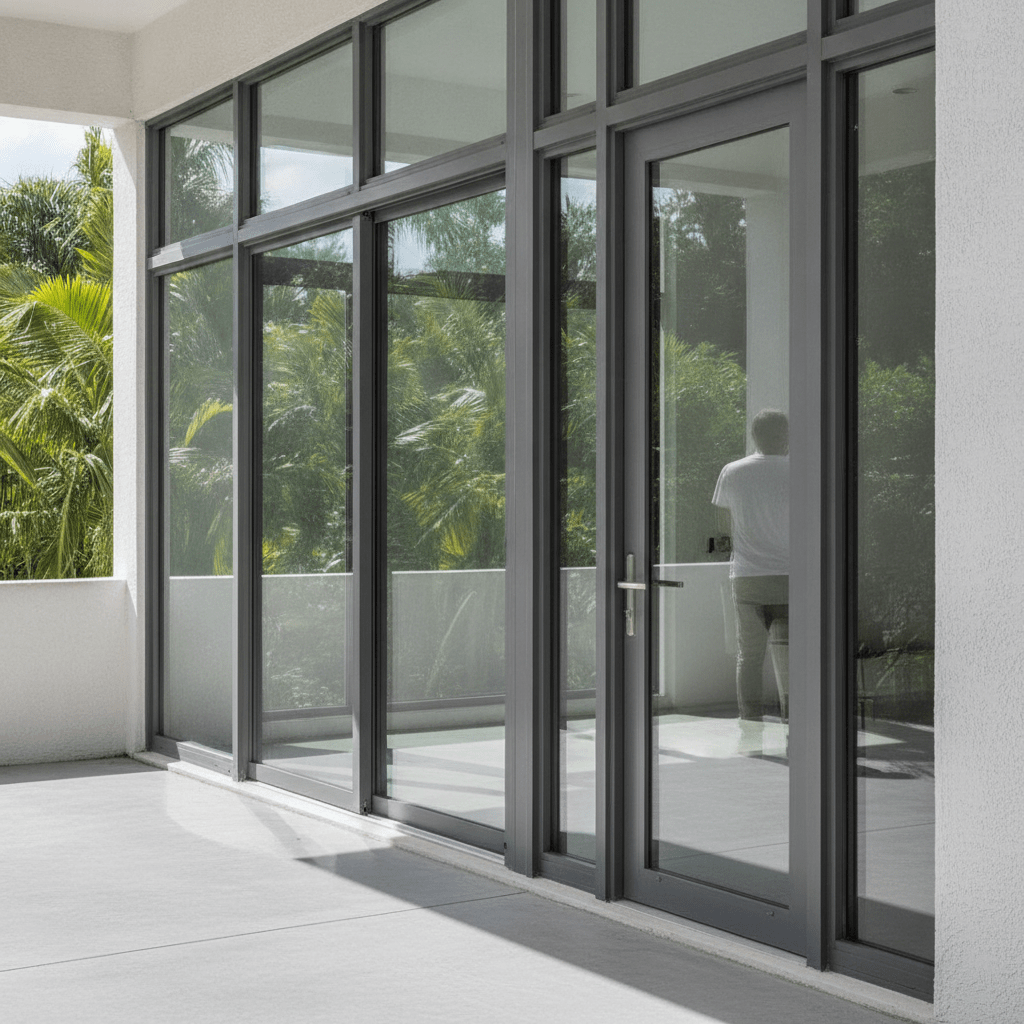
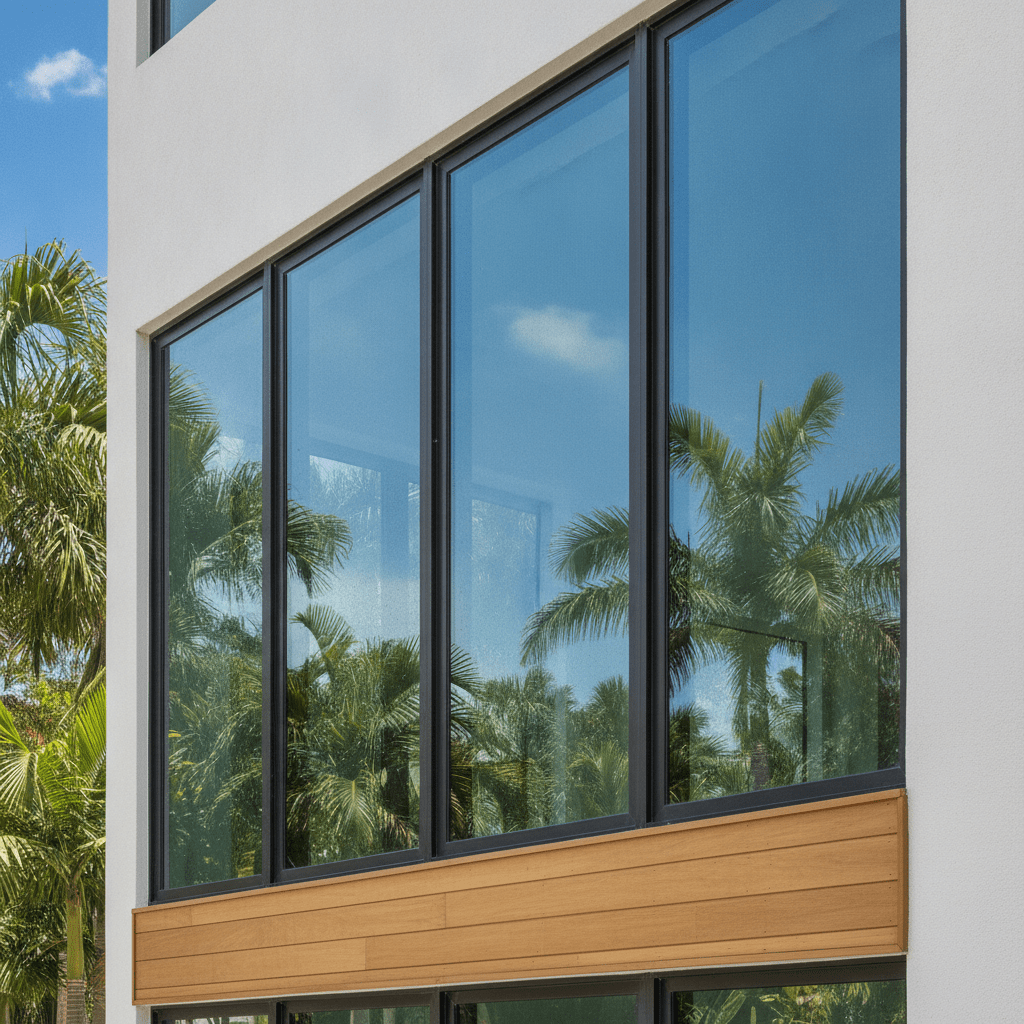
Bigfoot installs aluminum impact window frames — not vinyl. In South Florida’s HVHZ environment, aluminum has historically performed well in HVHZ conditions and is Bigfoot’s recommended frame material for South Florida’s heat, UV radiation, salt air, and high-wind loading. Thermally broken aluminum frames add an energy efficiency layer for homeowners concerned about cooling costs.
Our primary window line is Mr. Glass. A few things homeowners should know about product selection that affect timing:
- Series 200 (flagship single-hung): spiral adjustable balances, 2-7/8" frame depth, high-rise capable. A common choice for Miami-Dade residential and condo applications.
- Series 300 (flagship horizontal roller): rated to 80/80 psf, available up to 127-5/8" wide in a three-panel configuration. Strong choice for wide openings.
- Series 350 (builder grade): residential-only. Not suitable for condos, high-rise, or commercial buildings. Lead times are similar but the performance envelope is narrower.
- Series 1000 SGD (sliding glass door): comes with 9/16" glass as standard — a specification that competitors in this category often do not offer.
Glass specification also matters for coastal compliance. Properties within two miles of the water in Miami-Dade must use the 2605 coastal finish on aluminum frames — the 2604 wood-grain finish loses its ten-year warranty in saltwater environments. Getting the specification right at the measurement stage prevents reorders that add weeks to your timeline.
Mr. Glass products carry Florida Product Approval on all lines. For Miami-Dade NOA specifically, confirm applicability with your contractor at the product selection stage — not every series carries an NOA, and some applications require it.
Every Mr. Glass installation by Bigfoot carries a 10-year workmanship warranty from Bigfoot and a 10-year product warranty from Mr. Glass (effective October 2025).
Explore our full impact windows and doors lineup or check impact door options if you are also replacing entry or sliding glass doors.
How the Process Works
From First Call to Final Inspection: What to Expect
| Step | What Happens | Who Is Responsible |
|---|---|---|
| 1. Free Estimate & Measurement | On-site visit; all openings measured; product line selected; written scope provided | Bigfoot crew |
| 2. Contract & Deposit | Scope, product specs, and payment schedule documented in writing before anything is ordered | Homeowner + Bigfoot |
| 3. Permit Submission | Full permit package submitted to local building department; plan review assigned | Bigfoot (pulls permit) |
| 4. Manufacturing | Windows custom-manufactured to measured dimensions; production queue varies by season | Mr. Glass / manufacturer |
| 5. Installation | Crew installs per engineered drawings; structural scope addressed if needed (CGC authority) | Bigfoot crew |
| 6. Final Inspection | Building department inspector signs off; permit closed; wind mitigation report available | Building department |
| 7. Wind Mitigation Report | Documentation provided to your insurer; premium re-rate typically follows | Homeowner + insurer |
A Note on Financing Timing
If you plan to use PACE financing or another program to fund your impact window project, that application process has its own timeline. PACE financing — which is paid through your property tax bill rather than a separate monthly loan payment — requires a separate application for windows and roofing (they cannot be combined into one application). Rates and terms vary; a sample structure might be approximately $173 per month for a $15,000 project over 20 years, with no prepayment penalty. Starting the financing conversation early gives you time to compare options without pressure. Waiting until a storm watch is issued means making a financing decision in 48 hours.
The My Safe Florida Home grant program offers up to $10,000 for qualifying improvements, subject to available legislative funding, and can be stacked with PACE financing — but grant availability is subject to funding cycles. Applying early keeps that option open.
Hurricane season does not wait. Neither should your project.
The best time to start was last fall. The second-best time is now.
Keep Reading
Related Articles