Why Roofing Quotes Vary So Much in Miami | Bigfoot Windows & Roofing
Updated July 2026
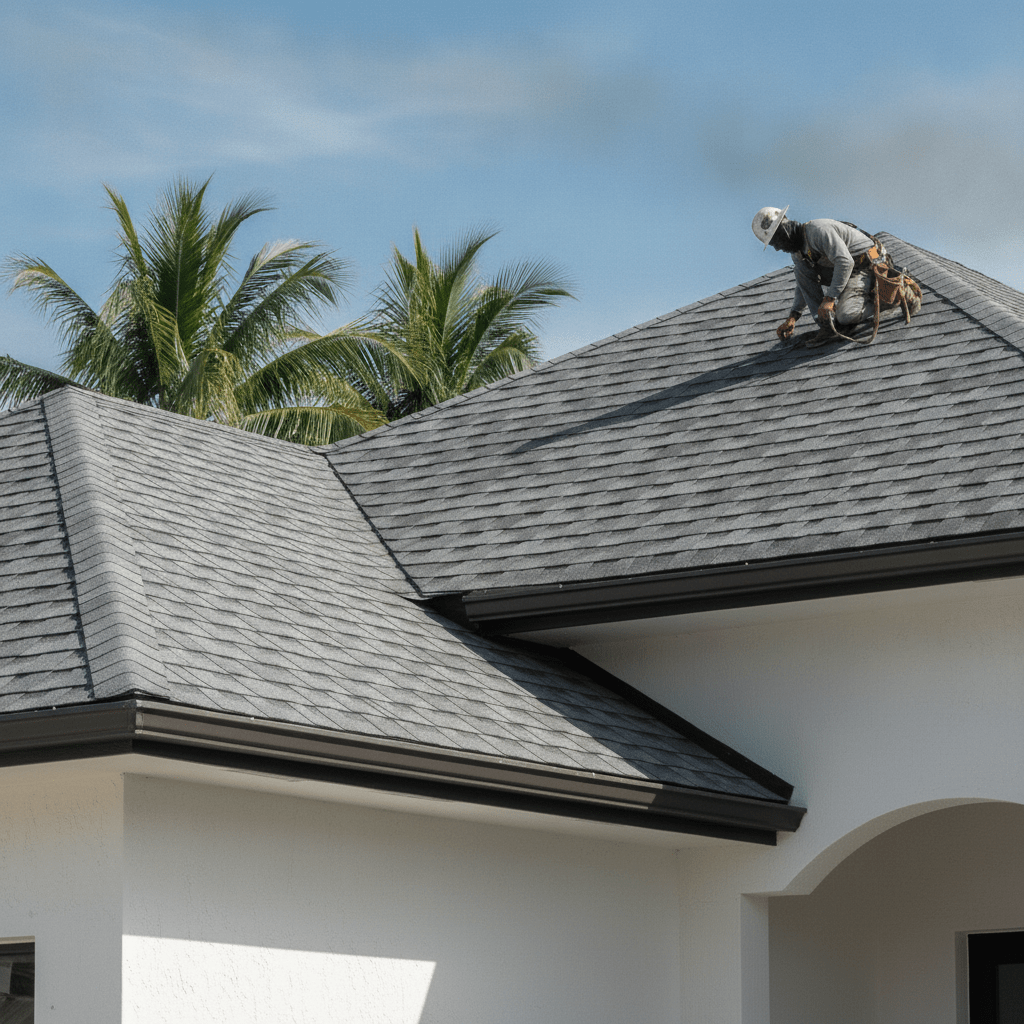
Roofing quotes in Miami can vary by thousands of dollars for the same house because contractors are often quoting entirely different scopes. Miami-Dade sits inside the High-Velocity Hurricane Zone (HVHZ), which mandates stricter materials, fastening patterns, and mandatory product approvals that legitimately raise the cost floor. A low quote that skips permits, non-compliant underlayment, or required inspections is not a bargain — it is an incomplete job.
Key Takeaways
- Miami-Dade HVHZ code requirements under the Florida Building Code raise the legitimate cost baseline compared to most Florida counties.
- Materials used in Miami-Dade must carry a Miami-Dade NOA or a Florida Product Approval that covers HVHZ use — quotes that skip this are a red flag.
- Permits, third-party inspections, and Miami-Dade Building Department fees are real costs; low quotes often omit them entirely.
- Scope gaps — decking, drip edge, underlayment layers, and the 25% re-roof trigger rule — cause large price swings between quotes.
- Contractor licensing tier and required insurance overhead affect pricing; the cheapest bid often reflects lower-coverage operators.
The Real Problem
You Got Three Quotes — and They’re All Over the Place
This is one of the most common frustrations homeowners in South Florida face when replacing a roof.
You did everything right. You called three contractors, got three written quotes, and now you’re staring at numbers that are thousands of dollars apart — for what looks like the same job on the same house. One contractor is 40% cheaper than another. One gave you a two-page breakdown; another handed you a single line item with a total.
The honest answer: they are not quoting the same job. In Miami-Dade County, roofing is regulated more strictly than almost anywhere else in the United States. The Florida Building Code’s High-Velocity Hurricane Zone requirements create a mandatory cost floor that not every contractor is building into their estimate — either because they plan to cut corners, or because they’re counting on you not knowing the difference.
This article walks through exactly what drives price variation so you can read a roofing quote like a contractor, not a homeowner guessing in the dark.
Why Miami Is Different
HVHZ: The Code Layer That Changes Everything in Miami-Dade
Miami-Dade and Broward counties fall inside the High-Velocity Hurricane Zone — the strictest residential building code environment in the United States.
The High-Velocity Hurricane Zone (HVHZ) designation under the Florida Building Code imposes requirements on roofing systems that do not apply in most other Florida counties, let alone the rest of the country. Under FBC Chapter 15, every component of a roofing assembly — shingles, metal panels, tile, underlayment, fasteners, clips, drip edge, flashing — must be installed according to specifications that are designed to resist the wind pressures generated by a major hurricane making landfall in a dense coastal metropolitan area.
What this means in practice:
- Fastening patterns are prescribed. Nail spacing, nail gauge, and penetration depth are not discretionary. An inspector can — and will — reject a roof that uses the wrong nail at the wrong spacing.
- Underlayment layers are mandated. In HVHZ, a single layer of 30-lb felt does not meet code. Peel-and-stick (self-adhering) secondary water barriers are commonly required. A full-deck peel-and-stick application can also qualify for a secondary water barrier discount on your homeowner’s insurance, depending on your carrier.
- Product approvals are mandatory. Every material installed in Miami-Dade must carry a Miami-Dade Notice of Acceptance (NOA) — a testing and approval issued by the Miami-Dade Building Code Compliance Office — or a Florida Product Approval that covers HVHZ use. A product with a current Florida Product Approval (FL number) that covers HVHZ use is legal to install in Miami-Dade and Broward. A Miami-Dade NOA is an additional certification some products also carry; it is not required for the permit. If a contractor is quoting you materials that do not have a current, valid Miami-Dade NOA or a Florida Product Approval that covers HVHZ use, that quote is not code-compliant for Miami-Dade.
These requirements are not optional extras a good contractor adds. They are the legal minimum. A quote that does not reflect them is either incomplete or built on materials that will fail inspection.
What’s Actually in the Quote
The Five Scope Gaps That Cause the Biggest Price Swings
Most quote variation comes down to what’s included — not what the labor rate is.
When two roofing quotes are far apart, the instinct is to assume one contractor is overcharging. More often, the lower quote is simply quoting less. Here are the five most common scope gaps that explain the difference.
| Scope Item | Often Omitted in Low Quotes | Should Be In Every Miami Quote |
|---|---|---|
| Miami-Dade Building Permit | Yes — frequently omitted or listed as “homeowner to obtain” | Required for every re-roof in Miami-Dade |
| Third-Party Inspections | Yes — some contractors assume one inspection; HVHZ often requires multiple | Mandatory; costs are real and pass-through |
| Decking Replacement | Often excluded or capped at a low per-sheet allowance | Directionally $80–$150 per sheet; scope unknown until tear-off |
| Peel-and-Stick Underlayment | Substituted with cheaper felt; fails HVHZ code | Required in HVHZ; adds material cost |
| Drip Edge and Flashing | Sometimes bundled vaguely or omitted | Must meet NOA spec; labor and material cost |
The 25% Re-Roof Trigger Rule
Florida Building Code includes a rule that catches many homeowners off guard: if you are replacing more than 25% of a roof’s total area, the entire roof must be brought up to current code. This means a contractor quoting a partial repair may be legally required — mid-project — to expand the scope to a full replacement if the damaged area exceeds that threshold. A contractor who is not upfront about this possibility is leaving a significant cost exposure out of the conversation. Ask every contractor directly: does the scope you’re quoting trigger a full replacement under the 25% rule?
Permits Are Never Optional in Miami-Dade
Permits are not optional for routine roof replacement in Miami-Dade County — there is no permit exemption for this work. Miami-Dade Building Department permit fees, processing timelines, and required third-party inspection fees are real costs. A contractor who says they will pull the permit separately, bill you later, or suggests you pull it yourself as the homeowner is a red flag. The permit should be itemized in writing before work begins.
Quote Comparison
How to Read Two Roofing Quotes Side by Side
Use this checklist before you decide which estimate to trust.
| What to Check | Red Flag in a Quote | Green Flag in a Quote |
|---|---|---|
| Permit line item | Not mentioned, or “TBD” | Specific dollar amount or range, contractor to obtain |
| NOA / product approval references | No mention of NOA numbers or approved product list | Materials listed with NOA reference or manufacturer approval |
| Underlayment specification | “Felt” or “standard underlayment” only | Peel-and-stick specified by brand and thickness |
| Decking | No mention, or excluded entirely | Per-sheet rate listed; scope contingent on inspection |
| Contractor license number | Missing, or only a local certificate of competency | Florida DBPR-issued Certified Roofing Contractor number |
| Insurance documentation | Verbal assurance only | Certificate of insurance (ACORD form) provided upfront |
When two quotes look identical on the surface, the one that costs more often has all of the above included. The one that costs less often has none of it. The gap between them is not margin — it is scope.
Who Is Quoting You
Contractor Licensing Tiers Affect Both Price and Protection
A licensed contractor, not a lead aggregator — here is what that distinction costs and why it matters.
In South Florida, roofing work can be quoted by contractors operating under several different credential tiers. Understanding the difference helps explain why overhead — and therefore price — legitimately varies.
- Florida DBPR Certified Roofing Contractor (CCC prefix): A state-level license with statewide authority. Requires passing a state examination, maintaining active insurance, and renewing biannually with continuing education. This is the license tier that should be doing roof replacements in Miami-Dade.
- Florida Certified Residential Contractor (CRC prefix): A broader residential license that also authorizes roofing work on residential structures. Same exam and insurance requirements.
- Certified General Contractor (CGC prefix): Authorizes commercial and residential scope, including structural work. Relevant when a roof replacement involves structural modifications — hurricane strap upgrades, rafter sister work, structural deck repair — that a roofing-only license cannot legally perform.
- Local Certificate of Competency: Issued by the county, not the state. Authority limited to the issuing jurisdiction. Less portable, sometimes lower insurance requirements.
- State-Registered (not Certified): Registered contractors must meet local licensing requirements rather than a single state exam standard. Less rigorous vetting.
The insurance overhead alone — general liability and workers’ compensation — adds real cost to a compliant contractor’s bid. A contractor operating without active workers’ comp is not doing you a favor by being cheaper; they are transferring liability to you if a worker is injured on your roof.
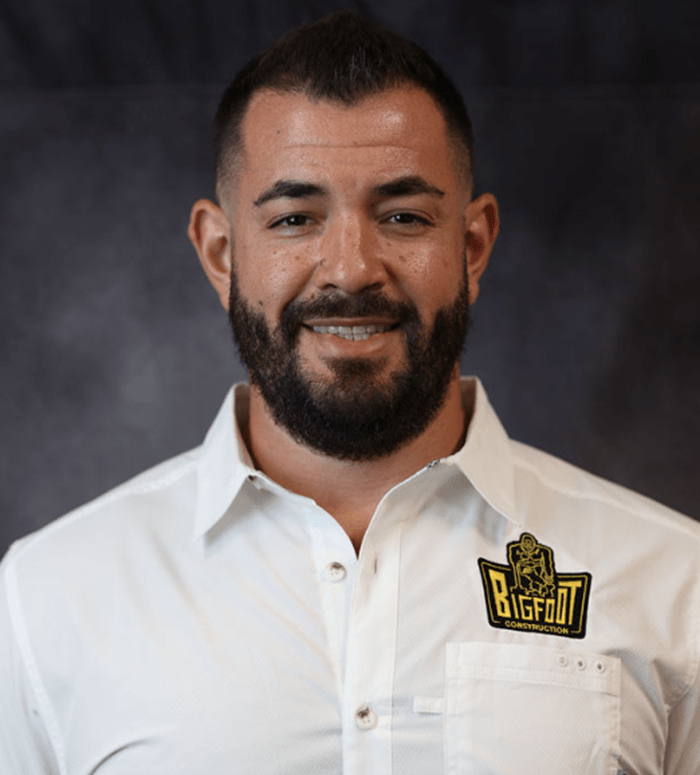
“Every time I see a quote that’s 30% below market, I ask the homeowner to request an ACORD certificate of insurance and the contractor’s DBPR license number. Half the time, one of the two is missing. That explains the price difference right there.”
Darryl Rosenbaum
President, Bigfoot Windows & Roofing
Material Choices That Drive Price
What Roofing Systems Cost in Miami-Dade — and Why Ranges Are Wide
Price-per-square figures only make sense when you know what is included in the system.
Roofing is priced per square — one square equals 100 square feet of installed roof surface. The range for each system type reflects HVHZ material requirements, underlayment spec, complexity, and scope inclusions. The figures below are directional market ranges for South Florida; they are not Bigfoot-specific price quotes.
| Roofing System | Typical Miami-Dade Range (per square installed) | Key Cost Drivers |
|---|---|---|
| Architectural Shingle | $750 – $850 | Peel-and-stick underlayment, NOA-approved shingle, permit, fastener spec |
| Standing Seam Metal | $1,050 – $1,300 | Custom fabrication, NOA-compliant clip system, gauge of steel, profile |
| Metal Tile | $1,175 – $1,400 | Stone-coated finish, wind rating, fastener pattern, hip and ridge complexity |
| Concrete / Clay Tile | $1,000 – $1,350 | Tile weight (structural load), foam set vs. mechanically fastened, hip detail |
| TPO Flat Roofing | $800 – $1,400 | Membrane thickness, tapered ISO insulation, Dens Deck cover board |
For a detailed South Florida roofing cost breakdown by system type, our online estimator walks through each variable so you can build a realistic budget before calling anyone.
On shingle roofing, Bigfoot holds GAF Certified Plus certification, which allows us to offer the GAF System Plus warranty on qualifying installations — a 50-year non-prorated warranty covering shingles, labor, tear-off, and accessories. The GAF Wind Proven warranty has no maximum wind speed cap and is not voided by a named storm hitting your county. This is a meaningful difference from warranties competitors offer that cap at 130 mph or that include named-storm exclusions.
On metal roofing, standing seam panels are fabricated one continuous piece bottom-to-top — no horizontal seams — which is a structural hurricane advantage. The clip system used must carry the manufacturer’s approval; knockoff clips have caused full re-dos after failed inspections. This is not a marketing point — it is a code compliance point.
What a Compliant Quote Process Looks Like
How a Legitimate Miami-Dade Roofing Project Runs From Estimate to Inspection
Understanding the process helps you spot when a contractor is skipping steps.
- On-site measurement and inspection. A legitimate estimate requires a physical inspection — roof pitch, existing deck condition, penetrations, current system identification. Remote satellite quotes cannot account for deck damage or attic moisture.
- Scope letter with itemized line items. Every material should be named — underlayment brand and spec, shingle or panel product with NOA reference, drip edge spec, decking allowance per sheet. Vague line items are a scope risk.
- Permit application before mobilization. Miami-Dade Building Department requires a permit before any tear-off begins. The permit number and approval date should be documented before your first payment beyond a deposit.
- Tear-off and deck inspection. Once the existing roof is removed, deck condition is assessed. Any rotten or damaged decking is replaced at the agreed per-sheet rate before new material is installed. If your project involves structural issues — damaged rafters, hurricane strap upgrades, or structural deck repair — this is where a contractor authorized to handle structural scope, such as one holding a Certified General Contractor license (CGC1531370), can address those conditions without requiring a second contractor or a separate permit pull.
- Installation to NOA specification. Every fastener, every row, every lap seam must match the approved installation drawing attached to the product’s NOA. Inspectors check this.
- Third-party and final inspections. Miami-Dade requires inspections at defined stages. Final inspection sign-off closes the permit and creates the documentation your insurance carrier needs for a wind mitigation inspection.
A new roof with a closed permit and a wind mitigation report can produce meaningful homeowner’s insurance premium reductions in South Florida. I have seen customers save significantly after combining a compliant metal roof installation with a wind mitigation inspection and policy shopping. I am not able to quote you a specific savings figure — every carrier and every policy is different — but the documentation a permitted, inspected roof creates is real leverage.
For context on how to evaluate competing roofing estimates in South Florida, our video explaining why roof quotes differ so dramatically covers the scope gaps contractors rely on homeowners not noticing.
Not Sure Which Quote to Trust?
We’ll walk through your existing estimates line by line — no pressure, no sales pitch. Just an honest comparison of what is and is not included.
Or call directly: 786-886-2088
Related Reading
More South Florida Roofing Guides
Related Articles
Who We’re Not the Right Fit For
We think it matters that you know when we are not the right contractor for your project. Here are honest disqualifiers:
- You need the absolute lowest price in the market. We are not going to omit permits, substitute non-NOA materials, or skip inspections to win a bid. If rock-bottom price is the only criteria, there are contractors who will provide that — but they are not pricing a complete, code-compliant job.
- Your project is purely cosmetic and below the 25% threshold. If you have a small area of missing shingles and you just want a patch, a specialty repair contractor may be more cost-effective than a full-service replacement company.
- You want a same-week start with no permit. In Miami-Dade, permits take time. We do not start work before the permit is approved. If you need a contractor who will start immediately without one, that is not us — and we would encourage you to think carefully about the risks of that approach.
- Your home is outside our South Florida service area. We operate in Miami-Dade, Broward, and Palm Beach counties. Projects outside those counties are outside our current scope.
Common Questions
Frequently Asked Questions
Why is my roofing quote in Miami so much higher than my neighbor’s quote?
The most common reason is scope: your quotes may include different materials, underlayment specs, permit fees, and decking allowances. Miami-Dade’s HVHZ requirements mandate specific materials and fastening patterns that legitimately raise the cost floor. A lower quote often means a narrower scope — not a better deal. Ask both contractors to itemize every line item and compare what is actually included.
What does HVHZ mean and how does it affect the cost of a new roof in Miami-Dade?
HVHZ stands for High-Velocity Hurricane Zone. Miami-Dade and Broward counties fall inside this designation under the Florida Building Code. It requires stricter fastening patterns, materials with a Miami-Dade NOA or a Florida Product Approval that covers HVHZ use, and additional underlayment layers compared to most Florida counties. These are mandatory minimum requirements — not upgrades — and they add real cost to a compliant installation. A quote that does not reflect HVHZ spec is not a compliant quote.
Should I choose the lowest roofing quote in South Florida?
Not without understanding what is excluded. Low quotes in South Florida frequently omit permits, use non-NOA materials, skip peel-and-stick underlayment, or carry no workers’ comp insurance. Each of those omissions transfers risk to you — failed inspections, liability for on-site injuries, and roofs that do not meet the wind rating your insurance policy expects. Compare scope, not just the total number.
Why do some Miami roofing quotes not include permits?
Some contractors exclude permit costs to make their quote look more competitive, or suggest the homeowner pull the permit themselves. Permits are not optional for roof replacement in Miami-Dade — there is no exemption. If you pull the permit as an owner-builder, you assume contractor liability for the work. The permit should be included in the contractor’s scope and obtained before any tear-off begins.
What is included in a legitimate roofing quote in Miami-Dade County?
A complete Miami-Dade roofing quote should include: the permit fee and contractor to obtain it, NOA-referenced materials, peel-and-stick underlayment to HVHZ spec, drip edge and flashing, a decking allowance per sheet, third-party inspection fees, and a clear scope statement about the 25% re-roof trigger rule. Anything missing from that list is a cost you may absorb later.
How does contractor licensing affect roofing quote prices in South Florida?
Florida DBPR-certified contractors — Certified Roofing Contractor (CCC), Certified Residential Contractor (CRC), or Certified General Contractor (CGC) — carry required general liability and workers’ compensation insurance, which adds to overhead. Lower-tier or locally-registered contractors may carry less coverage, producing cheaper quotes that shift liability to the homeowner. Always request an ACORD certificate of insurance before signing any roofing contract.
Can I finance a roof replacement in Miami-Dade and what options are available?
Yes. PACE financing is one option — payments go through your property tax bill rather than a bank loan, and there is no credit score requirement. The My Safe Florida Home program also offers matching grants of up to $10,000 for qualifying wind-mitigation improvements. For details on available financing paths, visit our financing options page. Always consult your CPA regarding any potential tax considerations.
Schedule Your Free Estimate
Ready to get started? Request a free estimate — no phone call required.
Sources
- Florida Building Code — Chapter 15 (Roof Assemblies and Rooftop Structures), High-Velocity Hurricane Zone requirements: floridabuilding.org
- Miami-Dade Building Code Compliance Office — Notice of Acceptance (NOA) product approval process: miamidade.gov/building
- My Safe Florida Home program — matching grant information: mysafeflhome.com
- Florida DBPR license verification — Certified Roofing Contractor (CCC), Certified Residential Contractor (CRC), Certified General Contractor (CGC): www2.myfloridalicense.com
Ready to Get a Quote You Can Actually Compare?
We itemize every line — permits, materials with NOA references, underlayment spec, decking allowance. No surprises after tear-off.
Use the roofing cost estimator
Or call Bigfoot Windows & Roofing at 786-886-2088