
10 Impact Window Myths Busted in Miami
Miami-Dade and Broward homeowners get quoted, sold, and occasionally red-tagged over things that are simply not true about impact glass. A window that fails High-Velocity Hurricane Zone (HVHZ) approval is one your insurer can decline to credit and your building department can refuse to sign off on.
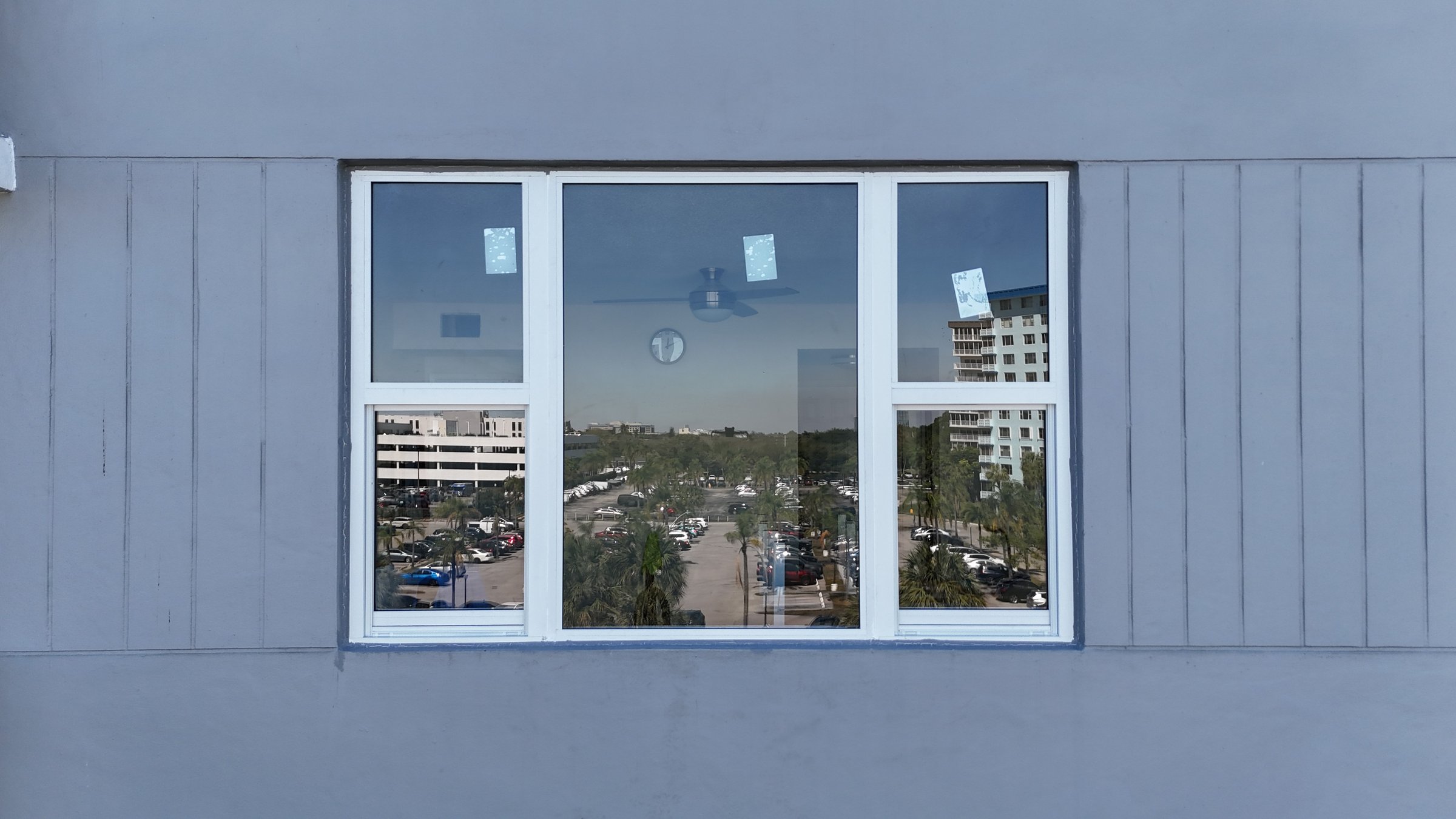
We install in the strictest wind-borne debris jurisdiction in the country under licenses CGC1531370, CCC1333168, CRC1331693, and SCC131153098. Here are the impact window myths we hear most in Miami, each checked against what the code and the paperwork actually say.
Why Impact Window Myths Cost South Florida Homeowners Money
Bad information costs money in three places, none of which surface until after the check clears.
- At permit. Reviewers verify every product carries a valid Notice of Acceptance (NOA) or Florida Product Approval for that exact opening size and pressure.
- At the insurance desk. Your premium credit comes from the wind mitigation form, not the brochure. Incomplete documentation means no discount, however good the glass is.
- After the storm. Carriers want proof of compliant opening protection. Homeowners who never collected their NOAs and closed permits argue for months.
The stakes are not theoretical. Florida law (§627.711, Fla. Stat.) requires insurers to offer premium discounts for construction techniques that reduce hurricane loss, and those discounts are documented on a state-mandated mitigation form. The wind loads driving all of this are real: under the Florida Building Code, HVHZ covers all of Miami-Dade and Broward County, where basic design wind speeds reach 170–180 mph for many risk categories (source: floridabuilding.org). Testing to those loads is not optional here.
Myth 1: Any “Hurricane Glass” Meets Miami-Dade Code (How to Actually Check Your NOA)
“Hurricane glass” is a marketing phrase with no legal definition. What the HVHZ recognizes is a product tested to TAS 201 (large and small missile impact), TAS 202 (uniform static air pressure), and TAS 203 (cyclic wind pressure loading) — all three, in the exact configuration being installed, before Miami-Dade issues an NOA. The large-missile test under TAS 201 fires a nominal nine-pound 2×4 at the glass at roughly 50 feet per second, then TAS 203 cycles the assembly through 9,000 pressure cycles (source: Miami-Dade Product Control, miamidade.gov).
This is where laminated glass vs tempered glass windows confusion does real damage. Tempered glass shatters into pebbles and leaves the opening open. Impact glass is laminated: two lites bonded to an interlayer that holds fragments in place after the strike, which is exactly what TAS 201 measures. Tempered alone will never carry a Miami-Dade NOA impact window rating.
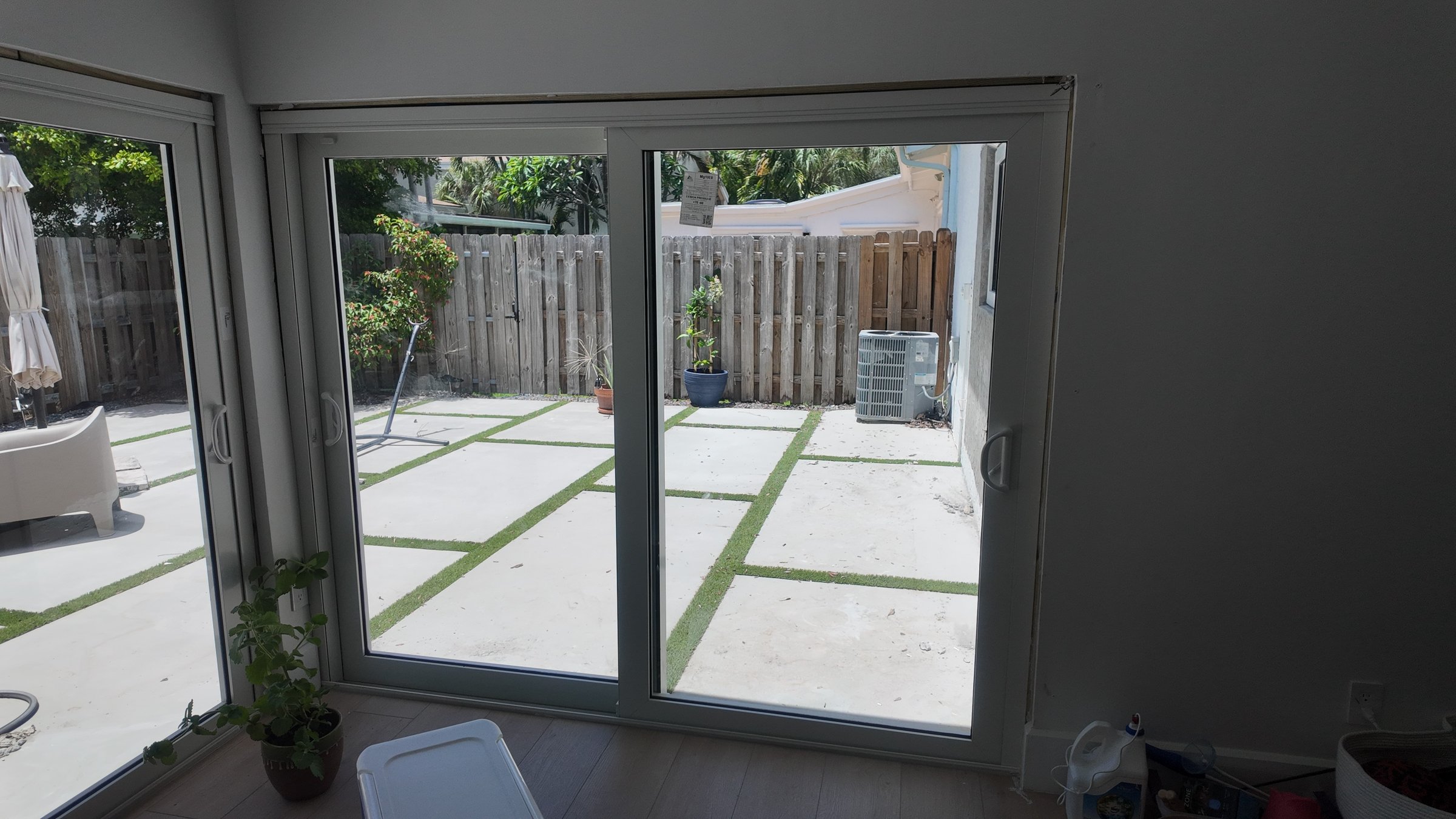
Myth 2: Impact Windows Always Cost More Than Shutters in the Long Run
The sticker comparison favors shutters; the ownership comparison usually does not. Hurricane impact windows cost South Florida homeowners more up front, and that is the only place shutters win outright. Shutters are a recurring labor cost — every named storm means ladders, hardware, and hours. Tracks corrode in salt air, panels disappear between seasons, and shutters protect glass you still have to replace later. If your windows are near end of life, impact units are almost always the better dollar.
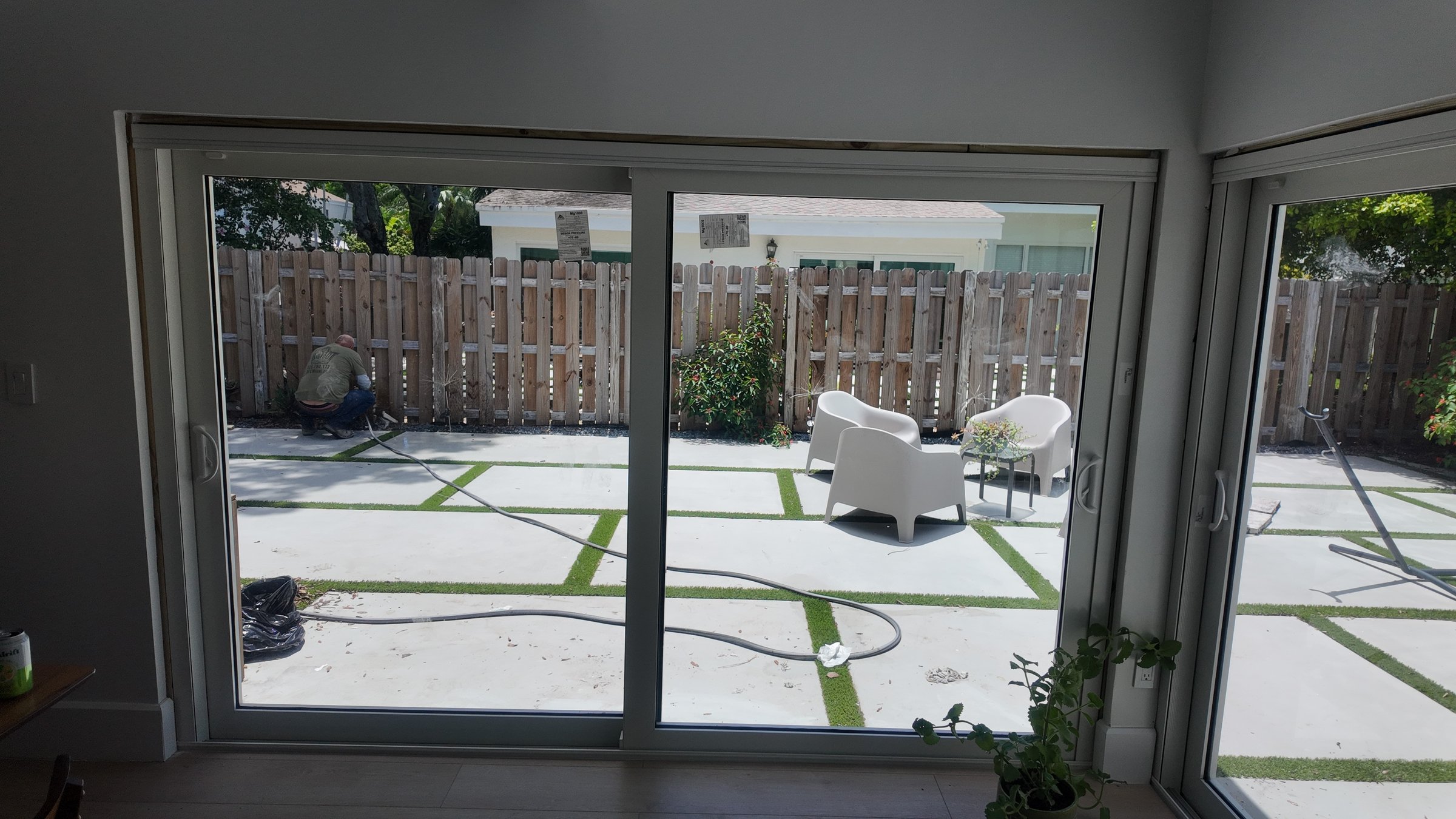
Myth 3: Impact Windows Automatically Get You the Maximum Insurance Discount
The most expensive myth here. The impact window insurance discount Florida carriers offer is driven by the Uniform Mitigation Verification Inspection Form (OIR-B1-1802). Two conditions control it: every glazed opening must be protected to earn the top classification, and the documentation must match — missing labels downgrade the rating even when the glass is fully compliant.
Impact rated doors hurricane protection is the piece homeowners forget. Front doors, French doors, sliders, and garage doors all count. Replacing eight windows and leaving the original wood front door costs you the discount those windows were bought for. On a recent Kendall job we replaced twelve windows and two sliders but the homeowner wanted to keep the original entry door — we walked them through why that single unprotected opening would have capped their mitigation credit, and they added an impact-rated door before we filed the form.
Myth 4: Impact Windows Block Outside Noise Completely
They reduce noise substantially, but they do not create silence. The laminated interlayer that stops debris also damps sound vibration, so do impact windows reduce outside noise has a genuine yes behind it. Sound also travels through walls, roof decks, and gaps around the frame, so poor perimeter sealing kills the benefit. Expect the biggest gains on mid and high frequencies; low-frequency rumble from trucks and aircraft resists any glazing.
Myth 5: Tinting or Window Film Voids Your NOA-Rated Glass Warranty
Partly true, and the distinction matters. The NOA covers a tested assembly. Aftermarket film on the interior surface is not automatically a code violation, but it can void the manufacturer’s glass warranty — especially on insulated units, where film changes thermal load and can induce stress cracking or seal failure.
Specify performance at order time instead. Modern impact glass tint and window film options include factory-applied tints and low-E coatings built into the tested unit and listed on the NOA: solar control without touching the warranty or the approval. Low-E coatings matter in this climate — the U.S. Department of Energy notes that windows account for a significant share of a home’s heating and cooling energy use, and low-E glazing can reduce energy loss by up to 30–50% compared with clear glass (source: energy.gov).
Myth 6: Hurricane Shutters Offer the Same Protection as Impact Windows
On a mitigation form, a code-approved shutter and an impact window can classify the same. In practice, hurricane shutters vs impact windows breaks on three points.
- They only work when deployed. Protection that depends on someone climbing a ladder before landfall has a human failure point.
- They are dark. A closed-up house during a multi-day outage is miserable, and you cannot see outside.
- They do nothing between storms. No daily security, UV control, noise, or energy benefit.
Both pass TAS 201-203 in their approved configurations. Only one passes at 3 a.m. when nobody was home to close it. FEMA’s guidance on protecting openings is blunt about why this matters: in high-wind events, once the building envelope is breached the resulting internal pressure can lift the roof and cause catastrophic structural failure (source: fema.gov). Continuous protection removes the human step.
Myth 7: Older Homes Are Automatically Grandfathered Out of HVHZ Requirements
Existing construction can legally remain as-is. That is all “grandfathered” means, and it is narrower than homeowners assume. The moment you pull a permit to replace windows or doors, the new work must comply with the current Florida Building Code, HVHZ provisions included. So you cannot replace non-impact windows with new non-impact windows in either county, and older masonry openings often need buck and anchor work — the NOA specifies the substrate and fastener schedule the product was tested with. That is not an upsell; it is what keeps the approval valid.
Myth 8: One NOA Number Covers Every Window on Your Property
An NOA is product- and configuration-specific, covering one product line within a defined size range, glass makeup, and design pressure rating. A typical hurricane window installation South Florida job carries separate approvals for single-hungs, horizontal rollers, picture windows, the slider, and the entry door — five products, five NOAs. Each is checked against the design pressure for that opening, and corner and gable-end openings see higher pressures, so the same model may be approved on one elevation and not another. Collect every NOA at closeout; that folder is what an adjuster asks for.
Myth 9: Impact Windows Don’t Need Permits or Inspections in Miami-Dade or Broward
Window and door replacement is permitted work in both counties without exception, including single-unit swaps. Unpermitted impact windows create three problems at the worst times: the mitigation inspector can refuse to credit unpermitted openings, the work becomes a disclosure item at resale, and an open violation complicates a post-storm claim. If someone offers to install “without the permit hassle,” they are transferring the risk to you.
Myth 10: A Lower Price Means You Got the Same Product
Two quotes for “impact windows” can describe genuinely different assemblies. Frame material, reinforcement, glass thickness, interlayer type, design pressure, and anchor schedule move price and performance together. A quote that does not name the manufacturer, product series, and NOA number is not comparable to one that does. Most of the price gap homeowners see between contractors is a specification gap.
How to Look Up Your Own Impact Window NOA Number
You can verify a product yourself in about five minutes.
- Find the label. A permanent etched label at the glass corner, or a sticker on the frame or jamb, lists manufacturer, approval number, and design pressure.
- Search the Miami-Dade Product Control database. The county publishes searchable Notices of Acceptance online by NOA number or manufacturer.
- Cross-check Florida Product Approval. Statewide approvals are published separately by the Florida Department of Business and Professional Regulation; many products carry both.
- Confirm three things. The NOA is current, your window’s size falls inside the approved range, and the design pressure meets what your opening requires.
- Match it to your permit. Pull the closed permit record from your county portal and confirm the product on the permit is the product on your wall.
Quick Answers: Impact Window Facts With Sources
- How fast is the test missile? TAS 201 large-missile testing fires a ~9 lb 2×4 at about 50 ft/s (source: miamidade.gov).
- How many pressure cycles? TAS 203 cyclic testing subjects the assembly to 9,000 loading cycles (source: miamidade.gov).
- What wind speeds does HVHZ design for? Basic design wind speeds in Miami-Dade and Broward reach 170–180 mph for many buildings (source: floridabuilding.org).
- Are insurance discounts required? Yes — Florida §627.711 requires insurers to offer mitigation discounts documented on the OIR-B1-1802 form.
FAQ: Impact Window Myths in South Florida
Does my HOA require its own NOA approval separate from the product’s NOA?
Your HOA cannot issue an NOA — only Miami-Dade Product Control does. But associations impose architectural standards on top of code: frame colors, finish, grid patterns, sometimes a specific manufacturer. Condo boards often keep an approved product list, and a fully compliant window that is not on it can still trigger a violation. Submit for architectural approval and pull your permit in parallel.
Do impact windows meet code if my house was built before the 2002 HVHZ update?
Yes, and the age of the house does not change the requirement. New impact windows are permitted and inspected under the current Florida Building Code with HVHZ provisions regardless of build year. Older homes often need new bucks or updated anchoring so the install matches the fastener schedule in the product’s NOA — the approval is only valid when the product is installed exactly as tested.
Can I mix impact windows and accordion shutters on the same house and still get full insurance credit?
Yes, provided every glazed opening is protected by a code-approved method. The mitigation form grades by the weakest protected opening, not by which method you chose, so impact windows in front and approved accordions in back can classify at the same level as an all-impact home. What breaks the credit is a gap: an unprotected skylight, bare garage door, or non-impact sidelight.
What’s the real permit and inspection timeline for impact windows in Miami-Dade vs. Broward County?
Both counties require permit application with product approval documents, installation, and inspection before closeout, with plan review before work starts. Duration varies by municipality — each city runs its own building department and queue — and by season, stretching as hurricane season approaches. Historic districts and condo buildings add a review-board step, so we give a jurisdiction-specific timeline at estimate.
How much do impact windows really cost compared to hurricane shutters in South Florida?
Impact windows cost meaningfully more up front, because you are buying a complete assembly rather than a cover for the window you already own. Over ownership the gap narrows: shutters carry deployment labor, salt-air maintenance, and storage, and leave your original windows to be replaced anyway. Pricing depends on opening count, sizes, frame material, and glass package, so we price from measured openings only.
What documents do insurance adjusters actually check for the impact window discount?
The primary document is the Uniform Mitigation Verification Inspection Form (OIR-B1-1802), completed by a qualified inspector. Supporting it: the permanent product label on each window and door, the Miami-Dade NOA or Florida Product Approval for every product, and the closed permit with final inspection approval. Photos of labels in place are frequently requested; homeowners who cannot produce those lose credits they legitimately earned.
What tests must an impact window pass to earn a Miami-Dade NOA?
All three of TAS 201 (large- and small-missile impact), TAS 202 (uniform static air pressure), and TAS 203 (cyclic wind pressure), in the exact configuration installed. TAS 201’s large-missile test fires a roughly nine-pound 2×4 at about 50 feet per second, and TAS 203 then cycles the assembly through 9,000 pressure loadings (source: Miami-Dade Product Control, miamidade.gov). Passing all three in the tested makeup is what produces the NOA number on your label.
Do impact windows really save energy in Miami?
Yes, when they carry a low-E coating specified at order time. The U.S. Department of Energy reports that low-E glazing can cut window energy loss by roughly 30–50% versus clear glass (source: energy.gov). In our climate the bigger benefit is blocking solar heat gain, which lowers cooling load. Ask for the coating to be built into the tested, NOA-listed unit rather than added as aftermarket film, which can void the glass warranty.
Every one of these impact window myths debunked traces to one root cause: marketing language has drifted away from the paperwork that governs it. The NOA, the permit, the mitigation form, and the product label decide whether your windows count. Ask for all four on every quote — any licensed South Florida contractor hands them over without hesitation.
Ready for a free estimate? Call 786-886-2088 or fill out our contact form.