
10 Concrete Tile Roof Myths Busted in Miami-Dade
Concrete tile is the most common steep-slope roof in South Florida, and the most misunderstood. Miami-Dade and Broward homeowners get their information from national blogs written for Ohio and Texas — places with no High-Velocity Hurricane Zone, no county product-approval office, and no salt air chewing on a roof year-round. The result is a pile of concrete tile roof myths Miami-Dade homeowners repeat to us on estimates every week, some of which cost real money at permit time or claim time.
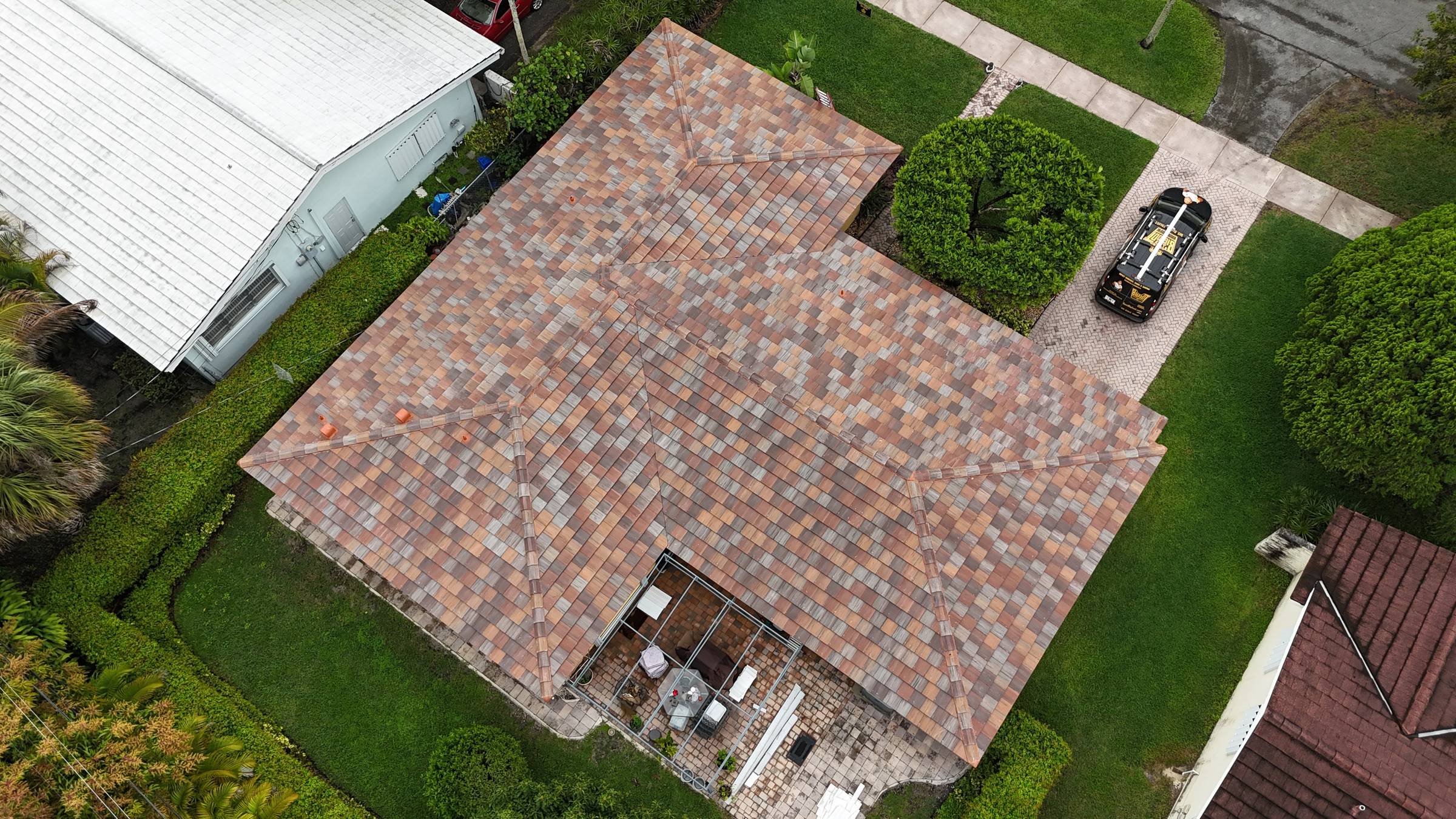
By the Bigfoot Windows & Roofing team. We are a Florida state-licensed general, roofing, and building contractor (CGC1531370, CCC1333168, CRC1331693, SCC131153098) pulling permits and passing in-progress tile inspections under Miami-Dade product control every week. The ten myths below are the ones we hear most on estimates — and what the code and the official sources actually say.
Quick Facts: Concrete Tile in the HVHZ
- Miami-Dade and Broward are the only two counties designated as the High-Velocity Hurricane Zone (HVHZ) in the Florida Building Code, where the strictest roofing and product-approval provisions apply. (Source: floridabuilding.org)
- Roofing products in the HVHZ require a Miami-Dade Notice of Acceptance (NOA) or Florida Product Approval and must be installed as the approved assembly. NOAs are searchable and carry expiration dates. (Source: miamidade.gov Product Control)
- The roof envelope is a major factor in hurricane wind performance; FEMA post-storm assessments repeatedly tie building damage to roof cover and attachment failures. (Source: fema.gov)
- Cool/reflective roofing, including many tile products, can reduce roof surface temperature and cooling load. (Source: U.S. DOE, energy.gov Cool Roofs)
Myth 1: Concrete Tile Is Just as Light as Clay — Truss Engineering Says Otherwise
In the concrete tile vs clay tile roof conversation, weight is the first thing homeowners wave off and the first thing an engineer looks at. Concrete roof tile generally runs heavier per square than most clay profiles, and that dead load lands on framing designed for whatever was on the roof the day the house was built. A 1968 CBS home framed for lightweight shingles is not automatically cleared for a tile conversion.
Concrete roof tile weight matters most on a material change — shingle to tile, or a heavier profile than what came off. That triggers a structural review and, in most Miami-Dade jurisdictions, a signed and sealed engineer letter with the permit application. Tile-to-tile in the same weight class usually does not. On a shingle-to-tile conversion in Miami Springs, we have had the county require the sealed engineer letter before the permit would even route to plan review.
Myth 2: Any Roofer Can Install Concrete Tile Under Miami-Dade’s HVHZ Rules
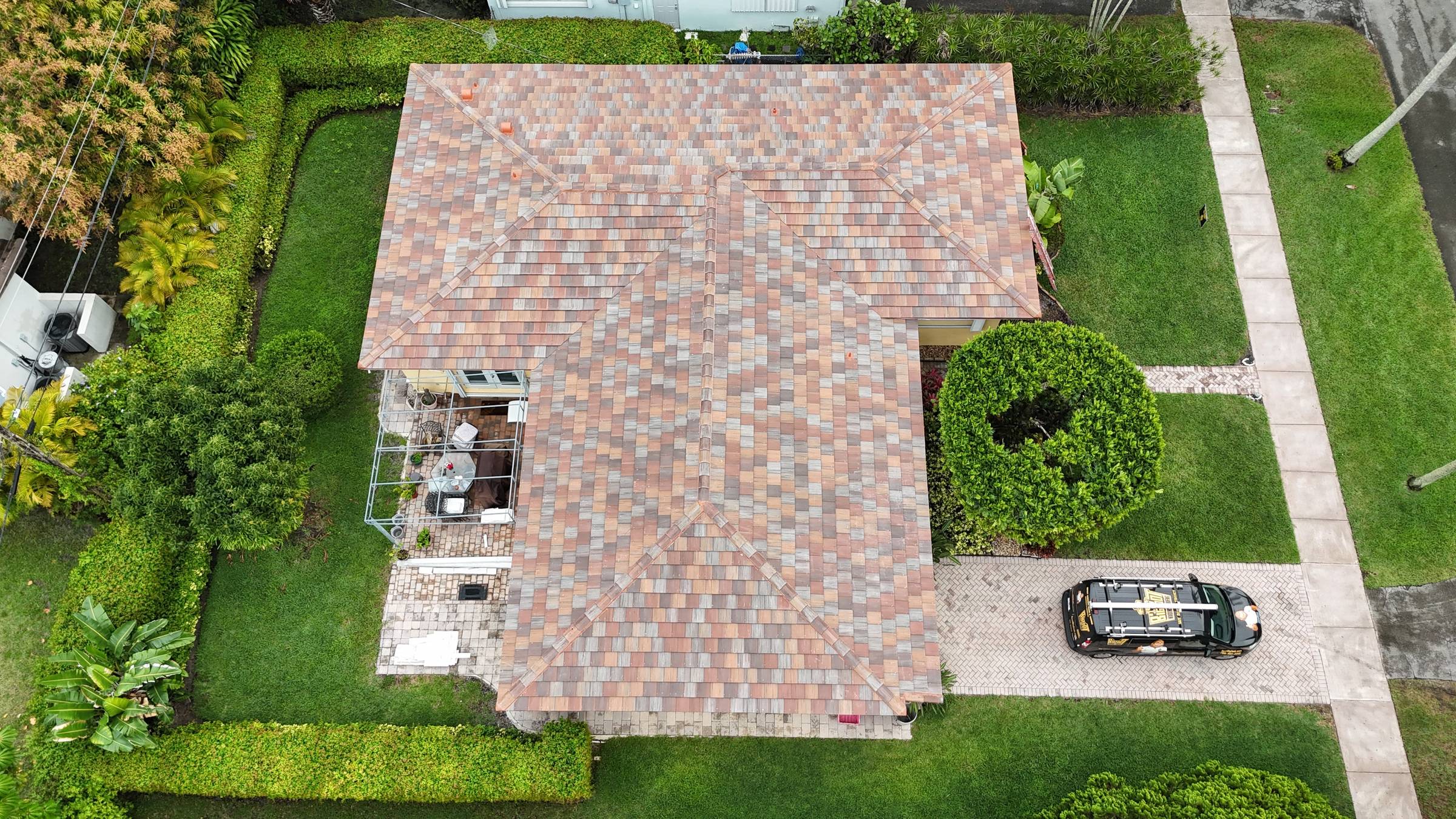
A state license gets a contractor onto a roof. It does not mean the crew has ever built a system that satisfies HVHZ concrete tile roof requirements. Inside the High-Velocity Hurricane Zone, the underlayment system, fastener schedule, batten details, drip edge, and roof flashing are all prescribed — not left to preference.
What separates an HVHZ tile job: an approved underlayment installed per its own approval, corrosion-resistant fasteners with defined deck penetration, metal drip edge set in the sequence the approval calls for, and headwall and sidewall roof flashing sized for wind-driven rain rather than gravity alone. Inspectors pull the in-progress inspection for exactly these items. Ask any bidder which underlayment NOA they are installing under before you sign. You can verify any NOA yourself in the Miami-Dade Product Control search.
Myth 3: One NOA Covers Every Concrete Tile Roof Forever
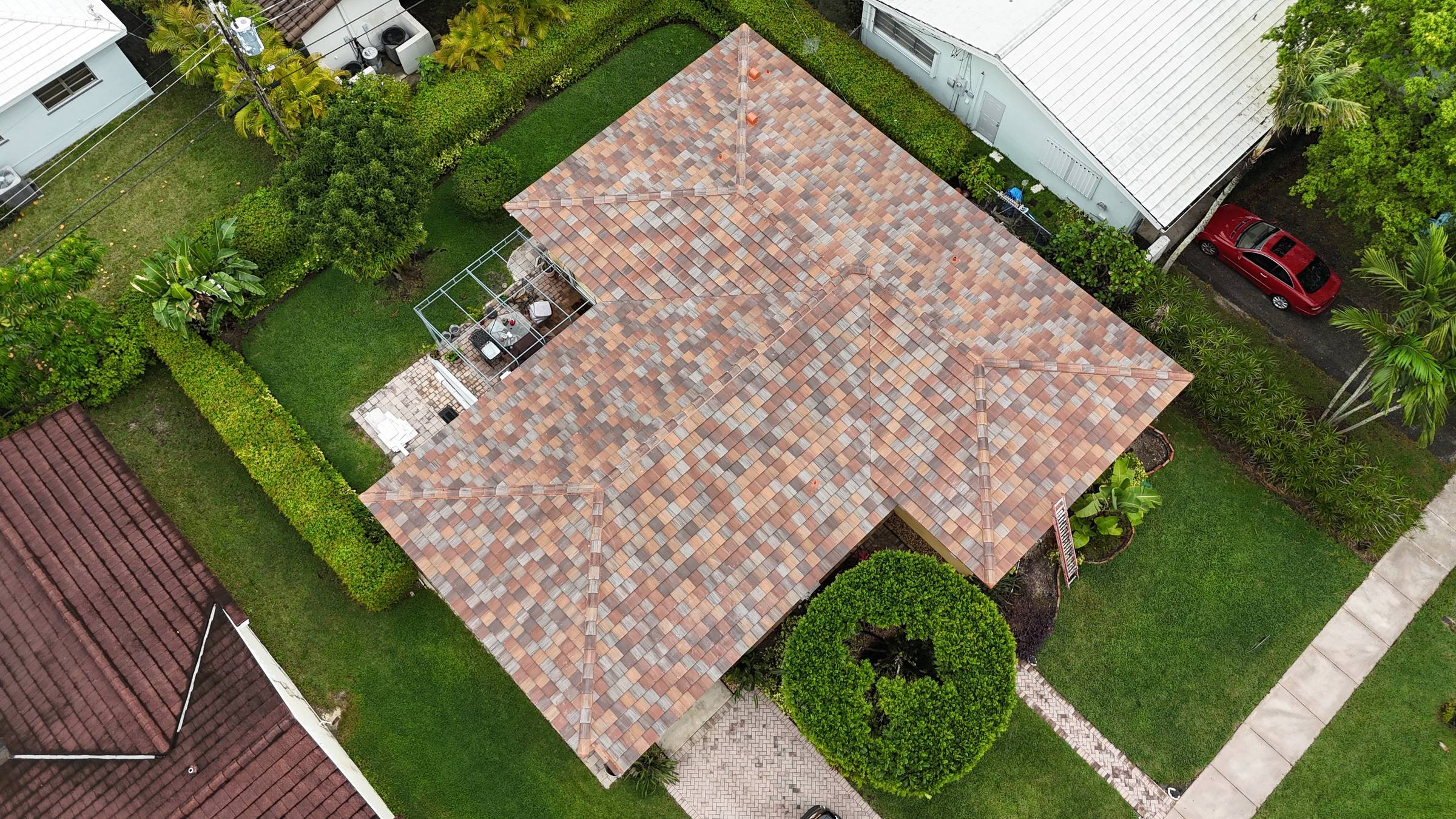
The Miami-Dade NOA concrete tile roof misconception is that the approval belongs to your house. It belongs to a specific manufacturer’s product in a specific assembly, and it carries an expiration date. NOAs get renewed, revised, and occasionally allowed to lapse when a manufacturer changes a formulation or drops a profile.
Practically: the NOA that covered your roof in 2011 may not be active today. At re-roof, the permit is reviewed against currently active NOAs for the tile, underlayment, and attachment method as a system — pairing an approved tile with an unapproved fastener is a failed inspection. Keep the NOA documents for every component with your closed permit; carriers and buyers’ inspectors ask for them.
Myth 4: Foam-Set Tile Is Always Approved and Insurance-Friendly
Adhesive-set tile is legitimate here, but “foam” is not a blanket category. Polyurethane foam adhesive is approved only where a current NOA covers that adhesive with that tile profile, at the specified paddy size and placement, on a properly prepared underlayment. Foam applied over a dusty or incompatible surface is a system failure waiting for the first named storm.
On foam vs mortar tile attachment, carriers have gotten sharper. After heavy South Florida claims scrutiny, underwriters want the permit, the final inspection, and the attachment method documented. A foam-set roof under an active NOA with a closed permit is not a red flag. One with no permit history is.
Myth 5: Mechanical Fastening Is Outdated Compared to Foam Attachment
Screws and nails are not the old way. Mechanically fastened tile — installed per the approval’s fastener schedule into deck or battens — remains a fully current, high-uplift-rated method under Miami-Dade product control, and on many steep-pitch and high-exposure roofs it is the better engineering answer.
Real selection drivers: roof pitch, deck condition, tile profile, the building’s design wind pressure under the Miami-Dade 25-7 HVHZ wind-load standard, and coastal exposure category. Adhesive systems are faster and produce fewer deck penetrations; mechanical systems are easier to inspect and repair tile-by-tile. A contractor who only offers one method is selling their crew’s habit, not your roof’s uplift requirement.
Attachment Methods at a Glance
| Factor | Mechanical Fastening | Foam / Adhesive Set |
|---|---|---|
| Approval basis | Current NOA fastener schedule | Current NOA for that adhesive + tile profile |
| Deck penetrations | More (screws/nails) | Fewer |
| Repairability | Easier tile-by-tile | Bonded — repair is more involved |
| Speed of install | Slower | Faster |
| Best-suited conditions | Steep pitch, high exposure | Sound underlayment, prepped surface |
Myth 6: Freeze-Thaw Cracking Is a Real Risk for Miami-Dade Tile Roofs
This one comes straight out of national content and does not apply here. Freeze-thaw damage requires water absorbed into the tile to freeze, expand, and spall the surface over repeated cycles. Miami-Dade does not produce those cycles.
What actually cracks tile here: foot traffic from technicians walking the field instead of the headlap, windborne debris, and the slow fatigue of a fastener or adhesive bond that lets a tile rock in wind. Those are install-quality issues, not climate chemistry. Budget an inspection after any named storm — that is the local equivalent of a freeze-thaw check.
Myth 7: Salt Air and UV Exposure Don’t Really Affect Concrete Tile
The tile body handles our climate well. The system around it takes the beating. Salt air roof damage Miami shows up first in metal: fasteners, valley metal, drip edge, and roof flashing at chimneys and wall terminations. Chloride-laden air accelerates corrosion, which is why the code specifies corrosion-resistant fasteners and why substituting cheaper metal surfaces in year eight, not year one.
UV degradation roof tile is real, but it targets the coating and underlayment more than the concrete. Coastal homes should get a documented inspection every 12 to 24 months, with attention to metal corrosion and cracked mortar at hips and ridges. Reflective tile coatings can also help on the energy side — the U.S. Department of Energy notes that cool roofs stay cooler in the sun and can lower cooling demand.
Myth 8: Faded or Broken Tiles Can Always Be Perfectly Color-Matched
Honest answer: sometimes, and rarely perfectly. Concrete tile roof fading Florida is normal — pigment weathers under UV and the roof settles into a lighter tone over a decade. A brand-new tile in the original color code reads as a bright patch against that weathered field even when it is the same product.
The bigger problem is discontinued profiles. If your tile came from a manufacturer that exited the market, there is no matching stock at any color. Store leftover tile from the original install — a pallet in the corner of the yard is the cheapest repair insurance available. On a repair in Palmetto Bay last year, the only reason we could keep the front elevation uniform was that the original owner had stacked a half-pallet of matching tile behind the shed.
Myth 9: Concrete Tile Always Costs Less Than Clay Long-Term in Coastal Miami
Concrete usually wins on material price per square. That is the beginning of the math, not the end. Concrete tile roof cost South Florida has to include the underlayment system — where most of the labor and nearly all of the waterproofing lives — plus tear-off, disposal, structural review if the load changes, and whatever deck repair the tear-off uncovers.
On concrete tile roof lifespan Florida, both materials commonly outlive the underlayment beneath them. Clay holds color better because the color is fired through the body; concrete is tougher against impact and cheaper to replace piece by piece. In salt-air coastal exposure, the deciding cost factor is the quality of the metal and underlayment, not the tile choice. Many Miami homes also carry attached flat roofs over porches or additions, and those TPO membrane or modified bitumen sections replace on a different schedule than the tile — price the whole roof, not just the pretty part.
Myth 10: Re-Roofing or Repairing Tile Never Requires a New Permit or Engineer Letter
Miami-Dade requires a permit for re-roofing and for repairs above the jurisdiction’s minimum threshold. There is no homeowner exemption. Unpermitted roof work gets discovered at three predictable moments — a claim, a sale, and a code-compliance complaint — all expensive.
An engineer letter is not required on every job, but it is common when the roof load changes, when tear-off exposes deteriorated deck or framing, or when the jurisdiction wants documentation that the structure meets current wind-load provisions. Repairs are also subject to percentage-replacement rules that decide when a repair legally becomes a re-roof. Get that determination before work starts. Permit and product requirements for the HVHZ are published at floridabuilding.org and miamidade.gov.
Frequently Asked Questions About Concrete Tile Roofs in Miami-Dade
Does my concrete tile roof need a new Miami-Dade NOA when I re-roof or repair a section?
For a re-roof, yes — the permit is reviewed against NOAs currently active for the tile, underlayment, and attachment method you are installing. Your old approval does not carry forward. For a small in-kind repair you are matching the existing assembly, but every product used still has to be approved for HVHZ use. Keep the NOA documents with your closed permit. You can verify current approvals through Miami-Dade Product Control.
Will insurance flag a foam-set tile roof after recent claims scrutiny in South Florida?
Not on the adhesive alone. Carriers look for a documented, permitted, inspected system. A foam-set roof installed under an active NOA with a closed permit and final inspection generally underwrites fine. A roof with no permit record, or an adhesive never approved for that tile profile, is where problems start.
Can a broken or faded concrete tile actually be color-matched on an older Miami-Dade roof?
Close sometimes, exact rarely. Pigment weathers under UV, so new tile in the original color reads brighter than a ten-year-old field. If the profile is discontinued, no match exists at all. The practical fix is relocating salvaged tile to the street-facing elevation and installing new tile out of sight.
Does the weight of concrete tile require a structural engineer letter for my home’s truss age?
It depends on whether the load changes. Tile-to-tile in the same weight class usually does not. Converting from shingle to tile, or moving to a heavier profile, typically does — a Florida-licensed engineer evaluates whether your existing trusses or rafters can carry the added dead load. Older homes and homes with prior framing modifications draw more scrutiny.
How does concrete tile roof lifespan and cost really compare to clay in salt-air coastal exposure?
Both tiles routinely outlast the underlayment under them, which is what actually ends a roof’s service life. Clay holds color longer because the color is fired through the body; concrete resists impact better and costs less to replace piece by piece. In coastal salt air, the real lifespan driver is the quality of the fasteners, flashing, and underlayment — not which tile you picked.
Is foam adhesive attachment ever approved for concrete tile under HVHZ, or only mechanical fastening?
Both are approved under Miami-Dade product control when installed per a current NOA. Adhesive-set systems have specific requirements for paddy size, placement, and the underlayment surface they bond to. Mechanical fastening has its own fastener schedule and penetration depth. The right choice comes from your roof’s pitch, deck condition, and design wind pressure under the Miami-Dade 25-7 HVHZ wind-load standard.
Which counties are in Florida’s High-Velocity Hurricane Zone?
Under the Florida Building Code, the HVHZ covers Miami-Dade and Broward counties. That designation drives the stricter roofing, product-approval, and wind-load requirements described throughout this article. See floridabuilding.org for the governing code language.
Ready for a free estimate? Call 786-886-2088 or fill out our contact form.