Roof Replacement Cost: Shingles & Hot Mop | Bigfoot Windows & Roofing
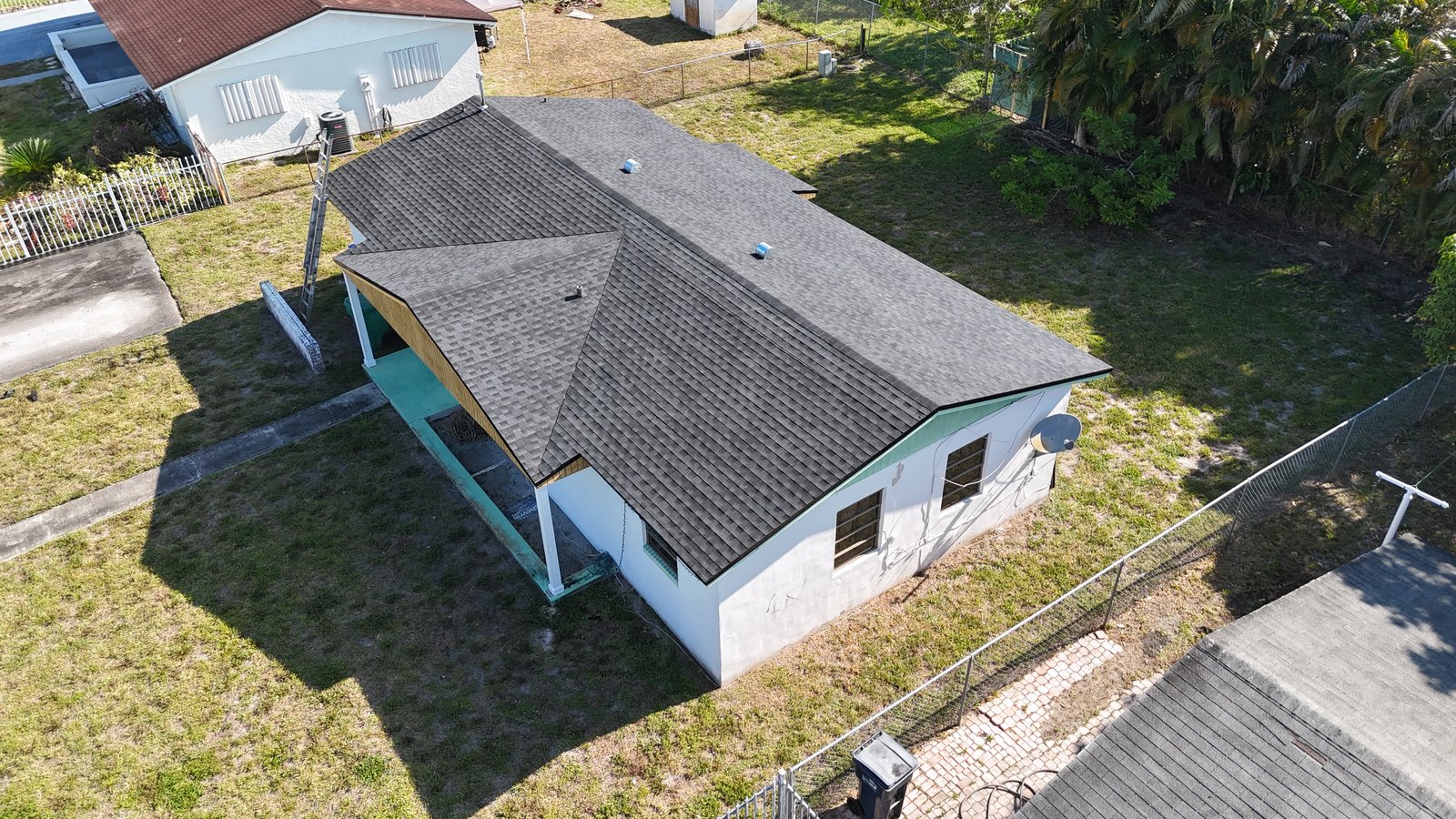
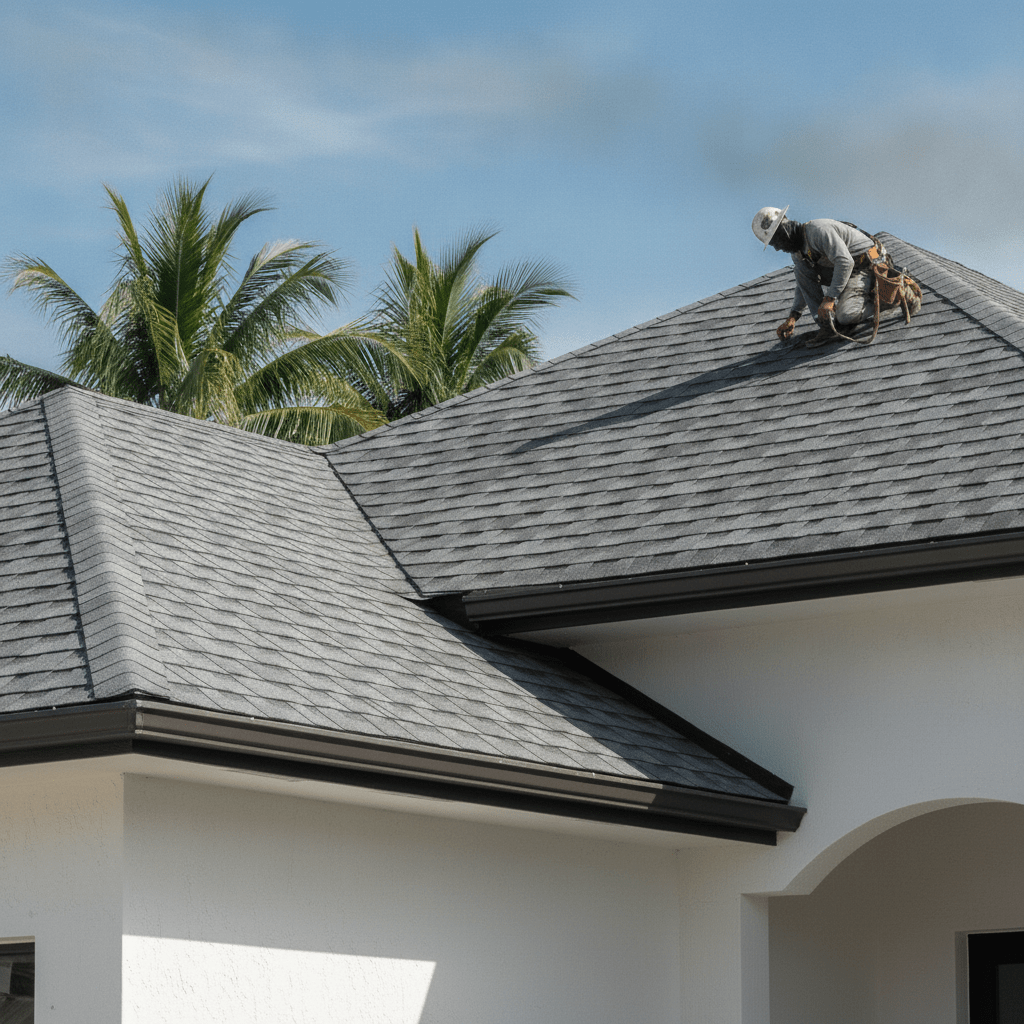
In South Florida, a full shingle roof replacement on a standard single-family home typically runs $750–$850 per square (100 sq ft installed). When your home also has flat or low-slope sections requiring a hot-mop underlayment, that work adds a separate cost layer — usually $3–$6 per square foot of flat area, depending on deck condition and ply count.
Updated August 2026
Key Takeaways
- Shingle roofing in South Florida runs $750–$850 per square installed — HVHZ permit and NOA requirements can push costs toward the upper end.
- Hot mop is a built-up asphalt membrane applied to flat/low-slope sections; it is often required by Florida Building Code and your insurer — not optional.
- Miami-Dade and Broward HVHZ rules require materials that carry a Miami-Dade NOA or a Florida Product Approval that covers HVHZ use and extra inspections, adding real cost that national averages omit entirely.
- A new shingle roof combined with a wind mitigation inspection can meaningfully reduce your Citizens Property Insurance or private carrier premium.
- Bigfoot holds a Certified Roofing Contractor license (CCC1333168) and a Certified General Contractor license (CGC1531370), so structural issues found during tear-off can be resolved in-house without a second contractor.
The Real Problem
Why National Cost Estimates Are Wrong for Miami-Dade Homeowners
The number your neighbor paid in Ohio has nothing to do with what your roof costs in Hialeah.
Type “roof replacement cost” into any search engine and you will find national estimates ranging from $5,000 to $12,000. Those figures are built around non-hurricane-zone labor rates, standard felt underlayment, and no permit complexity. They are essentially useless for South Florida homeowners.
Here is what those guides leave out entirely:
- A product with a current Florida Product Approval (FL number) that covers HVHZ use is legal to install in Miami-Dade and Broward. A Miami-Dade NOA is an additional certification some products also carry; it is not required for the permit. Products that do not hold an active NOA or a Florida Product Approval that covers HVHZ use cannot legally be installed in the HVHZ.
- HVHZ wind-speed design pressures — the High-Velocity Hurricane Zone covers Miami-Dade and Broward counties. Design pressure requirements of 180+ mph mean specific fastener schedules, specific underlayment systems, and additional inspections — all of which cost money.
- Hot mop as a code requirement — if your home has a flat or low-slope section (common on mid-century CBS homes throughout Miami-Dade), hot-mop built-up roofing is frequently the Florida Building Code-compliant solution, not an upgrade.
- The 25% rule — Florida Building Code §706 triggers a full re-roofing requirement when 25% or more of the roof area needs repair within a 12-month period. Many homeowners budget for a patch and end up paying for a full replacement.
South Florida Context
HVHZ, NOA Requirements, and the Miami-Dade Permit Process
Miami-Dade and Broward counties sit inside the HVHZ — the most stringent residential building code environment in the United States. This is not marketing language; it is a Florida Building Code designation that carries specific material, installation, and inspection obligations.
What HVHZ adds to your roofing cost:
- Miami-Dade NOA compliance: shingles, underlayment, fasteners, and accessories must all carry active Miami-Dade NOAs or a Florida Product Approval that covers HVHZ use. Products whose Florida Product Approval does not cover HVHZ use, and that have no Miami-Dade NOA, cannot be used in HVHZ installs. Sourcing NOA-compliant materials costs more than standard-grade equivalents.
- Permit fees and required inspections: Miami-Dade Building Department requires a permit for any full roof replacement. Permit fees vary by municipality and project value. The inspection sequence (dry-in inspection, final inspection) adds project timeline and coordinator cost.
- Fastener schedules: HVHZ fastener patterns are denser than standard Florida installations. More fasteners per shingle means more labor time per square.
- Mandatory hurricane strap verification: during many Miami-Dade reroofs, the inspector will check that hurricane straps connect your roof structure to the wall system. If straps are missing or corroded, they must be added or replaced — a structural scope item. Because Bigfoot holds a Certified General Contractor license (CGC1531370) in addition to a Certified Roofing Contractor license (CCC1333168), structural items like hurricane strap upgrades or damaged rafter repairs can be handled in-house without waiting for a separate GC to mobilize, which simplifies the permit and inspection process considerably.
Palm Beach County sits outside the HVHZ, so its permit requirements and inspection sequences are less intensive — typically $25–$50 per square less than a comparable HVHZ job. If your home is in Broward or Miami-Dade, budget accordingly.
Cost Education
What Is Hot Mop and Why Does Your South Florida Roof Need It?
Hot mop is a built-up roofing (BUR) membrane system applied to flat and low-slope roof sections (typically slopes below 2:12). A roofer mops hot liquid asphalt between alternating layers of roofing felt — usually two or three plies — creating a seamless, waterproof membrane bonded directly to the deck.
Hot mop is not a novelty or an upgrade. On low-slope sections common to South Florida CBS (concrete block structure) homes built in the 1950s through 1980s, it is frequently the code-appropriate and insurance-appropriate solution because:
- Standard shingles require a minimum 2:12 slope — flat or near-flat sections cannot accept shingle systems.
- Florida Building Code and many Citizens Property Insurance policies require a rated waterproofing membrane on low-slope areas.
- A proper hot-mop system qualifies as a secondary water barrier on the Florida OIR wind mitigation form (OIR-B1-1802), which may generate a meaningful premium credit — confirm eligibility and amount with your carrier, as credits vary by insurer and coverage zone.
| Cost Component | Typical Range | What Drives the Range |
|---|---|---|
| Shingle installation (per square) | $750–$850 | HVHZ permit complexity, deck condition, roof pitch, tear-off layers |
| Hot mop — 2-ply (per sq ft of flat area) | $3–$5 | Deck condition, accessibility, ply count |
| Hot mop — 3-ply / upgraded spec (per sq ft) | $5–$6+ | Insurer requirement, high-slope parapet detail |
| Deck replacement (per sheet) | $80–$150 | Plywood vs. OSB, rot extent, lumber pricing |
| Miami-Dade permit fee | Varies by municipality | Assessed value of project, building department schedule |
| Hurricane strap upgrade (if required) | Project-specific | Number of trusses/rafters, strap type, structural access |
Note: ranges above are directional estimates reflecting South Florida market conditions as of August 2026. Your actual quote depends on roof size, slope mix, deck condition, and HVHZ permit requirements. Request a detailed written estimate before committing.
Material Comparison
Shingle Options for HVHZ: What Miami-Dade NOA Approval Means for Your Choice
Not every shingle on the market holds a Miami-Dade NOA. Here is how the most common choices compare for South Florida homeowners:
| Shingle Type | Miami-Dade NOA? | Typical Installed Cost | South Florida Lifespan | Wind Rating |
|---|---|---|---|---|
| Standard 3-tab | Rarely | Lower | 10–12 years | 60–80 mph |
| GAF Timberline HDZ (HVHZ-compliant) | Yes (on qualifying underlayment system) | $750–$850/sq | 12–15 years | Wind Proven (no mph cap with qualifying system) |
| Architectural / dimensional | Varies by brand/NOA | Mid range | 12–15 years | 130 mph typical cap (non-qualifying systems) |
| Premium designer / impact-rated | Select products | Higher | 15+ years | Up to 150 mph (product-specific) |
Bigfoot installs GAF shingles and holds GAF Certified Plus certification, which allows us to offer the GAF System Plus warranty — a 50-year non-prorated warranty covering shingles, labor, tear-off, and accessories. The GAF Wind Proven warranty (no maximum mph rating, 15-year term, not voided by named storms in your county) is available on qualifying installations using the full GAF underlayment system including peel-and-stick base sheet.
For shingle and hot mop projects, we typically pair GAF Layer Lock shingles with a full-deck peel-and-stick underlayment on the pitched sections. The peel-and-stick system — permitted under the 2024 Florida Building Code update — can qualify as a Secondary Water Resistance (SWR) feature on the wind mitigation inspection form, potentially generating a meaningful insurance credit.
When a Different Option Might Be a Better Fit
If your low-slope section is large enough that the flat area represents the majority of the roof, a standalone TPO or modified bitumen flat roof may be more cost-effective than a hybrid hot-mop-plus-shingle approach. We will tell you honestly during the estimate which system makes structural and financial sense for your specific roof geometry.
Why It Matters Who You Hire
Licensed for Every Scope Your Roof Might Reveal
A roofing permit in Miami-Dade can expose structural items. Your roofer should be equipped to handle them — not send you to find another contractor.
“When we pull a permit in Miami-Dade and the inspector flags a missing hurricane strap, I don’t call a sub — we handle it in-house. That single fact saves homeowners days or weeks of project limbo.”
President, Bigfoot Windows & Roofing
Florida licensed: CGC1531370 · CRC1331693 · CCC1333168 · SCC131153098
Insurance & Wind Mitigation
Will a New Shingle Roof Lower My Homeowners Insurance Premium?
A properly documented new roof installation can generate meaningful insurance savings in South Florida — but the outcome depends on several variables working together, not just the shingle brand alone.
The four factors that affect your premium after a reroof:
- Roof covering type — HVHZ-rated shingles with a Miami-Dade NOA are credited differently than standard shingles on wind mitigation forms.
- Secondary water resistance — a full-deck peel-and-stick underlayment, or a properly applied hot-mop system on flat sections, can qualify for the SWR credit on the OIR-B1-1802 form. The Florida Division of Emergency Management lists a self-adhesive foam secondary water barrier at roughly 6% credit — verify current amounts and eligibility with your carrier.
- Roof deck attachment — inspectors verify nail size and spacing. A properly documented 8d nail installation with the required pattern supports a stronger deck attachment credit.
- Roof-to-wall connection (hurricane straps) — if your home gets hurricane strap upgrades as part of the project, the wind mitigation inspector documents the connection type, which can shift your premium category.
Citizens Property Insurance has been non-renewing policies on homes with roofs 20 years or older. A new qualifying roof removes that non-renewal trigger. I have seen customers reduce premiums significantly after a new roof combined with a wind mitigation inspection and policy shopping — but every home, insurer, and coverage zone is different, and I won’t give you a specific dollar figure I can’t document for your situation.
The My Safe Florida Home program offers matching grant funding of up to $10,000 for qualifying wind-mitigation improvements. Ask about stacking this with PACE financing to reduce or eliminate out-of-pocket cost on your qualifying improvements.
The Process
What to Expect: Shingle & Hot Mop Roof Replacement Timeline
South Florida roofing projects move on a different timeline than non-HVHZ states — permit cycles and inspection sequences add real days to the schedule.
- Estimate and proposal — we inspect the roof, measure the slope mix (pitched vs. flat), assess deck condition, and prepare a written scope with product specs and NOA references. No verbal ballpark estimates.
- Permit application — we pull the permit with your local building department. Miami-Dade permit processing times vary by municipality and season; plan for 5–15 business days in most cases.
- Tear-off and deck inspection — your existing roofing is removed, and the deck is inspected for rot, delamination, and fastener pullout. Deck boards that fail inspection are replaced before the dry-in begins.
- Dry-in inspection — the building inspector verifies underlayment installation (peel-and-stick on shingle sections; hot mop on flat sections) before shingles or cap sheet is applied. This is a mandatory hold point in Miami-Dade and Broward.
- Shingle installation — GAF Layer Lock shingles are installed using the HVHZ fastener schedule. On flat sections, the hot-mop ply count is completed and inspected.
- Final inspection and closeout — the building inspector verifies the completed roof. We provide you with a copy of the final permit and the product NOA documentation for your insurance wind mitigation inspection.
Get a written, itemized estimate for your shingle and hot mop roof replacement in Miami-Dade, Broward, or Palm Beach.
Related Articles
Who We’re Not the Right Fit For
We believe in being straight with homeowners before they sign anything. Bigfoot is not the best fit for every situation:
- You need a commercial flat roof on a multi-story building. Our residential and light-commercial scope covers single-family and small multi-family; large commercial membrane projects require a different contractor class and crew scale.
- Your budget requires the absolute lowest bid, materials TBD. We do not do unspecified or “whatever is cheapest” installs. HVHZ requires materials that carry a Miami-Dade NOA or a Florida Product Approval that covers HVHZ use, and we won’t cut that corner to win a bid.
- You want the job started without a permit. We pull permits on every South Florida project. If a contractor offers to skip the permit to move faster or save money, that is a red flag — not a benefit.
- You are only considering national chain vendors. Our model is owner-operated and locally licensed. If a national brand’s uniformity and call-center service model appeals to you, we may not be your style.
Common Questions
Frequently Asked Questions
How much does a full shingle roof replacement cost in Miami-Dade County?
In Miami-Dade, a shingle roof typically runs $750–$850 per square (100 sq ft installed). The range reflects HVHZ permit complexity, deck condition, and the number of tear-off layers. Flat or low-slope sections requiring hot mop add a separate cost — generally $3–$6 per square foot of flat area. Get a written, itemized estimate that references the specific NOA-compliant products being installed.
What is hot mop and why does my South Florida roof need it?
Hot mop is a built-up roofing membrane made by mopping hot asphalt between alternating plies of roofing felt on flat or low-slope sections. In South Florida, flat roof sections on CBS homes commonly require a rated waterproofing membrane under Florida Building Code. A properly installed hot-mop system may also qualify as a secondary water barrier on your wind mitigation form, which can generate a meaningful insurance credit.
Does Miami-Dade require a permit for a full roof replacement, and how does that affect cost?
Yes — Miami-Dade and Broward require a permit for any full roof replacement. The permit triggers a dry-in inspection and a final inspection, adding 5–15 business days to a typical project schedule. Permit fees vary by municipality and project assessed value. The inspection requirement also ensures NOA-compliant products and fastener schedules are verified by the building department — skip-the-permit offers are a serious red flag in HVHZ.
Will upgrading to HVHZ-rated shingles lower my homeowners insurance premium in Florida?
Possibly — but the premium reduction depends on multiple factors: roof covering type, secondary water resistance, deck attachment, and roof-to-wall connection type. A new qualifying shingle roof documented through a licensed wind mitigation inspection can support meaningful credits. I have seen customers reduce premiums significantly after a new roof combined with a wind mitigation inspection and policy shopping — but your specific credit depends on your insurer, zone, and coverage structure.
How long does a shingle and hot mop roof replacement take in South Florida?
Physical installation on a typical single-family home takes 2–5 days. The permit application in Miami-Dade adds 5–15 business days before work starts. A mandatory dry-in inspection creates a hold point mid-project. Total timeline from signed contract to final inspection closeout is commonly 3–5 weeks in the HVHZ. Projects with significant deck replacement or structural repairs will run longer.
What financing options are available for a roof replacement in South Florida?
PACE financing is one option many South Florida homeowners use — it is paid through your property tax bill rather than a bank loan, does not impact your FICO credit score, and eligibility is based on home equity rather than credit history. A sample $15,000 project on a 20-year PACE term runs approximately $173/month. The My Safe Florida Home grant offers up to $10,000 in matching funds for qualifying wind-mitigation improvements and can stack with PACE. Confirm current program availability and your eligibility before planning your budget.
Can Bigfoot handle structural repairs discovered during the rooftear-off?
Yes. Because Bigfoot holds both a Certified Roofing Contractor license (CCC1333168) and a Certified General Contractor license (CGC1531370), structural scope items found during tear-off — such as damaged rafters, rotted decking, or missing hurricane straps — can be addressed in-house under the same permit. You do not need to locate and coordinate a separate GC while your roof is open to the weather.
Schedule Your Free Estimate
Ready to get started? Request a free estimate — no phone call required.
Sources referenced in this article:
- Florida Building Code, Existing Building Volume, §706 — Re-roofing threshold (25% rule): floridabuilding.org
- Florida Division of Emergency Management, Wind Mitigation Booklet — Secondary water barrier credit: floridadisaster.org
- My Safe Florida Home grant program (up to $10,000 matching): mysafeflhome.com
- Renew Financial — PACE eligibility and credit score non-impact: renewfinancial.com
Ready to get an honest, itemized estimate for your shingle and hot mop roof?
We pull the permit, handle the inspections, and manage any structural items in-house — one contractor, one point of contact, from contract to final closeout.