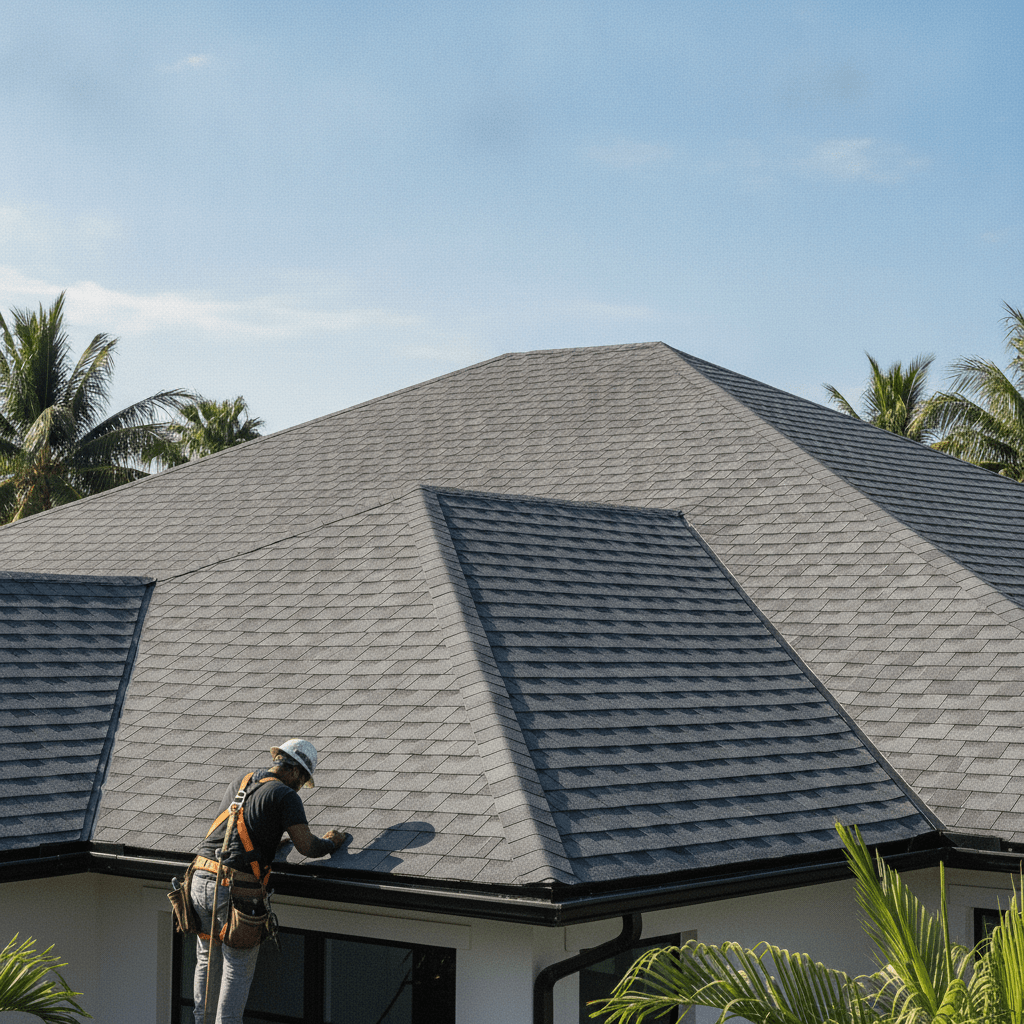
Bigfoot Windows & Roofing Reviews — What to Know
Updated September 2026
When South Florida homeowners search for impact-window or roofing contractor reviews, the most useful information is not a star rating — it is whether the contractor is properly licensed with the Florida DBPR, pulls permits in Miami-Dade or Broward, and installs products that carry a valid Miami-Dade Notice of Acceptance or Florida Product Approval covering High Velocity Hurricane Zone testing.
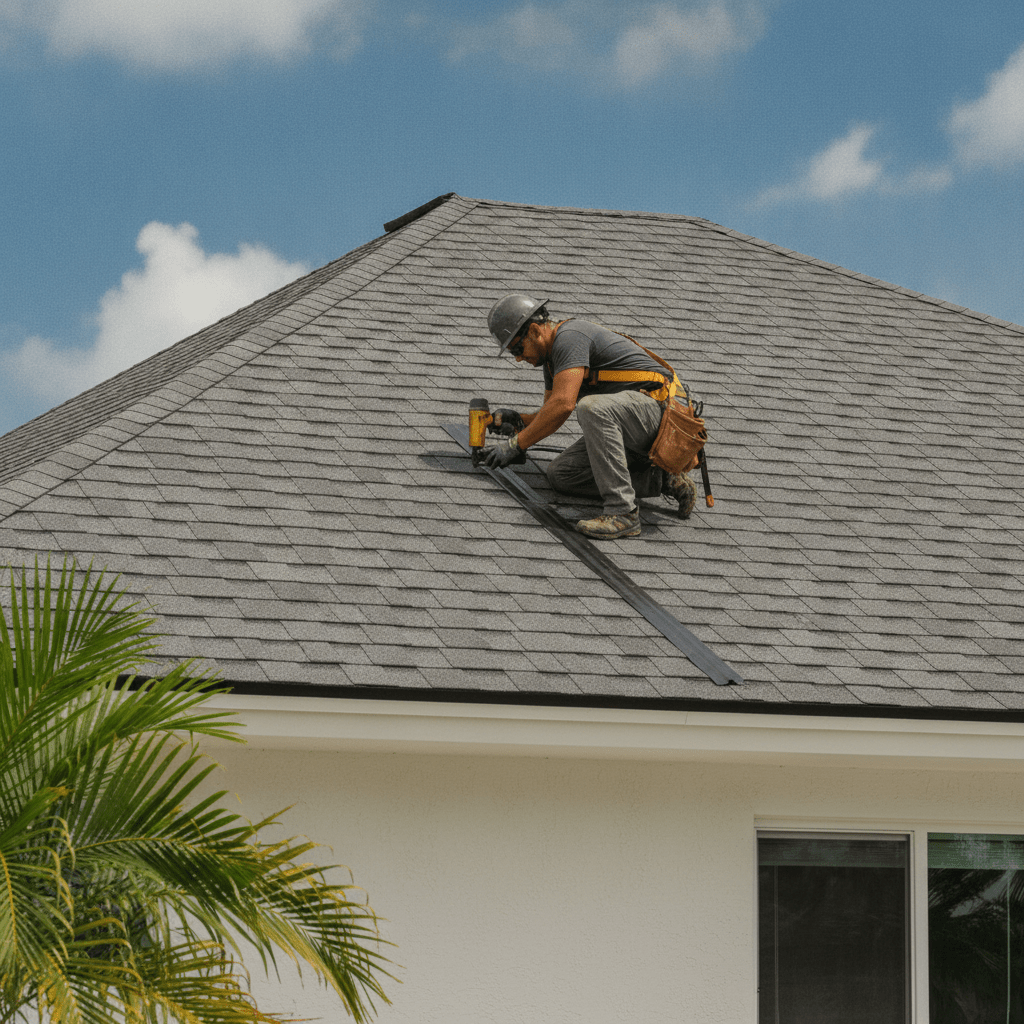
Key Takeaways
- A contractor’s DBPR license status and local permit history are more reliable vetting signals than an average star rating alone.
- In the HVHZ (Miami-Dade and Broward), every impact-window and door installation must use products approved for HVHZ conditions — this can be satisfied by either a Miami-Dade NOA or a Florida Product Approval that covers HVHZ testing.
- Permits are never exempt for routine window, door, or roof replacement in South Florida — a contractor who skips the permit is cutting corners that affect your insurance and resale value.
- Bigfoot Windows & Roofing holds four active DBPR licenses, including a Certified General Contractor license, which allows in-house handling of structural scope like header resizing when an opening is modified.
- The right review questions ask about product approval numbers, permit-pull history, and post-inspection sign-off — not just price and turnaround time.
The Real Problem
Why Star Ratings Alone Won’t Protect Your South Florida Home
Reviews matter — but they don’t tell you the whole story.
A contractor can collect five-star Google reviews for being friendly, communicative, and fast. None of those qualities tell you whether the impact windows they installed carry a valid product approval for your building height and wind zone, or whether the permit was actually pulled and finaled by the local building department.
South Florida homeowners are in one of the strictest building-code environments in the United States. Miami-Dade and Broward County sit inside the High Velocity Hurricane Zone (HVHZ), where the Florida Building Code imposes requirements that exceed the rest of the state. In that environment, a low-cost installer who wins on price but skips proper product approvals or permit filings creates hidden problems that can surface years later — during an insurance claim, a home sale, or the next major storm.
This guide explains exactly what to look for when reading contractor reviews and doing your own due diligence — whether you’re evaluating Bigfoot Windows & Roofing or any other South Florida impact-window company.
South Florida Context
HVHZ, Florida Building Code, and Why Vetting Matters Here More Than Anywhere Else
Miami-Dade and Broward County’s High Velocity Hurricane Zone designation means every impact product installed must meet HVHZ large-missile impact testing — a 9-pound 2×4 timber propelled at 50 feet per second, per Miami-Dade’s TAS/PA 201 protocol. A product is legally installable in the HVHZ when it carries an approval that covers this testing. That approval can come through either a Miami-Dade Notice of Acceptance (NOA) or a Florida Product Approval (FPA) whose test documentation covers HVHZ conditions — both are valid tracks under the Florida Building Code.
When you read a contractor review, none of this context is typically captured in the star rating. A homeowner who did not know their windows needed HVHZ-rated approval cannot leave a negative review for that specific gap. They may not discover the issue until they file a wind insurance claim or try to sell the home.
The three questions that matter most when vetting any South Florida impact-window contractor:
- Is the contractor’s DBPR license active? You can verify this in minutes at myfloridalicense.com.
- Do the products carry an approval valid for your county? For HVHZ homes, confirm the product has either a Miami-Dade NOA or a Florida Product Approval that covers HVHZ testing for your opening’s design pressure.
- Does the contractor pull permits, and do those permits get finaled? Permits can be verified through Miami-Dade’s online permit search or Broward County’s building department portal.
How to Vet Any Contractor
A Step-by-Step Verification Checklist for South Florida Homeowners
Use this process before signing any contract for impact windows, impact doors, or roofing in Miami-Dade, Broward, or Palm Beach County.
| Verification Step | Where to Check | What to Look For |
|---|---|---|
| DBPR License Status | myfloridalicense.com | Active status; contractor name matches business name on contract |
| License Type | DBPR search result | At minimum: Certified Roofing Contractor or Certified Specialty Contractor — Glass & Glazing Specialty for window work |
| Product Approval / NOA | floridabuilding.org (FPA) or miamidade.gov (NOA) | For HVHZ, either a Miami-Dade NOA or a Florida Product Approval covering HVHZ testing is acceptable — confirm it covers your county and design pressure |
| Permit Pull History | Miami-Dade or Broward building dept. permit search | Open permits should have a final inspection; no expired open permits |
| Insurance (GL + Workers’ Comp) | Ask for certificates; call insurer to verify | Coverage dates are current; your address can be added as certificate holder |
| Written Scope of Work | Contractor’s proposal/contract | NOA or FPA number for every product, installer license number, permit-pull commitment in writing |
For impact-window projects specifically, ask the contractor to provide the Florida Product Approval number or Miami-Dade NOA number for the specific window series they plan to install before you sign. You can cross-reference that number at floridabuilding.org to confirm it is active, covers your county, and applies to the opening dimensions and installation conditions for your home.
We install the Mr. Glass impact window line as our primary product. Mr. Glass windows carry Florida Product Approval on all standard residential series. For HVHZ projects, we confirm the applicable approval — whether that is a Florida Product Approval covering HVHZ testing or a Miami-Dade NOA — for every opening before finalizing a proposal. You can learn more about our impact window installation process and the specific product lines we carry.
Contractor Comparison
What Separates a Compliant HVHZ Installer from a Low-Bid Risk
Not all contractors who advertise impact windows in South Florida are equally equipped to install them correctly. Here is how a structurally compliant installer compares to the patterns we see from lower-bid operations that cut corners.
| Factor | Compliant HVHZ Installer | Risk Signals to Watch |
|---|---|---|
| License | Active DBPR specialty or contractor license verifiable at myfloridalicense.com | No license number on bid; license belongs to a different entity name |
| Product Approval | NOA or HVHZ-covering FPA number cited in the proposal; matches your county’s requirements | Vague reference to “impact-rated” without a product number |
| Permits | Pulls permit before installation; schedules final inspection | Asks homeowner to pull their own permit or says permit is “not needed” |
| Structural Scope | Has GC license authority to handle header resizing or structural modifications in-house if the opening changes | Subcontracts structural work with no accountability chain |
| Warranty | Offers written workmanship warranty with license number; manufacturer product warranty documented | Verbal warranty only; no license number on written warranty |
| Post-Install | Provides copy of finaled permit and inspection card | Disappears after installation; no inspection documentation |
When a lower-bid or permit-free contractor might be considered: If you own a property outside HVHZ — for example, certain inland Palm Beach County areas — and the product carries valid Florida Product Approval for the opening’s design pressure, a wider pool of contractors may be compliant. Even then, permits are still required. We would still encourage you to verify DBPR license status and demand written product approval documentation before signing any contract.
Why License Breadth Matters
Four DBPR Licenses. One Point of Contact.
A licensed contractor, not a lead aggregator.
Bigfoot Windows & Roofing holds four active Florida licenses recognized by the DBPR. For window and door projects that involve structural modifications — such as enlarging an opening, resizing a header, or adding hurricane strap connections — the Certified General Contractor (CGC1531370) license authorizes us to handle that structural scope in-house. A contractor holding only a specialty glazing license would need to subcontract structural work to a separate GC, creating a gap in accountability if something goes wrong.
You can verify all four license numbers directly at myfloridalicense.com — search by license number or by the name Darryl Henry Rosenbaum, DBA Bigfoot Windows and Roofing.
“Every homeowner I talk to deserves to know exactly what license covers their job, what product approval number is on their windows, and what permit number to look up when the job is done. That’s the baseline. The rest is craftsmanship.”
President, Bigfoot Windows & Roofing
Product Standards
What Quality Impact-Window Installation Looks Like in Practice
Homeowners often ask how they can tell — during or after an installation — whether the work was done correctly. Here are the visible and documentable quality indicators for HVHZ impact-window installations:
- Bucking and shimming: The window frame should be set in a pressure-treated or composite buck, shimmed level and plumb, with shims at prescribed intervals that match the product’s approval installation instructions. Improper shimming can void the approval and create air and water infiltration points.
- Fastener schedule: Approval documents specify fastener type, diameter, embedment depth, and spacing. Inspectors check this. If a contractor uses fewer fasteners or shorter screws than the approval requires, the window fails the wind-load design pressure it was tested to.
- Perimeter sealant: Sealant must be applied continuously around the frame exterior per the approval instructions. Gaps or voids are water-infiltration pathways and a code deficiency.
- Glass specification: Standard mid-grade residential openings typically use 7/16-inch laminated glass; high-rise or heavy-duty HVHZ applications use 9/16-inch. Builder-grade openings may use 5/16-inch. The correct thickness must match the product’s approval documentation for your opening’s design pressure.
- Inspection sign-off: A compliant installation ends with a final building-department inspection. Ask for the inspection card or a digital confirmation from the building department — this is your permanent record that the installation passed code.
For homeowners in Miami-Dade who want more context on how product approvals work, our guide to impact windows in Florida covers the difference between a Florida Product Approval and a Miami-Dade Notice of Acceptance in plain terms.
Our Process
How Bigfoot Handles an Impact-Window Project from Estimate to Final Inspection
- Free on-site estimate: We measure every opening, note structural conditions, and identify whether any openings require header work or other structural modifications before the window can be installed. Because we hold a Certified General Contractor license, that structural scope stays in-house.
- Product and approval confirmation: We confirm the specific Mr. Glass series, the applicable Florida Product Approval or Miami-Dade NOA number, and the glass thickness for each opening before we finalize the proposal.
- Permit filing: We pull the permit with Miami-Dade, Broward, or Palm Beach building authority before any installation begins. You receive the permit number so you can track status independently.
- Installation: Crews install per the approval fastener schedule and sealant requirements. If a structural condition requires header modification, our CGC-licensed team handles it without a separate subcontract.
- Final inspection: We schedule and pass the building-department final inspection. You receive the finaled inspection documentation.
- Warranty documentation: We provide written workmanship warranty documentation with our license number. The Mr. Glass product warranty (10 years, effective October 2025) is separate from our 10-year workmanship warranty.
If you’re ready to start the process, you can request a free estimate with no obligation.
Questions about licensing, product approvals, or permit history? Talk directly with Darryl’s team.
Who We’re Not the Right Fit For
- Homeowners whose primary decision factor is lowest price: We pull permits on every job, use products with verified NOA or FPA documentation, and hold four active DBPR licenses. That structure adds cost. If a competing bid is significantly lower and you cannot identify where the savings come from in writing, the gap is often permits, product quality, or liability insurance — not efficiency.
- Projects requiring licensed trades we do not hold: We hold licenses for general contracting, residential contracting, roofing, and glass & glazing. We do not hold electrical, plumbing, HVAC, or pool licenses. Jobs that require those trades as the primary scope should be contracted with a firm that holds the appropriate license for that work.
- Homeowners who prefer to manage multiple subcontractors independently: Our model consolidates windows, doors, and roofing under one licensed entity. If you prefer to hire a separate window company, a separate roofer, and manage the coordination yourself, that is a valid choice — it simply is not how we operate.
- Commercial high-rise projects outside our current service scope: We serve residential homes and low-rise residential structures in Miami-Dade, Broward, and Palm Beach County. Large-scale commercial or high-rise projects that require commercial-GC bonding thresholds or specialized commercial glazing systems are outside our current service model.
Homeowner Questions
Frequently Asked Questions
How do I verify that an impact-window contractor in Miami-Dade is licensed correctly?
Go to myfloridalicense.com and search by the contractor’s name or license number. Confirm the license type covers the work (at minimum a Certified Specialty Contractor with a Glass & Glazing Specialty for windows), the status shows active, and the licensee name matches the business name on your contract. This takes about two minutes and is the single most reliable vetting step available to any homeowner.
Does Bigfoot Windows & Roofing pull permits in Miami-Dade County?
Yes. We pull permits for every window, door, and roofing project in Miami-Dade, Broward, and Palm Beach County. Permits are never exempt for routine window or door replacement in South Florida. After final inspection, we provide the homeowner with documentation confirming the permit was finaled — which matters for insurance, resale, and code compliance records.
What is the difference between a Florida Product Approval and a Miami-Dade NOA for impact windows?
A Florida Product Approval (FPA) confirms a product meets Florida Building Code testing; when the FPA’s test documentation covers High Velocity Hurricane Zone conditions, that product is installable in the HVHZ. A Miami-Dade Notice of Acceptance (NOA) is a separate approval track confirming the product passed Miami-Dade’s HVHZ protocols, including large-missile impact testing. Both are valid routes to HVHZ compliance — a Florida Product Approval that covers HVHZ testing is fully installable in Miami-Dade and Broward. What matters is that the specific approval covers your county and your opening’s design pressure. Always ask your contractor to specify which approval covers your windows before signing.
Is a product with only a Florida Product Approval installable in Miami-Dade County?
Yes — provided the Florida Product Approval covers High Velocity Hurricane Zone testing for your opening’s design pressure. It is a common misconception that only a Miami-Dade NOA is legal in Miami-Dade or Broward. In reality, the Florida Building Code recognizes both a Miami-Dade NOA and a statewide Florida Product Approval as valid approval tracks, as long as the approval documentation covers HVHZ conditions. The key is confirming the approval applies to your county and design pressure at floridabuilding.org before installation.
What should I look for in reviews when hiring an impact window company in South Florida?
Look beyond the star average. Seek reviews that mention permit pull and final inspection, product approval documentation, and whether the contractor resolved any post-installation issues. A five-star review for speed and friendliness does not tell you whether the windows are HVHZ-compliant. Cross-check the contractor’s DBPR license status and Miami-Dade permit history independently — those records don’t rely on anyone’s subjective experience.
Can impact windows affect my homeowners insurance premium in Florida?
Florida law requires insurers to offer wind-mitigation credits for approved opening protection such as impact windows. In our experience, many South Florida homeowners see meaningful premium reductions after installing impact windows and obtaining a wind mitigation inspection. Actual reductions vary by insurer, policy, location, and home construction, and no specific figure can be guaranteed. Ask your insurer what credits apply before your installation so you know what documentation to provide.
How do I check if my existing impact windows were installed to Florida Building Code standards?
Request a copy of the original permit and the finaled inspection record from the building department where the work was performed — Miami-Dade, Broward, or Palm Beach County each maintain searchable permit databases online. If no permit was pulled or no final inspection exists, the installation may not be code-compliant. A licensed contractor can assess the existing installation and, if needed, correct deficiencies and refile for permit compliance.
Does Bigfoot Windows & Roofing offer financing for impact window projects?
Yes. We offer PACE financing, which is repaid through your property tax assessment rather than as a bank loan. PACE eligibility is generally based on home equity and mortgage payment history rather than a credit score, according to Renew Financial. Terms of up to 20 years are available for qualifying projects. The My Safe Florida Home program also offers matching grants of up to $10,000 for eligible homeowners, which can be stacked with financing. See our financing options page for details.
Schedule Your Free Estimate
Ready to get started? Request a free estimate — no phone call required.
Sources
- Florida DBPR License Verification — myfloridalicense.com
- Florida Building Commission — Product Approval Search — floridabuilding.org
- Florida Law — Wind Mitigation Insurance Credits — bigfootwindowsandroofing.com/impact-windows-cost-south-florida/
- My Safe Florida Home Grant Program — mysafeflhome.com
- Renew Financial — PACE Eligibility and Terms — renewfinancial.com
- Mr. Glass Florida Product Approval — bigfootwindowsandroofing.com/impact-windows-miami-dade/
Ready to verify scope, licensing, and product approvals for your South Florida project?
Or call us directly: 786-886-2088