
Does Your Contractor Do the Work or Send Subcontractors? Here’s What to Ask

, licensed contractor (CGC1531370 · CRC1331693 · CCC1333168 · SCC131153098) and founder of Bigfoot Windows & Roofing. 786-886-2088
Last updated: July 2026 by the Bigfoot Windows & Roofing editorial team.
Key Takeaways
- Most home improvement contractors — including window installers — use subcontractors. That is legal and common under Florida law.
- The question is not who does the work but whether the GC license covers the project and whether subs carry their own insurance.
- Ask for sub certificates of insurance before work starts — not after a damage claim.
- A Certified General Contractor can coordinate structural scope (hurricane straps, structural modifications, permits) in-house, removing the need for a separate GC hire.
- Warranty accountability lives with the license holder, not the individual crew — so verify who holds the license.
The Real Question
Why the Employee-vs-Sub Question Matters More Than You Think
It is not about who swings the hammer. It is about who is legally accountable when something goes wrong.
You signed a contract with a contractor. Then three strangers show up in an unmarked van. You have no idea who they work for, whether they are insured, or whether anyone is pulling a permit. This is one of the most common — and most stressful — surprises in home improvement, especially with impact window and door installations in South Florida.
The use of subcontractors is not inherently a problem. Florida law explicitly allows a licensed contractor to subcontract work. The problem is when a contractor cannot tell you: who those subs are, whether they are insured, and who is accountable if something is damaged or installed incorrectly.
South Florida Context
Why This Is Especially Important in Miami-Dade and Broward
South Florida sits inside the High-Velocity Hurricane Zone (HVHZ) — the strictest residential building code environment in the United States. Miami-Dade and Broward County require that every impact window and door installation be permitted, inspected, and installed to Florida Building Code standards by or under the supervision of a licensed contractor.
In the HVHZ, a failed installation is not just a cosmetic problem. A window that is not properly anchored or flashed can fail catastrophically during a named storm, voiding your homeowner’s insurance claim and potentially triggering a full replacement at your cost. This is why knowing who is actually on your roof or framing your window openings — and who carries the license over that work — matters beyond the typical contractor conversation.
How It Actually Works

How Subcontracting Works Legally in Florida Home Improvement
Florida law — specifically Chapter 489 of the Florida Statutes — allows a licensed contractor to hire subcontractors and specialty tradespeople to perform portions of the work. The licensed contractor remains the responsible party for the project in the eyes of the Florida Building Code, the permit authority, and your contract.
That means the license holder — not the individual crew member — is the entity that:
- Pulls and owns the building permit
- Is responsible for code compliance at final inspection
- Is bound by the workmanship warranty in your contract
- Is the named party if a claim is filed with the Florida Department of Business and Professional Regulation (DBPR)
Subcontracting is therefore a business structure decision, not a quality decision. A contractor with excellent in-house crews can do shoddy work. A contractor who uses vetted, insured subs with active supervision can deliver excellent results. What you need to confirm is accountability — not headcount.
| What to Verify | Why It Matters | How to Get It |
|---|---|---|
| Contractor’s active Florida license number | Confirms legal authority to pull permits and supervise work | DBPR license search (myflorida.com) |
| Subcontractor certificates of insurance (COI) | Protects you if a sub is injured or damages your property | Request COIs before work begins |
| Who pulls the permit | Permit must be in the name of the licensed contractor | Ask directly; verify at county building department |
| Who is responsible for the warranty | Warranty follows the license holder, not the crew | Get it in writing in your contract |
| Supervision plan | Licensed contractor must supervise work, not just sign off | Ask who will be on-site and when |
Comparing Crew Structures

In-House Employees vs. Subcontractors: What Changes, What Does Not
| Factor | In-House Employees | Vetted Subcontractors Under a GC License |
|---|---|---|
| Legal accountability | License holder | License holder (same) |
| Permit authority | License holder | License holder (same) |
| Warranty responsibility | Contractor | Contractor (same) |
| Insurance requirement | Employer provides workers’ comp | Sub must carry own COI — verify before work |
| Crew familiarity with your job type | Trained in-house, consistent process | Varies — ask how long sub relationship has been active |
| Scheduling flexibility | Depends on company backlog | Specialty subs can sometimes move faster |
The column that matters most is the left side: legal accountability and permit authority do not change based on crew structure. What does change is your homework — with subcontractors, you need to request and review certificates of insurance before day one.
When an Employee-Only Model Is the Better Fit
If you are managing a very large project with a tight timeline and want a single company whose employees are trained exclusively on your product line, an employee-only model may offer more consistency. Some homeowners also prefer the continuity of knowing the same people will return for any warranty work. If that matters to you, ask any contractor you interview what percentage of their installations are performed by in-house staff versus subcontractors — it is a fair and reasonable question.
License & Accountability
A Licensed Contractor — Not a Lead Aggregator
The license holder is the party with skin in the game. Verify the license before you verify anything else.
“The first thing I tell every homeowner is: look up the license number on the DBPR site before you trust anything else I say. If a contractor won’t give you their license number up front, that tells you everything.”
Darryl Rosenbaum
Founder & President, Bigfoot Windows & Roofing
What We Install
The Brands We Use — and Why Crew Structure Is Only One Piece
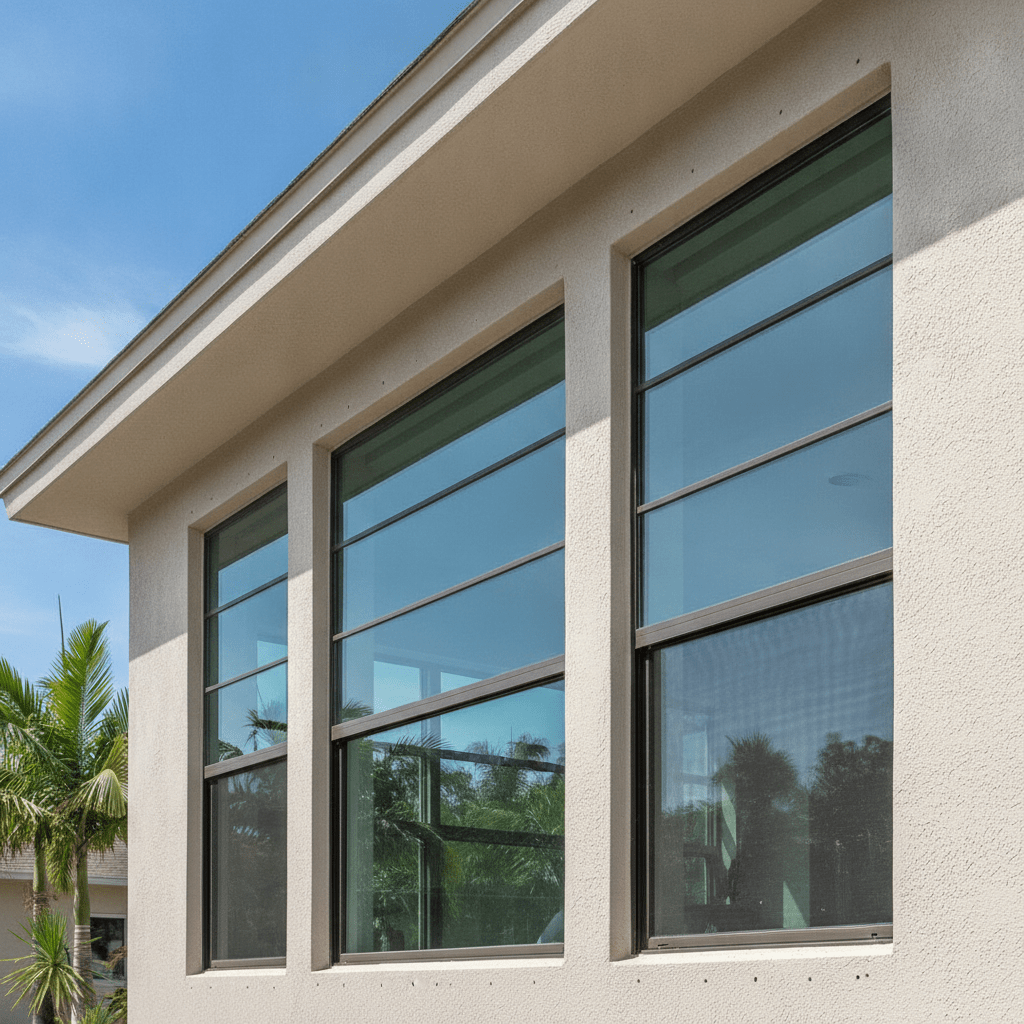
For impact windows, Bigfoot installs Mr. Glass as our primary line and ES Windows as our secondary line — both aluminum frame, both Florida Product Approval-compliant. Aluminum frames are our preference for South Florida conditions: the heat, UV exposure, salt air, and hurricane loads in the HVHZ make aluminum more durable over time than vinyl in our experience. Thermally broken aluminum frames are available for homeowners prioritizing energy efficiency alongside storm protection.
For impact doors, the same brand logic applies. We do not install PGT or carry Andersen products — those are available through other contractors at different price points.
Regardless of who is physically on-site during installation, the ten-year workmanship warranty Bigfoot offers on window installations is tied to the license, not the crew. The same is true for the Mr. Glass 10-year product warranty (effective October 2025).
Our Process
What You Should Expect Before Any Crew Arrives
- License verification: Before signing, look up any contractor’s license at myflorida.com/dbpr. Confirm the license class matches the scope of work.
- Subcontractor disclosure: Ask whether subs will be used and request a list of the primary subcontractors with their license numbers and certificates of insurance.
- Permit confirmation: Confirm the permit will be pulled in the license holder’s name before work begins. In Miami-Dade, this is trackable online through the county’s permit portal.
- Supervision plan: Ask who will be on-site during installation and how often. A Certified General Contractor has the authority to coordinate structural modifications — such as hurricane strap inspections or code-required header adjustments — that specialty-only contractors cannot legally perform.
- Warranty in writing: Get the workmanship warranty terms in your contract, not just in a verbal assurance.
If you are considering financing your window or door project, confirm that the financing agreement also names the license holder — not a third-party installer — as the responsible contractor.
Have questions about who will install your windows and what licenses cover the work?
Related Articles
Keep Reading
Related Articles



Who We’re Not the Right Fit For
- Buyers who want the lowest bid, period: Bigfoot is not structured to win a race to the bottom on price. If cost is the only factor, a lower-overhead operation may quote less — and may also carry less license authority or thinner insurance coverage. That trade-off is yours to make.
- Homeowners who want a brand Bigfoot does not carry: We do not install PGT or Andersen products. If you have a strong preference for those brands, another contractor is a better fit.
- Projects that need only one window and want the fastest possible turnaround: Single-unit replacements are not where our permitting and coordination structure adds the most value. A smaller specialist may be faster for a one-window job.
- Commercial high-rise projects: Our primary focus is residential — single-family homes and low-rise residential in Miami-Dade, Broward, and Palm Beach. Large commercial scopes are outside our core service model.
Frequently Asked Questions
Who will actually be doing the work at my house — employees or subcontractors?
It depends on the contractor and the project. Many window and door contractors in South Florida use subcontractors for installation. That is legal under Florida law. The key question is whether the licensed contractor holds the permit, supervises the work, and provides a written workmanship warranty — not whether the crew is on direct payroll. Ask any contractor you are considering to tell you their crew structure upfront.
How do I know the subcontractors are vetted and insured?
Ask for certificates of insurance (COI) for each subcontractor before work begins — not after. A COI shows the sub’s liability insurance and workers’ compensation coverage. Reputable contractors provide this without hesitation. You can also request the sub’s Florida license number and verify it at myflorida.com/dbpr. If a contractor cannot produce COIs, treat that as a red flag.
Am I protected if a subcontractor damages my property?
Your primary protection comes from the licensed contractor’s general liability insurance — which covers property damage caused during the project. The sub’s own COI provides a secondary layer. If a contractor cannot show you their general liability certificate and the sub’s COI before work starts, you have a coverage gap. Get both documents before anyone sets foot on your property.
Does using subcontractors affect the warranty on my windows?
It should not, if the contract is written correctly. The workmanship warranty in your contract is the responsibility of the license holder — the contractor you signed with. That obligation does not transfer to the sub. Confirm in writing that the warranty names the licensed contractor, not just the installation crew. Product warranties (from the window manufacturer) run separately and follow the product, not the crew.
What questions should I ask a contractor about their crews before signing?
Ask: (1) Will subcontractors be used, and can you provide their license numbers and COIs? (2) Who pulls the permit — and in whose license name? (3) Who supervises installation, and will a company representative be on-site? (4) Is the workmanship warranty tied to the license holder? (5) How long have you worked with these specific subcontractors? These five questions will tell you more than any sales pitch.
Can a contractor legally use subcontractors for permitted work in Florida?
Yes. Florida Statute Chapter 489 allows licensed contractors to subcontract portions of their scope. The licensed contractor retains legal responsibility for code compliance, permit issuance, and workmanship. What is not legal: allowing an unlicensed person to pull a permit, or using a sub whose scope exceeds their own license class. Always verify that the permit is in the licensed contractor’s name.
Why does a Certified General Contractor license matter for a window project?
Most window-only installations need a specialty contractor license. But if your project involves structural modifications — widening an opening, adjusting a header, adding hurricane straps, or addressing a code deficiency found during permitting — a Certified General Contractor can handle that scope in-house without hiring a separate GC. That keeps accountability under one license and one contract, which simplifies your paper trail if any issue arises later.

Ready to ask the right questions — or just want straight answers from someone with four active Florida licenses?
Request a free estimate online or call us directly.