
How Much Do Impact Windows Cost in Miami-Dade?
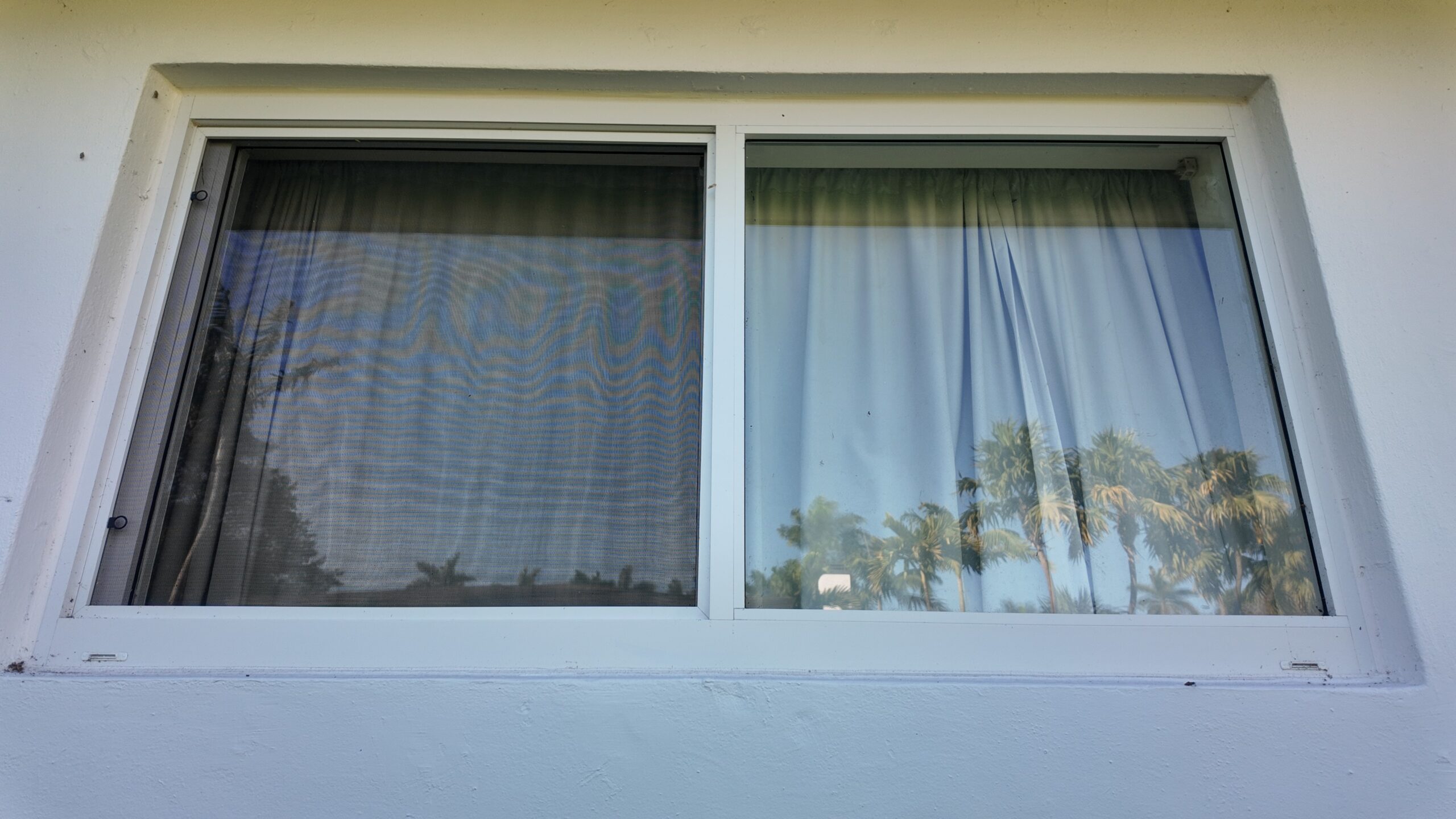
Updated July 2026
Key Takeaways
- Impact window costs in Miami-Dade typically run $800–$1,800 per window installed, depending on size, glass spec, and frame series.
- Aluminum frames are the better long-term choice for South Florida’s heat, humidity, and HVHZ wind requirements.
- Glass spec (5/16″, 7/16″, 9/16″) and Low-E coating drive the biggest per-unit cost differences.
- Permits are required in Miami-Dade — budget for them and factor in inspection timelines.
- The My Safe Florida Home grant offers up to $10,000 and can be stacked with PACE financing.
- Whole-house replacement almost always costs less per window than replacing one at a time.
The Real Question
Why Is Impact Window Pricing So Hard to Pin Down?
Because contractors quote it three different ways — and rarely explain what they included.
You call three contractors. You get three quotes that are thousands of dollars apart. One price looks like a deal. One looks like a rip-off. You have no idea which is which — because none of them told you what’s actually driving the number.
This article breaks down the real cost drivers for impact window installation in Miami-Dade, what moves the price meaningfully, what doesn’t, and how to compare quotes without getting burned.
South Florida Context
Miami-Dade HVHZ Rules Change the Equation
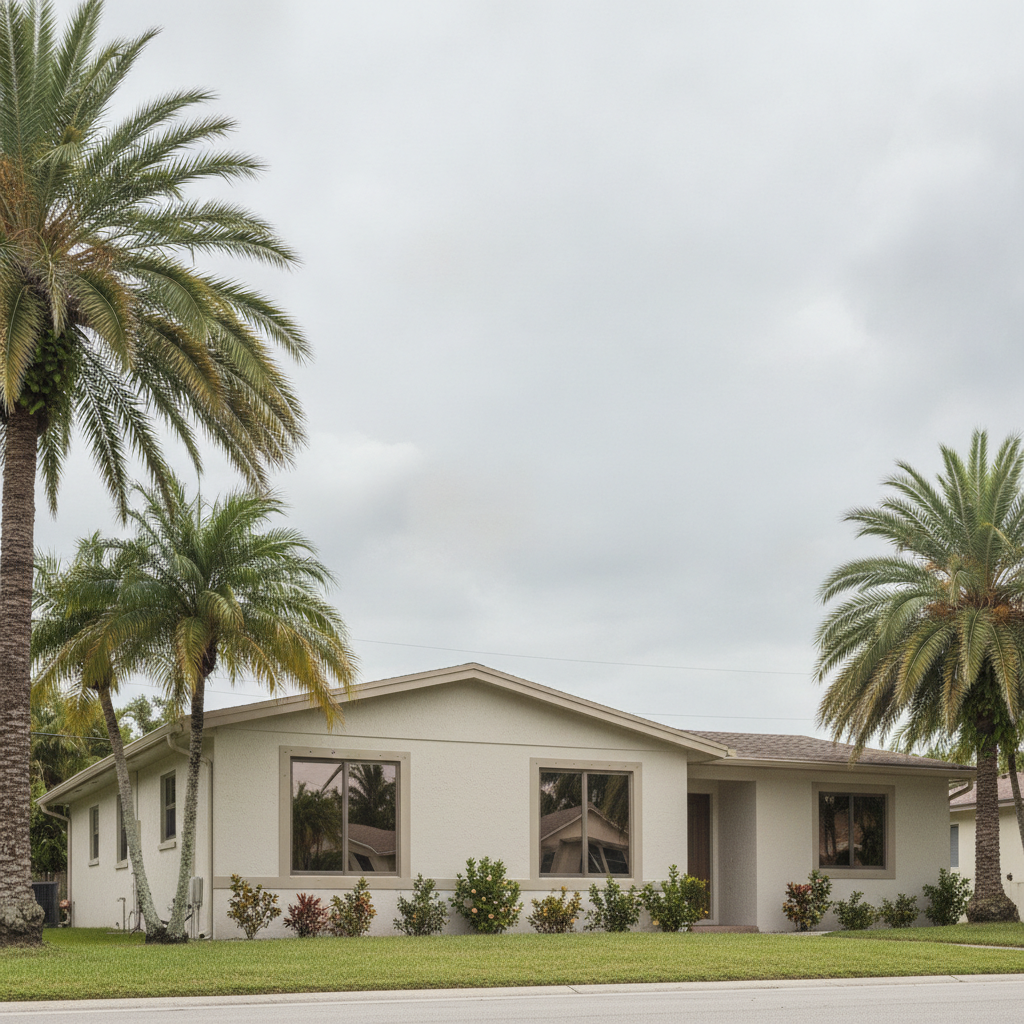
Miami-Dade and Broward counties sit inside the High Velocity Hurricane Zone (HVHZ) — the strictest residential building code jurisdiction in the United States. Impact windows sold and installed here must carry a valid Miami-Dade Notice of Acceptance (NOA) or Florida Product Approval that covers the specific design pressure your home requires. Not all products sold in other parts of Florida qualify here.
That code requirement affects product selection, permitting, and labor. It is also why impact windows in Miami-Dade cost more than comparable windows installed in, say, central Florida — the product spec is simply higher. Every installation requires a permit, rough inspection, and final inspection. Factor that into any quote comparison.
Salt air, intense UV, and annual hurricane seasons also favor aluminum frames over vinyl. Aluminum holds its structural tolerances longer in coastal HVHZ conditions, which is why Bigfoot recommends aluminum — including thermally broken aluminum where energy efficiency is a priority — for South Florida homes.
Cost Breakdown
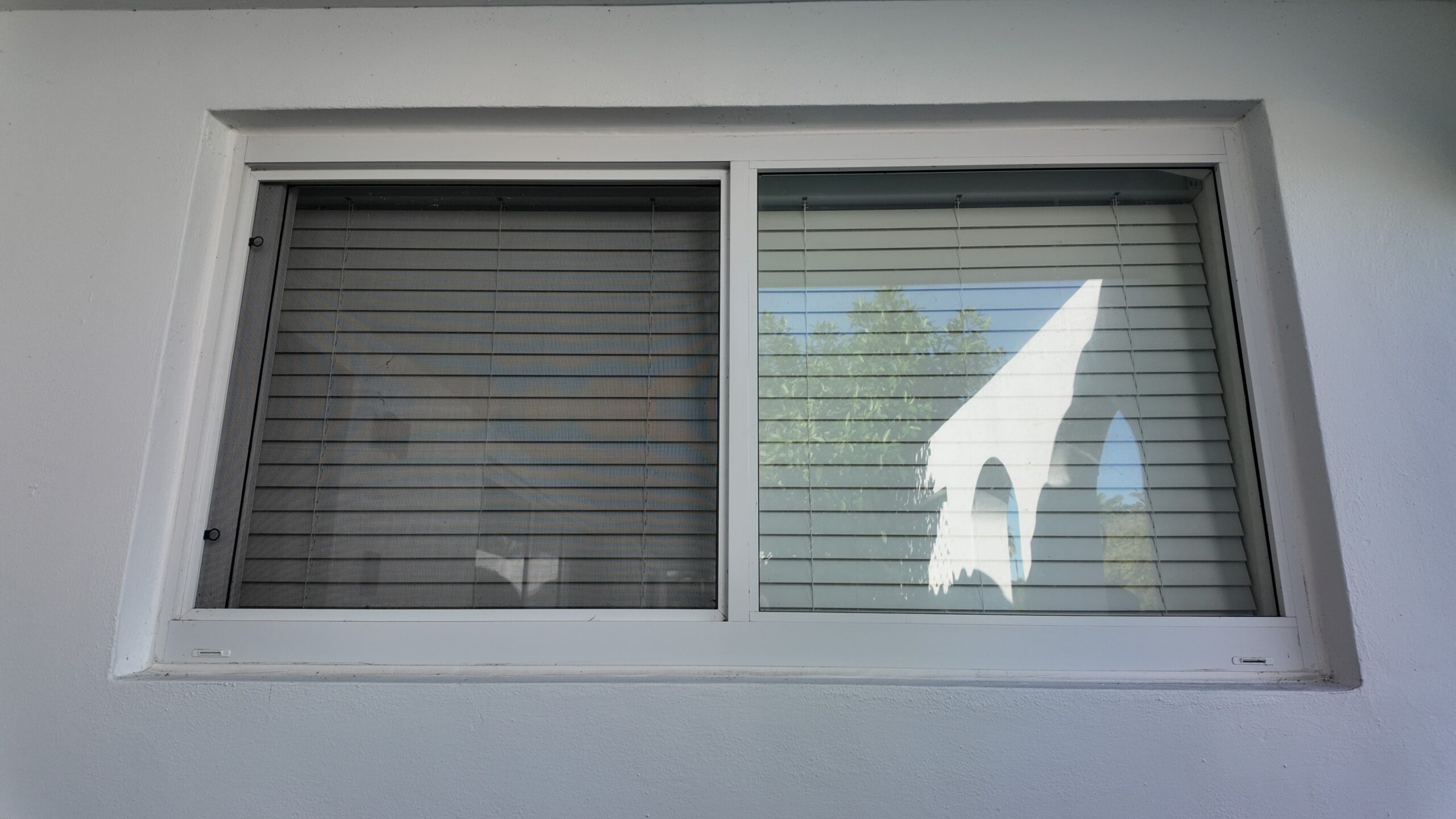
What You’re Actually Paying For
Every impact window quote bundles four cost layers. Here’s how to read them.
Impact window pricing has four layers: product (frame + glass), labor (removal + installation), permit and inspection fees, and site-specific work (stucco repair, buck repair, structural surprises). Knowing which layer is driving your quote puts you in control of the conversation.
| Cost Layer | Typical Share of Total | What Moves It |
|---|---|---|
| Window product (frame + glass) | 50–60% | Series, glass thickness, Low-E, window size |
| Labor (removal + install) | 25–35% | Window count, accessibility, existing condition |
| Permit & inspection fees | 5–10% | Miami-Dade municipality, window count |
| Site work (stucco, buck, structural) | 0–15% | Age of home, condition of existing openings |
Per-Window Price Ranges by Glass Spec
| Glass Specification | Typical Use | Installed Cost Per Window |
|---|---|---|
| 5/16″ laminated (builder grade) | Interior openings, low DP areas | $700–$950 |
| 7/16″ laminated (standard mid) | Most single-family HVHZ installs | $900–$1,300 |
| 9/16″ laminated (high-duty) | High-rise, large openings, coastal exposure | $1,200–$1,800+ |
| Insulated glass (IG) upgrade | Best noise reduction + energy efficiency | Add $100–$250/window |
Glass thickness alone can swing your project cost by 20–40%. The 9/16″ glass is standard in the Mr. Glass Series 1000 sliding glass door — there is no equivalent 9/16″ option in some competing lines, which is a meaningful product-spec difference when you’re comparing quotes.
Low-E coatings also affect price. SB 70 is our primary recommendation for South Florida — strongest heat block, darkest green tint. Climate Guard 6227 carries identical specs and is available as a no-cost upgrade on whole-house replacements. Neither adds significant cost, but some contractors charge extra for Low-E as an upgrade. Ask before you sign.
Material Comparison
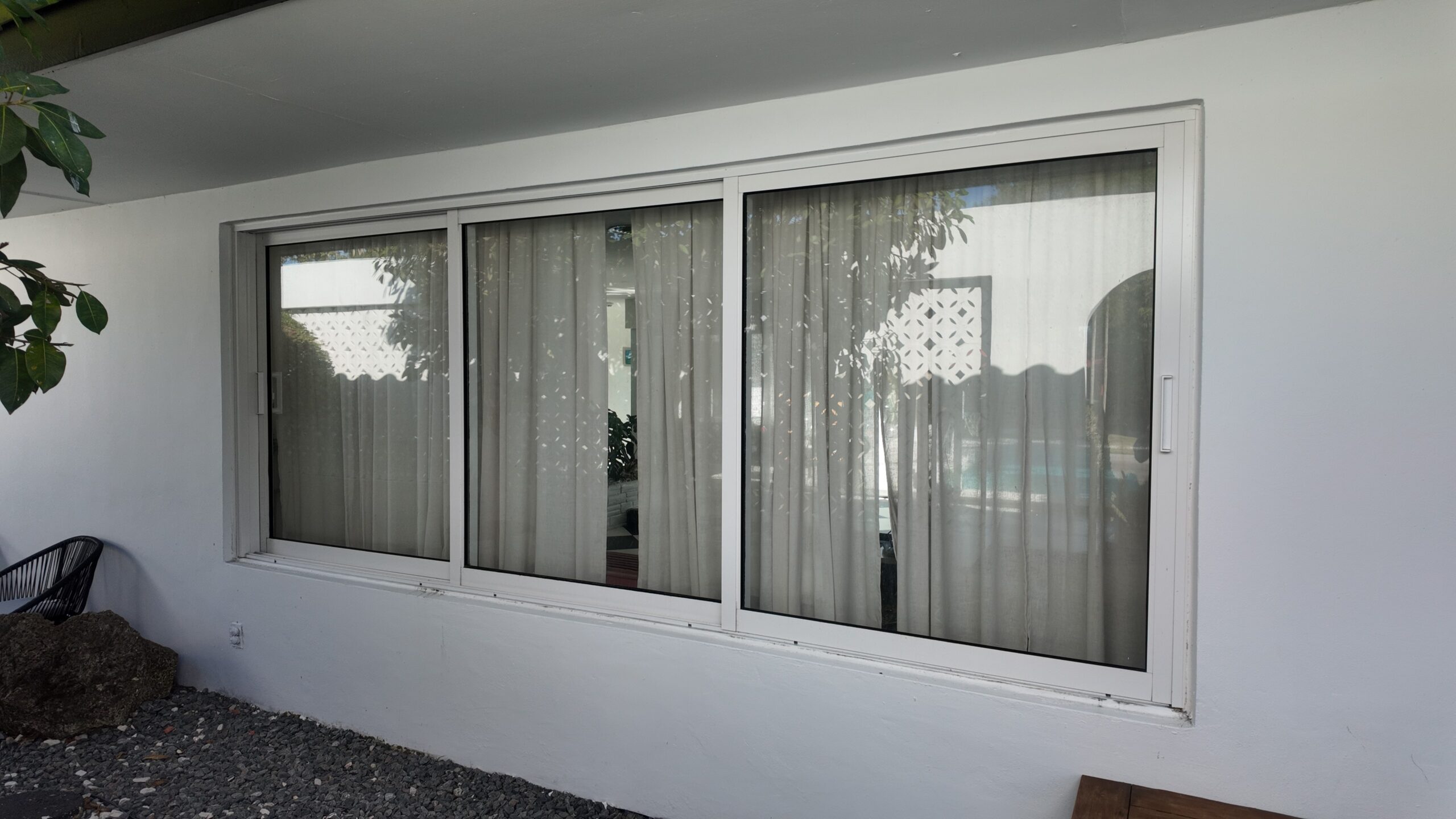
Aluminum vs. Vinyl: Which Frame Is Right for South Florida?
| Factor | Aluminum Frame | Thermally Broken Aluminum | Vinyl Frame |
|---|---|---|---|
| HVHZ performance history | Proven | Proven | Limited track record in extreme heat |
| Structural rigidity | High | High | Moderate (expands/contracts more) |
| Energy efficiency | Moderate | High (thermal break reduces conductance) | Moderate to high |
| Salt-air durability | Strong with 2605 finish | Strong with 2605 finish | Adequate |
| Typical installed cost | Mid | Mid-to-upper | Lower initial cost |
| BWR recommendation | Yes | Yes (energy priority) | Not preferred for South FL |
Bigfoot recommends aluminum — not as a marketing position, but because aluminum has a longer track record in Miami-Dade’s heat, humidity, UV load, and high-wind events. Vinyl frames expand and contract more in South Florida’s temperature swings, which can affect long-term seal integrity. If energy efficiency is a priority, thermally broken aluminum gives you the structural advantage of aluminum with meaningfully improved thermal performance.
When vinyl might be the better fit: budget-constrained projects in lower-wind-exposure inland locations where the product carries valid Florida Product Approval, and the homeowner accepts a different long-term performance profile. We don’t install vinyl — but we’ll tell you that upfront so you can make an informed decision.
Why It Matters Who Installs It
A License Is Not a Commodity
A licensed contractor, not a lead aggregator — here’s the difference.
“The cheapest quote usually omits the permit, the stucco repair, or the glass upgrade. We show every line item before you sign — so there are no surprises at final inspection.”
Founder & President, Bigfoot Windows & Roofing
Florida law requires a licensed contractor to pull permits for impact window installations. Bigfoot holds a Certified Specialty Contractor with a Glass & Glazing Specialty (SCC131153098) — the specific license class covering this scope of work — in addition to a Certified General Contractor (CGC1531370), which means structural issues discovered during installation (rotted bucks, deteriorated headers) can be addressed in-house rather than stopping your project while you locate a separate contractor.
For most window-only projects, the general contractor scope is not needed. But for older Miami-Dade homes where structural surprises are common, having that breadth available under one roof means your project doesn’t stall when the unexpected shows up.
What Bigfoot Installs
Mr. Glass & ES Windows — Why Series Numbering Matters
Bigfoot’s primary impact window line is Mr. Glass. One thing that trips homeowners up: the series numbering is counterintuitive. The Series 350 is the builder/entry-level grade — not the top of the line. Series 200, 300, and 400 are the flagship products.
- Series 350: Residential only. Not suitable for condos, high-rise, or commercial openings.
- Series 200 (Single Hung flagship): Spiral adjustable balances, 2-7/8″ frame depth, high-rise capable.
- Series 300 (Horizontal Roller flagship): Rated to 80/80 psf, available up to 127-5/8″ wide in three-panel configuration.
- Series 1000 SGD (Sliding Glass Door): 9/16″ glass is standard — no equivalent in some competing lines.
All Mr. Glass lines carry Florida Product Approval. Miami-Dade NOA is available on select series (including the 2500T door). When comparing quotes, confirm which series and glass spec you’re being quoted — not just the frame brand.
Bigfoot backs every installation with a 10-year workmanship warranty. Mr. Glass carries a 10-year product warranty (effective October 2025). If you’re getting a quote that doesn’t specify the series, ask. A builder-grade Series 350 and a flagship Series 200 are not the same product at the same price.
If you’re evaluating your options, our guide on costly mistakes South Florida homeowners make when buying impact windows covers what to watch for in product and quote comparisons.
How the Process Works
From Estimate to Final Inspection: What to Expect
- Measure & quote: We measure every opening, confirm design pressure requirements, and provide a line-item quote showing product spec, glass, labor, and permit cost.
- Product approval & permit submittal: We pull the permit with Miami-Dade Building Department. Timeline varies by municipality — typically 2–6 weeks.
- Fabrication & scheduling: Custom aluminum windows are fabricated to your openings. Lead times currently run 4–8 weeks depending on series and volume.
- Installation day: Existing windows are removed. New frames are set, shimmed, anchored per NOA requirements, and sealed. Stucco work is completed same day where possible.
- Inspections: Rough-in and final inspections are scheduled with the building department. We coordinate both — you don’t need to.
- Closeout: Final permit closed, warranty documentation provided. Wind mitigation inspection can be scheduled after closeout for insurance purposes.
You can also explore why hurricane windows matter beyond just storm season — including permit and insurance implications for Miami-Dade homeowners.
Get a Line-Item Impact Window Estimate
We itemize every cost — product, glass spec, labor, permit — before you sign anything.
Or call us directly: 786-886-2088
Related Reading
More Resources for South Florida Homeowners
Related Articles
Who We’re Not the Right Fit For
- Shoppers whose only criterion is lowest price: We don’t cut corners on glass spec, permit fees, or stucco repair to win a bid. If the lowest number is the decision, a different contractor will likely beat us.
- Homeowners who want vinyl frames: We believe aluminum is the right frame for South Florida’s HVHZ conditions. We don’t install vinyl impact windows. If vinyl is your preference, we’ll tell you that upfront and you should find a contractor who does.
- Projects that need only one or two windows replaced urgently: Our process — permit, fabrication, inspection — takes weeks, not days. Emergency board-up or single-window patch work is not our model.
- Buyers expecting a verbal quote with no line-item detail: We itemize every cost component. If you’d rather skip the detail and just get a bottom-line number, our process may feel slower than you want.
Common Questions
Frequently Asked Questions
How much do impact windows cost in Miami-Dade?
Most Miami-Dade homeowners pay between $800 and $1,800 per window installed — including frame, glass, labor, and permit. A full-house replacement on a typical single-family home (10–20 windows) usually runs $12,000 to $30,000 or more. The biggest variables are glass thickness (5/16″, 7/16″, or 9/16″), frame series, window size, and site conditions like stucco or buck repair.
What makes impact window quotes so different between contractors?
Most price gaps come from three omissions: the permit fee (required in Miami-Dade), the glass spec (builder-grade 5/16″ vs. mid-grade 7/16″ vs. heavy-duty 9/16″), and site work like stucco repair. A low quote that excludes those items will cost more by the end. Always ask for a line-item breakdown that shows product, glass, labor, permit, and any site repair costs separately.
Does whole-house replacement cost less per window than replacing one at a time?
Yes — almost always. When you replace all windows at once, permit fees are consolidated, mobilization costs are spread across the job, and fabrication is scheduled in a single production run. Replacing windows one or two at a time means paying mobilization and permit overhead multiple times. If your budget allows, a single whole-house project is typically more cost-efficient per window.
Can I use a grant or financing to help pay for impact windows?
Yes. The My Safe Florida Home program offers up to $10,000 in grants for qualifying homeowners, and it can be stacked with PACE financing. PACE (Property Assessed Clean Energy) is paid through your property tax bill — not a bank loan — at roughly 9.49% interest. A $15,000 project on a 20-year PACE term runs approximately $173/month. There is no prepayment penalty. Consult your CPA regarding any potential tax implications; we do not provide tax advice.
How long does impact window installation take in Miami-Dade?
From signed contract to final inspection, expect 8–16 weeks for a full-house replacement in Miami-Dade. Permit processing alone takes 2–6 weeks depending on the municipality. Custom aluminum window fabrication adds 4–8 weeks. Installation itself — the physical removal and installation — typically takes 1–3 days depending on window count and site conditions. Plan ahead; this is not a same-week project.
Will new impact windows lower my homeowner’s insurance premium?
Potentially, yes — but the amount varies by insurer and policy. After installation and final permit closeout, you can schedule a wind mitigation inspection. That inspection documents your opening protections for your insurance carrier. Some South Florida homeowners have seen significant premium reductions after upgrading to impact windows and obtaining updated wind mitigation reports. Bigfoot does not guarantee specific savings; contact your insurer for a quote comparison.
Do HOAs in Miami-Dade have any say in which impact windows I choose?
HOAs can regulate aesthetics — frame color, exterior appearance — but Florida SB 293 prohibits HOAs from blocking the installation of impact-resistant windows and doors. If your HOA has objected to a window style or color, review the specific restriction carefully. Structural approval (code compliance, NOA, permit) rests with Miami-Dade Building Department, not your HOA. We can help you identify products that meet both code requirements and HOA aesthetic guidelines.
Schedule Your Free Estimate
Ready to get started? Request a free estimate — no phone call required.
Ready for a Real, Line-Item Estimate?
No pressure. No vague bottom-line numbers. We show you exactly what you’re paying for — product, glass spec, labor, permit — before you commit to anything.
Prefer to talk first? Call Bigfoot Windows & Roofing at 786-886-2088.
Sources
- Florida Building Code, High Velocity Hurricane Zone (HVHZ) provisions — floridabuilding.org
- Miami-Dade County Notice of Acceptance (NOA) product search — miamidade.gov/building
- Florida SB 293 (2023) — HOA restrictions on hurricane-resistant improvements
- My Safe Florida Home Program — mysafefloridahome.com
- Property Assessed Clean Energy (PACE) financing — Florida Statutes §163.08