
Impact Door Installation Cost: South Florida Pricing Guide
In South Florida, impact door installation typically costs $1,200–$4,500 per door installed, depending on door type, size, configuration, and HVHZ code requirements. Single entry doors sit at the lower end; double French or wide sliding glass doors push toward the top. Permits, inspections, and structural modifications add to the total.
Key Takeaways
- Single impact entry doors typically run $1,200–$2,200 installed; double/French configurations $2,500–$4,500+.
- Miami-Dade and Broward HVHZ requirements mandate door units with a Miami-Dade NOA or a Florida Product Approval that covers HVHZ use — this narrows your product options and can raise material cost 10–20%.
- Permits are never optional in Florida; expect $150–$600+ in permit and inspection fees depending on county and scope.
- Structural work (widening an opening, adding a header, upgrading to hurricane straps) is priced separately and handled in-house by a Certified General Contractor.
- Florida Citizens Insurance windstorm mitigation credits can meaningfully offset the net cost of an upgrade — but no specific savings figure can be guaranteed.
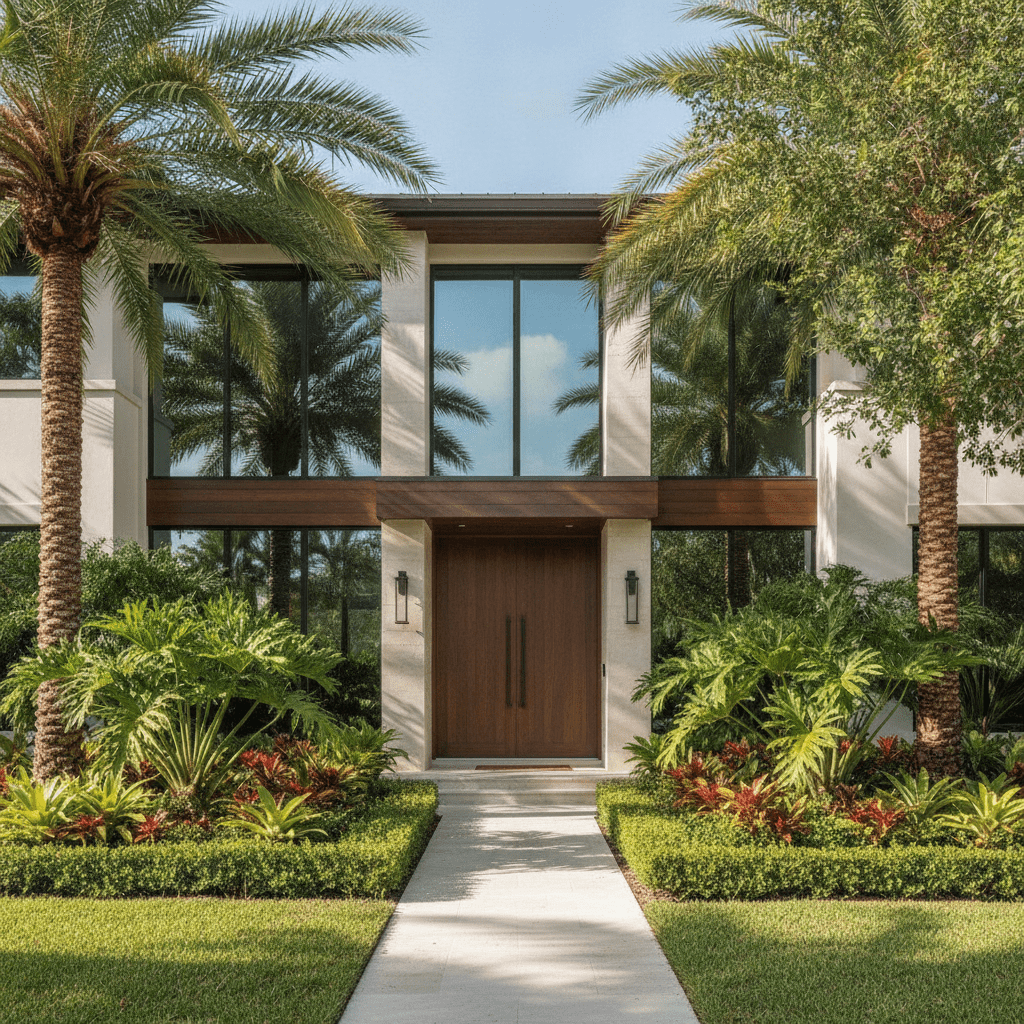
Why Cost Ranges Are So Wide
What Makes Impact Door Pricing So Confusing?
Three quotes, three very different numbers — here is why.
Homeowners shopping for impact doors in Miami-Dade or Broward regularly see quotes that vary by $1,500 or more for what sounds like the same job. The confusion usually comes down to four things: door configuration, HVHZ product specification, structural scope, and permit fees — and most competing quotes bury or omit at least one of these.
A contractor who quotes you a door price without confirming whether the unit carries Miami-Dade Notice of Acceptance (NOA) or a Florida Product Approval that covers HVHZ use is quoting you a product that may not pass inspection in HVHZ. A contractor who omits the permit fee is setting you up for a surprise. Understanding each cost component before you compare quotes is the only way to shop fairly.
Miami-Dade & Broward Context
HVHZ: The Code Layer That Changes Everything
South Florida is not the same as the rest of Florida — and the code reflects that.
Miami-Dade County and Broward County sit inside the High-Velocity Hurricane Zone (HVHZ) — the strictest residential building code jurisdiction in the United States. Under the Florida Building Code, any impact door installed in HVHZ must carry a valid Miami-Dade Notice of Acceptance (NOA) or an equivalent Florida Product Approval issued for HVHZ use. A door unit that is code-legal in Orlando or Tampa may not be legal in Miami.
That code distinction traces directly to Hurricane Andrew in 1992, after which Florida overhauled its building code and formalized the HVHZ standard. According to FEMA, wind-borne debris — not wind pressure alone — is a leading cause of building envelope failure in hurricanes, which is exactly what large-missile impact testing is designed to address. That testing rigor is why NOA-approved door units go through a more demanding third-party protocol. Fewer product lines qualify, which limits competition and typically raises the per-unit cost 10–20% compared to non-HVHZ-rated equivalents. If a quote you received does not specify the NOA number or product approval for the door being proposed, ask — or assume it is not HVHZ-rated.
Cost Breakdown
What Does Impact Door Installation Actually Cost in South Florida?
Use the table below as a directional starting point. All figures reflect installed cost (product + labor + standard hardware) for typical residential projects in Miami-Dade and Broward. Permit fees, structural work, and specialty finishes are itemized separately.
| Door Type / Configuration | Installed Cost Range | Notes |
|---|---|---|
| Single impact entry door (3/0 x 6/8) | $1,200 – $2,200 | Most common replacement; aluminum frame; standard hardware included |
| Double / French impact door (6/0 x 6/8) | $2,500 – $4,200 | Active and inactive panel; multi-point lock; wider rough opening may need structural work |
| Wide impact sliding glass door (6 ft – 12 ft) | $2,800 – $5,500 | Price scales with panel count and glass size; 9/16″ glass standard on Series 1000 SGD |
| Impact garage side/service door | $1,100 – $1,800 | Lower complexity; still requires HVHZ-rated unit in Miami-Dade/Broward |
| Thermally broken aluminum door (high-end) | $3,200 – $6,000+ | Best energy performance; for homes prioritizing energy efficiency alongside wind protection |
Note: these are directional market ranges, not Bigfoot fixed-price guarantees. Your actual cost depends on door size, opening condition, structural scope, and permit fees. Use our online estimator for a more project-specific starting point.
| Cost Factor | Typical Additional Cost | Who Controls It |
|---|---|---|
| Permit & inspection fees (Miami-Dade) | $150 – $600+ | County building department; varies by valuation |
| Structural header or lintel work | $400 – $1,800 | Contractor scope; CBS vs. wood frame matters |
| Opening enlargement (widen or raise) | $600 – $2,500+ | Contractor scope; requires GC-level authorization |
| Stucco repair / finish work | $200 – $800 | Contractor scope; depends on exterior condition |
| Coastal finish upgrade (2605 within 2 mi of water) | Included or +$100–$250 | Product spec; required to maintain warranty |
If your project involves widening an existing opening, adding a new structural header, or modifying load-bearing walls, that scope falls under general contracting work. As a Certified General Contractor (CGC1531370), Bigfoot can handle structural modifications in-house — homeowners do not need to hire a separate GC and coordinate two contractor schedules. That structural scope is priced and permitted as part of the same project.
On a recent Miami-Dade single-to-double conversion, we removed a 3/0 entry unit in a CBS wall, cut and widened the opening, set a new precast header, and installed an NOA-approved double French unit — all under one permit and one crew. The structural scope was the reason the final number landed well above a straight door swap, and that is exactly the kind of line item a glazing-only quote tends to leave out.
Configuration Comparison
Single Door vs. Double French vs. Sliding Glass — Which Is Right?
| Feature | Single Entry Door | Double / French Door | Sliding Glass Door |
|---|---|---|---|
| Typical installed cost | $1,200–$2,200 | $2,500–$4,200 | $2,800–$5,500 |
| Structural complexity | Low | Medium–High | Medium |
| Natural light / openness | Low | High | High |
| Security profile | High (single deadbolt or multi-point) | High (multi-point lock) | Medium–High (three-point lock) |
| HOA curb appeal impact | Moderate | High | High (rear/side) |
| Best for | Front entry replacement | Formal entry, double-door look | Patio / pool access |
When a single door is the better fit: If your opening is already sized for a single door, your budget is fixed, and you simply need a code-compliant HVHZ-rated replacement — a single impact entry door is the most cost-efficient path. Bigfoot handles single-door replacements as a complete project. We are never too small for a one-door job.
License & Accountability
Why License Breadth Matters on a Door Job
A licensed contractor, not a lead aggregator or handyman network.
Most impact door installers hold only a specialty glazing license. That is sufficient for a straight swap. But when the job involves structural scope — a widened opening, a new header, or work touching load-bearing walls — a glazing-only license is not enough. Bigfoot holds both the Glass & Glazing specialty and the Certified General Contractor license, so structural modifications and the door installation are permitted and managed under one roof.
“When a homeowner wants to turn a single door into a double French entry, that is not just a product swap — that is a structural project. We pull one permit, we manage one scope, and the homeowner deals with one contractor.”
President, Bigfoot Windows & Roofing
Product Guidance
What Kind of Impact Door Should You Specify in South Florida?
Aluminum frames. NOA-bearing units. Correct finish for your location.
For South Florida conditions — heat, humidity, salt air, and hurricane-force wind loads — aluminum frames are the experience-based recommendation. Aluminum is more time-tested in HVHZ environments than other frame materials. Where energy efficiency is a priority, thermally broken aluminum frames add a thermal barrier without sacrificing the structural performance aluminum is known for. Per the U.S. Department of Energy, exterior doors and their frames are a meaningful source of heat gain and air leakage, which is why a thermal break matters in a cooling-dominated climate like Miami-Dade (energy.gov).
Glass thickness matters too. Standard impact doors use 5/16″ or 7/16″ laminated glass. Wide sliding glass door units — like the Mr. Glass Series 1000 SGD — come standard with 9/16″ glass, which is the appropriate thickness for large openings and high-rise-capable installations. Frame depth does not change when you upgrade glass thickness, a detail that surprises many homeowners comparing product specs.
If your home sits within two miles of the water, your door unit must use a 2605 coastal finish on the aluminum frame. Specifying a 2604 (wood grain) finish in a coastal zone voids the manufacturer’s 10-year product warranty — confirm this with your contractor before signing anything.
Learn more about impact door options and configurations available through Bigfoot.
Process & Permits
How the Impact Door Installation Process Works
Understanding the steps helps you evaluate whether a quote you received is complete.
- Measure and product selection: Confirm rough opening dimensions, wall construction type (CBS vs. wood frame), and product approval requirements. HVHZ jobs require approval confirmation (a Miami-Dade NOA or a Florida Product Approval that covers HVHZ use) before ordering.
- Permit application: Bigfoot pulls the permit. In Miami-Dade and Broward, impact door replacements require a building permit — no exceptions under the Florida Building Code. Permit fees vary by county and project valuation but typically run $150–$600 for a standard residential door replacement.
- Product delivery and installation: Door units are installed by our crew. Structural work, if needed, is performed in-house under the Certified General Contractor license.
- Building department inspection: A licensed inspector signs off that the installation meets HVHZ code. This is not optional and is part of what legitimizes your wind mitigation documentation afterward.
- Wind mitigation report: After a qualifying installation, a licensed inspector can issue an updated wind mitigation report. This is the document that supports an insurance premium review with Citizens or a private carrier.
If you are in a historic district, additional approvals from the local historic preservation board may be required before a permit is issued. This adds time — sometimes 4–8 weeks — and should be factored into your project timeline. Confirm with your contractor before you sign a contract.
Ready to get a real number for your specific project?
Insurance & Savings
Will an Impact Door Lower My Homeowners Insurance?
Possibly — but the answer depends on your carrier, your current policy, your home’s existing opening protections, and whether a licensed wind mitigation inspector confirms the installation qualifies.
Florida Citizens Insurance offers windstorm mitigation credits for homes with impact-rated openings. If your home currently has unprotected doors and you replace them with NOA-approved impact units, a post-installation wind mitigation report can support a premium review. The amount of savings varies by home, carrier, and how many openings are now protected — we cannot quote a specific dollar figure, and any contractor who does should raise a flag.
The My Safe Florida Home program offers matching grant funding of up to $10,000 for qualifying wind-mitigation improvements, subject to program funding and eligibility. Impact doors and windows are qualifying improvements. You can learn more at mysafeflhome.com. If financing is part of your plan, explore PACE and other financing options that can spread the cost over time without requiring bank credit approval.
Who We’re Not the Right Fit For
- Buyers who need the absolute lowest price and cannot prioritize code compliance: HVHZ-rated, NOA-approved door units cost more than non-rated alternatives. If your only criterion is lowest installed price, we are probably not your contractor — and neither is anyone who cuts that corner legally in Miami-Dade.
- Projects requiring licensed trades we do not hold — electrical, plumbing, or HVAC work adjacent to the door scope: we will be direct about what is in our lane and what requires a separate subcontract.
- Buyers who want a same-week install without a permit: Every impact door replacement in Florida requires a permit. We pull permits on every job. If a contractor offers to skip the permit to save time or money, that is an unlicensed practice that puts your insurance coverage and resale title at risk.
- Commercial or high-rise projects requiring Series 350 Mr. Glass units: The Mr. Glass 350 series is rated for residential use only. High-rise and commercial applications require different product specifications — we will tell you that upfront rather than spec the wrong unit.
Homeowner Questions
Frequently Asked Questions
How much does it cost to install an impact door in Miami-Dade County?
A single impact entry door in Miami-Dade typically runs $1,200–$2,200 installed, including labor and standard hardware. Double French configurations or wide sliding glass doors range from $2,500 to $5,500 depending on size. Permit fees ($150–$600+) and any structural work are priced separately. HVHZ code requirements narrow your product options, which can add 10–20% to material cost compared to non-HVHZ-rated equivalents.
Do impact doors require a permit in South Florida and how much does that add to the cost?
Yes — every impact door replacement in Miami-Dade and Broward requires a building permit under the Florida Building Code. There are no code-legal exceptions for residential replacements. Permit fees generally run $150–$600+ depending on the county, project valuation, and number of openings. A licensed contractor pulls the permit on your behalf. Work done without a permit can void your homeowners insurance coverage and complicate a future home sale.
What is the price difference between a single impact door and double French impact doors in Florida?
Roughly $1,000–$2,500 more for the double configuration in most cases. A single entry door typically runs $1,200–$2,200 installed; a double French door runs $2,500–$4,200. The gap reflects a larger product unit, a wider rough opening that may require structural work, and a more complex multi-point lock system. If the existing opening needs to be widened, add another $600–$2,500 depending on wall type.
Will installing an impact door lower my homeowners insurance in Miami-Dade?
Possibly. Florida Citizens Insurance and some private carriers offer windstorm mitigation credits when all openings are protected with impact-rated products. After your installation passes inspection, a licensed wind mitigation inspector can issue a report you submit to your carrier for a premium review. The savings amount varies by home, carrier, and how many openings are now fully protected — no specific figure can be guaranteed. The My Safe Florida Home program also offers up to $10,000 in matching grant funding for qualifying improvements.
How do I know if an impact door meets Miami-Dade HVHZ requirements?
Ask your contractor for the Miami-Dade Notice of Acceptance (NOA) number for the specific door unit being proposed. An NOA is issued by the Miami-Dade Building Department after third-party testing. A product with a current Florida Product Approval (FL number) that covers HVHZ use is legal to install in Miami-Dade and Broward. A Miami-Dade NOA is an additional certification some products also carry; it is not required for the permit. If a contractor cannot provide the NOA or product approval documentation before you sign, treat that as a red flag.
Can I finance impact door installation and are there grant programs available?
Yes to both. PACE financing (Property Assessed Clean Energy) lets qualifying homeowners repay the cost through their property tax bill over up to 20 years, with no bank credit approval required. Rates are approximately 9.49%. Separately, the My Safe Florida Home program offers matching grants of up to $10,000 for qualifying wind-mitigation improvements — impact doors qualify. PACE and the grant can be layered, though separate PACE applications are required if you are also replacing windows. For details, review financing options here.
Does Bigfoot handle structural work like widening a door opening, or do I need a separate contractor?
Bigfoot handles structural modifications in-house. As a Certified General Contractor (CGC1531370), we are authorized to widen openings, add or modify structural headers, and address load-bearing wall scope — all under a single permit. Homeowners converting a single-door entry to a double French door do not need to hire a separate GC and coordinate two separate scopes. We manage it as one project.
Sources & References
- Florida Building Commission — Florida Building Code & High-Velocity Hurricane Zone provisions: floridabuilding.org
- Florida Product Approval / Statewide Product Approval system: floridabuilding.org/pr
- FEMA — building envelope and wind-borne debris guidance: fema.gov
- U.S. Department of Energy — Energy-Efficient Doors: energy.gov
- My Safe Florida Home program — wind-mitigation grants: mysafeflhome.com
Schedule Your Free Estimate
Ready to get started? Request a free estimate — no phone call required.
Get a straight answer on your impact door project cost.
No obligation. No pressure. A real number based on your specific opening, configuration, and county requirements.