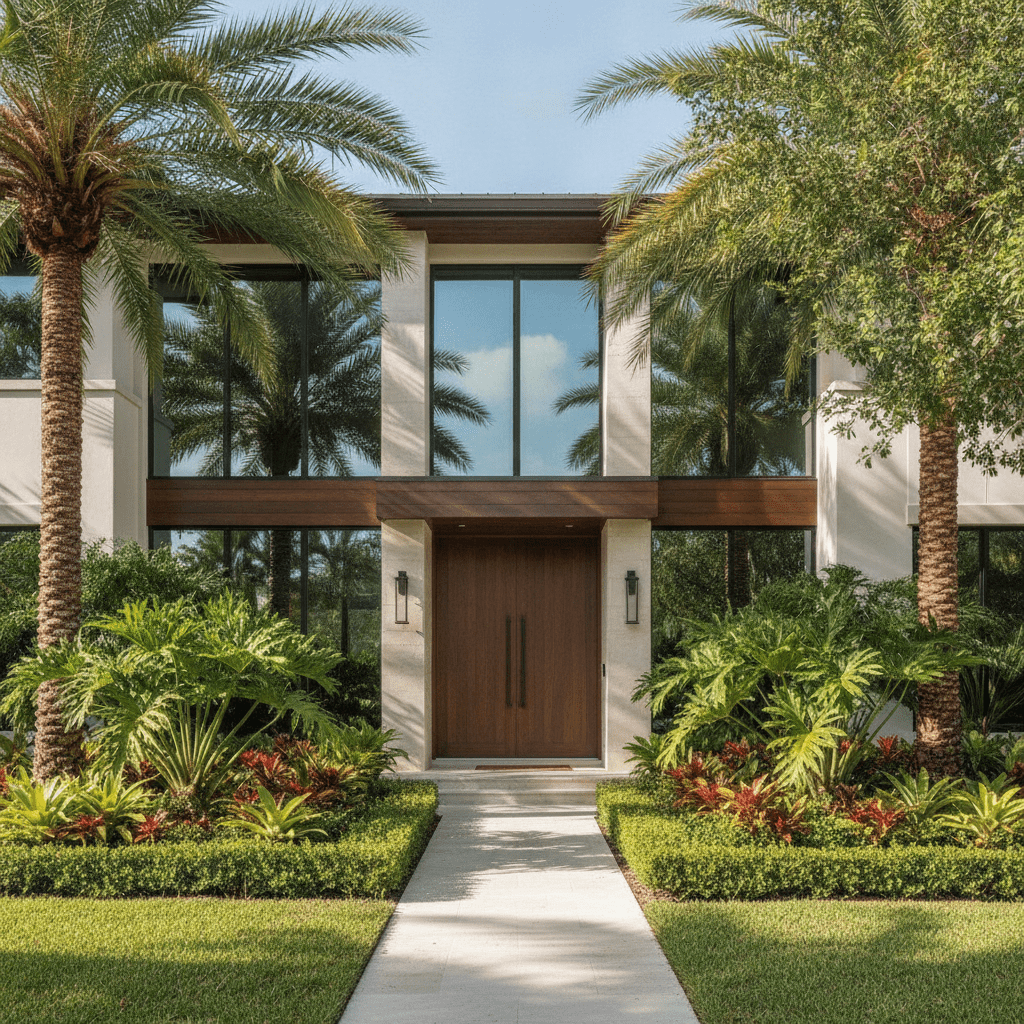
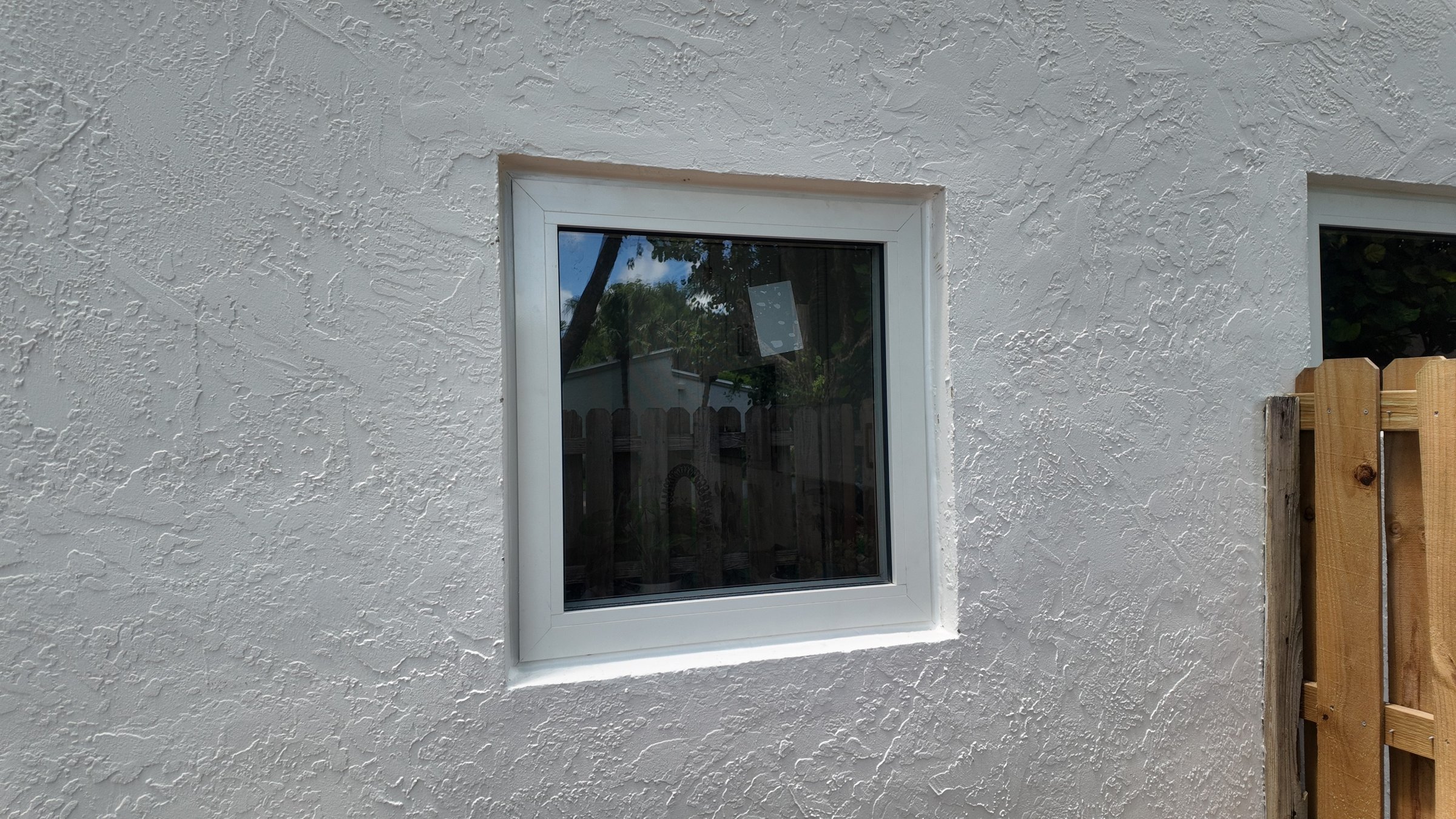
Hiring the right impact window installer in South Florida means verifying that the contractor holds the correct Florida license, that the products carry either a Miami-Dade Notice of Acceptance (NOA) or a valid Florida Product Approval for the High-Velocity Hurricane Zone (HVHZ), and that every opening is permitted and inspected under the Florida Building Code — all before a single frame is set.
Key Takeaways
- HVHZ (Miami-Dade and Broward) requires a Miami-Dade NOA or matching Florida Product Approval — standard FBC approval alone is not enough.
- Always ask for the product’s NOA or Florida Product Approval number before signing a contract.
- Impact window replacement always requires a permit in Florida — no exceptions for routine swaps.
- A properly permitted and inspected installation can reduce Citizens Property Insurance surcharges.
- Vet your installer by checking DBPR license status before any work begins.
The Real Risk
Why Hiring the Wrong Impact Window Installer Is a Costly Mistake
South Florida homeowners face a tighter approval ladder than anywhere else in the country — and a single shortcut can void your permit, your warranty, and your insurance credit.
Most South Florida homeowners comparing impact window options focus on glass thickness and frame color. That is understandable. But the decision that will actually determine whether your installation holds up after a hurricane, passes final inspection, and qualifies you for an insurance credit is something far less visible: did the installer pull the right permit, use a product approved for your specific code path, and hold the correct contractor license?
In Miami-Dade and Broward counties — the High-Velocity Hurricane Zone — those questions are not bureaucratic formalities. They are the difference between a window that is code-legal and one that can be ordered removed at your expense.
South Florida Code Context
HVHZ vs. Standard Florida Building Code: What Miami-Dade and Broward Homeowners Must Know
The Florida Building Code sets a baseline. Miami-Dade and Broward’s HVHZ raises that baseline substantially.
Florida operates under a statewide Florida Building Code, but Miami-Dade and Broward counties sit inside the High-Velocity Hurricane Zone — the strictest residential building-code environment in the United States. A product that holds a standard Florida Product Approval (FPA) statewide is not automatically legal in the HVHZ. To be installed in Miami-Dade or Broward, an impact window or door must carry either a Miami-Dade Notice of Acceptance (NOA) from Miami-Dade Product Control, or a Florida Product Approval that explicitly includes HVHZ compliance data.
These are two distinct approval paths. An NOA is issued by Miami-Dade County’s Product Control Division after testing under the large-missile impact protocol administered by Miami-Dade Product Control (TAS 201). A Florida Product Approval is issued by the state and may or may not include HVHZ test data. Ask your installer which approval document covers your specific product and opening, and request the document number so you can verify it at miamidade.gov or floridabuilding.org before signing.
| Approval Type | Issued By | Required In HVHZ? | Where to Verify |
|---|---|---|---|
| Miami-Dade NOA | Miami-Dade Product Control | Yes (or equivalent FPA with HVHZ data) | miamidade.gov/product-control |
| Florida Product Approval (FPA) | Florida Building Commission | Only if HVHZ data included | floridabuilding.org |
| Standard FBC Compliance Only | N/A | No — insufficient for HVHZ | N/A |
Palm Beach County sits outside the HVHZ, so the standard Florida Product Approval path applies there — though products with NOA approval are perfectly fine to use in Palm Beach as well.
How to Vet an Installer
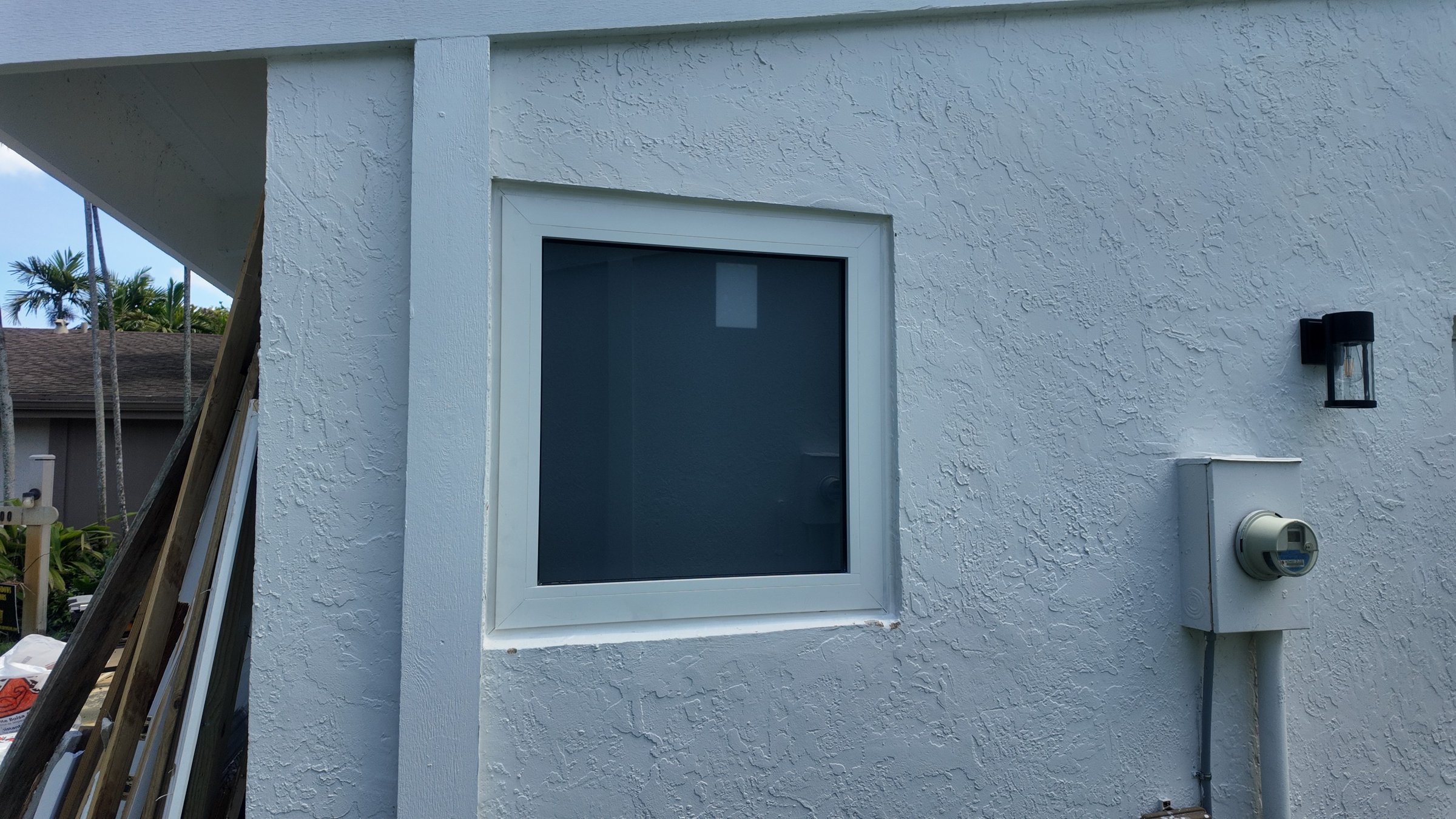
What Licenses Does a South Florida Impact Window Installer Need?
Florida law requires a state-licensed contractor to pull every permit. Here is what to look for.
In Florida, the contractor who pulls the building permit for an impact window replacement must hold a state-issued license recognized by the Florida Department of Business and Professional Regulation (DBPR). The license classes most relevant to residential impact window installation are a Certified Residential Contractor, a Certified General Contractor, or a Certified Specialty Contractor with a Glass & Glazing Specialty. A registered (county-only) contractor can pull permits in the county where they are registered, but a state-certified contractor can work anywhere in Florida.
To verify a license before you hire, go to myfloridalicense.com, search the contractor’s name or license number, and confirm the license status, expiration, and any disciplinary history. Do this before you sign anything. An unlicensed or expired-license contractor cannot legally pull a permit — which means no legal permit, no legal inspection, and no insurance credit.
Bigfoot Windows & Roofing holds four active Florida licenses: Florida licensed: CGC1531370 · CRC1331693 · CCC1333168 · SCC131153098. That license breadth also means that if your window replacement uncovers a structural issue — a header that needs resizing, a rough opening that is out of square because of prior water damage, or hurricane strap connections that fall within the structural scope — a Certified General Contractor license authorizes that structural framing work, whereas a specialty-only installer would need to subcontract it. That structural capability is what a Certified General Contractor license authorizes that a specialty-only installer cannot offer.
Comparison
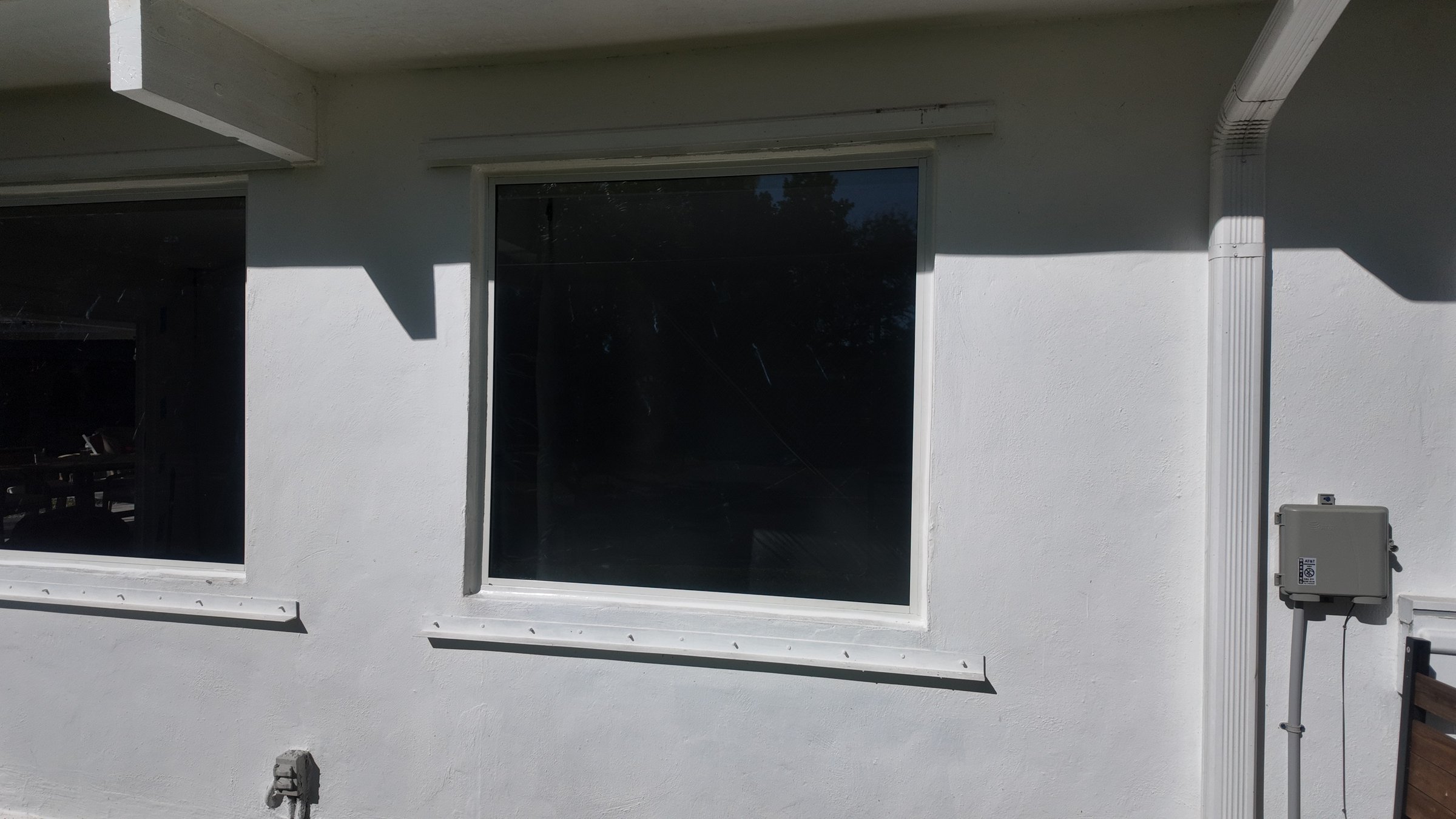
Impact Windows vs. Hurricane Shutters: Which Is Right for South Florida Homes?
Both satisfy the wind-pressure requirement. The difference is in daily livability, insurance treatment, and long-term cost.
| Factor | Impact Windows | Hurricane Shutters + Standard Windows |
|---|---|---|
| Daily operation | No action required before a storm | Must deploy before each storm |
| Insurance credit | Opening protection credit (law requires insurer offer) | Credit when rated shutters are deployed and inspected |
| Permit required? | Yes — always | Yes — for permanent shutter tracks |
| NOA/FPA required in HVHZ? | Yes | Yes (shutters must also carry NOA in HVHZ) |
| Noise reduction | Significant (laminated glass) | Minimal from glass alone |
| Energy efficiency | Low-E coating options reduce solar heat gain | Depends entirely on standard glass spec |
| Installed cost (typical South FL) | Higher upfront | Lower upfront, recurring labor to deploy |
When hurricane shutters are the better fit: If your budget is strictly limited right now, you are renting the property and the landlord controls window decisions, or your HOA has already approved a shutter system that you have owned for years, maintaining that shutter system may be the more practical near-term choice. Bigfoot does not install shutters, so we will tell you plainly if shutters are the right call for your situation.
Why It Matters Who You Hire
A Licensed Installer, Not a Lead Aggregator
We pull every permit under our own license and stand behind every inspection.
“I pull every permit under my own license. If the inspector finds a problem, it is my problem to fix — not something we pass off to a subcontractor you have never met.”
President, Bigfoot Windows & Roofing
What We Install
Impact Window Products We Recommend for South Florida
We install Mr. Glass as our primary line — aluminum frames, Florida Product Approval on all series, Miami-Dade NOA on the 2500T impact door.
Bigfoot installs Mr. Glass impact windows as our primary residential line. All standard Mr. Glass series carry Florida Product Approval. The flagship Series 200 (single-hung) and Series 300 (horizontal roller) are HVHZ-capable where the applicable approval covers the design pressure of the specific opening. Confirm the current Florida Product Approval number for your specific opening at floridabuilding.org or ask us for the document before ordering. The Series 350 is a builder-grade residential product — we do not recommend it for condominiums, high-rise buildings, or commercial applications.
For glass, we recommend an SB 70 Low-E coating as our standard specification. In South Florida’s cooling-dominated climate, Low-E coatings primarily reduce the solar heat gain your air conditioning must overcome. Glass thickness generally scales from 5/16" (builder grade) to 7/16" (standard mid-grade residential) to 9/16" (high-rise and heavy-duty openings, standard on the Series 1000 sliding glass door). The frame depth does not change when you upgrade glass thickness — a common misconception that affects sizing.
We recommend aluminum frames for South Florida installations. Aluminum has a longer track record than vinyl in the HVHZ’s combination of heat, salt air, humidity, and hurricane-season wind loading. For projects where energy performance is a priority, thermally broken aluminum frames reduce heat transfer while maintaining structural performance. Learn more about our impact window product line and what makes each series the right fit for different openings.
The Installation Process
What the Impact Window Permit and Inspection Process Looks Like in Miami-Dade
From signed contract to final sign-off, here is the typical sequence for a permitted replacement in the HVHZ.
- Product selection and NOA verification: Before ordering, confirm the product’s NOA or Florida Product Approval covers the design pressure (DP rating) of each opening in your home. In Miami-Dade, the product must be listed in Miami-Dade Product Control’s approved product directory or carry a matching state FPA with HVHZ data.
- Permit application: Your contractor submits a building permit application to the applicable municipal or county building department. In Miami-Dade, this typically includes a Notice of Commencement, product approval documentation, and a signed contractor affidavit. Permit approval timelines vary — straightforward residential replacements in Miami-Dade have typically run two to six weeks in recent years, though actual timelines depend on department workload and plan completeness.
- Rough opening and structural inspection: Before windows are set, the inspector verifies the rough opening dimensions and, where structural modifications are required (header resizing, damaged framing repair), confirms that work is complete. A Certified General Contractor can perform those structural modifications under a single permit rather than requiring a separate trade contract.
- Product and installation inspection: The inspector confirms that the installed product matches the approved NOA or FPA, that anchor spacing meets the product approval’s installation instructions, and that the installation complies with the Florida Building Code.
- Final sign-off: The building department issues a Certificate of Completion or final sign-off. This document is what your insurance company and future buyers will want to see. Keep a copy.
If your project also involves roofing or other structural work — a common scenario in South Florida where homeowners address multiple hurricane-hardening items at once — having a contractor who holds a Certified General Contractor license and a Certified Roofing Contractor license means both scopes can be coordinated and permitted under one accountable party. Explore financing options if you are combining window and roof work in a single project.
Ready to get a vetted, licensed estimate on impact windows in South Florida?
Or call Bigfoot Windows & Roofing directly: 786-886-2088
Insurance Implications
Will Impact Windows Lower My Homeowners Insurance in South Florida?
Florida law requires insurers to offer wind-mitigation credits for approved opening protection such as impact windows. In our experience, many South Florida homeowners see meaningful homeowners-insurance premium reductions after installing impact windows and obtaining a wind mitigation inspection. Actual reductions vary by insurer, policy, location, and home construction, and no specific figure can be guaranteed.
For Citizens Property Insurance specifically, a properly permitted and inspected impact window installation — one that produces a compliant wind mitigation inspection report (OIR-B1-1802) — can qualify the home for opening protection credits that reduce the hurricane portion of the premium. The key word is “properly permitted and inspected.” An unpermitted installation does not generate a legal inspection record, which means no insurance credit and potential coverage complications after a loss.
The My Safe Florida Home program also offers matching grants of up to $10,000 (a $2-for-$1 match reimbursing up to two-thirds of eligible mitigation project costs), subject to program funding, legislative appropriation, and eligibility. If you are exploring how to estimate your impact window project cost, factor in the potential grant benefit alongside any insurance savings.
Who We’re Not the Right Fit For
Bigfoot takes single-window jobs, small scopes, and full-house replacements alike. But there are specific situations where we are genuinely not the best match:
- You need a decision today with installation tomorrow. Permitted impact window work in Miami-Dade requires a building permit, which takes time. If you need emergency boarding or a temporary fix before hurricane season hits next week, a boarding service is the faster near-term answer — we handle the permanent permitted replacement afterward.
- You want the absolute lowest price and will not consider permit costs. Some installers quote without a permit fee. We do not skip permits. If the lowest possible number is your only criterion, you may find a cheaper quote elsewhere — but that quote likely does not include a legal permit or a final inspection that your insurer will recognize.
- Your project is a commercial high-rise requiring engineered glass systems beyond residential product approval. The Mr. Glass Series 350 is not rated for high-rise or commercial use. High-rise commercial projects require a different product specification and engineering review that falls outside our standard residential scope.
- You are outside our service area. We serve Miami-Dade, Broward, and Palm Beach counties. Projects significantly north of Palm Beach or outside South Florida are not a fit for our team.
Common Questions
Frequently Asked Questions
What is the difference between impact windows and hurricane shutters for South Florida homes?
Impact windows are permanently installed laminated-glass windows that provide continuous protection without any action before a storm. Hurricane shutters are deployable panels installed over standard windows. Both must carry HVHZ approval in Miami-Dade and Broward. Impact windows typically qualify for broader insurance credits and add more noise reduction and energy efficiency than shutters, but shutters carry a lower upfront cost.
Do impact window installers in South Florida need a special license to work in Miami-Dade County?
Yes. The contractor pulling the permit must hold a state-certified Florida license — typically a Certified Residential Contractor, Certified General Contractor, or Certified Specialty Contractor with a Glass & Glazing Specialty — recognized by the DBPR. Verify any installer’s license at myfloridalicense.com before signing a contract. A registered (county-only) contractor can also work in their registered county, but state-certified contractors can work statewide.
How long does it take to get permits approved for impact window installation in Miami-Dade?
Timelines vary by building department workload and plan completeness. Straightforward residential replacements in Miami-Dade have typically run two to six weeks for permit approval in recent years. More complex projects — older homes, structural modifications, multi-unit buildings — can take longer. Your contractor should be able to give you a realistic estimate based on current department conditions at the time of your project.
What is a Miami-Dade Notice of Acceptance and why does my impact window need one?
A Miami-Dade Notice of Acceptance (NOA) is a product-specific approval issued by Miami-Dade County’s Product Control Division after large-missile impact testing. In the HVHZ, your impact window must carry either an NOA or a Florida Product Approval that explicitly includes HVHZ test data. A standard statewide Florida Product Approval without HVHZ data is not sufficient for Miami-Dade or Broward installations. Ask your installer for the document number and verify it at miamidade.gov.
Will installing impact windows lower my homeowners insurance in South Florida?
Florida law requires insurers to offer wind-mitigation credits for approved opening protection such as impact windows. In our experience, many South Florida homeowners see meaningful premium reductions after installation and a wind mitigation inspection. Actual reductions vary by insurer, policy, location, and home construction, and no specific figure can be guaranteed. The installation must be properly permitted and inspected — an unpermitted installation will not generate a qualifying wind mitigation report.
Can I install just one impact window, or does Bigfoot require a whole-house project?
Bigfoot takes single-window and small-scope projects. There is no minimum opening count. A permit is still required for a single window replacement in Florida, so the timeline and process are the same regardless of scope size. If you have one non-