
Impact Window Cost in South Florida | Bigfoot Windows & Roofing
Key Takeaways
- Impact windows in South Florida typically cost $600–$1,800 per opening, installed — HVHZ compliance pushes prices above national averages.
- Miami-Dade and Broward sit inside the High Velocity Hurricane Zone (HVHZ), requiring NOA-approved or Florida Product Approval products — and that adds cost.
- Aluminum frames are the recommended choice for South Florida’s salt air, heat, and UV conditions; we do not promote vinyl here.
- Permit fees, third-party inspection, and a Notice of Commencement filing add real dollars — budget $400–$900 for soft costs on a typical job.
- Insurance premium reductions can meaningfully offset the net cost, but specific savings figures vary — consult your insurer after a wind mitigation inspection.
The Real Cost Question
Why Impact Window Prices in South Florida Aren’t Like the Rest of Florida
National cost averages leave South Florida homeowners under-informed. Here is the honest breakdown.
If you searched for impact window costs and landed on a national home-improvement site, you probably saw ranges like $300–$900 per window. Those numbers are real — for somewhere else. Miami-Dade, Broward, and much of Palm Beach sit inside the High Velocity Hurricane Zone (HVHZ), one of the most demanding building code jurisdictions in the United States. Products, labor, permitting, and inspections all cost more here, for good reason.
This guide explains what drives those costs, what you can expect to pay in 2026, and what questions to ask before you sign anything.
South Florida Context
HVHZ, NOA, and Florida Building Code — What They Cost You
Florida Building Code Section 1609 sets minimum wind-load requirements. Inside the HVHZ — which covers Miami-Dade and Broward counties — every exterior opening product must carry either a Miami-Dade Notice of Acceptance (NOA) or a Florida Product Approval with design-pressure ratings that meet or exceed the calculated loads for your specific building and location.
What that means in practice:
- Products cost more. The engineering, testing, and approval process that earns an NOA or Florida Product Approval is expensive, and manufacturers pass that cost downstream.
- Labor costs more. HVHZ installation requires closer tolerances, specific fastener patterns, and inspectors who know the code. Experienced HVHZ installers charge accordingly.
- Permits are not optional. Miami-Dade building permits for window replacement are required. Fees vary by municipality but typically run $200–$600 for a full-house replacement, plus a Notice of Commencement filing when the job exceeds $2,500 — add $50–$75 for recording.
- Third-party inspections may be required depending on your municipality and scope — budget $150–$250.
Palm Beach County, while partially outside the HVHZ in its western areas, still follows Florida Building Code wind-load requirements and requires permits for all window replacements. Do not skip the permit — unpermitted work can cloud a title and void an insurance claim.
Cost Breakdown
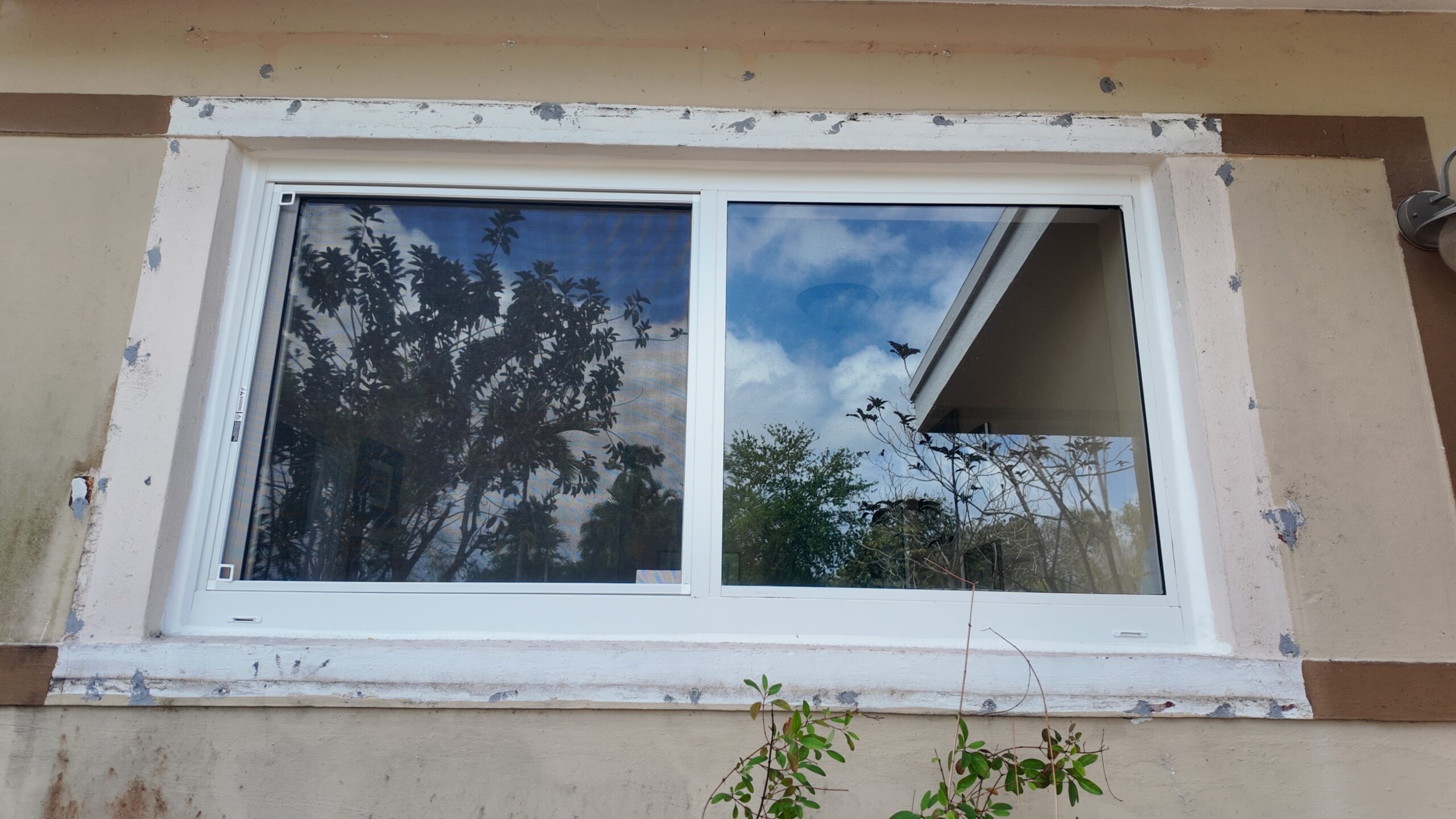
What You Actually Pay: Impact Window Cost Ranges for South Florida (2026)
The table below reflects installed costs — product plus labor — for typical residential openings in Miami-Dade and Broward. Palm Beach is generally similar to the mid range.
| Opening Type | Low Range | Mid Range (Most Common) | High Range |
|---|---|---|---|
| Standard single-hung (up to 36″ × 60″) | $600 | $800–$1,050 | $1,300 |
| Large picture / fixed (up to 60″ × 72″) | $900 | $1,100–$1,400 | $1,800 |
| Horizontal roller (wide openings) | $850 | $1,050–$1,350 | $1,700 |
| Casement (inswing) | $950 | $1,100–$1,450 | $1,800 |
| Sliding glass door (per panel pair) | $2,200 | $2,800–$3,800 | $5,500+ |
What drives a job toward the high end: larger openings; structural modification required to rough opening (this is where having a contractor with general contractor scope in-house matters — no subcontracting, no coordination gap); high-rise or condo with stricter design-pressure requirements; coastal locations within 2 miles of water requiring 2605 finish; insulated glass (IG) upgrades; and complex interior/exterior finish matching.
What does NOT meaningfully change the installed price: Low-E glass coating (SB 70 is our standard recommendation — it is not a luxury upgrade); standard aluminum color choices; single-window vs. whole-house (per-window unit cost is the same — volume discounts on large jobs offset some overhead).
As a Certified General Contractor (CGC1531370), Bigfoot can handle structural modifications to window openings — such as resizing a rough opening or addressing hurricane straps and header framing — without bringing in a separate contractor. That single-scope accountability is a structural advantage on jobs where the opening itself needs work, not just the window.
Comparison
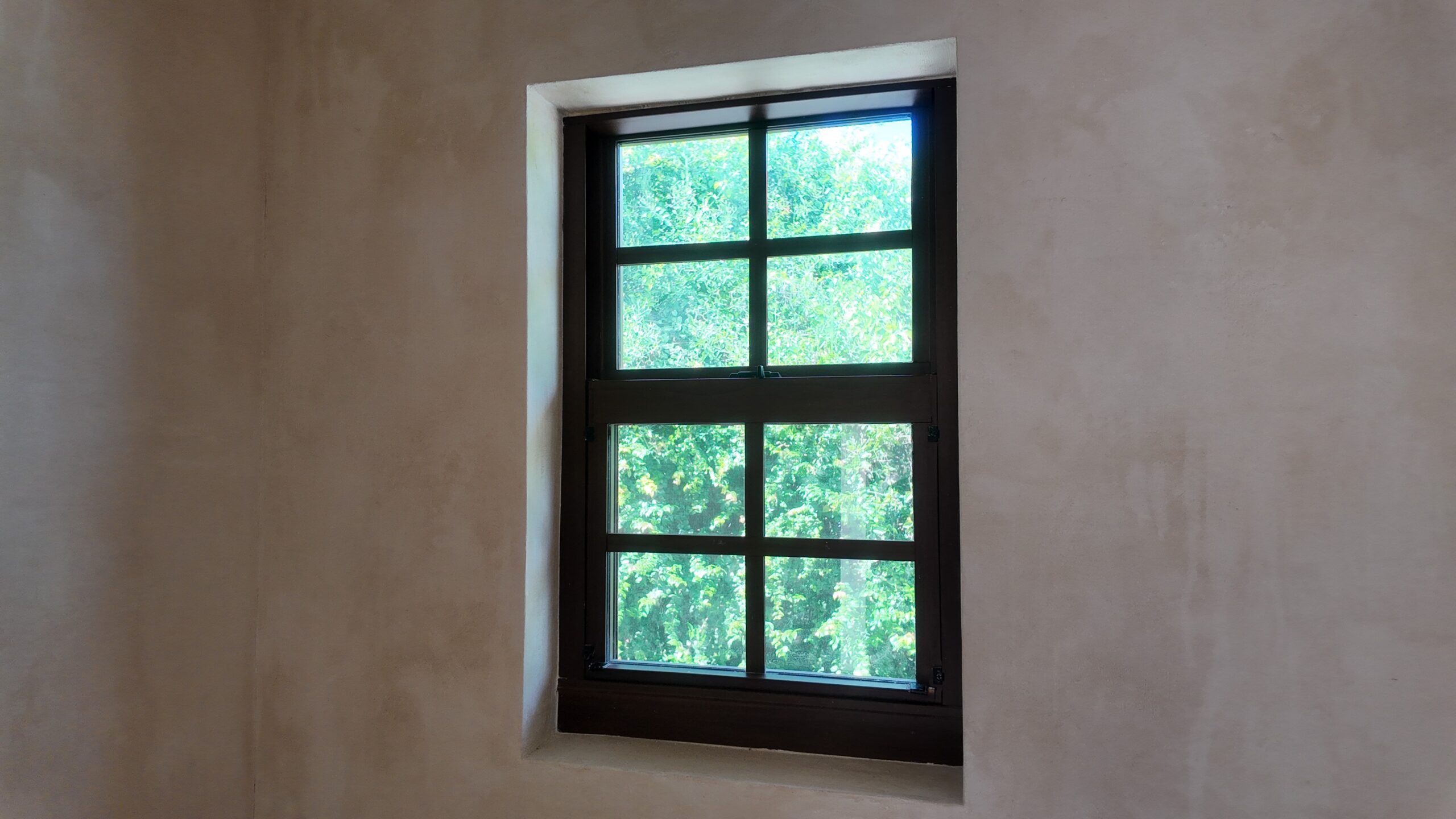
Frame Material and Glass Spec: What Changes the Price
Two of the most common cost questions we hear: aluminum vs. vinyl, and what glass thickness actually costs extra.
| Factor | Lower Cost | Bigfoot Recommendation | Why It Matters in South Florida |
|---|---|---|---|
| Frame material | Vinyl | Aluminum | Aluminum is more time-tested in HVHZ heat, salt air, and UV. Vinyl can warp and degrade faster in South Florida conditions. We do not promote vinyl here. |
| Glass thickness | 5/16″ (builder grade) | 7/16″ or 9/16″ | 9/16″ is auto-compliant with coastal turtle code; 5/16″ requires double-gray glass to comply in coastal zones. |
| Low-E coating | Clear (no coating) | SB 70 / Climate Guard 6227 | SB 70 is our primary heat-block recommendation; Climate Guard 6227 has identical specs and is available as a free upgrade on whole-house replacements. |
| Insulated glass (IG) | Laminated only | IG (3-layer) | Best for noise reduction, condensation control, and energy efficiency — worthwhile in South Florida where A/C runs year-round. |
| Finish (coastal) | 2604 wood-grain finish | 2605 anodized finish | Within 2 miles of water: 2604 finish loses 10-year warranty. Always specify 2605 in coastal zones. |
Why It Matters Who Installs
A Licensed Contractor, Not a Lead Aggregator
The window is only as good as the installation — and the installation is only as good as the license authority behind it.
“South Florida homeowners pay more for impact windows than the national average — and they should. The code is stricter. The wind loads are real. What we make sure is that every dollar goes toward a product and an installation that actually meets that code.”
President, Bigfoot Windows & Roofing
Product Guidance
What We Install — and Why
We install Mr. Glass as our primary impact window line and ES Windows as a secondary option. Both carry Florida Product Approval on all residential lines. A few things worth knowing before you compare quotes:
- Mr. Glass series numbering is counterintuitive. The 350 is a builder-grade residential window — it is NOT appropriate for condos, high-rise, or commercial buildings. The flagship lines (Series 200, 300, 400) are the high-performance products.
- Series 200 single-hung features spiral adjustable balances and a 2-7/8″ frame — it is high-rise capable.
- Series 300 horizontal roller is rated to 80/80 psf and supports openings up to 127-5/8″ wide in a 3-panel configuration.
- Casements come with stainless steel hardware as a standard feature, not an upgrade — a meaningful differentiator in salt-air coastal environments.
- Frame depth does not change when you upgrade glass thickness. This surprises many homeowners who worry about interior trim work — the opening profile stays the same.
- Mr. Glass Florida Product Approval: Yes on all lines. Miami-Dade NOA: No (except the 2500T door). This matters when a contractor claims NOA on windows that do not carry it.
We back our installations with a 10-year Bigfoot workmanship warranty. Mr. Glass products carry a 10-year product warranty (effective October 2025). Learn more about our full impact window installation service and impact door options.
The Process
From Estimate to Inspection: What to Expect
- Free estimate. We measure every opening, confirm design-pressure requirements for your address, and provide a written scope — product spec, glass spec, finish, permit plan, and labor.
- Permit pulled. We handle the building permit and Notice of Commencement filing. You do not coordinate with the building department.
- Product ordered. Lead times vary; Mr. Glass fabricates custom per job. Current South Florida lead times are typically 6–10 weeks depending on product line.
- Installation. Crew installs; structural modifications (if required) are handled in-house under our Certified General Contractor license.
- Final inspection. Building department or third-party inspector signs off. We stay through close-out.
- Wind mitigation inspection. Once permitted work closes, we recommend scheduling a wind mitigation inspection — this is the document your insurer uses to calculate any premium reduction.
If your project involves financing through PACE, note that roofing and window scopes must be filed as separate applications — we will walk you through that process at no extra charge.
Ready to get real numbers for your home — not national averages?
Or call Bigfoot Windows & Roofing at 786-886-2088
Related Reading
More Guides for South Florida Homeowners
Related Articles
Who We’re Not the Right Fit For
- Homeowners looking for the absolute lowest bid. We do not cut corners on permitting, product spec, or HVHZ compliance. If the only criterion is price, another contractor may offer a lower number — but scrutinize what they are omitting.
- Projects requiring vinyl windows. We recommend aluminum for South Florida’s climate conditions and do not carry or install vinyl impact window lines.
- Commercial high-rise or condo association projects that require NOA-specific documentation for the full window line. The Mr. Glass 350 is residential only. For high-rise openings, we specify the appropriate Series 200/300 — if your project needs something beyond what our product lines cover, we will tell you upfront.
- Homeowners who want a single point of contact to manage a large multi-trade renovation beyond our licensed scope. We hold licenses for windows, doors, roofing, and general contracting — but we do not carry electrical, plumbing, mechanical, or pool licenses. If your project requires those trades, you will need separate licensed contractors for those scopes.
Frequently Asked Questions
How much do impact windows cost per window in Miami-Dade?
Most Miami-Dade homeowners pay $800–$1,400 per opening installed for standard single-hung or horizontal roller windows. Larger openings, high-rise requirements, or structural modifications push costs higher. HVHZ compliance — required in Miami-Dade and Broward — means products and labor cost more than national averages. Budget separately for permit fees ($200–$600) and any Notice of Commencement filing.
Are impact windows cheaper than hurricane shutters for a South Florida home?
Impact windows have a higher upfront cost than shutters, but shutters require deployment before every storm, maintenance, and storage space. Impact windows also qualify for insurance discounts that shutters typically do not — particularly when combined with a wind mitigation inspection. Over a 10–15 year window lifespan, the net cost difference narrows considerably for most homeowners.
Does Miami-Dade require a permit to install impact windows and what does it cost?
Yes, permits are required for all window replacements in Miami-Dade — no exceptions. Permit fees typically run $200–$600 for a full-house replacement. Jobs exceeding $2,500 require a Notice of Commencement filing, which costs roughly $50–$75 to record. Some municipalities also require third-party inspections, adding $150–$250. We handle all permit filings on every job we complete.
How much can impact windows save on my Florida homeowners insurance premium?
Savings vary significantly based on your insurer, policy, home size, and current premium. Impact windows combined with a wind mitigation inspection can result in meaningful premium reductions — particularly for Citizens Insurance policyholders. We have seen customers achieve significant savings after new windows plus a wind mit report, but we cannot quote a specific dollar figure. Get a wind mitigation inspection after your installation and take the report to your insurer for a quote comparison.
What is the difference in cost between HVHZ-rated and standard impact windows?
HVHZ-compliant windows — those carrying an NOA or a Florida Product Approval with HVHZ-suitable design pressures — typically cost 15–25% more than non-HVHZ impact products. The premium reflects higher engineering, testing, and approval costs. In Miami-Dade and Broward, HVHZ-compliant products are not optional — they are required by the Florida Building Code for any permitted installation.
Can I finance impact windows and does it affect my credit score?
PACE financing (Property Assessed Clean Energy) is available for impact window replacements. It is repaid through your property tax bill — not a bank loan — and does not affect your credit score. Current rates are approximately 9.49%, with terms up to 20 years. Window and roofing scopes must be filed as separate PACE applications. No prepayment penalty applies. For qualifying property owners, there may be tax benefits — consult your CPA.
Does my HOA have the right to block impact window installation in Florida?
No. Florida SB 293 prohibits HOAs from blocking impact window or door installations. If your HOA has placed restrictions on impact windows, they are not enforceable under current Florida law. You may still need to follow aesthetic guidelines (color, trim), but the HOA cannot prevent you from installing code-compliant impact windows on your home.
Sources referenced:
- Florida Building Code, Section 1609 — Wind Loads (current edition)
- Miami-Dade County Building Department — permit fee schedule
- Florida Statute 553.8425 — HOA window/door restrictions (SB 293)
- Citizens Insurance — wind mitigation discount documentation
Get accurate pricing for your South Florida home — not a national average.
Call Bigfoot Windows & Roofing at 786-886-2088 or Request a Free Estimate Online