
Impact Windows Fort Lauderdale | Bigfoot Windows & Roofing
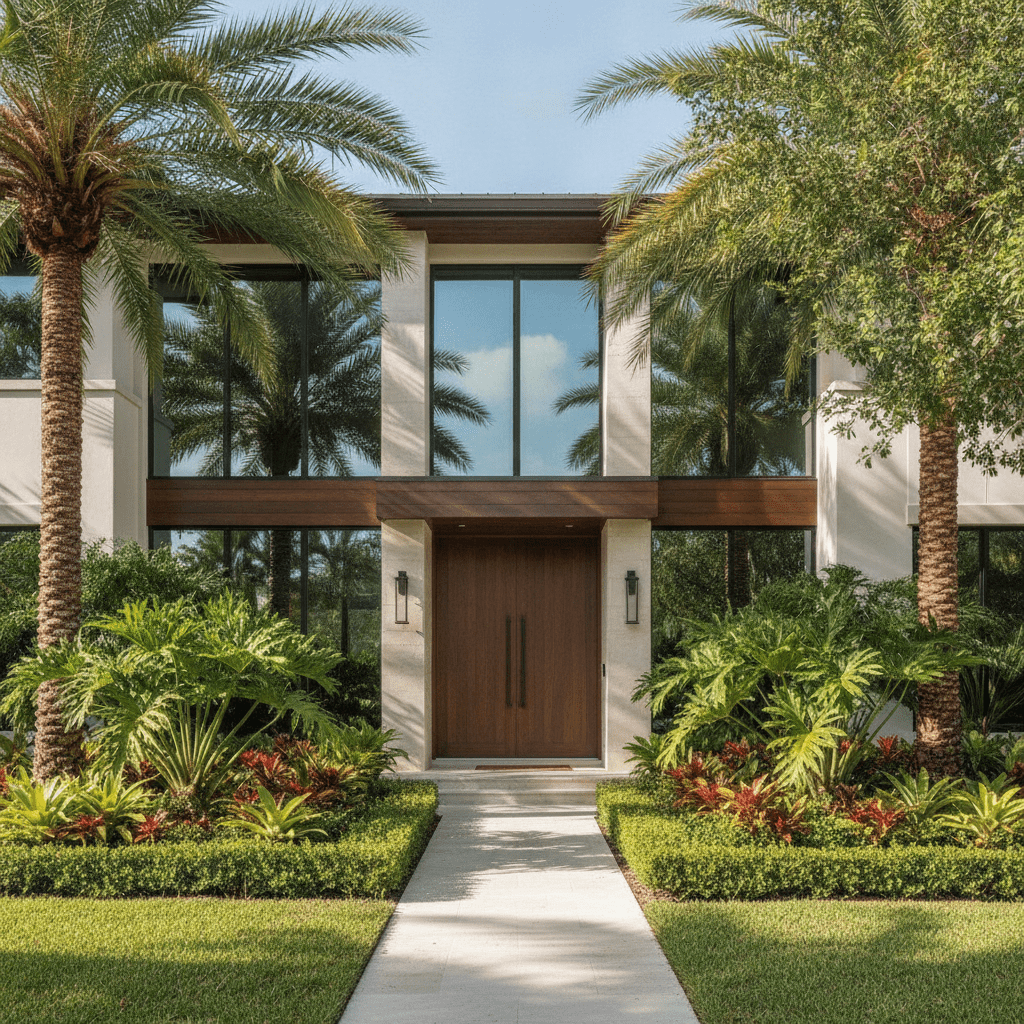
Fort Lauderdale sits inside Broward County’s High-Velocity Hurricane Zone (HVHZ), which means impact windows installed there must meet the same strict Florida Building Code wind-load standards that apply in Miami-Dade County. Products require either a Miami-Dade Notice of Acceptance (NOA) or a Florida Product Approval number accepted by the Broward County Building Division — and you need a permit before installation begins.
Updated September 2026
Key Takeaways
- Fort Lauderdale is in the HVHZ — products must carry an NOA or an accepted Florida Product Approval (FL#).
- Impact windows do not automatically eliminate hurricane shutters, but they satisfy the same code requirement.
- A wind mitigation inspection (OIR-B1-1802 form) after installation can unlock meaningful insurance premium reductions.
- Permits are required by law for every impact window installation in Broward County — no exceptions.
- Aluminum frames have a longer performance record than vinyl in South Florida’s coastal heat and salt-air environment.
The Problem
Why Fort Lauderdale Homeowners Get Confused About Impact Window Requirements
The rules are stricter than most people expect — and the paperwork matters.
Shopping for impact windows in South Florida feels straightforward until a contractor hands you a quote with no mention of permits, no product approval documentation, and a vague reference to being “code compliant.” In Fort Lauderdale that gap can mean a failed inspection, a stop-work order, or windows that technically cannot be covered by a wind mitigation discount.
The confusion usually comes from one of three places: not understanding how the HVHZ boundary works in Broward County, not knowing the difference between a Miami-Dade NOA and a Florida Product Approval number, and not realizing that the Broward County Building Division has its own permitting process that is separate from the City of Fort Lauderdale’s building department for some project types. This article answers all three — specifically and honestly.
Local Context
Fort Lauderdale, Broward County, and the HVHZ Boundary
Location determines product specification — here is what that means for your address.
The High-Velocity Hurricane Zone covers all of Miami-Dade and Broward counties under the Florida Building Code. Fort Lauderdale is squarely inside it. That matters because the HVHZ provisions of the FBC are materially stricter than the rest of Florida — not slightly stricter, but a separate and more demanding code path.
Under the 2023 Florida Building Code (7th Edition), structures in the HVHZ are designed to withstand wind speeds that reflect Broward County’s coastal exposure. For most Fort Lauderdale single-family residential locations, the design wind speed falls in the 170–185 mph range depending on risk category and distance from the coast. The impact windows you install must be tested and approved to handle the design pressure calculated for your specific opening size, orientation, and building height — not just a generic “hurricane rated” label.
| Location Factor | What It Means for Your Windows |
|---|---|
| Inside HVHZ (Broward County) | NOA or accepted FL Product Approval required on every unit |
| Coastal exposure (within 1 mile of ocean) | Higher design pressure; 2605 coastal finish required within 2 miles of saltwater |
| Two-story or above | Design pressure calculations change; product must match the opening DP rating |
| HOA community | Florida SB 293 restricts HOA prohibition of impact windows on residential properties |
One practical consequence: if a contractor quotes you a product that carries only a Florida Product Approval (FL#) but no Miami-Dade NOA, you need to confirm with the Broward County Building Division that the FL# is accepted for HVHZ use at your specific design pressure. Some FL-approved products are accepted in Broward’s HVHZ; others are not. Knowing the difference before you sign a contract saves you from a failed inspection after the fact.
Product Standards Explained
NOA vs. Florida Product Approval — What Broward Homeowners Need to Know
One is a Miami-Dade document. The other is a statewide document. Both can work in Fort Lauderdale — with caveats.
A Miami-Dade Notice of Acceptance (NOA) is issued by the Miami-Dade Building Department’s Product Control Division. It certifies that a specific product has been tested and reviewed to meet Miami-Dade’s HVHZ standards. Because Broward County operates under the same HVHZ provisions, an NOA is generally accepted by the Broward County Building Division without additional review — it is the most straightforward path to approval.
A Florida Product Approval (FL#) is issued by the Florida Building Commission and covers the entire state. However, FL# products must be evaluated against HVHZ requirements on a case-by-case basis for Broward and Miami-Dade installations. The FL# alone does not guarantee HVHZ acceptance. A contractor pulling a permit in Fort Lauderdale needs to submit the product’s test reports, installation drawings, and approval documentation — and the building official reviews whether the FL# covers the design pressures at your specific opening.
For Bigfoot installations, all Mr. Glass series carry Florida Product Approval, and the Mr. Glass 2500T thermally broken impact door holds a Miami-Dade NOA. When you are comparing quotes, ask each contractor: What is the product approval number, and does it cover HVHZ use at my design pressure? If a contractor cannot answer that question specifically, that is a red flag worth taking seriously.
| Approval Type | Issued By | HVHZ Acceptance in Broward | What to Verify |
|---|---|---|---|
| Miami-Dade NOA | Miami-Dade Building Dept. | Generally accepted directly | Product code + NOA number on permit docs |
| Florida Product Approval (FL#) | Florida Building Commission | Case-by-case; DP must match opening | Test reports + HVHZ-specific review by building official |
| No approval / generic “hurricane rated” | N/A | Not accepted | Do not permit; do not install |
Frame Material Comparison
Aluminum vs. Vinyl Impact Frames in Fort Lauderdale’s Climate
Material choice affects performance, warranty, and long-term maintenance in a coastal environment.
Aluminum has a longer track record than vinyl in South Florida’s HVHZ heat, UV, and coastal conditions. Broward County’s combination of salt air, intense UV exposure, and hurricane-season humidity accelerates the degradation of vinyl frames over time — warping, discoloration, and seal failure are more common problems in this environment. For properties within two miles of the ocean or Intracoastal Waterway, aluminum is the material Bigfoot recommends.
For energy efficiency in a hot climate, thermally broken aluminum frames add a thermal barrier between the interior and exterior aluminum sections, reducing heat transfer without sacrificing the structural advantages of the metal. If reducing cooling costs is a priority alongside hurricane protection, thermally broken aluminum is worth discussing during your estimate.
On finish: if your Fort Lauderdale property is within two miles of saltwater, you must specify the 2605 coastal finish. The 2604 wood-grain finish voids the manufacturer’s 10-year product warranty in coastal zones per the Mr. Glass Limited Warranty (06/07/2022 revision). That is not a small detail — it is a warranty-voiding specification error that shows up only after a claim.
Why License Breadth Matters
A Contractor Who Can Handle More Than Just the Windows
Licensed contractor, not a lead aggregator.
Many Fort Lauderdale homes built before the 1990s have structural conditions — undersized headers, absent hurricane straps, or rough openings that do not match modern product dimensions — that a windows-only installer cannot legally address. When those conditions surface mid-project, a specialist sub either walks away or the homeowner has to hire a second contractor, get a second permit, and coordinate a second inspection.
Bigfoot performs header resizing and hurricane strap upgrades as in-scope services under its Certified General Contractor license (CGC1531370), meaning structural work that arises during an impact window installation can be handled under the same permit set. That is a structural advantage grounded in license breadth — not a marketing claim.
“In Fort Lauderdale, we see older homes where the rough opening is the wrong size or the header needs resizing before a modern impact unit fits cleanly. Having the GC license means we can address that under one permit instead of stopping the job and sending you to find another contractor.”
President, Bigfoot Windows & Roofing
Product Guidance
What to Look For in an Impact Window for Fort Lauderdale
Specifications that matter in a coastal HVHZ environment.
Glass thickness and interlayer matter as much as the frame. For most Fort Lauderdale residential openings, 7/16″ laminated glass is the standard mid-grade option. For larger openings, high-rise applications (where the series supports it), or properties that prioritize noise reduction, 9/16″ glass provides additional performance. Glass thickness does not change the frame depth — a common misconception that leads homeowners to assume thicker glass means a bulkier installation.
For Low-E coating, SB 70 is the standard recommendation for South Florida’s solar environment. Cardinal ClimateGuard 6227 carries equivalent specifications to SB 70 and is offered as a complimentary upgrade on whole-house replacement projects. Both coatings reduce solar heat gain without meaningfully darkening the interior view — an important factor for Fort Lauderdale homes that face east or west.
For turtle-code compliance in coastal zones: 9/16″ gray glass is auto-compliant; 7/16″ gray is marginal and requires confirmation; 5/16″ requires double-gray to meet coastal lighting ordinance standards. If your Fort Lauderdale property is near the beach or Intracoastal, discuss turtle compliance with your contractor before finalizing product selection.
Explore your impact windows pricing options with our online estimator to get a preliminary range before your in-home consultation.
The Permitting Process
How Impact Window Permits Work in Fort Lauderdale and Broward County
No permit means no legal installation — and no wind mitigation benefit.
Impact window installation in Fort Lauderdale requires a building permit pulled through the appropriate jurisdiction — typically the City of Fort Lauderdale Building Services for properties within city limits, which coordinates with Broward County for HVHZ product review. Your contractor submits: a permit application, product approval documentation (NOA or accepted FL# with test reports), installation drawings stamped by a Florida-licensed engineer or architect for openings above certain thresholds, and a Notice of Commencement if the project value exceeds $2,500 (per Florida Statute 713.135).
After installation, the project requires a rough-in inspection and a final inspection. Once the final inspection passes, you can commission a wind mitigation inspection using the Florida Uniform Mitigation Verification Inspection form OIR-B1-1802. This form documents your home’s hurricane protection features — including impact-rated openings — and is submitted to your homeowners insurance carrier to request a windstorm premium discount.
Insurance carriers in Florida treat fully protected openings (all windows and doors meeting impact or shutter standards) differently from partially protected openings. The premium difference can be material, though specific savings depend on your carrier, your policy, and your home’s overall wind mitigation profile. Bigfoot does not quote specific insurance savings figures — but getting the OIR-B1-1802 inspection done after your installation is a step worth building into your project timeline.
Learn more about impact window installation requirements across South Florida and what documentation to expect at each stage.
Ready to get a straight answer on Fort Lauderdale impact windows?
No pressure, no lead handoff. Talk directly to the licensed contractor who pulls the permit.
Related Reading
More Impact Window Resources
Related Articles


Who We’re Not the Right Fit For
Bigfoot is worth calling for single-window replacements, full-house projects, and anything in between. But there are situations where we are honestly not the best match:
- Buyers who need the absolute lowest bid regardless of documentation. Our quotes include permitting, product approval documentation, and licensed installation. If another contractor is cheaper because they are skipping the permit, that savings disappears when the city issues a stop-work order or when your insurance carrier asks for the inspection record.
- Condo owners above the third floor who need a Series 350 window. The Mr. Glass Series 350 is rated for residential use only — not condominiums, high-rise buildings, or commercial applications. Condo owners above that threshold need a high-rise-capable series; we carry those, but Series 350 is not the answer and we will tell you that upfront.
- Homeowners who want vinyl frames in a coastal HVHZ location. We recommend aluminum for Fort Lauderdale’s coastal environment and do not promote vinyl as a preferred option here. If vinyl is a firm requirement, we may not be the right fit.
- Projects that require electrical, plumbing, HVAC, or pool work as part of the same scope. Our licenses cover windows, doors, roofing, and structural general contracting. We do not hold electrical or mechanical licenses and cannot coordinate those trades under our license.
Common Questions
Frequently Asked Questions
Do impact windows in Fort Lauderdale need a Miami-Dade NOA, or is a Florida Product Approval number sufficient?
Either can work in Broward County, but the requirements differ. A Miami-Dade NOA is generally accepted directly by the Broward County Building Division for HVHZ installations. A Florida Product Approval (FL#) may also be accepted, but the building official reviews the test reports to confirm the FL# covers the design pressures at your specific opening. Not all FL-approved products are accepted for HVHZ use. Ask your contractor for the specific approval number and confirm it with the building division before signing a contract.
How much can impact windows lower my homeowners insurance in Fort Lauderdale?
The savings depend on your carrier, your current policy, and whether all openings — windows and doors — meet impact or shutter standards. After installation, a wind mitigation inspector completes the OIR-B1-1802 form documenting your protected openings. That form is submitted to your insurer to request a windstorm premium reduction. Fully protected homes typically receive a larger discount than partially protected ones. Bigfoot does not quote specific savings figures — get the wind mitigation inspection done after your permit closes and let the inspector’s report speak for itself.
What wind speed rating do impact windows need to meet in Fort Lauderdale?
Fort Lauderdale falls within the HVHZ, where the 2023 Florida Building Code requires design wind speeds in the 170–185 mph range for most residential locations, depending on risk category, building height, and distance from the coast. The windows must be tested and approved to handle the design pressure calculated for each specific opening — not just a generic wind speed label. Your contractor’s permit submission includes the design pressure calculations matched to the product approval documentation.
How long does it take to get a permit for impact window installation in Fort Lauderdale?
Permit review timelines vary by jurisdiction and workload. For standard residential impact window projects in Broward County, review typically takes two to six weeks. Projects requiring engineer-stamped drawings for larger or atypical openings may take longer. Your contractor should submit a complete package — product approval docs, installation drawings, and Notice of Commencement if required — to avoid back-and-forth that extends the timeline. Plan for permitting time before scheduling installation.
Are impact windows required by law in Fort Lauderdale, or can I use hurricane shutters instead?
Impact windows are not legally mandated as the only option — hurricane shutters that meet HVHZ standards satisfy the same opening-protection requirement under the Florida Building Code. However, shutters require manual deployment before a storm, must be stored somewhere, and do not provide year-round protection. Impact windows offer permanent protection without the operational requirement. Many Fort Lauderdale homeowners choose impact windows for convenience and because fully protected openings qualify for the wind mitigation insurance discount on the OIR-B1-1802 form.
Do I need HOA approval before installing impact windows in a Fort Lauderdale HOA community?
Florida Senate Bill 293 generally restricts HOA prohibitions on hurricane protection devices, including impact windows, on residential properties (per Florida Statute 553.8425). Your HOA may still regulate aesthetic details such as frame color or profile, but cannot issue a blanket prohibition on impact windows. For the specific application to your property, consult a Florida-licensed attorney before assuming SB 293 resolves all HOA objections — aesthetic guidelines can still create project constraints.
Can I finance impact windows in Fort Lauderdale, and are there grants available?
PACE financing is available in Broward County and is repaid through your property tax bill — not a bank loan. The My Safe Florida Home grant offers up to $10,000 for qualifying homeowners and can be combined with PACE financing. If your project includes both windows and roofing, PACE requires separate applications for each scope — they cannot be combined into one PACE application. Learn more about impact window financing options before your consultation.
Schedule Your Free Estimate
Ready to get started? Request a free estimate — no phone call required.
Sources
- Florida Building Code, 7th Edition (2023) — HVHZ provisions, Broward and Miami-Dade counties
- Florida Statute 553.8425 (SB 293) — HOA restrictions on hurricane protection devices
- Florida Statute 713.135 — Notice of Commencement threshold for residential alterations
- Florida OIR-B1-1802 — Uniform Mitigation Verification Inspection Form
- Mr. Glass Limited Warranty, 06/07/2022 revision — 2604 coastal finish warranty exclusion
- Bigfoot Windows & Roofing service documentation — product approval and installation guidance
Get a straight, documented quote for Fort Lauderdale impact windows.
Permit included. Product approval documented. No subcontractors handling the licensed work.