
Impact Windows Miami | Bigfoot Windows & Roofing (Miami-Dade)
Updated July 2026
Key Takeaways
- Miami-Dade sits in the High-Velocity Hurricane Zone (HVHZ) — impact windows here must carry a Miami-Dade Notice of Acceptance (NOA) or Florida Product Approval.
- Aluminum frames outperform vinyl in South Florida heat, humidity, salt air, and hurricane loading — that is why Bigfoot recommends aluminum.
- Installed cost typically runs $80–$150 per square foot depending on series, glass thickness, and opening size.
- A Certified General Contractor can handle structural openings, header work, and permit coordination in-house — no separate GC required.
- Impact windows can reduce homeowner insurance premiums when paired with a wind mitigation inspection.
The Problem
Why Impact Windows in Miami Are a Different Decision Than Anywhere Else
HVHZ requirements, salt air, and permit complexity make Miami-Dade a unique market.
If you own a home in Miami-Dade or Broward, you already know hurricane season is not a hypothetical. What you may not know is that buying impact windows in the HVHZ is legally and technically different from buying them in Orlando or Tampa. Products must pass a stricter test protocol, permits are more scrutinized, and the wrong frame material can cost you in callbacks and warped hardware within a few years.
Most homeowners spend weeks comparing prices and brands without understanding the code requirements that govern the product before it ever hits a showroom. This article is designed to close that gap — honestly, without pressure, so you can make a confident decision whether or not you hire Bigfoot.
South Florida Context
HVHZ, Miami-Dade NOA, and Florida Building Code — What You Actually Need to Know
The High-Velocity Hurricane Zone (HVHZ) covers Miami-Dade and Broward counties. The Miami-Dade product approval process is widely regarded as the most stringent impact-product testing protocol in the United States. Windows installed in the HVHZ must carry either a Miami-Dade Notice of Acceptance (NOA) or a Florida Product Approval (FPA) — and the contractor must pull a permit, submit product data, and have the installation inspected.
Salt air accelerates corrosion in hardware, fasteners, and frame finishes. Homes within two miles of the coast must use a 2605 finish on aluminum frames — the standard 2604 wood-grain finish loses its 10-year warranty in coastal environments. If your contractor does not ask about your proximity to the water before specifying a product, that is a signal to dig deeper.
Buyer Education
Frame Material, Glass Thickness, and Series — What Actually Moves the Price
Three variables drive most of the cost difference between impact window quotes in Miami:
| Variable | Lower Cost End | Mid-Range / Recommended | Higher Cost End |
|---|---|---|---|
| Frame material | Vinyl | Aluminum (standard) | Thermally broken aluminum |
| Glass thickness | 5/16" (builder grade) | 7/16" (standard mid) | 9/16" (high-rise / heavy duty) |
| Series | Builder / 350-grade | Flagship single-hung or roller | SGD / casement / specialty |
| Installed price range | ~$80/sq ft | ~$100–$120/sq ft | ~$140–$150/sq ft |
Why Bigfoot Recommends Aluminum Over Vinyl in South Florida
Vinyl expands and contracts more than aluminum in South Florida’s heat cycles. Over time, that movement can stress the frame corners, distort the sash fit, and compromise the seal. Aluminum has a longer track record in the HVHZ under real hurricane loading. If energy efficiency is a priority, thermally broken aluminum frames add an insulating barrier without giving up the structural performance of aluminum — that is the frame technology we recommend when the budget supports it.
Glass Thickness and Turtle Code
For coastal properties (within roughly two miles of the water), turtle lighting code may apply. The 9/16" gray glass is auto-compliant; 5/16" typically requires double-gray glass to comply; 7/16" gray is marginal. Your contractor should be asking about your property’s coastal zone status before specifying glass thickness — not after the order is placed.
| Glass Thickness | Typical Application | Turtle Code Notes |
|---|---|---|
| 5/16" | Builder grade, interior openings | Double-gray required for coastal compliance |
| 7/16" | Standard residential | Gray is marginal — verify with inspector |
| 9/16" | High-rise, heavy-duty, coastal | Auto-compliant with gray tint |
Comparison
Impact Windows vs. Hurricane Shutters — Which Makes More Sense for Miami Homes?
Both options meet the Florida Building Code wind-protection requirement. The difference is in daily usability, insurance credit, and long-term maintenance.
| Criteria | Hurricane Shutters | Impact Windows |
|---|---|---|
| Protection method | Deployed before storm | Permanent, always on |
| Daily livability | Normal until deployment | Natural light, no action needed |
| Wind mitigation credit | Limited (opening protection only) | Full opening protection credit |
| Noise reduction | None (when open) | Significant with laminated glass |
| Maintenance | Annual; track/accordion care | Low — hardware and seal checks |
| Upfront cost | Lower | Higher — but often offset by insurance |
When shutters are the better fit: If your budget is severely constrained and you rent out the property or have consistent occupants who can deploy shutters before a storm, shutters provide code-compliant protection at a lower upfront cost. Accordion shutters on a large home can be a reasonable interim solution while you save for a full impact-window replacement.
Why It Matters Who Pulls the Permit
A Licensed Contractor, Not a Lead Aggregator
Four active Florida licenses mean one contractor can handle windows, doors, structural modifications, and roofing under a single permit file.
“In Miami-Dade, the permit and the product approval are everything. If either is wrong, the inspector will not sign off and the homeowner pays twice. We pull every permit ourselves and we specify products with current NOA or FPA on file.”
President, Bigfoot Windows & Roofing
Products We Install
Mr. Glass Impact Windows — Series Guide for Miami-Dade Homeowners
Bigfoot installs Mr. Glass as our primary impact window line. Here is a plain-English breakdown of the series that matters most in Miami-Dade:
- Series 200 (Flagship Single-Hung): Spiral adjustable balances, 2-7/8" frame depth, high-rise capable. Florida Product Approval on file. Best for mid-rise and single-family homes that need a proven workhorse.
- Series 300 (Flagship Horizontal Roller): Rated to 80/80 psf. Available up to 127-5/8" wide in a 3-panel configuration. Ideal for large openings common in Miami ranch-style homes.
- Series 350 (Residential Builder): A lower price-point option — but we limit it to residential single-family use only. We do not specify the 350 series for condos, high-rise buildings, or commercial applications.
- Series 1000 SGD (Sliding Glass Door): Standard 9/16" glass — heavier, quieter, better coastal performance. No direct equivalent at this glass spec from most competitors.
- Series 2500T (Thermally Broken Door): Both in-swing and out-swing tested — most competing doors test only one direction. Stainless steel hardware is the default, not an upgrade.
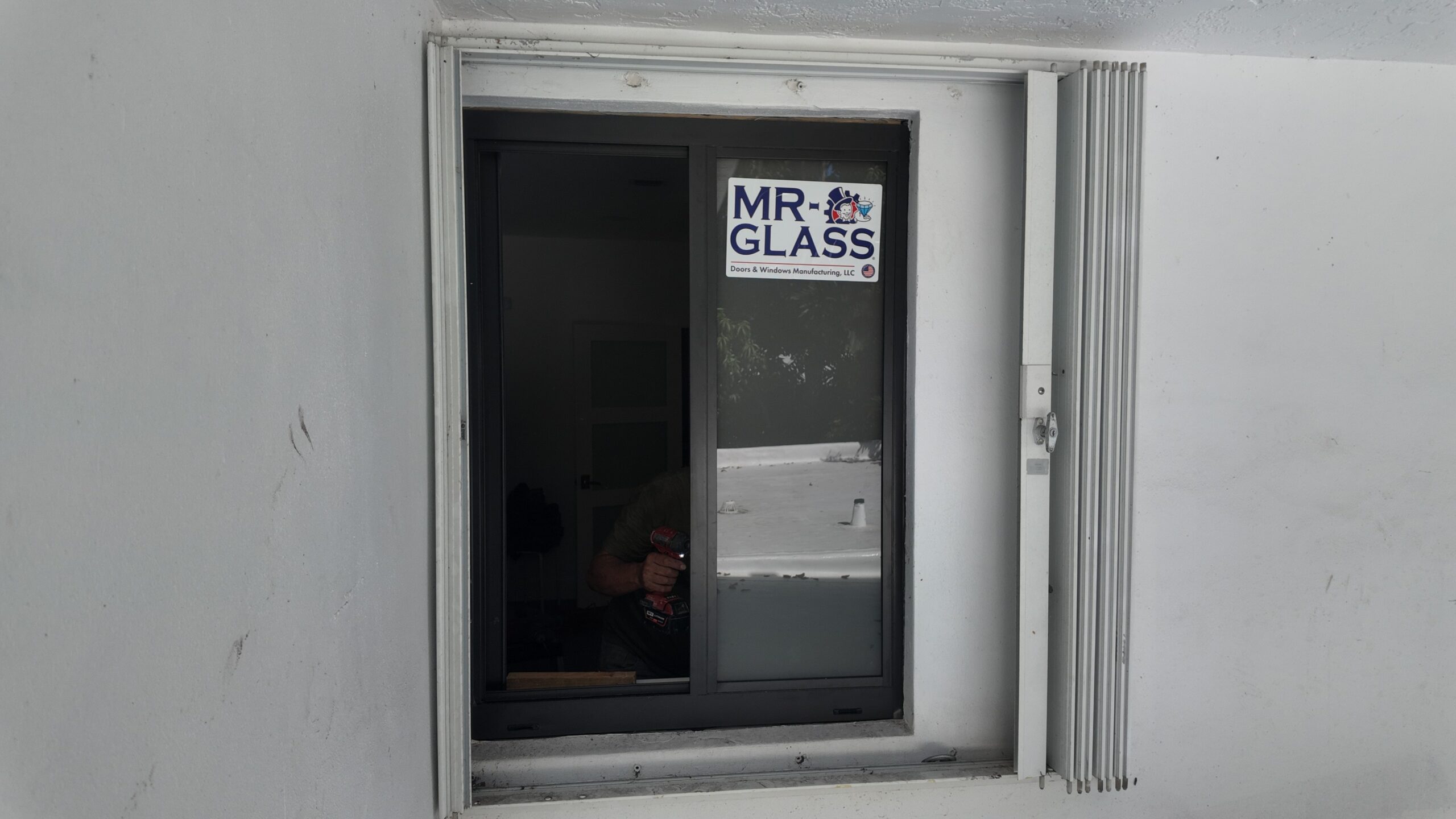
All Mr. Glass products carry a 10-year product warranty (as of October 2025). Bigfoot adds a 10-year workmanship warranty on installation. Note: Mr. Glass carries Florida Product Approval across all lines; Miami-Dade NOA is available on select products including the 2500T — confirm with us for your specific opening before ordering.
We also carry ES Windows as a secondary line for projects where the primary line lead time or sizing does not fit. If you are comparing options, read our guide to choosing impact windows for South Florida homes for a side-by-side of what changes between lines.
The Process
What Happens From Estimate to Inspection in Miami-Dade
- Site measurement & product specification: We measure every opening, confirm coastal zone status, verify turtle code requirements, and specify the correct series and glass thickness before anything is ordered.
- Permit application: We pull the permit. We submit the product data sheet (NOA or FPA) to Miami-Dade or Broward building department. No permit pulled by a homeowner or unlicensed sub on our jobs.
- Structural scope (when needed): If an opening needs to be widened or a header modified, our Certified General Contractor (CGC1531370) scope covers that work — you do not need to hire a separate GC or structural sub. This is one of the practical advantages of working with a contractor who holds broad license authority.
- Installation: Factory-ordered product arrives; install is typically one to three days depending on unit count. We use the correct finish and anchor spec per the product’s NOA/FPA requirements.
- Final inspection: Inspector visits, reviews the permit card and product approval, and signs off. We coordinate the inspection appointment — homeowners do not chase the building department.
- Wind mitigation report: After final inspection, we can advise on scheduling a wind mitigation inspection. A passing report submitted to your insurer can meaningfully reduce your premium — the exact amount varies by policy and insurer.
Ready to get a real number for your Miami-Dade home?
No pressure, no obligation. We measure every opening before we quote anything.
Related Articles
Keep Reading
Related Articles
Who We’re Not the Right Fit For
- Budget-first, lowest-bid buyers: If the only criterion is the lowest number on the page, we will not be the lowest. We specify aluminum frames, current-NOA products, and pull every permit — that costs more than a cash job with no permit.
- Projects needing only one or two windows with minimal lead time: Our production schedule is set up for whole-home or multi-opening projects. A homeowner replacing a single broken unit on a rushed timeline may be better served by a supplier who stocks standard sizes off the shelf.
- Buyers who want vinyl frames: We recommend aluminum for South Florida conditions. If you have already decided on vinyl and that is non-negotiable, we may not be the right fit — we will not install a product we do not stand behind long-term.
- Commercial high-rise or condo association projects requiring a separate GC bid process: We work on residential and select light-commercial projects. Large condo association bids with formal RFP processes and board approval timelines are outside our typical workflow.
Frequently Asked Questions
Do impact windows in Miami-Dade need a Miami-Dade NOA or just Florida Product Approval?
In the HVHZ (Miami-Dade and Broward), products must carry either a Miami-Dade Notice of Acceptance (NOA) or a Florida Product Approval (FPA). NOA goes through a stricter local test protocol. FPA is a statewide approval. Both satisfy the Florida Building Code in the HVHZ — but your contractor must submit the correct product data sheet with the permit application or the inspection will not pass.
Why does Bigfoot recommend aluminum frames instead of vinyl for South Florida?
Aluminum has a longer performance record in the HVHZ under real hurricane loading, high UV exposure, salt air, and heat cycling. Vinyl expands and contracts more, which can stress frame corners and compromise seals over time. If energy efficiency is the priority, thermally broken aluminum frames add an insulating barrier without sacrificing structural performance.
How much do impact windows cost installed in Miami?
Installed cost in Miami-Dade typically runs $80–$150 per square foot depending on series, frame type, glass thickness, and opening count. Larger projects with more openings can bring the per-unit cost down. Custom sizes, structural header work, and coastal finish requirements push toward the higher end. We provide itemized estimates after measuring every opening — we do not quote over the phone without measurements.
Can impact windows lower my homeowner’s insurance in Miami?
Possibly — and significantly for some homeowners. After a permitted installation with final inspection, you can schedule a wind mitigation inspection. A passing report submitted to your insurer can reduce your premium, particularly if you are replacing single-pane or non-impact windows. The exact amount depends on your insurer and current policy. We have seen customers reduce premiums meaningfully — we will not quote a specific dollar figure because it varies.
Can my HOA stop me from installing impact windows in Miami-Dade?
No. Florida Senate Bill 293 prohibits HOAs from blocking the installation of impact windows or impact doors. Your HOA can regulate aesthetics to some degree (frame color, for example) but cannot prevent the installation itself. If your HOA is pushing back, reference SB 293 — your right to install is protected by state law.
How long does impact window installation take in Miami-Dade, including the permit?
From signed contract to final inspection, a typical whole-home project in Miami-Dade runs six to twelve weeks. Product lead time after order is usually four to eight weeks depending on series and custom sizing. Permit review by Miami-Dade or Broward building departments adds one to three weeks. Physical installation is typically one to three days. Final inspection is scheduled after install — we coordinate that appointment.
Does Bigfoot offer financing for impact windows in Miami?
Yes. We work with PACE financing, which is paid through your property tax bill — not a traditional bank loan. The rate is approximately 9.49%; a 20-year term offers the lowest monthly payment. A sample: $15,000 financed over 20 years is roughly $173 per month with no prepayment penalty and no credit score impact. Roofing and window projects require separate PACE applications. For qualifying property owners, there may be tax benefits — consult your CPA. Learn more on our financing page.
Sources referenced:
- Florida Building Code, 8th Edition — HVHZ requirements and product approval standards
- Miami-Dade County Building Department — Notice of Acceptance (NOA) product search
- Florida Senate Bill 293 (2023) — HOA restrictions on hurricane protection and impact windows
- Florida Department of Financial Services — Wind mitigation inspection program guidance
Get a real estimate for your Miami-Dade home — no guesswork, no pressure.
We measure every opening before we quote. Call or request online.