
Impact Windows Sarasota FL | Bigfoot Windows & Roofing
Last updated: July 2026 by the Bigfoot Windows & Roofing editorial team.
Short answer: Sarasota County is NOT part of Florida’s High-Velocity Hurricane Zone (HVHZ). That means your impact windows need a Florida Product Approval (not a Miami-Dade NOA) and must meet the wind-speed design pressures set by the Florida Building Code for your specific wind zone. Verifying the right product approval label — and the contractor’s Florida license — are the two most important steps before you sign anything.
Key Takeaways
- Sarasota County falls outside HVHZ — Florida Product Approval (FPA) is required; Miami-Dade NOA is not mandatory.
- Impact windows must match the design-pressure (DP) rating for your specific wind zone under FBC 2023.
- A wind mitigation inspection after installation documents the upgrade for your insurance carrier.
- Verify your contractor holds an active Florida license through DBPR before signing any contract.
- Aluminum frames are the preferred choice for Florida’s coastal heat, UV, and hurricane exposure.
Quotable stat: Florida’s statewide building code — which governs impact-rated products throughout Sarasota County — was strengthened after Hurricane Andrew, a storm that federal analysis attributes substantially to construction quality. FEMA has documented that a large share of Andrew’s insured losses were tied to design and construction deficiencies, which is precisely why Florida now regulates windborne-debris protection so tightly (source: FEMA; floridabuilding.org).
The Homeowner Problem
Why Impact Window Buyers in Sarasota Get Confused
The approval labels, wind ratings, and contractor credentials look identical on paper — until a storm proves otherwise.
Sarasota homeowners shopping for impact-rated windows run into a common wall of confusion: salespeople toss around terms like “Miami-Dade approved,” “hurricane rated,” and “Florida Product Approval” interchangeably, as if they all mean the same thing. They don’t. Ordering the wrong product — or hiring a contractor who pulls no permit — can leave you with windows that technically exist on your home but fail a code inspection, void your insurance credit, or buckle under the first Category 2 gust that rolls in from the Gulf.
This guide cuts through the noise: what approvals Sarasota actually requires, how to read a DP rating, what the insurance documentation process looks like, and what to confirm about any contractor before you hand over a deposit.
Sarasota County Wind & Code Context
HVHZ vs. Standard Florida Building Code — Where Does Sarasota Sit?
Florida’s High-Velocity Hurricane Zone (HVHZ) encompasses only Miami-Dade and Broward counties. Sarasota County is governed by the standard Florida Building Code (FBC) — currently FBC 2023 (the 8th Edition) — which is still one of the strictest building codes in the United States, but operates under different product-approval pathways than HVHZ. The Florida Building Code and its adoption schedule are published by the Florida Building Commission at floridabuilding.org.
In HVHZ, products must hold a Miami-Dade Notice of Acceptance (NOA) — a county-level approval that is more rigorous than the statewide standard — or a Florida Product Approval that covers HVHZ use. Outside HVHZ, including all of Sarasota County, the controlling document is a Florida Product Approval (FPA), administered by the Florida Building Commission. An FPA confirms that a product has been tested to the performance levels required by the FBC for the wind zone where it will be installed.
| Approval Type | Jurisdiction | Issuing Authority | Required in Sarasota? |
|---|---|---|---|
| Miami-Dade NOA | HVHZ only (Miami-Dade + Broward) | Miami-Dade County Product Control | No — not required |
| Florida Product Approval (FPA) | Statewide (all non-HVHZ counties) | Florida Building Commission | Yes — required |
| National Evaluation Report (NER/ESR) | Supplemental only | ICC Evaluation Service | Supplemental, not standalone |
A window with only a Miami-Dade NOA and no Florida Product Approval number is not automatically code-compliant in Sarasota — and vice versa. Ask your contractor to provide the FPA number for the specific product being installed and verify it on the Florida Building Commission’s online product-approval search (floridabuilding.org product approval search) before installation begins.
Wind Ratings & Design Pressure
How to Read a DP Rating for Sarasota Wind Zones
The number on the label must match the wind load your specific address requires — not just “hurricane rated.”
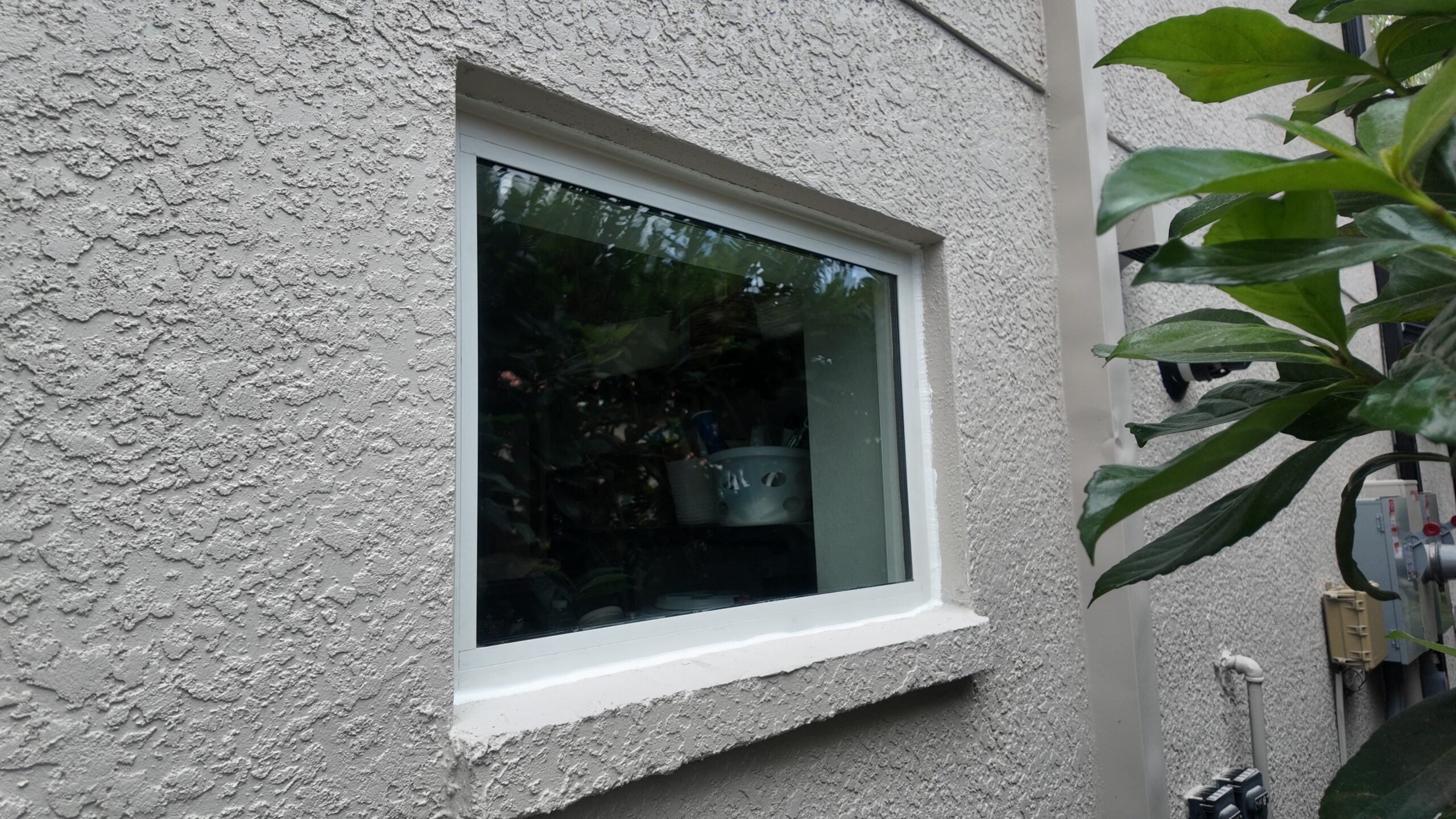
Under FBC 2023, every openings-protection product must meet the design pressure (DP) rating calculated for its installed location. DP ratings are measured in pounds per square foot (psf) of positive and negative pressure. Coastal areas of Sarasota County — particularly barrier islands like Siesta Key, Longboat Key, and Casey Key — sit in higher wind-speed zones than inland Sarasota and require higher DP-rated products.
The Florida Building Code references the ASCE 7-22 wind design standard to assign ultimate design wind speeds (in mph) by location. A licensed contractor or permitting office can confirm the design wind speed for your specific address. From that wind speed, the structural engineer of record (or product manufacturer’s engineering documents) determines the required DP values for each rough-opening size in your home.
Key rule: A DP rating is window-size-specific. A product approved at DP-50 for a 36” × 60” opening may only be approved at DP-40 for a 48” × 72” opening of the same series. The FPA documents will list tested size limits — do not exceed them without a separate engineering analysis.
| Sarasota Zone | Approximate Basic Wind Speed | Typical DP Needed (standard opening) | Notes |
|---|---|---|---|
| Inland Sarasota (east of US-41) | ~130–140 mph | DP-40 to DP-50 common | Verify by address; not a guarantee |
| Coastal / Barrier Islands | ~150–160 mph | DP-50 to DP-65+ common | Higher DP products essential here |
| HVHZ (Miami-Dade/Broward) | 175+ mph | NOA or a Florida Product Approval that covers HVHZ use required; DP-70+ typical | Not Sarasota — comparison only |
Always confirm required DP values with your local building department or a licensed engineer. The tables above are illustrative — your permit drawings govern, not a sales brochure.
First-hand note: On a Siesta Key replacement we completed, the original 1990s single-hung units were rated well below the DP we calculated for that barrier-island opening. When we removed the old frames we found corroded anchors in the block openings — exactly the kind of hidden condition that a specification-only quote never accounts for. We re-anchored to the fastener spacing on the engineered installation drawings before setting the new impact units. That is why we verify DP against permit drawings on-site, not just on the brochure.
Impact Windows vs. Hurricane Shutters
Which Provides Better Protection for a Sarasota Home?
| Factor | Hurricane Shutters | Impact Windows (Recommended) |
|---|---|---|
| Storm activation | Manual deploy required every storm | Always active — no action needed |
| Daily light & ventilation | Blocked when shutters are closed | Full light and ventilation year-round |
| Insurance documentation | Accepted with proper install | Wind mit inspection documents opening protection |
| Code path (Sarasota) | FBC-compliant shutters accepted | FPA-approved impact windows accepted |
| Noise reduction | Minimal when open | Laminated glass reduces exterior noise |
| Long-term maintenance | Track cleaning, hardware upkeep | Minimal — frame and hardware only |
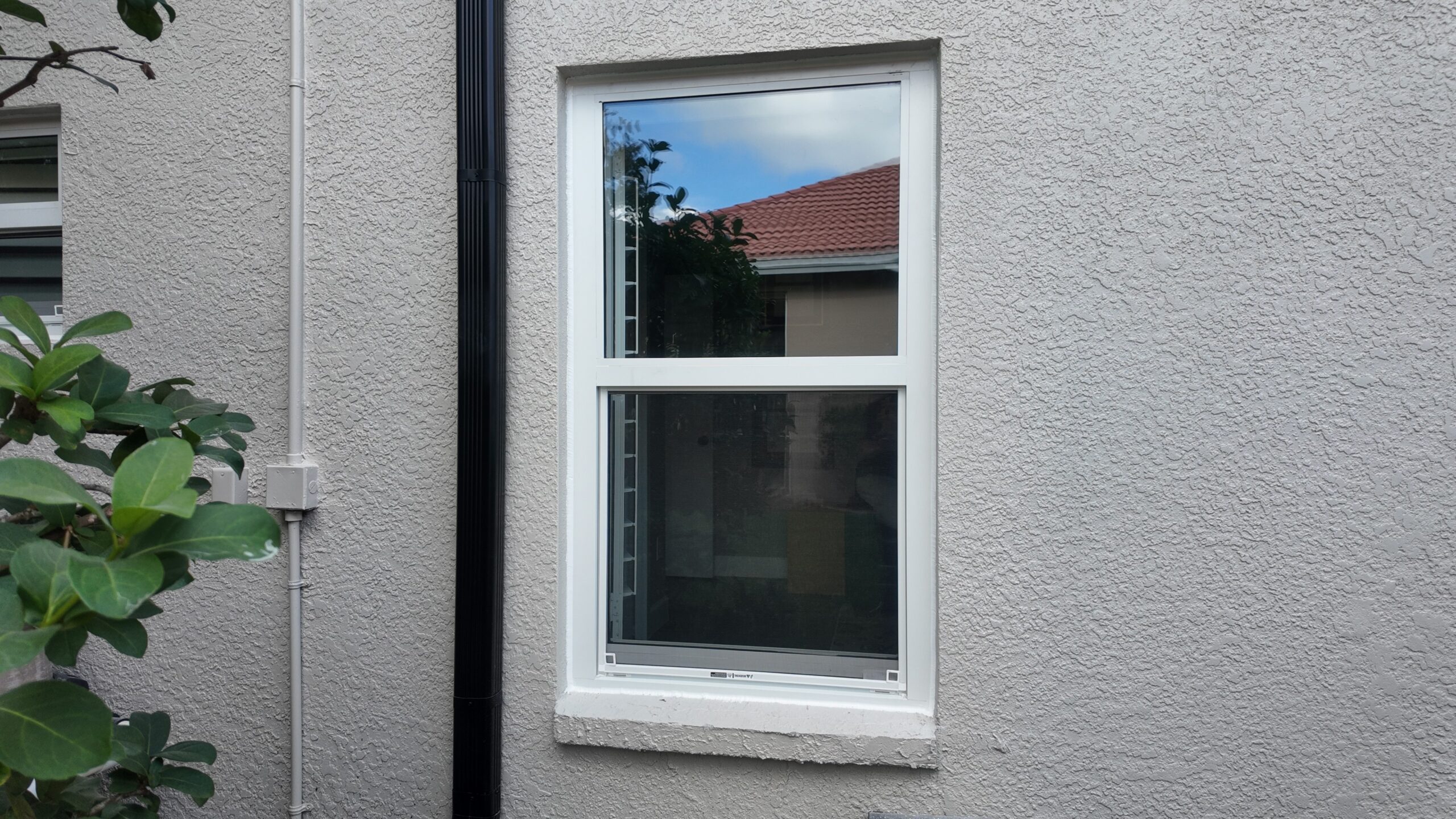
When hurricane shutters are the better fit: If you own a Sarasota vacation property that is unoccupied for most of the year and you need the lowest upfront cost, accordion or panel shutters on a structurally sound existing window may be a practical interim solution. They are code-accepted and can satisfy opening-protection requirements at a lower initial investment. The trade-off is the manual labor every hurricane season and the absence of the year-round insurance benefit that fully installed impact windows provide.
Why opening protection matters: The U.S. Department of Energy notes that windows are a major source of a home’s heat gain and loss, and ENERGY STAR-qualified windows can meaningfully reduce cooling loads in hot climates like Southwest Florida (source: energy.gov / ENERGY STAR). Laminated impact glass with a Low-E coating addresses both the storm-protection and the energy-efficiency side of that equation at once.
License & Accountability
Why Contractor Credentials Matter in Sarasota
A licensed contractor, not a lead aggregator — your permit and warranty depend on it.
Under Florida law, impact window installation requires a permit, and that permit must be pulled by a state-licensed contractor. Before signing any contract in Sarasota County, verify the contractor’s license number on the Florida DBPR license verification portal (myfloridalicense.com). Look for an active status — not expired, not suspended.
Certified Residential Contractor CRC1331693
Certified Roofing Contractor CCC1333168
Glass & Glazing Specialty SCC131153098
Miami-Dade • Broward • Palm Beach • Sarasota Area
Because Bigfoot holds a Certified General Contractor (CGC1531370) license alongside the Glass & Glazing Specialty license, we can handle structural scope that sometimes surfaces during a window replacement — deteriorated rough openings, header repairs, or hurricane-strap tie-in work — without requiring a separate contractor. That means one permit, one scope of accountability, and no finger-pointing between trades if something unexpected comes up in the wall.
“The permit is not just paperwork — it’s the only document that proves your windows were inspected and installed to code. Never let a contractor talk you out of pulling one.”
President, Bigfoot Windows & Roofing
Frame Material Guidance
Aluminum Frames for Sarasota’s Coastal Climate
Thermally broken aluminum is our preferred recommendation for Florida’s heat, humidity, UV exposure, and salt air.
Aluminum has decades of proven performance in Florida’s coastal environment. It does not warp, swell, or degrade under sustained UV and salt-air exposure the way softer frame materials can over a 20–30 year window lifespan. For energy efficiency in Sarasota’s hot climate, thermally broken aluminum — which incorporates a thermal barrier that interrupts the metal’s conductive path — significantly reduces heat transfer compared to standard aluminum. The U.S. Department of Energy explains that a thermal break in metal frames lowers conductive heat flow, improving overall window performance (source: energy.gov).
For homes within two miles of the water (which includes most of Sarasota’s barrier islands), a 2605 coastal finish is required to maintain the manufacturer’s 10-year product warranty. The 2604 wood-grain finish loses that warranty protection in coastal salt-air zones. Glass choice also matters for coastal compliance: the SB 70 Low-E coating is the strongest heat-blocking option available in our product line and carries a dark green tint that reads as neutral on most Sarasota home exteriors.
For homeowners interested in spreading the cost of a full-home window replacement, PACE financing options are available — paid through your property tax bill with no credit score impact.
Installation Process
What to Expect: Sarasota Impact Window Installation
A typical single-family home in Sarasota with 15–25 windows takes two to four days of installation time once the permit is issued. Here is the standard process:
- Measure & design: Field measurements taken; product specified to FPA-approved sizes; DP ratings confirmed against permit drawings.
- Permit application: Contractor submits permit to Sarasota County Building Department; typical review timeline varies by department workload — ask your contractor for current averages.
- Order & fabrication: Impact windows are custom-fabricated to rough-opening dimensions; lead times vary by product line.
- Installation: Old windows removed; openings inspected for structural issues; new windows set, shimmed, anchored to the required fastener spacing per engineering documents.
- Inspection: County inspector reviews installation against permit drawings before the job is closed out.
- Wind mitigation inspection: A separate licensed inspector documents the upgrade; the report is submitted to your insurance carrier to trigger any applicable premium adjustment.
The full timeline from contract to certificate of completion is typically six to twelve weeks depending on permit backlog and product lead times. Sarasota County permit review times can shift — your contractor should give you a current estimate at the time of contract.
Ready to get an accurate scope and price for impact windows in Sarasota?
Request a free estimate
Call 786-886-2088
Schedule Your Free Estimate
Ready to get started? Request a free estimate — no phone call required.
Related Articles
Keep Reading
Related Articles
Frequently Asked Questions
Do impact windows in Sarasota FL need Miami-Dade NOA approval or is a Florida Product Approval sufficient?
A Florida Product Approval (FPA) is sufficient for Sarasota County. A Miami-Dade NOA or a Florida Product Approval that covers HVHZ use is only mandatory in the High-Velocity Hurricane Zone, which covers Miami-Dade and Broward counties exclusively. Sarasota falls under the standard Florida Building Code, where FPA-listed products that meet your address’s design-pressure requirements are code-compliant. Always ask the contractor to provide the FPA number so you can verify it on the Florida Building Commission’s product-approval search at floridabuilding.org.
What wind speed rating do impact windows need to meet Florida Building Code in Sarasota County?
It depends on your exact address. Sarasota County spans multiple wind-speed zones under the ASCE 7-22 standard incorporated in FBC 2023. Coastal barrier islands (Siesta Key, Longboat Key, Casey Key) typically require higher design-pressure ratings than inland areas. Your contractor pulls the address-specific design wind speed from the code wind maps and sizes products to the required DP rating for each rough opening. Never accept a window solely because it is labeled “hurricane rated” — confirm the DP value matches your permit drawings.
Do you need a permit for impact windows in Sarasota County?
Yes. Impact window and door installation requires a building permit pulled by a Florida state-licensed contractor, followed by a county inspection before the job is closed out. Verify your contractor’s license status on the DBPR portal at myfloridalicense.com before signing.
How is Sarasota different from Miami-Dade and Broward for impact windows?
Miami-Dade and Broward are inside the High-Velocity Hurricane Zone and require a Miami-Dade NOA or a Florida Product Approval that covers HVHZ use plus permits and inspections. Sarasota is outside HVHZ and uses the statewide Florida Product Approval pathway instead. The performance requirement is still driven by your address-specific design wind speed under the Florida Building Code.
Can impact windows lower my energy costs in Sarasota?
They can help. The U.S. Department of Energy identifies windows as a significant source of a home’s heat gain, and energy-efficient windows with Low-E coatings reduce cooling loads in hot climates (source: energy.gov / ENERGY STAR). Laminated impact glass with an SB 70 Low-E coating combines storm protection with heat-blocking performance. Actual savings vary by home, orientation, and existing windows.
Does financing typically cover impact windows in Sarasota?
Financing options may be available depending on scope and lender, including PACE financing paid through your property tax bill. Ask your contractor which programs apply to your specific project before you sign anything.
Ready to get started? Get a free, no-pressure estimate from a licensed South Florida and Sarasota-area contractor.
Sources & further reading (official):
- Florida Building Commission — Florida Building Code & Product Approval search: floridabuilding.org
- Florida DBPR — License verification: myfloridalicense.com
- U.S. Department of Energy — Energy-efficient windows & thermal breaks: energy.gov/energysaver/windows
- FEMA — Hurricane Andrew building performance and windborne-debris mitigation: fema.gov