
Miami & Broward Hurricane Season Checklist | Bigfoot Windows & Roofing

Last updated: July 2026 by the Bigfoot Windows & Roofing editorial team.
Direct answer: South Florida hurricane season runs June 1 through November 30. For Miami-Dade and Broward homeowners, the highest-priority prep steps are confirming your impact windows carry a valid Miami-Dade Notice of Acceptance (NOA) or Florida statewide product approval, inspecting frames and sealant for salt-air degradation, and assembling the insurance documentation that supports a windstorm mitigation discount under Florida Statute 627.0629.
Key Takeaways
- Miami-Dade and Broward sit in the High-Velocity Hurricane Zone (HVHZ) — the strictest wind-load code zone in the United States, engineered for winds up to 185 mph.
- Impact windows must carry a Miami-Dade NOA or a Florida statewide product approval to be legally compliant; these are not the same document.
- Salt-air coastal exposure in South Florida degrades window sealant, weep holes, and aluminum frames faster than inland areas — annual inspection is not optional.
- A wind mitigation inspection tied to your impact window permit pull date can meaningfully reduce your homeowners insurance premium under Florida Statute 627.0629.
- Accordion shutters can satisfy Broward County secondary protection requirements in some permit scenarios, but they do not eliminate the need for impact-rated glazing in HVHZ buildings.
The Problem
Most Hurricane Checklists Miss the Details That Matter in Miami-Dade and Broward
Generic storm-prep guides were not written for HVHZ. Here is what they get wrong.
Most hurricane-prep checklists stop at “install shutters” or “board windows.” That advice is adequate in North Florida. It is inadequate — and potentially non-compliant — in Miami-Dade and Broward counties, where the Florida Building Code imposes the most demanding wind-load provisions in the country under the High-Velocity Hurricane Zone designation.
If your impact windows do not carry the right product approval, your insurance claim can be disputed. If your frames have corroded weep holes or degraded sealant, a storm can push water past impact-rated glass that would otherwise survive the wind load. If you cannot produce your permit pull date and product approval number before a wind mitigation inspection, you may forfeit a significant insurance premium reduction you legally qualify for.
This checklist covers what most guides skip: NOA vs. statewide approval, HVHZ inspection steps specific to salt-air coastal exposure, and the insurance documentation workflow that supports Florida Statute 627.0629 compliance.
South Florida Context
HVHZ, Salt Air, and the Florida Building Code Chapter 16 Gap
Why Miami-Dade and Broward homeowners face stricter requirements than the rest of Florida.
The High-Velocity Hurricane Zone (HVHZ) covers Miami-Dade and Broward counties in their entirety. Florida Building Code Chapter 16 sets wind-load design pressures for this zone that are higher than those required anywhere else in the state. Products used on HVHZ structures must be tested and approved specifically for those pressure ratings — a product approved for use in Palm Beach County or Orlando is not automatically approved for Miami-Dade.
Layered on top of the structural code is the coastal environment. Properties within two miles of the Atlantic coastline face accelerated salt-air corrosion on aluminum frames, sealant degradation from UV and humidity cycling, and weep-hole blockage from airborne debris and marine growth. These are not cosmetic issues — they are paths for water intrusion that a storm will exploit even when the glass itself holds.
Understanding both layers — the code approval layer and the physical condition layer — is the foundation of a real hurricane checklist for this market.
The Full Checklist
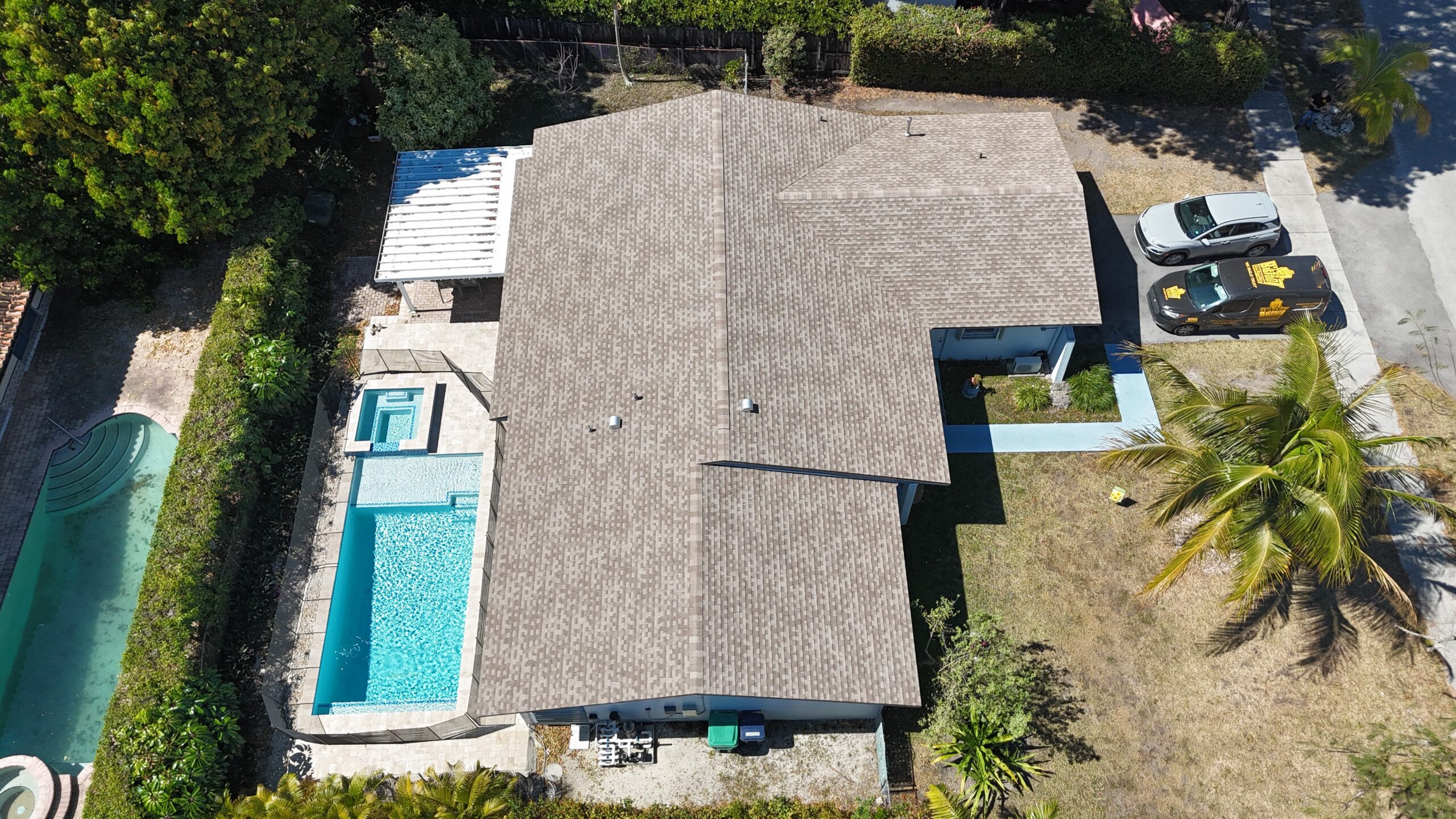
Miami & Broward Hurricane Season Checklist: Step by Step
Complete this checklist before June 1 each year and after any storm event.
Step 1 — Confirm Your Impact Windows Have a Valid Product Approval
Pull the Miami-Dade NOA number or Florida statewide product approval number for every impact window and door in your home. These numbers are printed on the installation label affixed to the frame, or they appear on the permit documents from the original installation.
- Miami-Dade NOA: issued by the Miami-Dade County Building Department’s Product Control Division. Required for all glazing products installed in HVHZ structures.
- Florida Statewide Product Approval: issued by the Florida Building Commission. Accepted in most of Florida, but Miami-Dade County requires the local NOA in addition to or in place of the statewide approval for HVHZ use — verify with your local building department.
- Confirm the approval has not lapsed. NOA expiration dates are public record at Miami-Dade Product Control.
Step 2 — Inspect Frames, Sealant, and Weep Holes for Salt-Air Degradation
Do this inspection at least once per year, ideally in April or May before the season begins. Aluminum frames in South Florida’s coastal environment are durable, but they are not maintenance-free.
| Inspection Point | What to Look For | Action if Found |
|---|---|---|
| Exterior sealant bead | Cracks, gaps, shrinkage, or separation from frame | Remove and replace with Florida-rated silicone sealant |
| Weep holes (bottom frame rail) | Debris, paint, or caulk blocking the drain opening | Clear with a toothpick or thin wire; never seal them shut |
| Frame corners | White oxidation, pitting, or visible corrosion on aluminum | Clean with marine aluminum cleaner; assess for structural integrity |
| Glass-to-frame gasket | Rubber drying, cracking, or pulling away from glass edge | Replace gasket before storm season; this is a water-intrusion path |
| Hardware (locks, handles) | Stiffness, corrosion, or incomplete engagement | Lubricate with dry PTFE spray; replace if locking mechanism fails to seat |
Step 3 — Photograph and Document Every Opening Before Storm Season
Your insurance carrier will ask for documentation if you file a wind or water damage claim. Create a pre-season photo record now, while everything is intact. For each window and door opening, photograph:
- The full exterior frame from outside the home
- The NOA or product approval label on the frame
- The permit placard or permit number (if still attached or accessible)
- Any existing sealant condition along the perimeter
Store these photos in cloud storage dated before June 1. The date stamp matters if a claim dispute arises.
Step 4 — Assemble Your Wind Mitigation Documentation
Under Florida Statute 627.0629, insurers must offer windstorm mitigation discounts to homeowners whose properties meet defined construction standards. Impact-rated openings are a qualifying feature. The documentation you need:
- The original permit for your impact window installation — specifically the permit pull date
- The NOA or product approval number for each product installed
- A completed OIR-B1-1802 wind mitigation inspection form, signed by a qualified inspector
- Photographs showing impact-rated glazing on all openings (not just some)
If you do not have the original permit documents, you can request them from the Miami-Dade or Broward County building department using the address and approximate installation year. This takes 2–4 weeks — request early.
Step 5 — Confirm Secondary Protection for Any Non-Impact Openings
If your home has any opening — a skylight, garage door, or older window — that does not carry a valid NOA or product approval, you need compliant secondary protection before storm season. In Broward County, accordion shutters are commonly used as secondary protection on openings where impact glazing is not present, provided they carry their own product approval for HVHZ use. Accordion shutters do not substitute for impact-rated glazing on HVHZ-designated structures where the building code requires impact glazing — confirm your specific permit scenario with a licensed contractor or your local building department.
Product Compliance Comparison
Miami-Dade NOA vs. Florida Statewide Product Approval — Key Differences
Both documents certify product testing. They are not interchangeable in HVHZ.
| Factor | Miami-Dade NOA | Florida Statewide Product Approval |
|---|---|---|
| Issuing authority | Miami-Dade County Product Control Division | Florida Building Commission |
| Jurisdiction | Miami-Dade County HVHZ structures | Statewide (excluding some HVHZ applications) |
| Wind speed tested | Up to 185 mph design pressure | Varies by product rating; may be lower |
| Required for HVHZ permit | Yes — mandatory for Miami-Dade | Sometimes accepted; verify locally |
| Where to verify | miamidade.gov/productcontrol | floridabuilding.org/pr |
| Expiration | Yes — must be renewed; check before purchase | Yes — confirm current approval status |
When you purchase impact windows in Miami-Dade or Broward, ask the supplier for the NOA number before you agree to anything. If a supplier cannot produce it, that is a compliance red flag — not a paperwork detail.
Why It Matters Who Pulls the Permit
A Licensed Contractor, Not a Lead Aggregator
HVHZ compliance starts with who installs the product and who pulls the permit.
When Bigfoot Windows & Roofing installs impact windows in South Florida, we pull the permit under a verified Florida license. That permit pull date is the document your wind mitigation inspector needs to certify your premium discount. A homeowner who had windows installed by an unlicensed sub or a lead-gen company with no direct license often cannot produce this document — and cannot claim the discount.
Because Darryl holds a Certified General Contractor license, Bigfoot can also handle structural modifications that sometimes arise during an impact window installation — such as opening a rough opening that requires a structural header adjustment or adding hurricane straps where an older framing condition is discovered. Homeowners do not need a second contractor for that scope.
“The permit pull date is not a bureaucratic detail. It is the timestamp that proves to your insurer that your openings were inspected and approved. Without it, the discount disappears.”
President, Bigfoot Windows & Roofing
What We Install
Impact Windows Built for HVHZ: Aluminum Frames, NOA-Compliant Glass
South Florida’s heat, UV, and hurricane conditions favor aluminum over vinyl for long-term frame performance.
We install Mr. Glass and ES Windows aluminum impact frames — both carry Florida product approvals and are tested for the pressure demands of HVHZ conditions. Aluminum is our preferred frame material for South Florida because it has a longer track record in HVHZ heat, humidity, UV cycling, and salt-air exposure than vinyl alternatives.
For glass, our primary recommendation for most South Florida homes is SB 70 Low-E glass: strongest heat-block performance, reduces solar heat gain, and carries a dark green tint that most homeowners find acceptable. For properties within two miles of the coast, we specify 2605 finish on aluminum frames — the 2604 wood-grain finish loses its 10-year warranty in marine-exposure environments. Learn more about our impact window options for Miami-Dade and Broward, or explore financing options if the project budget is a consideration.
Our Process
What Happens When You Call Before Storm Season
We keep the process straightforward for South Florida homeowners:
- Free estimate and product review — We confirm your current window product approvals and identify any openings that need replacement or repair before the season.
- Permit pull — We pull the permit under our Florida licenses with Miami-Dade or Broward County. The permit pull date goes into your documentation file.
- Installation — Aluminum impact frames installed to HVHZ tolerances, with full frame perimeter sealant and weep-hole confirmation.
- Inspection — County inspection closes the permit. Closed permit = the legal record your wind mitigation inspector needs.
- Documentation handoff — We provide you with NOA numbers, permit records, and product approval documents for your insurance file.
Hurricane season does not wait. Get your impact windows inspected and documented before June 1.
Related Articles
Who We’re Not the Right Fit For
- Homeowners looking for the lowest possible price over code compliance: We install HVHZ-compliant products with proper permits and inspections. If the priority is the cheapest bid regardless of NOA status, we are not your contractor.
- Projects requiring brands we do not carry: We do not install PGT, CGI, or Andersen windows. If you have a specific brand requirement we do not carry, we will say so upfront.
- Commercial high-rise or condo association projects requiring Miami-Dade NOA on Mr. Glass Series 350: The Series 350 is a residential-grade product not approved for high-rise or commercial use. We will specify the right product (Series 200 or 300) or tell you it is outside our scope.
- Emergency same-day installation during an active storm watch: Permitted impact window installation takes lead time for inspections. We cannot compress that timeline safely.
Homeowner Questions
Frequently Asked Questions
What impact windows are required by Miami-Dade code to survive hurricane-force winds in the HVHZ?
Miami-Dade County requires impact glazing products to carry a Miami-Dade Notice of Acceptance (NOA) issued by the county’s Product Control Division or a Florida Product Approval that covers HVHZ use. Products must be tested to the HVHZ design wind pressures specified in Florida Building Code Chapter 16, which can reach up to 185 mph equivalent design pressure for this zone. The NOA number should appear on the installation label affixed to the frame. A Florida statewide product approval alone is not always sufficient for Miami-Dade HVHZ structures — verify with your local building department before purchase.
How early before hurricane season should I inspect and repair my impact windows in South Florida?
Complete your inspection by April or May — at least four to six weeks before June 1. That lead time gives you space to order replacement sealant, clear blocked weep holes, and schedule a contractor if frame corrosion or gasket failure requires professional repair. Salt-air degradation in coastal Miami-Dade and Broward is year-round, so an annual inspection rather than a pre-storm-only check is the right habit.
Does having impact windows in Miami-Dade lower my homeowners insurance premium?
Yes, potentially. Florida Statute 627.0629 requires insurers to offer windstorm mitigation discounts for qualifying construction features, including impact-rated openings. The discount is triggered by a wind mitigation inspection (OIR-B1-1802 form) that documents your impact windows, the permit pull date, and the product approval numbers. The discount amount varies by insurer and policy structure. Homeowners have seen meaningful premium reductions when all openings are impact-rated and documentation is complete — consult your insurer for specifics.
What is the difference between a Miami-Dade NOA and a Florida statewide product approval for impact windows?
A Miami-Dade NOA is issued by the Miami-Dade County Product Control Division specifically for HVHZ use and is tested to local pressure standards. A Florida statewide product approval is issued by the Florida Building Commission and is accepted across most of Florida. In Miami-Dade County HVHZ structures, a Miami-Dade NOA or a Florida Product Approval that covers HVHZ use is typically required — a statewide approval alone may not satisfy the permit. Always verify which document your specific permit scenario requires before purchasing or installing any impact product.
Can I use accordion shutters instead of impact windows to meet Broward County hurricane protection requirements?
Accordion shutters can satisfy secondary protection requirements in Broward County for some permit scenarios — provided the shutters themselves carry a product approval for HVHZ use. However, accordion shutters do not substitute for impact-rated glazing in HVHZ structures where the Florida Building Code specifically requires impact glazing. Whether shutters satisfy your particular opening’s code requirement depends on your building type, permit history, and local building department interpretation. A licensed contractor can review your specific situation.
Can I get financing to replace non-compliant windows before hurricane season?
Yes. PACE financing (Property Assessed Clean Energy) is a common option for South Florida homeowners — payments are added to your property tax bill, not a bank loan, and there is no credit-score impact. The My Safe Florida Home grant program offers up to $10,000 for qualifying hurricane-hardening upgrades and can be stacked with PACE financing. For qualifying property owners, there may also be tax benefits available — consult your CPA. Visit our financing page for current program details.
Sources referenced in this article:
- Miami-Dade County Product Control Division — miamidade.gov/productcontrol
- Florida Building Commission Product Approval — floridabuilding.org/pr
- Florida Building Code, Chapter 16 (Structural Design, Wind Loads)
- Florida Statute 627.0629 — Windstorm Mitigation Discounts
- Florida OIR Wind Mitigation Inspection Form OIR-B1-1802
Ready to confirm your HVHZ compliance and build your insurance documentation file?