
PACE Financing for Impact Windows and Doors in Florida: How It Works
Updated June 2026
Key Takeaways
- PACE financing attaches to your property tax bill — no credit score check required at approval.
- Typical PACE terms in Florida run up to 20 years; rates vary by program (Renew Finance quotes 9.49% as a representative example).
- Impact windows and doors must carry Miami-Dade NOA or Florida Product Approval to qualify — not every window qualifies.
- A PACE lien transfers with the home at sale — disclose it; some buyers and lenders object.
- PACE is one financing path; Bigfoot also offers contractor-arranged financing options for qualified buyers.
The Problem
Impact Windows Cost Real Money — Financing Changes the Math
Most South Florida homeowners want impact protection. The sticker price stops them.
A full-house set of impact windows and doors in Miami-Dade or Broward typically runs $10,000–$30,000 or more depending on the number of openings, frame type, and structural work involved. That is not a home-improvement impulse buy. PACE financing exists specifically to remove the upfront cash barrier for permanently attached improvements like impact windows and doors — and Florida is one of the most active PACE markets in the country.
This guide explains how PACE works, what it actually costs over time, what to watch for, and how it compares to other financing paths — so you can decide with your eyes open.
South Florida Context
Why PACE Matters in Miami-Dade and the HVHZ
Florida’s High-Velocity Hurricane Zone (HVHZ) — which covers Miami-Dade and Broward counties — imposes the strictest impact-product standards in the country under the Florida Building Code. Every window and door installed in the HVHZ must carry a Miami-Dade Notice of Acceptance (NOA) or an equivalent Florida Product Approval (FPA). That code requirement means homeowners cannot cut corners on product quality, which keeps per-project costs higher than in other states.
PACE programs recognized by Florida statute (see Florida Statutes § 163.08) allow local governments to authorize financing for qualifying energy-efficiency, wind-resistance, and storm-hardening improvements — which explicitly includes impact-rated windows and doors. Miami-Dade County, Broward County, and Palm Beach County all have active PACE programs, making South Florida one of the highest-volume PACE markets nationally.
How It Works
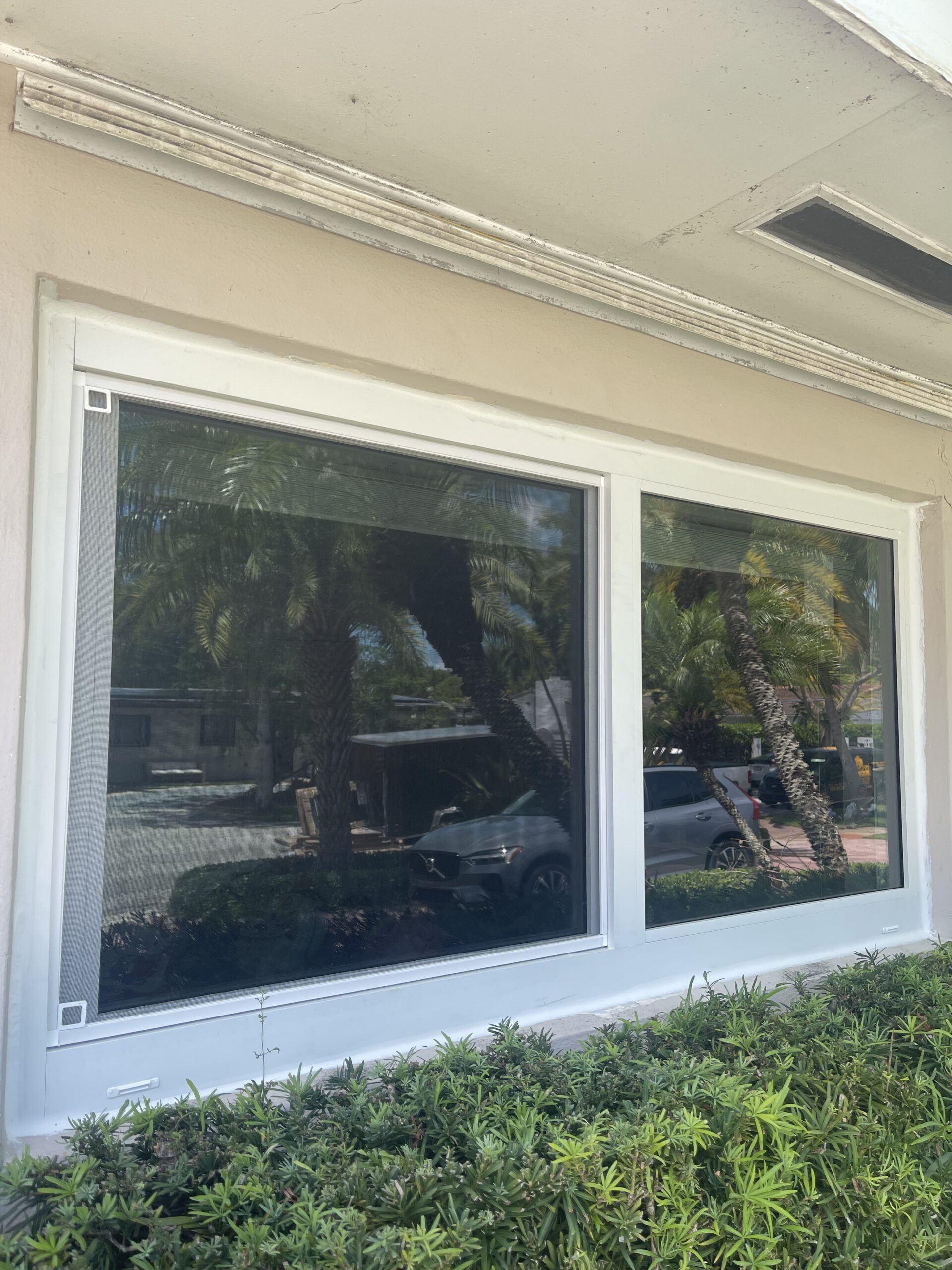
The Mechanics of PACE Financing for Impact Windows
PACE stands for Property Assessed Clean Energy. Here is the step-by-step flow:
- You apply through a PACE provider (e.g., Renew Financial, Ygrene, or another Florida-authorized program). Approval is based primarily on property equity and ownership — not your FICO score.
- The PACE lien is recorded against your property. This is the key structural difference from a personal loan or home equity line. The obligation runs with the land, not just with you personally.
- You select a participating contractor who installs NOA/FPA-qualified impact windows and doors and pulls the required permits under the Florida Building Code.
- Repayment is collected through your property tax bill — typically twice a year. You do not make monthly payments to a lender. The assessment appears as a line item on your county property tax notice.
- The lien transfers at sale. If you sell the home before the assessment is paid off, the remaining balance transfers to the buyer — or you pay it off at closing. This is a material disclosure obligation.
| PACE Feature | Detail |
|---|---|
| Approval basis | Property equity & ownership — not credit score |
| Repayment method | Added to property tax bill (semi-annual) |
| Typical term | Up to 20 years (varies by program & amount) |
| Representative rate | ~9.49% (Renew Finance published rate — confirm current rate at application) |
| Lien type | Senior lien on property (ahead of most mortgages) |
| Product eligibility | Must be NOA-qualified or Florida Product Approved |
| Permit required | Yes — Florida Building Code pull required |
A word on that senior lien: PACE liens are typically senior to your existing mortgage, which means your mortgage servicer may object or require notification. Some first-lien mortgage holders (including federally backed loans — Fannie Mae/Freddie Mac servicing guidelines historically restricted PACE) may have contractual limitations. Check with your mortgage servicer before signing a PACE agreement.
Comparing Options
PACE vs. Other Ways to Finance Impact Windows in Florida
PACE is not the only path. Here is how it stacks up against common alternatives:
| Financing Option | Credit Check | Lien on Property | Typical Rate Range | Repayment | Best For |
|---|---|---|---|---|---|
| PACE (property-assessed) | No credit pull | Yes — senior lien | ~8–12% (varies) | Property tax bill | Homeowners with equity, limited credit options |
| Contractor financing (e.g., GreenSky, Mosaic) | Yes | No | ~7–15% depending on promo period | Monthly to lender | Buyers who qualify and want simpler title |
| Home equity line (HELOC) | Yes | Yes — 2nd lien | ~8–10% variable | Monthly to lender | Buyers with significant equity |
| Cash / savings | N/A | No lien | 0% | None | Buyers ready to pay upfront |
When PACE Is the Better Fit
- You have home equity but limited liquid savings.
- Your credit profile makes traditional financing expensive or unavailable.
- You want the repayment spread over many years through your tax bill.
- You plan to stay in the home long enough to recoup value through insurance savings and reduced energy costs.
When Another Option May Serve You Better
- You plan to sell within 1–3 years — the transferring lien complicates sale negotiations.
- Your mortgage servicer restricts PACE liens on federally backed loans.
- You qualify for a lower-rate contractor financing program — total interest cost may be less.
- You prefer a clean title with no property-tax encumbrance.
Why Contractor Choice Matters
The Contractor You Choose Affects More Than the Price
A PACE-authorized contractor, not just a registered vendor, is who you want pulling your permits.
PACE programs require that the installing contractor be licensed under Florida law and that the installed products carry valid Florida Product Approval or Miami-Dade NOA. If a contractor installs a non-approved product or pulls no permit, the PACE program may still fund the project — but the installation will fail inspection, potentially leaving you with a lien and an uncompliant window. Vetting your contractor’s license before signing anything is not optional.
When an impact-window project also involves structural modifications — widening an opening, reframing a rough opening for a larger unit, or addressing hurricane straps during an envelope upgrade — a contractor authorized to handle multi-trade structural scope can manage that work under one agreement. That coherent scope accountability is a structural advantage grounded in license breadth: Bigfoot holds a Certified General Contractor license (CGC1531370) alongside its window/glazing and roofing credentials, so structural and code-driven scope does not require a separate general contractor or separate contract.
“We pull permits, install NOA-qualified products, and close out the job with a passed inspection — that’s what PACE programs require and what protects the homeowner’s investment.”
President, Bigfoot Windows & Roofing
Product Eligibility
Which Impact Windows and Doors Qualify for PACE?
PACE programs in Florida require that installed products qualify as permanent improvements and meet applicable building codes. For impact windows and doors in Miami-Dade and the broader HVHZ, that means:
- Miami-Dade Notice of Acceptance (NOA) — the product has been tested and approved for use in the HVHZ under Miami-Dade’s product control program.
- Florida Product Approval (FPA) — statewide approval through the Florida Building Commission for products used outside the strictest HVHZ zones.
Bigfoot works primarily with Mr. Glass and ES Windows — manufacturers whose aluminum-frame impact products carry Miami-Dade NOA and Florida Product Approval. We use aluminum frames — not vinyl — because aluminum has a longer track record in Florida’s heat, humidity, UV exposure, and hurricane-force wind conditions. For improved energy performance, thermally broken aluminum frames (which interrupt the conductive metal path between interior and exterior) reduce heat transfer without sacrificing the structural integrity that South Florida’s coastal environment demands.
If you are exploring impact-rated doors alongside windows, the same NOA/FPA requirement applies — and pairing them in a single project often streamlines the permitting and PACE documentation process.
The Process
How a PACE-Financed Impact Window Project Works Step by Step
- Get a project estimate. Understand total cost before applying for PACE. Use our windows estimator to get a ballpark, then request a full on-site scope review.
- Apply to a PACE program. You apply directly through a PACE provider (Renew Financial, Ygrene, or another Florida-authorized program). Approval typically takes 24–48 hours.
- Contractor verification. Confirm the contractor is licensed (check DBPR at myfloridalicense.com) and that proposed products carry NOA or FPA documentation before signing anything.
- Permit pull. Your contractor pulls the required building permit with Miami-Dade, Broward, or Palm Beach County before any work begins. This is non-negotiable under the Florida Building Code.
- Installation and inspection. Windows and doors are installed; county inspector closes out the permit. PACE funds are typically disbursed to the contractor after inspection passes.
- Assessment begins on your tax bill. Repayment starts with your next property tax cycle. The line item will appear on your county tax notice each year until the assessment is paid off.
| Stage | Who Acts | Timing (typical) |
|---|---|---|
| Estimate & scope | Homeowner + Contractor | 1–3 days |
| PACE application & approval | Homeowner + PACE provider | 1–2 days |
| Permit pull | Contractor | 1–4 weeks (varies by county) |
| Installation | Contractor | 1–5 days (scope-dependent) |
| Inspection & closeout | County inspector | Days to 2 weeks |
| PACE disbursement | PACE provider to contractor | After passed inspection |
Ready to explore impact windows for your South Florida home?
Or request a free estimate online — no obligation.
Who We’re Not the Right Fit For
We want to be straightforward about when Bigfoot is probably not the right contractor for your project:
- You need the absolute lowest bid, no questions asked. We pull permits, use NOA-qualified aluminum-frame products, and close out inspections. That process costs more upfront than an unlicensed installer or a contractor using non-approved products. If price is the only variable, we will not win that comparison.
- You want a vinyl-frame impact window. Bigfoot’s experience-based preference is aluminum and thermally broken aluminum for Florida’s climate. If vinyl is a firm requirement, we may not be the right match.
- You are on a very tight closing timeline. Permit timelines in Miami-Dade and Broward vary — sometimes weeks. If you need windows installed in days without permits, we cannot help with that legally or ethically.
- You are outside our service area. We serve Miami-Dade, Broward, and Palm Beach counties. Projects significantly outside that footprint are not something we currently staff for.
Common Questions
Frequently Asked Questions
Can I finance impact windows with PACE financing?
Yes. Impact windows and doors are an explicitly eligible improvement under Florida’s PACE statute (Florida Statutes § 163.08). Products must carry a Miami-Dade Notice of Acceptance or Florida Product Approval, the installing contractor must be properly licensed, and a building permit must be pulled. If those conditions are met, PACE programs in Miami-Dade, Broward, and Palm Beach counties can fund the project.
How does PACE financing work for impact windows in Florida?
You apply through a Florida-authorized PACE provider. Approval is based on property equity and ownership — not your credit score. The financed amount becomes a lien on your property and repayment is collected through your property tax bill twice a year. Your contractor installs NOA-qualified windows, pulls permits, and passes inspection; the PACE provider then disburses funds to the contractor.
What is the interest rate and term for PACE on impact windows?
Rates and terms vary by provider and program year. Renew Finance has published a representative rate of approximately 9.49% with terms up to 20 years — but you should confirm the current rate directly at application, as published rates change. Longer terms mean lower semi-annual payments but more total interest paid over the life of the assessment.
Does PACE financing for windows affect my credit score?
PACE approval itself does not require a credit check, so the application typically does not generate a hard pull on your credit report. However, if you fail to pay your property taxes (including the PACE assessment), that delinquency can ultimately affect your credit and trigger lien enforcement. Consult with a financial advisor about how a PACE lien may appear on title searches and interact with your mortgage servicer.
What happens to the PACE lien when I sell my home?
The unpaid PACE assessment balance transfers with the property unless paid off at or before closing. Florida law requires sellers to disclose a PACE lien to buyers. Some buyers — especially those using federally backed mortgages — may require you to pay off the lien at closing. This is one of the most important things to understand before signing a PACE agreement if you anticipate selling within a few years.
Does my mortgage lender need to approve a PACE lien?
Your mortgage lender does not approve or deny a PACE lien, but many servicers — particularly those servicing Fannie Mae or Freddie Mac loans — have guidelines that restrict or prohibit PACE assessments on properties with those loans. Review your mortgage agreement and contact your servicer before signing. This is an area where a real estate attorney’s guidance can be valuable.
What impact window products qualify for PACE funding?
Products must be permanently installed and meet Florida Building Code requirements — for Miami-Dade and the HVHZ, that means a valid Miami-Dade Notice of Acceptance (NOA) or a Florida Product Approval that covers HVHZ use. Outside the HVHZ, a Florida Product Approval (FPA) is required. The product must be installed by a licensed contractor who pulls the appropriate permit. Products that are not code-approved or installed without a permit will not satisfy PACE program requirements.
Sources
- Florida Statutes § 163.08 — Property Assessed Clean Energy (PACE) authorization for local governments.
- Florida Building Code, 8th Edition — Product approval and HVHZ requirements for impact-rated fenestration.
- Miami-Dade County Product Control Division — Notice of Acceptance (NOA) program for impact windows and doors.
- Renew Financial — Published PACE program rate and term disclosures (confirm current rates at application).
- Florida Department of Business and Professional Regulation (DBPR) — Contractor license verification: myfloridalicense.com.
Have questions about impact windows, PACE eligibility, or the permit process in South Florida?
Call Bigfoot Windows & Roofing at 786-886-2088 or request a free estimate online.