Hidden Roof Tearoff Costs on Older Homes | Bigfoot Windows & Roofing
Updated August 2026
On an 80-year-old South Florida home, a roof tearoff routinely uncovers rotted or undersized decking, asbestos-containing materials, compromised structural framing, and Florida Building Code compliance requirements that did not exist when the house was built. Each item adds real cost and, in most cases, cannot be skipped without failing a Miami-Dade Building Department inspection.
Key Takeaways
- Rotted plywood or original 1-inch board sheathing almost always needs full replacement to meet current HVHZ standards — budget accordingly.
- Pre-1980 homes commonly have asbestos-containing roofing felts or mastics; EPA NESHAP requires a licensed Florida asbestos contractor for abatement before tearoff.
- Florida Building Code Section 1511 triggers full re-roofing compliance on older homes, including secondary water barrier installation.
- Miami-Dade Notice of Acceptance (NOA) requirements or Florida Product Approval requirements that cover HVHZ use apply to every replacement material once the deck is exposed — generic national-brand products may not qualify.
- Structural framing deficiencies (termite damage, undersized rafters, rotted fascia) surface only after tearoff and add permit line items and inspections.
- A contractor holding a Certified General Contractor license can handle structural findings in-house — avoiding a separate structural contractor and a second permit cycle.
The Problem
Why Old-Home Roof Tearoffs Almost Always Cost More Than the Estimate
Your original quote was built on what your contractor could see. The real costs are underneath.
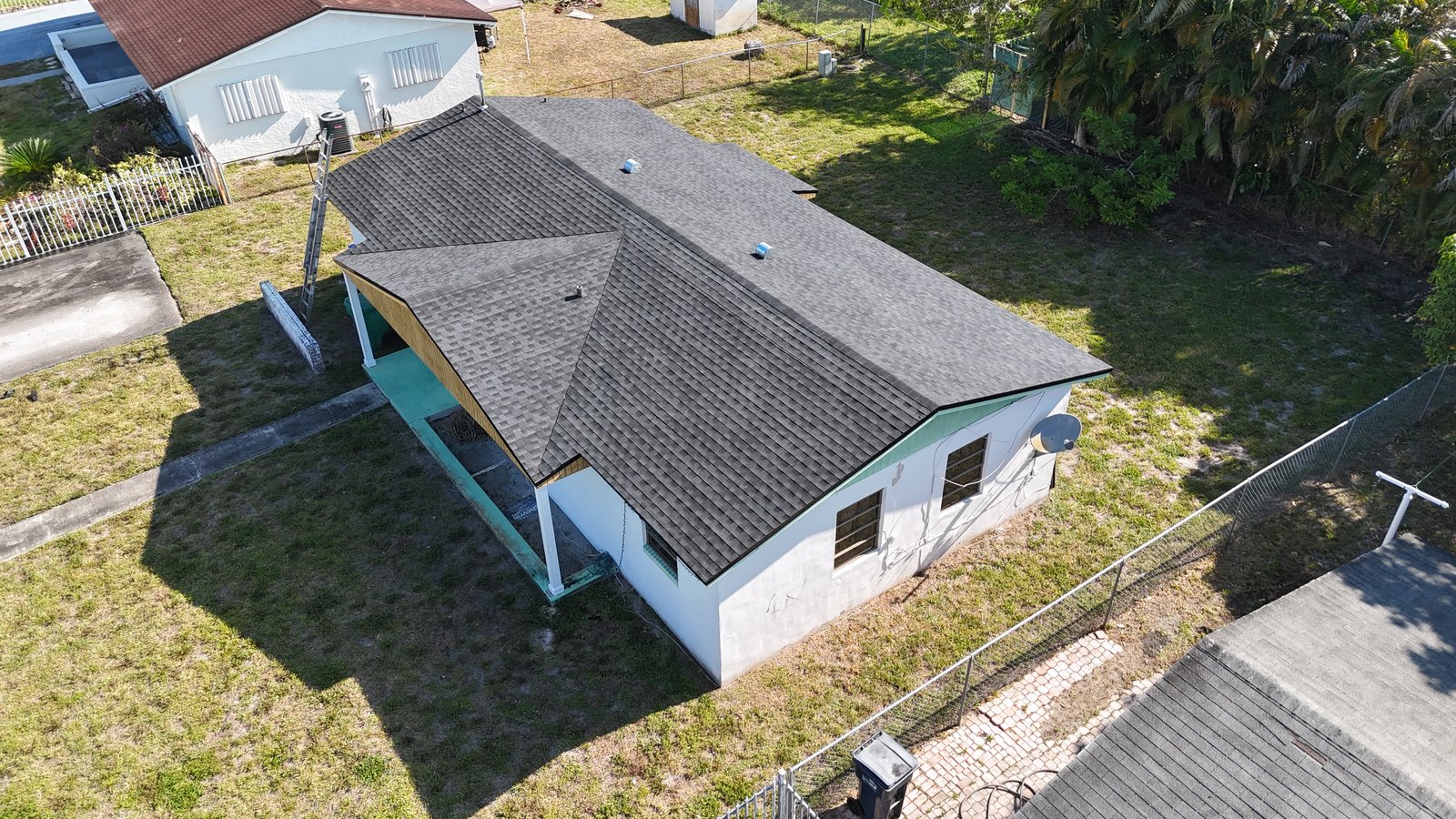
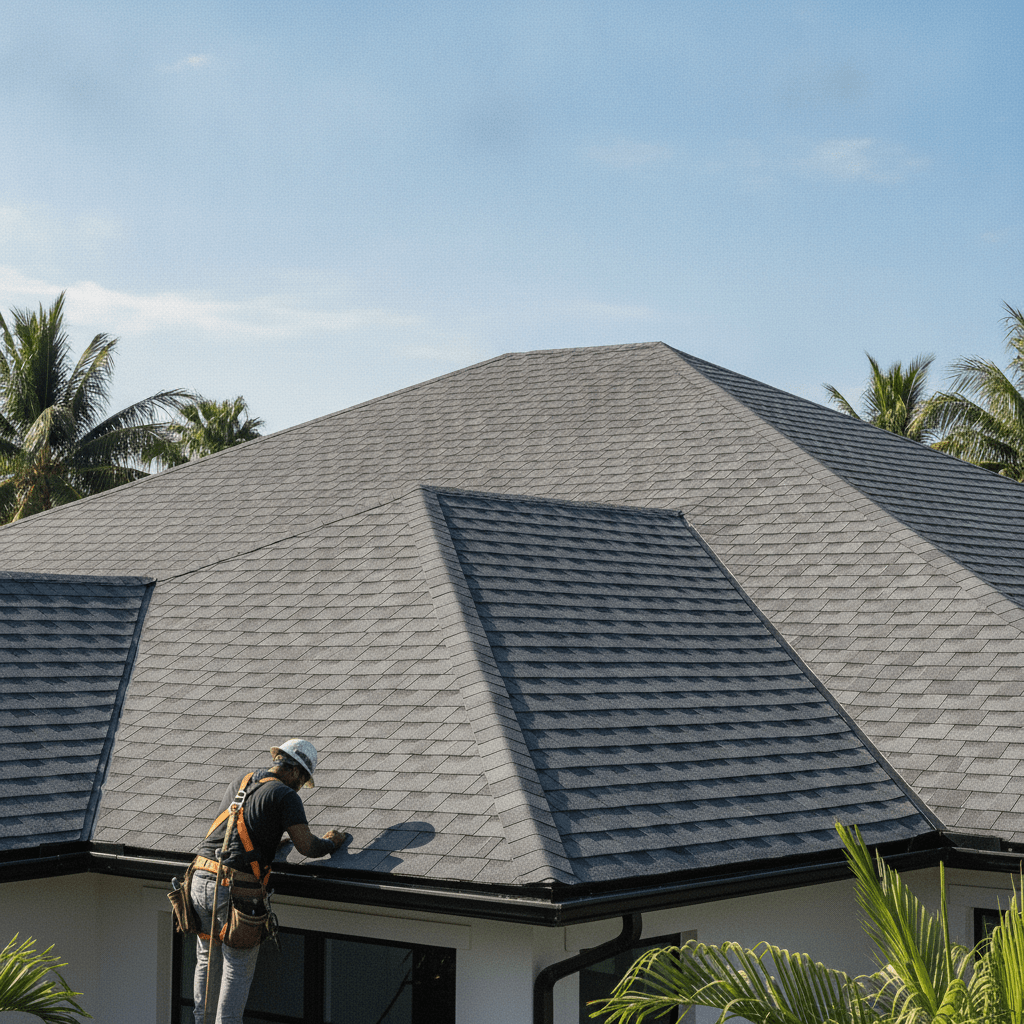
When a roofer pulls the first course of shingles or tiles off an 80-year-old South Florida home, the original estimate — carefully built on visible surface conditions — can change fast. This is not a contractor tactic. It is the physics of eight decades of heat, humidity, salt air, and hurricane seasons stacked on top of materials that were code-compliant in 1945 but are not today.
South Florida homeowners face a compounding problem. Miami-Dade and Broward sit inside the High Velocity Hurricane Zone (HVHZ) — the strictest residential building code environment in the United States. A tearoff on an older home does not just expose the old deck. It triggers a mandatory compliance review under Florida Building Code Section 1511. Everything that goes back on must meet current HVHZ standards, including materials that carry a valid Miami-Dade Notice of Acceptance (NOA) or a Florida Product Approval that covers HVHZ use. The code does not grandfather pre-existing conditions once work begins.
The sections below walk through every category of unforeseen cost, what drives each one, and what a realistic range looks like — so you can budget for the realistic scenario, not just the best case.
Local Context
Why Miami-Dade Makes This Harder Than Anywhere Else in the Country
Miami-Dade and Broward counties sit within the HVHZ — a designation that imposes material and installation standards well above the Florida Building Code baseline that applies to the rest of the state. Once a tearoff begins on a home built before the 1994 Miami-Dade code overhaul, the project must comply with the current code in full. There is no partial-credit exemption for structures that predate modern requirements.
Homes built in the 1940s, 1950s, and 1960s in South Florida were typically framed with dimensional lumber and sheathed with 1-inch-by-6-inch or 1-inch-by-8-inch tongue-and-groove board sheathing — not the plywood panels used today. That board sheathing is grandfathered in normal maintenance situations but becomes a compliance issue the moment a full tearoff and re-roof permit is pulled. Miami-Dade Building Department inspectors will flag it, and replacement materials must carry a Miami-Dade NOA or a Florida Product Approval that covers HVHZ use. Generic national-brand decking panels often do not have Miami-Dade product approval — adding cost over standard materials sourced from approved suppliers.
Palm Beach County sits outside the HVHZ but still operates under the Florida Building Code, and re-roofing on a pre-code structure still triggers compliance requirements — just with a somewhat different product-approval framework. The cost drivers described in this article apply across all three counties; the HVHZ compliance layer is most acute in Miami-Dade and Broward.
Cost Breakdown
The Six Categories of Unforeseen Tearoff Costs — What Each One Is and What It Costs
Directional estimates only. Actual costs vary with home size, deck condition, structural findings, and current labor and material pricing in your area.
1. Rotted or Undersized Roof Decking
This is the most common unforeseen cost on older South Florida homes. When the old roofing surface is removed, the crew finds sections — sometimes most of the deck — that have absorbed moisture over decades and are soft, spongy, or actively crumbling. On homes built before the 1970s, the original board sheathing may be structurally sound but does not meet current HVHZ plywood-panel requirements for the new roofing system being installed.
Full deck replacement is not optional once the Miami-Dade Building Department requires it. The inspector will note it on the permit card and the job cannot pass final inspection until it is done. Budget for deck replacement as a likely line item on any pre-1980 South Florida home, not a surprise add-on.
| Decking Scenario | Typical Added Cost (directional estimate) | Notes |
|---|---|---|
| Spot replacement (<10% of deck) | $500 – $1,500 | Common on newer pre-owned homes; rare on 80-yr structures |
| Partial replacement (10–40% of deck) | $1,500 – $4,500 | Most common finding on 1950s–1970s South FL homes |
| Full deck replacement | $4,000 – $10,000+ | Frequently required on homes with original board sheathing; price scales with roof size and NOA-compliant panel sourcing |
2. Asbestos-Containing Roofing Felts and Mastics
Florida homes built before approximately 1980 may contain asbestos in the roofing felt underlayment, the adhesive mastics used to seal penetrations, or in older built-up roofing (BUR) systems. Under EPA NESHAP regulations (40 CFR Part 61, Subpart M), any renovation or demolition that disturbs regulated amounts of asbestos-containing material requires written notification to the Florida Department of Environmental Protection before work begins. The abatement itself must be performed by a licensed Florida asbestos contractor — a standard roofing crew cannot legally do it.
This requirement adds two distinct costs: (1) an asbestos survey by a licensed inspector before tearoff, and (2) licensed abatement and disposal if regulated materials are found. The survey cost is typically in the hundreds of dollars; abatement varies widely with the quantity of material and disposal logistics. Neither cost can be accurately estimated until the survey is complete. If you are on a tight timeline, order the survey before you finalize your roofing contract.
3. Florida Building Code Section 1511 — Re-Roofing Compliance Triggers
Florida Building Code Section 1511 governs re-roofing on existing structures. On a home that has not been re-roofed since before the 1994 Miami-Dade code overhaul, a full tearoff activates a set of compliance requirements that go well beyond replacing like-for-like. The most significant for older South Florida homes: the secondary water barrier requirement. Current HVHZ rules require a secondary water resistance (SWR) layer — typically a full-deck peel-and-stick underlayment — installed over the new deck before the primary roofing system goes on.
If the original roof was installed over 30-lb felt with no secondary barrier (standard practice through the 1980s), the compliance upgrade adds material and labor cost. A full-deck peel-and-stick underlayment can also qualify as a Secondary Water Resistance feature on the Florida wind mitigation inspection form (OIR-B1-1802), which insurers may credit as a wind mitigation discount on the hurricane portion of your homeowners premium. Confirm eligibility and amount with your carrier.
4. Miami-Dade NOA Requirements on Replacement Materials
Once decking is exposed on a home inside the HVHZ and a full re-roof permit is active, every material that goes back on the structure — decking panels, underlayment, fasteners, clips, roofing tiles or shingles, ridge caps — must carry a valid Miami-Dade Notice of Acceptance (NOA) or Florida Product Approval for the specific application. Generic national-brand decking and underlayment commonly stocked at big-box retailers may not hold the applicable NOA.
Sourcing NOA-compliant materials in the correct thicknesses and grades adds cost over standard residential pricing. On a standing seam metal roof, for example, this affects the clip specification and gauge requirements. Contractors who do not regularly work inside Miami-Dade sometimes underestimate this, then pass the cost difference to the homeowner mid-project.
5. Structural Framing Deficiencies
Rafter damage from moisture intrusion, termite activity, or the original undersized framing common in mid-century construction becomes visible only after the deck is removed. Sistering damaged rafters, replacing notched or compromised ridge boards, or addressing rotted fascia and soffit framing triggers additional permit line items. In Miami-Dade, structural repair work must be inspected separately, which adds time to the project schedule.
This is where a contractor holding a Certified General Contractor (CGC1531370) license provides a structural advantage the homeowner may not initially think about. Structural framing repairs fall within general contractor scope. A roofing-only contractor who discovers damaged rafters must subcontract or refer that work — adding a second mobilization, a second permit, and a gap in accountability between trades. A Certified General Contractor can address structural findings under the same permit and keep the project moving without the homeowner coordinating between separate licensed parties.
6. Hurricane Straps and Uplift Hardware
Florida Building Code requires hurricane straps (rafter-to-wall-plate tie connectors) on structures undergoing certain levels of re-roofing work. On an 80-year-old home that predates this requirement, the absence of hurricane straps may need to be addressed once the deck is off and the framing is fully visible to an inspector. Adding hurricane straps increases material and labor cost and, if the home later receives a wind mitigation inspection, may contribute to a meaningful premium reduction with your insurer.
| Cost Category | Likelihood on 80-yr South FL Home | Directional Added Cost Range |
|---|---|---|
| Deck replacement (partial/full) | High | $1,500 – $10,000+ |
| Asbestos survey + abatement | Moderate (pre-1980 homes) | Survey: $300–$800 / Abatement: varies |
| FBC 1511 secondary water barrier | High (if not present) | $800 – $2,500 for full-deck peel-and-stick |
| NOA-compliant materials upgrade | High (HVHZ projects) | Embedded in material costs; $500 – $2,000+ premium |
| Structural framing repairs | Moderate to High | $500 – $5,000+ depending on extent |
| Hurricane strap installation | Moderate | $500 – $2,000 depending on framing access |
Decision Framework
How to Budget Before You Sign a Roofing Contract on an Old Home
Experienced South Florida roofers will include contingency language in their contracts precisely because the items above are common on older homes. Before you sign any contract, ask these questions:
- Does the contract specify a per-sheet price for additional decking if rotted panels are found? (It should.)
- Has an asbestos survey been ordered or recommended for a pre-1980 home?
- Does the estimate include secondary water barrier installation, or is that listed as a potential add-on?
- Are all specified materials NOA-compliant for HVHZ installation?
- What happens if the inspector finds structural damage — who handles it and under what license?
A contractor who cannot answer these questions clearly before the permit is pulled is a contractor whose estimate will change significantly mid-project. Ask for the contingency pricing in writing, not as a vague “we’ll figure it out” conversation on the day of tearoff.
If you want a realistic ballpark for your specific home before committing, use the Bigfoot roofing pricing estimator to see a project-specific range based on your roof size and type. For financing options that allow you to cover unforeseen costs without depleting cash reserves, explore PACE and other roofing financing options available in South Florida.
Why This Matters
Scope Clarity Before Tearoff — Not After
Licensed contractor, not a lead aggregator. Bigfoot holds all four Florida license classes needed to handle what old homes reveal.
“On every old-home tearoff we quote, I walk the attic before we write the number. What you find from below tells you a lot more than what the satellite imagery shows. We build contingency pricing into every contract so the homeowner is never surprised on day two of a tearoff.”
Founder & President
Roofing Systems
Which Roofing Systems Hold Up Best on Older South Florida Homes After a Full Tearoff
Once the deck is properly replaced and the secondary water barrier is installed, the new roofing system must itself carry HVHZ approval. Below are the systems Bigfoot installs and how each addresses the particular demands of an older South Florida home:
- GAF Architectural Shingles with System Plus: The GAF Layer Lock shingle system, installed with a full-deck peel-and-stick secondary water barrier, qualifies for the System Plus warranty (50-year non-prorated, covering shingles, labor, tear-off, and accessories). The Wind Proven warranty has no maximum mph cap and is not voided by named storms impacting your county — a meaningful distinction in Miami-Dade. Bigfoot holds GAF Certified Plus certification, which is required to issue the System Plus warranty. Typical installed cost for South Florida shingle roofing runs approximately $750–$850 per square (100 sq ft).
- Englert or Metal Alliance Standing Seam Metal: Panels are roll-formed on-site from 24-gauge Galvalume or aluminum and run as one continuous piece from eave to ridge — no horizontal seams. The clip system (installed at the spacing its product approval specifies) allows thermal float and carries HVHZ approval. Typical installed cost ranges approximately $1,050–$1,300 per square. On an older home with a complex roofline, expect the upper end of that range.
- Concrete or Barrel Tile: Westlake tile systems (Saxony 900 flat concrete, Barcelona barrel) are installed with Poly Set foam adhesive, rated to 180 mph vs. 160 mph for mechanical fasteners. Typical installed cost runs approximately $1,000–$1,350 per square. Tile adds dead load — on an 80-year-old home, structural framing must be assessed before tile is specified to confirm the existing rafters can carry the additional weight.
For detailed roofing system pricing, see the South Florida roofing cost estimator.
How It Works
What the Permit and Inspection Process Looks Like on an Older-Home Tearoff
- Pre-Permit Assessment: Walk the attic, photograph the deck from below, note the framing species and condition, check for prior water intrusion staining. Order an asbestos survey if the home is pre-1980.
- Permit Application: The permit application must specify the roofing system, underlayment type, fastener schedule, and — for HVHZ projects — the NOA numbers or Florida Product Approval numbers that cover HVHZ use for every major component. Miami-Dade Building Department typically requires plan review before permit issuance on complex re-roof projects.
- Tearoff and Deck Inspection: Once the old roofing is removed, the deck is exposed and inspected before new material goes on. This is when rotted panels, board sheathing issues, and framing deficiencies are formally noted on the permit card.
- Structural Repairs (if required): Damaged framing, sistered rafters, and hurricane strap installation happen at this stage, under the general contractor scope of the permit.
- Secondary Water Barrier Installation: Full-deck peel-and-stick underlayment is installed and inspected before the primary roofing system.
- Primary Roofing System Install: Shingles, metal panels, or tile installed per the approved NOA specifications and fastener schedule.
- Final Inspection: Miami-Dade Building Department performs a final inspection. No certificate of completion is issued until all work — including structural repairs — passes.
Have questions about what your specific South Florida home might reveal during tearoff?
Or request a free estimate online — no phone call required.
Related Articles
More Roofing Guides for South Florida Homeowners
Related Articles
Who We’re Not the Right Fit For
- Homeowners who need a single-trade specialist only and want the lowest possible base price: Bigfoot prices for quality materials, HVHZ-compliant installation, and the overhead of holding four active licenses. If your only criterion is the lowest opening number, you will likely find a lower bid elsewhere — though that bid may not include contingency pricing for the discoveries described in this article.
- Homeowners outside South Florida (Miami-Dade, Broward, Palm Beach): We operate exclusively in these three counties. If your project is in another Florida market, we are not the right contractor and we would rather tell you that upfront than waste your time.
- Projects requiring electrical, HVAC, plumbing, or pool/solar work as part of the same scope: Our four licenses cover general contracting, residential construction, roofing, and glass and glazing. We do not hold electrical, mechanical, or pool contractor licenses. A project that requires those trades needs a different primary contractor or a separate licensed subcontractor for those scopes.
- Homeowners who need a signed contract and crew on-site within 48 hours: Pre-permit asbestos surveys, NOA compliance verification, and Miami-Dade Building Department permit review take time. We do the process correctly; we do not skip steps to hit an arbitrary start date.
Frequently Asked Questions
Why did my roofer find rotted wood after tearing off my old South Florida roof, and how much extra will it cost to fix?
Moisture infiltrates roof decks over decades through small gaps, failed flashings, and damaged shingles. On an 80-year-old home, even a roof that looked intact from the surface can hide widespread rot underneath. Rotted plywood replacement typically adds $1,500–$10,000 or more depending on how much of the deck is affected — with larger, fully-affected decks on big roofs reaching the upper end. This cost cannot be avoided; Miami-Dade Building Department inspectors will require it before final inspection.
Does a full roof tearoff on an old Miami home require asbestos testing before work begins?
EPA NESHAP regulations require written notification to the Florida Department of Environmental Protection before demolition or renovation that disturbs regulated amounts of asbestos-containing material. On a pre-1980 South Florida home, roofing felts, adhesive mastics, and built-up roofing materials may contain asbestos. Best practice is to order a licensed asbestos survey before tearoff begins — not after. If regulated material is found, a licensed Florida asbestos contractor must perform the abatement before the roofing crew can proceed.
What does Miami-Dade Building Department require when decking is damaged during a roof tearoff?
When a Miami-Dade inspector notes damaged or non-compliant decking on the permit card, replacement is required before the new roofing system can be installed. Replacement panels must carry valid Miami-Dade NOA or Florida Product Approval for the specific application. A deck inspection is performed before underlayment goes on. The project cannot pass final inspection until the deck meets current HVHZ standards, which include panel thickness, fastener schedule, and edge nailing requirements.
Can my contractor reuse the existing board sheathing on my 1940s Florida home, or does it have to be replaced?
Existing 1-inch tongue-and-groove board sheathing in structurally sound condition may sometimes remain in place under certain FBC re-roofing scenarios, but this is a determination made by the Miami-Dade Building Department inspector — not the contractor alone. Once a full tearoff and re-roof permit is active under current HVHZ code, the inspector has authority to require deck replacement if the existing sheathing does not meet current structural or attachment requirements. Do not assume reuse is automatic on a full permit tearoff.
How does Florida High Velocity Hurricane Zone rules change what materials my roofer can install after a tearoff?
Inside the HVHZ (Miami-Dade and Broward), every major roofing component — decking, underlayment, fasteners, clips, roofing surface — must carry a valid Miami-Dade Notice of Acceptance or Florida Product Approval for the specific application and location. Generic national-brand materials commonly used elsewhere in the country often do not hold HVHZ approval. This adds cost and limits material sourcing options. Contractors who do not regularly work inside Miami-Dade may not have pre-established supplier relationships for NOA-compliant materials.
Can I use PACE financing to cover unexpected costs that come up during a roof tearoff?
PACE (Property Assessed Clean Energy) financing is paid through your property tax bill rather than a traditional loan, and eligibility is based on home equity and property tax payment history rather than personal credit score. It does not affect your FICO score to apply. PACE can be used to cover the full scope of a re-roofing project including code-required upgrades discovered during tearoff. Rates run approximately 9.49%; on a 20-year term, a $15,000 project works out to roughly $173 per month. Roofing and windows must be submitted as separate PACE applications. The My Safe Florida Home program also offers matching grants of up to $10,000 for qualifying wind-mitigation improvements, which can be stacked with PACE. Consult your CPA regarding any potential tax benefits; we do not provide tax advice.
What is a secondary water barrier and why is it required on my older home now?
A secondary water barrier (SWR) is a self-adhering peel-and-stick underlayment applied directly to the roof deck before the primary roofing surface. Florida Building Code and HVHZ standards now require it on qualifying re-roofing projects. Older homes were typically installed with 30-lb felt, which does not qualify as a secondary water barrier under current code. Adding a full-deck peel-and-stick system typically costs $800–$2,500 depending on deck size, but may qualify for a wind mitigation discount on your homeowners insurance premium — confirm with your carrier.
Schedule Your Free Estimate
Ready to get started? Request a free estimate — no phone call required.
Sources
- Florida Building Code, Section 1511 — Re-Roofing requirements. floridabuilding.org
- EPA NESHAP regulations, 40 CFR Part 61, Subpart M — Asbestos renovation/demolition notification requirements. epa.gov
- My Safe Florida Home grant program — matching grants up to $10,000. mysafeflhome.com
- Florida wind mitigation inspection form OIR-B1-1802 — secondary water barrier credit. floridadisaster.org
- Renew Financial — PACE eligibility criteria (equity-based, no FICO impact). renewfinancial.com
Ready to get a realistic estimate for your South Florida roof replacement — including what older homes typically reveal?
Or call Bigfoot Windows & Roofing at 786-886-2088.