
10 Shingle Roof Myths Busted for Miami Homeowners
Walk any street in Kendall, Coral Gables, or Pembroke Pines and you will find homeowners repeating shingle roof advice that was written for Ohio. South Florida does not play by national roofing rules. Miami-Dade and Broward sit inside the High-Velocity Hurricane Zone (HVHZ), the most demanding wind-load jurisdiction in the United States, and every shingle, fastener, underlayment, and drip edge installed here has to carry a Miami-Dade Notice of Acceptance (NOA) or a Florida Product Approval that specifically names HVHZ use. The shingle roof myths Miami homeowners believe are not harmless — they show up as failed inspections, denied insurance claims, and re-roofs that should have lasted another decade.
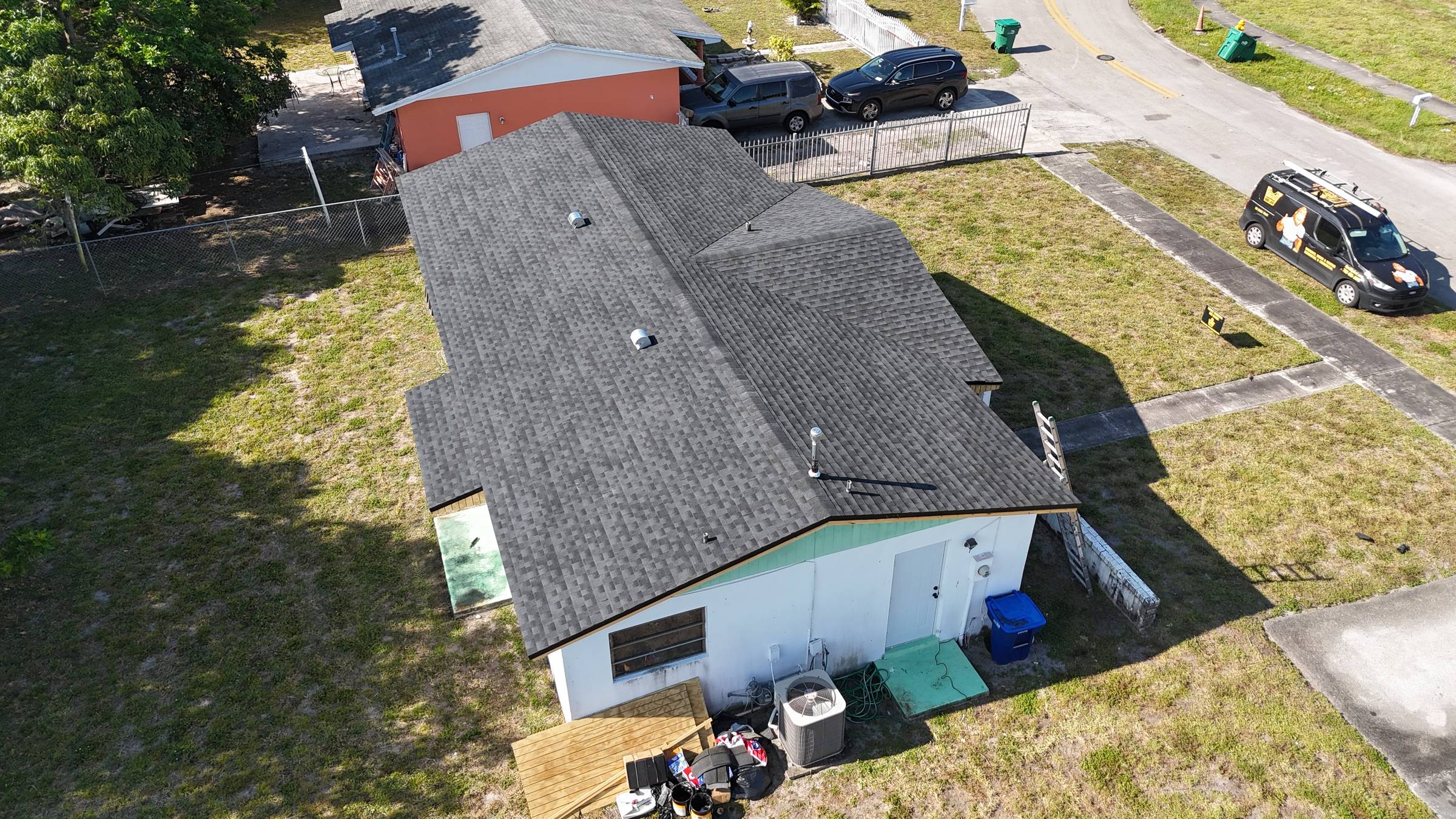
As a licensed contractor (CGC1531370, CCC1333168, CRC1331693, SCC131153098) working permits through the Miami-Dade County Department of Regulatory and Economic Resources and Broward’s municipal building departments, we read the fine print that adjusters and plan reviewers actually check. Here are the ten myths we correct most often.
Why Shingle Roof Myths Cost Miami-Dade Homeowners Money and Insurance Coverage
A shingle roof in South Florida is not a product decision — it is a code compliance package. The permit file has to show the NOA number for the shingle, the underlayment, the fasteners, the metal drip edge, and the roof flashing details. Miss any one of those and the inspector fails the deck-nailing or in-progress inspection, and the job stops.
The insurance side is stricter still. Carriers writing wind coverage in a wind-borne debris zone rely on the Uniform Mitigation Verification Inspection form. That form asks what your roof deck attachment is, what your roof-to-wall connection is, and whether a secondary water barrier exists. Answers come from documentation, not opinion. When a homeowner believes a myth, they usually skip a document — and the discount or the claim goes with it.
The stakes are not abstract. According to the Federal Emergency Management Agency, wind-driven water intrusion through the roof is one of the most common and costly forms of hurricane damage to residential buildings, and roof-covering failure frequently initiates the chain that lets water in (FEMA, Home Builder’s Guide to Coastal Construction, P-499). Florida’s building code responds to that reality with requirements found nowhere else in the country.
Quick Reference: What the Code Actually Requires in the HVHZ
| Requirement | What it means for your roof | Source |
|---|---|---|
| HVHZ product approval | Each component needs an active Miami-Dade NOA or Florida Product Approval naming HVHZ use | Miami-Dade Product Control; floridabuilding.org |
| Sealed roof deck (secondary water barrier) | Required on HVHZ re-roofs beneath the underlayment | Florida Building Code, Existing Building / Roofing provisions |
| Assembly wind testing | Evaluated under Miami-Dade TAS protocols (e.g., TAS 107, TAS 100), not just national ASTM | Miami-Dade TAS test protocols |
| In-progress inspections | Dry-in and deck-nailing inspected during construction, before shingles go on | Miami-Dade permitting; miamidade.gov |
Myth 1: Asphalt Shingles Can’t Meet Hurricane Wind Ratings in an HVHZ
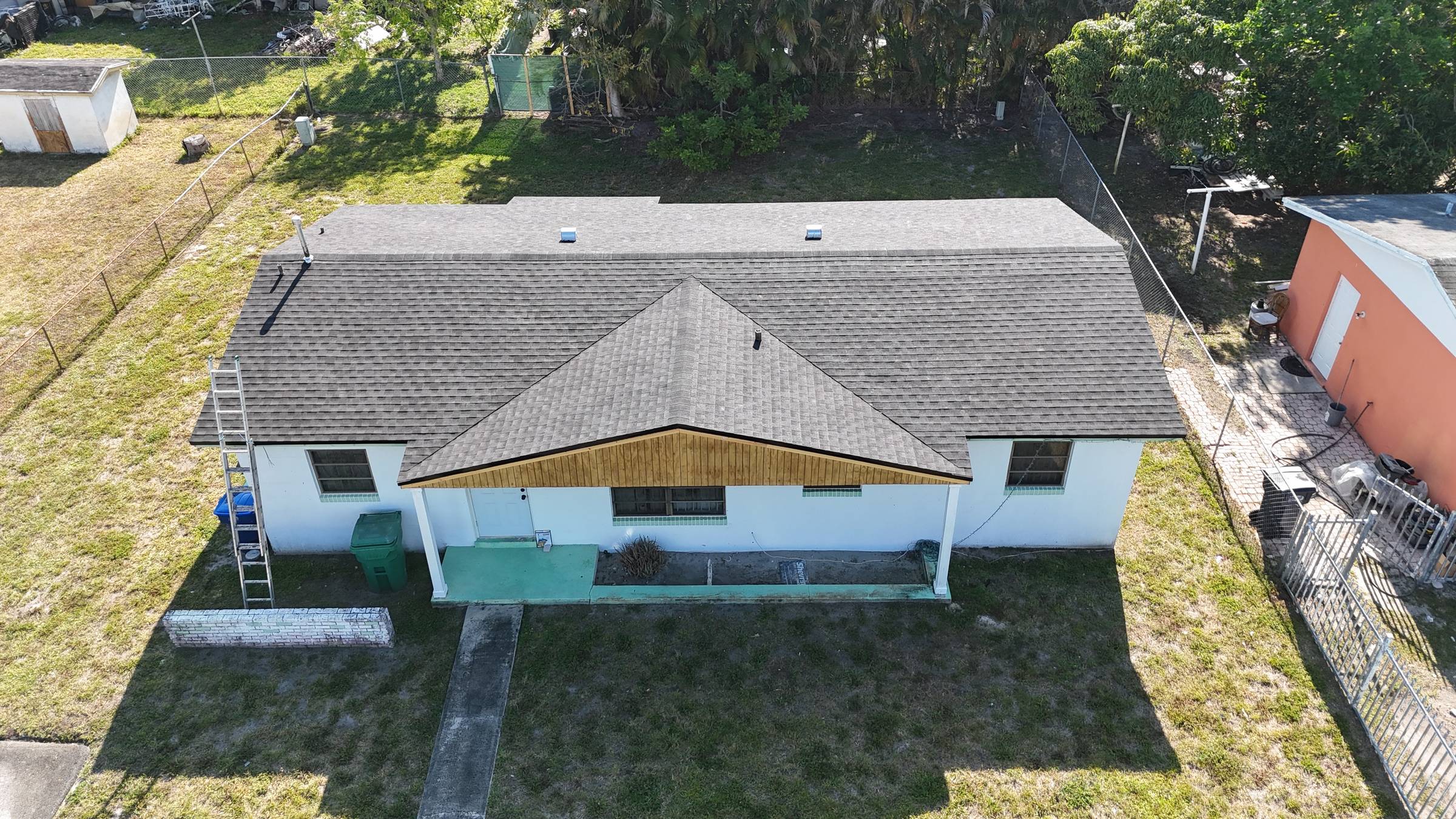
This is the most common one, and it is flatly wrong. Asphalt shingles are approved for HVHZ use when the specific product line has been tested and issued a Miami-Dade NOA. The testing is not the national ASTM D3161 or D7158 rating most manufacturers advertise — HVHZ products are evaluated under Miami-Dade’s own TAS protocols, including TAS 107 for shingle uplift resistance and TAS 100 for wind-driven rain performance on the assembly.
The result is that an asphalt shingle wind rating Miami-Dade accepts is an assembly rating, not a shingle rating. The shingle, the nailing pattern (six nails, not four), the underlayment, and the deck all get approved together. Change one component and the approval no longer applies. That is why a “130 mph shingle” on a big-box shelf means nothing here without an NOA or a Florida Product Approval that covers HVHZ use behind it.
For context, the American Society of Civil Engineers wind maps that Florida adopts place much of Miami-Dade at ultimate design wind speeds in the range of roughly 170–186 mph for typical residential risk categories — among the highest in the nation (Florida Building Code wind provisions, adopted from ASCE 7). That is the environment the assembly must survive, which is why the state does not let a single national sticker stand in for the tested assembly.
Myth 2: Any Shingle Product Is Approved for Use in Miami-Dade County
Manufacturers sell dozens of shingle lines nationally; only a subset carry an active Miami-Dade NOA. Approval is product-specific and expiration-dated. An NOA that lapsed last year is not an approval — it is a piece of paper that will get your permit application rejected.
You can verify this yourself. Miami-Dade County maintains a public Product Control Search where you look up the manufacturer, find the shingle line, and confirm the NOA number and expiration date. Ask your contractor for that number before you sign anything. A legitimate Miami-Dade NOA shingle approval lists the exact product name, the approved substrates, the required fastener pattern, and the design pressures. If a contractor cannot produce it in under a minute, they are not pulling HVHZ permits regularly.
Myth 3: A Secondary Water Barrier Is Optional Under Florida’s Building Code
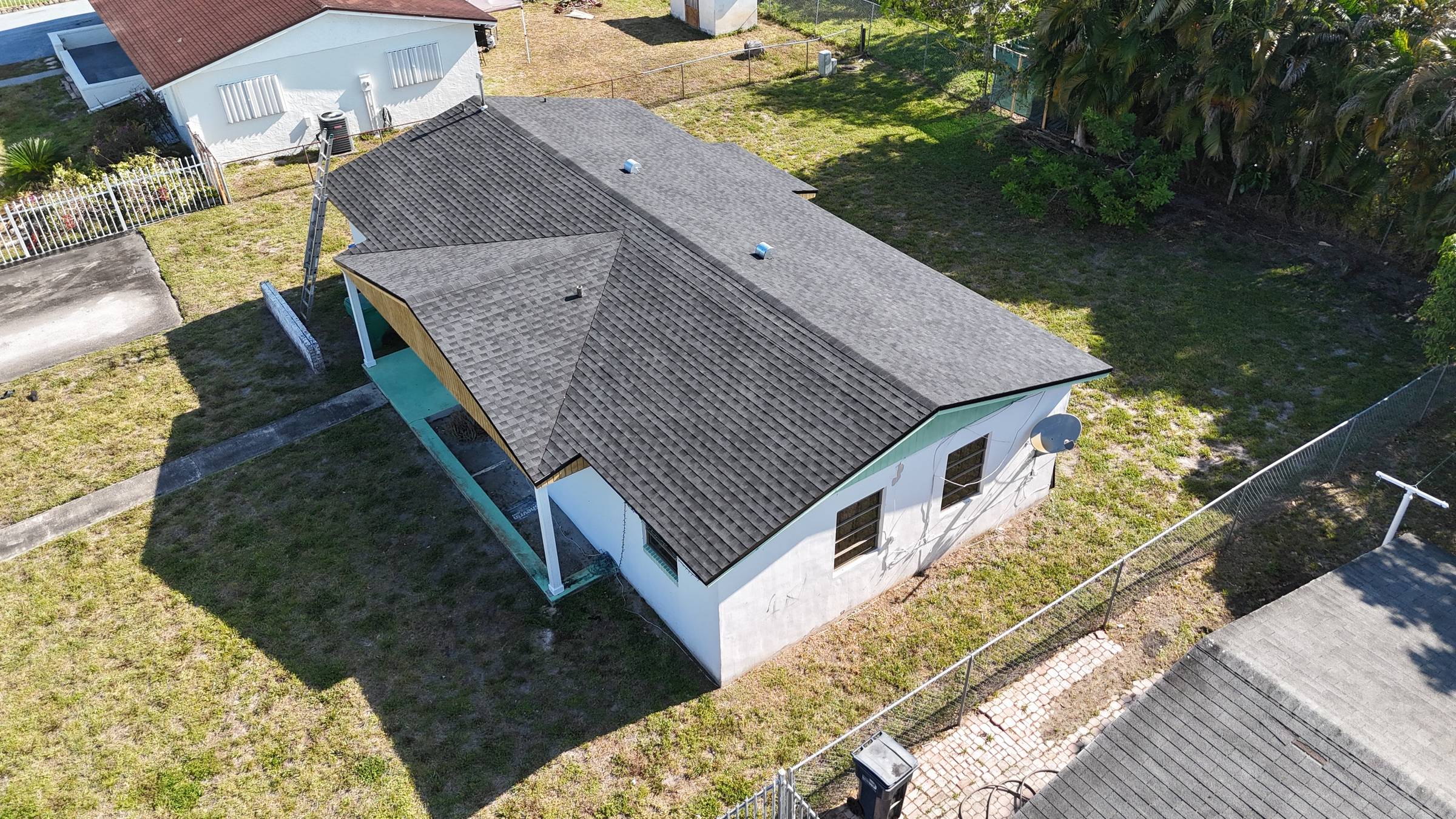
It is not optional in the HVHZ. Florida Building Code roofing provisions require a sealed roof deck — a secondary water barrier — on re-roofs in high-velocity hurricane zones. In practice that means either self-adhering polymer-modified bitumen sheet applied directly to the deck, or an approved sealant/tape system over the deck seams beneath the underlayment.
The purpose is simple. When shingles blow off in a hurricane, the sealed deck is what keeps water out of your house for the next 12 hours of rain. FEMA’s post-storm building performance studies repeatedly identify the sealed roof deck as one of the most effective, low-cost measures for limiting interior water damage after the covering is lost (FEMA, P-499). It is also the single line item on the mitigation inspection form that most reliably lowers a wind premium. Homeowners who let a contractor “save money” by skipping it lose twice — at the inspection and at renewal.
Myth 4: Algae Streaks Mean Your Roof Failed and Will Get Flagged at Inspection
Those black vertical streaks are Gloeocapsa magma, a cyanobacteria that feeds on the limestone filler in shingle granules. In our humidity it colonizes north-facing and shaded slopes within a few years. It is cosmetic. Shingle roof algae stains Florida homeowners see are not a structural finding and do not fail a code inspection on their own.
Why does one neighbor get flagged and another does not? Because inspectors and insurance field reps are looking for the things underneath — lifted tabs, exposed fasteners, deteriorated roof flashing at walls and chimneys, and missing drip edge at the eaves and rakes. Algae often accompanies a roof old enough to also have those defects, so the streaks become a visual cue that triggers a closer look. Algae-resistant shingles humidity performance comes from copper-infused granules; specifying an AR-rated line with a valid NOA solves the appearance problem at replacement time without any change to code compliance.
Myth 5: Granule Loss Is Always a Sign of a Failing Roof
Some granule loss asphalt shingles shed is normal and expected. New roofs release loose manufacturing granules for the first several rainfalls, and you will see them collect in the gutter. That is not damage.
What matters is the pattern. Uniform, gradual thinning across a slope over many years is aging. Concentrated bare spots at the bottom of a valley, circular impact bruises the diameter of a coin, or granules piling up after a single storm are different findings — those point to hail, mechanical damage, or a valley that is running too much water because a flat roof section or gutter is misdirecting flow. On South Florida homes with a mixed roof — shingles on the main structure and a TPO membrane or modified bitumen system over an addition or porch — we frequently trace heavy granule washout to a bad transition detail where the low-slope membrane terminates into the shingle field. On a Kendall re-roof last season we opened up exactly that kind of transition and found the previous installer had run shingles over an under-lapped membrane edge, funneling every rain into one valley; the granule pile in the gutter was the symptom, the bad termination was the disease.
Myth 6: All Asphalt Shingles Last the Same Number of Years in Florida Heat
Manufacturer warranties say 30 years, 50 years, lifetime. Those numbers are written for a national average climate. Real shingle roof lifespan South Florida heat produces is shorter, and it varies significantly by product construction.
Three-tab shingles, thinner and with less asphalt mass, age fastest here. Architectural (laminated) shingles carry more asphalt and a heavier fiberglass mat, and they hold up measurably better against thermal cycling. The U.S. Department of Energy notes that roof surface temperatures on dark roofing can climb far above the surrounding air temperature under summer sun — dark, low-reflectance surfaces can reach roughly 150°F or more (U.S. DOE / Energy Star, Cool Roofs). That daily heating and cooling drives the volatile oils out of the asphalt. Once the asphalt loses plasticizers, it gets brittle, the mat telegraphs through, and the shingle cracks. Color and ventilation matter too — a poorly vented attic runs the underside hot and accelerates the same process from below.
Myth 7: Sealant Strips Work the Same in Miami’s Sun as They Do Up North
Every shingle has a factory-applied thermal sealant strip. It is designed to soften in the sun and bond each course to the one below, which is what actually creates the wind resistance. In a northern climate the strip seals during the first warm season and stays bonded.
Here the story is more complicated in both directions. Install in January during a cool snap and the strips may not activate for weeks — a roof installed and then hit by an early-season storm before sealing can lose shingles at wind speeds well below its rating. On the other end, asphalt shingle UV damage Florida exposure causes long-term thermal fatigue at the seal line: repeated expansion and contraction eventually breaks the bond, which is why sealant strip failure Florida sun shows up as tab lifting on aging roofs even with no visible tearing. Hand-sealing with approved asphalt roof cement at rakes, eaves, and hip and ridge caps is standard practice on our HVHZ installs, and it is specified in most NOAs for exactly this reason.
Myth 8: Your Homeowners Insurance Automatically Covers Shingle Roofs in Wind-Borne Debris Zones
Coverage is not automatic and it is not uniform. Florida carriers underwrite roofs by age, material, and documented condition. Many will not write or renew a policy on a shingle roof past a certain age without a current inspection showing remaining useful life, and some apply a separate wind or hurricane deductible that only makes financial sense if your mitigation credits are documented.
What protects you is paperwork: the permit with the NOA numbers, the final inspection sign-off, and a completed mitigation form reflecting the sealed deck and the fastener schedule actually installed. Hurricane-rated shingles Miami homeowners install are only worth the premium credit if the file proves what went on the roof. Keep a copy — do not rely on your contractor or the county to produce it for you five years later during a claim.
Myth 9: Passing a Visual Inspection Means Your Shingle Roof Meets Code
A drive-by look, a real estate inspection, or a wind mitigation photo set tells you what is visible from outside. It does not tell you whether the deck is nailed to current schedule, whether a secondary water barrier exists under the underlayment, whether the drip edge is the approved gauge and profile and fastened at the required spacing, or whether the roof flashing at wall intersections was properly stepped and counter-flashed rather than smeared with mastic.
Under the Miami-Dade 25-7 HVHZ wind-load standard and the FBC provisions that govern re-roofing here, compliance is established during construction, at the in-progress inspections — dry-in and deck nailing — not after the fact. That is why the permit history matters more than any photograph. If a prior roof was installed without a permit, you have no record that any of it was done to HVHZ shingle roof requirements, and that gap will surface at sale or at claim time.
Myth 10: A Shingle Roof Installer Without HVHZ Certification Can Still Do the Job Right
Skill is not the issue. Jurisdiction is. An installer who does not routinely pull permits in Miami-Dade or Broward will not know that the NOA dictates a six-nail pattern with specific placement, that the drip edge has to be installed before the underlayment at eaves and over it at rakes, that dry-in has to be inspected before shingles go down, or that mixed-slope homes need a code-compliant termination where the TPO membrane or modified bitumen on the flat roofs meets the shingle field.
Every one of those is a failed inspection waiting to happen, and every failed inspection is a delay you pay for. A licensed HVHZ contractor carries the license numbers on the permit, orders products by NOA, and builds the assembly the approval describes. That is the whole job — matching what is on the roof to what is in the file.
The Ten Myths at a Glance
- Myth: Asphalt shingles can’t be hurricane-rated in the HVHZ. Fact: They can — as a tested, NOA-approved assembly.
- Myth: Any shingle is approved here. Fact: Only products with an active Miami-Dade NOA or a Florida Product Approval that covers HVHZ use.
- Myth: The secondary water barrier is optional. Fact: A sealed deck is required on HVHZ re-roofs.
- Myth: Algae streaks fail inspection. Fact: They are cosmetic; inspectors flag structural defects.
- Myth: Granule loss always means failure. Fact: Pattern and cause matter more than presence.
- Myth: All shingles last the same in Florida. Fact: Construction and ventilation change lifespan sharply.
- Myth: Sealant strips behave like they do up north. Fact: Miami sun creates unique sealing and fatigue issues.
- Myth: Wind coverage is automatic. Fact: Coverage and credits depend on documentation.
- Myth: Passing a visual inspection means code compliance. Fact: Compliance is verified during construction.
- Myth: Any skilled installer will do. Fact: HVHZ jurisdiction knowledge is the job.
Frequently Asked Questions About Shingle Roof Myths in Miami
Will my insurance company accept asphalt shingles in a wind-borne debris zone in Miami-Dade?
Yes, carriers write wind coverage on properly permitted asphalt shingle roofs in Miami-Dade. What they underwrite is age, documented condition, and mitigation features — a sealed roof deck, the approved fastener schedule, and a valid permit history. Acceptance is about documentation, not the material category.
Does my shingle roof need a secondary water barrier under Florida’s building code?
In the HVHZ, a sealed roof deck is required on re-roofs. It is installed as a self-adhering modified bitumen sheet or an approved taped-seam system beneath the underlayment. It is also the mitigation credit most likely to reduce your wind premium, and FEMA identifies it as one of the most effective low-cost measures for limiting interior water damage after the covering fails.
How do I find the Miami-Dade NOA number for my shingle product?
Use the Miami-Dade County Product Control Search, look up the manufacturer and shingle line, and confirm the NOA number and its expiration date. The same number should appear on your permit application and on the material submittal your contractor files.
Why did a neighbor’s roof pass inspection with algae streaks while mine got flagged?
Algae is cosmetic and is not a code failure by itself. Inspectors flag lifted tabs, exposed or backed-out fasteners, failed roof flashing, and missing or damaged drip edge. Streaking often appears on roofs old enough to have those defects too, so it draws attention rather than causing the failure.
What wind rating do shingles actually need to meet HVHZ requirements?
The number that matters is the design pressure listed on the Miami-Dade NOA for the complete assembly, tested under TAS protocols including TAS 107. National ASTM ratings printed on the wrapper do not establish HVHZ compliance on their own. Much of Miami-Dade carries ultimate design wind speeds in the roughly 170–186 mph range under the Florida Building Code wind provisions.
How long do asphalt shingles really last in South Florida heat and UV?
Expect meaningfully less than the printed warranty term. Architectural shingles with heavier asphalt mass and a properly vented attic outlast thin three-tab products by a wide margin here, because our service life is governed by thermal cycling and UV — dark roof surfaces can exceed 150°F under summer sun per the U.S. Department of Energy — rather than by the weather extremes that drive warranty terms elsewhere.
If you are not sure what is on your roof or what is in your permit file, that is the thing worth resolving before hurricane season, not after. We will pull the records, inspect the assembly, and tell you plainly where you stand.
Ready for a free estimate? Call 786-886-2088 or fill out our contact form.