
10 Standing Seam Metal Roof Myths Busted in Miami
Every week a homeowner in Key Biscayne, Doral, or Kendall calls us after a sales rep leaves a proposal on the kitchen table that says three words: “hurricane-rated metal roof.” That phrase means nothing to a Miami-Dade plans examiner. What means something is a Notice of Acceptance — a specific NOA number tied to a specific panel profile, a specific gauge, a specific clip or fastener spacing, and a specific deck attachment, tested to TAS 125 and pressure-rated for the zone your house sits in. Most of the standing seam metal roof myths Miami homeowners repeat back to us started as marketing shorthand and hardened into “facts” somewhere between the trade show booth and the driveway.
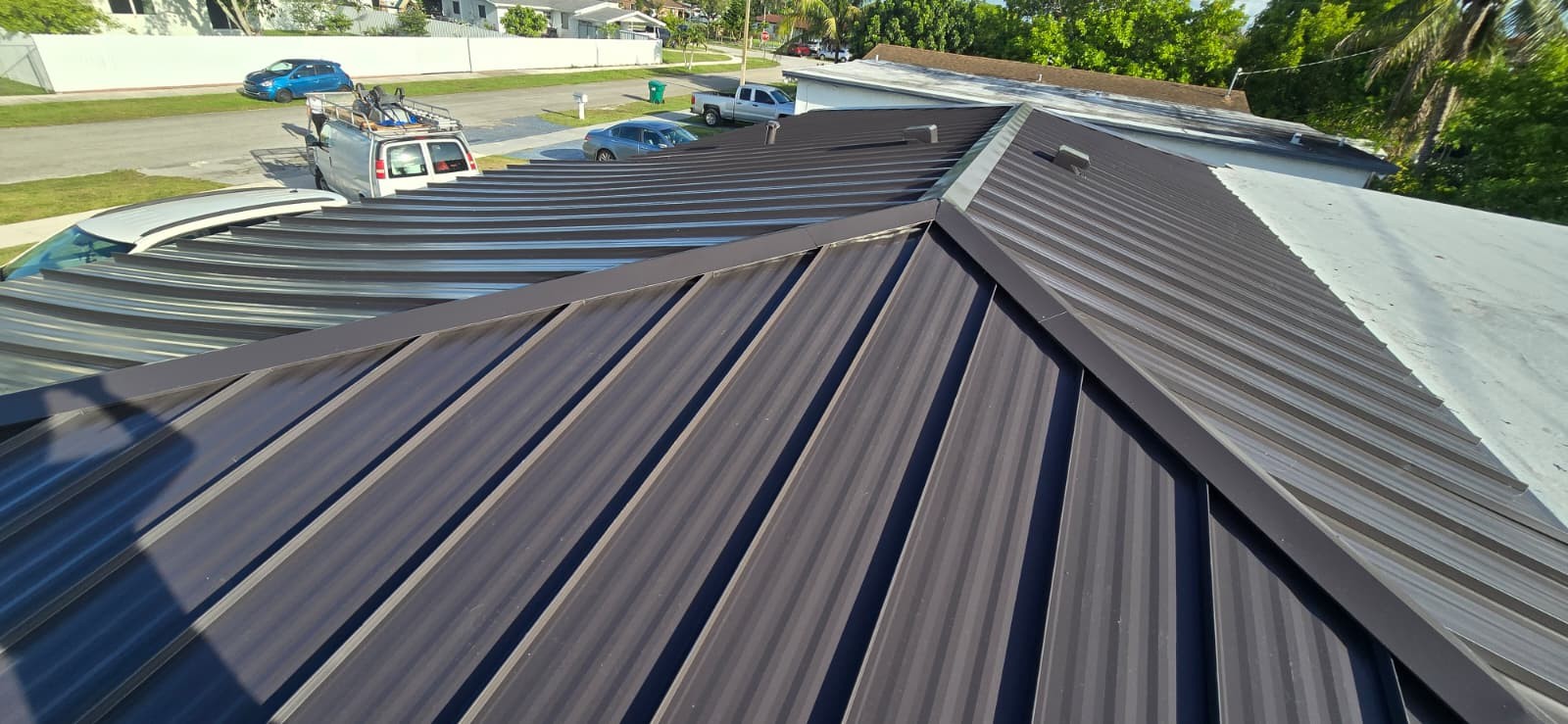
Here is what those documents actually say, myth by myth.
Why Standing Seam Metal Roofing Attracts So Many Myths in South Florida
Metal is the fastest-growing residential roof category we install, and fast growth pulls in installers whose experience is in shingles or flat roofs — modified bitumen, TPO membrane, the low-slope trades. Those crews are good at what they do. But standing seam is a mechanically attached, thermally moving assembly, and the High-Velocity Hurricane Zone (HVHZ) judges it under a different set of tests than anything else on a roof.
The confusion compounds because homeowners shop “metal roofing” as if it were one product, the way they shop a refrigerator. It is not a product. It is a category containing dozens of separately approved systems, each with its own uplift pressure rating, each legal only in the configuration it was tested in. The HVHZ provisions in the Florida Building Code that govern Miami-Dade and Broward require products to hold either a Florida Product Approval or a Miami-Dade Notice of Acceptance before they can be installed (source: floridabuilding.org; Miami-Dade Product Control, miamidade.gov). The brochure does not decide compliance. The NOA does.
Quotable fact: Miami-Dade County and Broward County are the only two counties in the United States designated as a High-Velocity Hurricane Zone under the Florida Building Code, which is why our product-approval and testing requirements are stricter than the rest of the state (source: floridabuilding.org).
Myth 1: “Metal Roofing” Is One Product With One Wind Rating
This is the myth that feeds every other one. Two panels can look identical from the street — same 16-inch width, same seam height, same color — and carry wind uplift ratings that differ by 60 pounds per square foot because one uses a 24-gauge steel panel on a concealed clip at 24 inches on center and the other uses a thinner panel on clips at 48 inches.
The NOA spells out the allowable design pressure for each configuration, and it varies by roof zone. Field, perimeter, and corner zones on your house see dramatically different loads — corners take the worst of it, which is exactly why the wind-load provisions of ASCE 7, referenced by the Florida Building Code, assign the highest pressure coefficients to roof corners and edges (source: floridabuilding.org). A compliant install tightens clip spacing at the perimeter and corners. When someone quotes you one clip spacing for the whole roof, they either have not read the approval or are hoping you never will. Ask which NOA number they are installing under and look it up yourself on the Miami-Dade product control portal. The document tells you the panel, the gauge, the substrate, the underlayment, and the attachment schedule.
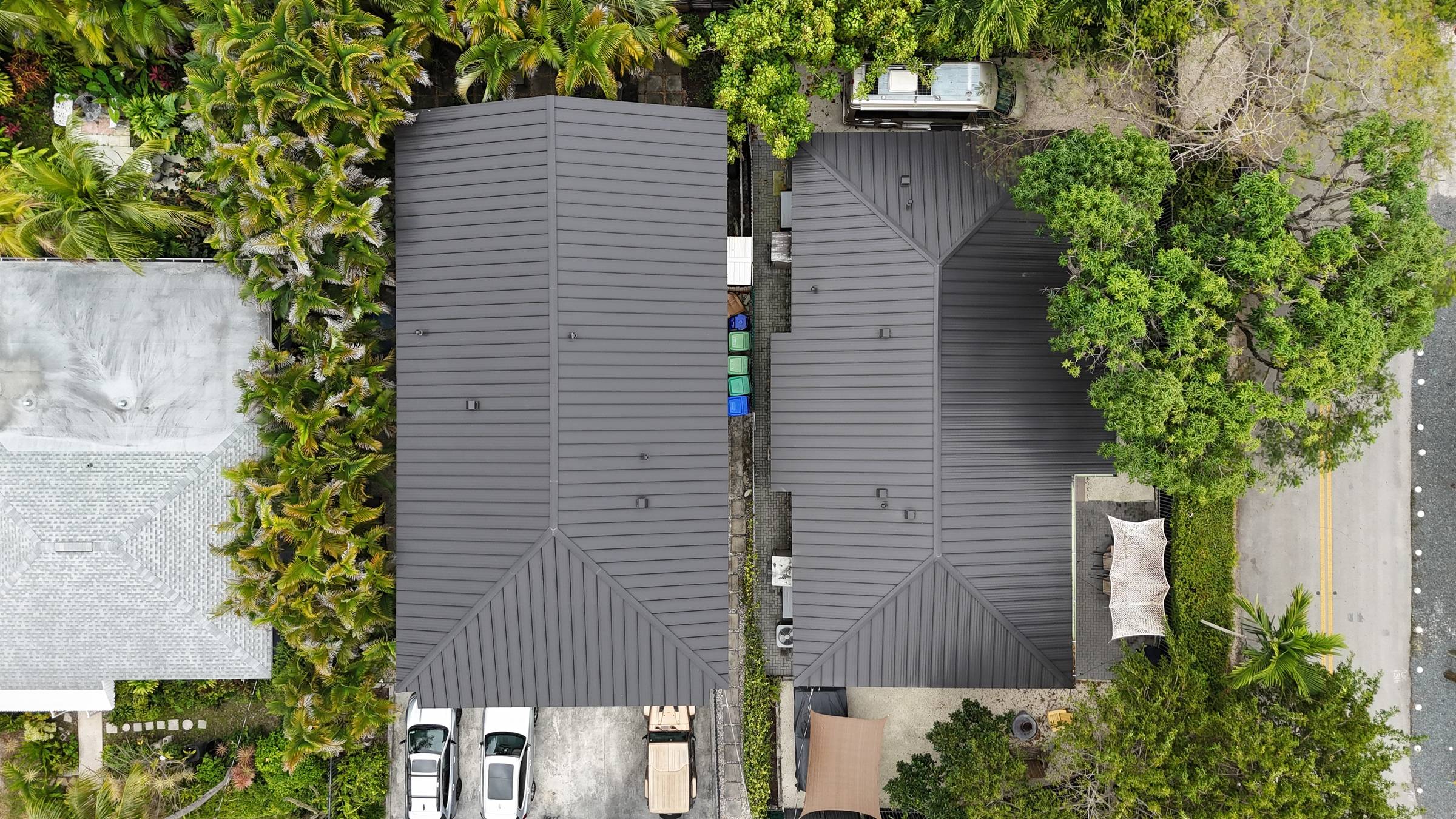
Myth 2: A Miami-Dade NOA Just Means “Hurricane-Rated”
An NOA is not a badge. It is a conditional permission slip. It certifies that one manufacturer’s system, built exactly as described, passed a defined battery of tests — TAS 125 for metal roofing systems, TAS 100 for wind-driven rain resistance on the assembly, static and cyclic uplift testing for the pressures listed (source: Miami-Dade Product Control test protocols, miamidade.gov).
Critically, the NOA also states its own limits: minimum deck thickness, approved underlayment types, maximum panel length, allowable slope, and the exact fasteners by size and material. Deviate on any of those and the roof is no longer the approved system — it is an unapproved assembly wearing the same panels. Inspectors in Miami-Dade check the attachment schedule against the NOA on the permit. The homeowners who get burned are the ones who found out at final inspection that their roof was installed to a different specification than the one permitted.
Myth 3: Exposed Fasteners and Concealed Clips Perform the Same in HVHZ Wind
They do not, and the difference shows up in two places: the pressure table and your insurance file.
An exposed-fastener panel — often called 5V crimp or R-panel — is screwed through the face of the metal into the deck, with a neoprene washer sealing each penetration. Every one of those screws is a potential leak path once the washer degrades under our UV load, and the panel cannot move freely as it expands and contracts. A concealed-clip standing seam system holds the panel at the seam, lets it float with thermal movement, and puts no penetration through the water plane.
Both configurations can hold valid NOAs. That is the honest answer. But their approved design pressures are usually not equal, and on a two-story coastal home the corner-zone pressure may exceed what the exposed-fastener system is approved to carry. On the wind-mitigation inspection form (Florida’s OIR-B1-1802) your insurer uses, what matters is the roof deck attachment, the secondary water barrier, and the roof covering’s compliance with the current code and its product approval — not the marketing label. A properly permitted, properly documented system earns the credit. A system installed outside its approval can cost you the credit entirely, because the inspector cannot verify compliance.
Myth 4: Oil-Canning Means the Panels Are Defective or Non-Compliant
Oil canning is the visible waviness in the flat area of a metal panel. It is inherent to light-gauge formed metal — a characteristic, not a defect, and every major manufacturer says so in writing. Metal panel producers describe oil canning as an inherent characteristic of light-gauge metal roofing that is not a cause for rejection (source: manufacturer technical bulletins such as those published by MBCI). It has no bearing on NOA compliance and does not reduce the wind uplift rating.
What it does affect is how your roof looks in low-angle afternoon light, which in South Florida is most of the year. Oil canning in standing seam is reduced, not eliminated, by heavier gauge material, striations or pencil ribs rolled into the pan, a flat and true deck beneath, and panels formed on site rather than trucked and flexed. On our own installs we run panels through a site rollformer at the curb for exactly this reason — a panel that is not flexed on and off a truck lies flatter. If a contractor promises zero oil canning, that promise is not backed by any manufacturer warranty you will ever collect on.
Myth 5: Standing Seam Roofs Are Unbearably Loud in the Rain
This myth comes from barns and carports — bare panels over open purlins with nothing underneath. That is not a residential standing seam assembly.
On a Miami-Dade home, the panel sits over solid sheathing, a code-approved underlayment layer, and an insulated, finished attic space. That stack absorbs the impact energy. Independent testing summarized by the U.S. Department of Energy notes that a metal roof installed over solid sheathing is no louder inside the home than other roofing materials (source: energy.gov). Where noise actually becomes a complaint is on unvented low-slope additions or over unconditioned Florida rooms with minimal decking — and that is a design problem, not a metal problem.
Myth 6: All Metal Roofs Corrode the Same Way Near Saltwater
Salt air is the single most underestimated variable in coastal roofing. A house on Key Biscayne or the barrier-island side of Miami Beach lives in a different corrosion environment than an identical house in Doral or Kendall, and the specification has to change accordingly.
Corrosion in a metal roof almost never starts in the middle of a panel. It starts at the cut edges, the roof flashing, the drip edge, and the fasteners — anywhere dissimilar metals meet or a factory finish is interrupted. The failure mode we see most on coastal re-roofs is galvanic: stainless or coated fasteners specified, carbon-steel fasteners actually installed, and rust bleeding down a five-year-old panel that is otherwise fine. On a Key Biscayne tear-off we handled, that exact bleed pattern is what the previous crew left behind — good panel, wrong screws. Coastal work calls for stainless fasteners, compatible flashing and drip edge metal, and a finish system rated for marine exposure. Many manufacturer warranties explicitly reduce or void coverage within a set distance of salt water unless the coastal-grade package was specified (source: manufacturer warranty documents, e.g. MBCI). Ask which package is on your proposal.
Myth 7: Aluminum and Steel Panels Are Interchangeable Choices
They are different materials with different behavior, and in South Florida the choice is usually driven by proximity to the ocean.
Aluminum does not rust. It is the durable answer for oceanfront and near-oceanfront exposure, it is lighter on the structure, and it carries a price premium. Its trade-offs are real: aluminum expands and contracts more than steel — its coefficient of thermal expansion is roughly double that of steel (source: manufacturer technical data) — which raises oil-canning visibility and makes clip selection and panel-length limits more important, and being softer it dents more easily. Steel — typically Galvalume-coated — is stiffer, holds a flatter appearance, costs less, and performs well inland across most of Miami-Dade and Broward. Near constant salt spray, its cut edges and fasteners need more attention.
Both have HVHZ approvals. Neither is universally correct. The right call comes from your distance to salt water, roof geometry, panel run length, and structure — not from whichever one the contractor stocks.
Myth 8: A Re-Roof Can Just Reuse the Old NOA
No. The permit is issued against the product approval in force at the time of application, and NOAs carry expiration dates and get revised as test standards evolve. The approval that covered your 2009 roof may be expired, superseded, or amended with attachment requirements that no longer match what is on your deck.
A re-roof is permitted as a new installation. The contractor submits the current NOA for the system being installed, and the attachment schedule, underlayment, and deck condition must all satisfy it. That last item catches people — when the old covering comes off and the sheathing is exposed, the Florida Building Code requires the deck to be re-fastened to current standards before the new system goes down (source: floridabuilding.org). That is not an upcharge someone invented; it is code, and it is one reason a legitimate metal roof quote here is higher than what the same panels cost in Orlando.
Myth 9: Panel Color Changes Don’t Require Re-Permitting
Color alone is generally the least disruptive change you can make, because NOAs are written around panel profile, gauge, substrate, and attachment — not the paint. Most approvals list multiple approved finishes and colors within the same system, so switching from a standard bronze to a standard slate inside the same approved product line does not change what was tested.
The traps are elsewhere. If the color change moves you to a different panel line, a different manufacturer, or a different gauge, you are on a different NOA and the permit has to reflect it. And in HOA-governed communities across Miami-Dade, the architectural approval is a separate process from the building permit — homeowners routinely get HOA sign-off, change the panel to match it, and never tell the contractor the product changed. Confirm the color you want exists inside the approved system already on your permit, before the panels are ordered.
Myth 10: A Metal Roof Doesn’t Need a Wind-Mitigation Inspection to Help on Insurance
It does, and skipping it leaves money on the table. Florida law requires insurers to provide premium discounts or credits for construction features that reduce hurricane damage, including roof covering, roof deck attachment, and secondary water resistance (source: Florida Statutes §627.0629, and the Florida wind-mitigation form OIR-B1-1802). A compliant standing seam roof only earns those credits if the inspector can document the deck attachment, the secondary water barrier, and that the covering meets current code and its product approval. No inspection, no documented credit — no matter how strong the roof actually is. After a permitted re-roof, order the wind-mitigation inspection and give the report to your insurer.
What to Ask a Miami-Dade Roofer Before You Sign
You do not need to be a roofer to separate a documented proposal from a slogan. Ask these:
- What is the NOA number for the exact system you are installing? Then look it up on the Miami-Dade product control portal yourself.
- What panel gauge, and what clip or fastener spacing in the field, perimeter, and corner zones? One number for the whole roof is a red flag.
- What underlayment, and is it listed in that NOA? Substituting underlayment is one of the most common quiet deviations.
- What material are the fasteners and the drip edge, and is a coastal package specified? Non-negotiable near the water.
- Will the deck be re-nailed to current code, and is that in the price? If it is not in the written scope, it is not in the price.
- How does the roof flashing tie into any adjacent low-slope area? Metal-to-membrane transitions on flat roofs — TPO membrane or modified bitumen — are where the leaks start.
- Which contractor license is this permit pulled under? Verify it is active and appropriate for roofing.
A contractor who reads approval documents will answer all seven without breaking stride. One selling a category instead of a system will change the subject to price.
Frequently Asked Questions About Standing Seam Metal Roof Myths in Miami
Does a Miami-Dade NOA for standing seam metal roofing cover every panel color and profile, or do I need a new approval if I change colors?
An NOA covers the specific panel profiles, gauges, and finish systems listed inside it. Most approvals include a range of standard colors within the same product line, so a color swap inside that line does not require a new approval. Changing profile, gauge, or manufacturer does — that is a different tested system and the permit must be updated before installation.
Will exposed fastener panels void my wind-mitigation insurance credit compared to concealed-clip systems?
Not automatically. Wind-mitigation credits are driven by roof deck attachment, secondary water barrier, roof-to-wall connection, and whether the covering complies with current code and its product approval. An exposed-fastener panel installed under a valid NOA and properly permitted can document compliance. The risk is that any system installed outside its approval, or without a permit an inspector can verify, gives the inspector nothing to check — and that is where credits get lost.
Is oil-canning in standing seam panels a defect covered by the NOA, or is it purely cosmetic?
Purely cosmetic. Oil canning is an inherent characteristic of light-gauge formed metal, excluded from essentially every manufacturer warranty, and it has no effect on NOA compliance or wind uplift performance. Heavier gauge, striated pans, a flat deck, and site-formed panels all reduce how visible it is.
How does salt-air exposure near Key Biscayne or Miami Beach change the fastener and flashing specs versus an inland install in Doral or Kendall?
Coastal exposure calls for stainless steel fasteners rather than coated carbon steel, flashing and drip edge in metals compatible with the panel to avoid galvanic corrosion, and a marine-rated finish package. Many warranties limit coverage within a set distance of salt water unless the coastal package was specified. Inland Doral or Kendall installs can generally use the manufacturer’s standard package, though quality flashing details still matter.
Can a re-roof reuse the existing Miami-Dade NOA, or does the county require a new product approval for the current installation?
The permit must reference the product approval in force at the time of application. NOAs expire and get revised, so the old one usually cannot be reused. Your contractor submits the current NOA or Florida Product Approval for the system being installed, and the deck, underlayment, and attachment schedule must meet its requirements — including re-nailing the deck to current standards once the old covering is removed.
Is standing seam metal roofing actually noisier in the rain than shingles or tile in a South Florida downpour?
Barely. Over solid sheathing, code underlayment, and an insulated attic, a residential standing seam roof is comparable to tile or shingle; the U.S. Department of Energy notes metal roofs installed over solid decking are no louder inside than other materials. The loud-metal-roof reputation comes from bare panels over open framing on barns and carports, which is not how a permitted residential system is built.
Should I choose aluminum or steel standing seam panels for a home near the ocean in Miami-Dade?
Near constant salt spray — oceanfront and barrier-island sites like Key Biscayne or the beach side of Miami Beach — aluminum is usually the better answer because it does not rust, though it expands more and dents more easily. Inland across most of Miami-Dade, Galvalume-coated steel is stiffer, flatter, and more economical. Both carry HVHZ approvals; the right choice depends on your distance to salt water, roof geometry, and structure.
The Common Thread
Every myth on this list survives for the same reason: it is easier to sell a category than to explain a system. The panel on your roof is only as good as the approval it was installed under and the details — clip spacing, fastener metallurgy, flashing, drip edge, deck attachment — that never appear in a brochure. When the next named storm sits over Miami-Dade for six hours, the roof does not perform to the slogan. It performs to the specification.
Ready for a free estimate? Call 786-886-2088 or fill out our contact form.