
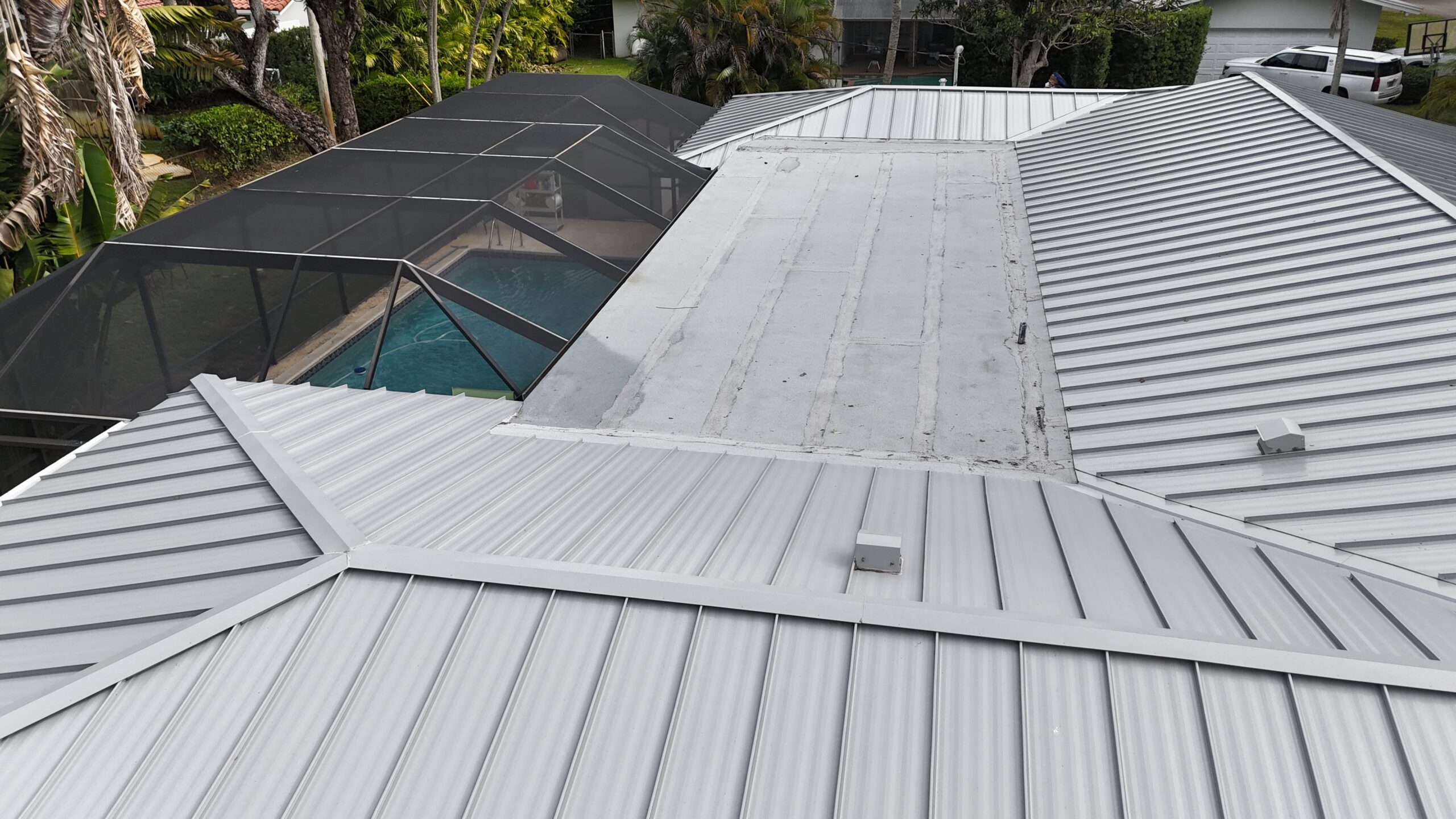
Standing Seam Metal Roofing in South Florida: Hurricane-Resistant Roofing Solutions
Standing seam metal roofing is a premium roofing system where metal panels connect with raised vertical seams that interlock without exposed fasteners. For South Florida homeowners, this roofing style offers exceptional hurricane resistance, energy efficiency, and longevity in coastal climates.
Quick Answer: Standing Seam Metal Roofing Benefits
- Hurricane resistance: Tested to withstand winds up to 180+ mph when properly installed
- Longevity: 40-70 years with minimal maintenance in Florida’s climate
- Energy efficiency: Reflective coatings can reduce cooling costs by 10-25% according to industry studies
- Insurance discounts: Often qualify for wind mitigation credits in South Florida with insurance discounts often ranging from 15-45% depending on coverage and carrier policies
- Code compliance: Meets Florida Building Code requirements for High Velocity Hurricane Zones
Standing Seam Metal Roof Components and Materials
Standing seam metal roofs consist of continuous metal panels that run from ridge to eave with vertical ribs connecting adjacent panels. The key components include:
- Metal panels: Typically 16-24 inches wide, made from steel, aluminum, or copper
- Seams: Raised vertical connections that mechanically interlock
- Clips: Hidden fasteners that allow thermal movement
- Underlayment: High-temperature synthetic or modified bitumen
- Trim and flashing: Custom-formed pieces for edges, penetrations, and transitions
At Bigfoot Windows & Roofing, we specialize in professional metal roofing installation using only the highest quality materials designed for South Florida’s demanding climate conditions.
Metal Gauge Options for South Florida
| Gauge | Thickness | Wind Rating | Best Use | Cost Factor |
|---|---|---|---|---|
| 29 Gauge | 0.0135″ | Up to 130 mph | Standard residential | Budget option |
| 26 Gauge | 0.0217″ | Up to 150 mph | Most residential | Standard pricing |
| 24 Gauge | 0.0276″ | Up to 180+ mph | HVHZ areas, premium | 20-30% higher |
| 22 Gauge | 0.0336″ | Up to 200+ mph | Commercial, extreme conditions | 40-50% higher |
For Miami-Dade, Broward, and Palm Beach counties—all designated High Velocity Hurricane Zones—24-gauge steel provides optimal performance and often qualifies for maximum insurance discounts.
Hurricane Resistance and Wind Performance
Standing seam metal roofs excel in South Florida’s hurricane-prone environment due to their continuous panel design and mechanical seam connections. Unlike other roofing materials that rely on individual components, standing seam systems distribute wind loads across the entire roof surface.
Wind Uplift Ratings
Properly installed standing seam metal roofs in HVHZ areas must meet specific uplift ratings:
- Field of roof: Minimum -45 psf (pounds per square foot) uplift resistance
- Perimeter zones: Minimum -60 psf uplift resistance
- Corner zones: Minimum -90 psf uplift resistance
These ratings translate to wind resistance capabilities well above typical hurricane wind speeds in South Florida, which historically range from 74-157 mph for Category 1-4 storms.
Florida Building Code Compliance
Standing seam metal roofs must comply with Florida Building Code requirements, including:
- Product approval through Miami-Dade County Product Control or equivalent
- Installation per manufacturer specifications and FBC guidelines
- Structural attachment to meet uplift requirements
- Impact resistance ratings for hail-prone areas
- Proper flashing and waterproofing details
Our team at Bigfoot Windows & Roofing ensures all hurricane roof preparation meets or exceeds Florida Building Code requirements for maximum protection and insurance compliance.
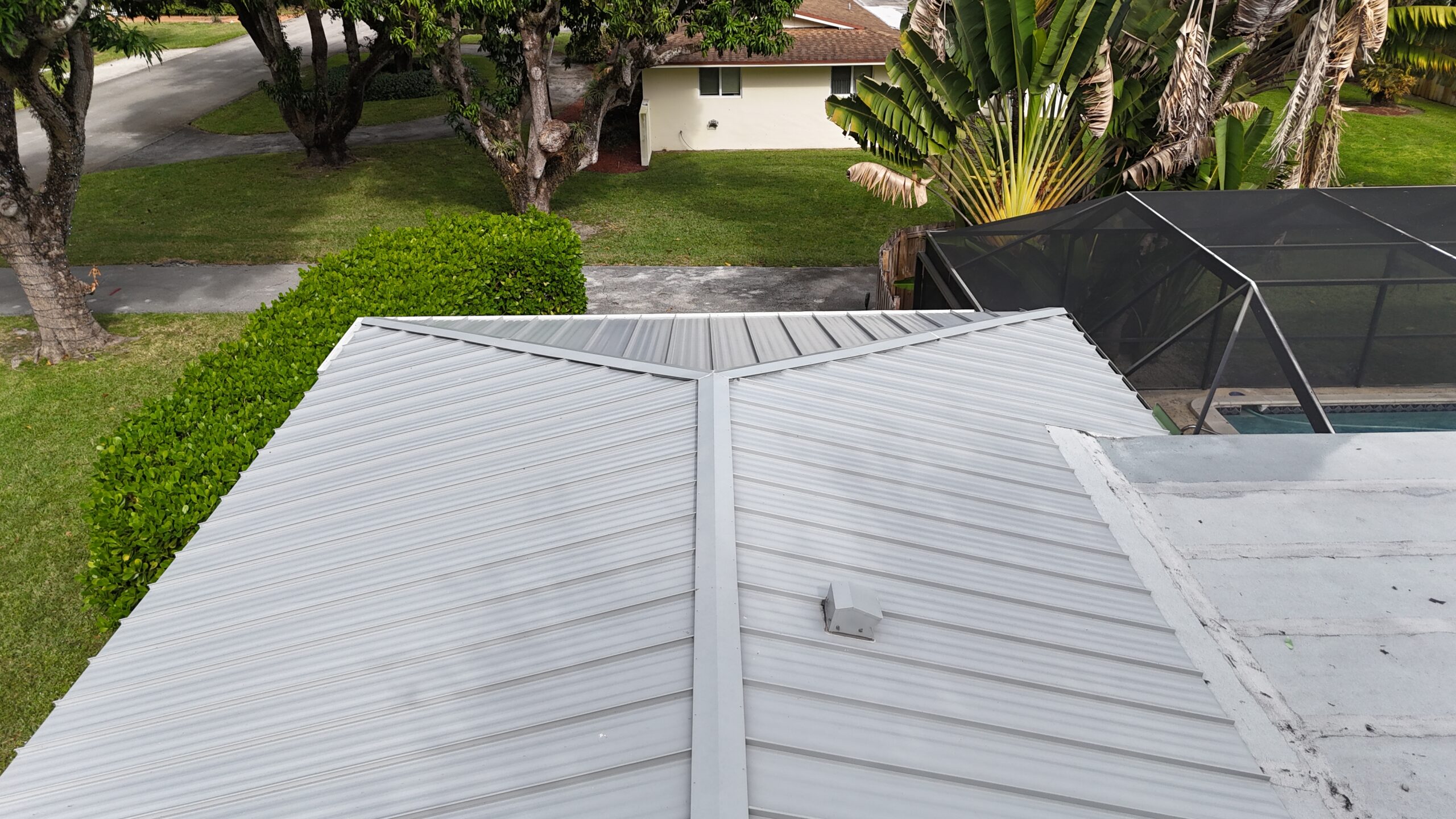
Cost Analysis for South Florida Installation
| System Type | Material Cost/Sq Ft | Labor Cost/Sq Ft | Total Installed Cost/Sq Ft | Notes |
|---|---|---|---|---|
| 26-gauge steel, basic | $4.50-$6.00 | $3.50-$5.00 | $8.00-$11.00 | Standard residential |
| 24-gauge steel, premium | $6.00-$8.00 | $4.00-$6.00 | $10.00-$14.00 | HVHZ recommended |
| Aluminum, painted | $5.50-$7.50 | $4.00-$6.00 | $9.50-$13.50 | Coastal corrosion resistance |
| Copper, natural | $12.00-$16.00 | $5.00-$8.00 | $17.00-$24.00 | Premium, 70+ year lifespan |
Costs include removal of existing roofing, underlayment, and standard installation. Complex roof geometries, structural repairs, or permit requirements may increase costs.
Factors Affecting Installation Cost
- Roof complexity: Multiple angles, dormers, and penetrations increase labor time
- Structural modifications: Hurricane straps or deck reinforcement may be required
- Permit requirements: Miami-Dade permits typically cost $500-$1,500 depending on project size
- Access challenges: Multi-story homes or tight spaces affect installation efficiency
- Material upgrades: Premium coatings, thicker gauges, or specialty metals increase cost
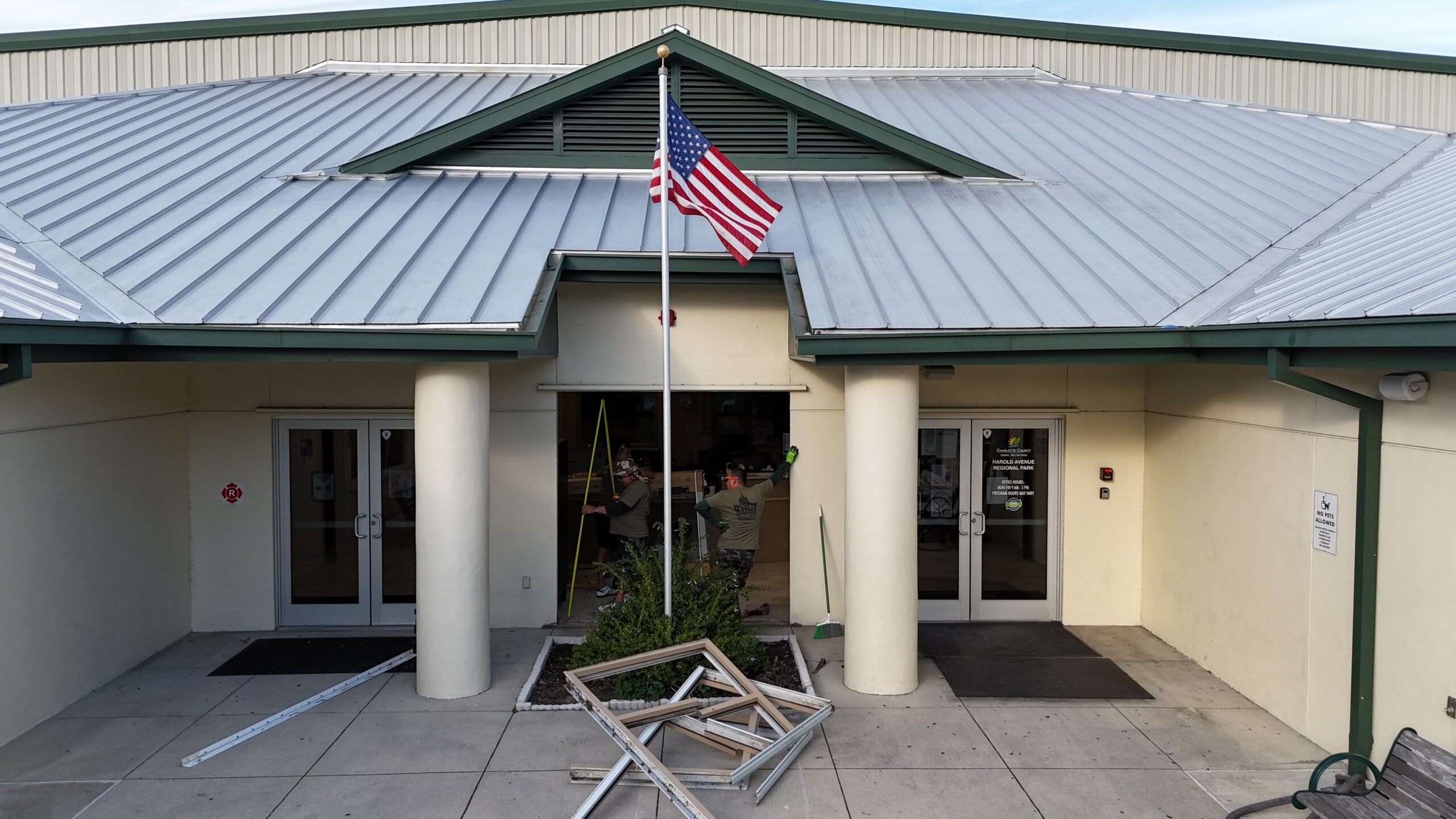
Standing Seam vs. Other South Florida Roofing Materials
| Roofing Material | Lifespan | Hurricane Resistance | Energy Efficiency | Maintenance | Initial Cost |
|---|---|---|---|---|---|
| Standing Seam Metal | 40-70 years | Excellent (180+ mph) | Very Good | Very Low | $10-$24/sq ft |
| Concrete Tile | 30-50 years | Good (120-140 mph) | Good | Moderate | $8-$15/sq ft |
| Clay Tile | 50-100 years | Fair-Good (varies) | Good | Moderate | $10-$20/sq ft |
| Architectural Shingles | 20-30 years | Fair (90-110 mph) | Fair | Moderate | $4-$8/sq ft |
| Modified Bitumen | 15-25 years | Good (varies) | Fair | High | $6-$12/sq ft |
Why Standing Seam Outperforms in South Florida
Concrete and clay tile: While popular in South Florida, tile roofs have individual components that can become projectiles in high winds. Standing seam’s continuous surface eliminates this risk.
Architectural shingles: Even impact-resistant shingles rarely exceed 130 mph wind ratings, well below Category 4-5 hurricane speeds. They also absorb heat, increasing cooling costs.
Modified bitumen: Common on flat or low-slope roofs, but requires more frequent maintenance and replacement in Florida’s UV-intensive environment.
Energy Efficiency and Cool Roof Technology
Standing seam metal roofs significantly reduce cooling costs in South Florida’s hot climate through several mechanisms:
Solar Reflectance and Thermal Performance
- High solar reflectance: Premium coatings reflect 70-85% of solar energy
- Thermal emittance: Metal surfaces quickly release absorbed heat
- Air gap ventilation: Raised seams create natural airflow channels
- Low thermal mass: Metal doesn’t store heat like concrete or asphalt
According to industry studies on residential cooling energy savings, metal roofs with reflective coatings can reduce cooling costs by 10-25% compared to traditional roofing materials.
Energy Star Certification
Many standing seam metal roof systems qualify for Energy Star certification when they meet specific solar reflectance and thermal emittance requirements. In South Florida, this certification may qualify homeowners for:
- Federal tax credits (when available)
- Utility rebate programs
- Faster permit processing in some jurisdictions
- Additional insurance discounts
Installation Process and Timeline
Pre-Installation Phase (1-2 weeks)
- Permit applications: Submit to Miami-Dade, Broward, or Palm Beach County
- Engineering review: Structural calculations for wind load compliance
- Material ordering: Custom panels fabricated to roof dimensions
- Weather planning: Schedule installation during dry periods
Installation Process (3-7 days typical)
- Existing roof removal: Strip old materials, inspect decking
- Structural modifications: Add hurricane straps or reinforcement as needed
- Underlayment installation: High-temperature synthetic membrane
- Panel installation: Begin at eave, work toward ridge
- Seam formation: Mechanical seaming with specialized equipment
- Trim and flashing: Custom pieces for edges and penetrations
- Final inspection: County inspection and manufacturer warranty activation
Maintenance and Longevity in Florida’s Climate
Standing seam metal roofs require minimal maintenance but benefit from regular inspection, especially in South Florida’s coastal environment.
Recommended Maintenance Schedule
- Bi-annual inspection: Check seams, fasteners, and flashing (spring and fall)
- Post-storm inspection: Document any damage for insurance claims
- Gutter cleaning: Remove debris that could cause water backup
- Panel washing: Annual rinse to maintain reflective properties
- Penetration sealing: Re-seal pipe boots and vents as needed (every 5-10 years)
Lifespan Expectations
- Galvanized steel: 40-50 years with proper coating maintenance
- Galvalume steel: 50-60 years with enhanced corrosion resistance
- Aluminum: 50-70 years, excellent coastal performance
- Copper: 70+ years, develops protective patina over time
Standing Seam Metal Roof Summary
Best for: South Florida homeowners prioritizing hurricane resistance, energy efficiency, and long-term value
Hurricane resistance: 180+ mph when properly installed with 24-gauge materials
Energy savings: 10-25% cooling cost reduction vs. traditional roofing (industry estimates)
Lifespan: 40-70 years depending on material choice
Investment: $10-$24 per square foot installed, often qualifying for insurance discounts
Insurance Benefits and Wind Mitigation
Homeowners insurance companies in South Florida often provide discounts for standing seam metal roofs due to their superior wind resistance. A certified wind mitigation inspection can document:
- Roof covering: Metal roofs typically qualify for the highest discount tier
- Roof deck attachment: Enhanced fastening patterns reduce uplift risk
- Roof-to-wall connection: Hurricane straps and clips improve overall structure
- Secondary water resistance: Sealed underlayment provides backup protection
Insurance discounts often range from 15-45% depending on coverage and carrier policies, helping offset the higher initial cost of metal roofing over time.
Professional Standing Seam Metal Roof Installation
Ready to protect your South Florida home with a hurricane-resistant standing seam metal roof? Contact Bigfoot Windows & Roofing for a comprehensive consultation and custom quote. Our certified installers have extensive experience with Florida Building Code requirements and High Velocity Hurricane Zone installations.
Get Your Standing Seam Metal Roof Quote Today
Don’t wait for the next hurricane season to upgrade your roof protection. Bigfoot Windows & Roofing offers:
- Free in-home consultations and detailed estimates
- Florida Building Code compliant installations
- Miami-Dade County approved materials and methods
- Comprehensive warranties on materials and workmanship
- Assistance with insurance claims and wind mitigation inspections
Call us today at (954) 500-7663 or schedule your free consultation online. Protect your home with the ultimate hurricane-resistant roofing solution.
Frequently Asked Questions About Standing Seam Metal Roofing
How long does standing seam metal roofing last in South Florida’s climate?
Standing seam metal roofs typically last 40-70 years in South Florida, depending on the material chosen. Galvalume steel lasts 50-60 years, aluminum performs for 50-70 years, and copper can exceed 70 years with minimal maintenance.
Can standing seam metal roofs withstand Category 5 hurricanes?
When properly installed with 24-gauge materials and appropriate fastening systems, standing seam metal roofs can withstand winds exceeding 180 mph, which covers most Category 4 and some Category 5 hurricane conditions. The key is professional installation meeting Florida Building Code requirements.
How much do standing seam metal roofs cost compared to tile roofs?
Standing seam metal roofs cost $10-$24 per square foot installed, while tile roofs range $8-$20 per square foot. However, metal roofs offer superior hurricane resistance, longer lifespan, and potential insurance discounts that can offset the initial cost difference.
Do standing seam metal roofs qualify for insurance discounts in Florida?
Yes, standing seam metal roofs typically qualify for wind mitigation discounts often ranging from 15-45% on hurricane insurance premiums in South Florida, depending on coverage and carrier policies. A certified wind mitigation inspection documents the roof’s wind resistance features for insurance companies.
Are standing seam metal roofs noisy during rain or hail?
Modern standing seam installations with proper underlayment are not significantly noisier than other roofing materials. The solid decking, insulation, and attic space effectively dampen sound, making interior noise levels comparable to tile or shingle roofs.
Can I install solar panels on a standing seam metal roof?
Standing seam metal roofs are excellent for solar panel installation. The raised seams provide convenient attachment points without penetrating the roof surface, and the metal’s reflective properties can actually improve solar panel efficiency by reducing ambient temperatures.
How do standing seam metal roofs perform in coastal salt air environments?
Standing seam metal roofs with proper coatings perform exceptionally well in coastal environments. Aluminum naturally resists corrosion, while galvalume steel and painted finishes provide excellent protection against salt air when maintained properly.
What permits are required for standing seam metal roof installation in Miami-Dade County?
Miami-Dade County requires building permits for roof replacement, structural modifications, and electrical work (if applicable). The roof system must use Miami-Dade approved materials and installation methods. Permit costs typically range $500-$1,500 depending on project scope.