

Impact Windows Vs Hurricane Shutters Which Is Better | Bigfoot Windows & Roofing (Miami-Dade)
Updated June 2026
Key Takeaways
- Impact windows offer always-on protection; shutters require deployment before every storm.
- Impact windows typically cost more upfront but eliminate shutter storage, labor, and HOA friction.
- Both options can meet Miami-Dade HVHZ and Florida Building Code requirements when properly rated.
- In South Florida’s salt air and UV environment, aluminum frames outperform vinyl long-term.
- Your insurance discount potential, HOA rules, and deployment ability all affect the right choice.
The Real Question
Why This Decision Is Harder in South Florida Than Anywhere Else
Miami-Dade and Broward homeowners face the most demanding hurricane code in the country — and the wrong choice costs real money.
Every June, South Florida homeowners revisit the same question: should I invest in permanent impact-rated windows or keep relying on hurricane shutters? Both protect against wind and debris. Both can satisfy Florida Building Code requirements. But they perform differently, cost differently, and live differently inside your home — especially in Miami-Dade’s High-Velocity Hurricane Zone (HVHZ).
This guide answers the question directly, without a sales pitch. If shutters are genuinely the better fit for your situation, we will say so.
South Florida Context
What the HVHZ Changes About This Decision
Miami-Dade and Broward counties sit inside the HVHZ — the strictest wind-resistance jurisdiction in the United States. Products used on homes here must carry a Miami-Dade Notice of Acceptance (NOA) or a Florida Product Approval with HVHZ authorization. Not every impact window or shutter rated for the rest of Florida qualifies here.
Salt air, intense UV, and sustained humidity also accelerate material degradation faster than in other markets. A product that tests well in a national lab may behave differently after a decade on a coastal Hialeah or Doral property. This is one reason we prefer aluminum frames over vinyl for South Florida installs — aluminum has a longer, more consistent track record in this specific climate. Thermally broken aluminum frames reduce heat transfer without sacrificing the structural integrity aluminum provides.
How They Work
Impact Windows vs. Hurricane Shutters: The Basics
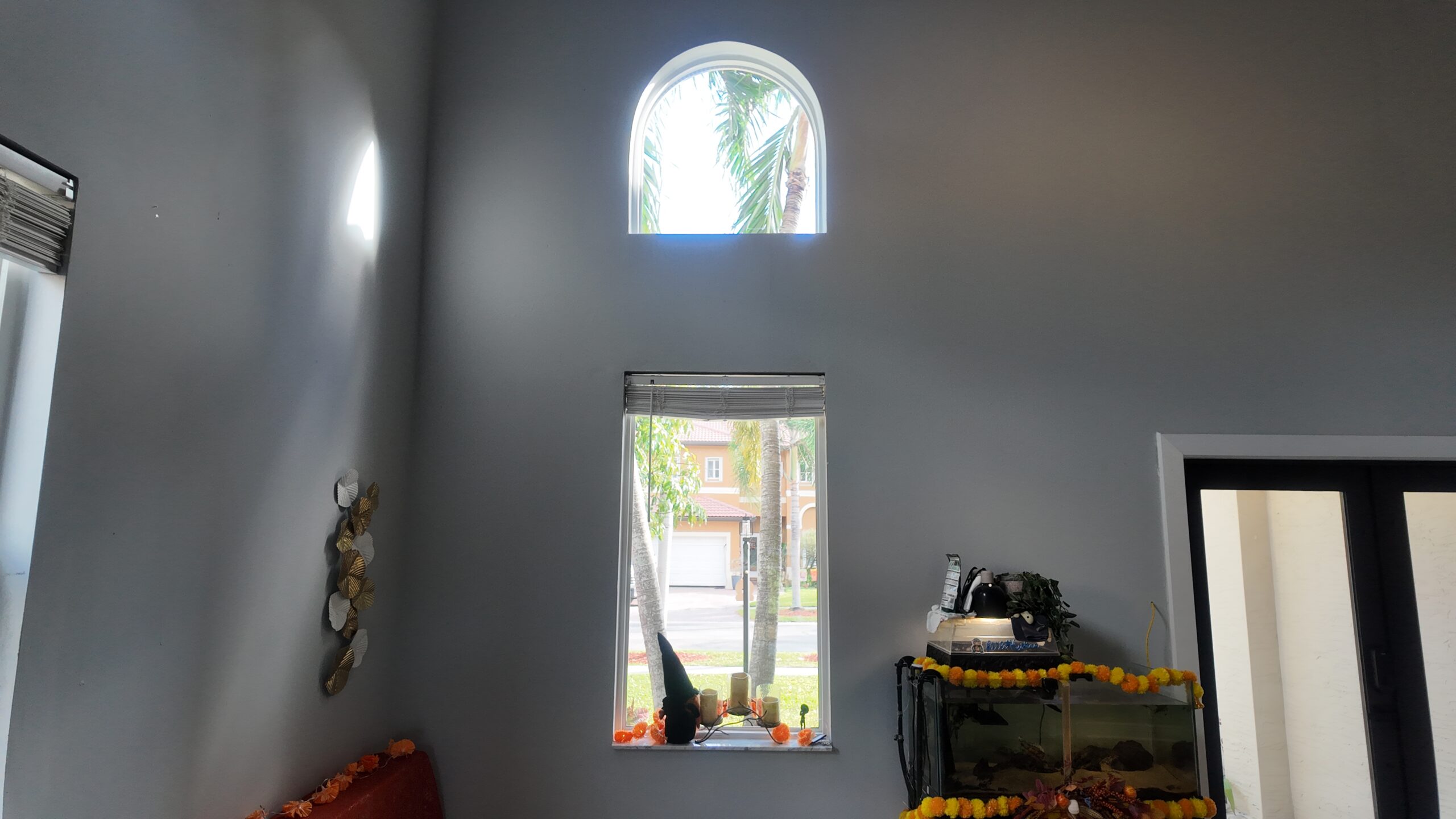
Impact windows replace your existing window with a laminated-glass unit bonded to a reinforced frame. The laminate holds the glass together even if it cracks under impact — similar to a car windshield. No deployment. No storage. No last-minute scramble when a storm track shifts.
Hurricane shutters — accordion, roll-down, panel, or Bahama style — are a protective layer installed over your existing window. They require closing (or deployment) before a storm. Accordion shutters are the most common in South Florida because they fold flat against the wall and close quickly. Panel shutters are the least expensive but require physical storage and more labor to install each season.
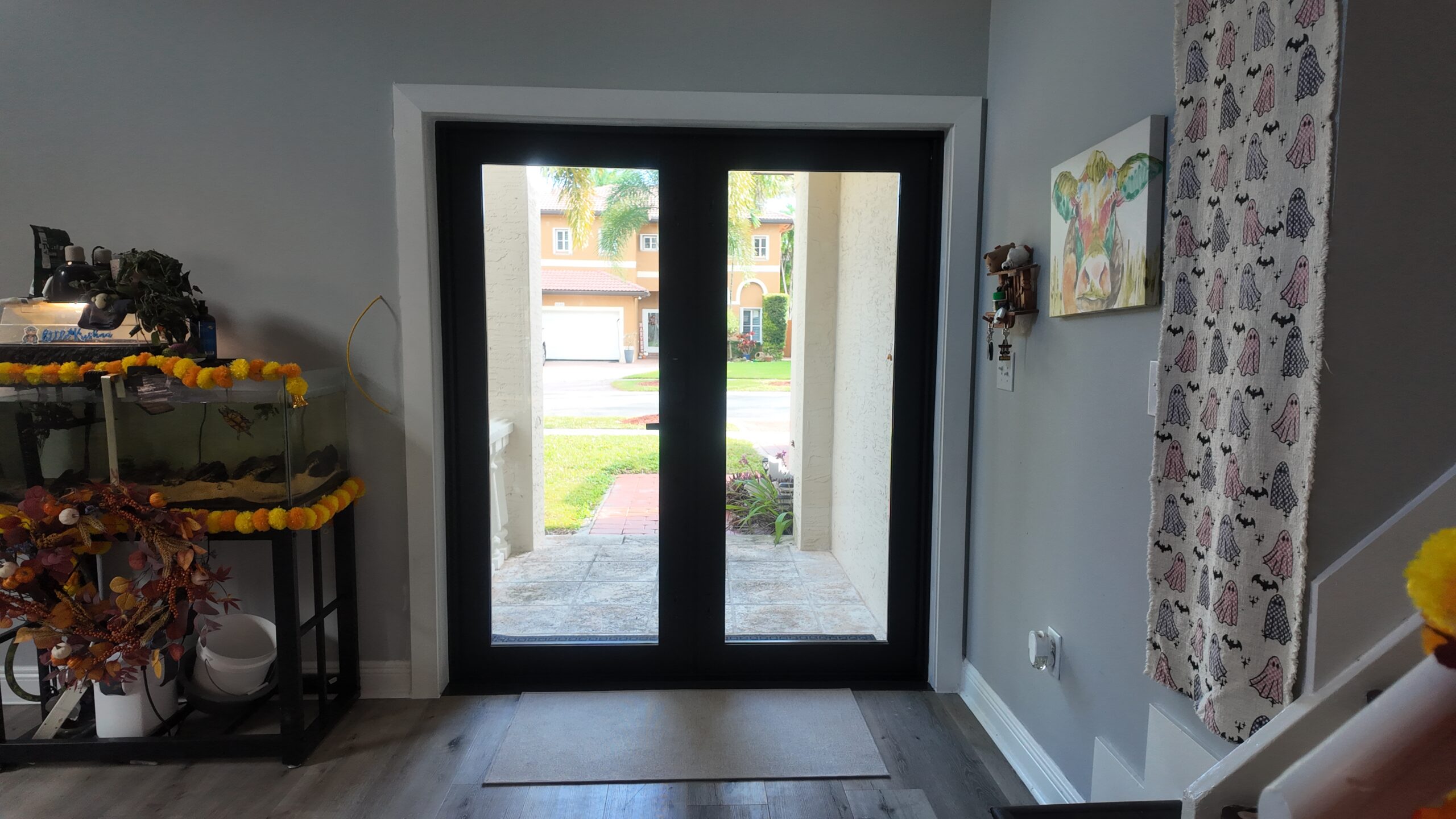
Both approaches can achieve the wind and impact ratings required by the Florida Building Code and Miami-Dade NOA standards. The meaningful differences are in convenience, cost structure, aesthetics, and long-term maintenance.
Side-by-Side
Impact Windows vs. Hurricane Shutters: Key Comparison
| Factor | Hurricane Shutters | Impact Windows |
|---|---|---|
| Storm readiness | Must be closed before each storm | Always active — no deployment needed |
| Daily light & views | Normal when open; blocked when closed | Full light and views year-round |
| Upfront cost (typical range) | Lower — varies by type and opening count | Higher — but consolidates window + protection |
| Maintenance | Tracks, hinges, panels need annual service | Minimal — frame and seal inspection |
| HOA compatibility | Some HOAs restrict visible shutters | Generally HOA-friendly — no visible hardware |
| Insurance discount potential | Yes — verify with your carrier | Yes — often higher; verify with your carrier |
| Energy efficiency | No change to window performance | Can improve with thermally broken aluminum frames |
| HVHZ approval available | Yes — product-dependent | Yes — product-dependent (e.g., ES Windows, Mr. Glass) |
Note: Actual cost ranges depend on your home’s opening count, frame conditions, and the specific products selected. We do not publish fixed price promises because variables differ meaningfully from property to property.
| Shutter Type | Deployment Effort | Storage Required | Approximate Relative Cost |
|---|---|---|---|
| Accordion | Low — fold and latch | None (permanently mounted) | Mid-range |
| Roll-down (manual) | Low — crank or pull | None (permanently mounted) | Mid to high |
| Roll-down (motorized) | Very low — button press | None (permanently mounted) | Higher |
| Storm panels (aluminum/polycarbonate) | High — bolt each panel | Yes — significant space needed | Lower |
| Bahama / Colonial | Low — prop rods | None (permanently mounted) | Mid-range |
License & Accountability
A Licensed Contractor, Not a Lead Aggregator
When your home needs structural work alongside a window project, one contractor holding the right licenses matters.
Florida licensed: CGC1531370 · CRC1331693 · CCC1333168 · SCC131153098
“Impact windows are not always the right answer for every homeowner. Our job is to give you the honest picture so you can decide — not to sell you the more expensive option.”
Founder & President, Bigfoot Windows & Roofing
Our Product Approach
What We Actually Install — and Why
For impact windows, we work primarily with Mr. Glass and ES Windows — manufacturers whose products carry Miami-Dade NOA approvals and have been tested and installed across South Florida’s coastal and HVHZ markets. We do not represent PGT, CGI, or Andersen products.
For frames, we recommend aluminum — specifically thermally broken aluminum where energy performance matters. National marketing often promotes vinyl as an energy-efficiency winner, but vinyl’s long-term performance in South Florida’s sustained heat, salt air, and UV exposure is less established than aluminum’s. Thermally broken aluminum gives you structural integrity and improved thermal performance without relying on a frame material that is less proven in this specific environment.
If you are exploring impact-rated doors alongside windows, the same frame-material logic applies. We assess each opening individually.
The Process
How a Window or Shutter Project Actually Unfolds
Whether you choose impact windows or shutters, a compliant South Florida install follows a defined sequence: site assessment and opening measurements, product selection with verified NOA or Florida Product Approval numbers, permit application with your local building department, installation by a licensed crew, and a final building inspection. Skipping the permit step is not a shortcut — it is a code violation that can complicate your home sale or insurance claim later.
One area where our Certified General Contractor license (CGC1531370) creates a structural advantage: if your window project uncovers framing damage, rot, or a need for hurricane straps or structural modifications, we can address that scope in-house rather than pausing your project to bring in a separate contractor. This is not a delivery-outcome guarantee — it is a scope-coverage reality grounded in what that license authorizes us to do. For homeowners in older Miami-Dade or Broward construction, this matters more often than you might expect.
Have questions about which option fits your home? Talk to a licensed South Florida contractor — no pressure, no lead forms.
Keep Reading
Related Articles
Who We’re Not the Right Fit For
- Budget-first, speed-first buyers: If your primary goal is the lowest possible upfront spend and you need work done in days, we are probably not your contractor. Permitted, inspected installs take longer and cost more than unpermitted work — and we only do permitted work.
- Homeowners committed to a specific brand we don’t carry: We work with Mr. Glass and ES Windows. If you have already decided on a different manufacturer, we are not a good fit.
- Properties outside our service area: We serve Miami-Dade, Broward, and Palm Beach counties. If your home is outside South Florida, we cannot help.
- Renters or property managers without owner authorization: Impact window and shutter work requires permits pulled under the property owner’s name. We need clear owner authorization before starting.
Frequently Asked Questions
Impact windows vs. hurricane shutters — which is better for South Florida?
For most South Florida homeowners, impact windows offer greater convenience and long-term value because they require no deployment before a storm. Shutters cost less upfront but require physical effort to close and may frustrate HOA requirements. The best answer depends on your budget, HOA rules, physical ability to deploy shutters, and how often you travel during hurricane season.
Do impact windows qualify for a homeowner’s insurance discount in Florida?
Many Florida insurers offer premium reductions for impact-rated openings. The discount amount and eligibility vary by carrier and policy. Request a quote from your insurer before and after a hypothetical impact-window install to estimate actual savings. We do not quote specific dollar amounts because insurer policies differ meaningfully.
Are hurricane shutters or impact windows required in Miami-Dade?
Miami-Dade’s HVHZ requires that all openings — windows, doors, skylights — meet approved wind and impact standards. You can satisfy that requirement with either impact-rated glazing or an approved shutter system protecting an existing window. Products must carry a Miami-Dade Notice of Acceptance (NOA) or equivalent Florida Product Approval with HVHZ authorization.
How much do impact windows cost compared to hurricane shutters?
Impact windows typically cost more upfront than most shutter systems because they replace the entire window unit, not just add a cover. The total depends on your home’s opening count, frame conditions, product line, and local labor costs. Shutters have lower upfront costs but ongoing maintenance costs for tracks, panels, and hardware. We do not publish fixed per-unit prices because actual costs vary significantly.
Can I mix impact windows and hurricane shutters on the same home?
Yes. Many South Florida homeowners install impact windows on frequently used rooms (living areas, bedrooms) and retain shutters on garage openings or utility spaces where impact-rated glazing is harder to justify economically. All openings must still meet the HVHZ standard — how you satisfy it per opening can vary.
Why does Bigfoot prefer aluminum frames over vinyl for South Florida impact windows?
Aluminum has a longer, more consistent track record in South Florida’s heat, salt air, UV, and HVHZ conditions than vinyl. National testing environments do not fully replicate coastal Florida’s real-world stresses. We recommend thermally broken aluminum when energy efficiency is a priority — it reduces heat transfer without sacrificing structural integrity. This is our experience-based preference, not a universal rule.
Sources
- Florida Building Code (FBC), 8th Edition — Chapter 14, Exterior Walls and Openings
- Miami-Dade County Product Control — Notice of Acceptance (NOA) database: miamidade.gov/building
- Florida Department of Business and Professional Regulation (DBPR) — License verification: myfloridalicense.com
- Florida Product Approval system — floridabuilding.org/pr
- ENERGY STAR / NFRC — Window performance ratings: energystar.gov
Ready to get a straight answer about your home’s openings?
Request a free estimate — no commitment, no pressure.
Related Articles
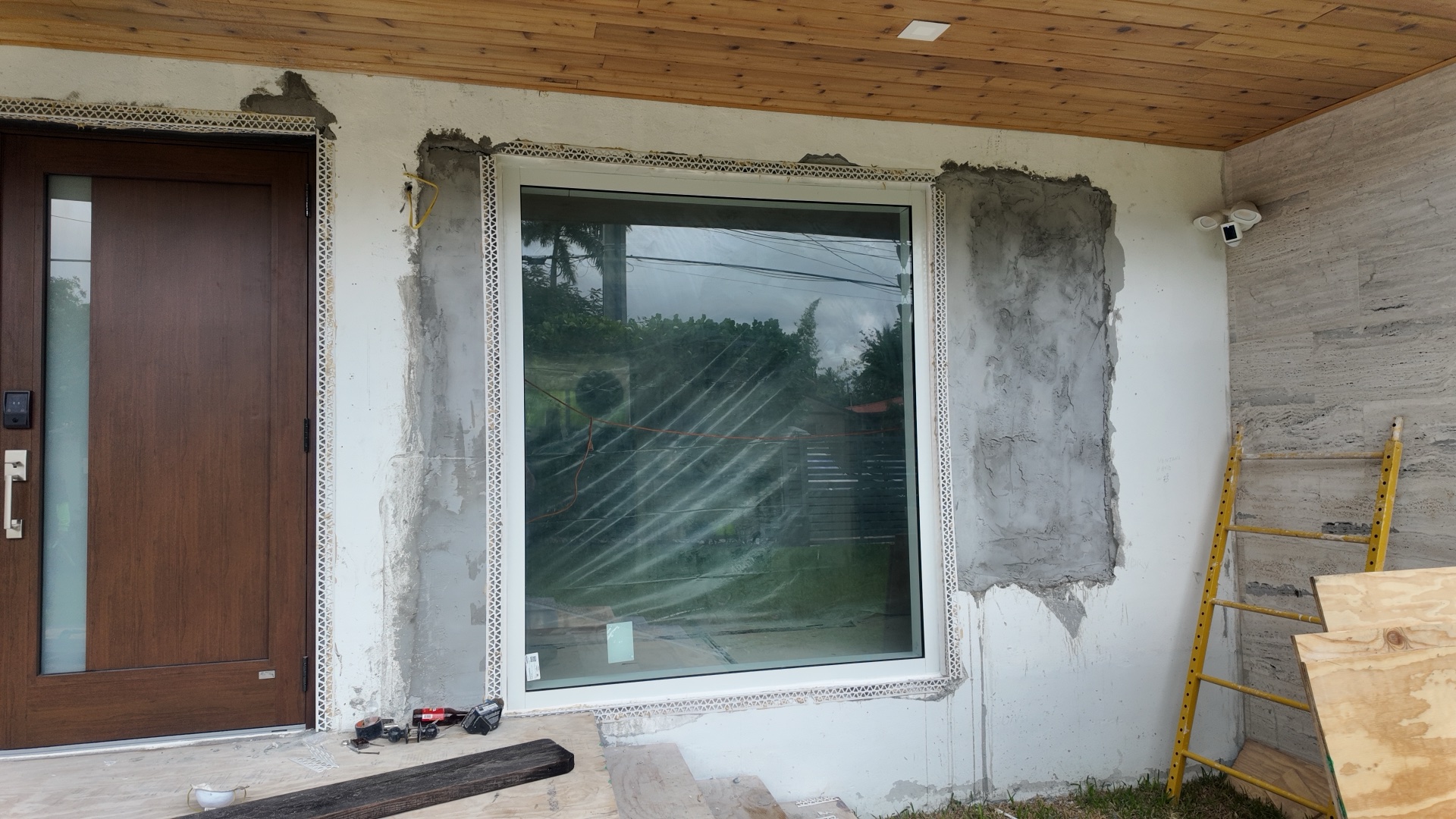 Impact Windows in Miami: Hurricane Protection, Energy Savings & What South Florida Homeowners Need to Know
 Ultimate Florida Guide to Hurricane‑Proof Impact Windows Installation
 Eurocraft Windows: European Style, Hurricane-Ready Performance for South Florida Homes
 PG Window Ratings Explained: How to Choose the Right Hurricane Impact Windows for Your South Florida Home