Last updated: July 2026 by the Bigfoot Windows & Roofing editorial team.
Short answer: When your windows and roofing come from two separate contractors, you inherit their coordination gap. Scheduling clashes, finger-pointing over water damage, and split warranties leave you holding the risk. One contractor who is authorized to handle both trades under a single license umbrella eliminates that gap structurally — before it becomes your problem.
Key Takeaways
- Split-trade projects create a finger-pointing gap that falls on the homeowner to resolve.
- Framing rot found during a window install often cannot legally be fixed by a window-only subcontractor.
- One contractor coordinating both trades prevents scheduling conflicts and overlapping warranties.
- In Miami-Dade’s High-Velocity Hurricane Zone, building-envelope gaps cost more to fix after the storm.
- A Certified General Contractor license is what authorizes structural framing repairs — not just window or roofing credentials alone.
The Real Problem
What Actually Goes Wrong When You Hire Two Separate Contractors
The conflict isn’t about competence — it’s about accountability.
Here is the scenario that plays out repeatedly on South Florida homes: a roofing crew finishes first, installs new underlayment, and closes up. Three weeks later, the window crew arrives, cuts into the rough opening, and finds rotted framing — sill plates soft from years of water intrusion. Now what?
The window installer says it is a structural issue and outside their scope. The roofer says the rot was there before they touched the deck. You are left in the middle, making calls, waiting on callbacks, and watching your project stall. Neither contractor has any legal incentive to absorb a cost that belongs to the other’s trade.
This is the structural problem with split-trade projects: the gap between two contractors becomes your liability by default.
South Florida Context
Why the Stakes Are Higher in Miami-Dade and Broward
Miami-Dade and Broward counties sit inside the High-Velocity Hurricane Zone (HVHZ) — the strictest residential building code jurisdiction in the United States. Products used here must carry a Miami-Dade NOA (Notice of Acceptance) or a Florida Statewide Product Approval. Every penetration in your building envelope — window openings, door openings, roof-to-wall connections — is a code-governed assembly.
In this environment, a gap in coordination is not just an inconvenience. A window that is improperly flashed because the roofer’s drip edge and the window installer’s pan flashing were never coordinated can channel water directly into your wall cavity. Over a hurricane season, that becomes a mold and structural problem. The Florida Building Code requires these assemblies to be inspected together — they were designed to work as a system.
When one contractor holds both scopes, the flashing detail, the buck installation, and the roof-to-wall termination are all under a single set of eyes and a single permit.
How It Works
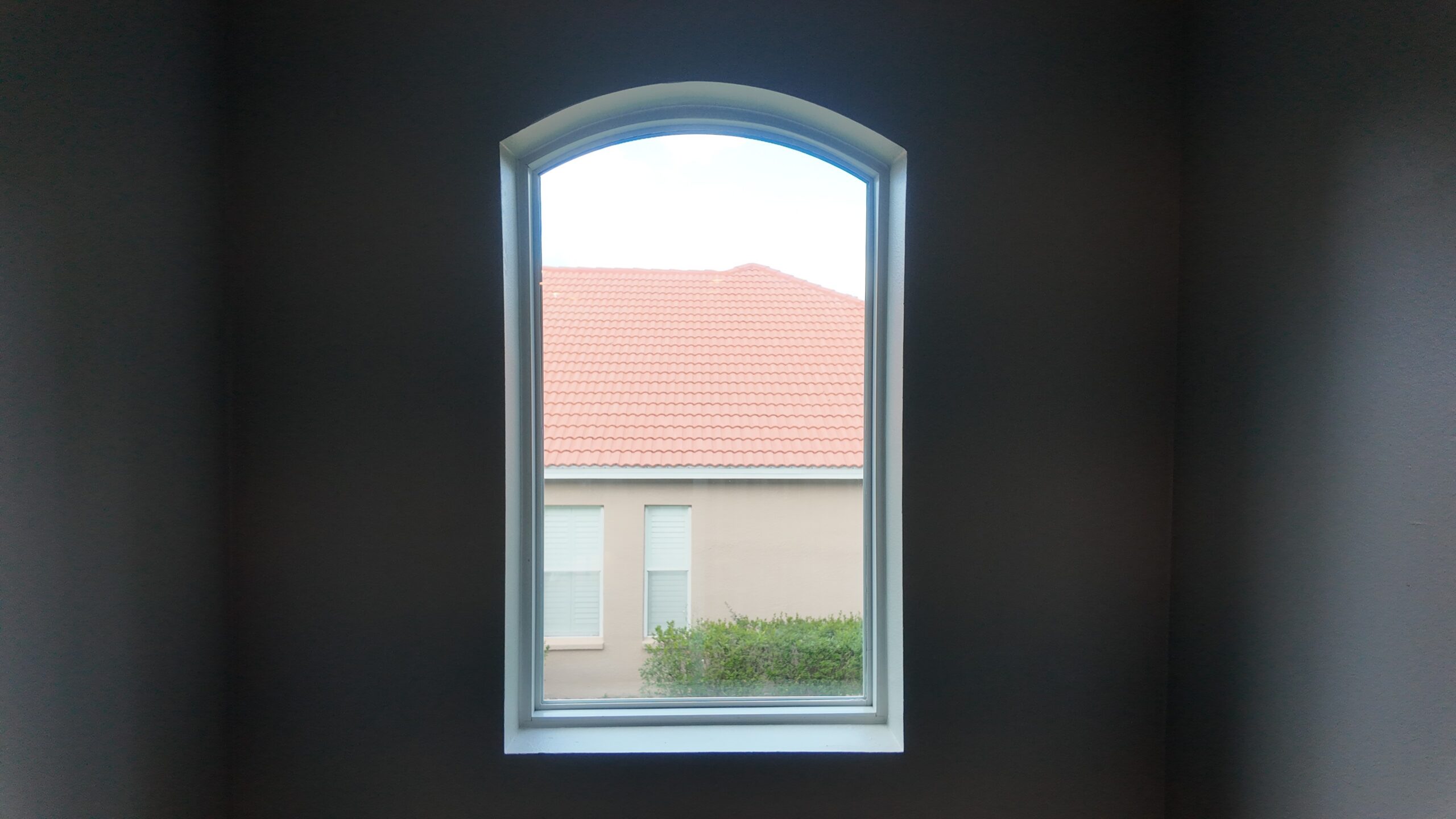
The Building Envelope Is One System — Not Two Jobs
Windows and roofing are adjacent parts of the same moisture barrier.
A building envelope is the set of physical components that separates conditioned interior space from exterior weather. It includes: the roof membrane and deck, the roof-to-wall transition, the wall sheathing, the window and door bucks, the rough opening flashing, the window or door unit itself, and the exterior cladding. Every one of those components affects the others.
When you hire an impact window installer separately from a roofer, you are asking two separate businesses to make decisions about the same continuous barrier — without any contractual obligation to coordinate with each other.
| Scenario | Two Separate Contractors | One Contractor (Both Trades) |
|---|---|---|
| Framing rot found at window opening | Disputed — neither contractor’s scope | Handled in-house under GC license |
| Flashing at roof-to-window transition | Each crew installs their own; gaps possible | Single spec, single inspection |
| Permit coordination | Two permits, two inspectors, two timelines | Coordinated under one pull |
| Warranty disputes | Each contractor points at the other | One warranty, one contact |
| Scheduling | Calendars rarely align; delays common | Sequenced by same superintendent |
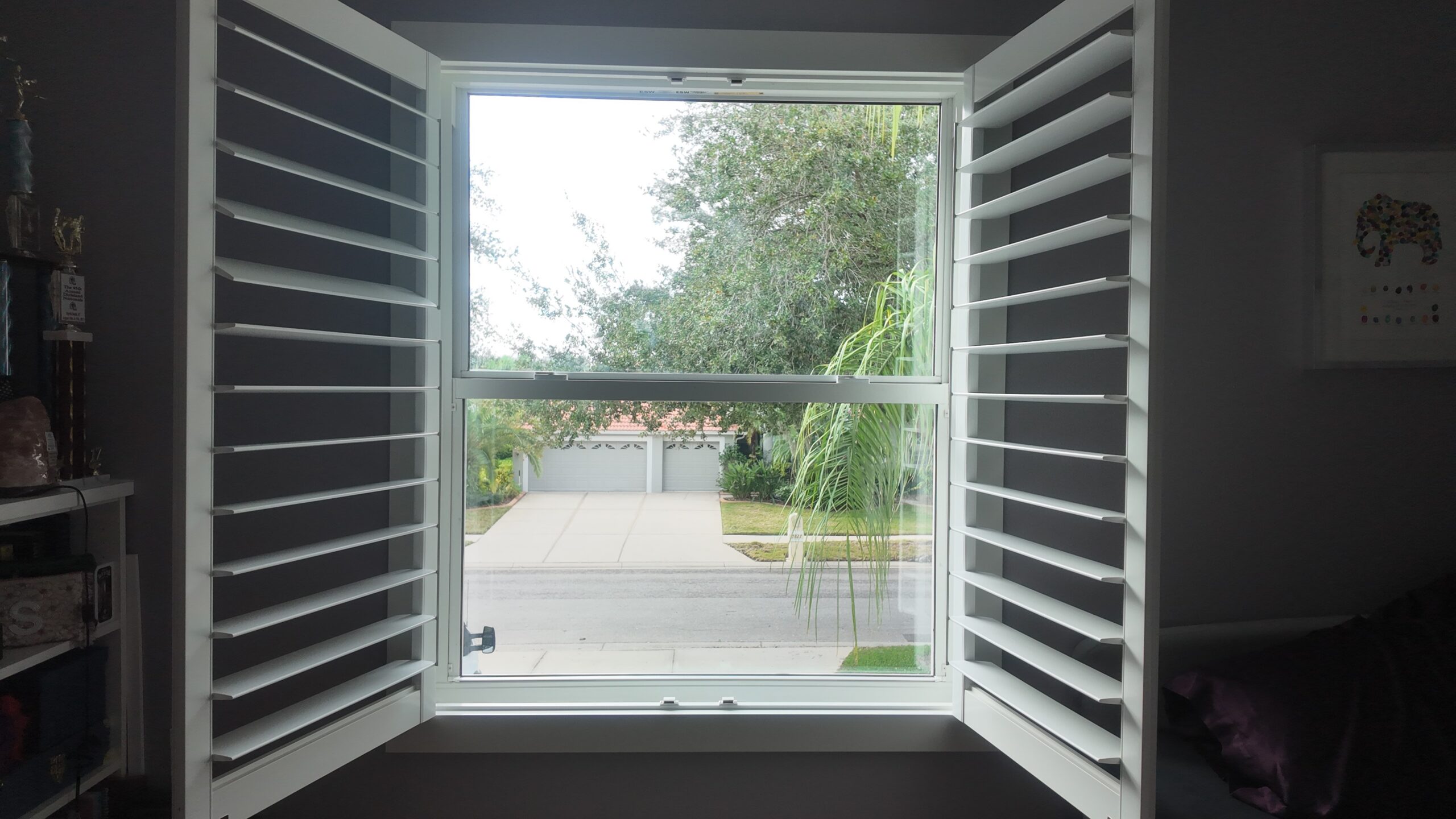
Who Actually Fixes the Framing?
This is the question most homeowners do not think to ask until they are standing in front of a rotted rough opening. A window-only installer is licensed to install windows. A roofer is licensed to install roofing. Structural framing repair — sistering a rafter, replacing a sill plate, reinforcing a load-bearing header — falls under general contracting scope.
A contractor authorized to coordinate multi-trade scope under a Certified General Contractor license can handle that framing repair in-house, keep the project moving, and pull the correct permit. A window-only installer legally cannot. This distinction is not marketing — it is license scope as defined by the Florida Department of Business and Professional Regulation (DBPR).
When you review your roofing project scope alongside your window replacement, ask every contractor you are evaluating: if your crew finds rotted framing, what happens? The answer tells you everything about who absorbs the risk.
Trade-Off Comparison
One Contractor vs. Two: What Each Approach Costs You
| Decision Factor | Two Separate Contractors | One Contractor (Both Trades) |
|---|---|---|
| Accountability for gaps | Unclear — homeowner mediates | Single point of contact |
| Structural scope (framing, hurricane straps) | Not included — requires a third contractor | In-house under GC license |
| Permit pulls | Two separate permits | Coordinated permitting |
| Insurance certificate | Two policies to verify | One certificate covers both scopes |
| Timeline | Dependent on two schedules | Single project timeline |
| Warranty | Split — product vs. labor, different contacts | Unified workmanship warranty |
When Two Contractors IS the Right Answer
Honestly: if you are replacing only one window on a structurally sound home and your roof is new, a specialized window company is a perfectly reasonable choice. If your roofing project is entirely independent — a flat membrane replacement on a commercial building where no windows are in scope — a roofing-only contractor is appropriate. The one-contractor advantage is most meaningful when both trades are happening at the same time, when the home has any history of water intrusion, or when structural unknowns exist.
License-Backed Accountability
Four Licenses. One Contractor. One Point of Contact.
A licensed contractor, not a lead aggregator or a single-trade subcontractor.
“When a window crew finds rot, somebody has to own it. With the GC license, that somebody is us — not the homeowner.”
President, Bigfoot Windows & Roofing
What We Install
Impact Windows, Roofing Systems, and the Frame Materials That Perform in South Florida
For impact windows, we install Mr. Glass aluminum-framed units as our primary line. Aluminum is our recommendation for South Florida — it is more time-tested in HVHZ heat, humidity, UV exposure, and hurricane-force wind pressure than vinyl alternatives. For homes within two miles of saltwater, we specify 2605 coastal finish to protect the frame and maintain the 10-year product warranty.
For roofing, we install GAF shingle systems (GAF Certified Plus; System Plus warranty available), Englert or Metal Alliance standing seam metal, Westlake tile, and TPO flat roofing. Each product line is selected based on the home’s existing structure, HOA requirements, and the owner’s insurance goals. When both trades are scoped together, material choices on the roof and at the windows can be coordinated to support a wind mitigation inspection — which can meaningfully affect your insurance premium.
If structural scope is uncovered during either installation — hurricane strap deficiencies, rotted framing, or load-path issues — those repairs are handled in-house under the Certified General Contractor (CGC1531370) license rather than subcontracted out or left for you to coordinate separately. Homeowners who need financing options can ask about PACE financing, which is paid through the property tax bill and keeps the project moving without upfront capital.
How It Works
The Single-Contractor Process: Consult Through Certificate of Completion
- Scope consultation: Both window and roofing scopes are assessed at the same visit. Structural observations are noted upfront, not discovered mid-project.
- Unified permitting: Permits for both trades are pulled together where possible, reducing inspection scheduling conflicts.
- Sequenced installation: Roofing and window work is staged so that flashing and rough openings are coordinated — not installed by two crews who never speak to each other.
- Structural repairs in-house: If framing rot or hurricane strap deficiencies are found, they are addressed under the same project, same permit, same contractor.
- Final inspection: A single certificate of completion covers both scopes. Your warranty documentation comes from one source.
Ready to scope both trades together and stop coordinating two separate crews?
Who We’re Not the Right Fit For
- Single-trade, small-scope projects: If you need one window replaced on a structurally sound home with a new roof, a window-specialty company may be faster and more cost-efficient than engaging a multi-trade contractor.
- Budget-first buyers prioritizing lowest bid over accountability: Our multi-license structure and in-house structural capability are reflected in our pricing. If your primary filter is lowest number on paper, we are probably not your contractor.
- Homeowners who want to manage their own subcontractors: We coordinate both trades as a single project. If you prefer to run your own general contracting process and hire individual crews separately, that model works — it just carries the coordination risks described in this article.
- Commercial or high-rise projects outside our service area: We serve Miami-Dade, Broward, and Palm Beach counties for residential and light commercial work. Large commercial or multi-family high-rise projects outside that scope are better served by a commercial GC firm.

Written by Darryl Henry Rosenbaum, Founder of Bigfoot Windows & Roofing.
Darryl Henry Rosenbaum, doing business as Bigfoot Windows and Roofing, holds four active Florida licenses recognized by the Florida Department of Business and Professional Regulation (DBPR): Certified General Contractor (CGC1531370), Certified Residential Contractor (CRC1331693), Certified Roofing Contractor (CCC1333168), and Certified Specialty Contractor with a Glass & Glazing Specialty (SCC131153098).
Frequently Asked Questions
Should I use one contractor for windows and roofing?
If both trades are happening at the same time, yes — strongly. The roof-to-window transition is a continuous moisture barrier, and two separate crews making independent decisions about that interface creates a coordination gap. When structural unknowns exist (older homes, prior water damage, unknown framing conditions), a single contractor authorized to handle all scopes prevents the project from stalling when something unexpected turns up.
What happens when window and roofing crews conflict on a job?
Typically, both crews stop work and point at each other. Roofing crews are not responsible for window flashing; window crews are not responsible for roof drip edge. The homeowner becomes the de facto project manager, making calls to get two contractors to agree on who fixes what. This can delay a project by weeks. One contractor who holds both scopes eliminates the conflict because there is only one party responsible.
Who fixes framing rot found during a window install?
A window-only installer is not licensed to perform structural framing repairs. That scope requires a Certified General Contractor or Certified Residential Contractor license under Florida law. If a window crew finds rotted sill plates or a deteriorated header, they must stop and notify you. You then need to find a separate contractor — unless your window installer also holds a GC or residential contractor license and can address it in-house.
Why does a general contractor license matter for impact windows?
The GC license authorizes structural scope — framing repairs, header reinforcement, hurricane strap installation, and load-path corrections. Impact window installation regularly uncovers these conditions in older South Florida homes. A contractor who holds only a window specialty license must stop at the rough opening. A contractor with a Certified General Contractor license can continue the work legally, keep the project on schedule, and pull the correct permit for structural repairs.
What is total building envelope protection?
The building envelope is the complete system of roof, walls, windows, and doors that separates your interior from weather. Total envelope protection means every component — roof membrane, flashing, window bucks, rough opening seals, and wall penetrations — is installed and inspected as a coordinated system. In Miami-Dade’s HVHZ, code requires these assemblies to work together. A single contractor responsible for the full envelope ensures that coordination happens by design, not by chance.
How does a single warranty help after a storm?
After a hurricane, damage rarely falls neatly into one trade’s scope. A leak at a window-head flashing could originate from the roofing system or from the window installation — or both. With two separate contractors and two separate warranties, each party can point at the other. A single workmanship warranty from one contractor covers the interface between both trades, so you have one call to make and one party accountable for the repair.
Can I finance both windows and roofing under one PACE application?
No — PACE financing requires separate applications for roofing and windows. They cannot be combined into one application. Each scope is treated as its own project for PACE purposes. However, both can be financed through PACE on the same home, and if you qualify for the My Safe Florida Home grant (up to $10,000), that can be stacked alongside PACE financing. Ask about your options when you request an estimate.
Scope both trades together — one estimate, one permit, one warranty.
Call Bigfoot Windows & Roofing at 786-886-2088 or request a free estimate.