
Key Takeaways
- Home insurance is a financial recovery tool — it does not prevent storm damage to your home or family.
- Impact windows create a sealed building envelope that resists wind, debris, and pressure changes during a hurricane.
- A wind-mitigation inspection after impact window installation can significantly reduce your insurance premium.
- South Florida’s High-Velocity Hurricane Zone (HVHZ) has the strictest window standards in the U.S. — products must carry a Miami-Dade NOA or Florida Product Approval.
- Financing options such as PACE make whole-home hardening accessible without a large upfront payment.
The Real Problem
Insurance Is a Check. It Is Not a Shield.
Understanding what your policy actually does — and doesn’t — do when a storm hits.
Home insurance and impact windows are not the same thing — one pays for damage after it happens, the other prevents the damage from happening at all. In South Florida’s hurricane zone, the answer to which you need is both — but for different reasons.
Your insurance won’t save you: real storm protection starts at home, with your windows and doors. Home insurance pays for repairs after your roof is breached, after water floods your living room, after your windows blow in. It does not stop any of that from happening. The weeks of displacement, the mold remediation, the belongings that cannot be replaced, the stress — none of that is covered by a check.
Every hurricane season, South Florida homeowners review their insurance policies and tell themselves they are prepared. They are not wrong about being financially protected — but they are wrong about being physically protected. Real storm protection means keeping the storm outside. That starts with your windows and doors.
South Florida Context
Miami-Dade and Broward Live Under the Strictest Building Code in the Country
HVHZ standards exist because ordinary windows have failed catastrophically here before.
Miami-Dade County and Broward County sit within the High-Velocity Hurricane Zone (HVHZ) — a building-code designation that requires impact-rated products to carry a Miami-Dade Notice of Acceptance (NOA) or a Florida Product Approval. These are not marketing labels. They are independently tested, engineering-backed certifications that confirm a product can withstand the wind speeds and debris-impact loads that South Florida actually generates.
After Hurricane Andrew in 1992, investigators found that envelope breach — windows and doors failing — was the single leading cause of catastrophic structural damage. The building code reforms that followed created the HVHZ standard. If a window does not hold, the pressure difference inside and outside the home can lift the roof. This is not a theory. It is documented failure history.
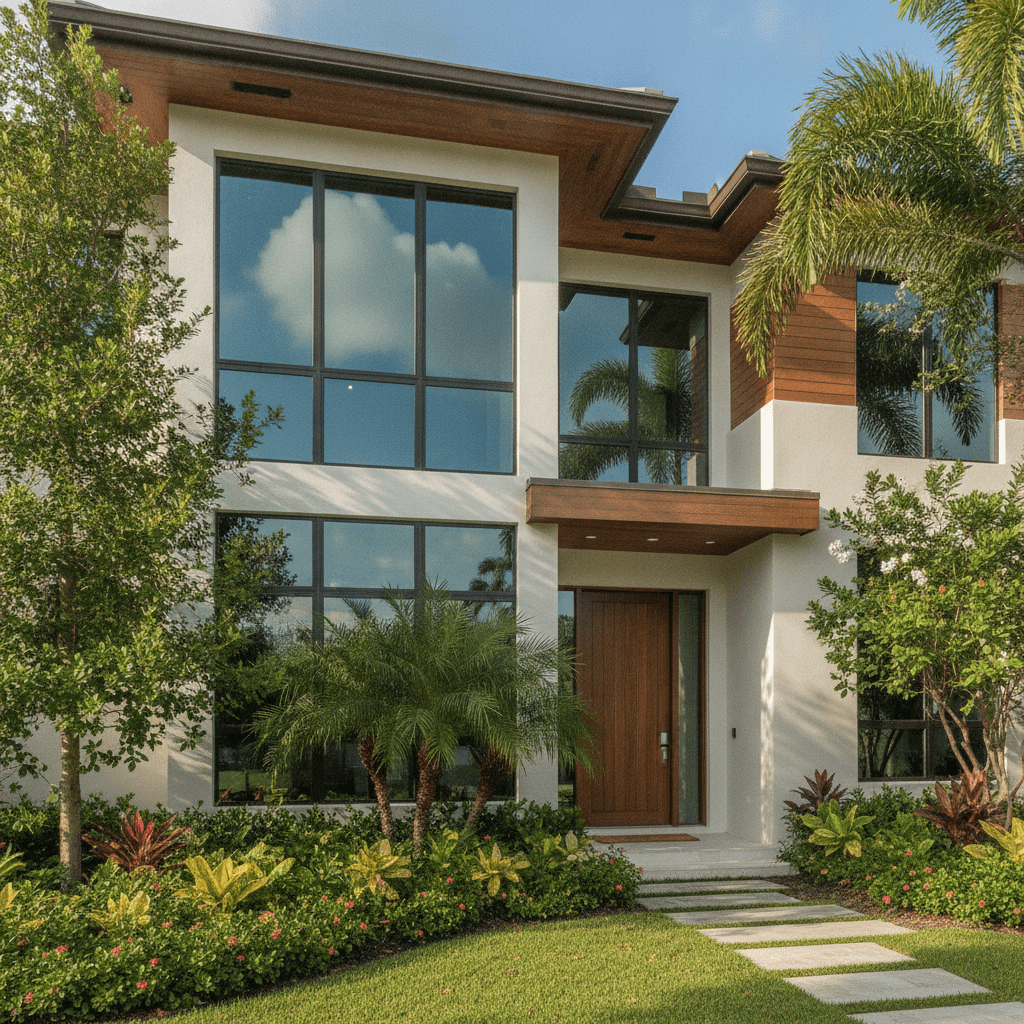
Choosing impact-rated windows built for HVHZ conditions is not an upgrade. In many cases it is a code requirement. And even where it is not legally required, it is the practical minimum for storm readiness in this region.
How Impact Windows Work
What Actually Happens When a Hurricane Tests Your Windows
The physics of envelope breach — and why impact glass changes the outcome.
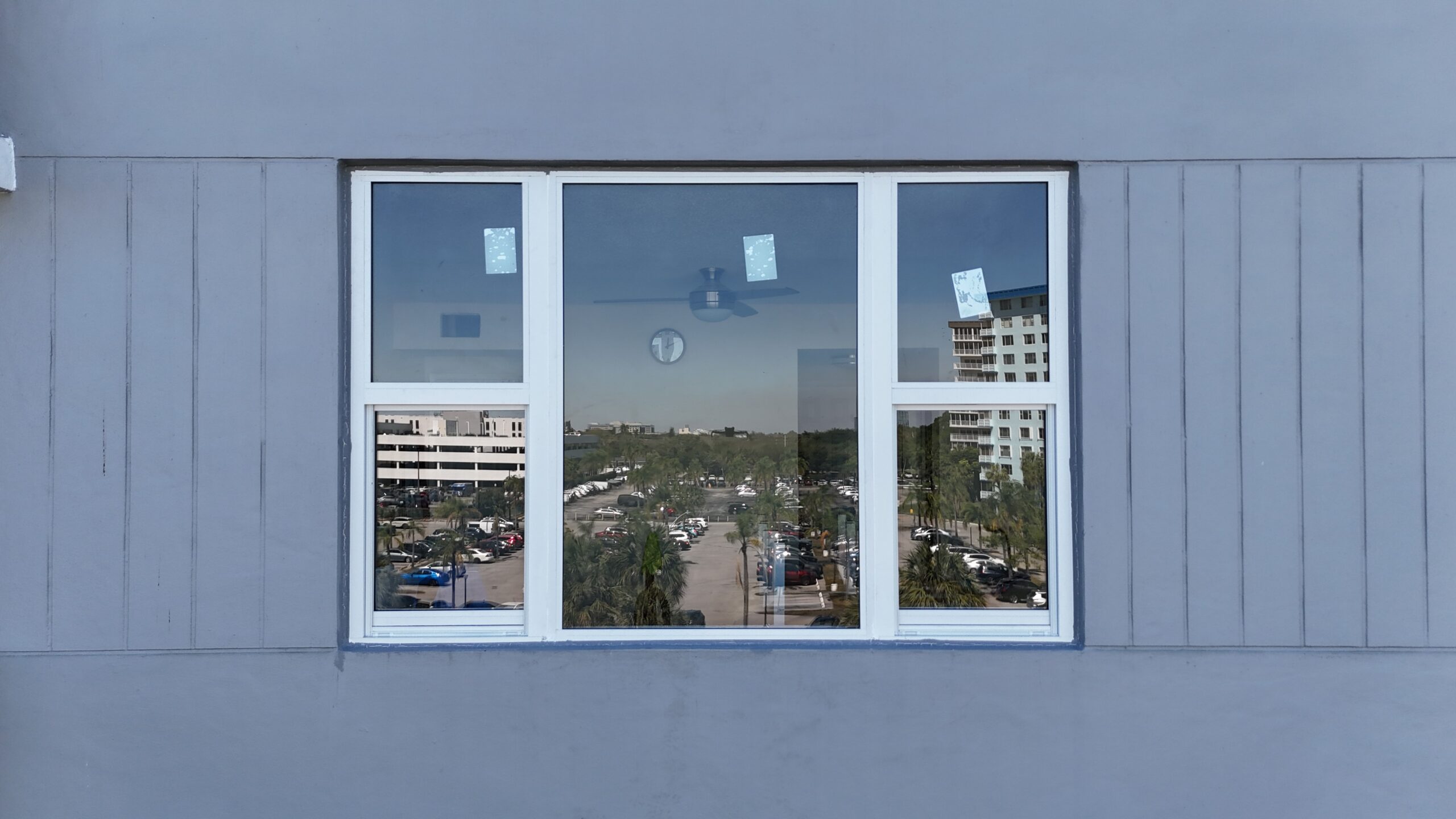
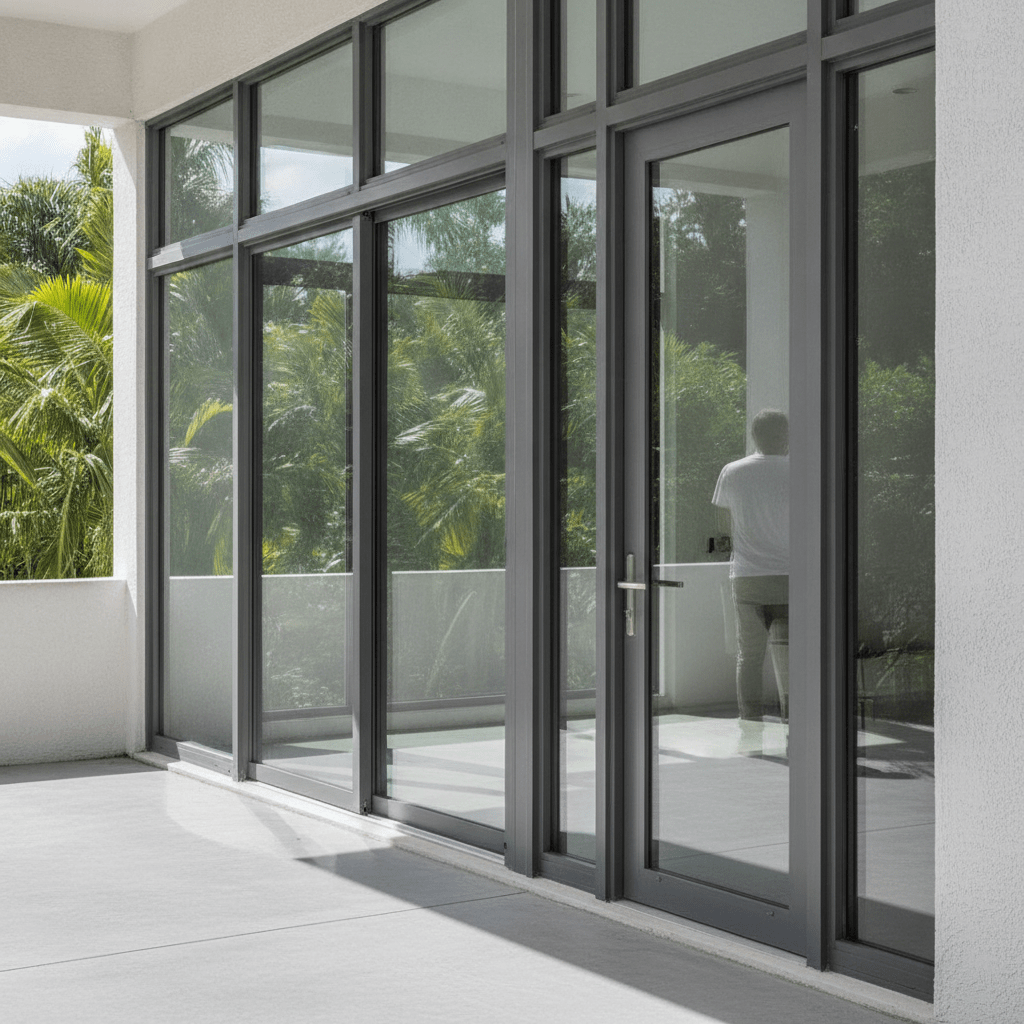
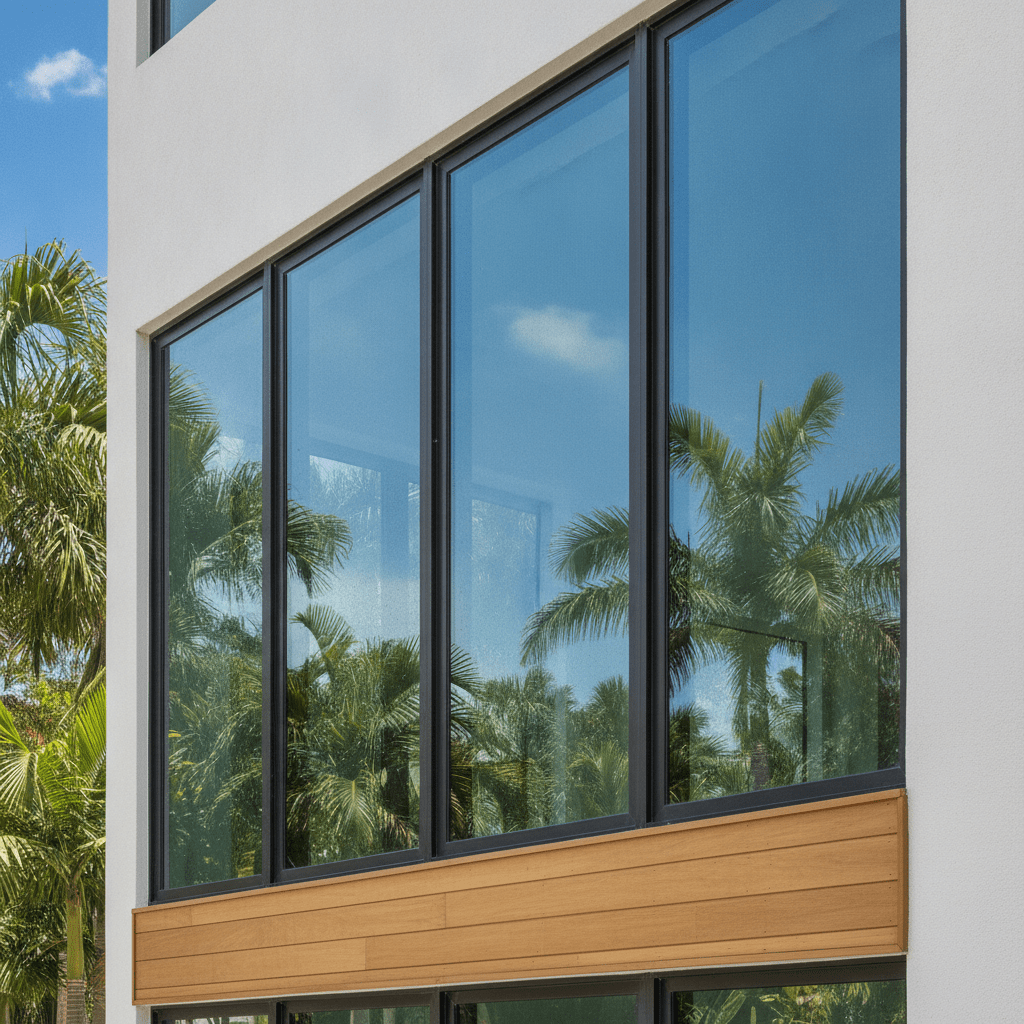
A standard single-pane or basic double-pane window is not designed to absorb the kinetic energy of a two-by-four traveling at 34 mph, which is the debris-impact standard set for large-missile testing under Florida Building Code. Impact windows use a laminated glass system — two panes bonded to a polymer interlayer. When struck, the glass may crack but the interlayer holds the pieces in place. The opening stays sealed.
That seal matters for two reasons. First, it prevents water intrusion from horizontal rain driven at hurricane speeds. Second — and this is the structural reason — it maintains the pressure equilibrium inside the home. Once a window fails and air rushes in, internal pressure rises dramatically. That pressure differential is what lifts roofs and collapses walls.
The frame material matters too. In South Florida’s salt air, UV intensity, and sustained heat, aluminum frames are the time-tested choice. Aluminum holds its tolerances in HVHZ heat and humidity over decades. Thermally broken aluminum frames add an insulated barrier inside the frame itself, reducing heat transfer and improving energy efficiency without sacrificing structural integrity.
| Window Type | Debris Impact | Pressure Resistance | Code Status (HVHZ) | Insurance Credit |
|---|---|---|---|---|
| Standard single-pane | Fails large missile test | Low | Does not comply | None |
| Basic double-pane (non-impact) | Fails large missile test | Low–moderate | Does not comply | None |
| Impact-rated laminated (aluminum frame) | Passes large-missile test | High — maintains seal | Complies with NOA/FPA | Significant wind-mit credit |
Insurance vs. Impact Windows
What Each One Actually Does For You
A side-by-side look at what home insurance covers versus what impact windows prevent.
| Scenario | Home Insurance | Impact Windows |
|---|---|---|
| Debris strikes window during storm | Pays to repair/replace after the fact | Window holds — no breach, no claim needed |
| Water intrusion from failed window | May cover water damage (subject to deductible + limits) | Sealed frame prevents intrusion |
| Roof lifted by pressure change | Covers roof repair/replacement | Maintained envelope reduces pressure differential |
| Family displacement after storm | Loss of use coverage has limits and waiting periods | Home stays livable — no displacement |
| Belongings destroyed by water | Contents coverage has sub-limits; depreciation applies | Dry interior protects contents |
| Wind-mitigation discount | N/A — insurance is the cost | Reduces annual premium after wind-mit inspection |
When Insurance Is the More Important Conversation
Impact windows do not replace comprehensive homeowner’s insurance. If a neighbor’s tree falls on your roof, if fire damages a room, if a pipe bursts — you need insurance. The point is not to drop your policy. The point is to stop treating the policy as your only storm plan.
Why the Contractor Behind the Installation Matters
A Window Is Only as Good as the Installation
Licensed contractor, not a lead aggregator — scope coverage, pre-sale clarity, in-project visibility.
Impact window installation in the HVHZ is not a commodity service. The opening has to be properly prepared. The frame has to be anchored per the NOA specifications. In older South Florida homes, that sometimes means discovering structural issues around the rough opening — rotted wood, compromised lintels, or deteriorated sills — that have to be addressed before the window can be set correctly.
A contractor authorized to coordinate structural scope in-house can identify and resolve those structural issues without stopping the job to bring in another party. That continuity matters for code compliance and for the integrity of the final installation.
“Insurance is what you fall back on. Impact windows are what you don’t fall back on. I’ve seen homes where the windows held and the interior was untouched. I’ve seen homes where they didn’t. The difference isn’t luck.”
Darryl Rosenbaum
Founder & President, Bigfoot Windows & Roofing
Product Guidance
Impact Window Options for South Florida Homes
Not all impact windows perform equally in HVHZ conditions.
The primary window line installed by Bigfoot Windows & Roofing is Mr. Glass, which carries Florida Product Approval across all series. For high-rise and condo applications, the Mr. Glass Series 200 (single hung) and Series 300 (horizontal roller) are capable of meeting high-rise structural requirements. The Series 1000 sliding glass door ships with 9/16" glass as standard — the heaviest glass thickness in the residential class, offering superior noise reduction and impact resistance.
For coastal installations within two miles of the water, all units require the 2605 marine-grade finish. Specifying the 2604 wood-grain finish in a coastal zone voids the 10-year product warranty — a detail that matters when your insurer asks for documentation at claim time.
Glass thickness options: 5/16" (builder grade), 7/16" (mid-range standard), 9/16" (high-rise and heavy-duty). For turtle-code compliance in coastal zones, 9/16" gray glass is the cleanest path to automatic compliance.
The Wind-Mitigation Credit Process
How Impact Windows Lower Your Insurance Premium
The path from installation to premium reduction — step by step.
Florida insurers are required to offer premium discounts for homes that meet wind-mitigation construction standards. The process works like this:
- Install impact-rated windows and doors that carry a valid Miami-Dade NOA or Florida Product Approval.
- Schedule a wind-mitigation inspection with a licensed inspector after installation is complete and permitted. The inspector documents opening protection, roof covering, roof shape, roof deck attachment, and roof-to-wall connections.
- Submit the wind-mit report to your insurer. Each qualifying feature reduces your wind premium. A whole-home impact opening upgrade is one of the highest-value items on the form.
- Request re-rating. Some insurers apply the discount automatically; others require a written request. Follow up.
The dollar impact varies by insurer, policy structure, and the specific features of your home — but homeowners in Miami-Dade and Broward who complete a full opening upgrade and a new wind-mit inspection have seen meaningful reductions. No specific savings amount can be guaranteed, but the mechanism is real and well-documented under Florida statute.
If you are also addressing roofing at the same time, the combination of a qualifying roof covering and impact openings can produce the most significant wind-mit score improvement. Learn more about roofing options that support wind-mitigation improvements.
For homeowners who want to spread the cost over time, PACE financing allows the project cost to be repaid through your property tax bill — no prepayment penalty, no credit score impact. PACE rates vary by program and lender — confirm the current rate with your PACE provider before committing. My Safe Florida Home grant funding (up to $10,000) can also be stacked with PACE for qualifying properties. Consult your CPA regarding any potential tax treatment; this content is educational only.
Ready to stop relying on insurance as your only storm plan?
Request a free estimate — no pressure, no obligation.
Keep Reading
Related Articles
Who We’re Not the Right Fit For
- Homeowners who need only one window replaced: Our project structure is optimized for whole-home or multi-opening scopes. A single-window repair is often better handled by a local glazing shop.
- Buyers primarily focused on the lowest possible unit price: We specify aluminum frames and tested product lines. If the primary goal is the cheapest window on the market regardless of long-term performance in HVHZ conditions, we are probably not the right fit.
- Projects outside Miami-Dade, Broward, and Palm Beach: Our licensing and field team are concentrated in South Florida. We are not the right contractor for projects in Central or North Florida.
- Homeowners who want a quote without a site visit: Accurate pricing for impact window installation requires measuring the actual openings and assessing the structural condition of each rough opening. We do not provide binding quotes from floor plans alone.

Written by Darryl Henry Rosenbaum, Founder of Bigfoot Windows & Roofing.
Darryl Henry Rosenbaum, doing business as Bigfoot Windows and Roofing, holds four active Florida licenses recognized by the Florida Department of Business and Professional Regulation (DBPR): Certified General Contractor (CGC1531370), Certified Residential Contractor (CRC1331693), Certified Roofing Contractor (CCC1333168), and Certified Specialty Contractor with a Glass & Glazing Specialty (SCC131153098).
Homeowner Questions
Frequently Asked Questions
Does home insurance protect my home during a hurricane?
No — home insurance is a financial recovery tool, not physical protection. It pays for repairs after a storm damages your home. It does not prevent windows from breaking, water from entering, or your roof from lifting due to pressure changes. Physical protection comes from impact-rated windows, doors, and a qualifying roof covering that keep the storm outside in the first place.
Is it better to have insurance or impact windows for storm protection?
Both serve different functions. Insurance is essential for financial recovery from any covered loss. Impact windows are your physical defense — they prevent envelope breach, which is the primary cause of structural hurricane damage. The strongest position is both: impact windows to minimize damage, and insurance as a backstop for anything that gets through. Impact windows also often reduce your insurance premium through wind-mitigation credits.
How do impact windows reduce hurricane damage?
Impact windows use laminated glass bonded to a polymer interlayer. When struck by debris, the glass may crack but the interlayer holds the pane in place — the opening stays sealed. This prevents water intrusion and, critically, maintains pressure equilibrium inside the home. When windows fail and air rushes in, internal pressure rises sharply and can lift the roof. A sealed envelope dramatically reduces that risk.
What are wind-mitigation credits and how do I get them?
Wind-mitigation credits are premium discounts Florida insurers must offer for homes with qualifying storm-resistant construction features. After you install impact-rated windows and doors, a licensed wind-mitigation inspector documents your opening protection and other features. You submit that report to your insurer and request re-rating. Opening protection is one of the highest-value line items on the wind-mit form. The exact savings vary by insurer and policy.
Can impact windows lower my insurance premium?
Yes — when paired with a wind-mitigation inspection, impact windows that carry a valid Miami-Dade NOA or Florida Product Approval qualify for the opening-protection credit on Florida’s standard wind-mit form. That credit reduces the wind portion of your premium. The size of the reduction depends on your insurer, policy structure, and what other mitigation features your home has. No contractor can guarantee a specific dollar amount, but the mechanism is documented in Florida statute.
How do I make my home hurricane-resistant in South Florida?
Whole-home hardening in the HVHZ involves three primary layers: impact-rated windows and doors on every opening, a qualifying roof covering (metal standing seam, tile with proper fastening, or GAF shingles with System Plus certification), and verified roof-to-wall connections including hurricane straps where required by code. Each layer contributes independently to your wind-mitigation score and to physical storm resistance. Start with your openings — that is where most envelope breaches begin.
What financing options are available for impact windows?
PACE (Property Assessed Clean Energy) financing allows homeowners to finance impact windows through their property tax bill — not a bank loan. There is no prepayment penalty and no credit score impact. PACE rates vary by program and lender — confirm the current rate with your PACE provider before committing. A 20-year term produces the lowest monthly payment. My Safe Florida Home grant funding of up to $10,000 can be stacked with PACE for qualifying properties. Consult your CPA regarding any potential tax treatment.
Sources
- Florida Building Code, High-Velocity Hurricane Zone provisions — Florida Department of Business and Professional Regulation (DBPR)
- Miami-Dade County Notice of Acceptance (NOA) program — Miami-Dade County Product Control Section
- Florida Statute §627.0629 — Wind mitigation discounts and credits
- FEMA Mitigation Assessment Team Report: Hurricane Andrew, 1993 — building envelope failure analysis