Key Takeaways
- Low-ball Facebook ads for impact windows often signal unlicensed or fraudulent contractors.
- Florida requires a DBPR-issued license to install impact windows legally — verify it before any deposit.
- A Miami-Dade NOA or a Florida Product Approval that covers HVHZ use is required for every window installed in HVHZ — ads that skip this are a red flag.
- Manufactured urgency, vague company names, and no physical address are the most common scam tells.
- A real installer pulls permits, provides NOA documentation, and puts everything in a written contract.
- Losing a deposit to a fraudulent contractor is common and difficult to recover — prevention is the only reliable defense.
The Problem
Why Fake Impact Window Ads Work — and Who They Hurt
South Florida homeowners are a prime target. Here is why scam advertisers know it.
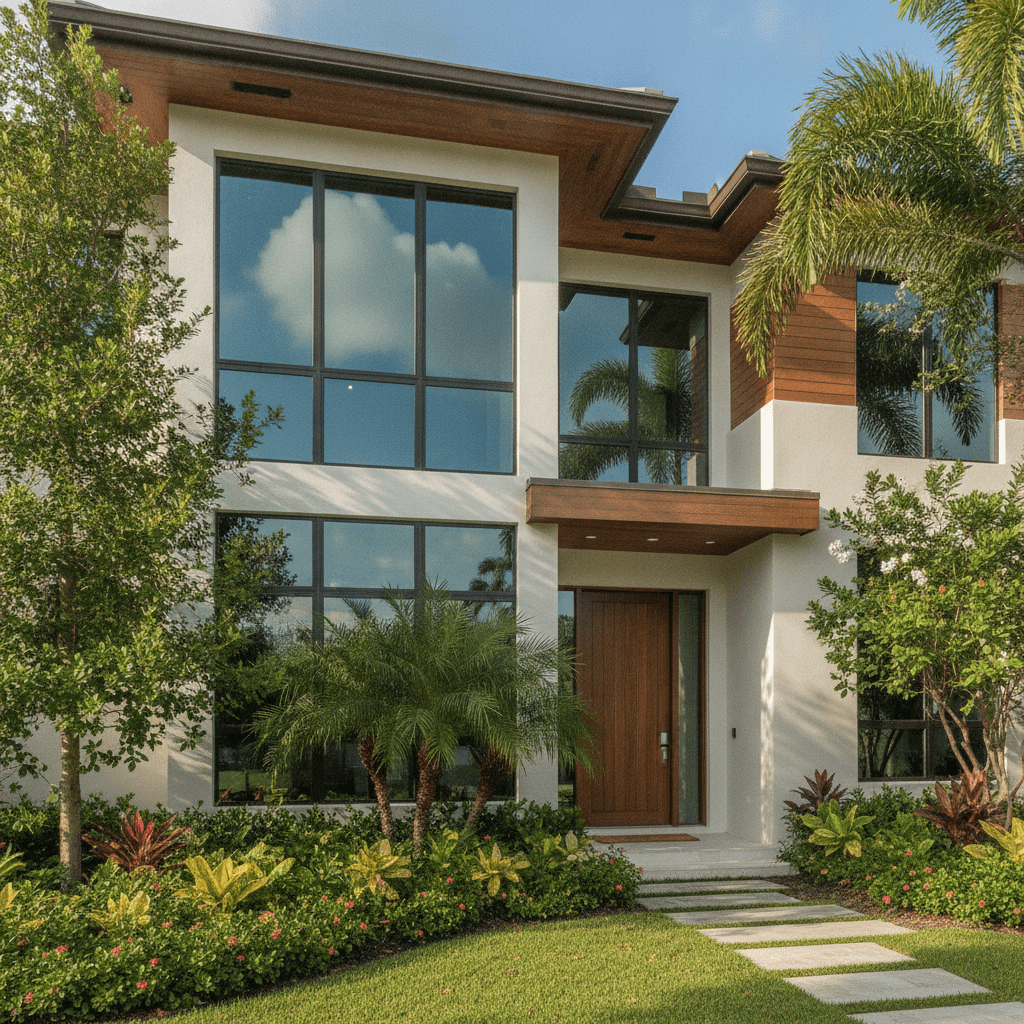
Every hurricane season, a new wave of cut-rate impact window ads floods Facebook feeds in Miami-Dade and Broward. The formula is predictable: a stock photo of gleaming windows, a price that seems 30–50% below every other quote you have gotten, a countdown timer, and a phone number. No company address. No license number. No mention of permits or Miami-Dade NOA approval.
These ads are not just misleading — they are the opening move in a contractor fraud playbook. The most common version: a homeowner sees the ad, calls, gets a plausible-sounding pitch, pays a deposit of several thousand dollars, and then the “company” stops answering. No windows are ordered. No permit is pulled. The homeowner is left with a hole in their budget, an unprotected home, and little legal recourse against a business that may not even legally exist.
Understanding why these ads are so effective — and what a legitimate offer actually looks like — is the best protection you have. This article walks you through both.
South Florida Context
Why Miami-Dade and HVHZ Homeowners Face Extra Risk
The strictest building code in the country creates a knowledge gap that scammers exploit.
Miami-Dade County is inside the High Velocity Hurricane Zone (HVHZ) — the most demanding residential construction environment in the United States. Every impact window or door installed in Miami-Dade must carry a Miami-Dade NOA or a Florida Product Approval that covers HVHZ use: a product-level approval that confirms the window has been tested to withstand the wind loads and debris-impact requirements specific to this market.
That requirement adds real cost and real complexity to a legitimate installation. A licensed installer in Miami-Dade must pull a permit, schedule inspections, use products with a Miami-Dade NOA or a Florida Product Approval that covers HVHZ use, and document the installation to code. That process costs money — which is exactly why a legitimate quote is rarely the cheapest one you will see on Facebook.
Scam advertisers know that most homeowners do not know what an NOA is, what a permit costs, or what DBPR license classes apply to window installation. That knowledge gap is the product they are selling against. When you understand what a real installation requires, a $299-per-window Facebook ad becomes obviously impossible at legal compliance standards.
For a deeper look at what compliant impact window installation actually involves in South Florida, the requirements are worth understanding before you accept any quote.
How to Spot a Scam Ad
Eight Warning Signs in a Facebook Impact Window Offer
Each of these is a standalone red flag. Multiple flags in one ad means walk away immediately.
| Warning Sign | What It Means | What a Real Installer Does Instead |
|---|---|---|
| Price 30–50% below every other quote | Product cost alone does not support the number; likely no permit, no NOA product, no labor budget | Provides an itemized written estimate with product line and permit cost included |
| No DBPR license number in the ad or on the website | Installer may be unlicensed — installation is illegal and uninspectable | License number is visible in writing before any agreement is signed |
| No physical business address | No verifiable location; no accountability if something goes wrong | Has a verifiable business address and service area listed publicly |
| Countdown timer or “today only” pressure | Manufactured urgency designed to prevent you from doing due diligence | Gives you time to compare quotes and verify credentials — no artificial deadline |
| No mention of Miami-Dade NOA or permits | Either the product is not NOA-approved or the installer plans to skip the permit | Names the specific product line, its NOA number, and confirms permit will be pulled |
| Generic company name, no reviews traceable to real projects | Shell company or recently created entity set up specifically for deposit collection | Has a documented business history, a Google Business Profile with real address, and verifiable reviews |
| Request for large cash deposit upfront (50%+) | Standard fraud pattern — once the deposit clears, contact stops | Deposit terms are reasonable and tied to contract milestones; typically less than 30% upfront for materials |
| No written contract before work begins | No legal basis for recourse if the project is abandoned | Provides a written contract covering scope, product specs, permit responsibility, and payment schedule |
The Fake Review Problem
Facebook ads can be boosted to audiences who have never interacted with the company before — and the comments section can be seeded with manufactured positive responses. Do not treat ad engagement or comments as social proof. Instead, search the company name independently on Google, check the Florida DBPR license verification portal at myfloridalicense.com, and search Miami-Dade’s online permit portal to see whether this contractor has a permit history in the county at all.
What Happens If You Pay and They Disappear?
Recovery is genuinely difficult. If the contractor is unlicensed, Florida’s Construction Industries Recovery Fund — which is funded by licensed contractor fees — does not cover losses from unlicensed operators. You may have credit card chargeback rights if you paid by card and acted quickly, but cash and check payments are harder to recover. Filing a complaint with the Florida Attorney General’s Office and your local law enforcement is the right step, but actual dollar recovery is not guaranteed. Prevention is the only reliable defense.
Real vs. Scam — Side by Side
What a Legitimate Impact Window Offer Looks Like vs. a Facebook Scam
| Criterion | Facebook Scam Ad | Legitimate Licensed Installer |
|---|---|---|
| DBPR license visible | Never — or unverifiable number | License number published; verifiable on myfloridalicense.com |
| Miami-Dade NOA referenced | Absent or vague | Specific NOA number for the product line provided in writing |
| Permit responsibility | Skipped or “you handle it” | Contractor pulls the permit; cost included in quote |
| Written contract | Verbal only or DocuSign with no specs | Full written scope: product, glass, frame, permit, schedule, payment milestones |
| Physical business address | PO Box or none | Verified street address in service area |
| Price relative to market | 30–50% below comparable quotes | Competitive but internally consistent — you can account for every cost driver |
| Post-installation inspection | No mention | Permit triggers a required county inspection — pass or redo |
| Workmanship warranty | Verbal only or not mentioned | Written warranty on installation labor, separate from product warranty |
Why License Breadth Matters Here
What Four Active Florida Licenses Actually Mean for You
A licensed contractor, not a lead aggregator or Facebook advertiser.
Darryl Henry Rosenbaum holds four active Florida licenses recognized by the DBPR. You can verify every one of them right now at myfloridalicense.com — search by license number or by name. That is the standard you should apply to any contractor before signing anything.
When impact window installation involves structural modifications — opening sizes, header reinforcement, hurricane strapping — having a contractor authorized to coordinate that structural scope in-house means you are not managing separate trades or hoping a window-only subcontractor hands off correctly to a general contractor. That structural coherence is a meaningful difference in projects that go beyond a straight swap of existing openings.
If you want to understand what financing options look like for a legitimate impact window project, explore financing options that do not require a cash windfall upfront.
“The first thing I tell anyone who has seen a low-ball Facebook ad: go to myfloridalicense.com and type in the license number they give you. If it comes back blank, or the name on the license does not match the company, stop the conversation. A real contractor expects you to verify them.”
Founder & President, Bigfoot Windows & Roofing
What Real Impact Windows Look Like
The Products Behind a Legitimate South Florida Installation
Knowing what you should be buying makes a too-low price impossible to ignore.
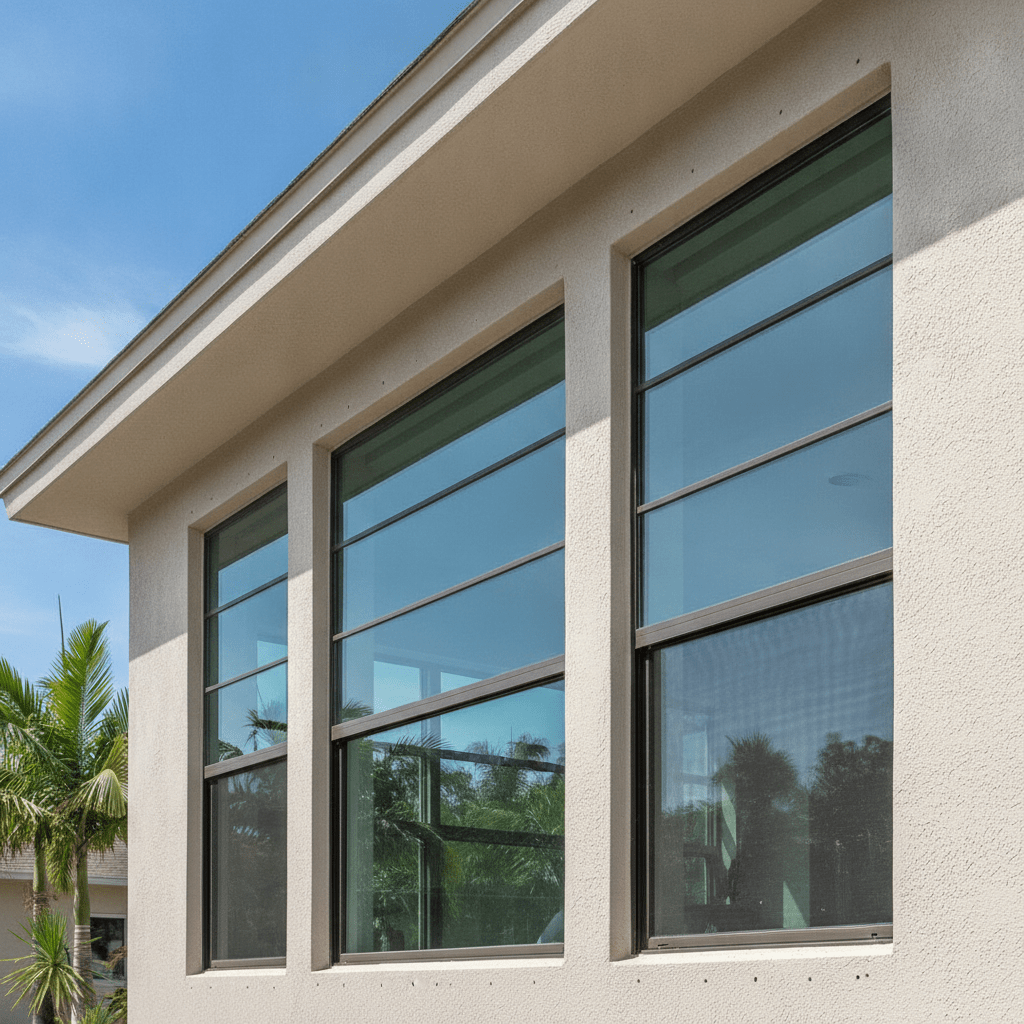
A legitimate impact window installation in Miami-Dade uses products that have gone through Miami-Dade’s independent testing and approval process. The NOA number on the product documentation is your verification that the window has been tested to the wind-load and debris-impact standards required in the HVHZ.
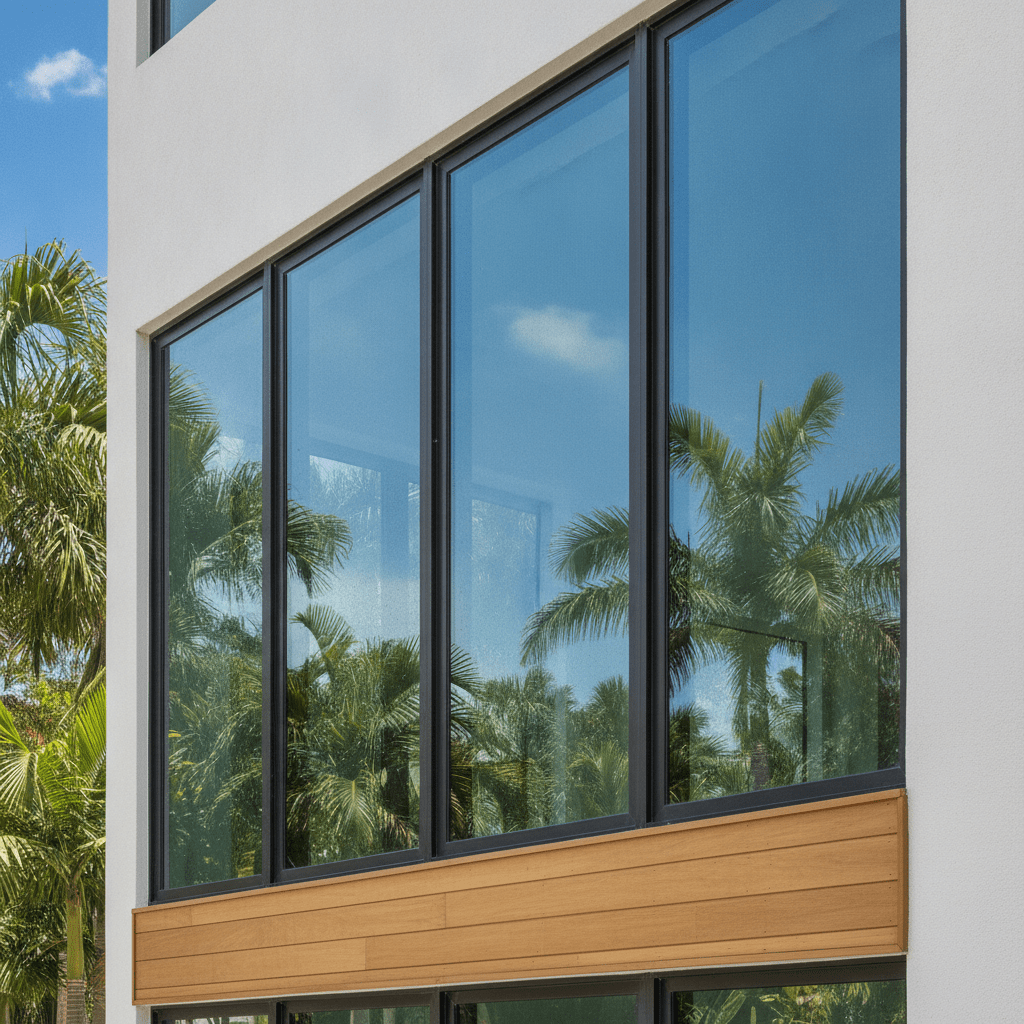
At Bigfoot, the primary window line is Mr. Glass — an aluminum-frame impact window manufactured specifically for South Florida conditions. Aluminum outperforms vinyl in the combination of heat, humidity, UV exposure, and coastal salt air that defines this market. It does not expand and contract the way vinyl does in extreme temperature swings, which matters for long-term seal integrity in a home that may face a major storm at any point in its lifespan.
Glass specifications also matter. The standard mid-grade is 7/16" laminated glass. High-rise and heavy-duty applications use 9/16" glass. A low-ball ad that does not specify glass thickness is almost certainly quoting a builder-grade product — or nothing at all.
Mr. Glass casement windows ship with stainless steel hardware as standard, not as an upgrade. That distinction matters in a coastal environment where salt air degrades inferior hardware within a few years of installation. When you are comparing quotes, ask specifically what hardware comes standard and what the glass thickness is. If the sales rep cannot answer, that is informative.
For the full range of what a legitimate impact door installation involves alongside windows, understanding the product specs helps you evaluate any quote you receive.
How a Real Installation Works
The Four Steps a Legitimate Impact Window Project Must Follow
If any of these steps is missing from a contractor’s process, ask why before you sign.
- Written proposal with product specs, NOA reference, and permit cost: Before any money changes hands, you should have a written document naming the exact window line, the NOA number, the glass spec, the frame material, and a line item for permit fees. If it is not in writing, it does not exist as a commitment.
- Permit application pulled by the contractor: In Miami-Dade and across the HVHZ, window replacement almost always requires a permit. The licensed contractor — not the homeowner — is responsible for pulling it. A contractor who tells you “permits are your responsibility” is either unlicensed or deliberately avoiding the paper trail a permit creates.
- Product order confirmed and lead time communicated: Impact windows are not off-the-shelf items. Custom sizes go through a fabrication process with lead times that can range from several weeks to a couple of months depending on the manufacturer and volume. A legitimate contractor gives you a realistic timeline in writing.
- Installation and county inspection: After installation, a permitted job triggers a required inspection by the county building department. The inspector verifies that the installation matches the permitted scope and that the products used match their NOA documentation. A job that passes inspection is a job that is done right — or the contractor has to come back and fix it. That accountability mechanism does not exist on an unpermitted job.
Got a Facebook ad quote you want a second opinion on?
Bring it to us. We will tell you what the price includes, what it is missing, and what the real cost of a code-compliant installation in your area looks like.
Who We’re Not the Right Fit For
Being honest about fit saves everyone time. Here are the situations where Bigfoot Windows & Roofing is probably not the right choice for you:
- You want the absolute lowest price regardless of what is included. We pull permits, use NOA-approved products, and provide written contracts with real specs. That process costs more than an unpermitted cash installation. If the lowest possible number is the only criterion, we are not your installer — and we would rather tell you that now.
- You need windows installed this week with no lead time. Legitimate impact window orders go through a fabrication process. We do not have stock windows sitting in a warehouse for same-week installation. If you have an emergency board-up situation, call your local board-up service first; windows come after permits are ready.
- You are in a jurisdiction outside Miami-Dade, Broward, or Palm Beach. Our service area is South Florida. If your project is further north or on the west coast of the state, a local DBPR-licensed installer with permit history in your county is the better fit.
- You want to handle the permit yourself and have us just install. We do not operate that way. The permit and the installation are connected — we pull both because the inspection is part of what we stand behind. If you need a contractor who will install without a permit, that is not a service we offer.
Frequently Asked Questions
Frequently Asked Questions
Are cheap impact window offers on Facebook real?
Some are real but cut corners on permits, product quality, or both. Many are outright scams designed to collect a deposit and disappear. The price alone is not the problem — the problem is when the price is so far below market that it cannot include a permit, an HVHZ-approved product, and a licensed installer’s labor. Before engaging, verify the contractor’s DBPR license number at myfloridalicense.com. If there is no license number in the ad, that is your answer.
How do I spot a fake impact window scam ad?
Look for: no DBPR license number, no physical business address, no mention of Miami-Dade NOA or permits, a price 30–50% below other quotes, a countdown timer creating urgency, and a request for a large cash deposit upfront. Any one of these is a yellow flag. Multiple in the same ad means stop. A real installer expects you to verify their license before you sign anything.
Why are some impact window prices too good to be true?
Because a legal installation has fixed costs that cannot be avoided: the permit fee, a product with an NOA or a Florida Product Approval that covers HVHZ use, a licensed installer’s labor, and the inspection. When a price is dramatically below market, at least one of those costs is missing from the equation — usually the permit or the product quality. In the HVHZ, skipping the permit means the installation is uninspectable and may not satisfy your insurer or a future buyer’s attorney.
How do I verify an impact window company before paying a deposit?
Go to myfloridalicense.com and search the contractor’s DBPR license number. Confirm the name on the license matches the company name you are dealing with. Then search Miami-Dade’s online permit portal to see if this contractor has a real permit history in the county. Ask for the NOA number of the specific product they plan to install and verify it at miamidade.gov. A contractor who resists any of these steps is telling you something.
What happens if I pay a deposit to a scam contractor?
If you paid by credit card, file a chargeback immediately — most card issuers have a dispute window of 60–120 days. If you paid cash or check, recovery is much harder. Florida’s Construction Industries Recovery Fund covers losses from licensed contractors who wronged you — it does not cover losses from unlicensed operators. File a complaint with the Florida Attorney General’s consumer protection office and your local law enforcement, but be realistic: prevention is far more reliable than recovery.
Do real impact window companies advertise on Facebook?
Yes — Facebook advertising is a legitimate marketing channel and real licensed contractors use it. The ad platform itself is not the problem. The problem is that Facebook does not verify contractor licenses before running an ad. So the burden falls on you to verify independently. A real contractor’s ad will include or immediately provide their DBPR license number, a verifiable address, and product specifics. An ad that only shows a price and a phone number has given you nothing to verify.
Can I finance a legitimate impact window installation instead of paying all cash?
Yes. PACE financing (Property Assessed Clean Energy) is one option available in Florida — it is repaid through your property tax bill rather than as a bank loan, and approval is not based on credit score in the traditional sense. My Safe Florida Home grants of up to $10,000 may also be available for qualifying homeowners. These programs work with licensed contractors only. If a contractor tells you they cannot participate in a financing program, that may indicate a licensing issue. Learn more about impact window financing options before committing to any payment structure.
Sources
- Florida Department of Business and Professional Regulation (DBPR) — license verification portal: myfloridalicense.com
- Miami-Dade County Building Department — product approval and permit portal: miamidade.gov/building
- Florida Attorney General’s Office — consumer protection and contractor fraud reporting: myfloridalicense.com/DBPR/os/index.html
- Florida Building Code, 8th Edition — High Velocity Hurricane Zone (HVHZ) requirements, Chapters 14 and 16
- Florida Statutes §489.126 — contractor deposit and abandonment provisions
Ready to compare a real quote against what you saw on Facebook?
We will walk you through every line item — product, glass spec, permit, installation — so you can see exactly what you are paying for. No pressure, no countdown timer.