
Updated July 2026
Short answer: A passed inspection confirms that visible, accessible roof elements met code on the day an inspector visited — it is not a guarantee of long-term performance. In South Florida’s High Velocity Hurricane Zone (HVHZ), workmanship errors, hidden flashing defects, and improper underlayment installation can all pass a cursory inspection and still cause failure within months or years.
Key Takeaways
- Inspections are point-in-time snapshots — not performance warranties.
- Flashing, underlayment, and fastener placement are the most common hidden failure points.
- South Florida’s HVHZ requires stricter standards than the rest of Florida — and many installers miss the details.
- Miami-Dade NOA product approval does not guarantee correct installation.
- A Certified Roofing Contractor with GC scope can address structural issues a roofer alone cannot.
- Protecting yourself means asking the right questions before work begins, not just after inspection passes.
The Problem
Your Roof Passed — So Why Is It Leaking?
A passed inspection creates a dangerous sense of security for South Florida homeowners.
You hired a roofing contractor. The county inspector signed off. You paid the final invoice. Six months later, water is dripping into your living room after a tropical storm.
This scenario is far more common than it should be. An inspection confirms that a roof met minimum visible code requirements at a specific moment in time. It does not certify that every nail was driven correctly, that the underlayment was lapped properly, or that the flashing was sealed against South Florida’s sustained wind-driven rain. Those details are often invisible to an inspector standing on the ground or walking a roof for fifteen minutes.
Understanding why inspections have limits — and what you can do about it — is the first step to protecting your home and your investment.
South Florida Context
HVHZ Raises the Stakes — and the Risk
Miami-Dade and Broward counties operate under the strictest residential building code in the United States.
The High Velocity Hurricane Zone (HVHZ) covers Miami-Dade and Broward counties. Every roofing product installed here must carry a Miami-Dade NOA (Notice of Acceptance) — the county’s own product-approval process that goes beyond the Florida statewide standard — or a Florida Product Approval that covers HVHZ use. An NOA verifies that a product can withstand HVHZ wind loads. It says nothing about whether your specific installer followed the approved installation method.
That distinction matters enormously. An inspector checking that a Miami-Dade NOA-approved shingle is present on your roof is not the same as verifying that each shingle was nailed within the approved nail zone, at the approved fastener count, with the approved overlap. Miss any of those parameters and a product that could survive a Category 4 storm becomes a liability in a tropical storm.
South Florida’s combination of intense UV exposure, salt air, 60-plus inches of annual rainfall, and hurricane-season wind events means workmanship errors that might stay hidden for years in a northern climate get exposed within one or two wet seasons here.
Education
What Inspectors Actually Check — and What They Miss
A code inspection is a minimum-compliance check, not a comprehensive quality audit.
Municipal building inspectors in Miami-Dade and Broward are checking code compliance against a specific inspection checklist. They typically verify:
- That an approved product (with a valid Miami-Dade NOA) is installed
- That visible fastening patterns appear roughly correct
- That flashing is present at required locations
- That required secondary water barriers are in place
What they often cannot verify from a standard inspection:
- Underlayment laps and seams — once the finished roofing material is on top, lap gaps are invisible
- Flashing depth and sealant quality — a flash can look correct from above while being improperly embedded or unsealed at a penetration
- Fastener placement accuracy — nails driven outside the approved nail zone on a shingle are often impossible to detect post-installation
- Deck attachment — inadequate hurricane-strap connections or decking fasteners may not be visible once the underlayment is down
- Ventilation adequacy — improper attic ventilation accelerates shingle degradation but is rarely part of the roofing inspection checklist
| Failure Point | Visible at Inspection? | Typical Time to Failure |
|---|---|---|
| Flashing not sealed at penetrations | Rarely | 6–18 months |
| Underlayment lap gaps | No — covered by finish material | 1–3 years |
| Fasteners outside approved nail zone | Very rarely | First major wind event |
| Improper drip edge installation | Sometimes | 2–5 years (fascia rot) |
| Inadequate deck fastening / hurricane straps | No — covered by underlayment | First Category 1+ storm |
For roofing projects in South Florida, the gap between a technically passing inspection and a truly sound roof often comes down to the 30 seconds per shingle that a skilled installer spends versus the 15 seconds a rushed crew spends. That gap is invisible on inspection day and painfully visible during the next named storm.
Comparison
Code Minimum vs. Sound Workmanship: What the Difference Looks Like
Both roofs might pass the same inspection — but they won’t perform the same way.
| Factor | Code Minimum | Sound Workmanship Standard |
|---|---|---|
| Fastener placement | Within general nail zone | Centered in manufacturer’s approved nail strip, every shingle |
| Underlayment | Required product present | Full laps, sealed seams, no fishmouths or exposed edges |
| Flashing at penetrations | Present | Embedded, sealed, counterflashed where required |
| Drip edge | Installed | Correct profile, correct overlap, sealed at joints |
| Deck inspection | Visual pass | Soft spots probed, damaged sheathing replaced, hurricane strap connections confirmed |
The honest reality: a code-minimum installation and a well-executed installation may look identical from the street and may both carry a certificate of completion. The difference shows up in year two or three — or during the first Category 1 storm that makes landfall nearby.
Licensed Contractor — Not a Lead Aggregator
How Bigfoot Approaches Roof Workmanship
Four active Florida licenses. Scope that goes beyond the shingles.
Most roofing-only contractors can install the shingles — they cannot legally address what they find underneath. When a crew removes old shingles and discovers rotted decking, inadequate hurricane-strap connections, or a structural issue at the ridge, a contractor authorized only for roofing must stop and call a separate trade. That creates scope gaps and scheduling delays that can leave your roof partially open during South Florida’s daily afternoon storms.
Because Bigfoot holds a Certified General Contractor (CGC1531370) license alongside its Certified Roofing Contractor (CCC1333168) license, structural scope — hurricane-strap upgrades, deck replacement, code-driven structural modifications — is handled under one contractor of record. That means no handoffs, no finger-pointing between trades, and no subcontractor who disappears when a structural question comes up mid-project.
“An inspection tells you the minimum was met. It doesn’t tell you whether the person who swung the hammer cared about your roof lasting 20 years. That’s the conversation I think every South Florida homeowner should have before they sign a roofing contract.”
President, Bigfoot Windows & Roofing
Roofing Products
Materials That Are Harder to Install Wrong
Product selection affects how much margin for error your installer has.
Some roofing systems are more forgiving of imprecise installation than others. Some are not. Here is how the main South Florida roofing options compare on installation-error tolerance:
- GAF architectural shingles (Layer Lock series): The wider nail strip introduced in GAF’s post-2020 redesign — significantly wider than prior-generation shingles — makes correct fastener placement meaningfully easier to achieve and verify. GAF’s Wind Proven warranty (no maximum mph cap) requires proper installation; Bigfoot’s GAF Certified Plus certification means installations are eligible for the System Plus warranty covering shingles, labor, tear-off, and accessories for 50 years non-prorated.
- Standing seam metal (Englert or Metal Alliance): Englert or Metal Alliance panels are fabricated as one continuous piece from eave to ridge — no horizontal seams means no horizontal leak path. The clip system (installed at the spacing its product approval specifies) is installation-critical; a knockoff clip or wrong clip spacing will fail inspection and require a full redo. The precision required here makes installation quality easier to audit.
- Concrete and clay tile (Westlake): Tile is the highest-labor roofing system in South Florida. Foam adhesive applications typically achieve higher wind ratings than mechanically fastened systems per Miami-Dade product testing — but only if application rate and placement are correct. This is an area where rushed crews cut corners that inspectors rarely catch.
For homeowners exploring financing options for a roof replacement, understanding product longevity matters: a standing seam metal roof installed correctly typically outlasts two or three shingle replacements. The cost-per-year math often favors the higher upfront investment.
What You Can Do
Protecting Yourself Before, During, and After Installation
The inspection is not the only quality gate — it should be the last one, not the only one.
- Ask for the installation method to be specified in writing before work begins. Request the specific Miami-Dade NOA number for every product going on your roof and confirm that the installation will follow the NOA’s approved installation instructions — not a generic method.
- Ask who physically installs the roof. Is the crew the contractor’s own employees, or a subcontractor? If subcontracted, who is the licensed contractor of record supervising that crew?
- Request a pre-dry-in inspection. Before the finish material goes on, the underlayment and deck should be inspectable. Some contractors will walk you through this stage if you ask.
- Confirm the secondary water barrier. For insurance discount purposes in South Florida, a full-deck peel-and-stick secondary water barrier qualifies for a significant premium reduction under wind-mitigation inspections. A 30-lb felt does not qualify. Confirm which product is specified before you sign.
- Get a workmanship warranty in writing, separate from the product warranty. Product warranties cover material defects. Workmanship warranties cover installation errors — which, as this article explains, are exactly what passes inspection and still fails later.
Concerned about a roof that passed inspection but doesn’t feel right? Talk to a contractor who can give you a straight answer.
Related Articles
Who We’re Not the Right Fit For
- Homeowners seeking the lowest bid regardless of process. If the top priority is the cheapest number on a proposal, Bigfoot is probably not going to win that comparison. We specify Miami-Dade NOA-compliant installation methods, carry four active licenses, and do not cut corners on underlayment or fastening — that shows up in price.
- Projects requiring a quick turnaround without permitting. Every roofing replacement in Miami-Dade and Broward requires a permit. We pull permits on every job. If a homeowner wants work done without a permit, we are not the right contractor.
- Homeowners who want a contractor to handle only the cosmetic surface and skip the deck evaluation. We do not install new roofing over a deck we have not evaluated. If that feels like more process than you want, a different contractor may suit you — but we think the evaluation protects you.
- Situations requiring licensed trades we do not hold. We hold four Florida licenses but do not hold electrical, plumbing, mechanical, or HVAC licenses. Projects that require those trades will need additional licensed subcontractors for those specific scopes.
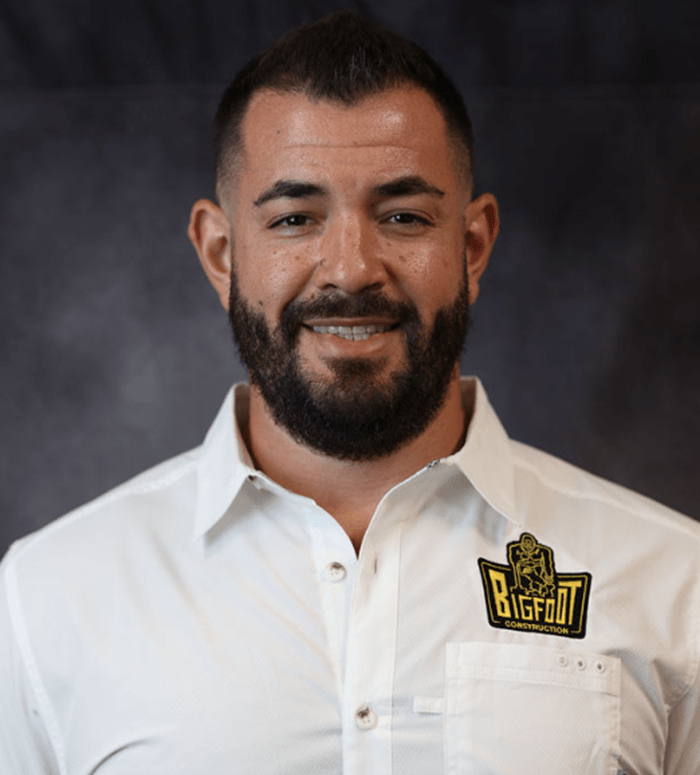
Written by Darryl Henry Rosenbaum, Founder of Bigfoot Windows & Roofing.
Darryl Henry Rosenbaum, doing business as Bigfoot Windows and Roofing, holds four active Florida licenses recognized by the Florida Department of Business and Professional Regulation (DBPR): Certified General Contractor (CGC1531370), Certified Residential Contractor (CRC1331693), Certified Roofing Contractor (CCC1333168), and Certified Specialty Contractor with a Glass & Glazing Specialty (SCC131153098).
Frequently Asked Questions
Why do roofs fail after passing inspection?
Inspections confirm minimum code compliance at a single point in time. They cannot verify every fastener placement, underlayment lap, or flashing seal — all of which can be defective and still look acceptable on inspection day. In South Florida’s HVHZ, these hidden workmanship errors are often exposed by the first major storm or heavy rain event after the project closes.
Can a roof pass inspection and still leak?
Yes. Leaks commonly trace to flashing that was present but not properly sealed, underlayment seams that were not lapped correctly, or fasteners placed outside the approved nail zone. All three pass a visual inspection and all three can allow water intrusion. A passed inspection certificate does not rule out any of these failure modes.
What do roof inspectors typically miss?
Inspectors typically cannot verify underlayment lap quality once the finish material is installed, fastener placement accuracy at the shingle level, sealant depth at penetration flashings, or hurricane-strap connection adequacy once underlayment covers the deck. These are the most common sources of post-inspection failure and they are structurally invisible after the roof is complete.
What causes premature roof failure in Florida?
The primary causes are workmanship errors (fasteners, flashing, underlayment), accelerated aging from South Florida’s UV intensity and heat, improper attic ventilation, and wind uplift at improperly fastened perimeter edges. Products without a Miami-Dade NOA or a Florida Product Approval that covers HVHZ use compound the problem. Industry estimates for South Florida asphalt shingle roofs typically range from 12–15 years (Florida Roofing and Sheet Metal Contractors Association guidance; individual results vary by product, installation quality, and maintenance) — premature failure usually means 5 years or less.
Does a Miami-Dade NOA guarantee my roof won’t fail?
No. A Miami-Dade NOA approves the product — it certifies that the roofing material, when installed per the approved method, can withstand HVHZ wind loads. It says nothing about whether your installer actually followed that approved method. An NOA-approved product installed incorrectly can fail at wind speeds well below the product’s rated capacity.
How do I verify roof workmanship before the inspection?
Ask your contractor to walk you through the roof at the underlayment stage — before the finish material covers it. Request the specific Miami-Dade NOA number and ask your contractor to confirm in writing that installation follows the NOA’s approved method. Ask for a workmanship warranty separate from the product warranty, and confirm who the licensed contractor of record is supervising the crew.
Can I finance a roof replacement in South Florida?
Yes. PACE financing (Property Assessed Clean Energy) is available in Miami-Dade and Broward for qualifying property owners — payments are made through the property tax bill rather than a bank loan. The My Safe Florida Home grant program offers up to $10,000 for qualifying hurricane-hardening improvements and can be combined with PACE. Consult your CPA regarding any potential tax implications specific to your situation.
Sources
- Florida Building Code, 8th Edition — High Velocity Hurricane Zone provisions (Miami-Dade and Broward counties)
- Miami-Dade County Product Control — Notice of Acceptance (NOA) program documentation
- GAF Roofing — Layer Lock shingle design specifications and Wind Proven warranty terms
- Florida Department of Business and Professional Regulation (DBPR) — License verification: CGC1531370, CRC1331693, CCC1333168, SCC131153098
Call Bigfoot Windows & Roofing at 786-886-2088 or Request a Free Estimate.