
Impact Windows Palm Harbor | Bigfoot Windows & Roofing
Last updated: July 2026 by the Bigfoot Windows & Roofing editorial team.
Key Takeaways
- Palm Harbor falls in Pinellas County — a non-HVHZ area, but Florida Product Approval (not Miami-Dade NOA) is still required for all impact windows.
- Impact windows that exceed the HVHZ standard still protect non-HVHZ homes and strengthen insurance discount claims.
- Florida Statute 627.0629 requires insurers to offer wind-mitigation discounts; the OIR-B1-1802 form documents your upgrades.
- Installed cost for impact window replacement in the Palm Harbor market typically runs $65–$120 per square foot depending on frame, glass, and opening size.
- Permits are required for every impact window replacement — Pinellas County Building Department issues them; typical approval runs 2–4 weeks.
The Problem
Storm Season Is Coming — Are Your Windows the Weak Link?
Palm Harbor sits on the Gulf Coast of Pinellas County. Every hurricane season, homeowners face the same question: plywood, shutters, or impact windows?
Storm shutters need to be deployed before every storm, stored year-round, and replaced when they corrode. Plywood is a last resort. Impact windows are permanently installed, meet Florida Building Code wind-load requirements, and qualify your home for meaningful insurance savings under Florida Statute 627.0629.
The challenge is sorting through contractor claims, product approvals, and insurance paperwork without a clear guide. This article gives you exactly that — grounded in the actual code standards that apply to Palm Harbor and Pinellas County, not just generic Florida advice.
Local Context
What Palm Harbor Homeowners Need to Know About Florida Wind Code
Palm Harbor is located in Pinellas County, which is not in Florida’s High-Velocity Hurricane Zone (HVHZ). The HVHZ is limited to Miami-Dade and Broward counties, where the Florida Building Code imposes the most rigorous product-approval requirements in the country. Pinellas County follows the standard Florida Building Code Chapter 16 wind-load provisions instead.
That distinction matters when you’re shopping for products. Miami-Dade County issues a Notice of Acceptance (NOA) for impact-resistant products that pass HVHZ testing protocols. Products installed in Palm Harbor are not required to hold a Miami-Dade NOA — they must carry a valid Florida Product Approval (issued by the Florida Department of Business and Professional Regulation under Florida Statute 553.842). Florida Product Approval tests to the same large-missile and cyclic-pressure protocol as Miami-Dade NOA but is administered at the state level.
That said, many homeowners in Palm Harbor specifically request HVHZ-rated products because they exceed the minimum wind-load thresholds for Pinellas County — and insurance inspectors recognize the higher rating. It is never wrong to install a product approved for a stricter wind zone than your county requires.
Under Florida Building Code Section R301.2, every replacement window in a one- or two-family dwelling must be designed for the wind speed applicable to its location. For most of Pinellas County, the design wind speed is 130–140 mph (3-second gust, ASCE 7 exposure category). Any impact window you purchase must carry a Florida Product Approval that covers your design pressure and opening size — your contractor is responsible for verifying this on the permit drawings.
The Education
How Impact Windows Actually Protect Your Home — and Your Insurance Bill
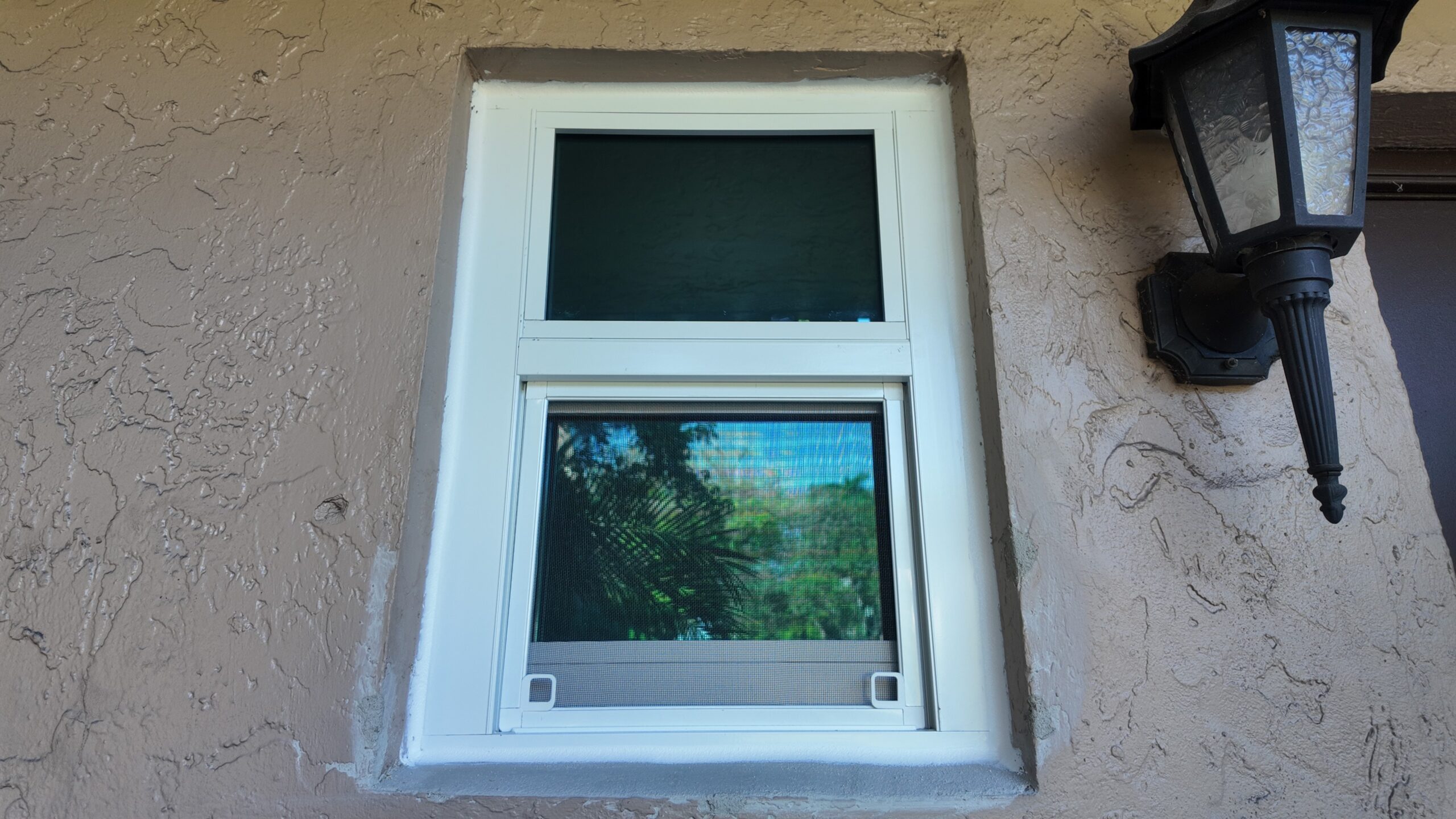
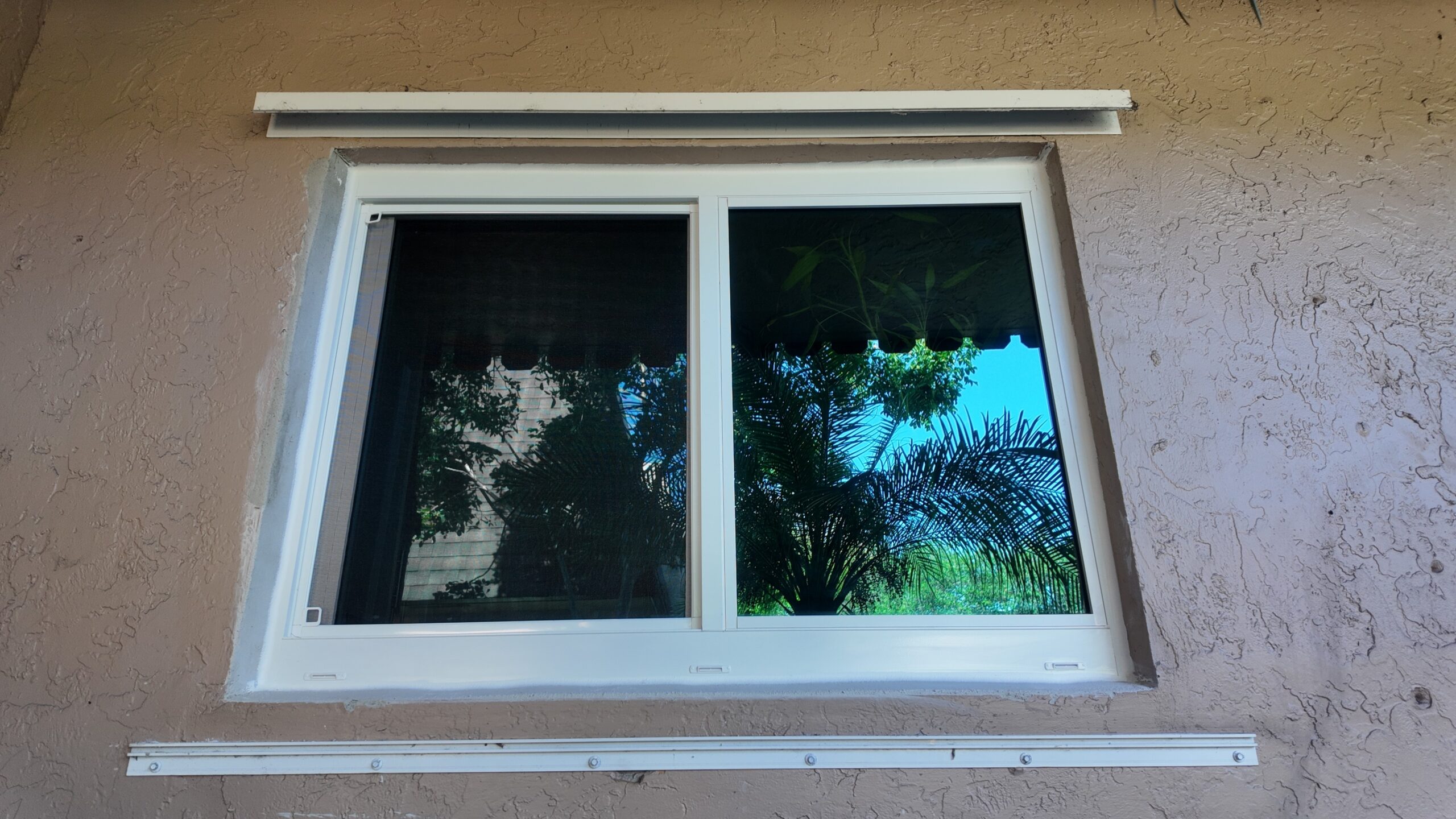
Impact windows use two layers of tempered or heat-strengthened glass bonded to a shatter-resistant interlayer (typically polyvinyl butyral or SGP). When struck by windborne debris, the glass cracks but the interlayer holds the pane intact, maintaining the pressure envelope of the home. A breached window during a hurricane is how catastrophic internal pressure damage begins — impact glass prevents that.
For insurance purposes, Florida Statute 627.0629 requires every insurer writing homeowners policies in Florida to offer actuarially sound discounts for wind-mitigation features including impact-resistant openings. To claim that discount, your home must be inspected using the OIR-B1-1802 wind mitigation inspection form. A licensed inspector visits after installation, verifies that your new windows carry valid Florida Product Approval, and documents the opening protection rating. That completed form goes to your insurer, who must apply the corresponding discount to your premium.
The magnitude of the savings depends on your insurer, your current policy structure, and how many openings you protected. We cannot quote a specific dollar figure — but homeowners who protect all openings (windows and doors) consistently see meaningful reductions. Your insurer can give you a pre-installation estimate if you share the product approval numbers in advance.
| Feature | Hurricane Shutters | Impact Windows |
|---|---|---|
| Storm deployment required? | Yes — before every storm | No — always in place |
| Florida Product Approval needed? | Yes | Yes |
| OIR-B1-1802 wind mit credit eligible? | Partial (shutters only) | Full opening protection credit |
| Energy efficiency benefit? | None | Low-E glass reduces solar heat gain |
| Noise reduction? | None | Laminated glass dampens outside noise |
| Estimated installed cost | $15–$40/sq ft (shutters) | $65–$120/sq ft (windows) |
Comparison
NOA vs. Florida Product Approval — Which Standard Applies to Palm Harbor?
| Standard | Issued By | Required In | Valid in Palm Harbor? |
|---|---|---|---|
| Miami-Dade NOA | Miami-Dade County BCCO | Miami-Dade & Broward (HVHZ) | Yes — exceeds requirements, never wrong |
| Florida Product Approval | Florida DBPR | All Florida counties (non-HVHZ) | Yes — the minimum required standard |
| No approval | N/A | Nowhere in Florida | Never acceptable |
Bottom line: in Palm Harbor, you need Florida Product Approval at minimum. An NOA-rated product will also pass inspection and may yield stronger insurance documentation. Either way, confirm with your contractor that the specific product, size, and installation condition (including anchor embedment and design pressure) is covered by the approval document — the approval covers a product line, not automatically every custom opening size.
Why Credentials Matter
A Licensed Contractor, Not a Lead Aggregator
Florida licenses are public record. Verify any contractor before signing.
Because Darryl holds a Certified General Contractor (CGC1531370) license in addition to the glass and glazing specialty, structural issues discovered during a window replacement — rotted sills, compromised headers, hurricane-strap deficiencies — can be addressed under a single contract without pulling in a separate GC. That coherent multi-trade accountability is a meaningful difference when structural scope is uncovered mid-project.
“Every impact window we install goes in with a valid Florida Product Approval on file before we pull the permit. No exceptions.”
President, Bigfoot Windows & Roofing
Product Guidance
Choosing the Right Impact Window for a Florida Home
For Florida’s heat, humidity, UV exposure, and coastal salt air, we recommend aluminum frames. Aluminum is more time-tested in Florida’s climate than vinyl — it does not soften under sustained heat, it does not absorb moisture, and it holds tighter tolerances over time. For homeowners who want improved thermal performance, thermally broken aluminum frames add a polyamide barrier between the inner and outer frame sections, reducing heat transfer without sacrificing the structural strength of aluminum.
On glass, the key choices are:
- Laminated glass (single unit): two glass layers bonded with an interlayer. Meets Florida Product Approval for impact. Lower cost.
- Laminated insulated glass (IG unit): three layers — two laminated lites with an air or argon space between them. Best for noise reduction, condensation control, and energy efficiency. Higher cost, but qualifies for Florida’s energy code Low-E requirements in Climate Zone 1 (Pinellas County).
Glass thickness options — 5/16" (builder grade), 7/16" (standard mid), and 9/16" (high-rise / heavy duty) — affect impact resistance and acoustic performance. For coastal areas or homes within two miles of the water (common in Palm Harbor), a 2605 coastal aluminum finish is required to preserve the 10-year workmanship warranty; the 2604 wood-grain finish loses warranty coverage in salt-air environments.
We install impact windows and impact doors using Mr. Glass and ES Windows product lines — both carry valid Florida Product Approval across their series. If you want to explore financing options before committing, see our PACE financing page for payment structures that attach to your property tax bill rather than your credit score.
The Process
What Impact Window Replacement Looks Like in Pinellas County
Here is what to expect from measure to final inspection:
- In-home measurement & product selection: We measure every opening, confirm design pressures for your specific address, and select products whose Florida Product Approval covers those conditions.
- Permit application — Pinellas County Building Department: A complete permit package includes product approval documents, installation drawings, and your property survey if structural work is involved. Typical approval time in Pinellas County runs 2–4 weeks for standard residential replacement windows. Complex structural openings or historic districts may take longer.
- Installation: Old windows are removed, frames are set and anchored per the product approval’s fastener schedule, and the exterior is sealed. Any structural deficiencies found in the rough opening — rot, compromised headers — are addressed before new units go in.
- Final inspection: A Pinellas County inspector verifies the installation matches the permitted drawings and product approval. You receive a certificate of completion.
- Wind mitigation inspection (optional but recommended): A separate licensed inspector completes the OIR-B1-1802 form. This goes to your insurer to trigger the Florida Statute 627.0629 discount.
Ready to get a real number for your Palm Harbor home?
Related Articles
Who We’re Not the Right Fit For
- Buyers with a fixed $200/window budget: Impact windows are a structural upgrade. Installed cost in Florida typically starts around $65 per square foot for basic configurations. If that range is far outside your budget, storm panels or accordion shutters remain code-compliant alternatives until you are ready for a full window replacement.
- Projects requiring architectural custom shapes in rare species wood or specialty finishes: We work in aluminum. If the design calls for wood-clad, Marvin-style profiles, or proprietary finishes our product lines do not carry, we are not the right fit.
- Homeowners who need a single permit pulled in a county we do not serve: Our license and active insurance cover Miami-Dade, Broward, and Palm Beach counties for standard projects. Pinellas County projects are evaluated case-by-case — call us at 786-886-2088 to confirm coverage for your specific address before we schedule an estimate.
- Projects where a decision is needed in 48 hours: We do not use high-pressure sales tactics. If you need a signed contract tomorrow, another contractor may serve that need better. We give you time to review, compare, and decide without pressure.
Frequently Asked Questions
Frequently Asked Questions
Do impact windows in Palm Harbor need to meet Miami-Dade NOA standards or Florida Product Approval?
Palm Harbor is in Pinellas County, which is outside Florida’s High-Velocity Hurricane Zone (HVHZ). That means Florida Product Approval — issued by the Florida DBPR — is the required standard, not a Miami-Dade NOA. However, NOA-rated products exceed the minimum and are fully acceptable. Either approval is valid as long as the product’s rated design pressure and size cover your specific opening.
How much can Palm Harbor homeowners save on homeowners insurance by installing impact windows?
Florida Statute 627.0629 requires insurers to offer actuarially sound discounts for impact-resistant openings. The actual dollar savings depends on your insurer, current premium, and how many openings are protected. Have a licensed inspector complete the OIR-B1-1802 wind mitigation form after installation and submit it to your insurer — that triggers the discount calculation. Ask your insurer for a pre-installation estimate using the product approval numbers before you buy.
What wind speed rating do impact windows need to meet in Pinellas County under the Florida Building Code?
Most of Pinellas County falls in a design wind speed range of approximately 130–140 mph (3-second gust per ASCE 7). Your specific site’s design pressure depends on building height, exposure category, and window location. The product’s Florida Product Approval must cover the design pressure calculated for your opening — your contractor verifies this on the permit drawings before installation begins.
How long does a typical impact window installation permit take to approve in Palm Harbor / Pinellas County?
For standard residential replacement windows in Pinellas County, permit approval typically runs 2–4 weeks from a complete submission. Complex projects — structural header work, historic districts, or large commercial openings — can take longer. Your contractor submits the product approval documents and installation drawings; the building department reviews and issues the permit before any work begins. Never let a contractor skip the permit step.
What is the difference between impact windows and hurricane shutters for storm protection in Florida?
Hurricane shutters require deployment before every storm and storage in between. Impact windows are permanently installed and require no action before a storm. Both can meet Florida Product Approval for opening protection. Impact windows also provide year-round benefits — noise reduction, energy efficiency from Low-E glass, and no storage or mechanical maintenance. Shutters typically cost less upfront; impact windows typically qualify for a stronger wind mitigation insurance credit.
Do I need a permit to replace windows with impact windows in Pinellas County?
Yes. Permits are required for all window replacement in Florida — there is no routine-replacement exemption. The permit process ensures the product carries valid Florida Product Approval for your design pressure, that installation follows the approved fastener schedule, and that a final inspection confirms code compliance. A final inspection is also the prerequisite for a valid OIR-B1-1802 wind mitigation report your insurer will accept.
Can I finance impact window replacement through PACE in Palm Harbor?
PACE (Property Assessed Clean Energy) financing is available to qualifying Florida property owners. Payments are made through your property tax bill — not a bank loan — so there is no credit score impact. Sample payment: $15,000 financed over 20 years at approximately 9.49% runs roughly $173/month. There is no prepayment penalty. Roofing and window projects must be submitted as separate PACE applications. For qualifying property owners, there may be tax benefits available — consult your CPA.
Sources
- Florida Statute 627.0629 — Windstorm loss mitigation; discounts, credits, and other rate differentials
- Florida Department of Business and Professional Regulation — Florida Product Approval Program (F.S. 553.842)
- Florida Building Code, 8th Edition — Chapter 16 Structural Design (wind load provisions)
- OIR-B1-1802 Uniform Mitigation Verification Inspection Form — Florida Office of Insurance Regulation
- ASCE 7 Minimum Design Loads for Buildings and Other Structures — wind speed mapping

Ready to protect your Palm Harbor home with impact windows?
Get a real estimate — no pressure, no obligation.