Cost to Replace Roof Decking | Bigfoot Windows & Roofing
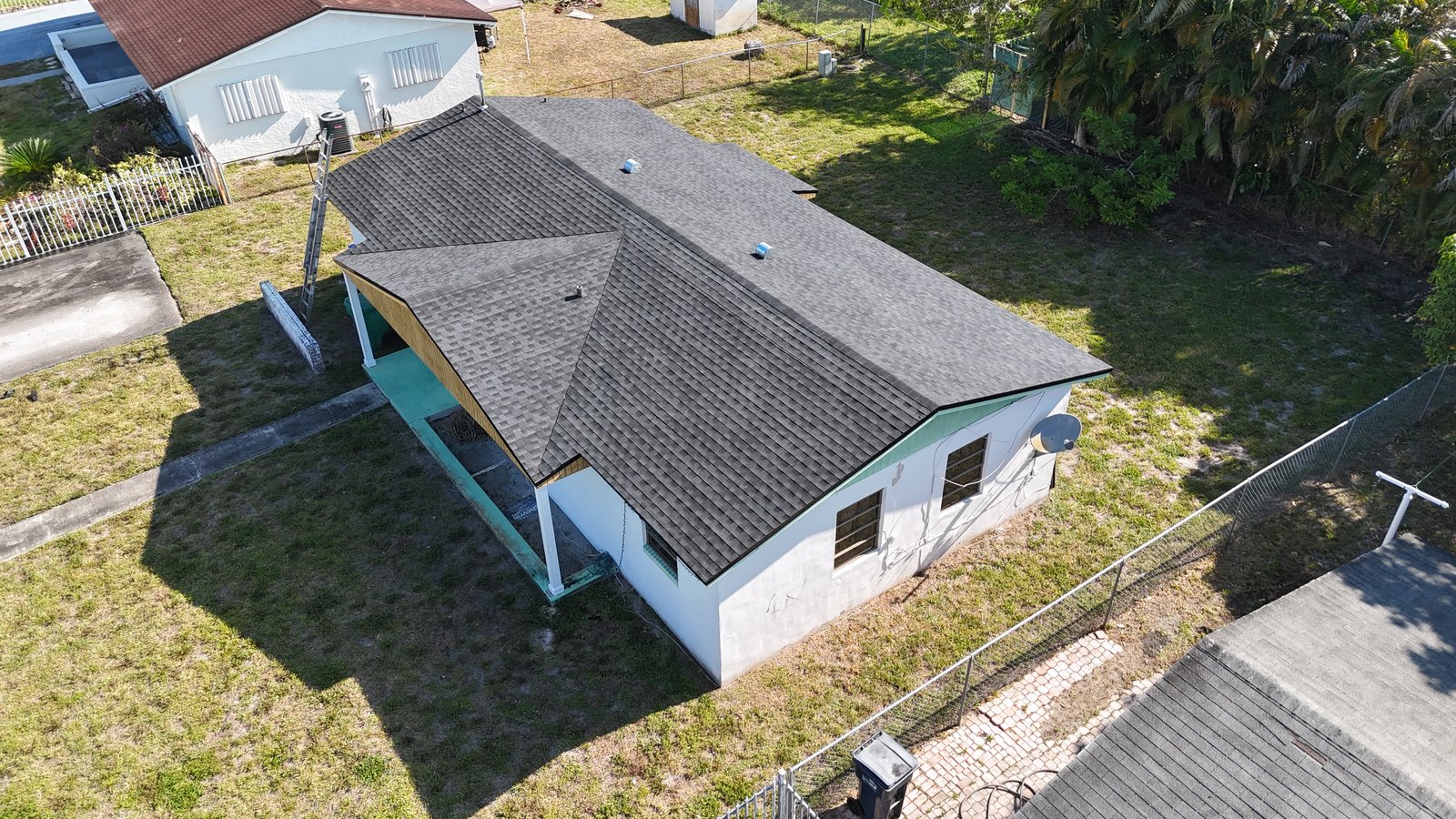
Replacing roof decking in South Florida typically costs $80–$150 per sheet of plywood or OSB, including labor. A full-deck replacement on a mid-size Miami-Dade home can run $3,000–$8,000 on top of your roofing contract, depending on decking type, structural access, and High-Velocity Hurricane Zone permit requirements.
Updated August 2026
Key Takeaways
- Decking replacement runs roughly $80–$150 per sheet installed in South Florida — full-deck jobs add $3,000–$8,000+ to a roofing contract.
- Miami-Dade and Broward (HVHZ) require specific plywood thickness, ring-shank nails, and a Miami-Dade Building Department re-nailing schedule — these requirements affect both cost and labor time.
- OSB is generally cheaper upfront, but many South Florida insurers prefer plywood in humid coastal environments; verify with your carrier before choosing.
- Partial decking replacement triggered by an insurance adjuster may cover less than what Florida Building Code requires — understand the gap before you sign off.
- Permits are never exempt for decking replacement in Miami-Dade County; inspections add time and cost you should budget for.
Why This Matters
Why Roof Decking Replacement Surprises So Many South Florida Homeowners
You budgeted for a new roof. Then the crew started tearing off old shingles or tile, and suddenly your contractor is showing you soft, discolored, or delaminated plywood. What happens next, and what it costs, is where most homeowners get blindsided.
Roof decking — the structural sheathing layer that sits directly on top of your rafters or trusses and under your roofing material — is invisible until tear-off. In South Florida’s heat, humidity, and hurricane-driven moisture, decking degrades faster than anywhere else in the country. Older homes in Coral Gables, Hialeah, and Kendall commonly have original decking that is decades old. By the time you schedule a roof replacement, the condition of that decking is largely unknown until the old roof comes off.
The problem compounds in Miami-Dade and Broward counties because those counties sit inside the High-Velocity Hurricane Zone (HVHZ) — the most stringent residential building code jurisdiction in the United States. The Florida Building Code Section 1523 mandates specific decking specs, nail patterns, and inspection steps that do not apply in other parts of Florida, and that national cost estimates entirely ignore. If your contractor does not account for those requirements upfront, you could face change orders, inspection delays, and out-of-pocket costs that were never in your budget.
South Florida & HVHZ Context
How Miami-Dade and Broward HVHZ Rules Affect Decking Cost
Most national roofing articles give you a price-per-sheet and move on. In South Florida, the real cost driver is the code path your project has to follow.
The Florida Building Code (FBC) designates Miami-Dade and Broward counties as a High-Velocity Hurricane Zone. Inside the HVHZ, the following requirements directly affect decking replacement cost and timeline:
- Plywood thickness minimums: FBC Section 1523 specifies minimum structural panel thickness based on rafter or truss spacing. Most HVHZ re-roofing jobs require at minimum 5/8-inch CDX plywood — thicker than the 7/16-inch OSB that might pass inspection in other Florida counties.
- Ring-shank nailing schedule: The Miami-Dade Building Department publishes a required re-nailing schedule. Ring-shank nails cost more than smooth-shank, and the pattern requires more fasteners per panel — both add labor time and material cost.
- Roofing affidavit requirement: Miami-Dade requires a signed roofing affidavit before permit issuance. This is an administrative step that adds to the project timeline.
- Mandatory decking inspection: An inspector must walk the deck before any new roofing material goes down. If your crew installs the new roof before inspection sign-off, the work fails and may need to be undone.
- Permit fees: Miami-Dade Building Department permit fees for structural work including decking replacement are generally in the range of $200–$600 depending on scope, though exact fees are set by the department and subject to change — always confirm current fees directly with Miami-Dade Building Department.
Palm Beach County is outside the HVHZ and follows a less restrictive code path, which is why a comparable decking job in Boca Raton or West Palm Beach typically costs less than the same job in Hialeah or Coral Gables.
Cost Breakdown
What Does Roof Decking Replacement Actually Cost?
Here is a realistic, South Florida–specific breakdown of what you should expect to budget.
| Cost Component | Typical Range (South Florida) | Notes |
|---|---|---|
| Plywood (5/8″ CDX, per sheet installed) | $90–$150 | HVHZ-required thickness; labor included |
| OSB (7/16″–5/8″, per sheet installed) | $80–$130 | Less common in HVHZ; verify insurer acceptance |
| Ring-shank nail upgrade (per square) | $15–$30 | Required under Miami-Dade nailing schedule |
| Permit fees (Miami-Dade) | $200–$600 | Directional range; confirm with Miami-Dade Building Dept. |
| Full-deck replacement (1,500 sq ft home) | $3,500–$7,000 | On top of base roofing contract |
| Partial replacement (10–20 sheets) | $900–$3,000 | Common after hurricane damage inspection |
These are directional market estimates for South Florida as of mid-2026. Actual costs depend on your roof’s pitch, access complexity, existing framing condition, and current lumber prices. Always get a written scope of work before any decking work begins.
OSB vs. Plywood: Which Should You Choose in South Florida?
This is a genuinely important decision in a coastal, high-humidity environment, and the answer is not the same as it would be in a dry climate.
| Factor | OSB | CDX Plywood (Recommended for HVHZ) |
|---|---|---|
| Upfront cost | Lower | Slightly higher |
| Moisture resistance | Swells faster when wet | Better edge-seal performance |
| HVHZ code compliance | Conditionally allowed | Most commonly specified |
| Insurer preference (Miami-Dade) | Some carriers prefer plywood | More broadly accepted |
| Structural performance | Comparable when dry | More time-tested in coastal humidity |
| Re-nailing schedule compatibility | Compatible | Compatible |
Our experience installing roofs across Miami-Dade, Broward, and Palm Beach is that plywood holds up better in South Florida’s combination of salt air, seasonal rain intrusion, and hurricane-season humidity cycles. OSB is not automatically disqualified under the Florida Building Code, but before choosing it, confirm that your homeowners insurer will not flag it on your wind mitigation inspection form.
If you are financing your roof replacement, understanding the full scope — including likely decking costs — upfront helps you budget accurately. You can explore roofing financing options that cover the full installed cost, including decking replacement, rather than being surprised by a change order mid-project.
Insurance vs. Code
Insurance Adjuster Scope vs. Florida Building Code Requirements: A Gap That Costs Homeowners Money
After a hurricane, your insurance adjuster’s estimate and the Florida Building Code minimums are not always the same number — and the difference usually comes out of your pocket.
Under the Florida Building Code (FBC) 7th Edition and subsequent updates, if a roof replacement is triggered by storm damage, the work must meet current code, not just restore the pre-storm condition. That means if your original decking was below current HVHZ thickness or nailing schedule requirements, you may be required to bring it up to code as part of the permitted re-roofing job, even if the adjuster’s estimate did not include that line item.
Common scenarios where this gap appears:
- Adjuster scopes 8 sheets of decking; inspection reveals 22 sheets are compromised once tear-off is complete.
- Adjuster prices smooth-shank nails; Miami-Dade nailing schedule requires ring-shank — the difference in material and labor is not in the adjuster’s line items.
- Older wood-frame homes in Coral Gables or Hialeah may have original board sheathing (planks, not panels) that must be replaced entirely with plywood panels to meet current HVHZ panel requirements — this is a structural scope change, not just a material swap.
Because Bigfoot holds a Certified General Contractor (CGC1531370) license in addition to its roofing license, our team can address structural issues — including framing repairs, hurricane strap upgrades, and code-driven structural scope — in-house, without requiring you to hire a separate contractor to handle anything the inspector flags. That kind of coordinated accountability matters when the permit is open and inspections are in progress. Learn more about how we handle roofing projects across Miami-Dade County.
Why It Matters Who Pulls the Permit
A Licensed Roofing and General Contractor in One
Licensed contractor, not a lead aggregator. Florida licensed: CGC1531370 · CRC1331693 · CCC1333168 · SCC131153098
“We never recommend replacing only what the adjuster listed without walking the full deck first. In South Florida, what you see from the attic is rarely the full picture once we start tear-off. We scope the whole deck before we write the number.”
Darryl Rosenbaum
President, Bigfoot Windows & Roofing
What We Install
Decking Materials Bigfoot Uses and Recommends
We specify materials that meet HVHZ code and hold up in South Florida’s coastal environment — not the cheapest option that gets past an inspector.
For Miami-Dade and Broward roofing projects, we default to 5/8-inch CDX plywood as our standard decking material. It meets HVHZ structural panel requirements, is accepted by the major South Florida homeowners insurers, and performs reliably in the humidity-cycling conditions common in coastal South Florida. We use ring-shank nails per the Miami-Dade re-nailing schedule as a standard practice, not an upgrade.
For homes where we are installing a new roofing system — whether GAF shingles, Englert or Metal Alliance standing seam metal, Westlake concrete tile, or a flat TPO membrane — the decking condition is evaluated as part of the estimate, not discovered as a surprise after tear-off. We walk your attic or inspect from the perimeter before we write a proposal, so the decking scope is captured in the original number wherever it is visually assessable. When decking is not fully visible until tear-off (which is common), we give you a per-sheet unit price upfront so you know exactly what additional sheets cost before work starts.
If you want to see what a full roofing replacement costs before committing to a conversation, you can use our South Florida roofing pricing estimator to get a ballpark figure based on your home’s size and roof type.
How It Works
How Roof Decking Replacement Works Step by Step
- Pre-tear-off assessment: We inspect the attic framing and any visible decking before tear-off begins. We note soft spots, water-stain patterns, and prior repair patches.
- Tear-off and full deck exposure: Once the old roofing material is removed, the full deck is visible. We walk every square foot and mark damaged, delaminated, or undersized panels for replacement.
- Permit scope confirmation: If the decking scope changes materially from the estimate, we contact you before ordering materials. Nothing proceeds without your sign-off on the updated scope and cost.
- Decking installation: New panels are installed per the Miami-Dade nailing schedule using ring-shank fasteners. Panels are run perpendicular to rafters with staggered joints for structural continuity.
- Inspection: The deck must pass a Miami-Dade Building Department inspection before any new roofing material is installed. We coordinate and manage the inspection scheduling.
- Roofing system installation: Once inspection passes, your new roofing system goes down on a clean, code-compliant deck.
Not sure how much decking your home actually needs? We scope the deck before we quote the roof — no guesswork, no mid-project surprises.
Related Articles
Who We’re Not the Right Fit For
- Homeowners who want the absolute lowest bid regardless of HVHZ code compliance: Our pricing reflects HVHZ nailing schedules, permit costs, and inspection requirements. If your priority is beating a price from a contractor who did not account for those requirements, we are not going to be the lowest number — and we are not going to cut those corners to match it.
- Projects where only insurance-approved sheet count matters, not code: If an insurer pays for 6 sheets and you want only 6 sheets installed regardless of what the deck inspection shows, that is not how we operate. We install what the deck requires to pass a Miami-Dade inspection, and we give you the scope in writing before we start.
- Buyers who do not want permits pulled: Every decking replacement in Miami-Dade and Broward requires a permit. We do not do unpermitted work. If a contractor offers to skip the permit to save money, that is a liability you will carry at resale and during a future insurance claim.
- Projects outside our service area: We serve Miami-Dade, Broward, and Palm Beach counties. If your project is in another part of Florida, we are not the right fit geographically.
Frequently Asked Questions
How much does it cost to replace roof decking in Miami-Dade?
In Miami-Dade, installed decking replacement typically runs $80–$150 per sheet (plywood or OSB), including labor. A full-deck replacement on a 1,500 square foot home can add $3,500–$7,000 on top of the base roofing contract. HVHZ nailing schedule requirements and permit fees push costs higher than in other Florida counties. These are directional estimates — actual cost depends on your roof’s pitch, framing type, and current lumber prices.
Does homeowners insurance in Florida cover roof decking replacement?
It depends on your policy and the cause of damage. If a named storm caused the decking damage, most policies cover replacement minus your deductible — but the adjuster’s scope may be narrower than what Florida Building Code requires. The code requires bringing all replaced decking up to current HVHZ standards, which may cost more than the adjuster initially authorized. Document everything, and make sure your contractor’s scope letter clearly lists all decking being replaced.
Do I need a permit to replace roof decking in Miami-Dade County?
Yes, always. In Miami-Dade County, replacing roof decking — whether partial or full — requires a building permit. A Miami-Dade Building Department inspector must walk the deck before any new roofing material is installed. Skipping the permit exposes you to fines, failed resale inspections, and insurance claim denials. There are no permit exemptions for routine decking replacement in the HVHZ.
What type of roof decking is required under the Florida High-Velocity Hurricane Zone code?
The Florida Building Code Section 1523 requires structural panel sheathing that meets minimum thickness requirements based on rafter or truss spacing. For most HVHZ residential projects, that means 5/8-inch CDX plywood is the standard. Ring-shank nails are required per Miami-Dade’s re-nailing schedule. OSB may be conditionally acceptable, but confirm with your contractor and insurer before specifying it — some South Florida carriers prefer plywood in coastal environments.
How do I know if my roof decking needs to be replaced before a new roof installation?
Warning signs include soft spots you can feel when walking the roof, discoloration or water staining visible from the attic, sagging between rafters, and delamination at panel edges. However, the true condition of decking is often only fully visible after tear-off. A reputable contractor will walk your attic before writing a proposal and give you a per-sheet unit price for any replacement sheets discovered during tear-off, so you are not surprised mid-project.
Can I finance roof decking replacement along with the rest of my new roof?
Yes. Most financing options — including PACE financing through programs like Renew Financial — cover the full installed cost of a roof replacement, which includes any decking replacement within the permitted scope. PACE is paid through your property tax bill rather than as a bank loan, and applying does not affect your FICO credit score. My Safe Florida Home grants of up to $10,000 can also be stacked with PACE for qualifying homeowners. Confirm eligibility with your financing provider.
Does replacing roof decking qualify for a wind mitigation discount in Florida?
Not directly. Wind mitigation discounts are tied to specific features on the OIR-B1-1802 inspection form: roof deck attachment (nail type and spacing), roof-to-wall connections, and secondary water resistance. Installing new decking with a ring-shank nailing schedule to current HVHZ code can improve your roof deck attachment rating on the wind mitigation form, which may reduce the hurricane portion of your homeowners premium. Results vary by insurer and require a licensed wind mitigation inspection after project completion.
Schedule Your Free Estimate
Ready to get started? Request a free estimate — no phone call required.
Sources
- Florida Building Code Section 1523 — High-Velocity Hurricane Zone Roof Deck Requirements (floridabuilding.org)
- Miami-Dade Building Department — Roofing Permit and Affidavit Requirements (miamidade.gov/building)
- Florida OIR Wind Mitigation Form OIR-B1-1802 — Roof Deck Attachment Rating Criteria
- My Safe Florida Home Program — Grant Eligibility and Funding (mysafeflhome.com)
- Renew Financial — PACE Eligibility and Application Process (renewfinancial.com)
Ready to find out what your decking actually needs? We walk the deck before we write the number.
Or call us directly at 786-886-2088