
Blown-In Attic Insulation Cost & Energy Savings | Bigfoot Windows & Roofing
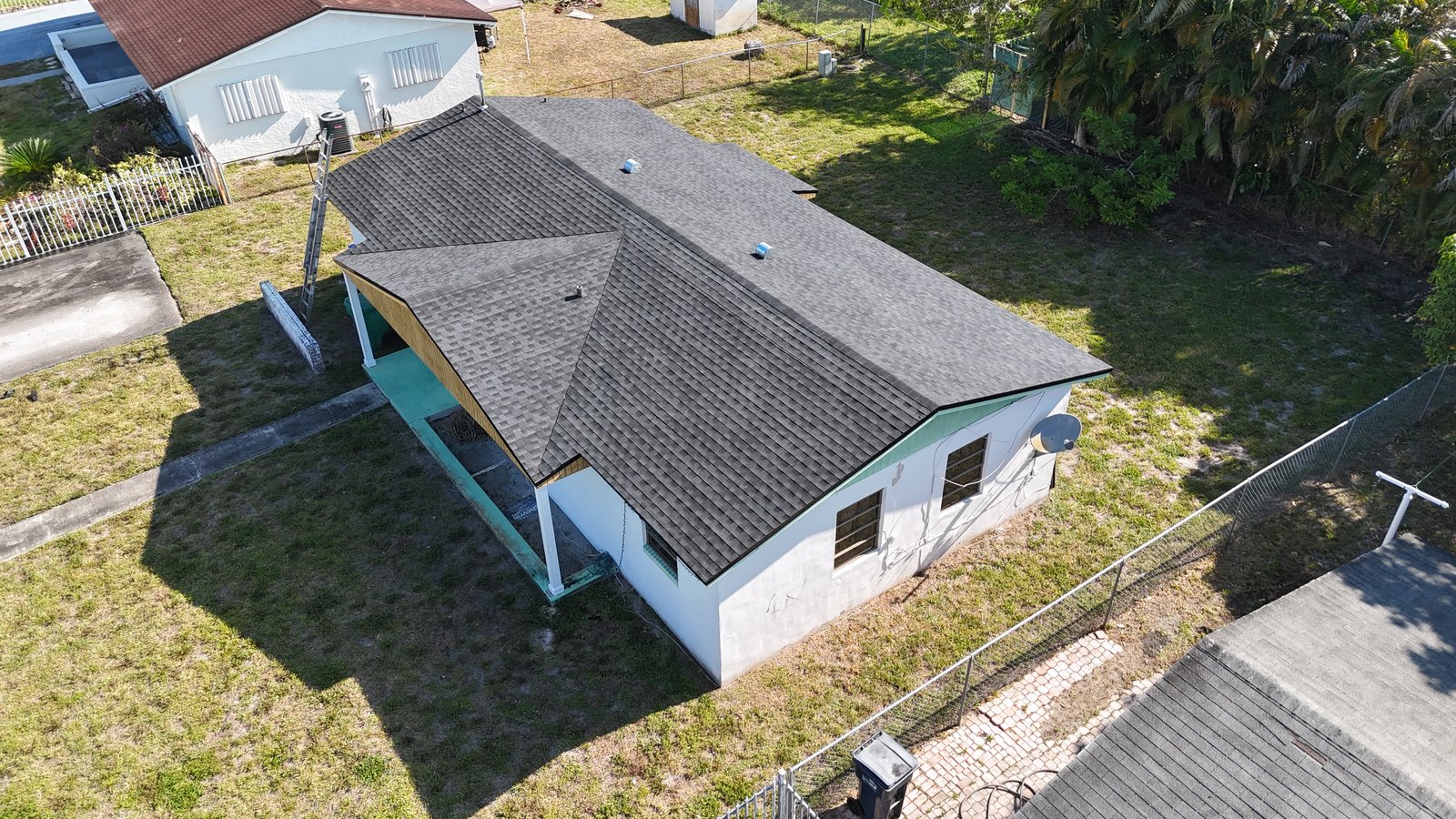
Blown-in attic insulation in South Florida typically costs $1.00–$2.50 per square foot installed, depending on insulation type, current R-value, attic access, and whether work is paired with a roof replacement. Fiberglass blown-in is the most common choice for Miami-Dade and Broward homes. Florida Building Code Climate Zone 1 requires a minimum R-38 for attic insulation in most residential applications.
Updated August 2026
Key Takeaways
- Blown-in fiberglass insulation typically runs $1.00–$2.50/sq ft installed in South Florida; exact cost depends on depth needed to reach R-38+.
- Florida Building Code (Climate Zone 1, Miami-Dade and Broward) requires a minimum R-38 in unconditioned attics — many older homes fall well short of that.
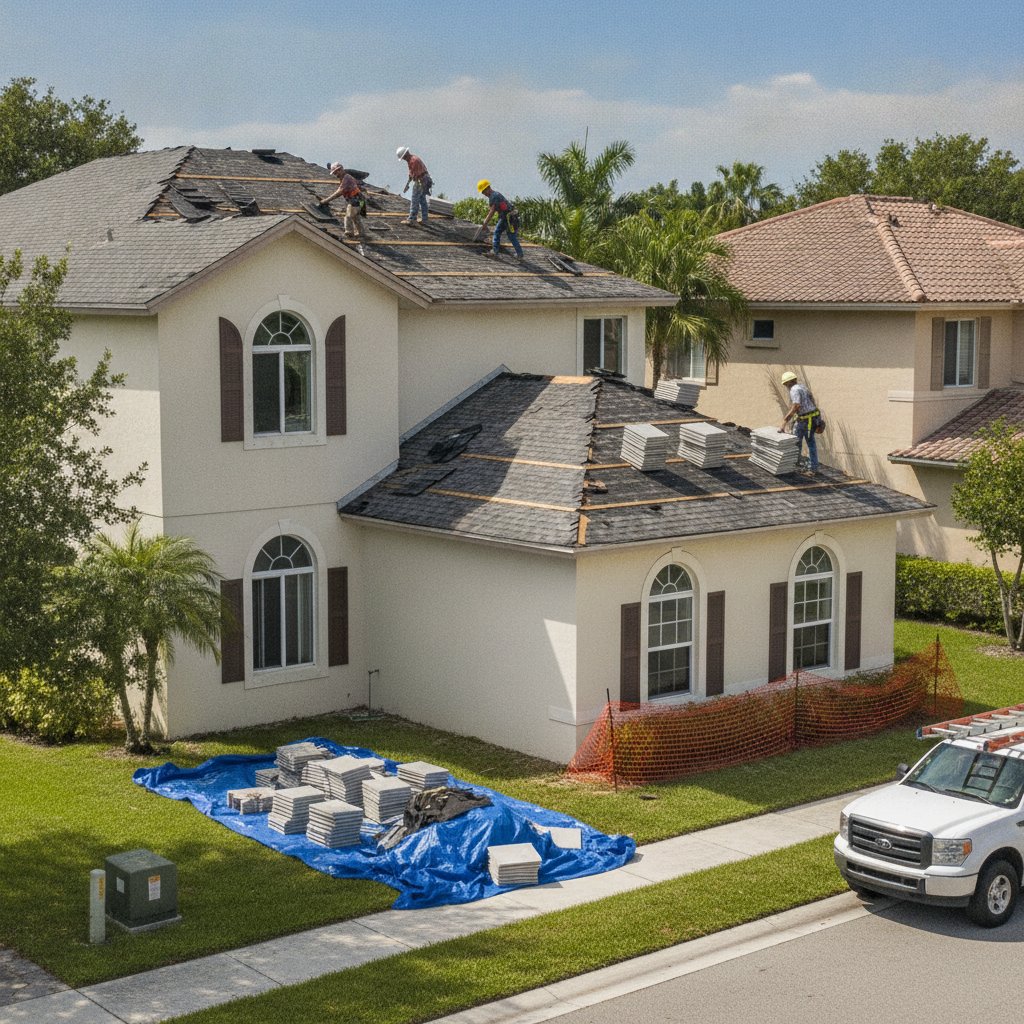
- Replacing your roof creates the lowest-cost window to upgrade attic insulation — attic access is already staged and labor overlap reduces total project cost.
- Fiberglass blown-in handles South Florida humidity well; open-cell and closed-cell spray foam are alternatives with different trade-offs in vapor management and cost.
- A Certified Roofing Contractor handling both the roof and insulation keeps the project under one permit pull and one accountable contractor.
Why South Florida Attics Lose So Much Energy
The Problem: Your Attic Is Costing You Every Month
South Florida homes face extreme radiant heat loads that underpowered insulation cannot stop.
A typical Miami-Dade home built before 2010 has R-11 to R-19 in the attic — half of what today’s Florida Building Code requires. That gap is not a minor inefficiency. On a 90°F+ summer afternoon, an under-insulated attic can reach 140°F–160°F. That superheated air pushes heat directly into conditioned living space, forcing your AC to run longer and harder. The result shows up on your FPL or TECO bill every single month.
The frustrating part: most homeowners find out about the insulation problem only when they get a new roof quote and a contractor mentions it in passing. By then, the roof tear-off is already priced, the deck is accessible, and upgrading insulation is the most cost-efficient it will ever be. Skipping it means paying full attic-access labor costs again later — for a problem you already knew about.
Local Context
South Florida’s Climate Zone 1 Insulation Requirements
Miami-Dade and Broward sit in IECC Climate Zone 1 — the hottest, most humid zone in the continental U.S.
The Florida Building Code (FBC) has adopted the IECC 2021 energy provisions. For Climate Zone 1, which covers all of Miami-Dade and Broward counties, the code requires a minimum of R-38 for unconditioned attic insulation in new construction and in projects that trigger full energy-code compliance. The 30%-of-assessed-value rule in FBC-Existing Building means that a large renovation — including a full roof replacement on a high-value home — may trigger compliance with current energy standards, making the insulation upgrade not just smart but sometimes code-required.
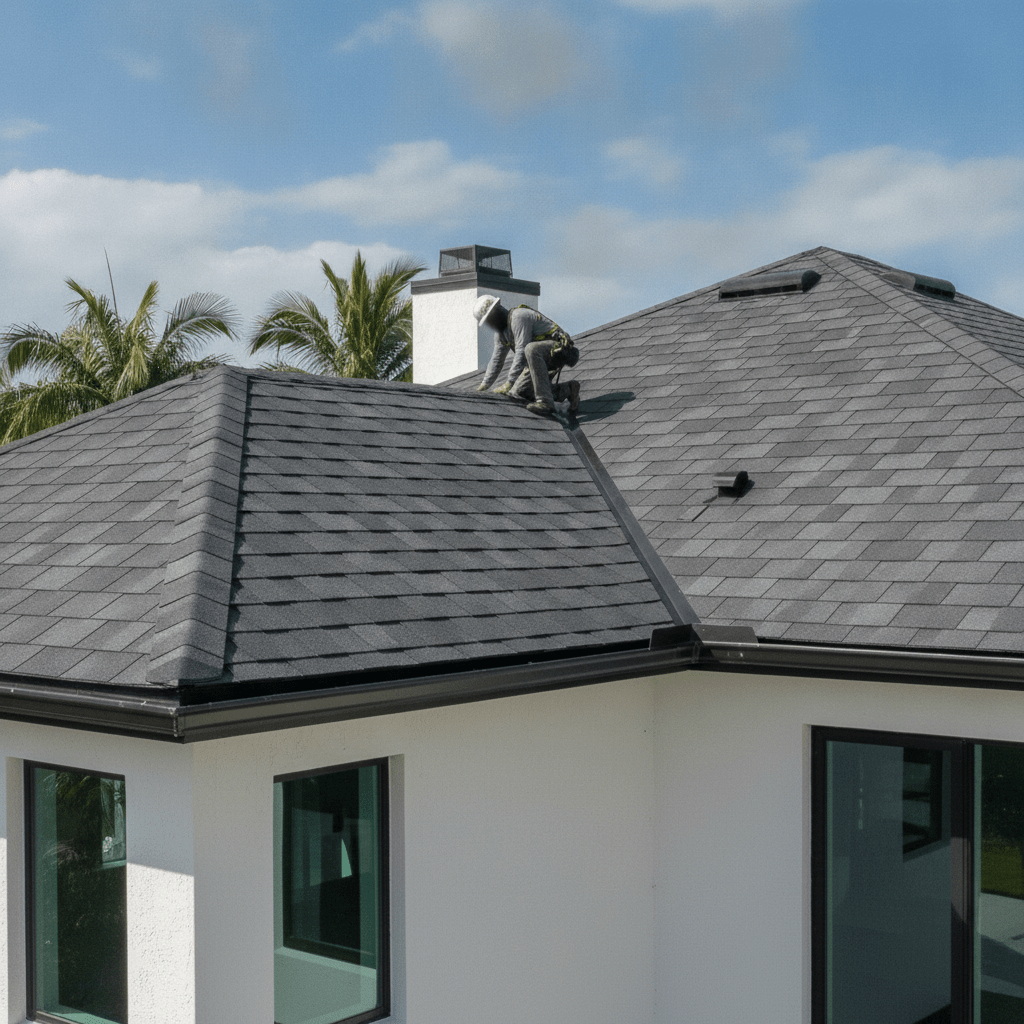
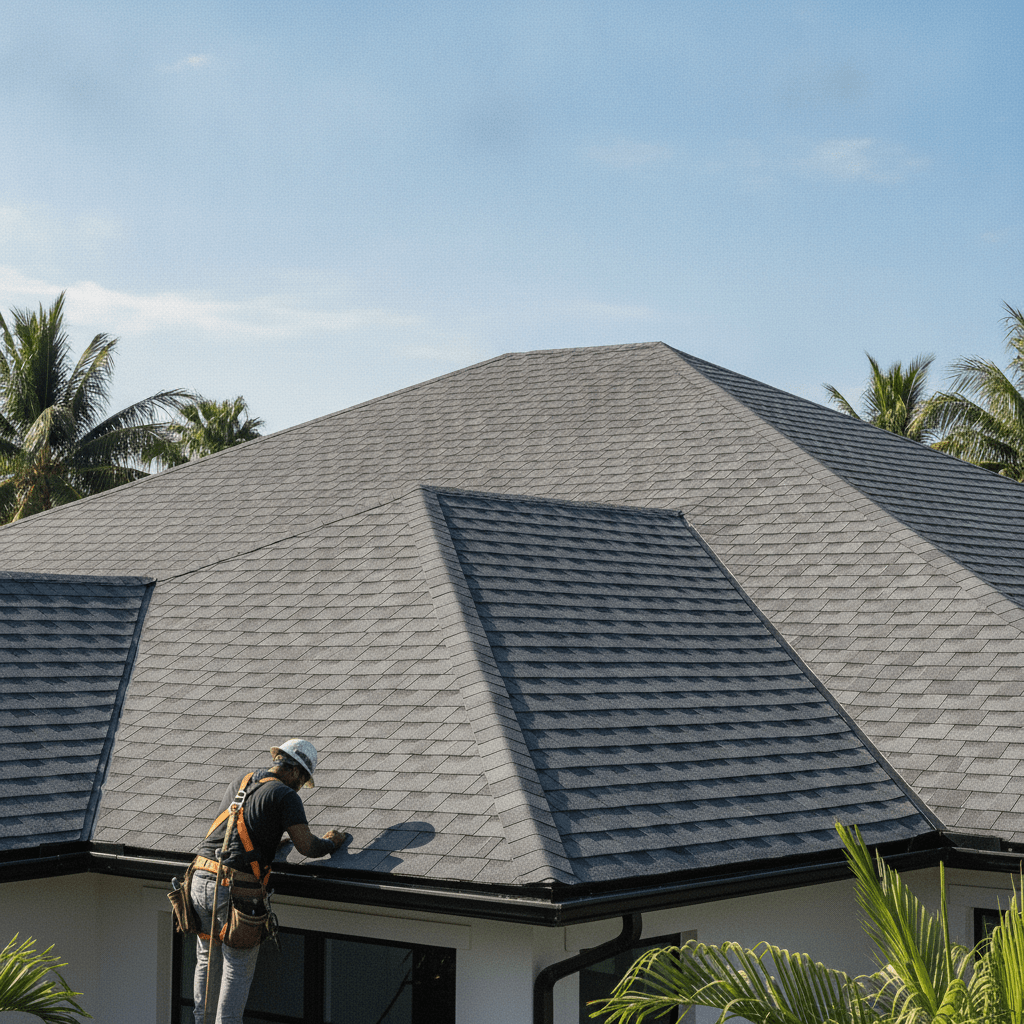
Homes in the HVHZ (Miami-Dade and Broward) also have specific attic ventilation requirements under FBC Section R806. Hip-roof construction — by far the most common roof shape in South Florida — creates a naturally tighter attic with less ridge ventilation than gable roofs. Blown-in fiberglass installed to the proper depth in a hip-roof attic must preserve the ventilation baffles along the eaves to maintain the required airflow channel. A contractor who does not understand this interaction will either block ventilation or under-insulate near the eaves.
For homeowners exploring ways to finance both a roof replacement and insulation upgrade together, our roof and window financing options page covers PACE and other program details available in Miami-Dade, Broward, and Palm Beach.
Understanding Your Options
Blown-In Insulation Types: Fiberglass vs. Spray Foam in South Florida Heat
Three insulation types compete for South Florida attics — each with a different cost, moisture behavior, and performance profile.
| Insulation Type | Typical Cost/Sq Ft (Installed) | R-Value per Inch | South Florida Humidity Performance | Best For |
|---|---|---|---|---|
| Fiberglass Blown-In | $1.00–$2.00 | ~R-2.2 to R-2.7 | Does not absorb moisture; inorganic; resists mold growth | Most South Florida attics — cost-effective, humidity-tolerant |
| Open-Cell Spray Foam | $1.50–$3.00 | ~R-3.7 per inch | Absorbs some moisture vapor; requires vapor retarder in high-humidity zones | Homes needing air sealing + insulation in one step; unvented attic assemblies |
| Closed-Cell Spray Foam | $3.00–$6.00+ | ~R-6.0–6.5 per inch | Excellent vapor barrier; highest moisture resistance | Undersides of roof decking (unvented assemblies); coastal and flood-prone zones |
Note on South Florida humidity: Open-cell spray foam is permeable to moisture vapor. In Miami-Dade’s Climate Zone 1, with average relative humidity frequently above 70%, an open-cell application in a vented attic without a proper vapor retarder can trap moisture against the roof deck. Fiberglass blown-in, being inorganic, sidesteps this problem entirely in a properly vented attic assembly. Closed-cell spray foam applied to the underside of the deck in an unvented attic design performs exceptionally but at two to three times the cost of fiberglass.
For most South Florida homeowners replacing a standard shingle or metal roof, blown-in fiberglass to R-38 or R-49 is the practical sweet spot — cost-effective, code-compliant, and durable in the local climate.
Cost Breakdown
What Does Blown-In Attic Insulation Cost in Miami-Dade?
Costs vary by current R-value, attic square footage, and whether you bundle with a roof replacement.
| Scenario | Typical Cost Range | Notes |
|---|---|---|
| Standalone insulation upgrade (1,500 sq ft attic, R-11 → R-38) | $1,800–$3,500 | Includes attic access setup, equipment, labor, and materials |
| Bundled with roof replacement (same mobilization) | $1,200–$2,500 | Labor overlap reduces cost; attic access already staged during tear-off |
| Top-off only (R-19 → R-38, partial upgrade) | $600–$1,400 | Smallest scope; most cost-effective per square foot |
| Full removal + reinstall (contaminated or wet insulation) | $2,500–$5,500+ | Remediation adds scope; required if moisture damage is present |
The single biggest cost driver is how far your current insulation falls below the R-38 target. An attic already at R-19 needs roughly 7–8 additional inches of fiberglass blown-in to reach R-38. An attic at R-11 (common in homes built in the 1970s and 1980s in Miami-Dade) needs 12–14 additional inches — nearly twice the material and labor.
The second-biggest variable is attic access. A standard pull-down stair with good clearance above the living space costs the least to work in. Tight hip-roof attics with limited headroom — very common in South Florida ranch-style homes — take longer to insulate evenly, especially near the eaves where baffles must be maintained. Contractors who quote without physically inspecting the attic access are guessing.
If you are also considering a full roof replacement, bundling both scopes into one project is almost always the lowest total cost path. The attic is accessible, the contractor is already mobilized, and you avoid a second permit pull and a second set of inspection fees later.
Why Contractor Choice Matters Here
One Contractor for the Roof and the Attic
A licensed contractor, not a lead aggregator or a specialty-only subcontractor chain.
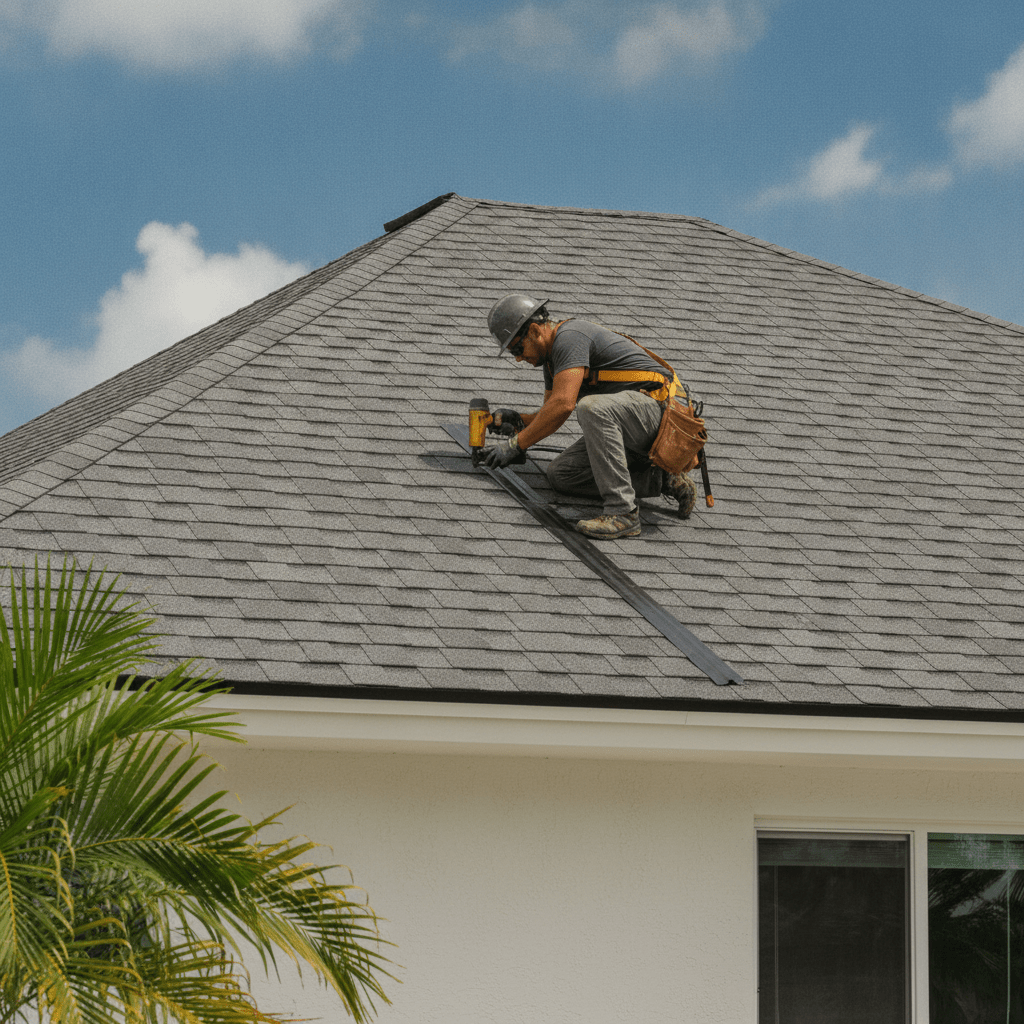
Attic insulation during a roof replacement is a scope that falls squarely inside a Certified Roofing Contractor’s work — but only if that contractor also understands FBC Section R806 ventilation requirements, HVHZ permit documentation, and how insulation depth interacts with the roof assembly above. When Bigfoot handles both the roof and the attic insulation, there is a single permit, a single inspection schedule, and one contractor accountable for the complete thermal envelope from the deck down.
As a Certified General Contractor (CGC1531370), Bigfoot is also authorized to coordinate structural scope if the project uncovers issues — hurricane strap upgrades, decking replacement, or structural modifications — without the homeowner needing to hire and coordinate a separate GC. That kind of multi-trade scope clarity matters in Miami-Dade, where HVHZ permit requirements are strict and coordination gaps between trades create inspection delays.
“Most of our customers don’t find out their attic is at R-11 until we’re already on the roof. At that point it costs almost nothing extra to fix it. Two years later, when someone else has to go back in and do it as a standalone job, it’s a completely different cost conversation.”
President, Bigfoot Windows & Roofing
Insulation & Roofing Systems
How New Roofing and Blown-In Insulation Work Together
The right roof system and the right insulation depth are a paired thermal performance decision.
A new roof replacement in Miami-Dade with GAF shingles and a full-deck peel-and-stick underlayment creates a secondary water barrier that helps protect the attic deck from moisture intrusion. When blown-in fiberglass is installed below that assembly to R-38 or R-49, the combined system reduces both heat gain through the deck and the risk of moisture-driven decay in the attic cavity.
Metal standing seam roofing — Bigfoot installs Englert or Metal Alliance panels roll-formed on-site from 24-gauge Galvalume or aluminum — reflects significantly more solar radiation than asphalt shingles, which reduces the temperature load the attic insulation has to resist. Pairing a cool-roof-rated metal system with properly upgraded attic insulation creates a compounding benefit: less heat entering the attic, and less of that heat transferring into the living space below.
For tile roofing (Westlake Saxony 900 or Barcelona barrel), the air gap beneath the tiles provides some additional thermal buffer. Even so, Climate Zone 1 requires the full R-38 in the attic floor insulation — the tile air gap is not a substitute for code-compliant attic insulation depth.
How the Process Works
What to Expect: Blown-In Insulation During a Roof Replacement
- Pre-project attic inspection: Before finalizing scope, Bigfoot inspects existing insulation depth, notes current R-value, checks for moisture damage or contaminated insulation, and confirms ventilation baffle condition along the eaves.
- Scope and permit: Insulation work is added to the roofing permit where code allows, or a separate mechanical/building permit is pulled — Bigfoot manages both. HVHZ permit documentation for Miami-Dade or Broward is handled in-house.
- Roof tear-off and deck inspection: During tear-off, the attic is accessible from above. Any damaged decking is replaced at this stage. Hurricane strap condition is noted and reported.
- Baffle installation: Ventilation baffles are installed or verified along all eave runs before blown-in begins. This step is critical in South Florida hip-roof construction to maintain the required airflow path.
- Blown-in installation: Fiberglass is blown to the target depth (calculated for R-38 or R-49, per project spec), leveled, and depth-marked with R-value indicator rulers for inspection.
- Inspection and closeout: City or county inspection confirms insulation depth and ventilation compliance. Permit is closed. Homeowner receives documentation of installed R-value for insurance and resale purposes.
Ready to find out what your attic insulation is actually doing — and what it would cost to fix it?
Related Articles
Who We’re Not the Right Fit For
- Homeowners looking for the absolute lowest bid: Bigfoot does not price-match cut-rate insulation-only crews who skip ventilation baffle work and skip the attic inspection. If lowest upfront number is the only criterion, there are cheaper options.
- Projects requiring mold remediation as the primary scope: If attic insulation has been saturated and mold is confirmed, that remediation scope requires a licensed mold assessor and remediator. Bigfoot can coordinate re-insulation after remediation is complete, but we are not the right contractor to lead the mold remediation itself.
- Homeowners who want insulation work only, with no roof involvement: We are happy to do standalone insulation upgrades, but our core strength is pairing insulation with roof work. If your roof was just replaced last year and you only want a blown-in top-off, a dedicated insulation contractor may give you a more competitive standalone price.
- Projects outside our service area: Bigfoot serves Miami-Dade, Broward, and Palm Beach counties. Projects further north or on the west coast of Florida are outside our operational footprint.
Frequently Asked Questions
How much does blown-in attic insulation cost per square foot in Miami-Dade County?
Blown-in fiberglass insulation in Miami-Dade typically runs $1.00–$2.00 per square foot installed for a standard vented attic upgrade. Cost varies based on current R-value, attic access conditions, and whether work is bundled with a roof replacement. Spray foam options cost more — open-cell runs $1.50–$3.00/sq ft; closed-cell can exceed $6.00/sq ft. Always get a quote based on a physical attic inspection, not just square footage.
What R-value is required for attic insulation in South Florida under the Florida Building Code?
The Florida Building Code, which adopts IECC 2021 energy provisions, requires a minimum of R-38 in unconditioned attics for Climate Zone 1 — which covers Miami-Dade and Broward counties. Some new construction or major renovation projects may target R-49 for better energy performance. Many older South Florida homes have R-11 to R-19, well below today’s code minimum.
Does adding blown-in insulation when replacing my roof lower my electric bill in Miami?
Upgrading from R-11 to R-38 meaningfully reduces heat gain through the attic — the largest source of cooling load in a South Florida home. I have seen customers notice a real difference in AC runtime after a roof and insulation upgrade done together. Actual savings depend on your home’s size, AC system age, window performance, and how much insulation was present before. Bigfoot does not guarantee specific dollar savings.
Can I add blown-in insulation to an attic in a home with a hip roof, which is common in South Florida?
Yes. Hip-roof attics can be insulated with blown-in fiberglass, but they require more care than gable-roof attics. The eaves on a hip roof have very little vertical clearance where the roof meets the wall. Ventilation baffles must be installed along every eave run before blowing insulation to maintain the required airflow channel under Florida Building Code Section R806. A contractor who skips baffles will either block ventilation or underinsulate the perimeter.
How long does blown-in attic insulation last in South Florida heat and humidity?
Fiberglass blown-in insulation is inorganic and does not decay, rot, or grow mold on its own. Properly installed in a vented attic, it can last 20–30 years or more. The main risks in South Florida are moisture intrusion from a roof leak (which compresses and contaminates insulation) and pest activity. Roof replacement is the best opportunity to inspect and remediate any moisture damage before adding new insulation on top.
Can I use a PACE loan or My Safe Florida Home grant to pay for attic insulation?
PACE financing (paid through your property tax bill, not a bank loan) can cover energy-efficiency improvements including insulation when bundled with qualifying improvements. The My Safe Florida Home program offers matching grants of up to $10,000 for qualifying wind-mitigation home improvements — attic insulation may qualify depending on program guidelines. Both options can be stacked in some cases. Confirm current eligibility with your PACE administrator and the My Safe Florida Home program directly.
Do I need a permit for blown-in attic insulation in Miami-Dade?
In most cases, yes — Miami-Dade and Broward require a building permit for insulation installation, particularly when it is part of a roof replacement project subject to energy code compliance. Permit requirements can vary by municipality within the county. When Bigfoot handles both the roof and insulation, permit documentation is managed in-house as part of the project scope. Permits protect you — they ensure an inspector verifies the installed R-value and ventilation.
Schedule Your Free Estimate
Ready to get started? Request a free estimate — no phone call required.
Sources
- Florida Building Code — Energy Conservation (IECC 2021 adoption), Climate Zone 1 attic insulation minimums: floridabuilding.org
- My Safe Florida Home grant program — up to $10,000 matching grant for qualifying wind-mitigation improvements: mysafeflhome.com
- Bigfoot Windows & Roofing — metal roof cost and product specifications: bigfootwindowsandroofing.com/metal-roof-cost-florida-pricing-guide/
Find out what your attic insulation is actually rated — and what it would take to bring it up to code before your next South Florida summer.