Best Roofing Companies in South Florida | Bigfoot Windows & Roofing
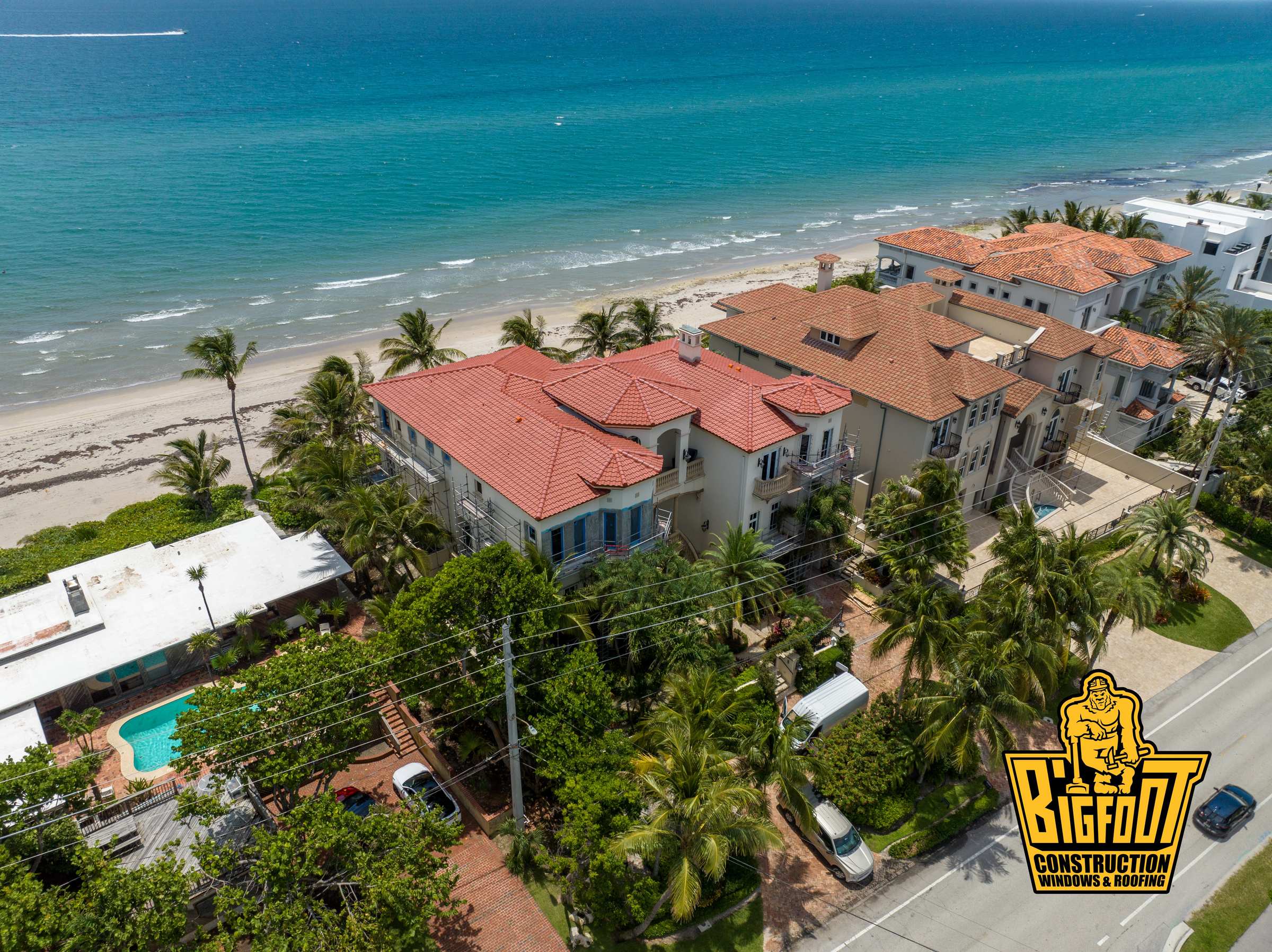
The best roofing companies in South Florida carry an active Florida Certified Roofing Contractor license, comply with HVHZ requirements under Florida Building Code Chapter 15, pull permits for every job, and can document that the materials they install carry valid Miami-Dade Notices of Acceptance — not just a Florida Product Approval — for Miami-Dade and Broward County installations.
Updated August 2026
Key Takeaways
- HVHZ (High-Velocity Hurricane Zone) rules in Miami-Dade and Broward County are the strictest residential roofing requirements in the United States — verify compliance before you sign.
- Every legitimate roof replacement in Miami-Dade requires a permit; an unpermitted roof can void your insurance and block a home sale.
- Verify your contractor’s Florida Certified Roofing Contractor license on the DBPR website before accepting any bid.
- Roofing material options — TPO, concrete tile, and metal — each have specific HVHZ-approved product lines; confirm NOA numbers before installation begins.
- A new roof installed correctly can significantly reduce your homeowners insurance premium through a wind mitigation inspection credit.
The Problem
Why Choosing the Wrong Roofer in South Florida Is a Bigger Risk Than Anywhere Else
Miami-Dade and Broward County sit inside the High-Velocity Hurricane Zone. That changes everything about how a roof must be built — and who is qualified to build it.
South Florida is not a standard Florida roofing market. It operates under a separate, materially stricter code path called the High-Velocity Hurricane Zone (HVHZ), defined under Florida Building Code Chapter 15. This designation applies to all of Miami-Dade County and Broward County and requires roofing products to hold a Miami-Dade Notice of Acceptance (NOA) — a more rigorous product-approval standard than a Florida Product Approval alone — or a Florida Product Approval that covers HVHZ use. A contractor who installs a product whose Florida Product Approval does not cover HVHZ use, and that has no NOA, in an HVHZ opening is not in compliance, regardless of whether the product “passed” some test somewhere else.
The risk is real: an improperly permitted or non-HVHZ-compliant roof can be flagged during a resale inspection, rejected by your insurance carrier, or fail to receive a wind mitigation credit — costing you thousands of dollars per year in premiums you didn’t have to pay. It can also leave you with no insurance coverage on the roof itself when a named storm makes landfall.
For homeowners comparing roofing bids, understanding what separates a genuinely qualified South Florida roofing contractor from one who is simply cheap is the single most important part of the hiring decision.
Local Context
What Makes South Florida Roofing Different from the Rest of the State
The Florida Building Code applies statewide, but Section 15 of that code — the HVHZ provisions — creates a separate compliance pathway for Miami-Dade and Broward Counties. Here is what that means in practice for homeowners:
| Requirement | Standard Florida | HVHZ (Miami-Dade / Broward) |
|---|---|---|
| Product approval standard | Florida Product Approval (FPA) | Miami-Dade NOA or a Florida Product Approval that covers HVHZ use required |
| Deck attachment | Nails per code table | Ring-shank nails, specific embedment |
| Secondary water barrier | Recommended | Mandatory (impacts insurance credit) |
| Permit required for replacement | Yes, in most counties | Yes — always, no exceptions |
| Wind speed design minimum | Varies by zone | 175+ mph design pressure in many areas |
| Inspector access at closing | Standard | Multiple required inspections |
Palm Beach County operates under standard Florida Building Code (not HVHZ), but contractors working across all three counties should know which code path applies to each project. When you are getting quotes in Broward or Miami-Dade, every line item in that proposal — product type, underlayment, deck attachment method — should map to an HVHZ-compliant specification. If it doesn’t, ask why.
How to Evaluate Roofing Companies
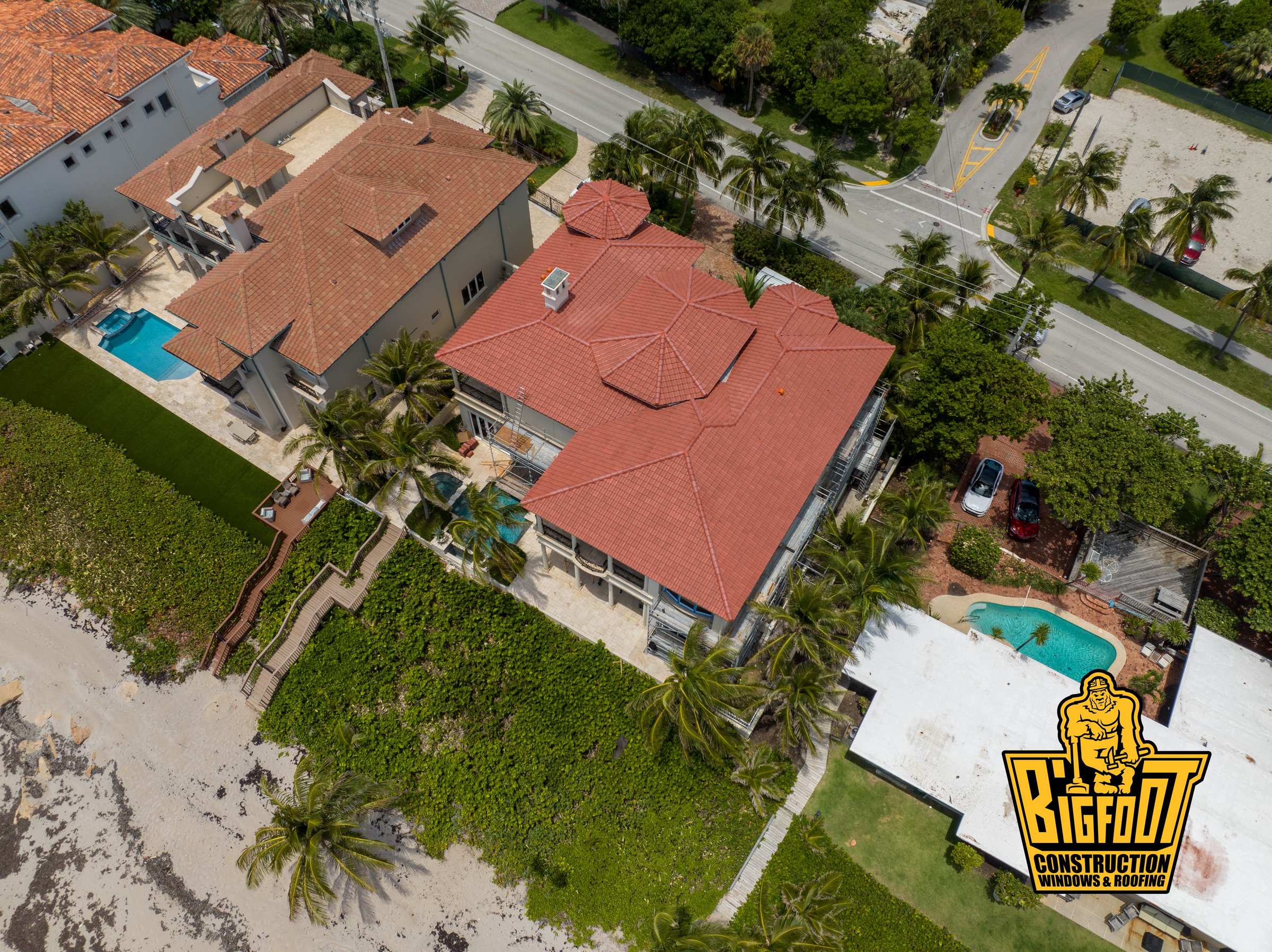
What to Actually Check Before You Hire a South Florida Roofer
When comparing roofing contractors in Miami-Dade, Broward, or Palm Beach County, the following checklist separates qualified companies from those that may leave you exposed:
1. Verify the Florida License Directly on DBPR
A contractor must hold an active Certified Roofing Contractor license issued by the Florida Department of Business and Professional Regulation (DBPR) to legally replace a roof in South Florida. Do not take a copy of a license at face value — look it up yourself at myfloridalicense.com. The license status should show as current and active. Any lapse means the contractor cannot legally pull permits in your county.
Bigfoot Windows & Roofing holds license CCC1333168 (Certified Roofing Contractor). You can verify this directly on the DBPR website.
2. Confirm NOA Numbers for Every Material
Ask any roofing contractor for the specific Miami-Dade NOA number for the shingles, tile, metal panels, or membrane they plan to install on your home. A legitimate HVHZ contractor will have this on file before they propose a product. If they cannot produce a NOA number for materials going onto a Miami-Dade or Broward home, that is a red flag.
3. Confirm Permit Inclusion
Every roof replacement in Miami-Dade County requires a permit. This is not optional, and it is not something a homeowner can waive. Permits trigger mandatory inspections at deck, dry-in, and final stages. A company that offers to skip the permit — even framing it as a cost-savings move — is exposing you to insurance voidance, failed resale inspections, and possible code-enforcement liability. Confirm the permit is included in the contract and ask for the permit number once it is pulled.
4. Ask About the Wind Mitigation Report
A properly installed South Florida new roof should qualify for meaningful wind mitigation credits that reduce your homeowners insurance premium. The deck attachment method (ring-shank nails), roof cover type (sealed system), and secondary water barrier (peel-and-stick underlayment) all feed into the OIR-B1-1802 wind mitigation inspection form. A knowledgeable contractor will explain which credits your installation qualifies for before the job begins — not after.
A full-deck peel-and-stick underlayment can qualify as a Secondary Water Resistance (SWR) feature on the Florida wind mitigation inspection form, which insurers may credit as a wind mitigation discount on the hurricane portion of your homeowners premium. The actual credit varies by insurer and coverage zone and requires a licensed wind mitigation inspection — confirm eligibility and amount with your carrier.
5. Understand What Scope Your Contractor Can Handle
A common issue on South Florida roof replacements is discovering mid-project that the structure needs repair — rotted decking, missing or improperly installed hurricane straps, or fascia damage that requires structural correction before a new roof can be legally completed. A contractor who holds only a roofing license cannot legally perform structural modifications. Bigfoot’s Certified General Contractor license (CGC1531370) means that if structural work is discovered during a roof replacement — hurricane strap upgrades, decking repairs requiring structural assessment, or fascia that ties into load-bearing framing — it can be handled under one licensed scope without stopping the job to hire a separate contractor. This is a structural compliance advantage, not a marketing claim.
Roofing Materials Compared
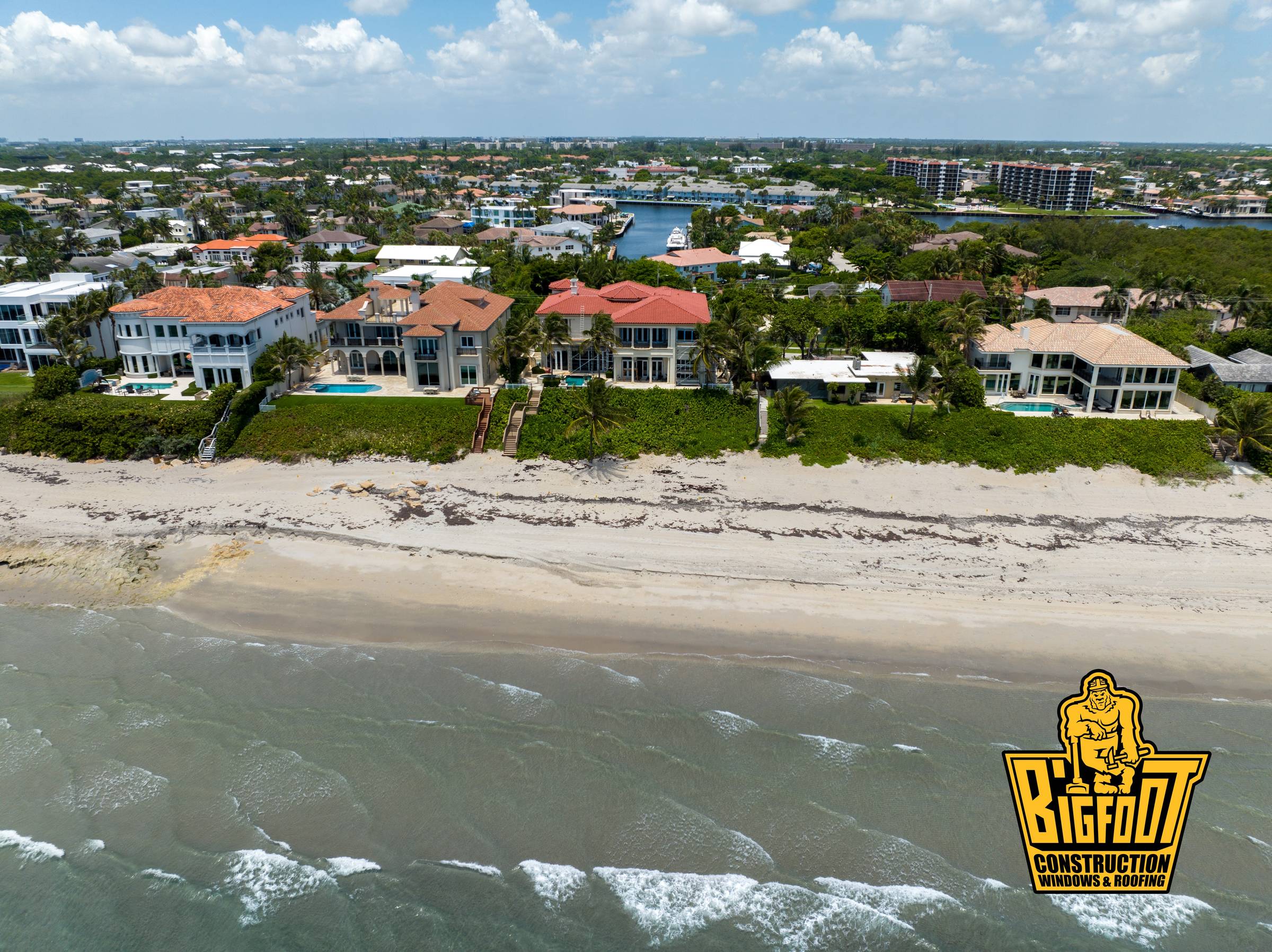
Which Roofing Material Is Best for South Florida? TPO, Tile, Metal, or Shingle?
Each material has a different cost profile, maintenance requirement, and HVHZ approval pathway. Here is a side-by-side breakdown based on South Florida conditions.
| Material | Typical Installed Cost (per square) | HVHZ NOA Available | Lifespan (South FL) | Best For |
|---|---|---|---|---|
| GAF Architectural Shingle | $750–$850 | Yes | 12–15 years | Budget replacement, rental properties |
| Concrete Tile (e.g., Westlake Saxony 900) | $1,000–$1,350 | Yes | 30–40+ years | HOA communities, resale value |
| Standing Seam Metal (Englert or Metal Alliance) | $1,050–$1,300 | Yes | 50+ years | Long-term value, insurance savings |
| TPO / Modified Bitumen (flat) | $800–$1,400 | Yes | 15–25 years | Flat or low-slope roofs |
Metal roofing note: Bigfoot installs Englert or Metal Alliance standing seam panels roll-formed on-site from 24-gauge Galvalume or aluminum. The proprietary clip system — the manufacturer’s approved clips, at the spacing its product approval specifies — allows thermal float and has passed HVHZ inspection requirements. Nail-strip (snap-lock) panel systems do not allow the same thermal movement and have a documented history of oil-canning and buckling in South Florida heat cycles. Always ask what clip system your metal roofer uses.
When another material may be a better fit: If your HOA specifically requires barrel tile and you are not open to metal, concrete or clay tile is the appropriate choice. If your building is a commercial structure or a multi-story condo, flat TPO or modified bitumen systems are typically the correct specification. Bigfoot works across all of these material types.
Why License Breadth Matters
A Licensed Roofing Contractor — Not a Lead Aggregator
You are hiring an individual with licenses on the line, not a call-center that dispatches subcontractors.
“When a homeowner calls me about a roof, I’m not handing it off to someone I’ve never met. I pull the permit. My crew installs it. I hold the license.”
Founder & President, Bigfoot Windows & Roofing
Our Roofing Systems
What Bigfoot Installs — and Why These Products for South Florida
Every roofing product Bigfoot installs in Miami-Dade and Broward is selected specifically because it carries a Miami-Dade NOA or a Florida Product Approval that covers HVHZ use, as required for HVHZ compliance. Here is a brief overview of the primary systems:
- GAF Shingle System: Bigfoot holds GAF Certified Plus certification, which authorizes the GAF System Plus warranty — a 50-year non-prorated warranty covering shingles, labor, tear-off, and accessories. GAF’s Wind Proven warranty has no maximum mph cap and is not voided by a named storm hitting the county — a meaningful distinction from most competitor warranties that cap at 130 mph or are voided by named-storm county declarations.
- Englert or Metal Alliance Standing Seam Metal: Panels are roll-formed on-site, one continuous piece from bottom to top — no horizontal seams, which is a structural advantage in hurricane uplift conditions. The long lifespan makes this the highest long-term value system we install. Warranty terms come from the panel manufacturer on your project (Englert or Metal Alliance) and are listed on your proposal.
- Westlake Concrete & Stone-Coated Tile: The Saxony 900 (flat concrete) and Unified Steel stone-coated lines both carry valid HVHZ NOAs. Westlake’s Unified Steel product carries no named storm, saltwater, or act-of-God exclusion clauses — confirm the same with any tile product you are comparing.
- TPO Flat Roofing: For flat and low-slope sections, we install TPO membrane systems with HVHZ-approved specifications, including tapered insulation and cover board where drainage design requires it.
Bigfoot does not install roofing products from manufacturers with high callback rates or unresolved HVHZ compliance issues. If a product is not on our approved list, we will tell you plainly — and explain why — rather than install something that may create problems at inspection or in the next storm season.
For homeowners interested in financing a new roof, explore PACE and other financing options — including the My Safe Florida Home program, which offers matching grants of up to $10,000 for qualifying wind-mitigation improvements.
The Process
How a South Florida Roof Replacement Works — Step by Step
- On-site estimate: A Bigfoot estimator visits your property, assesses the existing roof condition, takes measurements, and identifies any structural concerns (rotted decking, hurricane strap deficiencies, fascia damage) that may affect scope and cost.
- Permit application: Once you accept the proposal, we apply for the permit with the applicable county — Miami-Dade, Broward, or Palm Beach. The permit number is provided to you, and inspection scheduling is managed by our office.
- Tear-off and deck inspection: The existing roofing system is removed. The deck is inspected at this stage, and any damaged or substandard decking is replaced. A county inspector performs a deck inspection before any new material goes down.
- Underlayment and dry-in: HVHZ-compliant underlayment — including peel-and-stick secondary water barrier where specified — is installed and inspected before the field installation of the primary roof cover begins.
- Roof cover installation: Shingle, tile, metal panels, or membrane system is installed per the NOA specifications, including the required fastener schedule, clip system, or foam-set application.
- Final inspection: County inspector performs a final inspection. Upon approval, the permit is closed and a copy of the closed permit is provided to you for your records — critical documentation for insurance, wind mitigation, and future resale.
Get a roofing estimate from a Florida-licensed contractor who pulls permits and knows HVHZ.
We serve Miami-Dade, Broward, and Palm Beach County.
Related Articles
Who We’re Not the Right Fit For
- Buyers whose only decision factor is lowest price: HVHZ-compliant roofing — proper NOA products, ring-shank fasteners, peel-and-stick secondary water barriers, permitted inspections — costs more than a non-compliant installation. If you are comparing us to a bid that skips the permit or uses a product without a valid NOA, we will be more expensive. That difference is intentional.
- Commercial or multi-story condo projects: Bigfoot focuses on residential roofing in Miami-Dade, Broward, and Palm Beach. Very large commercial roofing projects are outside our primary scope.
- Homeowners who want work to start immediately without a permit: We do not start roof work without a permit in place. If your timeline cannot accommodate the county permit review period, we are not the right contractor for your schedule.
- Projects outside our service area: We do not currently serve areas outside Miami-Dade, Broward, and Palm Beach County. If your property is in another Florida county, we recommend verifying DBPR license status on any contractor you consider.
Frequently Asked Questions
How do I know if a roofing company is licensed to work in Miami-Dade County?
Look up the contractor’s license number at myfloridalicense.com and confirm the status shows as current. The contractor should hold an active Certified Roofing Contractor license (CCC prefix). For work in Miami-Dade specifically, also confirm they have experience pulling HVHZ permits, since the HVHZ product approval requirements are materially stricter than the statewide Florida Product Approval standard.
What roofing materials are approved for HVHZ in South Florida?
A product with a current Florida Product Approval (FL number) that covers HVHZ use is legal to install in Miami-Dade and Broward. A Miami-Dade NOA is an additional certification some products also carry; it is not required for the permit. Approved product categories include certain GAF shingle systems, concrete and clay tile, standing seam metal panels (such as Englert or Metal Alliance), and TPO flat membrane systems. Ask your contractor for the specific NOA number for every material before signing.
Do I need a permit to replace my roof in Miami-Dade County?
Yes — always. Every roof replacement in Miami-Dade County requires a permit, multiple scheduled inspections, and a closed permit on record. There are no exceptions and no legal way to waive this requirement. An unpermitted roof can void your homeowners insurance coverage, create problems at resale, and result in code-enforcement action.
How can a new roof affect my homeowners insurance premium in South Florida?
A properly installed South Florida roof — with ring-shank deck fasteners, a peel-and-stick secondary water barrier, and an approved roof cover — typically qualifies for significant wind mitigation credits on the OIR-B1-1802 inspection form. These credits can reduce the hurricane portion of your premium meaningfully. The actual reduction depends on your insurer, current policy structure, and inspection results; confirm specifics with your carrier after a licensed wind mitigation inspector completes the inspection.
What should I look for when comparing roofing quotes in South Florida?
Verify the contractor’s DBPR license, confirm a permit is included in every bid, and ask for the NOA number for every material proposed. Compare the deck attachment specification (ring-shank vs. smooth nails), underlayment system (peel-and-stick full-deck vs. felt), and what happens if rotted decking or structural issues are discovered mid-project. A bid that is significantly lower may be skipping one or more of these compliance requirements.
Can Bigfoot handle structural repairs discovered during a roof replacement?
Yes. Because Bigfoot holds a Certified General Contractor license (CGC1531370) in addition to the Certified Roofing Contractor license, structural scope — including hurricane strap upgrades, load-bearing fascia repair, and decking issues requiring structural assessment — can be handled under the same licensed contractor without stopping the project to hire a separate GC. This matters in South Florida where mid-project structural discoveries are common on older homes.
Does Bigfoot offer financing for roof replacements?
Yes. Bigfoot works with PACE financing (paid through your property tax bill, not a bank loan) and can assist with the My Safe Florida Home grant application, which offers matching grants up to $10,000 for qualifying wind-mitigation improvements. PACE applications for roofing and windows must be submitted separately. For qualifying property owners, there may also be tax benefits available — please consult your CPA.
Schedule Your Free Roofing Estimate
Ready to get started? Request a free estimate — no phone call required.
A compliant South Florida roof starts with a licensed contractor who knows HVHZ.
Call Bigfoot Windows & Roofing at 786-886-2088 or request a free estimate online.
Sources
- Florida Department of Business and Professional Regulation (DBPR) — License Verification: myfloridalicense.com
- Florida Building Code, 8th Edition — Chapter 15 (HVHZ provisions): floridabuilding.org
- Florida DEM Wind Mitigation Booklet — Secondary Water Resistance credit (approx. 6% for self-adhesive secondary water barrier): floridadisaster.org
- My Safe Florida Home Grant Program — up to $10,000 matching grant: mysafeflhome.com
- Renew Financial — PACE eligibility criteria: renewfinancial.com