
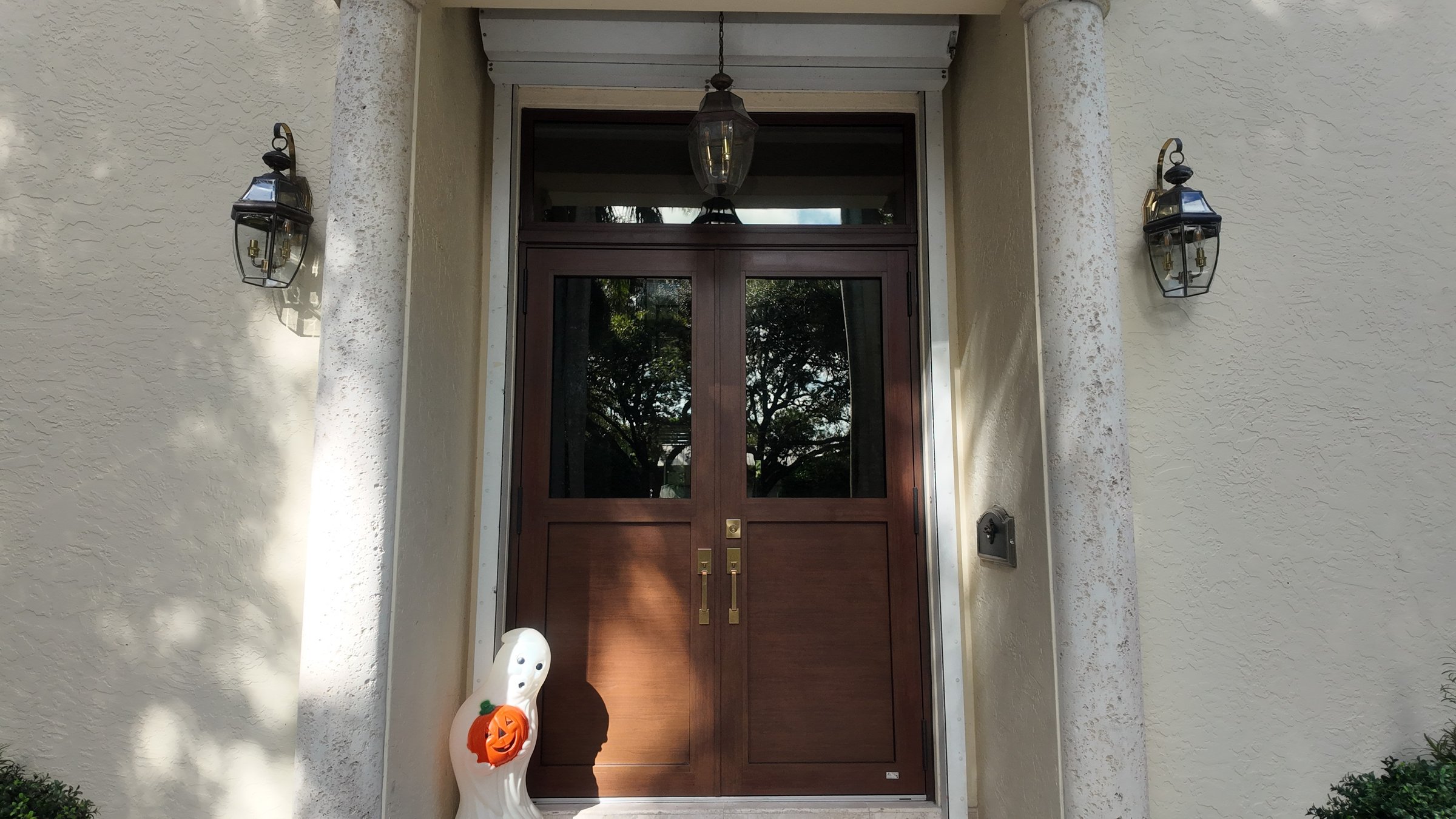
Impact door installation in South Florida requires a product carrying a Miami-Dade Notice of Acceptance (NOA) or the applicable Florida Product Approval for your specific county, a pulled permit, and an installation method that meets FBC Section 1609 wind-load requirements for your exposure category — not just a label that says “impact rated.”
Key Takeaways
- A product with a current Florida Product Approval (FL number) that covers HVHZ use is legal to install in Miami-Dade and Broward. A Miami-Dade NOA is an additional certification some products also carry; it is not required for the permit.
- Every impact door replacement requires a permit; no permit exemption exists under Florida Building Code for routine replacements.
- Your door’s frame finish, glass thickness, and approval path must match the specific opening’s design pressure — not just the door’s general rating.
- Florida law requires insurers to offer wind-mitigation credits for impact-rated opening protection; actual savings vary by insurer and policy.
- A contractor holding a Certified General Contractor license can handle structural scope — header resizing, threshold work — without a second specialist.
The Real Problem
Why So Many Impact Door Projects Go Wrong Before Installation Even Starts
Homeowners in Miami-Dade, Broward, and Palm Beach are often surprised when a permit gets flagged, a product fails inspection, or a quote falls apart because the door spec doesn’t match what the county requires.
South Florida’s wind environment is one of the most demanding in the United States. Miami-Dade and Broward counties sit inside the High-Velocity Hurricane Zone (HVHZ) — a designation that carries materially stricter building code requirements than anywhere else in the state. A door that is legal to install in Palm Beach County may not pass a Miami-Dade inspection. A product with Florida Product Approval alone will fail the permit review in the HVHZ if it does not also carry a Miami-Dade Notice of Acceptance (NOA).
The confusion is real and it costs homeowners time and money. Contractors who don’t specialize in HVHZ work sometimes submit permit applications with the wrong approval path and the permit gets rejected or the inspection fails. By the time that happens, the door may already be on order.
Understanding what the code actually requires — before you sign anything — protects your project from these delays.
South Florida Context
HVHZ, Exposure Categories, and Why Miami-Dade Is Different
The Florida Building Code treats Miami-Dade and Broward differently from the rest of the state — and your door spec must reflect that.
The High-Velocity Hurricane Zone designation under the Florida Building Code means every exterior door in Miami-Dade and Broward must be tested to the Miami-Dade large-missile impact protocol (TAS 201/202/203) and carry a valid Miami-Dade NOA at the time of permitting. Florida Product Approval (FPA) — the statewide approval pathway — is not a substitute in the HVHZ. This distinction is written into FBC Section 1609 and enforced at the product-approval review stage of the permitting process.
Outside the HVHZ — in most of Palm Beach County and northward — Florida Product Approval is sufficient, and the wind-load design pressure requirements follow ASCE 7 for your specific coastal exposure category (B, C, or D). Coastal exposure categories determine the design wind pressure your door must be rated to withstand. Homes within a certain distance of the coastline fall into higher exposure categories, which means higher required design pressures.
What this means practically: a door with an NOA covering openings up to a certain design pressure may not be the right choice for a beachfront home with large openings, even if the NOA exists. The installer must confirm that the specific design pressure on the NOA matches or exceeds the required design pressure calculated for that opening and location.
What You Need to Know
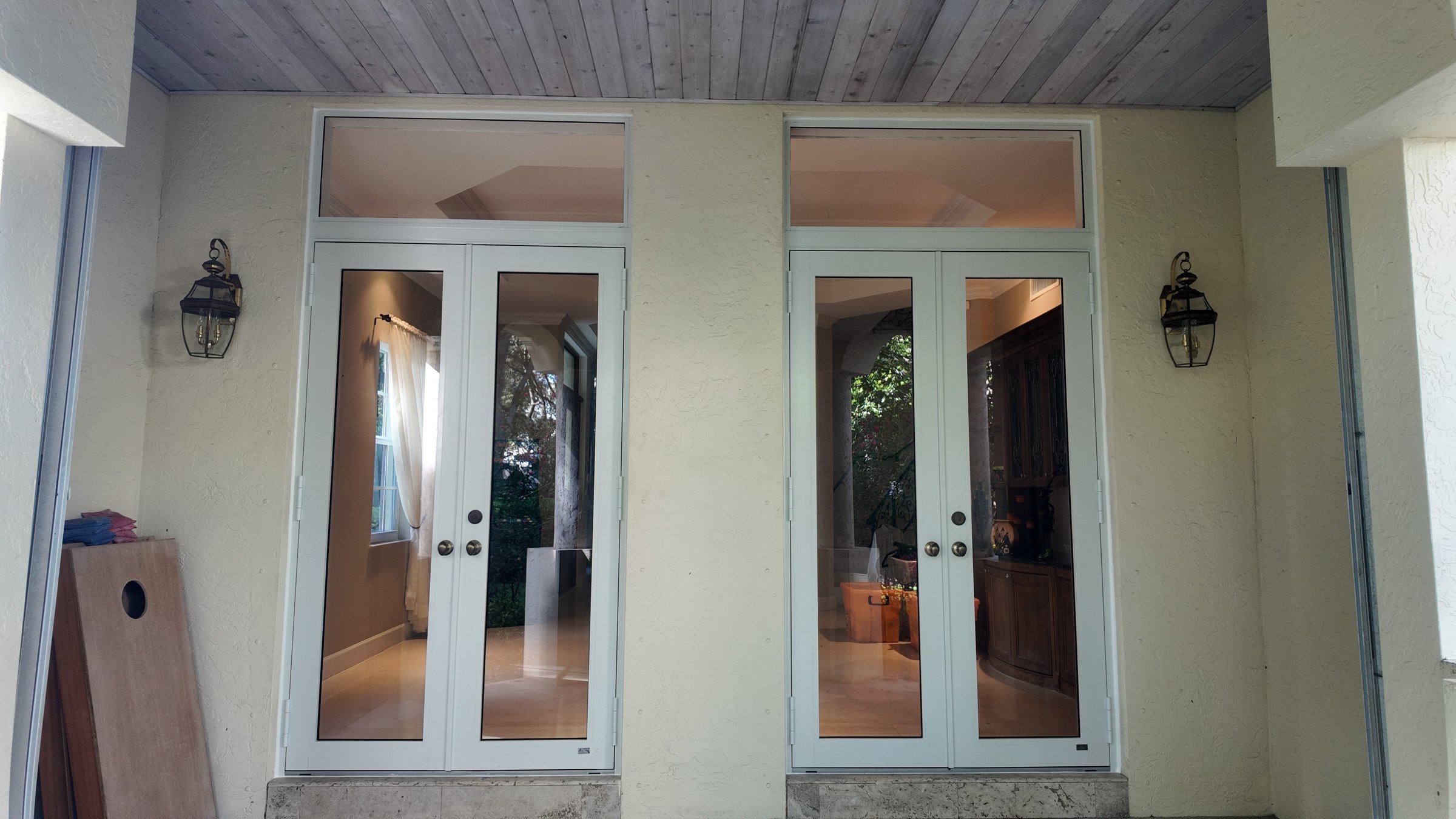
The Miami-Dade Permit Process for Impact Door Replacement — Step by Step
No permit exemption exists for impact door replacement in Florida. Here is what the process actually looks like.
Understanding the permitting sequence helps you ask the right questions before you hire anyone. Here is a straightforward overview of what a compliant impact door installation in Miami-Dade County involves:
- Product selection and approval verification. The door must have a valid Miami-Dade NOA (HVHZ) or Florida Product Approval (non-HVHZ) covering the specific opening dimensions and required design pressure. The NOA number, revision, and scope must be confirmed — not just the brand name — because NOAs expire and are revised.
- Permit application. A licensed contractor submits the permit application to the county or municipality’s building department. Required documents typically include: the product’s NOA or FPA number, signed-and-sealed drawings (when structurally required), the installation instructions per the NOA, and the Notice of Commencement. Owner-builder permits are technically allowed under Florida law but require the homeowner to attest that they are performing the work themselves; most mortgage lenders and insurance companies require a licensed contractor’s permit.
- Permit review. Miami-Dade’s building department reviews the product approval pathway, the scope of work, and whether the submitted drawings match the NOA installation requirements. This review commonly takes two to four weeks for standard residential replacements, though complex projects or backlog periods can extend the timeline.
- Installation. The door is installed per the NOA’s installation instructions. Fastener spacing, embedment depth, shimming, and anchor type are all specified in the NOA — deviation from those specs can void the approval, fail the inspection, and trigger removal and reinstallation.
- Inspection and final permit closure. The building inspector verifies that the installation matches the approved drawings and the NOA installation method. Once the inspection passes, the permit is closed and the homeowner has documentation that the installation is code-compliant.
| Step | Who Handles It | Typical Duration |
|---|---|---|
| Product approval verification | Contractor | 1–3 days |
| Permit application submission | Contractor | 1–2 days to submit |
| Permit review (Miami-Dade) | Building Dept. | 2–4 weeks (residential) |
| Installation | Contractor crew | 1–3 days per project |
| Final inspection | Building inspector | Scheduled within 1–2 weeks |
Total project timeline from signed contract to closed permit: typically six to ten weeks for a standard South Florida residential impact door project, depending on permit review backlog, product lead time, and HOA approval (if applicable).
Impact Doors vs. Hurricane-Shuttered Doors
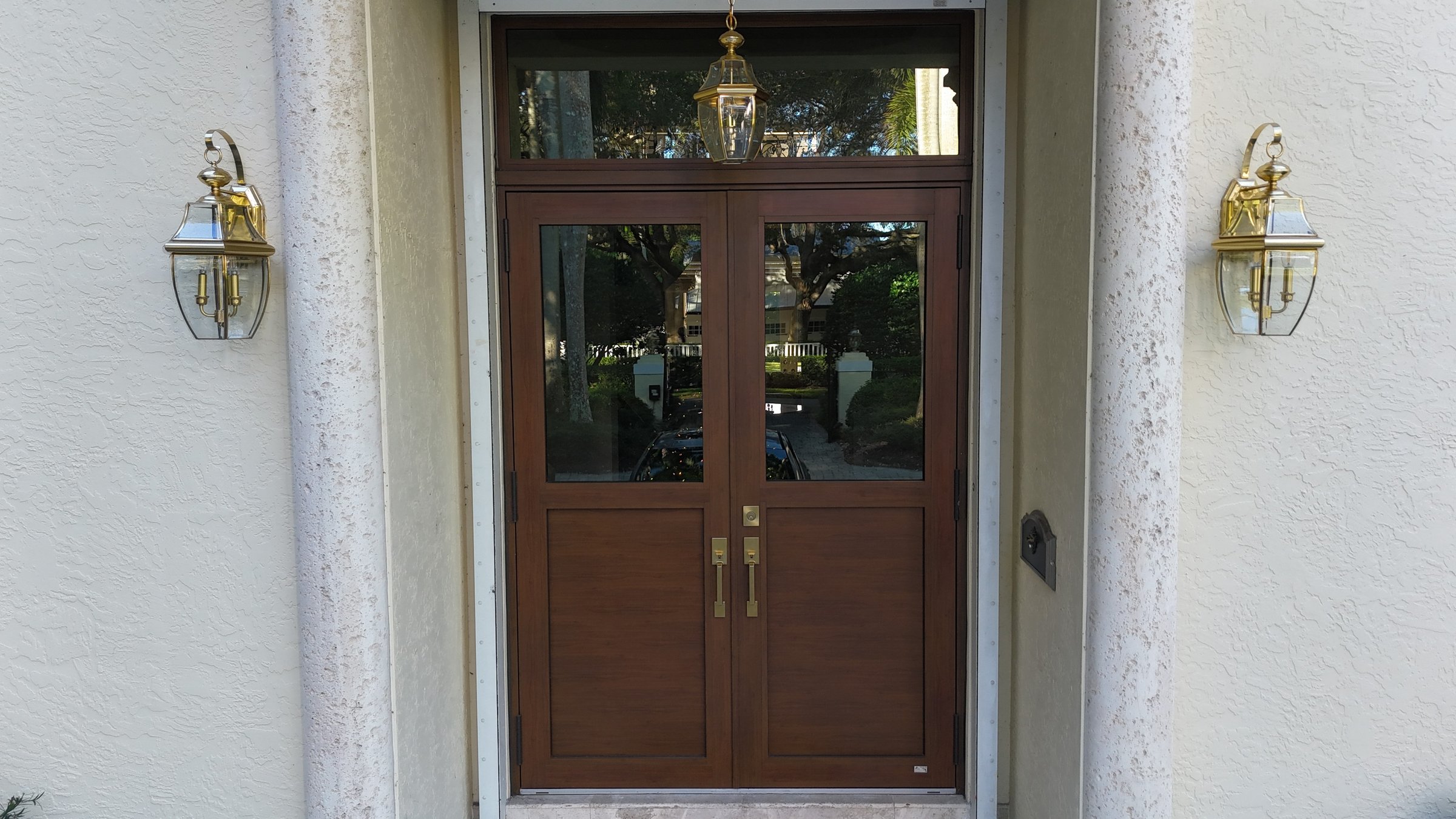
Permanent Protection vs. Deployable Shutters — What Actually Matters for Insurance and Code
Both can be code-compliant. The difference affects your insurance premium, your daily convenience, and your resale value.
| Feature | Impact-Rated Door (Permanent) | Hurricane Shutter + Standard Door |
|---|---|---|
| HVHZ compliance path | Miami-Dade NOA on the door itself | NOA on the shutter system; standard door behind it |
| Daily convenience | No action required — always protected | Must be deployed before a storm |
| Insurance premium impact | Wind-mitigation credit under FL Statute 627.0629 — varies by insurer | Shutter credit available but typically lower than impact door credit |
| Resale value signal | Strong — buyers and appraisers recognize impact openings | Moderate — shutters require buyer education |
| Permit required? | Yes — always | Yes — always |
Florida Statute 627.0629 requires insurers to offer premium discounts or credits for approved opening protection, including impact-rated doors. The actual credit you receive depends on your insurer, your policy structure, your home’s wind mitigation inspection results, and your location. In our experience, many South Florida homeowners see meaningful premium reductions after installing impact-rated doors and doors combined with a wind mitigation inspection — but no specific figure can be guaranteed, and you should confirm current credit amounts with your carrier before making a decision based on projected savings.
If you’re considering impact doors for your South Florida home, the permanent protection advantage over deployable shutters is one of the most common reasons homeowners choose to upgrade.
Why Contractor Choice Matters Here
License Authority — Not Just a Sales Pitch
Impact door installation in the HVHZ isn’t just a product decision. It’s a code compliance exercise. The contractor you hire must know the approval path, pull the permit correctly, and install to the NOA — not just hang a door.
“Every impact door project we do starts with the NOA verification and design pressure check — before we ever quote a product. If the door doesn’t match the opening’s required DP rating and the HVHZ path, we won’t spec it. That’s how you avoid failed inspections and reinstallation costs.”
Bigfoot Windows & Roofing
Product Guidance
What to Look for in an HVHZ-Compliant Impact Door
The product spec drives everything: the NOA path, the design pressure rating, the frame finish for coastal durability, and the glass thickness for your opening size.
We install Mr. Glass impact doors as our primary line. The Mr. Glass Series 2500T thermally broken impact door carries both a Florida Product Approval and a Miami-Dade NOA — making it one of the few door systems tested for both in-swing and out-swing configurations. Most competitor door systems are tested in only one swing direction; the 2500T is tested in both, which matters in HVHZ permitting where inspectors verify the installation matches the exact tested configuration.
A few product-selection facts that affect your project:
- Frame finish for coastal locations: For homes within two miles of saltwater, specify the 2605 coastal aluminum finish. Using a 2604 wood-grain finish in a coastal zone can void the manufacturer’s 10-year product warranty — confirm current terms with your contractor before ordering.
- Glass thickness: Impact laminated glass thickness generally scales from 5/16″ (builder grade) to 7/16″ (standard mid-range residential) to 9/16″ (high-rise and high-design-pressure applications). The exact specification must match the NOA for the specific product and opening.
- Frame depth stays constant: Upgrading glass thickness does not change the frame depth — a common misconception that sometimes leads to threshold modification surprises during installation.
GC Scope Advantage
When Impact Door Installation Requires More Than Just a Door
Some openings need structural work before a compliant installation is possible. That scope requires a general contractor — and having one team handle both avoids coordination delays.
Impact door installation occasionally reveals structural conditions that must be addressed before the door can be installed to code. The most common situations include:
- Header resizing: If the existing rough opening needs to be widened or the header (the structural beam above the opening) needs to be upgraded to carry the additional load of a heavier impact door unit, that is structural scope. A Certified General Contractor (CGC1531370) can perform that work in-house — without bringing in a separate structural contractor, which would add scheduling complexity and cost.
- Threshold modifications: Impact door thresholds are typically higher than standard door thresholds to meet the door system’s tested installation method. Some homeowners ask about lowering or ramping thresholds for accessibility — that work, when it intersects with structural concrete, requires contractor coordination and should be discussed at the design stage, not discovered at installation.
- Permit documentation requirements: Projects that involve structural modifications may require signed-and-sealed drawings from a licensed engineer. Bigfoot’s CGC license authority allows us to coordinate that documentation as part of a single permit — so you’re not managing two separate contractors and two separate permit applications for one opening.
For most straightforward residential impact door replacements — swapping one door for another in the same rough opening — no structural engineering documentation is required. The permit application is driven by the NOA and the installation drawings provided by the manufacturer. But knowing in advance whether your project is straightforward or not is exactly why a pre-installation assessment matters.
Explore our impact door pricing estimator for a preliminary cost range before your on-site visit, or review impact door financing options if budget timeline is a concern.
Ready to Get an Accurate Quote for Your Impact Doors?
We verify the NOA, pull the permit, and install to code — one team, one point of contact.
Who We’re Not the Right Fit For
We want you to make the right decision for your project — and that sometimes means being honest about situations where we may not be the best match.
- Buyers seeking the lowest possible price above all else. HVHZ-compliant installation with the correct NOA path, pulled permits, and proper inspection costs more than an unlicensed cash job. If price is the only criterion, we are not the right fit — but we’d encourage you to think carefully about what an unpermitted installation means for your insurance claim after a hurricane.
- Projects outside Miami-Dade, Broward, and Palm Beach. Our operations are concentrated in South Florida. If your project is in a market we don’t serve, we’ll tell you clearly rather than take on work we can’t support properly.
- Homeowners who need a door installed this week with no permit. Permits are not optional under Florida Building Code — for any county, any installation. If a contractor tells you permits aren’t needed for a door replacement, that’s a red flag, not a convenience.
- Buyers who have already purchased a non-HVHZ door and want us to install it in Miami-Dade. If the product doesn’t carry the right NOA for your location, we will not install it — even if the buyer has already purchased it elsewhere. We’d rather help you find the right product than install one that will fail inspection.
Common Questions
Frequently Asked Questions
What is a Miami-Dade NOA and do I need one for my impact door installation in South Florida?
A Miami-Dade Notice of Acceptance (NOA) is a product approval document issued by Miami-Dade County’s Building Code Compliance Office, confirming the product has passed the county’s large-missile impact testing protocol (TAS 201/202/203). If your home is in Miami-Dade or Broward County — both inside the High-Velocity Hurricane Zone (HVHZ) — your impact door must carry a valid Miami-Dade NOA. A product with a current Florida Product Approval (FL number) that covers HVHZ use is legal to install in Miami-Dade and Broward. A Miami-Dade NOA is an additional certification some products also carry; it is not required for the permit. Outside the HVHZ (most of Palm Beach County and northward), Florida Product Approval is the required pathway.
How long does the permit process take for impact door replacement in Miami-Dade County?
For a standard residential impact door replacement in Miami-Dade, the building department review typically takes two to four weeks after a complete application is submitted. Total project timeline from signed contract to closed permit — including product lead time, installation, and final inspection — is generally six to ten weeks. Complex projects, structural modifications, or high-backlog periods at the building department can extend that timeline. Your contractor should give you a realistic estimate at the proposal stage, not just an installation date.
Will installing impact doors lower my homeowners insurance in Florida?
Florida law requires insurers to offer wind-mitigation credits for approved opening protection such as impact-rated doors, under Florida Statute 627.0629. In our experience, many South Florida homeowners see meaningful premium reductions after installing impact doors and completing a wind mitigation inspection. Actual reductions vary by insurer, policy, location, and home construction, and no specific figure can be guaranteed. Confirm current credit amounts and eligibility with your insurance carrier before making a decision based on projected savings.
What is the difference between an impact door and a hurricane-rated door in the HVHZ?
In common use, “impact door” and “hurricane-rated door” often refer to the same product — a door with laminated impact glass and a tested frame system. In the HVHZ specifically, a compliant door must pass the Miami-Dade large-missile impact protocol and carry a valid NOA. A door sold as “hurricane rated” somewhere else in the country may not meet HVHZ testing standards. Always verify the product carries a current Miami-Dade NOA before purchasing for a Miami-Dade or Broward installation.
Do I need an architect or engineer to pull a permit for impact door installation in South Florida?
For most straightforward residential impact door replacements — swapping a door in an existing rough opening — signed-and-sealed engineering drawings are not required. The permit application relies on the product’s NOA and the manufacturer’s installation drawings. Engineering documentation is generally required when the project involves structural modifications such as header resizing, enlarging the rough opening, or load path changes. A contractor holding a Certified General Contractor license can coordinate that scope in-house for projects that need it.
How do HOA approval requirements interact with the county permit process for impact doors in South Florida?
In gated communities and HOA-governed neighborhoods across Broward and Miami-Dade, you may need HOA architectural approval before — or in parallel with — the county permit. Florida Senate Bill 293 generally restricts HOAs from prohibiting impact-rated doors and windows; however, HOAs may still regulate color, finish, and style within reasonable limits. Confirm your HOA’s approval process and timeline at the design stage. HOA review delays do not pause the county permit clock, so starting both processes early reduces total project timeline. Verify current HOA rules with your association and an attorney if needed.
What financing options are available for impact door installation in South Florida?
Several options exist for South Florida homeowners financing impact door projects. PACE (Property Assessed Clean Energy) financing is repaid through your property tax bill rather than a bank loan, does not require a FICO credit score for qualification, and offers terms up to 20 years. The My Safe Florida Home program may provide matching grants of up to $10,000 for eligible mitigation improvements, subject to program funding and legislative appropriation. Both options can be explored through Bigfoot’s financing page. Consult your CPA regarding any potential tax implications — we do not represent PACE as a tax deduction.
Schedule Your Free Estimate
Ready to get started? Request a free estimate — no phone call required.
Related Reading
More from Bigfoot Windows & Roofing
Sources
- Florida Building Code, Section 1609 — Wind Loads: floridabuilding.org
- Miami-Dade County Building Code Compliance Office — NOA search: miamidade.gov
- Florida Statute 627.0629 — Residential property insurance; rate filings: flsenate.gov
- Florida Senate Bill 293 (2024) — HOA restrictions on impact openings: flsenate.gov/Session/Bill/2024/293
- Mr. Glass impact door product information — Florida Product Approval FL41890: floridabuilding.org
- My Safe Florida Home grant program FAQs: mysafeflhome.com
- RenewPACE Florida financing: renewfinancial.com
Get Your Impact Door Project Quoted Correctly — the First Time
We verify the NOA path, pull the permit, and install to the Florida Building Code in Miami-Dade, Broward, and Palm Beach County.