
Split Payment & Financing for Impact Windows | Bigfoot Windows & Roofing
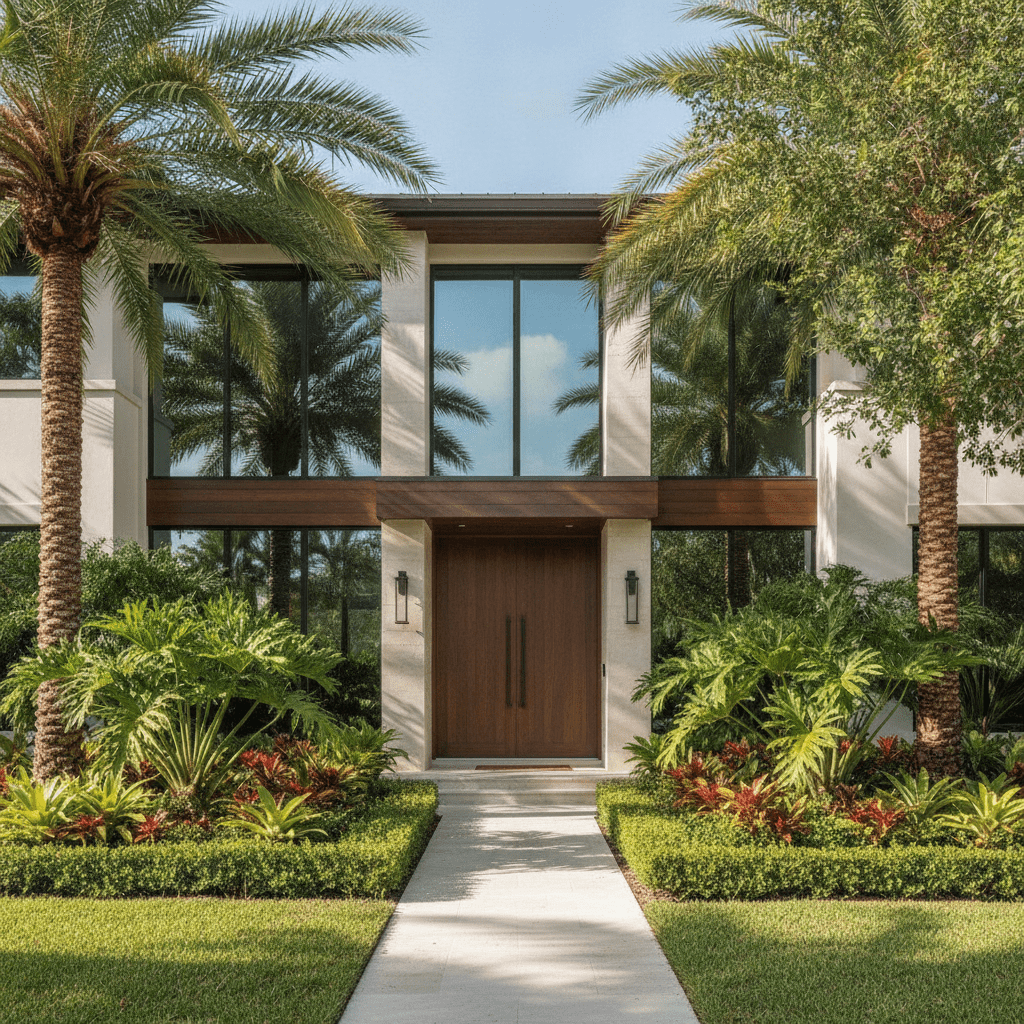
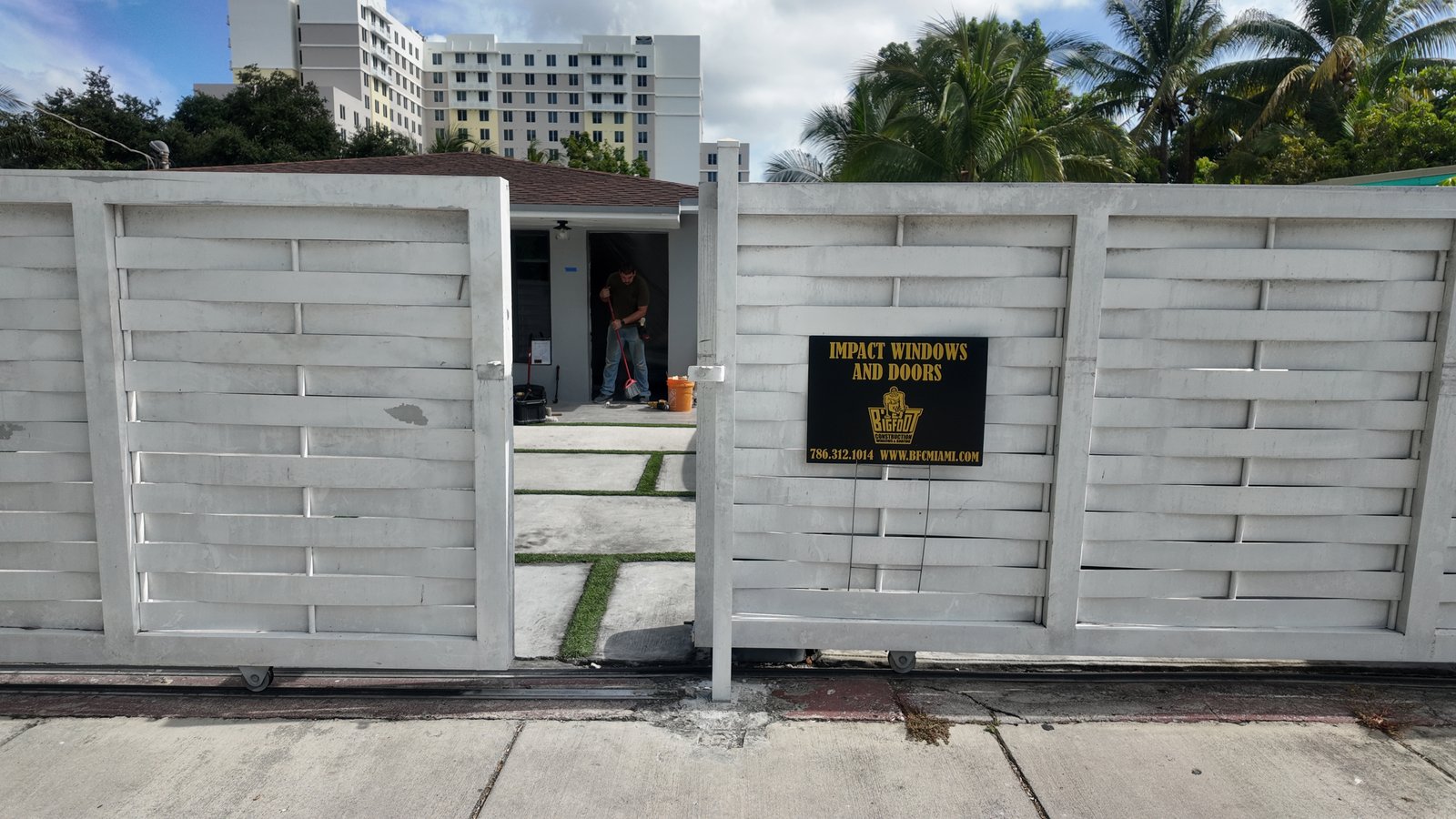
Yes — you can pay part of an impact window project upfront and finance the rest. Florida contractors are legally permitted to structure hybrid payment arrangements, and programs like PACE financing let homeowners layer a partial cash payment against a property-tax-based balance. Florida Statute 489.126 governs how much a contractor can collect before work begins, so the split must be structured correctly.
Updated September 2026
Key Takeaways
- Florida law caps certain contractor deposits and requires milestone-based draws — your split-payment schedule must comply.
- PACE financing (Renew Financial / Ygrene) covers 100% of the project cost through your property tax bill, making partial cash + financed balance easy to structure.
- Miami-Dade HVHZ permits typically take 4–8 weeks — your draw schedule and financing disbursement should align with permit milestones, not calendar dates.
- Impact windows with Miami-Dade NOA or Florida Product Approval can qualify you for a homeowners-insurance wind-mitigation credit, which can offset the cost of the financed portion over time.
- PACE, contractor-arranged financing (GreenSky, Synchrony), and HELOC carry different lien implications — understand the difference before you sign.
The Homeowner’s Problem
Why Impact Window Financing Feels Complicated in South Florida
Most homeowners have savings, equity, and a loan — but no clear path to combining them.
Impact windows are one of the highest-value investments a South Florida homeowner can make. They protect against hurricanes, lower insurance premiums, and permanently replace shutters. But for many Miami-Dade and Broward homeowners, the total project cost — which can run $10,000 to $40,000 depending on the number of openings, glass spec, and structural scope — sits uncomfortably between what they have in savings and what they want to borrow.
The natural answer is a hybrid: pay some cash upfront and finance the rest. But most contractors simply hand you a financing brochure without explaining how Florida law shapes what the split can look like, how Miami-Dade’s permit timelines affect when money actually changes hands, or what the difference is between financing through a contractor program and financing through PACE or your own HELOC.
This article answers those questions directly, so you can structure a payment arrangement that works financially and legally.
South Florida Context
How Miami-Dade HVHZ Rules Shape Your Payment Timeline
South Florida sits in the High Velocity Hurricane Zone (HVHZ) — the strictest residential building-code environment in the United States. Miami-Dade and Broward require impact windows to carry either a Miami-Dade Notice of Acceptability (NOA) or a Florida Product Approval that has been specifically confirmed for HVHZ applications before a permit will be issued.
Miami-Dade Building Department permit review for impact window replacements typically runs 4–8 weeks. That timeline matters enormously for hybrid payment structures: if you are using contractor-arranged financing or a PACE disbursement, the lender may not release funds until a permit is issued or until installation is substantially complete. If your down payment covers the deposit and permit-pull costs but your financed balance disburses at installation, you need to make sure the draw schedule in your contract maps to those milestones — not to a calendar date that ignores the permit queue.
Florida Statute 489.126 is the governing rule. It generally prohibits a contractor from demanding or receiving more than a 10% deposit before work begins on projects where the contract is $2,500 or more and the contractor has a recovery fund obligation — but the specific applicability depends on contract type and scope. The practical effect: your contractor cannot legally collect a large upfront payment and then sit on it waiting for a permit. Payment milestones must be tied to real construction progress. Any contract you sign should spell out exactly when each payment is due and what triggers it.
How It Works
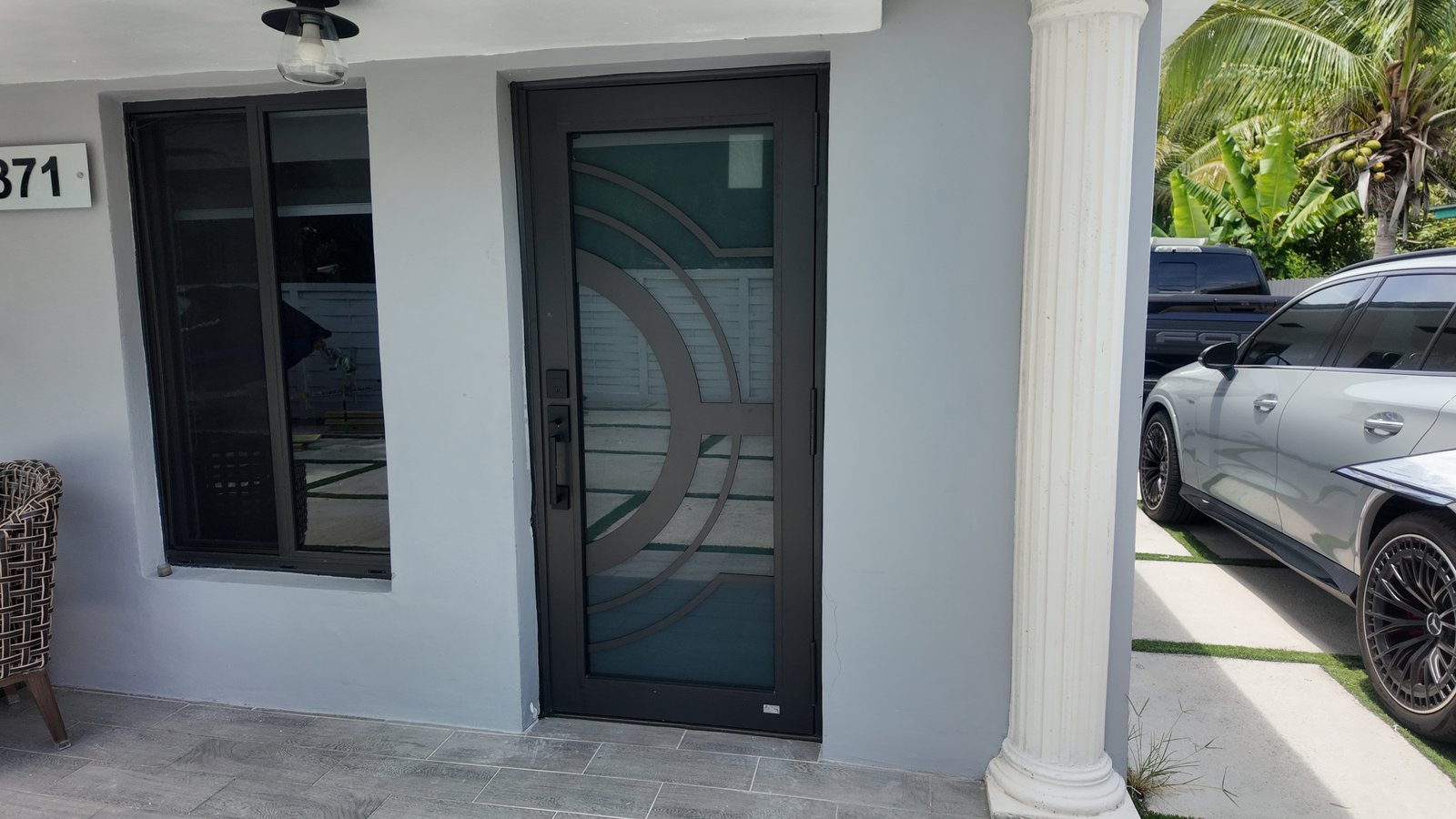
Structuring a Split Payment for Your Impact Window Project
Cash down plus financed balance is a legitimate and common approach — here is how each piece fits together.
A hybrid payment for an impact window project typically has three layers: a cash deposit at contract signing, a permit-milestone draw (sometimes cash, sometimes financed), and a final balance due at completion and inspection. Here is how each financing path handles that structure:
| Financing Path | How the Split Works | Lien / Title Implication | Best For |
|---|---|---|---|
| PACE (Renew Financial / Ygrene) | Covers 100% of project; homeowner can prepay any amount at any time with no penalty, effectively creating a self-directed split | PACE assessment is a senior lien on the property — discloses at refinance/sale; no mortgage impact at origination | Homeowners who want maximum flexibility, low monthly payment, no credit-score requirement |
| Contractor-arranged (GreenSky, Synchrony Home) | Contractor draws from credit line at milestones; homeowner cash portion applied as a down payment before financing activates | Unsecured personal loan or revolving credit — no property lien; does appear on credit report | Homeowners with strong credit who want a fixed monthly payment and no property encumbrance |
| Home Equity Line of Credit (HELOC) | Homeowner controls all draws; can put any cash amount toward balance at any time | Second lien on property; affects refinance calculations; interest may be deductible — confirm with your CPA | Homeowners with significant equity who want the lowest net cost of funds |
| Cash + Financed Balance (any path) | Cash covers deposit and permit costs; financed amount drawn at installation milestone | Depends on which financing path is used for the financed portion | Most homeowners — balances liquidity with manageable monthly payment |
Because Bigfoot holds a Certified General Contractor (CGC1531370) license in addition to our window-specific credentials, we can handle structural scope — header resizing, opening modifications, hurricane strap work — in-house when a window replacement uncovers structural issues. That matters for payment structure because a project that requires structural modifications may change in scope mid-job. With a single contractor managing both scopes under one contract, your draw schedule stays coherent rather than being split across two separate payment streams with two separate contractors.
Payment Path Comparison
PACE vs. Contractor Financing vs. HELOC — Which Structure Fits Your Situation?
| Factor | PACE (RenewPACE) | Contractor Financing | HELOC |
|---|---|---|---|
| Credit score required? | No — based on home equity and property-tax payment history | Yes — typically 620+ depending on lender | Yes — typically 680+ |
| Repayment method | Added to property tax bill | Monthly payment to lender | Monthly payment to bank |
| Approximate rate (directional) | ~9.49% (20-year term available) | Varies; promotional 0% APR periods available | Prime + margin; variable rate |
| Can I prepay / put cash down? | Yes — no prepayment penalty; prepay any amount at any time | Depends on lender terms | Yes — pay down line at any time |
| Property lien? | Yes — senior PACE assessment lien | No lien | Yes — second mortgage lien |
| Impact on credit report? | No — property-based, not reported as debt | Yes | Yes |
| My Safe Florida Home grant stackable? | Yes | Yes | Yes |
For most South Florida homeowners using impact window financing, PACE is the most flexible split-payment tool because any cash you bring to the table effectively reduces the outstanding assessment — and there is no penalty for doing so. If you put $5,000 cash toward a $20,000 project and finance $15,000 through PACE at approximately 9.49% over 20 years, your annual property-tax assessment addition runs roughly $2,080 per year — about $173 per month when spread across your tax bill.
Through Florida’s My Safe Florida Home program, eligible homeowners may also receive a matching grant of up to $10,000 (subject to legislative appropriation and available program funding as of September 2026) — a grant that can be layered on top of either a cash contribution or a PACE balance to further reduce what you need to finance.
When contractor-arranged financing is the better fit: If you have strong credit and the project qualifies for a promotional 0% APR period (common with GreenSky and Synchrony), you can borrow the full financed balance interest-free for 12–18 months. This works well when the total project cost is moderate and you can commit to paying off the balance before the promotional period ends. Unlike PACE, this leaves no lien on your property — which matters if you plan to refinance within a few years.
When HELOC is the better fit: If you have substantial equity and a relationship with your bank, a HELOC typically offers the lowest net borrowing cost. You draw only what you need, when you need it, which maps cleanly to milestone-based payment schedules. Potential tax treatment should be confirmed with your CPA.
Why It Matters Who You Finance Through
Contractor License Breadth Affects How Your Payment Schedule Is Structured
A licensed contractor, not a lead aggregator — four Florida licenses, one accountable team.
“A split-payment structure only works when the draw schedule in the contract matches real construction milestones — not calendar dates. Florida law requires it. We build every contract around Florida Statute 489.126 so there are no surprises about when money is due.”
Darryl Rosenbaum
President, Bigfoot Windows & Roofing
What You’re Financing
Impact Windows That Qualify for Miami-Dade NOA and Insurance Credits
Not every impact window qualifies for the insurance wind-mitigation credit that can help offset your financed costs. In the HVHZ — Miami-Dade and Broward — the window must carry either a Miami-Dade NOA or a Florida Product Approval that has been confirmed for HVHZ applications. We install Mr. Glass impact windows as our primary line. Mr. Glass standard window series carry Florida Product Approval; the Series 2500T impact door additionally carries a Miami-Dade NOA. For each opening in the HVHZ, we confirm the applicable approval path before finalizing your proposal.
In our experience, many South Florida homeowners see meaningful homeowners-insurance premium reductions after installing impact windows and obtaining a wind mitigation inspection. Actual reductions vary by insurer, policy, location, and home construction, and no specific figure can be guaranteed. What that means for your financing decision: the ongoing insurance savings can functionally offset a portion of your monthly financing cost, making the net cost of borrowing lower than the nominal interest rate suggests. Florida law requires insurers to offer wind-mitigation credits for approved opening protection such as impact windows; your specific credit depends on your policy and insurer.
We recommend aluminum frames for all South Florida installations. Aluminum has a longer track record than vinyl in the HVHZ’s combination of heat, salt air, humidity, and hurricane-season wind loading. Where energy efficiency is a priority, thermally broken aluminum frames reduce heat transfer while maintaining structural performance — an important consideration in South Florida’s cooling-dominated climate. Explore our full impact window product options for details on glass thickness, Low-E coatings, and frame specifications.
Step by Step
How a Split-Payment Impact Window Project Works at Bigfoot
- Free estimate and scope confirmation: We assess every opening, confirm HVHZ product approval paths, and identify whether any structural scope (header adjustments, opening modifications) is needed. Structural scope is handled in-house under our Certified General Contractor license (CGC1531370) — you don’t need to hire a separate contractor or manage a separate payment stream.
- Contract with milestone-based draw schedule: Florida Statute 489.126 requires that payment milestones tie to real construction progress. Your contract will specify exactly what triggers each payment: signing, permit issuance, installation start, and final inspection. Your cash down and financed balance are allocated to specific milestones — not lumped into a single upfront payment.
- Financing application (if applicable): PACE applications for roofing and windows must be submitted as separate applications — never combined. If you are financing only windows, your PACE application covers that scope alone. Contractor-arranged financing (GreenSky, Synchrony) is activated by the contractor at the point of sale.
- Miami-Dade permit pull: We pull the permit with Miami-Dade Building Department. Expect 4–8 weeks in the HVHZ. Your financing disbursement is structured to align with permit approval — not a fixed date that may fall before or after permit issuance.
- Installation and inspection: Impact windows are installed by our crew. Miami-Dade requires a final inspection confirming product, installation method, and fastener schedule match the approved permit. Final payment milestone triggers at passed inspection.
- Wind mitigation inspection: After installation is complete and the permit is closed, a licensed wind mitigation inspector assesses your openings for insurance credit eligibility. This is a separate step from the building inspection — budget roughly $75–$300 for the inspection (directional market range; not a Bigfoot-set price). Submit the report to your insurer to capture the premium credit.
Ready to map out your payment structure? Request a free estimate and we will walk through every milestone together before you sign anything.
Have questions about financing options or Florida deposit law? Talk to us directly.
Related Articles


Who We’re Not the Right Fit For
- Homeowners who need work started within days: Miami-Dade HVHZ permits take 4–8 weeks. If you need windows installed next week, we cannot legally begin and no contractor operating within the code can. We will not pull a permit retroactively.
- Buyers seeking 0% contractor financing on very large projects: Promotional 0% APR periods from GreenSky or Synchrony are typically capped at 12–18 months. If your project balance is large and you cannot pay it off in that window, the deferred interest can be significant. We will always show you the math before you commit.
- Homeowners who want a single lump-sum bill with no payment milestones: Florida Statute 489.126 means we cannot structure a contract where you pay everything upfront before work begins. If another contractor offers to collect full payment before pulling a permit, that is a compliance concern, not a convenience.
- Buyers whose primary criterion is lowest possible bid: We are not the lowest-price option in South Florida. Our scope includes licensed structural capability, aluminum frames, NOA-confirmed product paths, and milestone-based payment discipline. If price alone is the decision, a lower-overhead competitor will beat our number.
Frequently Asked Questions
Can I put money down on impact windows and finance the rest in Florida?
Yes. Hybrid split-payment arrangements are common and legally permitted. Florida Statute 489.126 governs how much a contractor can collect upfront and requires that payment milestones tie to construction progress rather than calendar dates. PACE financing allows 100% coverage with no prepayment penalty, so any cash you apply reduces your financed balance immediately.
What is the maximum deposit a window contractor can legally collect upfront in Florida?
Florida Statute 489.126 generally limits certain contractor deposits and requires milestone-based draws on contracts above $2,500. Specific limits depend on contract type and scope. The practical rule: a contractor cannot legally collect a large upfront payment and then wait for a permit before starting work. Payment milestones must correspond to verifiable construction progress. Any contract should spell this out explicitly before you sign.
Does Miami-Dade allow PACE financing for impact window replacements?
Yes. PACE financing through Renew Financial and Ygrene is available in Miami-Dade for eligible impact window installations. Eligibility is based on home equity and property-tax/mortgage payment history rather than a personal credit score. PACE is repaid through your property tax bill. Note that roofing and window scopes must be submitted as separate PACE applications — they cannot be combined into one.
Will financing impact windows still qualify me for a Florida homeowners insurance discount?
Yes — how you pay for the windows does not affect their eligibility for a wind-mitigation insurance credit. The credit depends on the product (it must carry a Miami-Dade NOA or confirmed Florida Product Approval for HVHZ), the installation, and the wind mitigation inspection report. In our experience, many South Florida homeowners see meaningful premium reductions after installing impact windows and obtaining a wind mitigation inspection. Actual reductions vary by insurer, policy, location, and home construction, and no specific figure can be guaranteed.
How does the draw schedule work when I mix cash and a loan for an impact window project?
Your cash covers the deposit and permit-related costs; your financed balance disburses at installation or substantial completion, depending on the lender. With PACE, funds are released after work is complete and verified. With contractor-arranged financing (GreenSky, Synchrony), the contractor draws from your credit line at defined milestones. Your contract should list each trigger explicitly — no milestone, no payment.
What is the difference between PACE financing and a HELOC for impact windows in South Florida?
PACE is property-based: repaid through your tax bill, no credit score required, no credit-report impact, but it places a senior assessment lien on your home that must be disclosed at sale or refinance. A HELOC is a second mortgage: interest rates are typically lower, and there may be tax benefits (confirm with your CPA), but it requires strong credit and does appear as debt on your credit report. PACE is more accessible; HELOC is often lower net cost for qualified borrowers.
How long does a Miami-Dade impact window permit take, and how does that affect my financing?
Miami-Dade Building Department HVHZ permits for impact window replacements typically take 4–8 weeks. This matters for financing because some lenders disburse funds only after permit issuance or installation completion. Your contract’s draw schedule must account for this timeline — not a fixed date. If a lender’s disbursement timeline is shorter than the permit window, your contractor may need to bridge costs internally; confirm this before signing.
Schedule Your Free Estimate
Ready to get started? Request a free estimate — no phone call required.
Sources
- Florida Statute 489.126 — Contractor deposit and milestone-payment requirements (flsenate.gov)
- RenewPACE Florida — PACE financing eligibility and property-tax repayment structure (renewfinancial.com)
- My Safe Florida Home — Matching grant program details, up to $10,000 (mysafeflhome.com)
- Bigfoot Windows & Roofing — Impact windows cost guide (bigfootwindowsandroofing.com/impact-windows-cost-south-florida/)
- Florida Department of Emergency Management — Wind mitigation booklet, secondary water barrier savings estimates (floridadisaster.org)
Ready to map out your split-payment structure?
We will walk through every milestone, every lien implication, and every financing option before you sign. No pressure — just clear answers.