
Roof Replacement Process Step-by-Step | Bigfoot Windows & Roofing

A South Florida roof replacement typically runs from permit application through final inspection in four to eight weeks, depending on Miami-Dade or Broward permit review timelines and material availability. Every step — from NOA verification to dry-in inspection — must happen in the correct order or the project stalls at the building department.
Updated September 2026
Key Takeaways
- Miami-Dade and Broward sit inside the High-Velocity Hurricane Zone (HVHZ) — every roofing product must carry a valid Miami-Dade Notice of Acceptance (NOA) or a Florida Product Approval covering HVHZ use before installation begins.
- Pulling the permit is the contractor’s job, not yours — a licensed Certified Roofing Contractor (CCC1333168) is required to do it.
- Expect two to six weeks for Miami-Dade Building Department permit review alone; total project timelines vary.
- Two required inspections — dry-in and final — must pass before the roof is considered code-compliant.
- Material choice (shingle, metal, tile) affects longevity, wind rating, and insurance premium differently in South Florida’s climate.
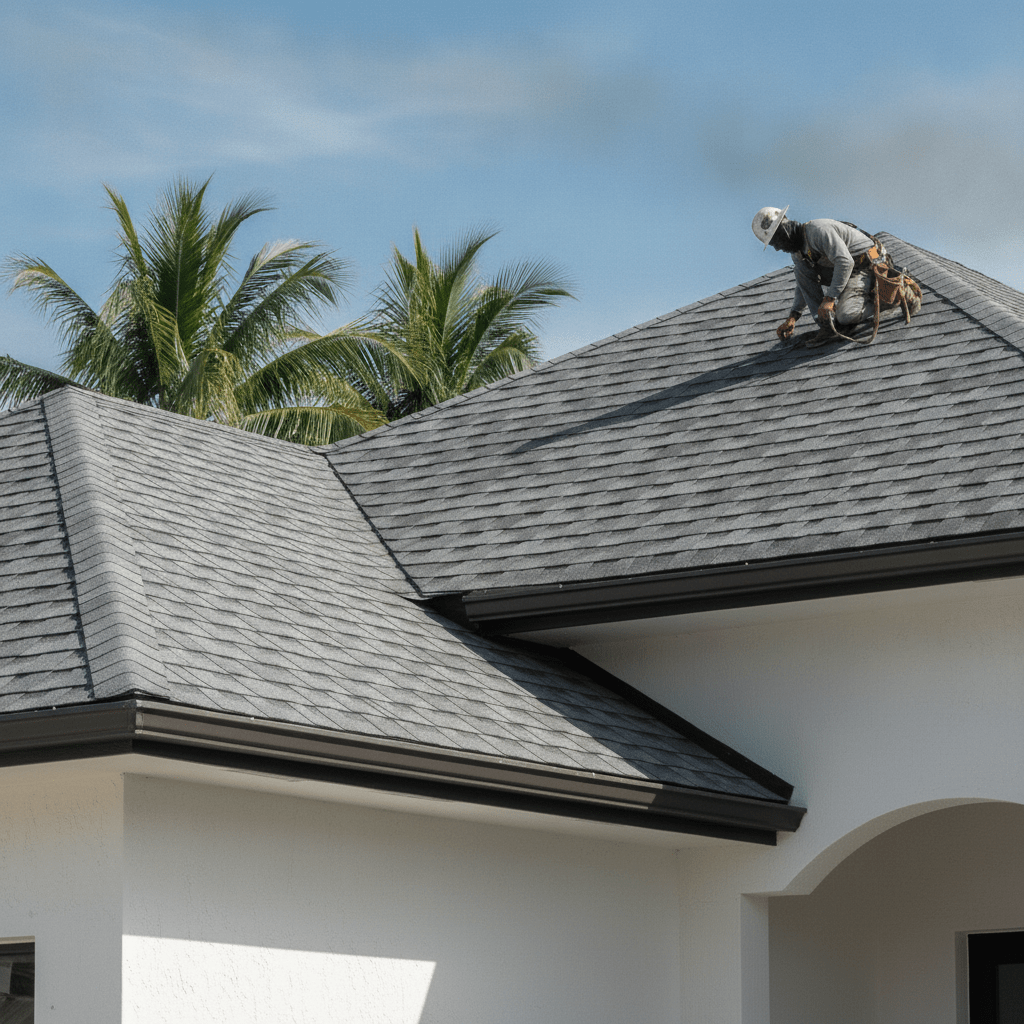
The Problem
Why South Florida Roof Replacements Are More Complex Than Most States
HVHZ rules, NOA requirements, and a strict inspection sequence make this a different process than a standard US roof job.
Most roofing content online was written for contractors in Ohio or Texas. Miami-Dade and Broward homeowners face a fundamentally different regulatory environment — the High-Velocity Hurricane Zone (HVHZ), which operates under the strictest residential building code jurisdiction in the United States per the Florida Building Code (FBC 8th Edition). That means every product, every fastener pattern, and every underlayment choice must be engineered for hurricane-force wind loads.
If your contractor has not verified that every material carries a current Miami-Dade Notice of Acceptance (NOA) — or a Florida Product Approval that specifically covers HVHZ use — before ordering, you are already behind. A product without valid HVHZ approval cannot legally be installed in Miami-Dade or Broward, and the building inspector will catch it at dry-in or final. That means tear-off and redo at your expense.
Local Context
HVHZ, NOA, and the Florida Building Code — What South Florida Homeowners Must Know
The High-Velocity Hurricane Zone designation applies to Miami-Dade and Broward counties. Under ASCE 7 wind-load engineering standards incorporated into the FBC, roof systems in these counties must withstand sustained design wind speeds that exceed most of the rest of Florida. That requirement filters all the way down to how shingles are nailed, how underlayment is adhered, and which clips hold a metal roof panel.
A Miami-Dade Notice of Acceptance (NOA) is issued by the Miami-Dade County Product Control Division and confirms a product has been tested and approved for use in HVHZ conditions. A product with a current Florida Product Approval (FL number) that specifically covers HVHZ use is also legal to install in Miami-Dade and Broward — the NOA is an additional certification some products carry, not the only path to approval. Your contractor must verify which approval document covers each material before the permit application is submitted.
Miami-Dade Building Department permit review typically takes two to six weeks for standard residential roof replacement projects (per Bigfoot Windows & Roofing). Plan your timeline around that window — not around when materials arrive.
The Full Process
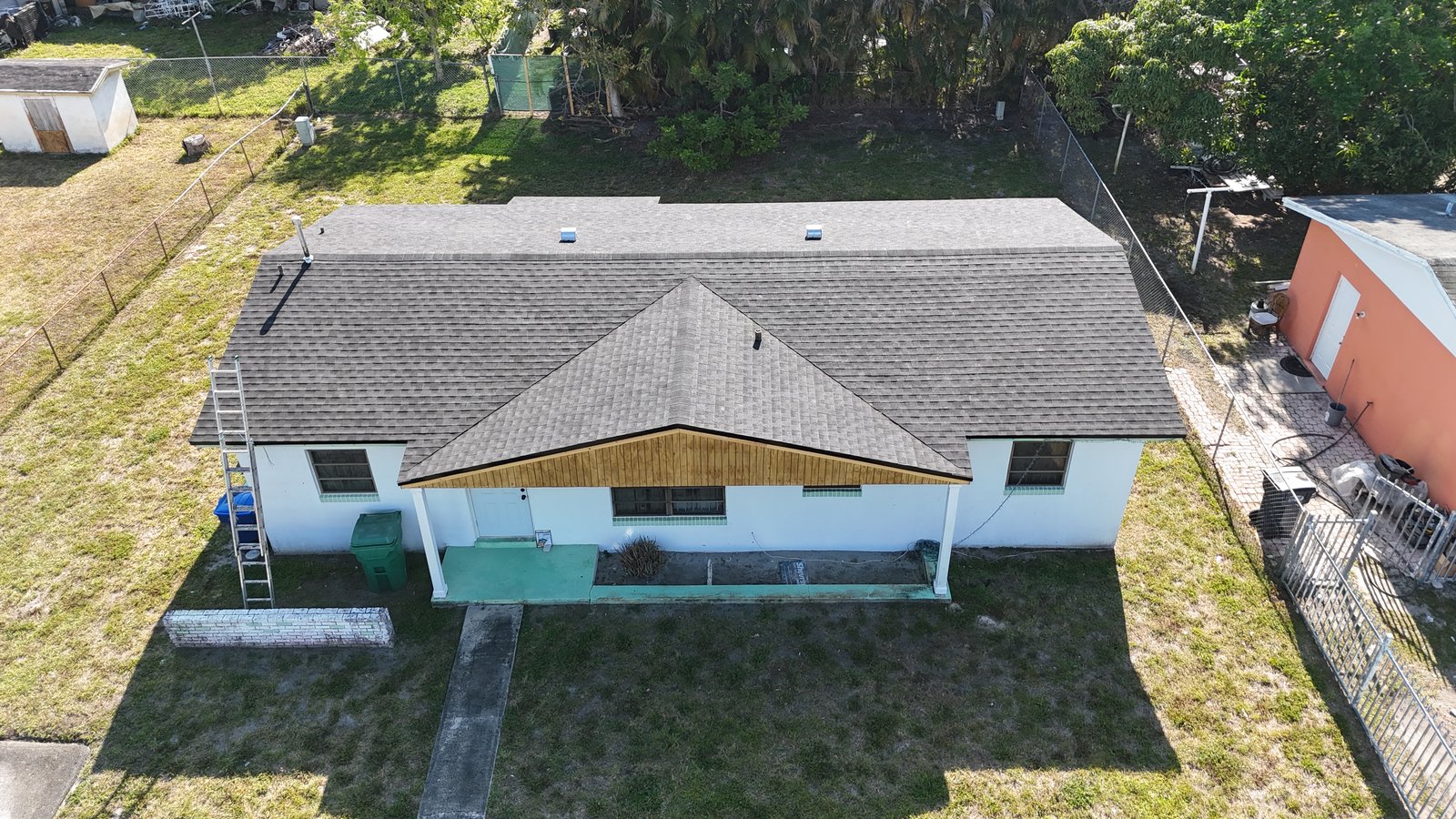
Every Step of a South Florida Roof Replacement — In Order
Here is the correct sequence for a code-compliant roof replacement in Miami-Dade or Broward County. Each step is a gate — you cannot open the next door until the current one closes.
- Pre-project inspection and scope agreement. A licensed contractor inspects your deck, existing underlayment, hurricane straps, and fascia. Structural issues — undersized headers, missing hurricane straps, rotted deck sections — must be identified before the permit is filed, not discovered mid-job. Because Bigfoot holds a Certified General Contractor license (CGC1531370), structural scope such as hurricane strap upgrades can be handled under the same permit set rather than requiring a separate contractor and a separate permit application.
- NOA and product approval verification. Every product going on the roof — shingles, underlayment, tiles, metal panels, adhesives, fasteners, clips — must have a verified, current NOA or Florida Product Approval covering HVHZ use. Your contractor should provide you with the relevant approval references before the permit application is submitted.
- Permit application and plan review. The Certified Roofing Contractor (CCC1333168) pulls the permit — not you. The building department reviews the submitted documents, which include the product approval references, a roof plan, and the product specifications. Permit review in Miami-Dade typically takes two to six weeks; Broward County timelines are generally comparable. Submitting an incomplete application is one of the most common reasons review drags beyond that window.
- Material delivery and staging. Materials arrive after permit issuance. Delivery and staging on an occupied property require coordination — roofing materials are heavy and can damage driveways or landscaping if dropped carelessly.
- Tear-off and deck inspection. The old roofing system is removed. The exposed deck is inspected for rot, delamination, or fastener pull-out. Damaged deck sections must be replaced before proceeding — this is a code requirement, not an upsell.
- Dry-in and mandatory dry-in inspection. Underlayment is installed per the approved system requirements. In HVHZ, full-deck peel-and-stick underlayment systems are standard; full-deck peel-and-stick may qualify as a secondary water barrier for insurance purposes — confirm the specific qualification with your carrier. The building inspector must perform the dry-in inspection and sign off before any finish material (shingles, tiles, metal panels) is installed. Do not let a contractor skip this step.
- Finish material installation. Shingles, metal panels, or tile are installed per the approved fastener patterns and specifications. Clip selection, nail-line accuracy, and adhesive coverage all matter — the inspector checks these at final.
- Final inspection. The building inspector returns to verify the completed roof matches the permitted documents and product approval specifications. A passing final inspection closes the permit and gives you a code-compliant roof.
- Post-installation wind mitigation inspection. This is a separate inspection — not performed by the building department — conducted by a licensed wind mitigation inspector. The resulting report is submitted to your insurance carrier and can affect your premium. A new metal roof with full-deck peel-and-stick underlayment and verified hurricane strap connections often produces a materially different report than the old roof did.
| Step | Who Does It | Typical Duration | Common Delay |
|---|---|---|---|
| NOA / product approval verification | Contractor | Before permit | Product not HVHZ-approved |
| Permit application | Licensed roofing contractor | Typically 1–3 business days to submit (estimate) | Incomplete submittal |
| Permit review (Miami-Dade) | Building dept | 2–6 weeks | Plan corrections |
| Tear-off & deck repair | Contractor crew | Often 1–2 days, depending on deck condition | Deck rot discovered |
| Dry-in inspection | Building inspector | 1–3 business days to schedule | Inspector backlog |
| Finish installation | Contractor crew | Typically 1–4 days, depending on system and weather | Weather or material shortage |
| Final inspection | Building inspector | 1–3 business days to schedule | NOA spec deviation |
| Wind mit inspection | Third-party inspector | After final closes | Homeowner scheduling |
Material Trade-offs
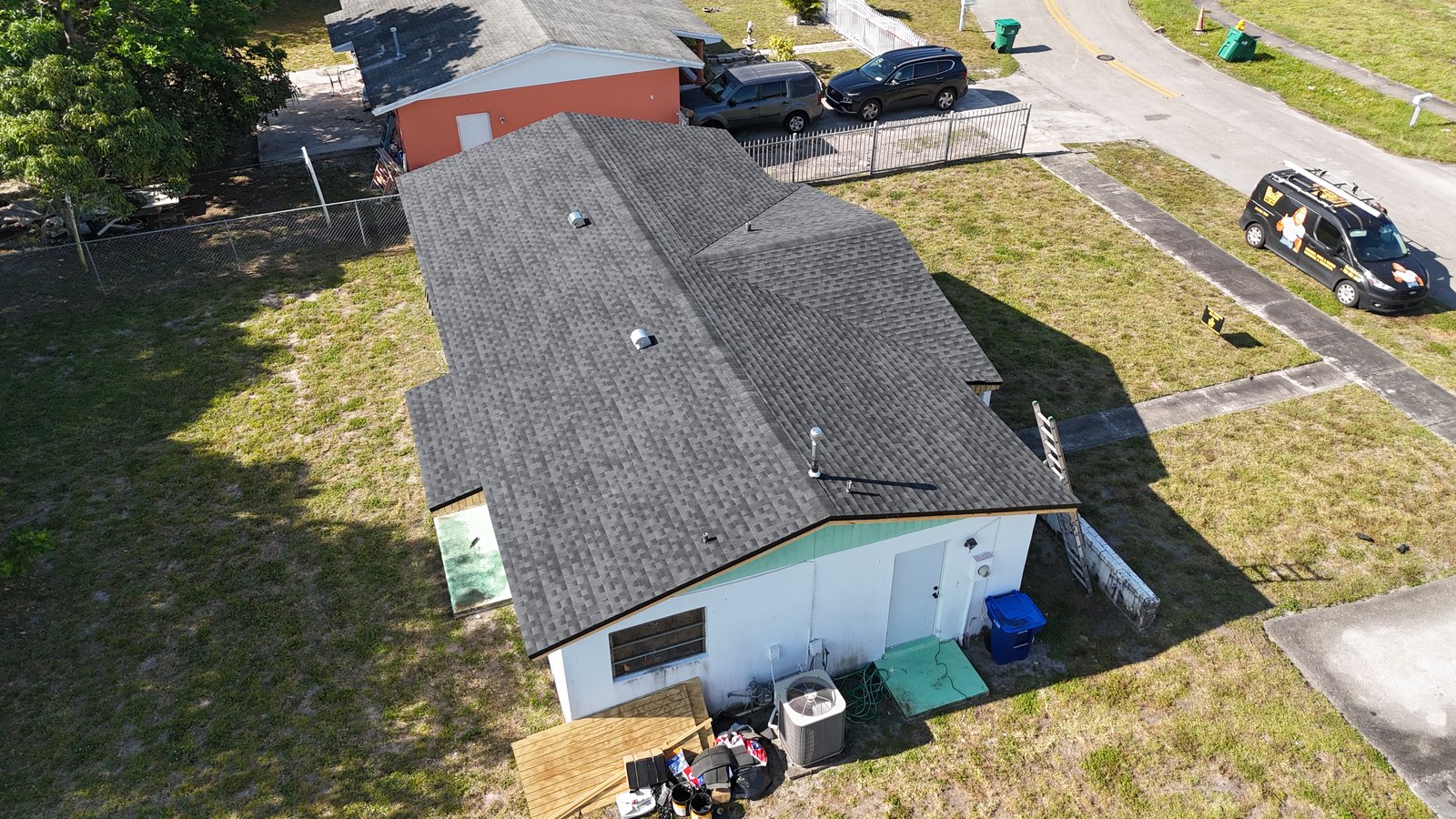
Shingle vs. Metal vs. Tile — Which Roofing Material Makes Sense in South Florida?
Material choice affects permit complexity, installation speed, wind rating, longevity, and insurance impact differently. Here is a practical comparison grounded in HVHZ conditions.
| Factor | Architectural Shingle | Standing-Seam Metal | Concrete / Clay Tile |
|---|---|---|---|
| Installed cost per square (per Bigfoot Windows & Roofing, 2026) | Roughly $750–$850 | Roughly $1,050–$1,300 | Roughly $1,000–$1,350 |
| Expected lifespan in South Florida (directional estimate) | Typically 12–15 years | 40–50+ years in the right conditions | Tile: 40–50 years; underlayment typically needs replacement every 20–25 years |
| HVHZ wind rating | Varies by approval; GAF Wind Proven has no mph cap | No mph cap (Wind Proven system) | Poly-set foam: 180 mph rated |
| Permit complexity | Standard | Standard | Standard; weight load calc may apply |
| Insurance impact | Moderate | Significant wind mit benefit potential | Significant wind mit benefit potential |
| Algae & UV resistance | Low to moderate | High | High |
When shingle is the right fit: Budget-constrained projects, shorter ownership horizon, or a roof section where tile or metal weight is a structural concern. GAF architectural shingles installed with a full-deck peel-and-stick underlayment system qualify for the GAF Wind Proven warranty — no maximum mph cap, not voided by named storms — making shingle a stronger HVHZ performer than many homeowners assume.
When metal is the right fit: Long ownership horizon, Citizens Property Insurance mitigation goals, or a desire for a long-lasting system that avoids the underlayment replacement cycle. Englert panels are roll-formed on-site from 24-gauge C4 steel (per Bigfoot Windows & Roofing service documentation). The clip system allows thermal float — preventing the oil-canning and buckling common with nail-strip systems. Tile underlayment typically needs replacement every 20–25 years even when tile itself remains intact, so the true lifecycle cost of tile is higher than the initial install price suggests.
Learn more about South Florida roofing costs and what drives the price range before you compare quotes.
Why License Authority Matters Here
A Licensed Roofing Contractor — Not a Lead Aggregator
The permit is pulled under a real license. The work is inspected by the building department. That accountability is structural, not a marketing badge.
“Every product goes on my license. That means I verify the NOA before anything is ordered — not after it shows up on the truck.”
Founder & President, Bigfoot Windows & Roofing
Product Systems
What Goes on Your Roof — And Why Each Component Is Chosen for South Florida
In HVHZ, the roofing system is evaluated as a whole — not component by component. That means the shingle, the underlayment, the fastener pattern, and the deck attachment all have to match the same approved system. A product substitution anywhere in that chain can void the approved assembly and cause a failed inspection.
For shingle roofing, Bigfoot installs GAF systems with full-deck peel-and-stick underlayment. Full-deck peel-and-stick is installed per the approved system; homeowners should confirm with their carrier whether the installed system qualifies as a secondary water barrier under their specific policy. GAF shingles carry a Wind Proven warranty with no mph cap — confirm current specifications at gaf.com.
For metal roofing, Bigfoot uses Englert panels with Englert-stamped clips. Knockoff clips — even those that look similar — carry a different (and in some cases lapsed) approval and will not pass a Miami-Dade inspection. Englert panels are roll-formed on-site from 24-gauge C4 steel (per Bigfoot Windows & Roofing service documentation), and the clip system allows thermal float — preventing the oil-canning and buckling common with nail-strip systems. You can explore metal roofing pricing details to understand what drives the installed cost range.
For tile, Westlake concrete tile installed with poly-set foam adhesive attachment is rated to 180 mph in South Florida conditions (per Bigfoot Windows & Roofing warranty documentation). Foam adhesive also provides an attic insulation benefit by sealing the tile-to-deck gap.
Bigfoot is a GAF Silver Plus certified contractor. Extended warranty coverage is available through a GAF Silver Plus certified contractor — confirm current terms and coverage scope at gaf.com.
Insurance & Documentation
Citizens Property Insurance, Wind Mitigation, and What to Document Before and After
Citizens Property Insurance has been non-renewing policies on homes with roofs 20 to 25 years or older. If your roof is in that age range, replacement is not just a code decision — it is an insurance decision. A roof that sustains 25% or more damage in a storm can trigger a full replacement requirement rather than a partial repair, which affects how your claim is structured.
Before replacement: document the existing roof’s age, condition, and any prior claims with photos and receipts. If you are filing an insurance claim, your carrier will require an adjuster inspection before work begins. Do not let a contractor start tear-off before that adjuster visit — doing so can compromise your claim documentation.
After replacement: schedule a wind mitigation inspection promptly. The inspector will verify deck attachment method, roof covering type, opening protection, and other factors that insurers use to calculate your premium. A new metal or tile roof with verified hurricane strap connections and full-deck peel-and-stick underlayment typically produces a more favorable wind mitigation report than the roof it replaced. Submit that report to your carrier and to Citizens if applicable.
If you are exploring financing for the replacement, PACE financing options allow payment through your property tax bill with no prepayment penalty. Note that roofing and window scopes require separate PACE applications — they cannot be combined into one. The My Safe Florida Home grant offers up to $10,000 that can stack with PACE financing for qualifying homeowners.
Want to know what your roof replacement will cost before you commit?
Related Reading
Related Articles


Who We’re Not the Right Fit For
Bigfoot handles roofing jobs of all sizes — full replacements, partial replacements, and repairs. But we want to be honest about where we are not the best match:
- Emergency same-day repairs with no permit. We pull permits on all replacement work. If you need someone to throw a tarp on a roof today and skip the permit process, we are not that contractor. Every permit we pull protects you legally and keeps your insurance claim intact.
- Projects requiring large-scale commercial roofing specialties beyond our license scope. Our residential and light-commercial expertise is strong. Large commercial projects requiring specific commercial roofing classifications beyond our current license scope should go to a contractor with that designation.
- Homeowners who need a verbal quote finalized the same day. We will not quote without a proper inspection. Estimating a South Florida roof replacement accurately requires verifying deck condition, structural connections, and current product approval pricing — that cannot happen in a 10-minute phone call.
- Budgets built around skipping required inspections. Dry-in and final inspections are mandatory. We cannot and will not skip them. If a competing quote is lower because it skips the permit or inspection process, that savings comes with real legal and insurance risk to you as the property owner.
FAQ
Frequently Asked Questions
How long does a roof replacement take in Miami-Dade County from permit to final inspection?
Total timelines vary, but plan for four to eight weeks in most cases. Miami-Dade Building Department permit review alone typically takes two to six weeks for standard residential projects. Once the permit issues, the physical installation — tear-off, dry-in, finish material, and final inspection — generally adds one to two weeks depending on crew scheduling, inspector availability, and weather.
Do I need a permit to replace my roof in South Florida?
Yes. Roof replacement always requires a permit in Miami-Dade and Broward. There are no permit exemptions for routine roof replacement in these counties. The permit is pulled by your licensed Certified Roofing Contractor — not by you as the homeowner. Any contractor who offers to skip the permit is putting your insurance claim eligibility and property title at risk. The dry-in inspection and final inspection are mandatory steps under that permit.
What is a Miami-Dade NOA and why does my roofing contractor need one?
A Miami-Dade Notice of Acceptance (NOA) is issued by the Miami-Dade County Product Control Division and confirms a roofing product has been tested and approved for High-Velocity Hurricane Zone conditions. A product with a current Florida Product Approval covering HVHZ use is also legal to install in Miami-Dade and Broward — the NOA is an additional certification some products carry, not the only path. Your contractor must verify which approval covers each material before the permit is submitted. Products without valid HVHZ approval will fail inspection.
Will Citizens Property Insurance or my homeowners insurance cover a full roof replacement?
Coverage depends on the cause of damage and your specific policy. Citizens has been non-renewing policies on roofs aged 20 to 25 years or older. If a storm causes 25% or more damage, a full replacement rather than repair may be required. Before any contractor starts work on a claim, get your adjuster’s inspection completed and documented. Filing a wind mitigation report after replacement can affect your premium. Consult your carrier for your specific policy terms.
What roofing materials are approved for HVHZ in South Florida?
Products approved for HVHZ use include GAF architectural shingles with Wind Proven warranty (no mph cap), Englert standing-seam metal panels, and Westlake concrete tile installed with poly-set foam adhesive (rated 180 mph per Bigfoot Windows & Roofing warranty documentation). Each product must carry a current Miami-Dade NOA or Florida Product Approval specifically covering HVHZ use. A product substitution anywhere in the approved assembly can void the system and cause a failed inspection.
Can I finance a roof replacement in South Florida, and how does PACE financing work?
Yes. PACE financing is a common option for South Florida homeowners — payments go through your property tax bill, not a bank loan. There is no prepayment penalty and no credit score impact from the application. If you are replacing both a roof and windows, those must be filed as separate PACE applications; they cannot be combined into one. The My Safe Florida Home grant offers up to $10,000 that can stack with PACE financing for qualifying homeowners. Review Bigfoot’s financing options for more detail.
What structural work might come up during a South Florida roof replacement?
Older South Florida homes sometimes have undersized hurricane straps or missing deck attachment hardware discovered when the old roof is torn off. In those situations, structural repairs — hurricane strap upgrades, deck fastener corrections — must happen before the new roof goes on. Bigfoot handles hurricane strap upgrades and structural modifications in-house under its Certified General Contractor license (CGC1531370), which means this work can be addressed under the same permit set rather than requiring a separate contractor or a separate permit application.
Schedule Your Free Estimate
Ready to get started? Request a free estimate — no phone call required.
Sources
- Miami-Dade Building Department permit review timelines: bigfootwindowsandroofing.com/impact-windows-miami-dade/
- GAF WindProven Limited Wind Warranty: gaf.com/en-us/resources/warranties/windproven
- Florida Building Code (FBC 8th Edition) HVHZ provisions: bigfootwindowsandroofing.com/impact-windows-miami-dade/
- Bigfoot Windows & Roofing — roofing pricing guide (2026): bigfootwindowsandroofing.com/metal-roof-cost-florida-pricing-guide/
- Bigfoot Windows & Roofing — roofing warranty documentation: bigfootwindowsandroofing.com/roofing-warranty-florida-materials-workmanship/
- Bigfoot Windows & Roofing — why quotes differ: bigfootwindowsandroofing.com/why-roofing-quotes-so-different-south-florida/
- Bigfoot Windows & Roofing — tile vs. shingle: bigfootwindowsandroofing.com/tile-roof-vs-shingle-south-florida/
- PACE financing scope guidance: bigfootwindowsandroofing.com/impact-door-installation-cost/
Ready to start your South Florida roof replacement the right way?
Call Bigfoot Windows & Roofing at 786-886-2088 or request a free estimate online.