
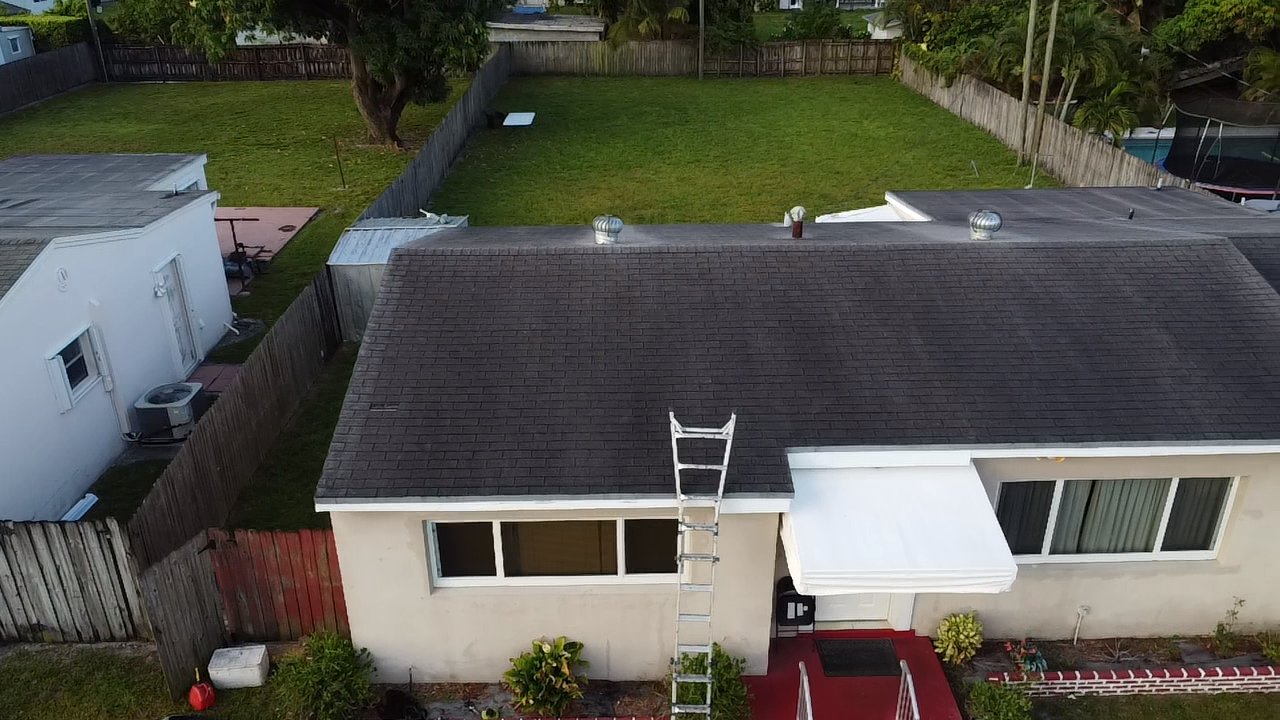
To prove a roofing contractor did substandard work in Florida, you need a documented evidence trail: signed contract and change orders, building permit records, inspection reports from the county building department, dated photographs, and the Notice of Commencement filing. These documents form the foundation of any DBPR complaint, Florida Statute 558 notice, or construction lien dispute.
Key Takeaways
- Florida Statute 558 requires written notice to the contractor before you can sue for a construction defect — skipping this step can hurt your case.
- Miami-Dade and Broward HVHZ permit records, inspection reports, and the Notice of Commencement are primary evidence in any roofing dispute.
- A failed building inspection is admissible, contemporaneous evidence that work did not meet Florida Building Code at the time of inspection.
- Florida construction law sets time limits on defect claims — consult a licensed construction attorney to understand the deadlines that apply to your situation.
- Photographic documentation with timestamps and a documented communication log are often the evidence that resolves disputes fastest.
The Problem
Why Florida Roofing Disputes Are Harder to Prove Than Homeowners Expect
Verbal agreements and faded memories won’t hold up. Here’s what actually moves the needle.
Imagine a leak appearing a few months after a new roof installation. The contractor says it is storm damage. You say the flashing was never properly sealed. Without documentation, that argument goes nowhere — and in South Florida’s HVHZ (High-Velocity Hurricane Zone), roofing installations are held to the strictest code standards in the country. That means the evidentiary bar for proving a defect is high, but the paper trail the code creates is also thorough.
Many homeowners reach out after they have already lost critical evidence: they deleted text messages, could not find the contract, or never tracked which subcontractors set foot on their property. Understanding what evidence matters — and capturing it in real time — is the difference between a complaint that goes somewhere and one that does not.
South Florida Context
How Miami-Dade and Broward County Records Become Evidence
The HVHZ code creates one of the most detailed public paper trails in the country — use it.
In Miami-Dade County and Broward County, every permitted roofing job generates a public record: the permit application, the Notice of Commencement (NOC), each scheduled inspection result (pass, fail, or correction notice), and the final certificate of completion. These records are maintained by the Miami-Dade County Building Department and the Broward County Permitting, Licensing & Consumer Protection division, and they are generally accessible as public records.
Under Florida Statute 713.135, a Notice of Commencement is required for residential alterations exceeding $2,500 (per bigfootwindowsandroofing.com). The NOC identifies the contractor, the property, the scope of work, and the surety or bond information. In a dispute, the NOC is often the first document an attorney or DBPR investigator pulls — it establishes who was legally responsible for the work and when the job started.
Failed inspection reports are particularly powerful. When a county building inspector marks an inspection as failed, that report is a contemporaneous government record stating that the work did not meet the Florida Building Code at that time. It is not hearsay. It is not a hired expert’s opinion. It is a timestamped official finding — and it goes into the public record automatically. If your contractor re-did flashing after a failed inspection, that corrected inspection result also matters: it shows the defect existed and was acknowledged.
For roofing projects in Miami-Dade, the HVHZ provisions of Florida Building Code Chapter 15 apply specific requirements for underlayment, attachment methods, and flashing details that exceed what is required in the rest of Florida. A roofing installation that passes inspection elsewhere may still fail HVHZ standards. When pulling permit records, request the specific inspection category (structural, mechanical, framing) and the inspector’s notes, not just the pass/fail status.
Documentation Hierarchy
What Evidence Matters Most in a Florida Roofing Dispute
Ranked by evidentiary weight — start collecting these the moment you have a concern.
| Evidence Type | Why It Matters | Where to Get It |
|---|---|---|
| County permit record & NOC | Identifies contractor of record, start date, scope | Miami-Dade or Broward Building Dept. public portal |
| Signed contract & change orders | Establishes agreed scope and price; gaps can prove scope creep or omissions | Your files; contractor invoice chain |
| Inspection reports (pass/fail/correction) | Contemporaneous government record of code compliance at time of inspection | County building department records request |
| Dated photographs & video | Timestamps show condition before, during, and after work | Your phone; cloud backup with metadata intact |
| Written communication log | Texts, emails, voicemails showing what contractor promised and when | Your phone, email; screenshot and export |
| Notice of Commencement (NOC) | Required under Florida Statute 713.135; identifies all parties and start date | County records or contractor file |
| Lienor Notices to Owner (NTO) | Identifies subcontractors and suppliers; critical for Florida Statute 713 lien analysis | Served directly to you; retain all postal mail |
| Certificate of Completion | Proves whether the job was officially closed or left open | County building department |
Florida Statute 558: The Required Pre-Suit Notice
Before you can file a lawsuit over a construction defect in Florida — including a roofing defect — Florida Statute 558 requires you to serve a written notice of claim on the contractor. This notice must describe the defect with reasonable specificity. The contractor then has a statutory period (generally 60 days for residential projects) to inspect the property, make an offer to repair, offer monetary settlement, or dispute the claim. If the contractor disputes it or does not respond, you may then proceed to litigation or arbitration.
Failure to comply with Florida Statute 558 can have serious consequences — in some cases, courts have found that non-compliance may result in dismissal of the lawsuit. Consult a Florida-licensed construction attorney to ensure your notice is properly served and documented. The notice also creates a formal record that the contractor was aware of the defect, which is useful if the dispute escalates.
When you send your Florida Statute 558 notice, attach copies of your evidence — inspection reports, photographs, and the contract. This creates a documented record that the contractor received specific, substantiated notice of the problem.
Comparison
DBPR Complaint vs. Florida Statute 558 Notice vs. Construction Lien: When to Use Each
| Path | What It Does | Best For | Key Evidence Needed |
|---|---|---|---|
| Florida Statute 558 Notice | Required pre-litigation step; triggers contractor’s chance to cure | Construction defect; before any lawsuit | Signed contract, inspection reports, photos of defect |
| DBPR Complaint | Regulatory action against contractor’s license | License violations, unlicensed work, fraud | License number, contract, permit records, evidence of violation |
| Florida Statute 713 Lien / Discharge | Addresses unpaid lienors or improper liens on your property | Subcontractor liens, unpaid material suppliers | NOC, Notices to Owner served, payment records |
| Mediation (Florida voluntary dispute resolution law) | Voluntary dispute resolution before or during litigation | Parties willing to negotiate; faster than trial | All of the above — a stronger evidence file gives you better leverage at the table |
These paths are not mutually exclusive. A homeowner can simultaneously file a DBPR complaint (which goes to the contractor’s license) and serve a Florida Statute 558 notice (which is a precondition to suit). Understanding which path applies to your situation — and gathering the right evidence for each — often determines the outcome before any hearing begins.
Why License Scope Matters in Disputes
A Single Licensed Contractor of Record Simplifies Accountability
A licensed contractor, not a lead aggregator — one point of contact for permit, inspection, and scope.
When a roofing dispute involves structural issues — an improperly sized header, missing hurricane straps, or framing damage discovered during tear-off — the question of who is responsible can become complicated if multiple contractors were involved. Bigfoot holds a Certified General Contractor (CGC1531370) license in addition to its roofing license, which means structural modifications such as hurricane strap upgrades and header corrections can be addressed under one permit and one contractor of record. That kind of scope coherence creates a cleaner paper trail and a clearer line of accountability — both of which matter enormously if a dispute arises later.
“When a homeowner comes to us after a roofing dispute, the first thing we look for is the permit record and the inspection history. If those are clean and the work still failed, that tells one story. If there are failed inspections that were never corrected — that tells a completely different story.”
Founder & President, Bigfoot Windows & Roofing
Practical Guidance
How to Build Your Evidence File Before the Dispute Escalates
A step-by-step checklist for South Florida homeowners.
- Pull your permit record immediately. Visit the Miami-Dade County Building Department portal or Broward County’s online permit search. Download the permit application, NOC, all inspection records, and any correction notices. Do this before contacting the contractor about the problem — records can sometimes be amended after the fact.
- Photograph everything with timestamps. Use your phone’s native camera (GPS metadata is embedded automatically). Photograph the defect from multiple angles, the surrounding roof area, any interior water damage, and the materials used. If water intrusion is visible, photograph it immediately and again after rain events.
- Preserve all written communications. Screenshot and back up every text thread, email chain, and social media message exchanged with the contractor or their office. Export email threads as PDF. Voicemails should be saved to a voice memo app before they expire.
- Locate and review your contract. Confirm whether the contract specifies the materials by brand and gauge, the warranty terms, the payment schedule, and what happens if work is not completed to code. If the contract is vague on materials or workmanship standards, note that as a gap — it will matter if the dispute goes to mediation.
- Retain all Notices to Owner. Under Florida Statute 713, subcontractors and material suppliers who were not directly paid by you — but who worked on your roof — may serve a Notice to Owner within 45 days of first furnishing labor or materials (per Florida Statute 713.06). These notices preserve their lien rights. If you received any NTOs, keep them. They identify who worked on your project and may reveal subcontractors the contractor of record did not disclose.
- Document any post-storm damage separately. If a hurricane or tropical storm occurred after the roof was installed, document the storm date, the storm track (NOAA records are public), and the condition of your roof before and after the event. Under Florida Statute 627.70132, hurricane-related insurance claims have a filing window from the date of loss — consult a Florida-licensed attorney or public adjuster promptly to confirm the deadline that applies to your specific situation. If the contractor argues the damage is storm-related, your pre-storm photographic record is what separates a contractor defect claim from an insurance claim.
Once you have this file assembled, consult with a Florida-licensed construction attorney before serving a Florida Statute 558 notice. The attorney can review whether the evidence is sufficient and ensure the notice is drafted with the specificity the statute requires.
If you want to understand what a properly documented South Florida roofing project should cost, that context can also help you identify whether the scope of work you paid for matches what was actually installed.
Statutes of Limitation
How Long Do You Have to File a Construction Defect Claim in Florida?
Florida law sets time limits on construction defect claims. Missing these deadlines can bar your claim entirely, regardless of how strong your evidence is. The figures below reflect general Florida construction law doctrine; consult a Florida-licensed construction attorney to confirm the deadlines that apply to your specific situation.
| Claim Type | Typical Limitation Period | Starting Point |
|---|---|---|
| Construction defect (latent) | Typically 4 years (per Florida construction law doctrine) | Date of discovery, or when defect reasonably should have been discovered |
| Construction defect (statute of repose) | Typically 10 years absolute maximum (per Florida construction law doctrine) | Date of completion or date of possession — whichever is later |
| DBPR complaint (license violation) | No fixed statute; DBPR investigates based on complaint date | Date of complaint filing |
| Construction lien (Claim of Lien) | 1 year from recording; shortened to 60 days if a Notice of Contest of Lien is served (per Florida Statute 713.22) | Date lien is recorded in county records |
| Hurricane insurance claim (F.S. 627.70132) | Consult attorney — filing window runs from date of loss | Date of loss (storm date) |
The clock for a construction defect generally starts running when you discover — or reasonably should have discovered — the defect. Even a defect that first becomes apparent years after installation is subject to an absolute outer deadline measured from substantial completion, regardless of when you discovered the problem. A Florida construction attorney can advise you on whether your situation falls inside the applicable windows.
If you are unsure where you stand on the timeline, that is another reason to consult a Florida construction attorney before serving your Statute 558 notice. The attorney can also advise on whether financing options might help you fund remediation while the dispute is pending.
Have questions about your roofing project’s documentation or permit status in South Florida?
Who We’re Not the Right Fit For
- Homeowners who need legal representation. Bigfoot is a roofing and windows contractor, not a law firm. We can document our own work thoroughly and provide permit and inspection records for projects we complete — but if you need an attorney to represent you in a construction dispute, you need a Florida-licensed construction law attorney, not us.
- Projects where work was done by another contractor. We cannot retroactively certify, inspect, or warranty work we did not perform. If you need a third-party roofing inspection for litigation purposes, hire a licensed roofing inspector or forensic consultant — not the contractor you are considering for the repair.
- Homeowners seeking guaranteed claim outcomes. We can give you an honest assessment of what we observe on a roof and provide thorough documentation of any work we perform, but we cannot guarantee the outcome of a DBPR investigation, mediation, or court proceeding. No contractor can.
- Projects outside Miami-Dade, Broward, and Palm Beach counties. We serve South Florida. If your project is in a different market, we are not the right fit geographically.
Frequently Asked Questions
What documents do I need to prove a roofing contractor did bad work in Florida?
The strongest evidence package includes: the signed contract and any change orders, the county building permit and Notice of Commencement, all inspection reports (pass, fail, and correction notices) from the Miami-Dade or Broward building department, dated photographs of the defect, and your written communication record with the contractor. Florida Statute 558 requires you to describe the defect in a written notice before suing — having this documentation ready before you send that notice strengthens your position significantly.
Does a failed building inspection count as evidence in a Florida contractor dispute?
Yes. A failed inspection report is a contemporaneous government record showing that the work did not meet the Florida Building Code at the time of inspection. It is not an opinion — it is an official timestamped finding entered into the public record by a county inspector. Failed inspection reports are among the strongest forms of objective evidence in Florida roofing disputes, particularly in Miami-Dade and Broward where HVHZ standards apply.
What is the Florida Statute 558 notice requirement before suing a contractor?
Florida Statute 558 requires a homeowner to serve a written notice of claim on the contractor before filing a lawsuit over a construction defect. The notice must describe the defect with reasonable specificity. The contractor then has a statutory period — generally 60 days for residential projects — to inspect, offer repair, offer a monetary settlement, or dispute the claim. Failure to comply with this requirement can have serious consequences — in some cases, courts have found that non-compliance may result in dismissal of the lawsuit. Consult a Florida-licensed construction attorney to ensure your notice is properly served and documented.
How long do I have to file a construction defect claim against a roofer in Florida?
Florida construction law generally provides a statute of limitations for latent construction defect claims, plus an absolute outer deadline measured from substantial completion — consult a Florida-licensed construction attorney to confirm the specific deadlines that apply to your situation. Hurricane insurance claims under Florida Statute 627.70132 have a separate filing window from the date of the storm event; again, verify the current deadline with an attorney or public adjuster promptly.
How do I file a DBPR complaint against a roofing contractor in Florida?
You can file a complaint directly with the Florida Department of Business and Professional Regulation (DBPR) through their online complaint portal. You will need the contractor’s license number (find it on the permit or the contract), a description of the violation, and supporting documentation such as the contract, permit records, photographs, and any written communications. DBPR investigates license violations — including unlicensed contracting, abandonment, and willful code violations — and can discipline or revoke a contractor’s license.
What is a Notice of Commencement and why does it matter in a roofing dispute?
A Notice of Commencement (NOC) is a document required under Florida Statute 713.135 for residential alterations exceeding $2,500. It identifies the property owner, the contractor of record, the scope of work, and the project start date, and it is recorded in the county’s public records. In a dispute, the NOC establishes who was legally responsible for the project and when work began — making it a foundational piece of evidence for both lien analysis and contractor accountability.
Can I use roofing financing while a contractor dispute is still pending?
Financing for remediation work — such as PACE or the My Safe Florida Home grant program — is available independently of any ongoing dispute with a prior contractor. If you need emergency repairs while pursuing a claim, you do not need to wait for the dispute to resolve before hiring a new contractor and financing the corrective work. Keep all receipts and document the remediation scope separately so those costs can be substantiated if you seek damages.
Schedule Your Free Estimate
Ready to get started? Request a free estimate — no phone call required.
Sources
- Florida Statute 558 — Construction Defects: flsenate.gov
- Florida Statute 713.06 — Construction Lien Law: leg.state.fl.us
- Florida Statute 713.135 — Notice of Commencement: flsenate.gov
- Florida Statute 713.22 — Notice of Contest of Lien: flsenate.gov
- Florida Statute 627.70132 — Hurricane Insurance Claims: flsenate.gov
- Florida Statute 44.1011 — Mediation: flsenate.gov
- Miami-Dade County Building Department: miamidade.gov/building
- Florida Building Code Chapter 15 — Roofing: floridabuilding.org
Have a South Florida roofing project and want a properly documented installation from the start?
Request a free estimate or call us directly — we pull our own permits, attend our own inspections, and provide a clean paper trail from day one.