
Best Roofing Companies to Work For in Florida | Bigfoot Windows & Roofing
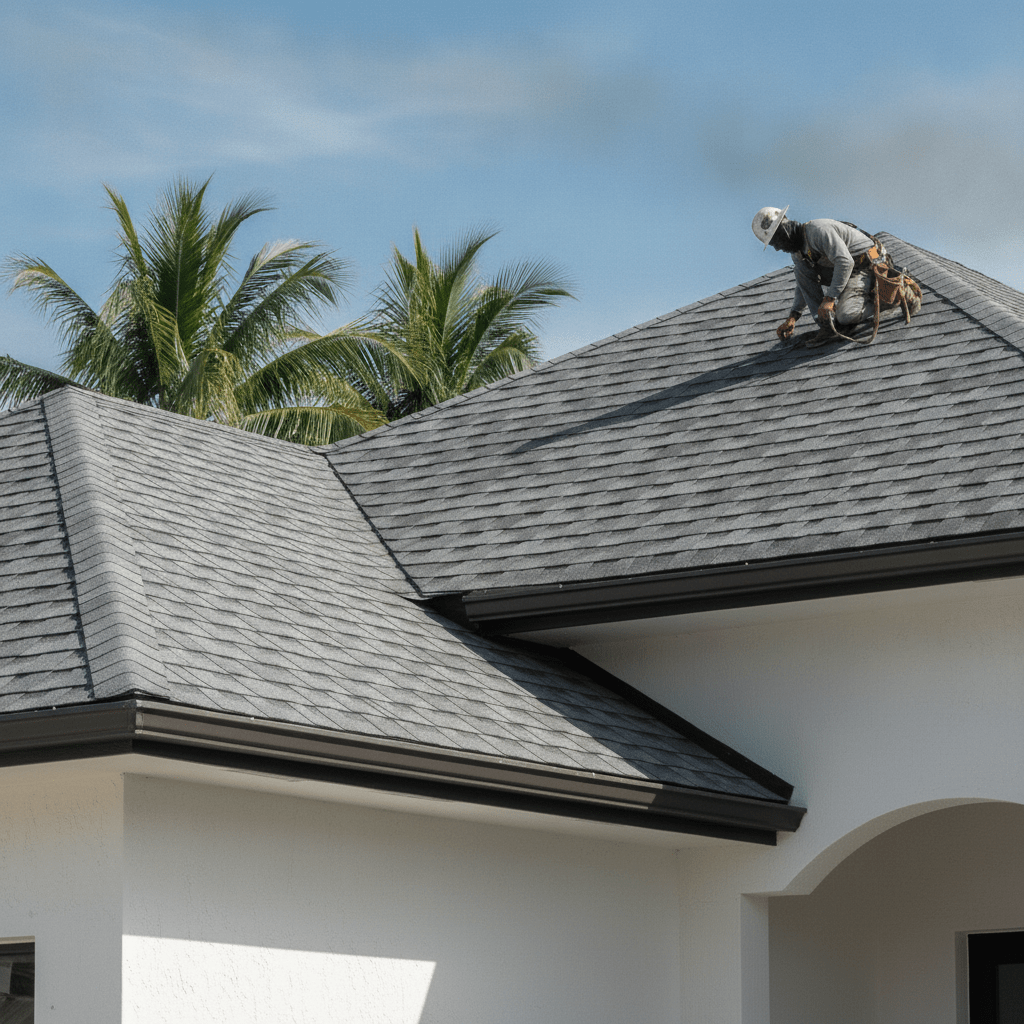

The best roofing companies to work for in Florida hold a valid Certified Roofing Contractor (CCC) license from the Florida DBPR, carry active workers’ compensation and general liability insurance, provide OSHA safety training, and offer exposure to High-Velocity Hurricane Zone (HVHZ) work — skills that drive higher earnings and genuine career advancement in South Florida’s year-round construction market.
Updated September 2026
Key Takeaways
- A valid Florida CCC license is the single most important credential to verify before taking a roofing job.
- HVHZ certification creates specialized skill demand and premium pay in Miami-Dade and Broward counties.
- Active workers’ comp coverage protects you — unlicensed employers routinely skip it.
- GAF Silver Plus and similar manufacturer partnerships signal training investment by the employer.
- Year-round storm repair demand in South Florida produces more consistent roofing income than most U.S. markets.
The Real Risk
Why Choosing the Wrong Florida Roofing Employer Can Hurt Your Career
Not all roofing companies in Florida are the same — and the gap matters more here than almost anywhere else.
Florida’s roofing industry is one of the most active in the country, driven by a 365-day construction season, a population that keeps growing, and a hurricane threat that never fully goes away. That demand is real — but it has also created a shadow workforce of unlicensed crews, misclassified employees, and contractors who skip permits, skip insurance, and skip OSHA training.
If you take a roofing job with an unlicensed employer in Florida, you are not just risking a bad W-2. You are risking your safety on the roof, your legal protections if you are injured, your career legitimacy when you eventually want to advance, and your ability to work on permitted jobs in Miami-Dade or Broward where inspectors verify license chains.
This guide is for roofers — experienced installers, helpers, and crew leads — who want to evaluate a Florida roofing employer honestly before they sign on.
South Florida Context
How Miami-Dade and Broward Roofing Jobs Differ From the Rest of Florida
HVHZ requirements create a specialized skill tier that commands higher pay and offers stronger career development.
Miami-Dade and Broward counties fall inside the High-Velocity Hurricane Zone (HVHZ) — the strictest residential building code jurisdiction in the United States. The Florida Building Code’s HVHZ provisions require tighter fastening patterns, specific underlayment systems, Miami-Dade Notice of Acceptance (NOA) or Florida Product Approval for every roofing material, and mandatory secondary water barrier installations.
Working on permitted HVHZ jobs trains you on installation methods that most roofers in the rest of the country never see. That specialization translates directly into earning potential. Employers who regularly pull permits in Miami-Dade — and whose crews pass those inspections — are running legitimate operations with real accountability.
Beyond HVHZ, South Florida’s storm repair cycle creates near-continuous demand. After named storms or significant weather events, roofing crews with documented HVHZ experience are the first hired for emergency repair and full replacement work. That volume advantage over other markets means roofing jobs in Miami-Dade and Broward tend to offer more consistent hours and overtime potential than comparable positions in central or north Florida.
For workers considering roofing companies hiring in Miami-Dade or Broward, the HVHZ credential signal is one of the clearest indicators of employer quality. Contractors who regularly work in the HVHZ understand the code, invest in crew training, and run jobs through inspectors — not around them.
What to Look For
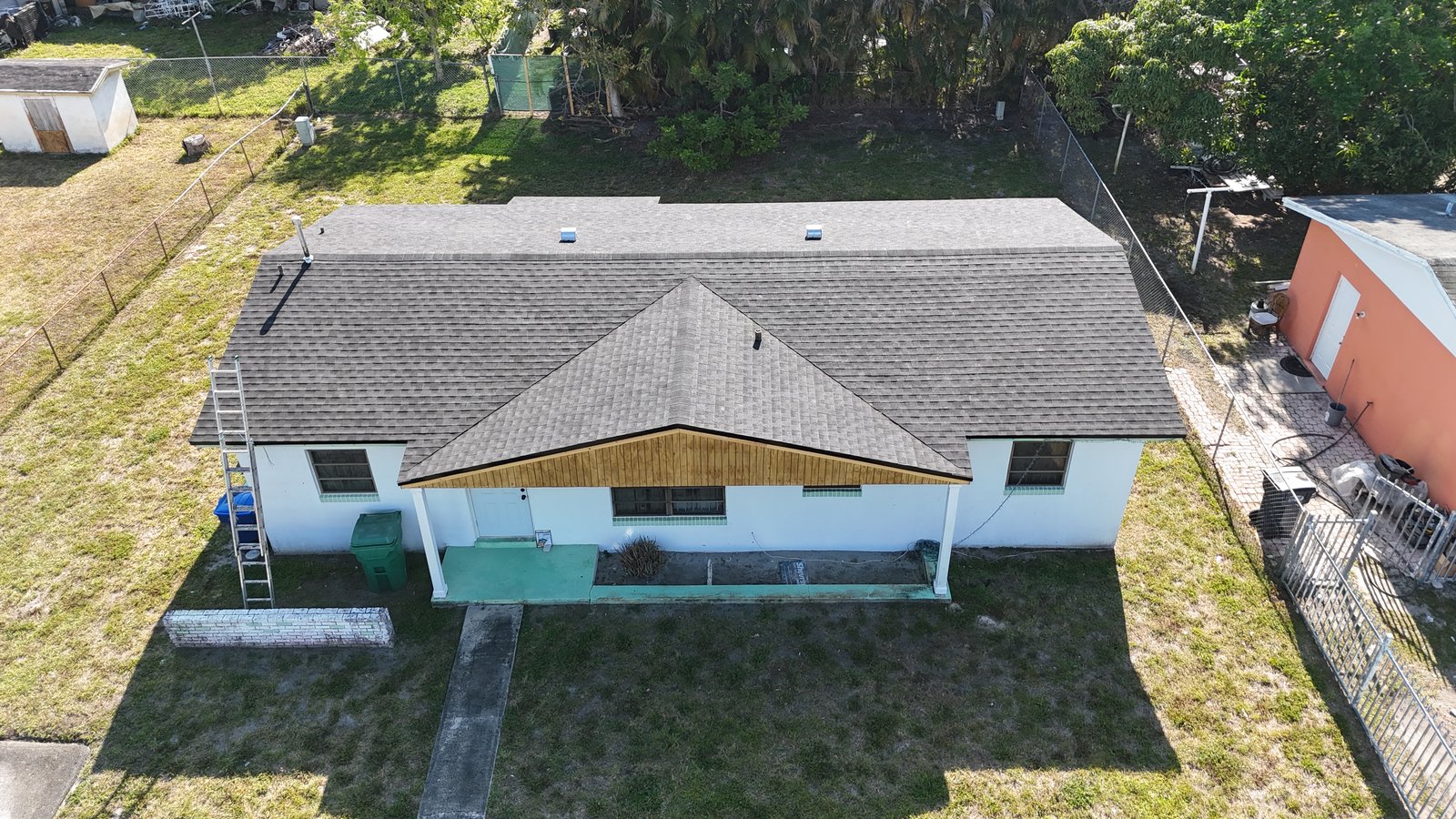
How to Evaluate a Florida Roofing Employer Before You Accept an Offer
Five concrete signals separate quality employers from operations that will leave you exposed.
1. Verify the DBPR license. Florida requires every roofing contractor to hold either a Certified Roofing Contractor (CCC) license or a Registered Roofing Contractor license issued by the Florida Department of Business and Professional Regulation (DBPR). You can look up any contractor’s license status for free at www2.myfloridalicense.com. A CCC license holder has passed a state exam, posted a bond, and carries insurance as a condition of maintaining their license. If an employer cannot give you a CCC or equivalent license number, that is a disqualifier — not a yellow flag, a red one.
2. Confirm active workers’ compensation coverage. Florida law requires roofing contractors to carry workers’ comp regardless of company size. Yet violations are widespread. Ask to see the certificate of insurance before your first day. If you are injured on an uninsured job, your medical bills and lost wages fall entirely on you. A reputable employer hands you the certificate without hesitation.
3. Ask about OSHA training culture. Top Florida roofing employers pay for OSHA 10 or OSHA 30 certification for crew members. This is not just a safety benefit — it is a signal of operational maturity. Companies running permitted jobs in Miami-Dade need crews who understand fall protection, load limits, and jobsite protocols. If a company has never heard of OSHA 10, you have your answer about how they value their crews.
4. Check manufacturer certification partnerships. GAF Silver Plus, System Plus, and similar manufacturer certification programs require employers to meet training, installation quality, and customer satisfaction standards. These certifications are not handed out freely. Bigfoot Windows & Roofing, for example, holds GAF Silver Plus certification — a documented signal that installation practices meet a manufacturer’s published standard. Employers with active manufacturer partnerships are more likely to invest in crew development because their certification status depends on it.
5. Look at the permit history. Most South Florida municipalities post permit records online. Search the company name in Miami-Dade or Broward’s permit portals. A legitimate roofing contractor pulls permits on every replacement job — that is the law. A contractor with no recent permit history is either working below the code threshold (unlikely for full replacements) or working without permits. Neither outcome is good for you as an employee: no permit means no inspection, no inspection means no proof the job was done correctly, and that exposure eventually circles back to the crew.
Side by Side
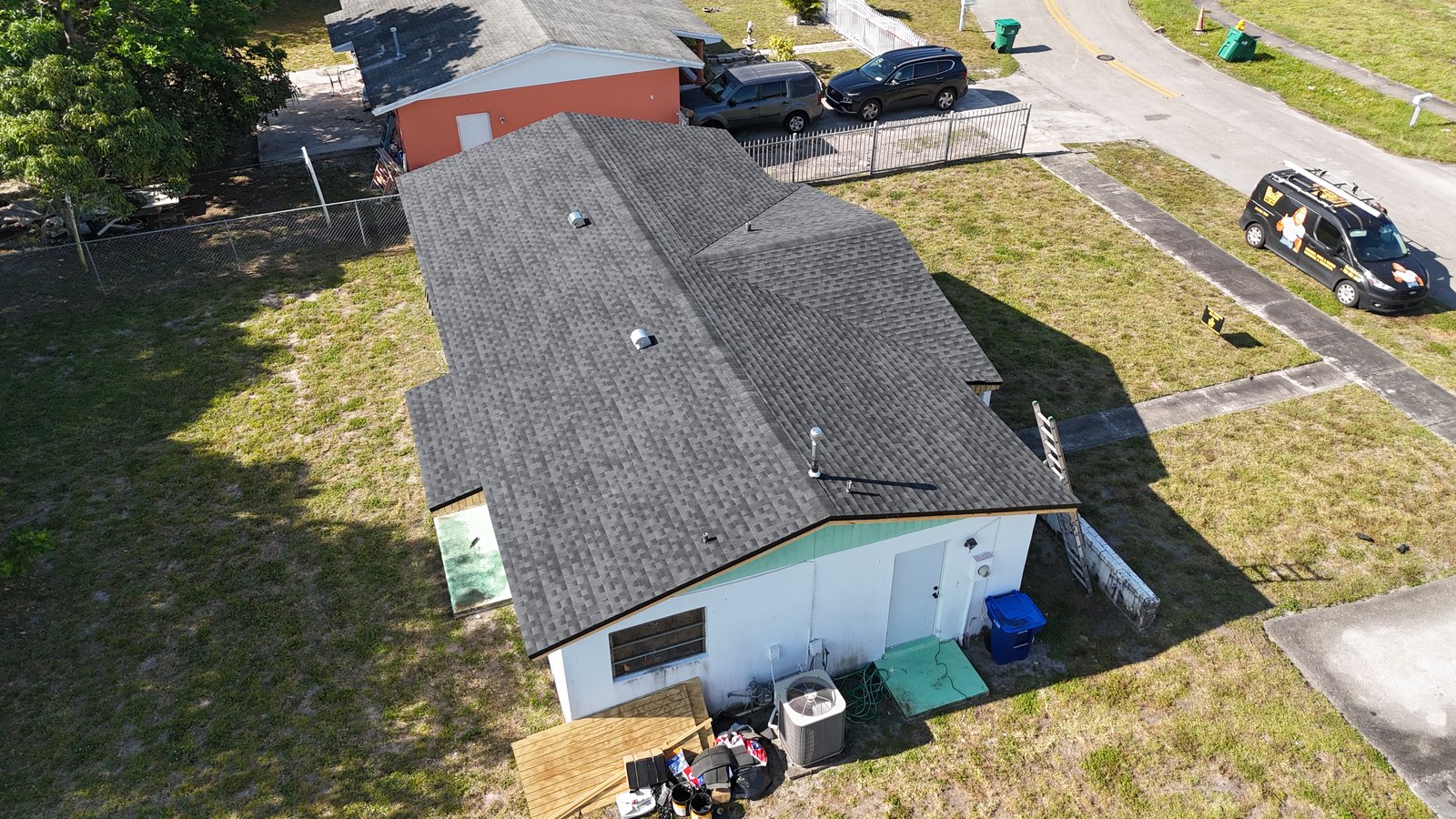
Licensed vs. Unlicensed Roofing Employer: What Changes for You
| Factor | CCC-Licensed Employer | Unlicensed / Misclassified |
|---|---|---|
| Workers’ compensation | Required by law; verifiable certificate | Often absent; injury costs fall on worker |
| HVHZ permit eligibility | Can pull permits in Miami-Dade & Broward | Cannot legally pull permits; job exposure risk |
| OSHA training | Typically provided or reimbursed | Rarely provided; no accountability |
| Manufacturer cert access | GAF Silver Plus, System Plus available | Not eligible for most manufacturer programs |
| Career legitimacy | Verifiable work history on permitted jobs | Gaps in documented experience; harder to advance |
| Income stability | Year-round permitted work + storm cycles | Volatile; dependent on cash jobs |
The table above reflects structural differences, not opinion. Working for an unlicensed roofing operation in Florida is not a comparable career path with a slightly different risk profile — it is a fundamentally different and more precarious situation for a worker.
When an unlicensed arrangement might be a short-term fit: If you are just entering the roofing trade and need a summer of hands-on exposure, some subcontracting arrangements can provide early experience. But even then, verify that the general contractor overseeing the job holds a valid Florida license — that at minimum keeps you on a permitted jobsite with code oversight.
Employer Credentials
What Bigfoot Windows & Roofing Brings to the Table
A licensed roofing contractor, not a lead aggregator or staffing shell — four active Florida licenses, real scope authority.
“Every job we run goes through a permit. Every crew member works on a legitimate, inspected project. That’s not a marketing line — it’s how we protect our people and our license.”
Founder & President
Roofing Systems and Skills
What HVHZ Roofing Skills Look Like in Practice
The materials and methods used in South Florida create a specialized skill set that transfers to higher-value jobs.
A roofer who completes training on full-deck peel-and-stick underlayment systems, standing-seam metal panel installation, and South Florida roofing materials required under HVHZ code is not interchangeable with a roofer who has only done 30-lb felt and asphalt shingles. The gap in technical depth is real, and so is the pay difference.
At Bigfoot Windows & Roofing, our roofing crew works across three primary system types:
- GAF shingle systems — including full-deck peel-and-stick underlayment (which qualifies as a secondary water barrier for insurance purposes), GAF Layer Lock shingles with the Wind Proven warranty, and System Plus warranties that cover shingles, labor, tear-off, and accessories.
- Englert standing-seam metal — panels roll-formed on-site from 24-gauge C4 steel with Englert-stamped clip systems, allowing proper thermal float and passing HVHZ inspection. This is not a nail-strip system. Understanding the clip spacing, gauge requirements, and panel continuity is a skill that takes time to develop.
- Westlake concrete and tile systems — including poly-set foam adhesive attachment rated to 180 mph in South Florida conditions, and stone-coated steel with no named storm or saltwater exclusion clauses in the warranty.
Training on these systems in the field — on permitted, inspected jobs — is how a roofer builds a resume that commands higher pay. The installer who can pass an HVHZ inspection is genuinely more valuable than one who cannot.
Because Bigfoot holds a Certified General Contractor license (CGC1531370) in addition to our Certified Roofing Contractor license (CCC1333168), our roofing crews sometimes work alongside structural scope — hurricane strap upgrades, header evaluation, and code-driven modifications that arise during a roofing replacement. That exposure to multi-trade, permit-coordinated work provides broader jobsite experience than a single-trade roofing operation can offer.
Career Path
How Florida Roofing Career Paths Compare to Other States
| Factor | South Florida (Miami-Dade / Broward) | National Average |
|---|---|---|
| Work season | Year-round; storm surges add volume | Seasonal gaps in northern markets |
| Code complexity | HVHZ — strictest in the U.S. | Standard IBC / state codes |
| Permit requirement | Every replacement; active inspection | Varies; often less enforced |
| Skill premium | Higher for HVHZ-certified installers | Lower specialization premium |
| Storm repair demand | Recurring; named storms + seasonal | Episodic; geography-dependent |
| Employer accountability | DBPR license; public record | Licensing varies by state |
Florida does not have a slow season the way northern markets do. Heat, storm preparation, insurance-triggered replacements, and post-storm repair keep roofing demand steady throughout the year. Citizens Insurance, Florida’s insurer of last resort, has been non-renewing policies on roofs 20 or more years old — which is forcing tens of thousands of homeowners to replace their roofs regardless of the economic cycle. That policy pressure alone sustains roofing job volume independently of hurricane activity.
Interested in roofing work in South Florida? Talk to a contractor who runs permitted jobs with trained crews.
Related Articles


Who We’re Not the Right Fit For
Bigfoot Windows & Roofing is a legitimate, licensed, permitted roofing operation in South Florida. That structure is a strength, but it also means we are not the right employer for every situation. Here is an honest accounting:
- Workers who prefer cash-only, off-the-books arrangements. We run every job through a permit. That means payroll documentation, proper classification, and taxes. If you prefer informal arrangements, we are not the right fit.
- Installers who want to skip OSHA and safety training. Safety protocols are non-negotiable on our jobsites. If that feels like red tape rather than protection, we are probably not aligned.
- Homeowners seeking the lowest possible bid with no paperwork. This article is primarily for workers, not homeowners — but if a homeowner is drawn to a contractor promising to skip the permit to save money, that contractor is not Bigfoot. Our work goes through inspection every time.
- Contractors looking to subcontract unlicensed crews under our license. We do not permit our license to be used as a cover for unlicensed work. If that is the arrangement being proposed, the answer is no.
FAQ
Frequently Asked Questions
What roofing certifications and licenses should I look for when choosing a roofing company to work for in Florida?
Look for a valid Florida Certified Roofing Contractor (CCC) license issued by the DBPR. Confirm it is active at www2.myfloridalicense.com. Beyond the license, verify active workers’ comp insurance, OSHA 10 or OSHA 30 training access, and any manufacturer certifications such as GAF Silver Plus. These credentials indicate a legitimate employer who invests in crew development and operates within Florida’s legal framework.
Do roofing companies in Miami-Dade pay more because of hurricane impact and HVHZ requirements?
Generally yes. HVHZ installation skills are specialized, and South Florida roofing companies hiring installers trained on HVHZ-compliant systems — standing seam metal, peel-and-stick underlayment, NOA-approved products — tend to pay a premium for that documented experience. Year-round storm repair demand also sustains consistent overtime opportunities that many non-coastal markets cannot match.
What is the difference between working for a CCC-licensed roofing contractor versus an unlicensed subcontractor in Florida?
A CCC-licensed employer can legally pull permits, is required to carry workers’ compensation insurance, and operates under DBPR oversight. An unlicensed employer cannot legally pull HVHZ permits, typically skips workers’ comp, and offers no career-verifiable work history. If you are injured on an unlicensed job without workers’ comp coverage, Florida law may leave you without recourse against the employer.
How does Florida’s year-round construction season and storm repair demand affect roofing job stability and overtime?
South Florida’s lack of a true slow season means roofing demand stays relatively consistent throughout the year. Citizens Insurance non-renewals on older roofs, post-storm repair cycles, and ongoing residential growth in Miami-Dade and Broward all sustain roofing job volume. When a named storm affects the area, permitted contractors with trained HVHZ crews are first called for emergency and replacement work — which creates significant overtime potential.
What OSHA and Florida Building Code training should a reputable Florida roofing employer provide to crew members?
Reputable Florida roofing employers typically offer or reimburse OSHA 10 (and ideally OSHA 30 for crew leads), fall protection training, and jobsite-specific safety orientation. On HVHZ jobs, they should train crews on FBC-compliant fastening patterns, secondary water barrier installation, and manufacturer-specific installation requirements tied to the product’s NOA or Florida Product Approval. Training that keeps inspection pass rates high is in the employer’s direct interest.
Can I verify that a Florida roofing contractor’s license is active before I start working for them?
Yes — and you should. The Florida DBPR maintains a free public license lookup at www2.myfloridalicense.com. Search by company name or license number. Confirm the license class (CCC for roofing), the licensee name, and that the status shows active. This takes two minutes and is the single most important due diligence step before accepting a roofing job in Florida.
Does financing availability affect how I should evaluate a roofing employer as a potential job opportunity?
Indirectly, yes. Employers who offer customers roofing financing options tend to close more jobs and run more consistent crews. A contractor with access to financing programs like PACE can take on larger projects and keep crews employed through slower months. When evaluating an employer, ask how they handle customer financing — it is a proxy for business stability and volume.
Schedule Your Free Estimate
Ready to get started? Request a free estimate — no phone call required.
Sources
- Florida DBPR License Lookup: www2.myfloridalicense.com
- Bigfoot Windows & Roofing — GAF Silver Plus certification and System Plus warranty scope: bigfootwindowsandroofing.com/why-roofing-quotes-so-different-south-florida/
- Bigfoot Windows & Roofing — roofing warranty coverage: bigfootwindowsandroofing.com/roofing-warranty-florida-materials-workmanship/
- Florida Building Code HVHZ provisions — Miami-Dade and Broward county applicability: bigfootwindowsandroofing.com/impact-windows-miami-dade/
Ready to work on real, permitted roofing jobs in South Florida? Call Bigfoot Windows & Roofing or request information online.