
Bigfoot Roofing in Miami-Dade: What Local Homeowners Should Know
Updated July 2026
Key Takeaways
- Bigfoot Roofing operates in Miami-Dade under four active Florida DBPR licenses, including Certified Roofing Contractor (CCC1333168).
- Miami-Dade sits inside the High Velocity Hurricane Zone (HVHZ) — the strictest U.S. building code jurisdiction for roofing.
- Roofing costs in South Florida typically range $750–$1,400 per square (100 sq ft) depending on material and complexity.
- GAF Certified Plus certification means System Plus warranty (50-year non-prorated, labor + materials) is available.
- A Certified General Contractor license (CGC1531370) means structural scope — hurricane straps, deck repairs — can be handled under one contract.
- This company does not serve every homeowner; see the honesty block below for who is not the right fit.
The Problem
Miami-Dade Roofing Is Not a Routine Trade
Hiring the wrong contractor here costs more than a bad roof — it can cost your insurance policy.
Most South Florida homeowners searching for a roofing contractor already know the basics: get three quotes, check the license. But Miami-Dade and Broward sit inside the High Velocity Hurricane Zone (HVHZ) — a code designation that makes local roofing inspections, product approvals, and installation requirements stricter than almost anywhere else in the United States.
A shingle system approved for Orlando is not automatically approved for Miami-Dade. A nail pattern that passes in Broward may fail inspection here. And Citizens Insurance is actively non-renewing homes with roofs 20–25 years or older. The stakes are real, and the margin for error is thin.
This article covers what Miami-Dade homeowners should know specifically about how Bigfoot Windows & Roofing approaches roofing work in this market — what licenses are held, what materials are used, what warranties are available, and who this company is not the right fit for.
Local Context
Why HVHZ Changes Everything About Your Roof
Miami-Dade County and Broward County are the only two counties in Florida designated as HVHZ. Every roofing product installed here must carry a Miami-Dade Notice of Acceptance (NOA) or a Florida Statewide Product Approval (FL#) that covers HVHZ use. Not every manufacturer obtains an NOA; not every contractor knows the difference.
The practical impact on homeowners:
- Product selection narrows. Only shingles, tiles, and metal panels with a Miami-Dade NOA or a Florida Product Approval that covers HVHZ use may be legally installed. Substituting an unapproved product fails inspection and triggers a complete redo.
- Nail patterns and fastener schedules are stricter. The HVHZ wind uplift requirements govern how many fasteners are used, where, and at what spacing.
- Secondary water barriers are code-required. Peel-and-stick underlayment covering the full deck now qualifies under the 2024 Florida Building Code; 30-lb felt does not qualify as a secondary barrier and will not earn the wind mitigation credit.
- Permits are mandatory. No permit = no inspection = no wind mitigation report = no insurance benefit and a potential lien on your sale.
Bigfoot Windows & Roofing operates from Miami, FL 33155 and pulls permits in Miami-Dade County regularly. If you want to verify any license before hiring, the Florida DBPR lookup at myfloridalicense.com is the official source.
What You Need to Know
Roofing Materials, Costs, and Warranties in South Florida
Here is a plain-English breakdown of the four main roofing categories Bigfoot installs in Miami-Dade, with honest cost ranges and what drives each range.
| Roofing Type | Typical Cost Range (per sq) | Lifespan (South FL) | Key Consideration |
|---|---|---|---|
| GAF Architectural Shingle | $750 – $850 | 12–15 years | Heat/UV accelerates aging; Wind Proven warranty available |
| Standing Seam Metal | $1,050 – $1,300 | 40–50+ years | Englert or Metal Alliance; panels one continuous piece, no horizontal seams |
| Concrete or Clay Tile | $1,000 – $1,350 | 30–50 years | Westlake; complexity and pitch push cost to upper range |
| Flat / TPO Membrane | $800 – $1,400 | 15–25 years | Range driven by tapered ISO vs. flat insulation and cover board type |
Cost per square = per 100 sq ft installed, including tear-off, permit, and underlayment. Actual quotes vary by roof size, pitch, existing deck condition, and code-required accessories.
GAF Shingle: What Certified Plus Certification Means for You
Bigfoot holds GAF Certified Plus certification. This matters because it unlocks the System Plus warranty: 50-year non-prorated coverage on shingles, labor, tear-off, and accessories. The Wind Proven feature carries no maximum mph limit and is not voided by a named storm making landfall in your county — a meaningful difference from competitor warranties typically capped at 130 mph or voided on named storms.
Important clarification: Bigfoot is not yet GAF Master Elite. The Golden Pledge warranty, which requires Master Elite status, is not currently available. If a sales rep promises a Golden Pledge, that is inaccurate — ask for it in writing.
Metal Roofing: Englert or Metal Alliance Standing Seam
For standing seam metal, Bigfoot uses Englert or Metal Alliance panels fabricated with 24-gauge Galvalume or aluminum and a multi-coat proprietary paint system. Panels run one continuous piece from ridge to eave — no horizontal seams that can fail under wind-driven rain. The clip system uses manufacturer-approved clips at the correct spacing to allow thermal float. Knockoff clips have caused full inspection failures in Miami-Dade; the stamped clip requirement is non-negotiable on permitted work here.
Florida SB 293 prohibits HOAs from blocking metal roofing installation — if your HOA has told you otherwise, that restriction is legally unenforceable.
Comparison
GAF Shingle vs. Standing Seam Metal: Which Makes More Sense for Miami-Dade?
| Factor | GAF Architectural Shingle | Standing Seam Metal (Englert or Metal Alliance) |
|---|---|---|
| Upfront cost | Lower ($750–$850/sq) | Higher ($1,050–$1,300/sq) |
| South FL lifespan | 12–15 years | 40–50+ years |
| Wind resistance | Wind Proven (no mph cap) | Continuous-panel structural advantage |
| Insurance premium impact | Positive (new roof + wind mit) | Strongest premium reduction potential |
| HOA restrictions | Rarely restricted | SB 293 protects homeowner right to install |
| Best for | Budget-conscious; shorter ownership horizon | Long-term ownership; maximum storm protection |
When shingles are the better fit: If you plan to sell within five to seven years and the existing deck is in good condition, a GAF shingle replacement with System Plus warranty makes financial sense. The upfront savings are real, and the warranty transfers to a buyer.
When metal is the better fit: If you intend to stay in the home long-term and want the lowest lifetime cost per year of coverage — and maximum wind mitigation benefit — standing seam metal typically delivers better value over a 20-plus-year horizon in South Florida’s heat and storm environment.
License & Credentials
A Licensed Contractor, Not a Lead Aggregator
Every permit, every inspection, every installation is backed by four active DBPR licenses held by Darryl Henry Rosenbaum, doing business as Bigfoot Windows and Roofing.
“In Miami-Dade, a roofing permit is not optional and neither is using the right NOA-approved product. We pull permits, we use stamped clips, and we do not cut corners on underlayment because the inspection will catch it — and the homeowner will pay twice if we do.”
President, Bigfoot Windows & Roofing
Scope & Services
What Bigfoot Roofing Covers — and Why the GC License Matters
Roofing in South Florida often reveals structural issues that a roofing-only contractor cannot legally address. Rotted rafters, damaged trusses, missing hurricane straps — these are structural repairs that require a general contractor license, not just a roofing license.
Because Bigfoot holds both a Certified Roofing Contractor license (CCC1333168) and a Certified General Contractor license (CGC1531370), structural scope — including hurricane strap installation, deck replacement, and code-driven structural repairs — can be handled under a single contract without subcontracting the work to a separate GC. That means one permit, one point of accountability, and no gaps between trades arguing over whose scope a problem belongs to.
This is not a marketing claim about better outcomes — it is a structural fact about license authority. For homeowners whose roofs reveal structural damage during tear-off, it eliminates a logistical problem that otherwise requires finding and coordinating a second licensed contractor mid-project.
For impact window and impact door work, the Glass & Glazing Specialty license (SCC131153098) covers that scope in-house as well. Many homeowners pair a full roof replacement with window upgrades in a single project to maximize wind mitigation inspection results and minimize permitting cycles.
The Process
How a Roofing Project Works in Miami-Dade
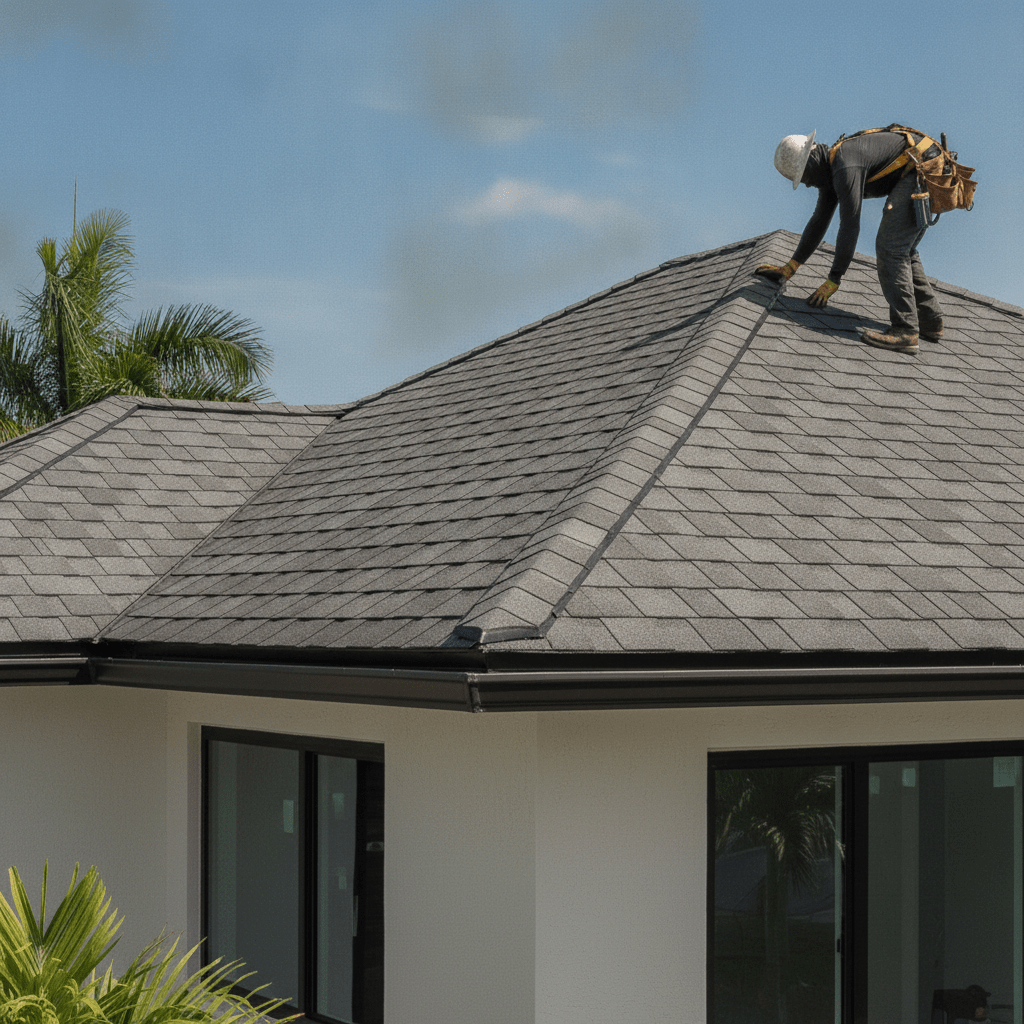
- Estimate and material selection. A field visit confirms roof size, pitch, deck condition, and current underlayment. Material options, NOA compliance, and warranty tiers are reviewed before any number is quoted.
- Permit application. Bigfoot pulls the permit with Miami-Dade Building Department before any tear-off begins. No permit means no inspection, which means no wind mitigation report and no insurance benefit.
- Tear-off and deck inspection. Once the old material is removed, the deck is inspected. If structural issues appear — rotted sheathing, missing hurricane straps — this is when they are addressed under the GC license before new underlayment goes down.
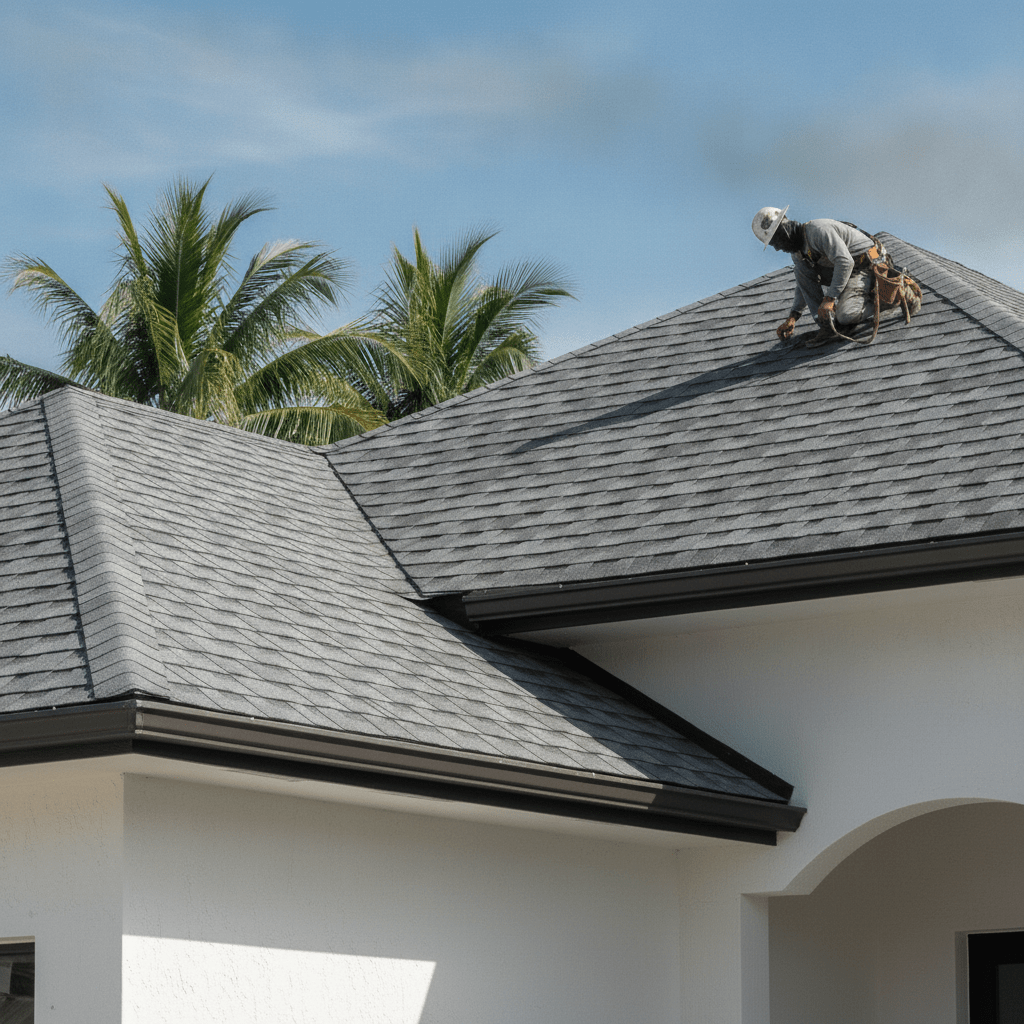
- Underlayment and installation. Full-deck peel-and-stick underlayment is installed first. This is the secondary water barrier required for the wind mitigation secondary barrier credit under the 2024 Florida Building Code.
- Final inspection and wind mitigation report. The inspector closes the permit. A licensed inspector then issues a wind mitigation report, which you submit to your insurance carrier to request a premium review.
If you are considering financing your roofing project, PACE financing is available through the property tax bill — no credit score impact, no prepayment penalty. Rates are approximately 9.49%; a $15,000 project at 20 years runs approximately $173/month. Always consult your CPA regarding any potential tax implications.
Ready to get an honest roofing estimate for your Miami-Dade home?
Related Reading
More from Bigfoot Windows & Roofing
Related Articles
Who We’re Not the Right Fit For
- Homeowners needing the absolute lowest bid. Bigfoot is not a volume-discount operation. We pull permits, use NOA-approved products, and carry four licenses. That overhead is real. If the lowest number on the page is your only criterion, another contractor will likely beat our price — and we are fine with that.
- Commercial or large multifamily projects. Our primary focus is residential single-family and small multifamily in Miami-Dade, Broward, and Palm Beach. Large commercial flat roofing projects with complex project management requirements are outside our normal scope.
- Homeowners wanting work done without a permit. We will not install a roof without pulling a permit in Miami-Dade. A no-permit roof cannot receive a wind mitigation inspection, cannot support an insurance claim, and creates a title problem when you sell. We are not the right fit if this is what you are looking for.
- Homeowners outside South Florida. We serve Miami-Dade, Broward, and Palm Beach counties. We do not operate statewide and cannot serve the Jacksonville, Central Florida, or Panhandle markets.
FAQ
Frequently Asked Questions
What roofing materials does Bigfoot install in Miami-Dade?
Bigfoot installs GAF architectural shingles, Englert or Metal Alliance standing seam metal, Westlake concrete and clay tile, and TPO flat membrane roofing. All products carry a Miami-Dade NOA or a Florida Product Approval that covers HVHZ use as required for HVHZ installation. Material selection depends on your budget, home style, HOA requirements, and how long you plan to own the property.
Does Bigfoot Roofing also handle gutters and windows?
Bigfoot holds a Certified Specialty Contractor with a Glass & Glazing Specialty license (SCC131153098), which covers impact window and door installation. Gutters are a common add-on discussed during a roofing estimate. Ask during your site visit about scope and pricing for gutter work specific to your home.
What should I know before hiring any roofing contractor in Miami-Dade?
Verify the contractor holds an active Certified Roofing Contractor license through DBPR at myfloridalicense.com. Confirm they pull permits before starting work. Ask whether the products they plan to install carry a Miami-Dade NOA. Request the warranty in writing before signing. A reputable contractor will provide all of this without hesitation.
How much does a roof replacement cost in Miami-Dade?
Typical installed costs in South Florida: shingles $750–$850 per square (100 sq ft), standing seam metal $1,050–$1,300/sq, tile $1,000–$1,350/sq, and flat TPO $800–$1,400/sq. Your actual cost depends on roof size, pitch, deck condition, underlayment requirements, and permit fees. Use the roofing estimator for a range before scheduling a visit.
Is a permit really required for a roof replacement in Miami-Dade?
Yes. Miami-Dade requires a permit for full roof replacements and most significant repairs. A permitted roof is inspected, which is required to generate a wind mitigation report. Without a wind mit report, your insurer cannot apply the applicable premium discounts. Unpermitted roof work can also block a future sale or insurance claim.
What is the GAF System Plus warranty and does Bigfoot offer it?
System Plus is a 50-year non-prorated warranty covering shingles, labor, tear-off, and accessories. It includes Wind Proven — no maximum mph limit, not voided by named storms in your county. Bigfoot’s GAF Certified Plus certification makes this warranty available. Note: Bigfoot is not yet GAF Master Elite; the Golden Pledge warranty is not currently available from this company.
Does Bigfoot serve homeowners in Jacksonville or other parts of Florida?
No. Bigfoot Windows & Roofing operates in Miami-Dade, Broward, and Palm Beach counties only. The company is based at 7250 SW 39th Ter, Miami, FL 33155. Homeowners in Jacksonville, Central Florida, or the Panhandle should look for a locally based contractor licensed in their jurisdiction.
Sources
- Florida DBPR License Verification — myfloridalicense.com
- Miami-Dade Building Department — NOA Search, miamidade.gov
- Florida Building Code 2023 (7th Edition), Chapter 15 — Roof Assemblies
- Florida SB 293 (2023) — HOA restrictions on roofing and impact windows
- GAF Roofing — System Plus and Wind Proven Warranty Terms
Get a straight answer on your Miami-Dade roof — no pressure, no fluff.