Key Takeaways
- Low bids often swap qualified DP-rated frames for borderline ones that fail HVHZ inspection.
- Stripped glass packages increase heat gain, condensation, and long-term energy costs.
- Under-anchoring and knockoff fasteners are invisible until a storm exposes them.
- Low-grade sealants fail wind-driven rain within 2–3 South Florida hurricane seasons.
- Concealed structural rot and missing permits shift full liability to the homeowner.
The Real Problem
Why the Lowest Bid Is Rarely the Cheapest Option
A quote that looks $3,000 cheaper often becomes $8,000 more expensive after callbacks, failed inspections, and re-installations.
Miami-Dade homeowners comparing impact window quotes frequently focus on the bottom-line number. That instinct is understandable — a full-house replacement is a major investment. But experienced installers in the High-Velocity Hurricane Zone (HVHZ) know exactly which line items disappear when a contractor needs to shave a bid. This article names them directly so you can compare proposals on equal footing.
South Florida Context
Miami-Dade and the HVHZ Set a Higher Bar
Miami-Dade and Broward counties sit inside the HVHZ — the strictest residential building-code zone in the United States. Every impact window installed here must carry a valid Miami-Dade Notice of Acceptance (NOA) or a Florida Product Approval that explicitly covers HVHZ applications. A lower-priced quote that substitutes a non-HVHZ product will fail the county inspection, trigger a full re-installation at the homeowner’s cost, and void any manufacturer warranty. The local stakes are not theoretical.
The 9 Hidden Costs
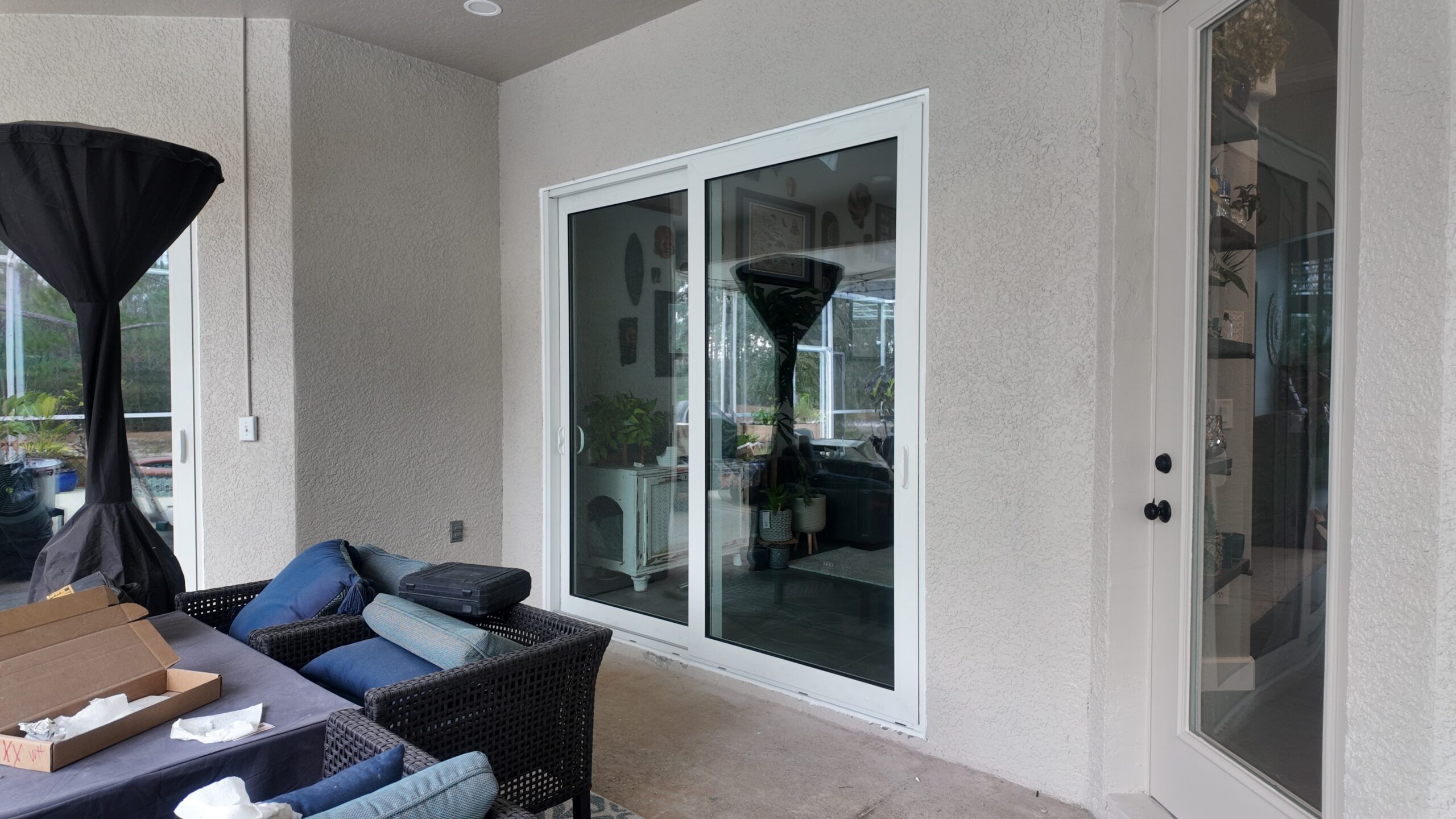
What Cheap Impact Window Estimates Leave Out
1. Borderline DP Ratings
A Design Pressure (DP) rating measures how much wind load a window can withstand. HVHZ installations require windows tested to specific positive and negative pressure values that match your opening’s exposure category. Low bids frequently specify windows at the minimum allowable DP rather than the appropriate one for your floor, wall orientation, and home geometry. The window passes paper review but performs at the edge of its rating in a named storm.
2. Weak or Misrepresented Frames
Aluminum frames are the standard recommendation for South Florida because they are more time-tested in HVHZ heat, humidity, UV, and hurricane conditions than other frame materials. Cheap bids sometimes substitute thinner-wall aluminum extrusions or misrepresent the frame series. Ask for the exact product line, series number, and Miami-Dade NOA number before signing anything. For impact windows we install, Mr. Glass series specifications are documented and verifiable.
3. Stripped Glass Packages
Glass accounts for a significant share of window cost. Budget proposals often default to 5/16-inch glass — the thinnest builder-grade option — rather than the 7/16-inch or 9/16-inch lites appropriate for your opening size and exposure. They also drop Low-E coatings entirely. In South Florida, omitting a proper Low-E layer (such as SB 70 or equivalent) meaningfully raises interior heat gain and can increase condensation on the glass surface — both of which become recurring complaints after the first summer.
4. Under-Anchoring and Knockoff Fasteners
Florida Building Code prescribes fastener spacing, embedment depth, and substrate engagement for impact window installations. Under-anchoring — fewer fasteners, shorter screws, or wrong substrate — is completely invisible once the frame is set and trimmed. It will not show up on a visual inspection. It shows up when a Category 3 storm tests the connection between your window frame and your wall. This is one reason proper permitting matters: a permitted job requires a field inspection before the opening is closed.
5. Low-Grade Sealants
The sealant at the perimeter of every impact window is the last line of defense against wind-driven rain infiltration. Quality installations specify sealants rated for HVHZ exposure and UV degradation. Budget bids routinely use generic construction caulk that degrades within two or three South Florida hurricane seasons, creating water infiltration paths that damage framing, drywall, and insulation — none of which is covered by the window warranty.
6. Concealed Structural Rot
Older Miami-Dade homes frequently have wood rot around window openings — particularly at the sill and rough opening corners. A contractor who wants to keep the bid low will set the new frame directly over deteriorated wood rather than flagging it, replacing the substrate, and then setting the window. The rot continues after installation. When it progresses far enough, the window loses its structural attachment. Because we hold a Certified General Contractor license (CGC1531370), our crews are authorized to handle structural substrate repairs in-house as part of the window scope — homeowners do not need a separate contractor to address underlying rot before installation proceeds.
7. Permit Pull and Inspection Gaps
Permits cost money and take time. Some low-bid contractors propose unpermitted work outright, or pull a permit but skip the required interim inspections. An unpermitted impact window installation in Miami-Dade can result in a stop-work order, a required tear-out and re-inspection, and — critically — a cloud on your property title that surfaces when you sell or refinance. Your homeowner’s insurance carrier may also deny a wind-mitigation discount on an unpermitted opening.
8. No Workmanship Warranty
Product warranties cover the glass unit and frame from the manufacturer. They do not cover how the window was installed. A contractor who provides no written workmanship warranty is signaling that their installation confidence does not extend past the day they leave your driveway. Ask every bidder: what does your written workmanship warranty cover, for how long, and what does it exclude?
9. Vague or Missing Scope Descriptions
A one-line proposal — “supply and install 12 impact windows” — is not a scope of work. It omits: demolition and disposal of existing windows, interior and exterior trim, stucco patching, screen or shutter removal, structural substrate repairs, and permit fees. When those items appear as change orders after the contract is signed, the original low price becomes irrelevant. Request an itemized written scope before comparing bids.
Quote Comparison
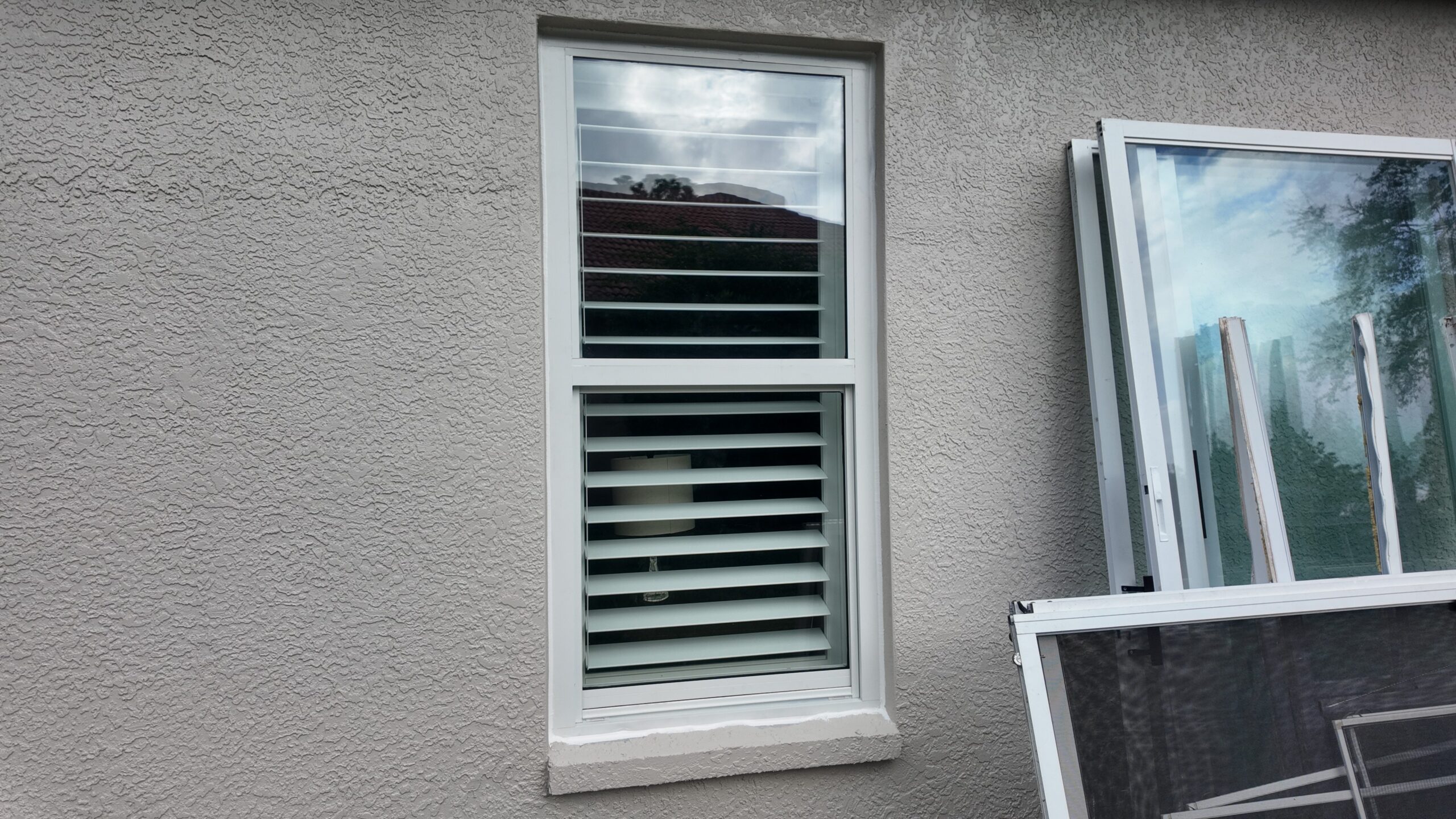
How to Compare Impact Window Quotes Fairly
Use these criteria to put every proposal on the same footing before you evaluate price.
| Criteria | Low-Bid Red Flags | What to Require |
|---|---|---|
| DP Rating | Minimum allowable; no exposure category noted | Rated for your specific opening, floor, and exposure category |
| Frame Material | Unnamed “aluminum” or series 350 builder-grade only | Named product line with Miami-Dade NOA or FL Product Approval number |
| Glass Specification | 5/16″ standard; no Low-E noted | 7/16″ or 9/16″ with SB 70 or equivalent Low-E |
| Anchoring Detail | “Per code” with no specifics; no NOA installation detail referenced | Fastener type, spacing, and substrate engagement per NOA installation drawing |
| Sealant | Not specified | HVHZ-rated sealant, specified by product name |
| Permit & Inspections | Omitted or “not included” | Permit pulled in contractor’s name; all inspections completed |
| Workmanship Warranty | None offered or verbal only | Written, minimum 10 years on labor |
| Scope Description | One-line summary | Itemized: demo, trim, patching, structural substrate, permit fees |
Impact Window Cost Ranges in Miami — What Drives the Difference
The table below reflects general installed ranges for South Florida. Actual pricing depends on opening count, size, glass spec, frame series, structural substrate condition, and permit complexity. These ranges are educational only — get a written itemized proposal for your specific home.
| Scope Level | Approximate Installed Range (per opening) | What It Typically Includes |
|---|---|---|
| Builder-grade / stripped | $600 – $900 | 5/16″ glass, minimum DP, no Low-E, limited warranty |
| Mid-range / HVHZ-appropriate | $900 – $1,400 | 7/16″ or 9/16″ glass, named frame series, SB 70 Low-E, 10-yr workmanship |
| High-performance / large or specialty | $1,400 – $2,200+ | SGD, thermally broken aluminum, heavy-duty glass, complex structural substrate |
Financing options — including PACE programs paid through your property tax bill — are available for qualifying homeowners. Learn more about impact window financing options before your estimate appointment.
Why It Matters Who Pulls the Permit
A Licensed Contractor, Not a Lead Aggregator
The contractor whose license number appears on the permit is legally responsible for the installation. Make sure you know whose license that is.
“When I see a stripped estimate, I know exactly what got cut. Our proposals are itemized line by line — you can compare them directly against any other bid.”
President, Bigfoot Windows & Roofing
Product Guidance
Which Window Lines We Recommend for Miami-Dade Homes
For South Florida impact window installations, we work primarily with Mr. Glass aluminum frames. Mr. Glass series 200 (single hung), series 300 (horizontal roller), and series 1000 SGD are all tested and carry Florida Product Approval. The Mr. Glass series 350 is a residential builder line — we do not recommend it for condos, high-rise buildings, or commercial applications. For thermally broken aluminum options, the series 2500T door system is tested both in-swing and out-swing, which most competitors test only one direction. We also carry ES Windows as a secondary line for specific opening configurations. We do not install PGT or Andersen products — not because of brand bias, but because those are not lines we stock or stand behind with our workmanship warranty.
If you are comparing impact door options alongside windows, the same frame-quality and DP-rating questions apply. Ask for the NOA or FL Product Approval number for every opening.
Our Process
What a Transparent Installation Looks Like, Step by Step
- On-site measure and assessment: We measure every opening and note substrate condition, existing frame material, and any visible rot or damage before quoting.
- Itemized written proposal: Every line item is named — product series, glass spec, DP rating, fastener schedule, permit fees, substrate repair allowance if needed, and workmanship warranty terms.
- Permit in our name: We pull the permit under one of our active Florida licenses. You can verify the license number on the DBPR website before we start.
- Installation per NOA drawing: Our crews follow the manufacturer’s approved installation drawing — fastener type, spacing, and embedment depth — not a generic interpretation of “per code.”
- Inspections completed: We schedule and pass all required county inspections before calling the job complete.
- Final walkthrough: We walk the installation with you, demonstrate operation of every window, and leave written warranty documentation.
Ready to compare your current estimate against an itemized proposal?
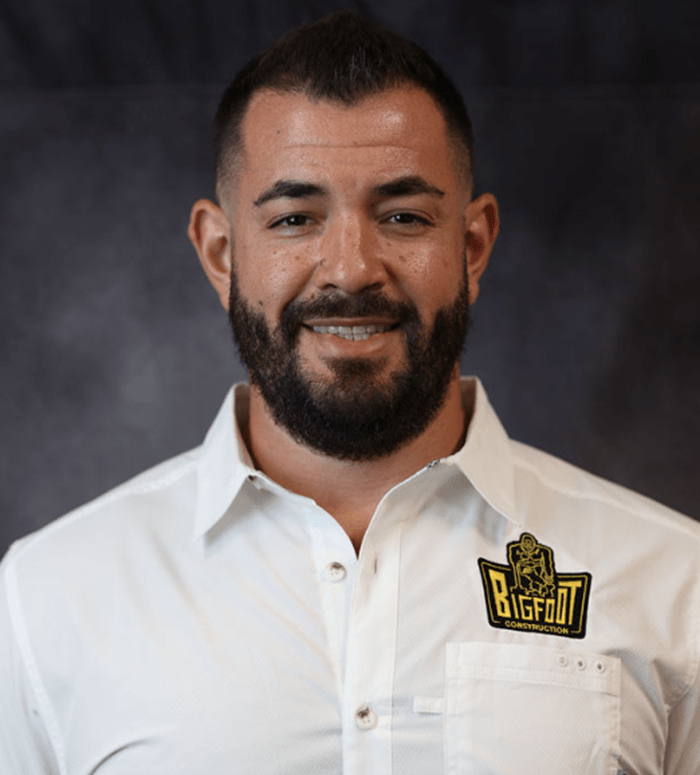
Written by Darryl Henry Rosenbaum, Founder of Bigfoot Windows & Roofing.
Darryl Henry Rosenbaum, doing business as Bigfoot Windows and Roofing, holds four active Florida licenses recognized by the Florida Department of Business and Professional Regulation (DBPR): Certified General Contractor (CGC1531370), Certified Residential Contractor (CRC1331693), Certified Roofing Contractor (CCC1333168), and Certified Specialty Contractor with a Glass & Glazing Specialty (SCC131153098).
Who We’re Not the Right Fit For
- Homeowners who need the absolute lowest per-window number: Our proposals are fully itemized and use specified HVHZ-appropriate products. If your primary criterion is the lowest possible price regardless of spec, we are likely not your match — and we would rather tell you that now than after a failed inspection.
- Projects requiring PGT, Andersen, or CGI products: We do not carry those lines. If you are committed to one of those brands specifically, a dealer who stocks them is the better fit.
- Homeowners who prefer an all-cash, no-permit approach: Every installation we do is permitted and inspected. If you are looking for an unpermitted installation to save time or permit fees, we are not the right contractor.
- Very small single-window replacements on tight budgets: Our minimum project scope and overhead may not make economic sense for a one-window job where speed and cost are the only criteria.
Frequently Asked Questions
Frequently Asked Questions
What do cheap impact window estimates leave out?
They commonly omit or downgrade: DP-appropriate frame series, Low-E glass coatings, HVHZ-rated sealant, proper fastener schedules, permit fees, substrate repair allowances, and written workmanship warranties. Each omission reduces the upfront price but creates a real cost — either in a failed inspection, storm damage, or a callback repair you pay out of pocket.
How do I compare impact window quotes fairly?
Request an itemized written scope from every bidder. Confirm the product series name, Miami-Dade NOA or Florida Product Approval number, glass thickness and Low-E spec, fastener schedule, sealant product, and workmanship warranty terms. Once every proposal is itemized, you are comparing real apples to apples — not a stripped spec to a full one.
What is a DP rating on an impact window?
DP stands for Design Pressure. It measures the wind-load resistance of the window unit in both positive (outward) and negative (inward) directions, expressed in pounds per square foot. HVHZ installations in Miami-Dade require windows rated for the specific pressure values dictated by your opening’s location, floor level, and exposure category. A higher DP rating means the window is engineered for more demanding wind conditions.
Why is under-anchoring dangerous on impact windows?
Under-anchoring means fewer fasteners, shorter screws, or inadequate substrate engagement. The window looks fully installed from inside and outside, but the connection between the frame and the wall is weaker than the NOA installation drawing requires. In a named storm, that connection is what keeps the window in the opening. A failed anchor transfers wind load directly to the glass and frame — neither of which is designed to carry it alone.
What questions should I ask an impact window installer?
Ask: What is the exact product series and NOA or Florida Product Approval number? What glass thickness and Low-E coating are you specifying? What is the fastener type, spacing, and embedment depth? Do you pull the permit in your own license number? What does your written workmanship warranty cover and for how long? Will you address any structural substrate rot found at the rough opening before setting the frame?
How much do quality impact windows cost in Miami?
For HVHZ-appropriate installations in Miami-Dade, installed ranges generally run $900–$1,400 per opening for standard sizes with proper glass specs and a written workmanship warranty. Large openings, sliding glass doors, thermally broken aluminum frames, or complex structural substrate conditions push toward $1,400–$2,200 or more per opening. Builder-grade stripped installations can run $600–$900 per opening but often carry the hidden costs described in this article.
Can I finance impact window replacement in Miami-Dade?
Yes. PACE financing is one option available to qualifying Florida homeowners — it is repaid through your property tax bill rather than a separate loan, and it carries no prepayment penalty. The My Safe Florida Home grant program may also provide up to $10,000 for qualifying homeowners and can be stacked with PACE. Consult your CPA regarding any potential tax benefits; we do not provide tax advice.
Get an itemized proposal you can actually compare — line by line.
Sources
- Florida Building Code, 8th Edition — Section 1609 (Wind Loads) and HVHZ provisions
- Miami-Dade County Product Control — Notice of Acceptance (NOA) database, miamidade.gov
- Florida DBPR License Verification — myfloridalicense.com
- Florida Department of Financial Services — Citizens Insurance non-renewal policy guidance